
Political Power and Architectural Expression in Great Zimbabwe's Stone Enclosures

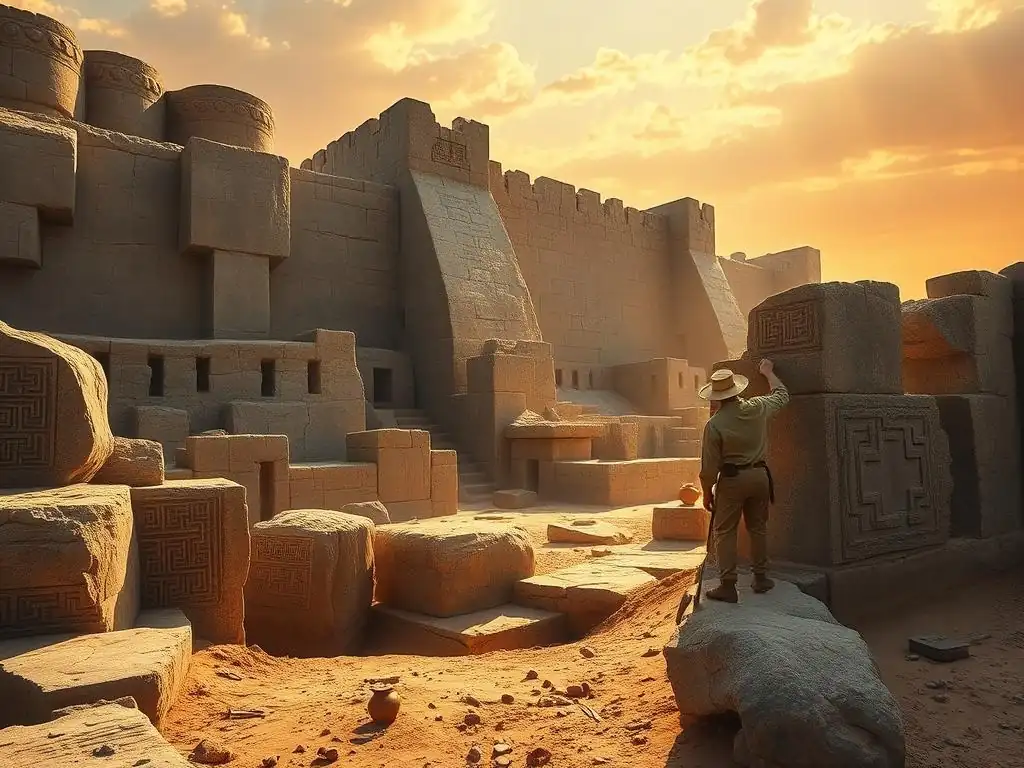
Welcome to ArchaeologyHub.org, your gateway to the past.
Delve into the fascinating world of archaeological discovery, from groundbreaking excavation techniques to the intricate tapestry of ancient civilizations. Ever wondered how architecture served as a language of power? Our featured article explores just that, uncovering the secrets behind the Political Power and Architectural Expression in Great Zimbabwe's Stone Enclosures. Prepare to journey back in time and understand how magnificent structures reflected, and reinforced, authority in this remarkable historical site. What stories do these stones tell? Let's find out together...
- Introduction: Unveiling Great Zimbabwe's Enclosures and Power
- The Architectural Landscape of Great Zimbabwe
- Political Power and Architectural Design: A Symbiotic Relationship
- Architectural Symbolism and the Legitimation of Power
- The Role of Stone Enclosures in Economic and Social Control
- Decline and Legacy: Shifting Power Dynamics and Architectural Changes
- Synthesis: Power, Architecture, and Society
- References: Scholarly Sources on Great Zimbabwe's Architecture and Power
-
Frequently Asked Questions
- What was the primary function of the stone enclosures at Great Zimbabwe?
- How does the architecture of Great Zimbabwe's enclosures reflect the society's hierarchical structure?
- What role did the control of resources play in the construction and maintenance of Great Zimbabwe's stone enclosures?
- What are some of the unique architectural features found in the Great Zimbabwe enclosures?
- How does the study of Great Zimbabwe's enclosures contribute to our understanding of ancient African civilizations?
- Final Reflection: Echoes of Power in Stone
- Unearth Great Zimbabwe's Secrets: Your Journey Starts Now!
Introduction: Unveiling Great Zimbabwe's Enclosures and Power
Great Zimbabwe: A Symbol of Shona Civilization
Great Zimbabwe stands as the largest and most significant ancient city in sub-Saharan Africa, a monumental testament to the advanced civilization of the Shona people. Flourishing between approximately 1100 and 1450 CE, this UNESCO World Heritage Site served as the capital of a powerful pre-colonial kingdom, controlling vast trade routes that stretched from the interior of Southern Africa to the Swahili coast and beyond. Its intricate and imposing dry-stone architecture, particularly the iconic Great Zimbabwe stone enclosure power structures, distinguishes it as a marvel of ancient engineering and a profound symbol of indigenous African ingenuity and state formation.
The city's strategic location, rich mineral resources, and control over gold and ivory trade routes propelled its rise as a regional economic and political powerhouse. At its peak, Great Zimbabwe is estimated to have housed a population of up to 18,000 people, a remarkable demographic concentration for its time. The sheer scale and complexity of its ruins underscore a highly organized society, capable of mobilizing significant labor and resources to construct such enduring monuments, reflecting a sophisticated social and political structure that dominated the landscape for centuries.
The Significance of Stone Enclosures in Understanding Political Power
The stone enclosures of Great Zimbabwe are not merely defensive structures or habitations; they are profound architectural expressions of political power, social hierarchy, and ideological control. Their unique design, massive scale, and strategic placement within the landscape offer invaluable insights into the nature of the ruling elite's authority and how it was manifested and maintained. Studying the Great Zimbabwe stone enclosure power dynamics provides a unique lens through which to understand the complex interplay between architecture, governance, and societal organization in ancient Southern Africa.
Archaeological analysis of these structures reveals deliberate choices in their construction, layout, and ornamentation, all serving to reinforce the legitimacy and dominance of the ruling class. From the imposing height of the walls to the intricate internal passages that regulated access, every element of the stone enclosures communicated a message about who held power and how that power was exercised. These structures were central to the functioning of the state, serving as administrative centers, royal residences, ritual spaces, and symbols of the kingdom's wealth and influence.
The Architectural Landscape of Great Zimbabwe
Defining the Stone Enclosures: Structure and Materials
The stone enclosures of Great Zimbabwe are characterized by their remarkable dry-stone masonry, a sophisticated building technique that involved stacking precisely cut granite blocks without the use of mortar. These blocks, derived from the abundant local granite kopjes, were shaped through a process of heating and cooling, causing them to fracture along natural lines, and then further refined to fit together snugly. This method resulted in incredibly stable and durable structures that have withstood centuries of environmental wear.
The walls vary significantly in height and thickness, with some reaching up to 11 meters (approximately 36 feet) high and 5 meters (approximately 16 feet) thick at the base, such as sections of the Great Enclosure. The construction exhibits varying levels of craftsmanship, from rougher, earlier constructions to later, finely dressed stonework, indicating an evolution in building techniques and potentially the availability of skilled labor. The deliberate choice to use dry-stone masonry, rather than a mortared technique, speaks to an established tradition and a mastery of local materials that was both practical and symbolically significant.
Mapping the Major Enclosures: The Great Enclosure, Hill Complex, and Valley Complex
Great Zimbabwe is divided into three principal architectural zones, each with distinct characteristics and presumed functions, collectively reflecting the distribution of Great Zimbabwe stone enclosure power. The Hill Complex, situated atop a steep granite kopje, is the oldest and most sacred part of the city. It features a labyrinth of narrow passages, massive walls, and natural boulders integrated into the architecture, believed to have served as the royal residence, a spiritual center, and a formidable defensive stronghold. Its elevated position visually dominated the entire settlement, symbolizing the rulers' spiritual and temporal authority.
Below the Hill Complex lies the Great Enclosure, the most iconic and structurally impressive feature of Great Zimbabwe. This immense, oval-shaped structure, approximately 97 meters (318 feet) in diameter and 250 meters (820 feet) in circumference, is defined by its massive outer wall, which contains the famous Conical Tower. It is widely interpreted as the primary royal residence and the administrative heart of the kingdom, a place where the Mambo (king) resided and held court.
The Valley Complex, stretching between the Hill Complex and the Great Enclosure, consists of numerous smaller stone enclosures and residential areas, likely housing the majority of the population, including artisans, traders, and commoners. The spatial segregation of these complexes clearly delineates social hierarchies and the centralized nature of the Great Zimbabwe stone enclosure power.
Construction Techniques and Labor Organization
The construction of Great Zimbabwe’s stone enclosures required an immense amount of coordinated labor and sophisticated engineering knowledge. Estimates suggest that hundreds of thousands of tons of granite were quarried, transported, and meticulously shaped to construct the city’s monumental walls. This scale of construction implies a highly centralized political authority capable of mobilizing and organizing a large workforce, including skilled masons, laborers, and supervisors, over an extended period. The consistency in building style across different parts of the site suggests a standardized approach to construction, indicative of master builders overseeing the projects.
The precision of the dry-stone masonry, particularly in the later phases of construction, demonstrates a profound understanding of structural stability and load distribution. Walls were often built with a batter (a slight inward slope) to enhance stability, and intricate drainage systems were incorporated to manage rainwater.
The sheer effort and organizational capacity required to build and maintain such a city underscore the significant Great Zimbabwe stone enclosure power wielded by its rulers. It points to a society with surplus resources, a clear chain of command, and a shared vision, all directed towards monumental construction that served both practical and symbolic purposes.
Political Power and Architectural Design: A Symbiotic Relationship
The Great Enclosure: Royal Residence and Center of Governance
The Great Enclosure stands as the quintessential manifestation of Great Zimbabwe stone enclosure power, serving as the likely royal residence and the undisputed administrative hub of the kingdom. Its sheer scale and the meticulous craftsmanship of its walls immediately convey a sense of awe and authority.
The outer wall, reaching heights of up to 11 meters, created an imposing boundary that physically separated the ruling elite from the common populace, reinforcing their exalted status. Inside, a complex network of internal walls, passages, and platforms suggests a carefully organized space designed for both residential comfort and the execution of state affairs.
Archaeological evidence within the Great Enclosure, including elite pottery, imported artifacts, and remnants of large structures (likely dwellings or audience chambers), supports its role as the seat of the Mambo. The narrow, winding passages within the enclosure were not just for security; they also controlled movement, directing visitors along specific routes and creating a sense of controlled access that underscored the ruler's dominion. This architectural control over space and movement was a direct expression of the centralized Great Zimbabwe stone enclosure power that governed the vast kingdom.
Perched atop a granite kopje, the Hill Complex is the oldest and arguably most sacred part of Great Zimbabwe, serving as a vital ritual space and a potent manifestation of the ruler's spiritual and political authority. Its elevated position provided both strategic defense and a symbolic connection to the heavens, reinforcing the divine legitimacy often associated with ancient rulers. The complex incorporates natural rock formations into its architecture, creating a unique synthesis of natural landscape and human construction.
Within the Hill Complex, archaeological finds include the famous soapstone birds, which are believed to represent the ancestral spirits of the Shona people and were likely used in religious ceremonies. The presence of these revered artifacts, combined with the complex's commanding views and formidable defenses, suggests its role as a place where the Mambo consulted with ancestors, performed important rituals, and asserted their spiritual and political dominance over the land and its people.
The very act of ascending to the Hill Complex would have been a pilgrimage, emphasizing the sacred and formidable nature of the Great Zimbabwe stone enclosure power centered there.
The overall architectural layout of Great Zimbabwe, particularly the distinct separation of the Hill Complex, Great Enclosure, and Valley Complex, provides clear evidence of a highly stratified society and the deliberate use of space to enforce social hierarchy. The elite, including the Mambo and their immediate family and advisors, resided in the more exclusive and monumental Hill Complex and Great Enclosure. These areas were characterized by their massive walls, intricate internal divisions, and controlled access points, signifying prestige and restricted entry.
In contrast, the Valley Complex, while still featuring stone enclosures, contained more numerous and generally less elaborate structures, indicative of commoner dwellings and areas for craft production. The differing scales of architecture, quality of construction, and levels of ornamentation across these zones visually communicated status and privilege. This spatial segregation was a powerful tool for maintaining social order and reinforcing the Great Zimbabwe stone enclosure power of the ruling class, clearly delineating who belonged where and how their lives were structured within the urban landscape.
Architectural Symbolism and the Legitimation of Power
Within the Great Enclosure stands the enigmatic Conical Tower, a solid, mortarless granite structure approximately 9.1 meters (30 feet) high and 5.5 meters (18 feet) in diameter at its base. Its function and symbolism have been subjects of extensive scholarly debate, but it is widely interpreted as a potent symbol of royal authority, prosperity, and fertility. Its phallic shape has led some to suggest a connection to male virility and the ruler's role in ensuring the continuity of the lineage and the fertility of the land and its people.
Alternatively, the tower may have symbolized a granary, representing the Mambo's control over agricultural surplus and their ability to provide for the population, a crucial aspect of their Great Zimbabwe stone enclosure power. Regardless of its precise meaning, its prominent position within the Great Enclosure and its unique form suggest a profound symbolic significance, likely related to the well-being of the kingdom and the legitimacy of its ruler. The tower's enduring presence continues to evoke a sense of mystery and power, reflecting the enduring legacy of Great Zimbabwe's sophisticated civilization.
Chevron Patterns and Other Decorative Motifs: Deciphering Symbolic Meanings
The outer wall of the Great Enclosure is adorned with a distinctive chevron pattern, a series of inverted V-shapes meticulously laid out in dry-stone masonry. This pattern is not merely decorative; it is believed to carry significant symbolic meaning, often interpreted as representing prosperity, fertility, and the continuity of the royal lineage. The chevron motif is found in various forms across different African cultures and often signifies abundance, water, or the movement of people and resources, all vital elements for a thriving kingdom.
Other decorative motifs, such as the herringbone and dentelle patterns, are also observed on various walls throughout Great Zimbabwe, though less prominently than the chevron. These intricate designs required exceptional skill and time to execute, suggesting that their inclusion was deliberate and served to enhance the aesthetic appeal and symbolic richness of the architecture. The presence of these complex patterns on the most significant structures further underscores the sophisticated symbolic language embedded within the Great Zimbabwe stone enclosure power and its architectural expression, serving to legitimize the ruling elite and reinforce their connection to the well-being of the state.
The Absence of Mortar: A Deliberate Choice Reflecting Traditional Building Practices
A defining characteristic of Great Zimbabwe's stone enclosures is the complete absence of mortar in their construction. This was not due to a lack of knowledge or capability; rather, it was a deliberate and highly skilled traditional building practice. The granite blocks were meticulously shaped and fitted together with such precision that they held firmly by gravity and friction alone, creating incredibly stable and durable structures that have largely survived intact for centuries. This technique, known as dry-stone masonry, requires a profound understanding of geology, engineering, and the properties of the local stone.
The choice to build without mortar may also carry symbolic weight, representing a deep connection to the natural landscape and a mastery over its materials. It speaks to a self-sufficient and resourceful society that utilized its environment to create monumental architecture without relying on external technologies. This distinctive building method not only showcases the advanced technical abilities of the Shona people but also contributes to the mystique and inherent strength associated with the Great Zimbabwe stone enclosure power, demonstrating an indigenous architectural prowess that was uniquely adapted to its environment.

Controlling Access and Movement: The Enclosures as Instruments of Power
The intricate design of Great Zimbabwe's stone enclosures, particularly their narrow, winding passages, high walls, and multiple entrances, served as a sophisticated mechanism for controlling access and movement within the city. This architectural control was a direct manifestation of the ruling elite's Great Zimbabwe stone enclosure power over the population and resources. The most important areas, such as the Great Enclosure and parts of the Hill Complex, had restricted access, ensuring that only authorized individuals could enter, thereby regulating interactions and maintaining security for the ruling class.
The labyrinthine passages and dead ends within some enclosures acted as deterrents and defensive features, making it difficult for unauthorized individuals to navigate or penetrate key areas. This physical control over space created a clear distinction between the public and private realms, and between the elite and commoners. It reinforced the social hierarchy by dictating who could go where, when, and how, effectively using architecture as an instrument of surveillance and social management.
Storage and Distribution: Economic Control Through Architectural Spaces
Beyond their residential and symbolic functions, the stone enclosures also played a critical role in the economic control of the kingdom. Archaeological evidence suggests the presence of storage facilities, such as granaries, within or adjacent to the main enclosures. These spaces would have been used to store agricultural surplus, including grains, and potentially other valuable commodities like gold, ivory, and imported goods. The control over these vital resources was central to the Mambo's Great Zimbabwe stone enclosure power.
The ability to accumulate and redistribute wealth, particularly food resources, was a key aspect of maintaining power and legitimacy in a pre-industrial society. By controlling the storage and distribution of surplus, the ruling elite could manage the economy, support specialized artisans, reward loyal followers, and sustain the population during times of scarcity. The architectural design, therefore, facilitated the economic systems that underpinned the state's prosperity and its capacity to fund monumental construction and maintain its regional dominance.
Evidence for Trade and Resource Management
Great Zimbabwe's prosperity was largely built upon its strategic position in regional and international trade networks, and its stone enclosures facilitated the management of these extensive economic activities. Archaeological excavations have unearthed a wealth of imported artifacts within the enclosures, providing tangible evidence of long-distance trade. These include fragments of Chinese porcelain (from the Ming Dynasty), Persian pottery, glass beads from India and the Middle East, and copper ingots from distant mines.
The presence of these luxury goods within the elite enclosures indicates that the ruling class controlled the flow of these valuable commodities, which were exchanged for local resources like gold and ivory. The organized layout of the city, with designated areas for different activities, suggests a sophisticated system for managing trade, processing raw materials, and distributing finished goods. The stone enclosures, therefore, were not just symbols of power but also functional hubs for the economic activities that sustained the Great Zimbabwe stone enclosure power and its influence across Southern Africa.
Decline and Legacy: Shifting Power Dynamics and Architectural Changes
Factors Contributing to the Decline of Great Zimbabwe
The flourishing period of Great Zimbabwe came to an end around the mid-15th century CE, leading to the gradual abandonment of the city. The reasons for its decline are complex and likely multifactorial, reflecting a combination of environmental, economic, and political pressures. One prominent theory suggests that environmental degradation, such as overgrazing by cattle and deforestation for fuel and construction, may have strained the local resource base, making it unsustainable to support a large population.
Another significant factor was the potential shift in trade routes. As new gold fields were discovered further north, and new coastal trading centers emerged, the economic centrality of Great Zimbabwe may have diminished. Internal political instability, succession disputes, or the rise of competing polities like the Mutapa and Torwa kingdoms, which established new capitals further north (e.g., Khami), could also have contributed to the dispersal of the population and the eventual decline of the centralized Great Zimbabwe stone enclosure power.
Changes in Architectural Styles Reflecting Political Transformations
The decline of Great Zimbabwe was accompanied by noticeable shifts in architectural styles in subsequent regional centers, reflecting a transformation in political power dynamics. While successor states like the Torwa and Mutapa kingdoms continued the tradition of dry-stone masonry, their capitals, such as Khami and Manyikeni, often exhibited different architectural characteristics. For instance, Khami, a later Torwa capital, features elaborate terracing, retaining walls, and a distinctive "checkered" pattern not as prominent at Great Zimbabwe.
These architectural variations suggest a decentralization or re-shaping of the monumental building traditions that characterized Great Zimbabwe. While the skill of dry-stone masonry persisted, the sheer scale and unified vision seen at Great Zimbabwe were not always replicated in the same manner. This shift reflects a fragmentation or re-distribution of the centralized Great Zimbabwe stone enclosure power that had once enabled the construction of such a vast and singular urban complex. The subsequent capitals, while impressive in their own right, represent a new chapter in the architectural and political history of the region.
The Enduring Legacy of Great Zimbabwe's Stone Enclosures in Southern African Architecture
Despite its eventual decline, the legacy of Great Zimbabwe's stone enclosures remains profound and enduring, deeply influencing subsequent architectural traditions in Southern Africa and standing as a powerful symbol of indigenous African achievement. The sophisticated dry-stone masonry techniques developed and perfected at Great Zimbabwe were carried forward by its successor states, shaping the built environment of later kingdoms across modern-day Zimbabwe, Mozambique, and South Africa. Sites like Khami, Dhlo Dhlo, and Manyikeni bear clear architectural resemblances, demonstrating a continuous tradition of monumental stone construction.
Today, Great Zimbabwe is a source of immense national pride for Zimbabwe and a beacon of African heritage globally. Its unique architecture continues to inspire and educate, serving as a tangible reminder of a complex pre-colonial state that rivaled contemporary European and Asian civilizations in its organizational capacity and architectural sophistication. The Great Zimbabwe stone enclosure power is not just a historical phenomenon but an enduring cultural and architectural legacy that continues to shape identity and understanding of Southern African history.
Synthesis: Power, Architecture, and Society
Reassessing the Relationship Between Architectural Form and Political Function
The study of Great Zimbabwe's stone enclosures unequivocally demonstrates a profound and symbiotic relationship between architectural form and political function. These structures were not merely utilitarian buildings but deliberate and complex expressions of the ruling elite's authority, social hierarchy, and economic control. The monumental scale of the Great Enclosure, the strategic elevation of the Hill Complex, and the spatial segregation of the Valley Complex all served to reinforce the Mambo's centralized Great Zimbabwe stone enclosure power and the stratified nature of their society.
The choice of dry-stone masonry, the intricate decorative motifs like the chevron pattern, and the controlled access within the enclosures collectively communicated a powerful message of legitimacy, prosperity, and dominance. Every aspect of Great Zimbabwe's architecture was meticulously crafted to reflect and reinforce the political order, demonstrating how an ancient African civilization utilized its built environment to shape and maintain its societal structure and governance. This reassessment highlights that architecture was a primary tool for the projection and consolidation of power in this sophisticated pre-colonial state.
Future Research Directions: Unlocking Further Insights into Great Zimbabwe's Power Structures
Despite extensive research, Great Zimbabwe continues to hold many secrets, offering fertile ground for future archaeological and historical inquiry, particularly concerning its power structures. Further detailed spatial analysis using advanced remote sensing and GIS technologies could provide more nuanced understandings of internal site organization and activity areas, potentially revealing previously unarticulated social dynamics and control mechanisms. High-resolution mapping could identify subtle variations in construction that correlate with different phases of political influence.
Additionally, focused archaeological excavations in under-explored areas, particularly within the Valley Complex, could yield more comprehensive data on commoner life, economic activities, and the practical implementation of Great Zimbabwe stone enclosure power at a grassroots level. Comparative studies with other regional dry-stone sites, utilizing new dating techniques and material analyses, could further illuminate the evolution of architectural styles in relation to shifting political landscapes. Continued interdisciplinary research, integrating environmental studies, oral histories, and linguistic analysis, promises to unlock deeper insights into the complex interplay of power, architecture, and society at Great Zimbabwe.
References: Scholarly Sources on Great Zimbabwe's Architecture and Power
Frequently Asked Questions
What was the primary function of the stone enclosures at Great Zimbabwe?
The stone enclosures at Great Zimbabwe served as symbols of political power and elite residences. They were not primarily defensive structures, but rather demonstrated status.
How does the architecture of Great Zimbabwe's enclosures reflect the society's hierarchical structure?
The size, complexity, and positioning of the enclosures directly correlate with the social standing of the inhabitants. Larger, more elaborate structures signified greater power and influence.
What role did the control of resources play in the construction and maintenance of Great Zimbabwe's stone enclosures?
Access to and control over labor, skilled artisans, and materials (like granite) were crucial for construction. This control was a key indicator and enforcer of political dominance.
What are some of the unique architectural features found in the Great Zimbabwe enclosures?
Features include the iconic conical tower, the use of dry-stone masonry without mortar, and the intricate patterns and decorations found on the walls, all signifying sophistication and control.
How does the study of Great Zimbabwe's enclosures contribute to our understanding of ancient African civilizations?
It provides insights into the political organization, social structures, and architectural capabilities of a sophisticated African civilization, challenging Eurocentric narratives.
Final Reflection: Echoes of Power in Stone
The enduring legacy of Great Zimbabwe's stone enclosures serves as a potent reminder that architecture is never neutral. Today, as we grapple with questions of representation and authority in the built environment, understanding how power was encoded in these ancient structures offers invaluable insights into the relationship between space, society, and control. The silent stones of Zimbabwe continue to speak volumes about the enduring human desire to shape the world around us in ways that reflect and reinforce our beliefs and hierarchies.
The profound impact of Great Zimbabwe extends far beyond its physical ruins. It stands as a testament to the ingenuity and sophistication of pre-colonial African societies, challenging Eurocentric narratives and inspiring a renewed sense of pride and cultural identity. The intricate stonework, devoid of mortar, speaks to a deep understanding of materials and engineering, a knowledge system often overlooked in historical accounts. The past is never dead. It's not even past.
- William Faulkner. This quote resonates deeply when considering Great Zimbabwe, as its influence continues to shape contemporary discussions about African history, architectural heritage, and the very definition of civilization.
As you reflect on the power embedded within Great Zimbabwe's stone enclosures, consider the spaces you inhabit and the structures that surround you. What messages do they convey? Whose voices are amplified, and whose are silenced? Let the lessons learned from this ancient city inspire you to critically examine the built environment and to advocate for spaces that are more equitable, inclusive, and representative of the diverse communities they serve. The power to shape our world, brick by brick, rests in our hands.
Unearth Great Zimbabwe's Secrets: Your Journey Starts Now!
Thank you for exploring the architectural and political power woven into the stones of Great Zimbabwe. We hope this glimpse into the past has sparked your curiosity. Now, it's time to take the next step and connect with this fascinating history.
Here are some actions you can take to delve deeper:
- Embark on a virtual archaeological expedition: Explore online 3D models and interactive reconstructions of Great Zimbabwe's enclosures.
- Share this article with friends or colleagues interested in archaeology, African history, or political science to ignite meaningful conversations.
- Dive into related books and documentaries to deepen your understanding of Great Zimbabwe's cultural context and the Shona people.
What aspects of Great Zimbabwe's architecture most vividly illustrate its political power to you?