
Jewelry and Personal Adornment in Pompeii: Indicators of Status, Wealth, and Fashion


Welcome to ArchaeologyHub.org!
Unearth the secrets of the past and step into a world where every artifact whispers a story. Ever wondered what jewelry can reveal about the lives of those who wore it? Delve into our comprehensive exploration of Pompeii jewelry status symbols and discover how personal adornment reflected wealth, fashion, and societal standing in this ancient Roman city. Prepare to be captivated by the intricate details and hidden meanings woven into each exquisite piece – the story of Pompeii awaits.
- Introduction: Pompeii Jewelry as a Window into Roman Society
- Jewelry as Status Symbols: Unveiling Social Stratification
- Wealth Displayed: Opulent Jewelry in Pompeii's Elite Homes
- Fashion Trends in Pompeii: A Glimpse into Roman Aesthetics
- Types of Jewelry Found in Pompeii: A Detailed Overview
- The Role of Jewelry in Pompeian Rituals and Beliefs
- Case Studies: Analyzing Specific Pieces of Pompeii Jewelry
- Conservation and Preservation of Pompeii Jewelry
- Conclusion: Pompeii Jewelry – More Than Just Ornamentation
-
Frequently Asked Questions
- ### What role did jewelry play in Pompeian society according to ArchaeologyHub.org?
- ### How did the materials used in Pompeian jewelry reflect a person's social standing as detailed on ArchaeologyHub.org?
- ### Can ArchaeologyHub.org provide examples of specific jewelry pieces found in Pompeii that signify social rank?
- ### How did excavation techniques, as described on ArchaeologyHub.org, help archaeologists understand the context of jewelry found in Pompeii?
- ### According to ArchaeologyHub.org, what does the style and design of Pompeian jewelry reveal about the city's culture and influences?
- Final Reflection: Echoes of Pompeii's Elegance
- Unveil Your Inner Pompeian: Adorn Yourself with Knowledge!
Introduction: Pompeii Jewelry as a Window into Roman Society
The Significance of Personal Adornment in Ancient Pompeii
In the vibrant Roman city of Pompeii, personal adornment transcended mere decoration; it served as a powerful visual language, communicating an individual's social standing, economic prosperity, and even their beliefs. Jewelry, in particular, was a crucial element of daily life, worn by both men and women across various social strata.
From simple bronze rings to elaborate gold necklaces adorned with precious gemstones, each piece of Pompeii jewelry offered a glimpse into the wearer's identity and their place within the complex social fabric of the 1st century AD. These items functioned as unmistakable Pompeii jewelry status symbols, broadcasting wealth and influence without a single word.
The meticulous preservation offered by the eruption of Vesuvius in 79 AD has provided an unparalleled archaeological record, allowing modern scholars to study these artifacts in their original context. The sheer volume and diversity of jewelry found, from domestic settings to public spaces and even within the grasp of victims, underscore its pervasive importance. Understanding these adornments helps reconstruct the aesthetic preferences, economic realities, and social hierarchies that defined life in this bustling Roman city, revealing how deeply intertwined personal style was with societal expectations.
Archaeological Context: Exploring Pompeii's Material Culture
The catastrophic eruption of Mount Vesuvius encased Pompeii in ash and pumice, effectively freezing the city in time and preserving an extraordinary array of material culture, including thousands of pieces of personal adornment. Unlike many other ancient sites where organic materials and delicate artifacts have long since decayed, Pompeii offers a unique snapshot of Roman life, complete with the everyday objects used by its inhabitants. This preservation has been instrumental in allowing archaeologists to study items like necklaces, rings, and bracelets, providing concrete evidence of the types of jewelry worn and owned by Pompeians.
Excavations across the city, from grand aristocratic villas to modest artisan homes, have yielded a rich tapestry of jewelry finds. These discoveries are not just isolated artifacts; they are often found in situ, offering valuable insights into the contexts of their use – whether left on dressing tables, hidden in strongboxes, or worn by the victims themselves. This archaeological precision allows researchers to correlate specific types of Pompeii jewelry with particular residences or individuals, thereby enhancing our understanding of social stratification and the significance of these items as indicators of wealth and status.
The choice of materials and the quality of craftsmanship in Pompeii jewelry were direct indicators of an individual's social standing and economic power. Gold was undeniably the most prestigious metal, reserved primarily for the elite. Wealthy Pompeians displayed their affluence through heavy gold chains, elaborate earrings, and rings set with large, often imported, gemstones. The intricate artistry, such as filigree, granulation, and repoussé techniques, seen in these gold pieces further accentuated their value and exclusivity, requiring skilled artisans and significant investment. Such pieces were undeniable Pompeii jewelry status symbols.
In contrast, citizens of more modest means typically wore jewelry made from bronze, silver, or even glass. While still decorative, these pieces were often simpler in design, with less elaborate detailing. For instance, a common individual might possess a plain bronze ring, whereas a wealthy merchant or senator would adorn their fingers with multiple gold rings, each perhaps bearing a finely carved intaglio or a precious stone. The sheer weight and purity of the gold, combined with the complexity of its fabrication, clearly distinguished the wearer as belonging to the upper echelons of Pompeian society.
Gemstones and Their Symbolic Meanings in Pompeii
The Allure of Emeralds, Sapphires, and Garnets
Gemstones played a pivotal role in Roman jewelry, not only for their inherent beauty but also for their perceived symbolic meanings and rarity, further solidifying their role as Pompeii jewelry status symbols. Emeralds, with their vibrant green hue, were highly prized, often associated with fertility, rebirth, and good fortune; they were frequently sourced from Cleopatra's mines in Egypt.
Sapphires, though less common than emeralds, were admired for their deep blue color and believed to offer protection and wisdom. Garnets, with their rich red tones, were particularly popular, often carved into intaglios or cabochons, and were thought to protect against illness and danger.
These precious stones were typically set into gold rings, necklaces, and earrings, transforming simple pieces into luxurious displays of wealth. The size, clarity, and provenance of these gems significantly influenced their value and the status they conferred upon the wearer. Owning multiple pieces adorned with such stones was a clear indication of immense wealth, distinguishing the elite from the vast majority of the population who could only afford simpler glass imitations or less valuable stones.
Imported Materials and Trade Networks
The presence of diverse gemstones and exotic materials in Pompeian jewelry underscores the extensive trade networks that characterized the Roman Empire. Lapis lazuli, with its deep blue and golden flecks, was imported from distant Afghanistan, while pearls, highly coveted for their luminescence, came from the Persian Gulf or even as far as the Indian Ocean. Amber, often used for beads and pendants, journeyed from the Baltic Sea region, its warm tones and light weight making it a popular choice.
The ability to acquire and display such imported materials was a direct testament to one's wealth and connections within the vast Roman commercial sphere. Merchants and the affluent elite had access to these global commodities, and incorporating them into their personal adornment was a potent way to signal their economic power and sophisticated tastes. These exotic elements made specific pieces of Pompeii jewelry even more potent status symbols, demonstrating not just wealth but also access to the wider world.
Wealth Displayed: Opulent Jewelry in Pompeii's Elite Homes
Excavations Revealing Lavish Jewelry Collections
Archaeological excavations in Pompeii have consistently unearthed significant caches of opulent jewelry, particularly within the grandest residences, providing direct evidence of the immense wealth held by the city's elite. For instance, the House of the Golden Bracelet (Regio VI, Insula 17) yielded a spectacular collection of gold jewelry, including a magnificent serpent-shaped bracelet, several rings set with precious stones, and numerous gold coins. This discovery, found alongside the remains of a woman, suggests she was attempting to flee with her most valuable possessions, highlighting jewelry's role as portable wealth.
Another notable find occurred in the House of the Faun, one of Pompeii's largest and most luxurious homes, where fragments of intricate gold jewelry and numerous silver pieces were recovered, indicating the lavish lifestyle of its inhabitants. These findings are not isolated incidents; across various elite villas, archaeologists have consistently found dozens of gold pieces, often weighing several kilograms in total, along with hundreds of silver items, signifying that such extensive collections were a standard feature of aristocratic households. These collections unequivocally served as Pompeii jewelry status symbols, visually confirming the immense economic power of their owners.
The House of the Vettii: A Showcase of Pompeian Wealth
The House of the Vettii, famously owned by Aulus Vettius Conviva and Aulus Vettius Restitutus, two wealthy freedmen, stands as a prime example of how personal adornment and household possessions were used to display newly acquired wealth. While the house is renowned for its vibrant frescoes, the material culture found within, including various personal effects, underscores the Vettii brothers' aspiration to integrate into the city's upper echelons.
Though specific jewelry hoards of the same magnitude as the House of the Golden Bracelet were not found, the overall opulence of the villa suggests its occupants would have possessed extensive collections of high-value Pompeii jewelry.
The brothers, having risen from slavery to considerable prosperity, would have likely invested in fine jewelry not only for personal adornment but also as tangible assets. Their acquisition of luxurious goods, including fine textiles, elaborate furnishings, and presumably substantial jewelry, was a critical component of their social climbing. Such displays were essential in a society where public perception and visible wealth, including sophisticated Pompeii jewelry status symbols, were paramount to establishing and maintaining one's position.
Jewelry as an Investment and a Family Heirloom
Beyond its aesthetic and social functions, jewelry in Pompeii also served as a practical form of investment and a valuable family heirloom. In a world without formalized banking institutions as we know them, precious metals and gemstones represented a secure and portable store of wealth. In times of political instability, economic downturns, or natural disasters—such as the eruption of Vesuvius itself—jewelry could be easily hidden, transported, or exchanged for other necessities. The discovery of numerous hoards of jewelry buried or carried by fleeing Pompeians testifies to its role as a liquid asset.
Furthermore, valuable pieces of Pompeii jewelry were often passed down through generations, embodying family history and preserving wealth across time. A grandmother's intricate gold necklace or a father's signet ring would not only carry sentimental value but also maintain significant monetary worth. This practice ensured that valuable resources remained within the family, contributing to its enduring prosperity and reinforcing its social standing over centuries. These inherited pieces also functioned as powerful Pompeii jewelry status symbols, linking current prosperity to an established lineage.
Fashion Trends in Pompeii: A Glimpse into Roman Aesthetics
Popular Jewelry Styles and Designs of the 1st Century AD
Pompeian jewelry of the 1st century AD reflected the broader Roman aesthetic, which often blended influences from Hellenistic and Etruscan traditions with distinctly Roman sensibilities. Popular styles included snake bracelets, often depicted coiled multiple times around the arm, symbolizing fertility and protection. Rings were ubiquitous, ranging from simple iron bands for slaves to elaborate gold rings set with intaglios (engraved gemstones) or cameos, which often featured portraits or mythological scenes. These rings were not only decorative but also served practical purposes, such as signet rings for sealing documents.
Necklaces frequently featured multiple strands of gold chains, sometimes interspersed with pearls, glass beads, or small pendants. Crescent moon pendants (lunulae) were particularly common, especially for women and children, believed to ward off evil. Fibulae, or brooches, were essential for fastening garments and were often highly decorative, made from bronze, silver, or gold, sometimes inlaid with enamel or gemstones. These diverse styles were not merely ornamental but contributed to the overall presentation of oneself, acting as subtle Pompeii jewelry status symbols.
Influence of Roman Emperors and Cultural Exchange
The fashion trends in Pompeii were undoubtedly influenced by the imperial court in Rome, as well as by broader cultural exchanges across the vast Roman Empire. The tastes of emperors and empresses, often disseminated through portraiture and public monuments, set the tone for elite fashion. For example, the popularity of certain gemstone cuts or specific types of earrings might have originated in the capital before spreading to provincial cities like Pompeii. The influence of figures like Livia or Agrippina the Younger, whose images were widely circulated, could shape preferences for particular styles of adornment.
Beyond imperial influence, Pompeii's position as a bustling port city meant it was exposed to a diverse array of foreign goods and ideas. Trade routes brought exotic materials like Indian pearls and Egyptian emeralds, but also introduced design motifs from the Near East and Hellenistic Greece. This cultural melting pot resulted in a rich and varied jewelry landscape, where traditional Roman designs coexisted with, and were often integrated with, foreign artistic elements, creating a unique Pompeian aesthetic.
The Use of Jewelry in Hairstyles and Clothing
Jewelry in Pompeii extended beyond mere neck and finger adornment, playing a significant role in enhancing hairstyles and clothing. Hairpins, often crafted from bone, bronze, or even gold, were used not only to secure elaborate coiffures but also as decorative elements, sometimes topped with carved figures, pearls, or glass beads. Wealthy women, in particular, would adorn their intricate hairstyles with delicate diadems or headbands made of gold, pearls, or precious stones, further elevating their appearance and signaling their elite status.
Brooches (fibulae) were essential for fastening tunics, cloaks, and stolas, and their decorative nature made them prominent features of an outfit. A finely crafted gold fibula, perhaps inlaid with a gemstone, could instantly elevate a simple garment, making it a statement piece. Additionally, sashes and belts were sometimes embellished with metallic ornaments or jeweled buckles. The strategic placement of these adornments ensured that jewelry was an integral part of the overall visual presentation, making every element of one's attire contribute to their image as a Pompeii jewelry status symbol.
Types of Jewelry Found in Pompeii: A Detailed Overview
Rings: Signet Rings, Engagement Rings, and Decorative Rings
Rings were arguably the most ubiquitous form of Pompeii jewelry, worn by men and women across all social strata, each type serving distinct purposes. Signet rings (anuli signatorii) were particularly important for men, featuring an engraved bezel, often with an intaglio carving, used to seal documents with wax. These carvings typically depicted family crests, mythological figures, or portraits, and the quality of the engraving and the material of the ring (iron for soldiers, gold for senators) were clear Pompeii jewelry status symbols.
Engagement rings (anulus pronubus) were given by the groom to his betrothed, often a simple iron ring as a symbol of fidelity and commitment, though more elaborate gold versions sometimes appeared among the wealthy. Beyond these functional types, decorative rings were popular for both genders, featuring various designs from simple bands to elaborate settings with gemstones like garnets, emeralds, or glass paste. Women often wore multiple rings on each hand, showcasing their personal taste and wealth.
Necklaces and Pendants: Amulets and Religious Symbols
Necklaces in Pompeii varied widely in style and material, reflecting the wearer's economic standing and personal beliefs. Gold chains, often intricately woven or braided, were popular among the elite, sometimes adorned with pearls, glass beads, or small, finely crafted gold pendants. Simpler necklaces made from glass beads, amber, or less precious metals were common among the middle and lower classes.
Pendants frequently carried symbolic or religious significance. Lunulae, crescent moon-shaped pendants, were extremely common, especially for women and children, believed to offer protection against evil. Amulets depicting phallic symbols (fascinum) were also worn for apotropaic purposes, warding off misfortune. Small effigies of deities or mythological figures were sometimes worn as personal talismans. These pieces were not just decorative but deeply embedded in the daily superstitions and religious practices of Pompeians.
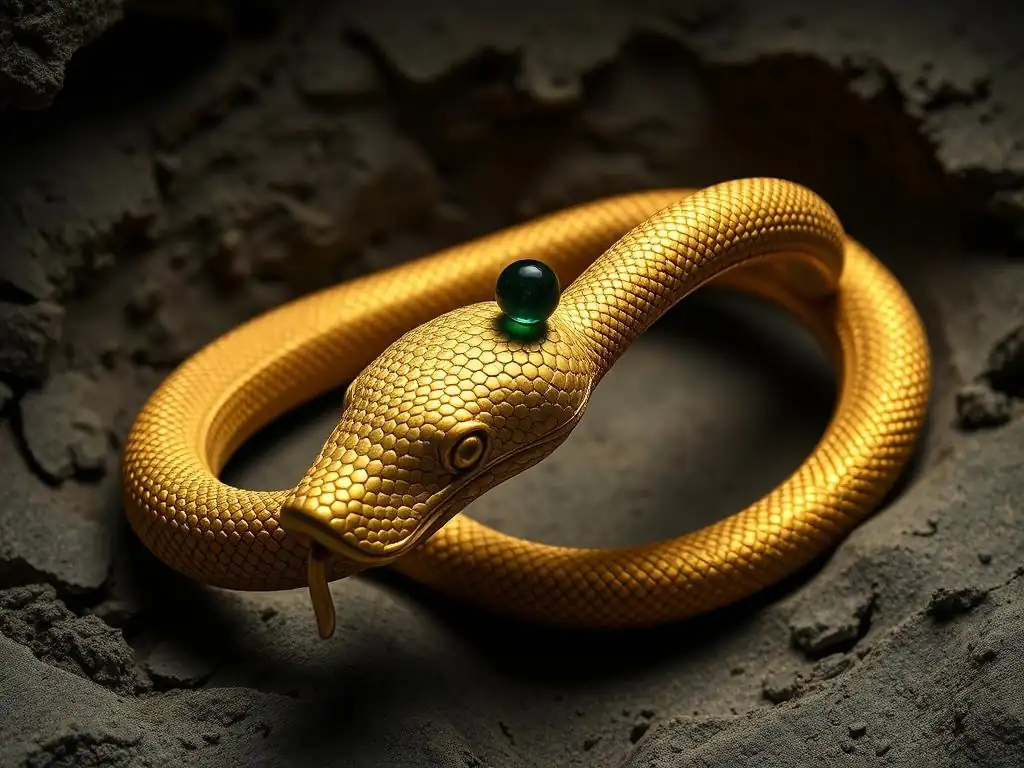
Bracelets and armlets were a prominent form of adornment in Pompeii, worn on the wrists, forearms, and sometimes even the upper arms. The most iconic design was the serpent bracelet, often made of gold, depicting a coiled snake with finely detailed scales and sometimes gem-set eyes. These pieces were highly prized and were clear Pompeii jewelry status symbols, as exemplified by the famous gold serpent bracelet found in the House of the Golden Bracelet. Snakes were symbols of fertility, protection, and renewal, adding a deeper layer of meaning to these luxurious items.
Other bracelets included simple cuffs made of gold, silver, or bronze, often engraved with patterns or inscriptions. Beaded bracelets, crafted from glass, amber, or precious stones, were also popular. The material, weight, and intricacy of the design directly correlated with the wearer's social standing. While simple bronze bands might be worn by laborers, wealthy women adorned their arms with multiple, elaborate gold bracelets, sometimes weighing hundreds of grams, signifying their considerable affluence.
Earrings: Styles and Materials Common in Pompeii
Earrings were a favored form of personal adornment for Pompeian women, with a diverse range of styles reflecting both individual taste and prevailing fashion trends. Hoop earrings, often simple gold or silver circles, were a classic and enduring style. Drop earrings were also very popular, featuring various elements suspended from a hook or loop, such as pearls, glass beads, or small gemstones like garnets or emeralds. Some elaborate designs featured multiple pendants or intricate filigree work.
Materials varied from simple bronze for everyday wear to highly polished gold, often embellished with pearls, glass paste, or precious stones for more formal occasions or wealthier individuals. Glass, in particular, was skillfully manipulated to mimic more expensive gemstones, allowing those of more modest means to partake in fashionable trends. The presence of earrings on female skeletons found within Pompeii suggests that these were commonly worn items, even during the city's final moments.
The Role of Jewelry in Pompeian Rituals and Beliefs
Amulets and Protective Charms: Warding Off Evil
Jewelry in Pompeii was not solely for aesthetic display or signaling status; it played a significant role in the daily rituals and beliefs of its inhabitants, particularly as protective charms. Amulets were widely worn by adults and children alike to ward off evil (maleficium) and bring good fortune. The most common amulet for children, especially boys, was the bulla, a locket containing apotropaic charms, worn until they came of age. Girls often wore lunulae, crescent moon-shaped pendants, believed to protect them from evil spirits and ensure fertility.
Beyond these well-known examples, various other symbols were incorporated into jewelry for protective purposes. Phallic symbols (fascinum) were considered potent against the evil eye, often appearing on rings, pendants, and even household objects. Eyes, knots, and specific animal motifs (like snakes or lions) were also believed to offer protection or bestow specific qualities upon the wearer. These pieces were deeply integrated into the superstitious fabric of Roman life, demonstrating a reliance on tangible objects to influence fate.
Jewelry as Offerings to the Gods
The dedication of jewelry as votive offerings was a common practice in Pompeii, reflecting a profound connection between personal wealth, piety, and the desire for divine favor. Individuals would offer valuable pieces of jewelry to deities at temples or domestic shrines (lararia) in exchange for prayers answered, good health, safe journeys, or successful ventures. These offerings could range from simple rings to elaborate necklaces, depending on the supplicant's wealth and the significance of the request.
Archaeological discoveries in and around Pompeii, including in sanctuaries and temple precincts, have occasionally yielded hoards of jewelry, indicating their deposition as religious gifts. For example, small, often broken, pieces of jewelry or miniature replicas have been found in areas associated with healing cults, suggesting offerings made in hopes of recovery from illness. This practice underscores that jewelry's value extended beyond the purely material, becoming a medium for communication with the divine and a way to demonstrate one's devotion.
Funerary Jewelry: Adorning the Deceased
The practice of burying the deceased with their personal effects, including jewelry, was a significant aspect of Roman funerary customs in Pompeii. This tradition reflected beliefs about the afterlife, where the departed might need their possessions in the underworld, or simply served as a final act of remembrance and honor from the living. While cremation was common, certain valuable items, particularly jewelry, were often interred with the ashes or placed directly on the body during inhumation.
Excavations of tombs and burial grounds outside the city walls have revealed skeletons adorned with rings, bracelets, and necklaces, providing poignant insights into the personal effects deemed important enough to accompany an individual into death. The type and value of the funerary jewelry could also reflect the social standing of the deceased, with wealthier individuals being interred with more elaborate pieces of Pompeii jewelry status symbols. These finds offer invaluable archaeological data, revealing not only fashion trends but also intimate details about Roman beliefs surrounding mortality and remembrance.
Case Studies: Analyzing Specific Pieces of Pompeii Jewelry
The "Serpent Bracelet" and its Cultural Significance
One of the most iconic pieces of Pompeii jewelry ever discovered is the "Serpent Bracelet," unearthed in the House of the Golden Bracelet (Regio VI, Insula 17). This magnificent gold armlet depicts a coiled snake, intricately detailed with scales and small emeralds for eyes. It weighs approximately 600 grams and was found on the arm of a woman, likely the mistress of the house, who was attempting to flee the eruption. The serpent motif was highly popular in Roman art and jewelry, symbolizing fertility, renewal, and protection, often associated with the household spirits (Lares) and good fortune.
The exceptional craftsmanship and sheer weight of this bracelet firmly establish it as a premier Pompeii jewelry status symbol, indicating the immense wealth and refined taste of its owner. Its discovery in situ provides a powerful narrative of the last moments of a Pompeian citizen, highlighting how deeply intertwined personal identity and valuable possessions were. This piece is a testament to the sophisticated goldsmithing techniques available in the 1st century AD and the cultural significance imbued in such luxurious adornments.
The "Gold Necklace with Locket from the House of the Menander" - Iconography and Ownership
The House of the Menander, a grand aristocratic residence, yielded a remarkable "Gold Necklace with Locket," a testament to the wealth and artistic preferences of its owners, likely the Poppaei family. This exquisite piece features a finely crafted gold chain from which suspends a locket, often adorned with intricate filigree or granulation. While specific details of its iconography can vary, such lockets frequently contained miniature portraits, locks of hair, or small protective charms, making them deeply personal and sentimental objects.
The quality of the gold, the delicate workmanship, and the context of its discovery within such a prominent household underscore its value as a significant piece of Pompeii jewelry. It represents not just a decorative item but a highly personal and potentially symbolic possession that would have been cherished and possibly passed down through generations. Such a necklace served as a clear Pompeii jewelry status symbol, reflecting the refined tastes and considerable resources of the elite family who owned the House of the Menander.
The Villa of the Mysteries, renowned for its Dionysian frescoes, also yielded examples of exquisite jewelry, including a "Pair of Gold Earrings" that exemplify the high level of craftsmanship available to the Pompeian elite. These earrings typically feature intricate designs, such as delicate filigree work, small pearls, or precious gemstones, showcasing the skill of Roman jewelers. The specific style might involve elaborate drop designs or intricate hoops, reflecting the sophisticated fashion trends favored by the villa's wealthy inhabitants.
The discovery of such finely crafted pieces within a grand suburban villa, associated with a prominent family like the Istacidii, reinforces the idea that jewelry was a critical component of elite self-presentation. These earrings were not merely adornments but statements of wealth, social standing, and access to the finest artisans and materials. They serve as tangible evidence of how personal adornment, specifically high-quality Pompeii jewelry, functioned as a powerful indicator of social context and the luxurious lifestyle enjoyed by the upper echelons of Pompeian society.
Conservation and Preservation of Pompeii Jewelry
Challenges in Preserving Delicate Artifacts
The preservation of ancient Pompeii jewelry presents numerous complex challenges for archaeologists and conservators. While the volcanic ash protected these artifacts from immediate destruction, exposure to the elements over nearly two millennia, followed by excavation, can cause significant degradation. Gold, being largely inert, often survives remarkably well, but silver is highly susceptible to tarnishing and corrosion, often appearing as a black crust. Bronze, an alloy of copper, suffers from various forms of corrosion, leading to instability and loss of detail.
Organic components like pearls, amber, and bone, as well as delicate glass elements, are even more fragile. They are prone to desiccation, cracking, and chemical alteration upon exposure to air, light, and humidity after centuries of burial. The very act of excavation, while necessary for discovery, can also introduce stresses that accelerate deterioration, making careful handling and immediate stabilization crucial for these delicate and invaluable Pompeii jewelry status symbols.
Modern Techniques in Jewelry Conservation
Modern conservation science employs a range of sophisticated techniques to stabilize, clean, and preserve Pompeii jewelry, ensuring its longevity for future generations. For metallic artifacts, methods include controlled mechanical cleaning using micro-tools to remove corrosion layers, often under a microscope, to reveal original details without damaging the surface. Chemical treatments are carefully applied to stabilize active corrosion products, preventing further degradation. Electrolytic reduction can be used for severely corroded silver.
For fragile organic materials and gemstones, conservators focus on creating stable microclimates, controlling temperature, humidity, and light levels within display cases or storage facilities. Laser cleaning, a non-contact method, is increasingly used for delicate surfaces to remove dirt and corrosion with minimal physical intervention. The application of protective coatings, such as microcrystalline waxes or acrylic resins, is sometimes used to provide a barrier against environmental factors, ensuring that these historical Pompeii jewelry pieces remain intact.
The Importance of Public Display and Education
The public display of Pompeii jewelry is paramount for its educational value and for fostering a deeper appreciation of Roman history and material culture. Museums, most notably the National Archaeological Museum of Naples (MANN), house extensive collections of these artifacts, making them accessible to millions of visitors annually. These exhibitions allow the public to witness firsthand the intricate craftsmanship, diverse materials, and sheer beauty of ancient Roman adornment, bringing the lives of Pompeii's inhabitants to vivid life.
Through curated displays, interactive exhibits, and detailed labeling, museums contextualize these pieces, explaining their significance as Pompeii jewelry status symbols, religious amulets, or simply items of everyday wear. This educational outreach helps to connect contemporary audiences with the past, illustrating how personal adornment has always played a fundamental role in human society. Furthermore, public interest and support generated by these displays are crucial for funding ongoing archaeological research and conservation efforts at Pompeii and beyond.
Conclusion: Pompeii Jewelry – More Than Just Ornamentation
Jewelry as a Reflection of Pompeian Life and Values
The vast array of jewelry discovered in Pompeii offers an unparalleled window into the multifaceted lives and values of its ancient inhabitants. Far from being mere ornaments, these pieces served as powerful indicators of social standing, economic prosperity, and personal identity. From the opulent gold serpent bracelet of an aristocratic woman, a clear Pompeii jewelry status symbol, to the simple bronze ring of a craftsman, each artifact tells a story of aspiration, daily life, and societal norms. They reflect a society where visible wealth and adherence to fashion trends were deeply intertwined with one's place in the community.
Furthermore, Pompeii's jewelry illuminates the city's extensive trade networks, its religious beliefs, and its aesthetic sensibilities. The presence of imported gemstones and foreign motifs speaks to Pompeii's role as a bustling port city, open to global influences. The widespread use of amulets and protective charms underscores the pervasive role of superstition and piety in daily life. Ultimately, these artifacts provide a tangible connection to the individuals who wore them, allowing us to reconstruct their world with remarkable clarity and detail.
Further Research and Ongoing Discoveries in Pompeii
Despite centuries of excavation, Pompeii continues to yield new discoveries, and further research into its material culture, including jewelry, remains a vibrant field. Significant portions of the city are still unexcavated, holding the promise of uncovering more insights into Roman life. Modern archaeological techniques, including advanced imaging, stratigraphic analysis, and interdisciplinary approaches, allow for more precise contextualization of finds than ever before.
Ongoing conservation efforts also contribute to our understanding, as new methods reveal previously hidden details on delicate pieces. Future studies may focus on micro-analysis of materials to trace their exact origins, or on a deeper understanding of workshop practices and the lives of the jewelers themselves. Each new piece of Pompeii jewelry unearthed or re-examined contributes to an ever-evolving narrative, enriching our knowledge of this extraordinary ancient city.
The Enduring Fascination with Pompeii's Lost Treasures
The enduring fascination with Pompeii's lost treasures, particularly its personal adornments, lies in their ability to connect us intimately with the individuals who wore them. These rings, necklaces, and bracelets are not just archaeological specimens; they are poignant reminders of lives abruptly halted, preserved in a moment of catastrophic beauty. They evoke a sense of immediacy, allowing us to imagine the wearers, their aspirations, their daily routines, and their final moments.
The exquisite craftsmanship and timeless beauty of many of these pieces continue to captivate audiences worldwide, drawing millions to museums and to the archaeological site itself. As tangible links to a vibrant past, Pompeii jewelry serves as powerful educational tools, illustrating the complexities of Roman society, the sophistication of its artistry, and the universal human desire for beauty, status, and protection. They are indeed more than just ornamentation; they are eloquent testaments to a civilization frozen in time, forever whispering stories of its people.
Frequently Asked Questions
### What role did jewelry play in Pompeian society according to ArchaeologyHub.org?
Jewelry in Pompeii was much more than mere decoration. It served as a powerful indicator of status, wealth, and evolving fashion trends within the society.
The types of materials used significantly impacted the perceived value. Jewelry crafted from gold, precious stones, and imported materials denoted higher status and wealth.
While specific examples are detailed on the site, generally, items like elaborate gold necklaces, intricate gemstone rings, and bracelets are strong indicators of high social standing.
### How did excavation techniques, as described on ArchaeologyHub.org, help archaeologists understand the context of jewelry found in Pompeii?
Careful excavation and documentation of the jewelry's location within homes and tombs help archaeologists understand the contextual significance and owner's social environment.
### According to ArchaeologyHub.org, what does the style and design of Pompeian jewelry reveal about the city's culture and influences?
The style reflects a blend of Roman, Greek, and Eastern influences, showcasing Pompeii's position as a vibrant and cosmopolitan center of trade and cultural exchange.
Final Reflection: Echoes of Pompeii's Elegance
The opulence and artistry of Pompeii's jewelry, as revealed in this exploration, are not merely relics of a bygone era, but vibrant testaments to the enduring human desire for self-expression and social distinction. The intricate designs and precious materials unearthed from the ashes offer a compelling glimpse into the lives, aspirations, and social hierarchies of a society frozen in time, reminding us that the pursuit of beauty and status is a timeless human endeavor.
The enduring fascination with Pompeii and its artifacts underscores the power of material culture to connect us to the past. The jewelry, in particular, speaks volumes, whispering stories of individual lives and societal values that resonate even today. The beauty of things must be that they end.
- Ursula K. Le Guin. This quote reminds us that the tragedy of Pompeii, paradoxically, preserved these beautiful objects, allowing us to contemplate their significance across millennia. The echoes of Pompeii's elegance continue to influence contemporary design and fashion, proving that true artistry transcends time.
As we reflect on the dazzling array of Pompeii jewelry and its significance as status symbols, let us consider the ways in which we, too, use adornment to express ourselves and navigate the complexities of our own social landscapes. What stories do our choices tell? What values do they reflect? Let the echoes of Pompeii inspire you to cultivate a deeper understanding of the messages you send to the world, and to choose adornments that truly reflect your authentic self.
Unveil Your Inner Pompeian: Adorn Yourself with Knowledge!
Thank you for delving into the fascinating world of Pompeian jewelry! We hope you've gained a new appreciation for how personal adornment reflected status and style in this ancient city. Ready to connect with the past? Here are a few ways to keep the exploration alive:
- Reimagine a piece of Pompeian jewelry: Let your creativity flow and sketch your version, considering what materials and symbols you would use to reflect your status and identity today.
- Delve deeper into the social history of adornment by researching how jewelry indicated status in other ancient cultures, like Egypt or Rome.
- Share this article with fellow history buffs and jewelry enthusiasts – spark a conversation about the enduring power of personal adornment!
What modern accessory best reflects your personality and status, and why? Share your thoughts in the comments below!