
The Enigmatic Loulan Beauty: An InDepth Archaeological Profile

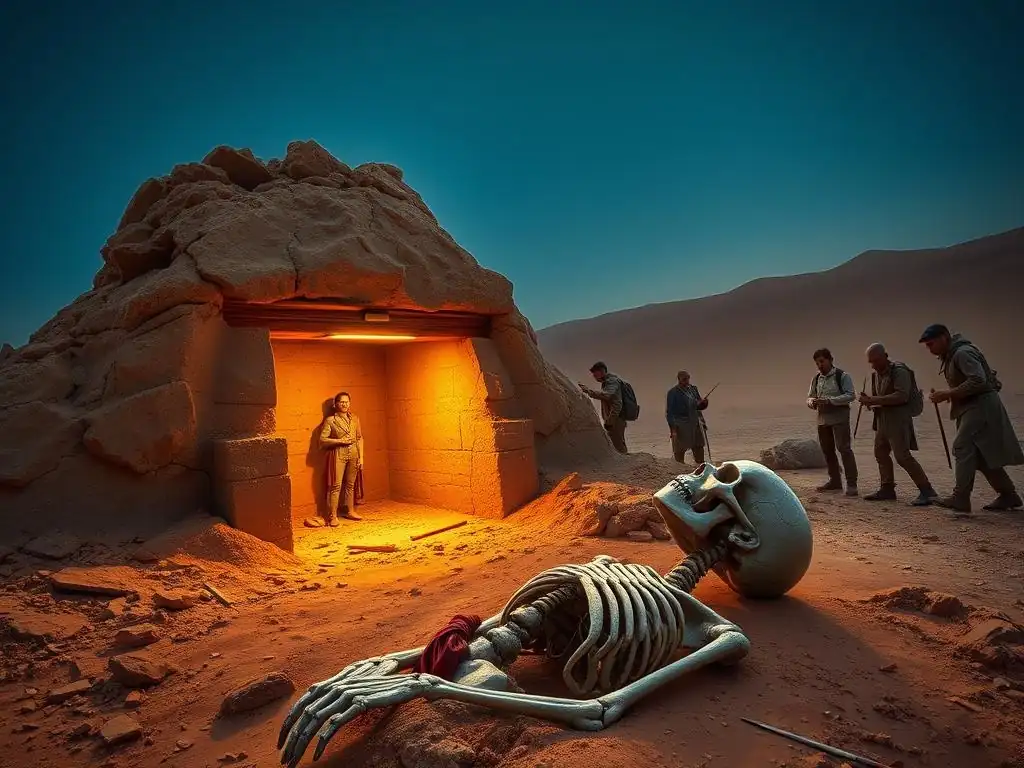
Welcome to ArchaeologyHub.org, your gateway to the fascinating world of ancient civilizations! Delve into the mysteries of the past, starting with our in-depth exploration of the Loulan Beauty archaeological profile. What secrets did this remarkably preserved mummy reveal about life along the Silk Road? Uncover the answers and embark on a journey through time, exploring the rich tapestry of history woven across the globe. Prepare to be captivated – the story of Loulan is just the beginning...
- Introduction to the Loulan Beauty and Her Significance
- Discovery and Initial Examination of the Loulan Beauty
- Physical Characteristics and Apparent Age of the Loulan Beauty
- Clothing, Burial Practices, and Cultural Context
- The Loulan Beauty and the Disappearance of Loulan
- Artifacts Discovered Alongside the Loulan Beauty
- Preservation and Display of the Loulan Beauty
- The Loulan Beauty's Legacy and Ongoing Research
- Conclusion: The Enduring Allure of the Loulan Beauty
-
Frequently Asked Questions
- ### Who was the Loulan Beauty, and why is she significant to archaeology?
- ### What methods were used to excavate and preserve the Loulan Beauty?
- ### What does the Loulan Beauty's archaeological profile reveal about her lifestyle and origins?
- ### Where can I find more detailed information about the Loulan Beauty on ArchaeologyHub.org?
- ### What impact has the discovery of the Loulan Beauty had on our understanding of ancient civilizations in the Tarim Basin?
- Final Reflection: Unveiling Echoes of the Past
- Unearth Your Inner Archaeologist!
Introduction to the Loulan Beauty and Her Significance
Unveiling the Mysteries of Loulan: A Silk Road Oasis
The ancient kingdom of Loulan, nestled within the vast and arid Lop Nur desert of the Tarim Basin in Xinjiang, China, stands as a testament to the thriving Silk Road trade routes of antiquity. For millennia, this strategic oasis city served as a crucial waypoint, facilitating the exchange of goods, cultures, and ideas between the East and West. Its geographical position, at the convergence of major trade arteries, endowed it with immense commercial and geopolitical importance, making it a vibrant center of activity.
However, despite its historical prominence, Loulan eventually succumbed to the unforgiving forces of nature and changing geopolitical landscapes, fading into obscurity. The city's abandonment, likely due to shifting river courses and encroaching desertification, left its ruins remarkably preserved by the extreme aridity. This natural preservation allowed for the rare survival of organic materials, including human remains, offering an unparalleled window into a lost civilization.
The Loulan Beauty: A Window into Ancient Xinjiang
Among the most astonishing discoveries from the Tarim Basin mummies, the Loulan Beauty stands out for her extraordinary state of preservation. Discovered in 1980, this naturally mummified woman offers an incredibly detailed glimpse into the physical appearance and daily life of people inhabiting ancient Xinjiang. Her delicate features, remarkably intact, provide direct visual evidence of the population that thrived in this challenging environment over 3,800 years ago.
Her discovery revolutionized the understanding of early populations in the region, challenging previous assumptions about the demographic history of Central Asia. The Loulan Beauty archaeological profile provides concrete data for anthropological studies, allowing researchers to examine facial structures, hair color, and even skin texture from a period long before written records offered such intimate details. She serves as a tangible link to a distant past, making abstract historical concepts profoundly personal and real.
The Archaeological Importance of the Loulan Mummy
The Loulan Beauty's archaeological significance extends far beyond her striking appearance. Her burial context, complete with remarkably preserved textiles, personal items, and even remnants of food, offers an invaluable dataset for archaeologists. The arid conditions of the Lop Nur desert naturally desiccated her body and accompanying artifacts, preventing decay and creating a time capsule of ancient material culture.
A comprehensive Loulan Beauty archaeological profile allows scientists to reconstruct not only individual characteristics but also broader societal patterns. The analysis of her clothing, for instance, reveals ancient weaving techniques and material sources, while the simple yet significant grave goods shed light on funerary practices and beliefs. Through meticulous study, the Loulan Beauty provides crucial evidence for understanding ancient migration patterns, cultural interactions along the early Silk Road, and the environmental history of the Tarim Basin.
Discovery and Initial Examination of the Loulan Beauty
The Excavation Site: Lop Nur Desert, Xinjiang
The Lop Nur desert, a vast and desolate region in the eastern Tarim Basin of Xinjiang, China, is renowned for its extreme aridity and harsh climatic conditions. This hyper-arid environment, characterized by minimal rainfall and intense evaporation, played a pivotal role in the natural mummification of the Loulan Beauty and other ancient inhabitants. The dry, saline soil and constant winds acted as natural desiccants, preserving organic remains with astonishing fidelity over millennia.
Archaeological work in this remote and challenging landscape is arduous, requiring specialized logistical support and resilience. The specific site where the Loulan Beauty was unearthed is known as the Qäwrighul (Gumugou) cemetery, located near the ancient Loulan city ruins. This cemetery, distinguished by its unique burial structures and the exceptional preservation of its occupants, has yielded a wealth of information about the early Bronze Age cultures of the Tarim Basin.
The Circumstances of the Loulan Beauty's Discovery
The Loulan Beauty was discovered in April 1980 by a team of Chinese archaeologists, led by the esteemed archaeologist Mu Shunying, during a survey expedition in the ancient Loulan region. The team stumbled upon a series of burial sites at the Qäwrighul cemetery, revealing numerous naturally mummified individuals. Among these, the Loulan Beauty immediately stood out due to her exceptional state of preservation and striking features.
She was found lying supine in a simple pit grave, covered with a reed mat and wrapped in wool fabric, a common burial practice for the period. The initial discovery sparked immense excitement within the archaeological community, as such an intact individual from over 3,800 years ago was an unprecedented find. The immediate realization of her scientific and historical significance prompted careful excavation and subsequent protection.
Initial Preservation Efforts and Scientific Analysis
Upon her discovery, immediate and meticulous preservation efforts were undertaken to ensure the integrity of the Loulan Beauty. The delicate nature of naturally mummified remains, highly susceptible to degradation upon exposure to modern atmospheric conditions, necessitated rapid and careful handling. She was gently extracted from her burial context and transported under controlled conditions to the Xinjiang Uygur Autonomous Region Museum in Urumqi.
Early scientific analyses commenced shortly after her arrival at the museum. These initial examinations included preliminary anthropological measurements, photographic documentation, and initial assessments of her age at death and any visible pathologies. These foundational studies were crucial in establishing the initial Loulan Beauty archaeological profile, paving the way for more advanced scientific techniques, such as radiocarbon dating of associated materials, which confirmed her antiquity to approximately 1800 BCE.
Physical Characteristics and Apparent Age of the Loulan Beauty
Preserved Physical Features: Facial Structure, Hair, and Height
The Loulan Beauty is renowned for the remarkable preservation of her physical features, providing an unparalleled direct visual record of an ancient individual. Her facial structure, characterized by a prominent nose, high cheekbones, and distinct brow ridges, is strikingly intact. Her hair, a light brown or reddish-brown hue, was found braided and coiled, revealing insights into ancient hairstyling practices.
Standing at an estimated height of approximately 1.55 to 1.60 meters (5 feet 1 inch to 5 feet 3 inches), she was relatively tall for a woman of her era. The desiccation process, due to the arid environment, preserved not only her skeletal structure but also a significant amount of soft tissue, including skin, fingernails, and even some internal organs. This exceptional preservation has enabled detailed anthropological studies, offering direct evidence of the appearance of Bronze Age inhabitants of the Tarim Basin.
Estimating the Age and Health of the Loulan Mummy at Death
Based on meticulous osteological analysis, particularly the study of her dental wear and the fusion of her bone epiphyses, archaeologists and forensic anthropologists have estimated the Loulan Beauty's age at death to be approximately 45 years. This age suggests a life lived to a relatively mature stage for ancient times, where average lifespans were considerably shorter than today.
Further examination of her remains has revealed insights into her health and lifestyle. While she showed no overt signs of severe disease, analysis of her bones indicated signs of physical stress, possibly related to the demands of daily life in an ancient agricultural or pastoral society. Such findings, while subtle, contribute significantly to her Loulan Beauty archaeological profile, painting a more complete picture of the challenges and resilience of ancient populations in this region.
Genetic Analysis and Ancestry of the Loulan Beauty
The advent of ancient DNA analysis has provided profound insights into the Loulan Beauty's genetic heritage. Scientists have successfully extracted and sequenced DNA from her remains, overcoming the challenges posed by ancient and degraded genetic material. These genetic studies are pivotal in understanding the migrations and intermingling of ancient populations.
The genetic analysis of the Loulan Beauty indicates a complex ancestry, suggesting a mix of both East Asian and West Eurasian genetic markers. This finding strongly supports the theory of significant population movements and interactions along the Silk Road millennia ago, long before the major historical periods of trade. Her genetic profile provides compelling evidence for the multi-ethnic composition of the Tarim Basin inhabitants during the Bronze Age, making her an indispensable component of the broader Loulan Beauty archaeological profile and the study of ancient human migration.
Clothing, Burial Practices, and Cultural Context
Analysis of the Loulan Beauty's Clothing and Textiles
The Loulan Beauty was found clothed in a remarkably well-preserved ensemble, offering invaluable insights into ancient textile production and fashion. She wore a conical felt or wool cap, a simple, knee-length woven wool cloak, and soft leather boots. The wool fabric, likely sourced from local domesticated sheep, demonstrates sophisticated weaving techniques, primarily a plain tabby weave, indicative of established textile craftsmanship.
The preservation of these garments is exceptional, allowing for detailed analysis of fiber types, yarn spinning methods, and dyeing techniques. While the colors have faded over millennia, remnants suggest natural dyes were used. The simplicity and practicality of her attire reflect the functional needs of life in a desert environment, yet the quality of the weave speaks to a developed skill set among the Loulan people.
Burial Rituals and Their Significance in Loulan Society
The burial practices observed with the Loulan Beauty provide crucial insights into the funerary rituals and spiritual beliefs of the ancient Loulan society. She was interred in a simple pit grave, a common practice at the Qäwrighul cemetery, lying supine and wrapped in a reed mat and wool shroud. This method of burial, while seemingly unelaborate, ensured direct contact with the arid soil, which facilitated the natural mummification process.
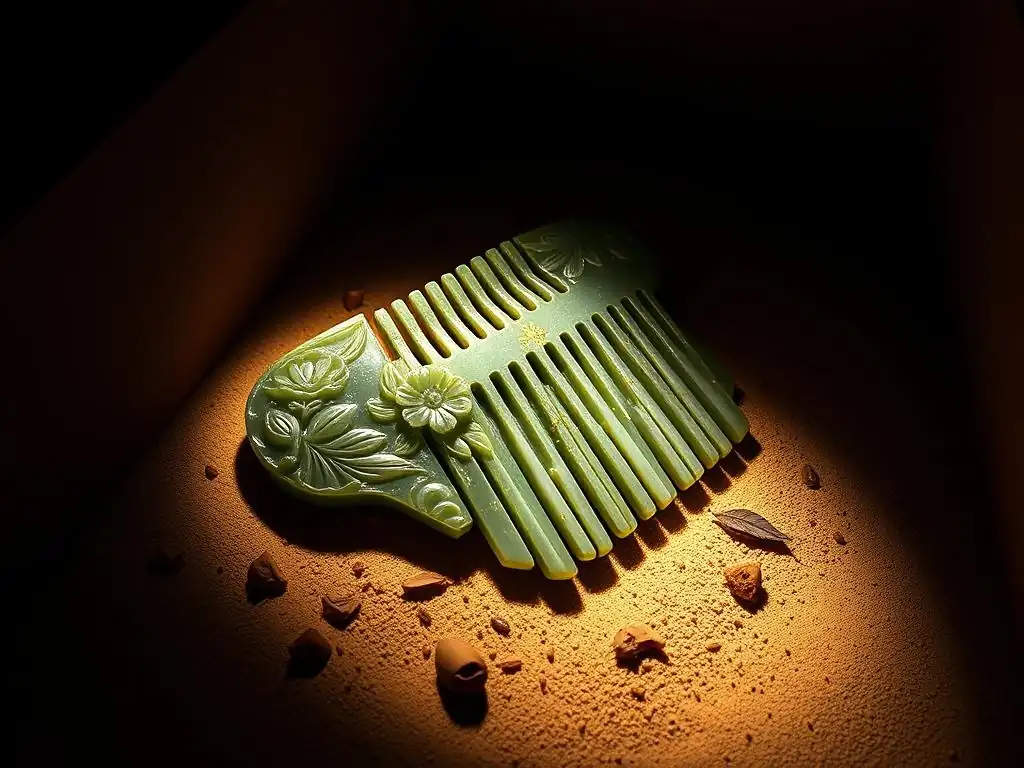
Accompanying her were a few modest grave goods, including a small woven basket containing wheat grains and a comb, suggesting provisions for an afterlife or personal items of significance. These humble offerings, typical of the Qäwrighul culture, indicate a belief system that honored the deceased and perhaps aimed to equip them for a journey beyond life. The consistency of these practices across the cemetery contributes to a detailed Loulan Beauty archaeological profile concerning ancient Loulan's societal structure and spiritual worldview.
Contextualizing the Loulan Beauty Within the Silk Road Trade
The Loulan Beauty, through her physical presence and the materials found with her, serves as a poignant illustration of the interconnectedness fostered by the early Silk Road. While her specific garments were made of local wool, the very existence of a settled, organized community capable of sophisticated textile production hints at the broader economic and cultural dynamics of the region. The Silk Road was not merely a conduit for luxury goods but also facilitated the exchange of agricultural practices, technologies, and ideas.
Her genetic profile, revealing mixed East Asian and West Eurasian ancestry, further reinforces Loulan's role as a meeting point for diverse populations. The presence of such an individual, whose heritage reflects a blend of influences, underscores the constant flow of people and cultural traits along these ancient arteries. The Loulan Beauty archaeological profile thus becomes a microcosm of the vast historical tapestry of the Silk Road, illustrating its profound impact on human development and interaction.
The Loulan Beauty and the Disappearance of Loulan
Theories Surrounding the Abandonment of Loulan
The decline and eventual abandonment of the ancient city of Loulan remain a subject of intense archaeological and historical inquiry, with several compelling theories proposed. The primary hypotheses center on a combination of environmental degradation and shifting geopolitical dynamics. As a vital oasis city, Loulan's survival was inextricably linked to its water sources, making it highly vulnerable to ecological changes.
Additionally, shifts in the major Silk Road trade routes, perhaps due to political instability or the emergence of alternative paths, could have significantly diminished Loulan's economic viability. The cumulative effect of these factors likely rendered the city unsustainable, compelling its inhabitants to migrate to more hospitable regions. The archaeological record, including the Loulan Beauty herself, provides clues to the environment and life that existed before this eventual decline.
Environmental Changes and Their Impact on Loulan's Decline
One of the most widely accepted theories for Loulan's abandonment points to catastrophic environmental changes, particularly the shifting course of the Tarim River. This vital river, fed by glacial meltwater, historically meandered across the Tarim Basin, nourishing oases like Loulan before emptying into the vast Lop Nur lake. Evidence suggests that the river's course shifted significantly, depriving Loulan of its essential water supply.
The drying up of Lop Nur, which was once a substantial freshwater lake, also contributed to the salinization of the surrounding soil, rendering the land infertile for agriculture. This progressive desertification and loss of water resources would have made sustained human habitation increasingly difficult, ultimately forcing the Loulan population to abandon their once-thriving city in search of more viable settlements.
The Loulan Beauty as a Symbol of a Lost Civilization
The Loulan Beauty, with her remarkably preserved form, has emerged as a powerful and poignant symbol of the lost Loulan civilization. She is not merely an archaeological specimen but a tangible human connection to a past that would otherwise remain largely abstract, known only through scattered ruins and ancient texts. Her existence brings the ancient Loulan kingdom to life, embodying the resilience and eventual fate of its people.
Her well-preserved state allows us to gaze upon an individual who lived and breathed in an ancient Silk Road oasis, offering a direct link to the human story of Loulan. In her, we see the face of a civilization that adapted, thrived, and ultimately succumbed to environmental pressures, making her Loulan Beauty archaeological profile a compelling narrative of human interaction with a dynamic landscape and a symbol of what can be lost to time.
Artifacts Discovered Alongside the Loulan Beauty
Pottery and Tools Found in the Burial Site
While the Loulan Beauty's burial was relatively simple compared to some other elaborate tombs, the few artifacts discovered alongside her provide valuable insights into the material culture of the Qäwrighul people. Among the most notable items was a small, finely woven basket, likely made from reeds or plant fibers. This basket, remarkably preserved by the arid conditions, contained grains of wheat, suggesting provisions for the afterlife or a staple food source.
Though no complex pottery vessels or metal tools were explicitly found within her immediate burial context, the presence of such a well-crafted basket indicates a mastery of local resources and weaving techniques. The simplicity of these accompanying items aligns with the known archaeological patterns of the Qäwrighul culture, which focused more on natural materials and practical objects rather than elaborate adornments in their funerary practices.
Jewelry and Ornaments Associated with the Loulan Mummy
The Loulan Beauty's personal adornments were modest, reflecting the utilitarian nature of her burial and the cultural practices of her time. Her most prominent "ornament" was the distinctive conical felt or wool cap that covered her head. While not traditionally considered jewelry, this cap represents a significant piece of personal attire and cultural identity.
Beyond this, specific accounts of elaborate jewelry like necklaces or earrings found directly on the Loulan Beauty herself are limited. The emphasis in her Loulan Beauty archaeological profile tends to be on her exceptional preservation and the practical items of clothing and the basket. However, other mummies from the broader Tarim Basin have yielded various simple ornaments made from shell, bone, or small beads, suggesting such items were part of the wider cultural repertoire.
Analyzing the Cultural Significance of the Accompanying Artifacts
The seemingly humble collection of artifacts found with the Loulan Beauty—her clothing, the reed mat, the basket of wheat, and a comb—collectively forms a significant cultural snapshot. These items, preserved for millennia, allow archaeologists to reconstruct aspects of daily life, subsistence strategies, and spiritual beliefs of the Qäwrighul people. The wheat grains, for example, confirm the practice of agriculture and potentially a belief in providing sustenance for the deceased in the afterlife.
The presence of domestic items like a comb underscores a focus on personal care and perhaps a continuation of mundane activities in the spiritual realm. While not rich in precious metals or exotic goods, the artifacts speak volumes about the self-sufficiency and resourcefulness of the Loulan inhabitants. They provide concrete evidence for their textile technology, dietary habits, and funerary customs, enriching the comprehensive Loulan Beauty archaeological profile and shedding light on the broader Bronze Age culture of the Tarim Basin.
Preservation and Display of the Loulan Beauty
Current Location and Preservation Methods
The Loulan Beauty is currently housed and meticulously preserved at the Xinjiang Uygur Autonomous Region Museum in Urumqi, China. Recognizing her immense scientific and cultural value, the museum has implemented state-of-the-art preservation methods to ensure her long-term stability and prevent any further degradation. This includes maintaining strictly controlled environmental conditions within her display case.
Her exhibition environment typically features precise regulation of temperature, humidity, and light levels, often within an inert gas atmosphere to minimize oxidation and microbial activity. These advanced conservation techniques are crucial for safeguarding such delicate organic remains, ensuring that the Loulan Beauty archaeological profile remains available for future generations of researchers and the public to study and appreciate.
Ethical Considerations in Displaying Human Remains
The public display of ancient human remains, such as the Loulan Beauty, is a complex issue fraught with ethical considerations. It necessitates a careful balance between the scientific imperative to study and learn from the past, the educational value for the public, and the profound respect due to the deceased. Debates often arise concerning the dignity of the individual, the potential for sensationalism, and the sensitivities of descendant communities, if any can be identified.
Museums and archaeological institutions worldwide engage in ongoing discussions to establish best practices for presenting such exhibits respectfully. For the Loulan Beauty, the focus is predominantly on her scientific significance and the invaluable insights she provides into ancient history, rather than on her as a mere spectacle. This approach aims to educate and inform, fostering a deeper understanding of human history while upholding ethical standards in the Loulan Beauty archaeological profile.
The Loulan Beauty's Impact on Public Understanding of Archaeology
The Loulan Beauty has captivated the public imagination globally, playing a significant role in raising awareness about the rich archaeological heritage of Xinjiang and the broader Silk Road. Her remarkably preserved features provide a compelling human face to ancient history, making abstract concepts of past civilizations tangible and relatable to a wide audience. Her story has been featured in documentaries, exhibitions, and popular science articles worldwide.
Through her prominent display and the narratives surrounding her discovery and analysis, the Loulan Beauty serves as an effective educational tool. She illustrates the processes of natural mummification, the painstaking work involved in archaeological excavation, and the scientific techniques used to unlock secrets from the past. Her enduring allure fosters public appreciation for archaeological research and the importance of preserving cultural heritage, deepening the public's understanding of the Loulan Beauty archaeological profile.
The Loulan Beauty's Legacy and Ongoing Research
The Continuing Significance of the Loulan Discovery
The discovery of the Loulan Beauty remains a cornerstone of Tarim Basin archaeology, continuing to yield significant insights into the prehistory of Central Asia. Her exceptional preservation, coupled with the detailed contextual information from her burial site, makes her an unparalleled resource for understanding early Bronze Age cultures. She fundamentally shifted perceptions about the demographics and interactions along the nascent Silk Road, demonstrating complex population movements millennia before commonly assumed.
Her presence continues to drive research into migration patterns, cultural exchange, and environmental adaptation in this critical geographical crossroads. The Loulan Beauty archaeological profile serves as a benchmark for comparative studies with other mummified remains from the Tarim Basin and wider Eurasia, constantly enriching our understanding of ancient human history and the intricate connections between diverse cultures.
Current Research and Future Directions in Loulan Archaeology
Modern archaeological science continues to push the boundaries of what can be learned from remains like the Loulan Beauty. Current research employs advanced non-invasive techniques such as high-resolution CT scans and X-rays to glean anatomical details without disturbing her delicate state. Furthermore, breakthroughs in ancient DNA sequencing allow for more detailed genetic analyses, potentially revealing more precise origins, familial relationships, and even ancient pathogens.
Future directions in Loulan archaeology will likely involve more extensive isotopic analysis to reconstruct diet, migration patterns, and climate conditions with greater precision. Comparative studies with newly discovered sites and improved dating techniques will refine the timeline of Loulan's occupation and decline. These ongoing and future studies will undoubtedly deepen the comprehensive Loulan Beauty archaeological profile, adding layers of nuance to her story and the civilization she represents.
The Loulan Beauty Archaeological Profile: A Summary of Key Findings
The Loulan Beauty archaeological profile synthesizes a wealth of information gleaned since her discovery in 1980. She is a naturally mummified woman, approximately 45 years old at the time of her death around 1800 BCE, found in the Qäwrighul cemetery near ancient Loulan. Her remarkable preservation includes light brown hair, distinct facial features, and a stature of about 1.55-1.60 meters. Genetic analysis indicates a mixed East Asian and West Eurasian ancestry, highlighting early Silk Road interactions.
Her simple burial, complete with a wool cloak, leather boots, and a basket of wheat, offers insights into Bronze Age textile technology, subsistence, and funerary practices. She symbolizes the vibrant yet ultimately lost civilization of Loulan, whose decline was likely due to environmental changes. Preserved at the Xinjiang Uygur Autonomous Region Museum, she continues to be a focal point for ethical display, public education, and cutting-edge scientific research, constantly expanding our understanding of ancient human history in the Tarim Basin.
Conclusion: The Enduring Allure of the Loulan Beauty
The Loulan Beauty stands as an unparalleled archaeological marvel, her millennia-old preservation offering a profound and direct connection to ancient human history. Her unique Loulan Beauty archaeological profile, meticulously constructed from physical examination, genetic analysis, and contextual artifact study, has unveiled critical insights into the lives, cultures, and migrations of people along the early Silk Road.
From her distinctive features to the simple textiles that adorned her, she embodies the resilience and rich heritage of a civilization that thrived in the challenging environment of the Tarim Basin. As research continues to advance, the Loulan Beauty will undoubtedly remain a central figure in our understanding of ancient East Asia, her enigmatic allure continuing to inspire fascination and scientific inquiry into the depths of our shared human past.
Frequently Asked Questions
### Who was the Loulan Beauty, and why is she significant to archaeology?
The Loulan Beauty was a remarkably well-preserved mummy discovered in the Tarim Basin, dating back approximately 3,800 years. Her significance lies in providing valuable insights into the ancient inhabitants of the region and their migration patterns.
### What methods were used to excavate and preserve the Loulan Beauty?
Archaeologists utilized meticulous excavation techniques to carefully unearth the remains. Preservation involved specialized temperature and humidity-controlled environments and advanced conservation methods to prevent further decay.
### What does the Loulan Beauty's archaeological profile reveal about her lifestyle and origins?
Her profile suggests a Caucasoid origin and a diet that included grains. The textiles found with her provide clues about ancient weaving techniques and trade routes of the time.
### Where can I find more detailed information about the Loulan Beauty on ArchaeologyHub.org?
You can explore the "Loulan Beauty archaeological profile" section on ArchaeologyHub.org. This section provides detailed timelines, artifact profiles, and interpretive analyses related to the discovery.
### What impact has the discovery of the Loulan Beauty had on our understanding of ancient civilizations in the Tarim Basin?
The discovery has significantly reshaped our understanding by providing direct evidence of early inhabitants and their interactions with other cultures. It has also sparked further research into migration patterns and ancient trade routes in the region.
Okay, here's a final reflection crafted to fit your article "The Enigmatic Loulan Beauty: An In-Depth Archaeological Profile," targeting the keyword "Loulan Beauty archaeological profile," and following your specified structure:
Final Reflection: Unveiling Echoes of the Past
The journey through the archaeological profile of the Loulan Beauty reminds us that history is not merely a collection of dates and events, but a tapestry woven with the lives of individuals. The enduring fascination with the Loulan Beauty stems from her ability to bridge the vast chasm of time, offering a tangible connection to a world that existed millennia ago.
Her preserved form allows us to glimpse not only her physical appearance but also, through scientific analysis, to infer aspects of her culture, diet, and even her final moments, making her more than just an artifact; she is a silent storyteller.
The discovery and subsequent study of the Loulan Beauty have profoundly impacted our understanding of ancient migration patterns, cultural exchange along the Silk Road, and the remarkable preservation capabilities of the Taklamakan Desert. This enduring figure serves as a potent symbol of the interconnectedness of human history and the power of archaeology to illuminate the lives of those who came before us. Archaeology is the search for fact, not truth. If it's truth you're interested in, Dr. Tyree's philosophy class is right down the hall.
- Indiana Jones, reminding us that while we strive for accuracy, complete understanding remains elusive.
As we conclude this exploration of the Loulan Beauty's archaeological profile, let us consider the profound implications of her existence. What stories do we leave behind for future generations? What echoes of our lives will resonate through the corridors of time? Take a moment to reflect on the legacy you are creating and strive to live a life that, like the Loulan Beauty, leaves an indelible mark on the world, inspiring curiosity and fostering a deeper appreciation for the shared human experience.
Unearth Your Inner Archaeologist!
Thanks for delving into the mystery of the Loulan Beauty! We hope you found her story as captivating as we do. Now, it's time to translate that fascination into action.
Here's how you can continue the journey:
- Embark on Your Own Research: Delve deeper into the Tarim Basin mummies and explore the scientific studies surrounding their genetic origins and preservation techniques.
- Share the Enigma: Spread the wonder of the Loulan Beauty by sharing this article with your friends and fellow history enthusiasts.
- Connect & Discuss: Join the ArchaeologyHub forum and discuss your theories about the Loulan Beauty's life, her people, and the mysteries that still shroud her existence.
What aspect of the Loulan Beauty's story resonates most with you, and what further questions does it inspire you to explore?