The Economic Powerhouse of Jorvik: Industry, Craftsmanship, and International Trade
🌍 Discover how Jorvik’s economic trade routes fueled its rise as a global hub, blending industry and craftsmanship. This vital network not…
Read article
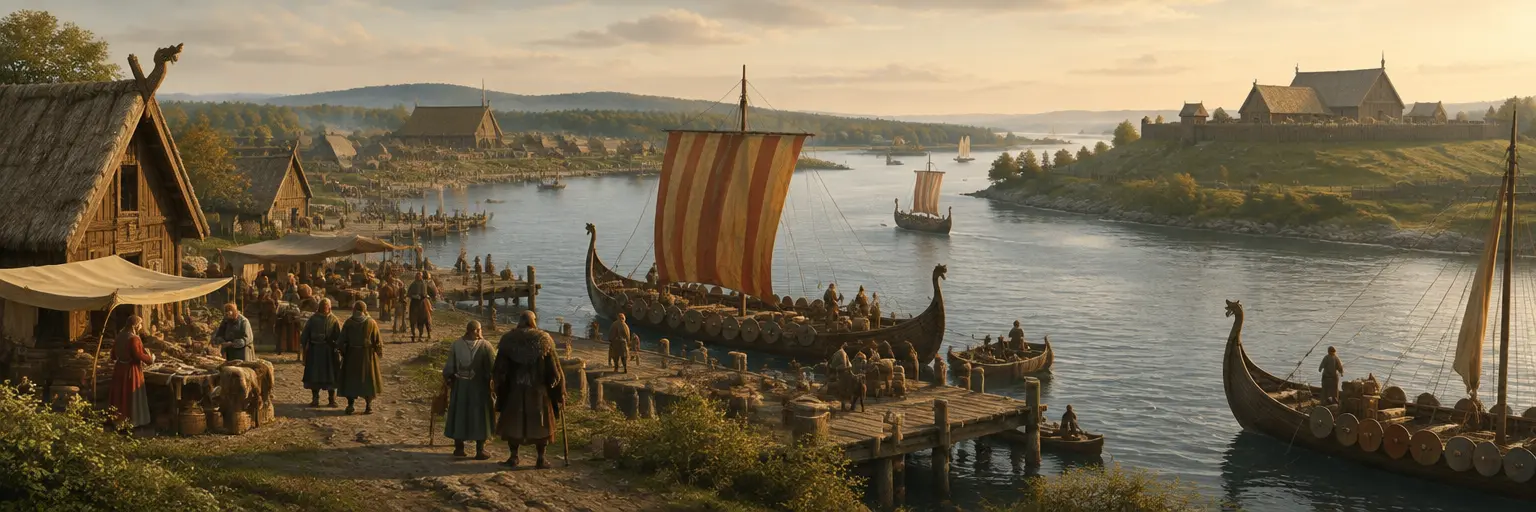
Discover the pulse of the Viking world through its bustling trading posts and settlements, where commerce, craft, and culture converged. From the strategic island hub of Birka in Sweden to the mighty border town of Hedeby in Denmark, and the vibrant urban heart of Jorvik (modern York), these sites reveal the far-reaching networks of Norse exploration and exchange. Unearth artifacts like silver dirhams, amber beads, and intricately carved bone combs that tell stories of global trade, everyday life, and societal structure. Explore excavation timelines, interactive artifact profiles, and interpretive analyses that bring these medieval marketplaces to life. Whether you’re a history enthusiast or a student of archaeology, this digital encyclopedia offers a deep dive into how these settlements shaped economies, influenced political power, and left an indelible mark on the Northern Hemisphere. Trace the evolution from early raiding outposts to sophisticated urban centers, and see how environmental and social factors fueled their rise—and eventual decline.
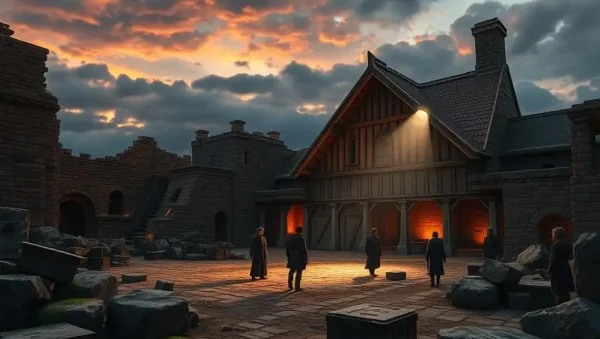
🌍 Discover how Jorvik’s economic trade routes fueled its rise as a global hub, blending industry and craftsmanship. This vital network not…
Read article
🌟 Discover how cutting-edge technologies are revolutionizing Birka Viking Age surveys, unveiling hidden secrets and enriching our understanding of this iconic Scandinavian…
Read articleStep into the bustling world of the Vikings, far beyond the raiding longships. This subcategory of Archaeological Sites (Global Coverage) on ArchaeologyHub.org focuses on the vibrant economic and urban centers of the Norse world: Birka, Hedeby, and Jorvik. These locations were not merely villages; they were international hubs connecting Scandinavia with the Byzantine Empire, the Islamic Caliphate, and the Carolingian Empire. Delve into the daily lives, craftsmanship, trade networks, and complex social structures that defined the Viking Age, all illuminated by meticulous archaeological research and artifact analysis. Here, you’ll find a rich, digital encyclopedia of find-spots, stratigraphy, and historical interpretation tailored for enthusiasts and scholars alike.
Birka, located on the island of Björkö in Sweden, was a fortified trading town flourishing from the 8th to the 10th centuries. Often called Sweden’s first city, it served as a critical node in the Baltic trading network, linking the Nordic world with the East. The archaeological remains, including ramparts, grave fields, and the harbor, reveal a society deeply engaged in long-distance commerce, producing glass beads, furs, and iron tools for export. Excavations have uncovered thousands of graves, offering a direct window into Viking funerary customs, social stratification, and personal adornment.
Expect to find detailed profiles of the “Birka Warrior” grave and the famous silver hoards that attest to its wealth. Our interpretive analyses highlight how urban life in Birka differed from rural farms, showing a reliance on trade and craft rather than agriculture. You’ll also explore the defensive Borgen ringfort, which protected this bustling emporium, and understand its eventual abandonment in the late 10th century, likely due to shifting trade routes and rising power of Sigtuna. This content emphasizes the site’s UNESCO World Heritage status and its role in connecting distant cultures.
Hedeby, near modern Schleswig in Germany, was the largest and most important Viking Age trading center in Northern Europe. Situated on the narrow Jutland peninsula, it controlled the overland route between the North Sea and the Baltic, making it a chokepoint for continental trade. Its crescent-shaped rampart, the Halbkreiswall, protected a town of dense occupation, with streets, plots, and workshops meticulously planned. Archaeological finds include boat timbers from the harbor, coins from Arabia, and pottery from the Rhineland, proving its vast reach. This was a melting pot of Slavic, Frisian, and Norse populations, creating a unique cosmopolitan culture.
In this section, you’ll uncover evidence of thriving crafts like comb making, metalworking, and textile production. We provide a deep dive into the famous Skuldelev ships and the harbor structures that facilitated heavy cargo loads. Learn about the violent history of Hedeby, from attacks by Harald Bluetooth to its final destruction in 1066, which marked the end of its economic dominance. Our analysis helps contextualize its role as a primary hub for the exchange of slaves, walrus ivory, and honey, all set against a backdrop of political and military tension.
Jorvik, the Viking name for York, England, stands out not just as a settlement but as a fully reconstructed urban experience. From the 9th to the 11th centuries, Jorvik was a bustling metropolis under Norse control, home to thousands of residents. The famous Coppergate excavations in the 1970s revealed waterlogged conditions that preserved organic materials like wood, leather, and textiles to an astonishing degree. This preservation allowed archaeologists to reconstruct everyday life—from latrines to workshops—with incredible fidelity, resulting in visitor centers that bring history to life. The site demonstrates how Vikings integrated into an Anglo-Saxon landscape, creating a hybrid culture.
Expect detailed coverage of the key findings, including the “Jorvik Viking Centre” and its realistic displays based on actual archaeological layers. We discuss evidence of craft production, such as the sharpening of blades, the dyeing of wool, and the manufacture of jewelry from amber and jet. Our interpretation also covers the political rise of Jorvik as a regional capital, its kings, and the social dynamics between Norse warriors and local inhabitants. This content not only describes the artifacts but also explains the processes of urban archaeology, making it a model case study for preservation and public engagement.
This section offers a side-by-side comparison of Birka, Hedeby, and Jorvik to highlight both their commonalities and distinct characters. You’ll see that all three were non-agricultural centers reliant on external food supply, yet they differed in governance, defense, and market orientation. While Birka was more insular and royally controlled, Hedeby was a more open monopoly post, and Jorvik evolved from a military base into a commercial hub with a robust market economy. The comparison draws on ceramic and coin evidence to track trade routes and economic fluctuations over time.
Our analysis reveals how each site adapted to its geopolitical environment, from the payment of danegeld in Jorvik to the tribute systems in Birka. You’ll gain insights into the urban planning differences: Hedeby’s grid-like street layout versus Birka’s more organic growth, and Jorvik’s high-density wooden buildings. We also examine the social hierarchy, using grave goods to show a wider gap between rich and poor in Birka compared to the more mixed graves in Hedeby. This comparative approach enhances your understanding of the Viking world as a network of specialized nodes, not just a collection of isolated settlements.
Beyond the excavation trenches, this subcategory explores how these sites are managed today for conservation and education. Birka and Hedeby are jointly inscribed as a UNESCO World Heritage Site, recognizing their universal value. We explain the ongoing challenges of preservation, including waterlogging management, climate change impacts on coastal sites, and the tension between tourism and archaeological integrity. Learn about modern techniques such as ground-penetrating radar and LiDAR that are reshaping our understanding without destructive digs, allowing for virtual reconstructions of areas not yet physically excavated.
We also cover the interpretive strategies used to engage the public, from live-action reenactments to digital immersive experiences. The legacy of these Viking settlements extends into modern cultural identity in Scandinavia and England, influencing place names, museums, and national narratives. Our content provides a critical look at how archaeological knowledge is translated into heritage, ensuring that the stories of Birka’s craftsmen, Hedeby’s merchants, and Jorvik’s families continue to inspire future generations. This focus on applied heritage makes the past tangible and relevant today.
The eighth to eleventh centuries AD is the core period, with Birka active from 750–975 AD, Hedeby from 808–1066 AD, and Jorvik from 866–1066 AD. This interval captures the height of Viking expansion, trade networks, and urbanization. Studying this window allows you to compare the development of these settlements as they rose, peaked, and eventually declined due to changing political and economic conditions.
Archaeologists identify trade goods through provenance analysis of materials like ceramic vessels, coinage, and precious stones. For instance, Islamic silver dirhams found at Birka indicate connections with the Caliphate. Additionally, specialized artifacts like glass beads or whalebone plaques suggest long-distance exchange. Soil flotation and residue analysis on pots can reveal imported foodstuffs, and the presence of weights and scales confirms commercial transactions.
No, fortifications varied significantly based on local threats and resources. Birka had a stone and timber rampart on a hill, Hedeby had a massive semicircular earthen wall with a palisade, and Jorvik relied on natural river defenses alongside a wooden “riverside” fort. These differences reflect responses to various attack strategies—from naval raids to land-based armies—and show that Viking defenses were adaptive and practical.
There is no single “most significant” artifact, but the Hedeby stone (a rune-inscribed boulder dating to the 9th century) is highly valuable as it names a king and a trading destination. Also notable is the Birka silver cup with high artistic craftsmanship, and from Jorvik, the 5-foot-long Coppergate helmet. Each artifact provides unique historical insight, but collectively they are far more informative.
Yes, all three sites are open to visitors. Birka and Hedeby have established archaeological open-air museums with interpretive trails and reconstructed dwellings. Jorvik has an indoor immersive reconstruction of the city on the exact excavation site. Visitors can see ongoing excavation areas at Birka and Hedeby, while Jorvik offers virtual tours. Always check seasonal times, as weather affects access to outdoor sites.







