Explore the Ancient Indus Valley: Mohenjo-Daro & Harappa
Welcome to ArchaeologyHub.org’s dedicated corner for the Indus Valley Civilization, focusing on the twin megacities of Mohenjo-Daro and Harappa. These South Asian sites represent the pinnacle of Bronze Age urban planning, trade, and social organization, predating ancient Egypt and Mesopotamia in sophisticated water management. Our curated resources here help you decode the mysteries of a script that remains undeciphered, explore grid-planned streets, and understand the daily lives of people who flourished along the Indus River over 4,500 years ago. Dive into expert analyses, artifact guides, and excavation timelines to enrich your archaeological journey.
🏛️ Urban Planning & Sanitation Mastery
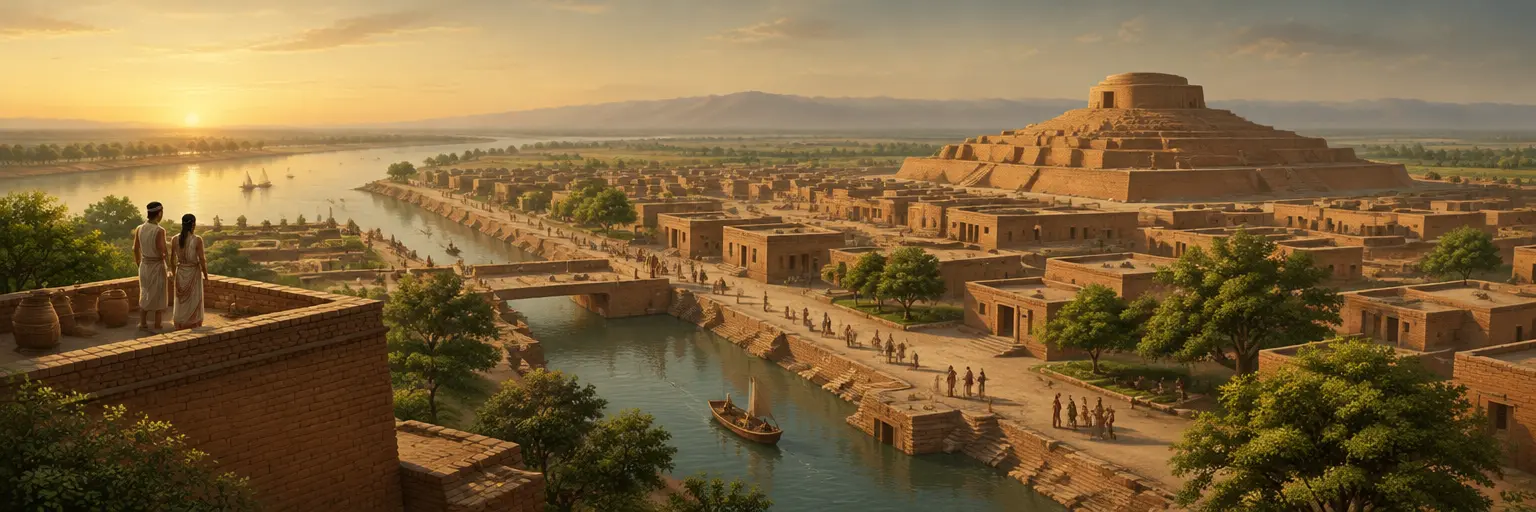
Discover how Mohenjo-Daro and Harappa demonstrated an unprecedented understanding of civic engineering. Unlike contemporary civilizations, these cities featured standardized fired-brick construction, a sophisticated drainage system with covered sewers, and public wells on nearly every street corner. The Great Bath at Mohenjo-Daro stands as a testament to ritual water use, featuring waterproof bitumen layers that still impress modern engineers. Our detailed guides break down the layout of citadels, lower towns, and the granary complexes, illustrating a society that prioritized hygiene and communal well-being over monumental palaces. Expect aerial reconstructions and excavation diagrams that reveal the precise alignment of streets and the advanced gravity-fed sewer outfalls.
For SEO-focused researchers, this section highlights keywords like Bronze Age sanitation, Indus urban grid, and Mohenjo-Daro architecture. We also connect these urban traits to the Harappan trade networks, showing how city planning facilitated economic efficiency. By exploring this facet, you will learn why many historians consider the Indus Valley the first “smart city” civilization, long before the term existed. Our interactive maps allow you to virtually walk through the ancient lanes, observing the uniform brick sizes and the strategic placement of public buildings, which indicate a strong central authority without evident royal burials or temples.
🔍 Deciphering the Undeciphered Indus Script
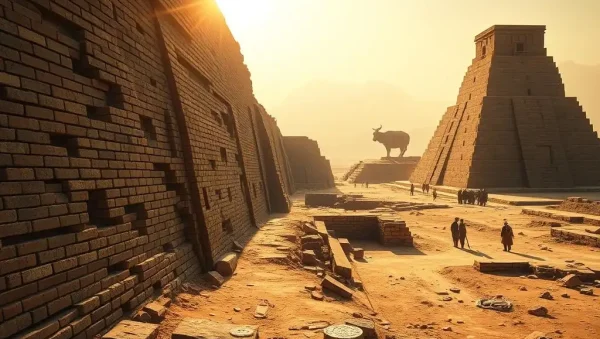
The Indus Valley script remains one of archaeology’s greatest puzzles. These seal inscriptions, found in abundance at both sites, consist of short sequences of symbols—often on steatite square seals with an animal motif like the unicorn or humped bull. In this subcategory, we analyze the ongoing debates about whether these symbols represent a full language or a proto-writing system used for administrative and trade records. You’ll explore the corpus of over 4,000 inscriptions, artifact contexts from excavation trenches, and comparative studies with Mesopotamian cuneiform to assess possible trade correspondences. We also feature the latest computational linguistic models attempting to identify syntactic patterns.
Expect curated profiles of steatite seals, pottery graffiti, and copper tablets, each with high-resolution imagery and interpretive notes. Our experts weigh in on theories suggesting that the script was used to mark ownership, religious motifs, or early prototypes of names. By engaging with this content, you’ll understand the profound challenge of decipherment and why breakthroughs remain elusive due to the lack of bilingual texts. We also cover the controversial claims of “Indus–Dravidian” links, presenting evidence for and against, and emphasize the importance of cautious, evidence-based archaeology. This part of the site is ideal for students, amateur epigraphers, and anyone fascinated by linguistic mysteries.
⚒️ Excavation History & Modern Techniques
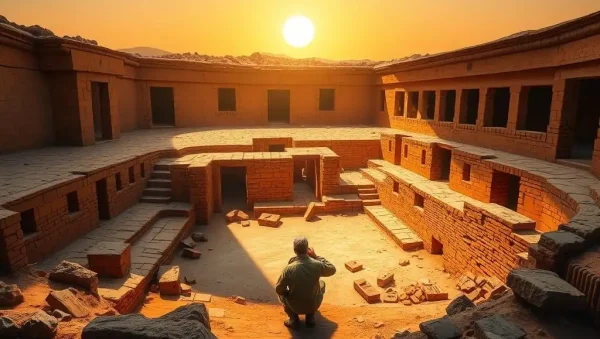
From the first accidental discovery by Charles Masson in 1826 to the systematic excavations by Sir John Marshall in the 1920s, and the later work by Mortimer Wheeler, this section chronicles the archaeological evolution at these sites. We provide a detailed timeline of key field seasons, the original stratigraphic methods, and the unfortunate loss of top levels due to brick robbing by early railway builders. More importantly, we highlight modern non-invasive techniques such as magnetometry, ground-penetrating radar, and drone-based Lidar that are reshaping our understanding of the sites’ true extents. Learn how recent excavations at Harappa have uncovered craft production areas, including bead-making workshops and copper smelting furnaces.
Our content emphasizes stratigraphy, radiocarbon dating protocols, and the conservation challenges posed by saline groundwater at Mohenjo-Daro. You will find interviews with current Pakistani archaeologists who are using 3D digital preservation to document fragile structures. We also discuss the impact of climate change, monsoon shifts, and agricultural expansion on site integrity. For those interested in public archaeology, we include educational outreach programs and ethical frameworks for repatriation and local community engagement. This subcategory ensures you grasp both the historical digging Sagas and the cutting-edge science protecting these UNESCO World Heritage sites today.
🏺 Artifacts, Trade & Daily Life
Step beyond the monumental architecture to inspect the material culture of the Indus people. We dedicate this section to the diverse artifacts recovered: terracotta figurines, including the iconic “dancing girl” bronze sculpture, turquoise and carnelian beads, shell bangles, and copper tools. Analyze the weights and measures system—based on a ratio of 16—which facilitated smooth commerce across the region. Our trade route maps show connections to Mesopotamia via Dilmun (Bahrain), revealing exports of cotton textiles, timber, and lapis lazuli. Daily life is reconstructed from faunal remains indicating domesticated cattle, water buffalo, and fish; we also explore the evidence of cereal cultivation (wheat, barley, millet) and the presence of public granaries.
Expect detailed artifact profiles with provenance data, manufacturing techniques, and wear-use analysis that informs social hierarchies. We examine the striking lack of weapons, suggesting a largely peaceful society, though we also present counterarguments about possible small-scale conflicts. The famous Great Bath and the Great Granary are given focused attention, comparing their functions with similar structures in Egypt and Mesopotamia. Through this lens, you’ll appreciate the sophistication of Harappan artisans, the reach of their commercial networks, and the everyday realities of cooking, clothing, and recreation. Our period-specific timelines help you contextualize each artifact within the Mature Harappan phase (2600–1900 BCE).
🌍 Decline, Legacy & Modern Relevance
The sudden decline of the Indus cities around 1900 BCE remains a hotly debated topic. In this section, we explore the leading hypotheses, including tectonic shifts altering river courses, extreme monsoon variability, and the potential of an ancient drought. We also analyze the evidence of increasing interment violence, the abandonment of standardized weights, and the de-urbanization into smaller rural settlements. Crucially, we compare these theories with recent paleoclimatic data from lake sediments and isotope analyses, presenting a nuanced, multi-causal interpretation. The legacy of Mohenjo-Daro and Harappa is not just archaeological; their urban ethos influences modern sustainable city designs, from drainage to waste management.
We examine how these cities became symbols of national identity and pride in South Asia, and their role in contemporary heritage tourism. Understand the ongoing conservation battles against salt erosion and monsoon damage, alongside international efforts like the “Save Mohenjo-Daro” projects. This subcategory also connects the decline to broader Bronze Age collapse patterns, using comparative case studies from Egypt and the Andes. By the end, you’ll see how these ancient urbanites modern relevance, offering lessons in resilience and adaptation. Our curated print-friendly PDFs provide summary charts of decline theories, key chronological milestones, and a bibliography for deeper academic exploration.
Frequently Asked Questions
What is the exact date of the Indus Valley Civilization at Mohenjo-Daro and Harappa?
The Mature Harappan phase typically dates from around 2600 BCE to 1900 BCE. However, earlier Kot Diji phases (3300–2600 BCE) show formative urban development. Radiocarbon dating and stratigraphy at both sites suggest peak occupation during the third millennium BCE, with gradual decline by 1700 BCE.
Why is the Indus script still undeciphered?
Because most inscriptions are extremely short (averaging 4-5 symbols) and there is no bilingual text like the Rosetta Stone. The absence of longer texts makes it difficult to identify grammar or syntax. Additionally, the corpus is small (about 4,000 examples) and the language underlying the symbols remains unknown, though some theories suggest Dravidian roots.
How did the Indus people manage their water supply without monsoon control?
They constructed hundreds of stepwells and large public wells that tapped into groundwater. The Great Bath at Mohenjo-Daro used a waterproof lining and drains, but most domestic water came from private and neighborhood wells. The city’s impressive drainage system ensured wastewater was efficiently removed, minimizing disease.
Were there any palaces or temples at Mohenjo-Daro and Harappa?
No monumental palaces or large-scale temples have been found. Instead, the largest structures are the Great Bath, the Great Granary, and the Assembly Hall. This suggests a more egalitarian society or a form of corporate governance, possibly with rule by elites or assemblies rather than divine kings.
What modern tools are used for new discoveries at these sites?
Modern teams use magnetometry to map subsurface walls, ground-penetrating radar for anomalies, and 3D photogrammetry for digital preservation. Satellite imagery and Lidar reveal the broader settlement landscape, while isotopic analysis of teeth and bones helps trace migration and dietary patterns.