The Role of North African Ports in the Annona Civica and Militaris
🌍 Explore how North African port trade routes played a crucial role in the dissemination of Annona Civica and Militaris artifacts, shaping…
Read article
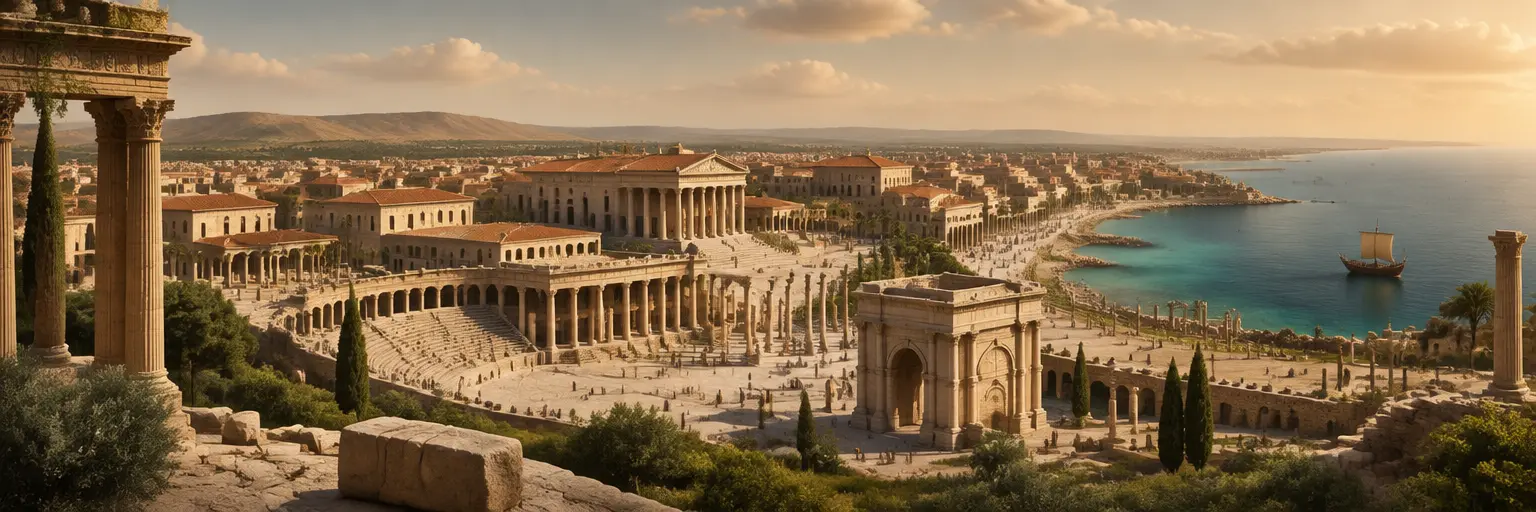
Explore the grandeur of Roman Provincial Sites through the lens of Leptis Magna and other spectacular North African cities, where imperial ambition met indigenous craftsmanship. This global archaeological coverage unveils how Rome’s frontier provinces became bustling hubs of trade, monumental architecture, and cultural fusion—from the sweeping Severan Forum to the intricate mosaics of Sabratha. Dive into excavation records, urban planning analyses, and artifact profiles that reveal how these cities thrived on the edge of empire, blending Punic, Berber, and Roman traditions. Perfect for history enthusiasts and travelers alike, this resource highlights key structures, preservation challenges, and the latest discoveries across sites like Volubilis, Dougga, and Cyrene. Uncover the political, economic, and religious life of these provincial centers, and see how their legacy shapes our understanding of Romanization in Africa. Whether you’re researching urban decay, triumphal arches, or amphitheater engineering, these detailed timelines and interpretive guides make ancient North Africa accessible and vivid.
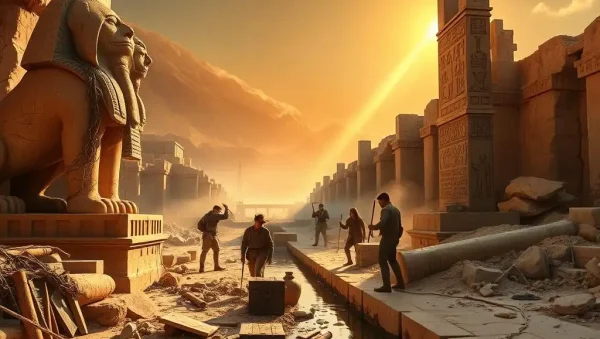
🌍 Explore how North African port trade routes played a crucial role in the dissemination of Annona Civica and Militaris artifacts, shaping…
Read article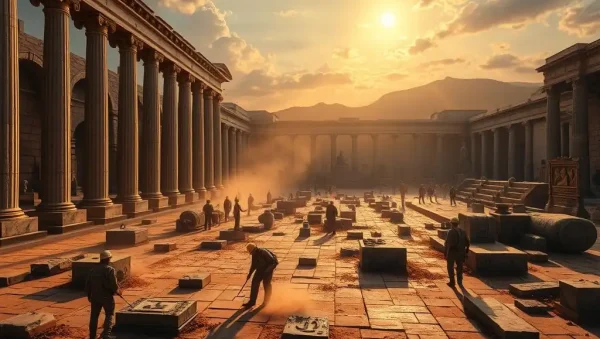
🌟 Timgad (Thamugadi) exemplifies innovative Timgad Roman urban planning, showcasing a meticulously designed Roman colonial city. This comprehensive archaeological study highlights its…
Read articleDive into the grandeur of Rome beyond the capital with our dedicated subcategory on Roman Provincial Sites, focusing on Leptis Magna and other vibrant North African cities. These archaeological treasures reveal how Roman urban planning, engineering, and culture merged with indigenous Punic and Berber traditions. Here, you’ll uncover detailed site guides, artifact analyses, and historical timelines that bring these sun-baked provinces to life, making it a cornerstone for anyone studying Roman expansion and provincial life.
Leptis Magna, located in modern-day Libya, stands as one of the best-preserved Roman cities outside Italy. This section explores its spectacular public monuments—the Severan Forum, the Basilica, and the monumental Arch of Septimius Severus—all showcasing the blend of Roman imperial style with local decorative motifs. You’ll learn why the city thrived as a key trading hub, exporting olive oil and wild animals to Rome, and how its harbor infrastructure reflected sophisticated engineering.
Beyond stones, we analyze the daily life of its inhabitants through mosaics, inscriptions, and domestic architecture. Discover how the city’s wealth from African grain funded its lavish buildings, and how its eventual decline in the 4th century AD mirrors broader shifts in the Roman world. Practical visitor guides and 3D reconstructions help you visualize the site today, while scholarly debates on its restoration provide a deeper appreciation for archaeological conservation in conflict zones.
While Leptis Magna dominates the spotlight, this subcategory equally highlights Sabratha and Oea (modern Tripoli). Sabratha’s theater—rebuilt in the 1930s—is a stunning example of Roman entertainment architecture, with its three-tiered stage backdrop intact. Here, we detail the city’s origins as a Punic trading post, its Romanization, and its role in the Africe Proconsularis province. Excavated houses, temples, and the necropolis reveal a vibrant commercial center that also became a Christian bishopric.
For Oea, though largely buried under modern Tripoli, we piece together its historical significance using Roman texts and limited excavations. You’ll understand how these three cities formed the “Tripolis” federation, a rare example of regional cooperation in the ancient world. Our interpretive maps and artifact profiles—from funerary altars to imported pottery—illustrate the connectivity of North African ports with Rome and beyond, offering a rich comparative study of urbanism under Roman rule.
No discussion of Roman North Africa is complete without Carthage, which was destroyed by Rome in 146 BC and later rebuilt as a major colony. This section traces that dramatic transformation, focusing on the rerouted Roman city grid, the Antonine Baths, and the extensive aqueduct system. You’ll explore how the city’s tophet & harbors were repurposed, and how Roman Carthage became a hub for Christian theology, home to figures like Tertullian and Augustine. Excavation reports from UNESCO’s campaigns are detailed here.
We also extend the lens to surrounding cities like Utica and Dougga, showing a landscape dotted with fertile villas and olive presses. The section emphasizes agricultural productivity that made North Africa Rome’s breadbasket, linking land tenure systems to provincial wealth. Through dated stratigraphies and coin finds, you’ll gain insight into how a conquered enemy was reinvented as a loyal, prosperous province—key for understanding Romanization processes beyond military conquest.
Roman North African cities were melting pots of religion, blending Punic gods like Baal Hammon with Roman deities, then later embracing Christianity. This subcategory’s section examines temple architecture dedicated to imperial cults, as well as syncretic sanctuaries at sites like Thugga (Dougga). You’ll discover how Mithraic shrines and Jewish communities coexisted, as evidenced by inscriptions and small finds. The transition to Christianity is traced through early basilicas, baptismal fonts, and the famous martyr cults of Carthage.
We provide detailed interpretations of mosaic floor symbolism that switched from pagan mythology to Christian iconography, sometimes within the same building. This helps readers understand how local elites used religion to negotiate their identity under Roman rule. Our curated bibliography and excavation summaries from North African missions (French, Italian, and British) ensure you can trace the evolution of religious landscapes, making this a valuable resource for students of late antiquity and religious studies.
Delve into the material culture that defined daily existence in these Roman provinces. This section highlights ceramic lamps, glassware, and amphorae that indicate trade networks stretching from Italy to the eastern Mediterranean. You’ll find detailed artifact catalogs with high-resolution images, including the distinctive African Red Slip ware that dominated Mediterranean markets for centuries. Each entry explains manufacturing techniques, decoration styles, and socio-economic implications, such as the rise of local oligarchies controlling pottery industries.
Beyond trade goods, we examine household items—from bronze mirrors to bone hairpins—to reconstruct family life in second-century cities like Leptis Magna. Epigraphic records on tombstones and public dedications provide names, occupations, and social hierarchies of freedmen, soldiers, and priests. By linking artifacts to specific excavation contexts, our analyses help you visualize how provincial Romans expressed status and cultural identity, enhancing your understanding of daily Roman habits away from the imperial center.
This subcategory offers a systematic look at the engineering marvels that supported urban life: aqueducts, sewers, roads, and defensive walls. For Leptis Magna, we detail the Hadrianic baths’ water supply and the intricate drainage systems that prevented flooding. For Sabratha, the street grid and its link to the harbor illustrate classic Roman planning, adapted to a narrow coastal terrace. Interactive GIS maps allow you to overlay ancient routes with modern topography, revealing how cities connected to inland farms and caravan trails.
We also explore public works projects funded by local elites, a practice called euergetism, which shaped civic pride and political competition. Inscriptions recording such donations are transcribed and translated here. Comparative analyses of urban layouts between these cities and Italian ones highlight regional variations—for instance, the greater emphasis on defensive walls in African cities due to desert threats. This infrastructural focus provides a solid foundation for understanding the functional aspects of Roman provincial life, from sanitation to military logistics.
The ideal time is from March to May or October to November, when temperatures range from 20–28°C (68–82°F). Summer months can exceed 40°C, making exploration uncomfortable. Winters are mild but occasional rains can muddy unexcavated areas. Always check travel advisories for Libya, as the site is remote and security conditions vary. Guided tours are recommended for safety and historical context.
Its wealth stemmed from fertile agricultural lands producing olive oil, grain, and wild animals for Roman games. The city also benefited from its deep natural harbor, facilitating trade in exotic goods like ivory and gold from sub-Saharan Africa via caravan routes. Emperor Septimius Severus, a native, lavishly funded public buildings, further boosting its infrastructure and prestige.
Yes, the theater’s backstage area retains several floor mosaics, mostly geometric and floral patterns dating to the 2nd–3rd centuries AD. Some depict mythological scenes like the Judgment of Paris, though heavily fragmented. The site’s museum houses many originals for protection, while in situ mosaics are under partial shelters. Restoration efforts continue to mitigate weathering.
Christianity gained traction through urban trade networks and Jewish diaspora communities. Leaders like Tertullian and Cyprian wrote in Latin at Carthage, solidifying doctrinal foundations. By the 3rd century, large basilicas and baptisteries appeared, as seen at Leptis Magna. Persecutions under emperors like Diocletian were severe but failed to stop growth, leading to a dominant Christian culture by the 5th century.
Very few remain above ground, but the Arch of Marcus Aurelius (2nd century AD) still stands in Tripoli’s old town. Excavations in the 1970s uncovered a Roman theater and baths, though most were reburied or destroyed. The National Museum houses artifacts from Oea, including sculptures and inscriptions. For a fuller provincial experience, visit Sabratha and Leptis Magna instead.







