Discover Ephesus: The Crown Jewel of Roman Asia Minor
Welcome to our dedicated subcategory on Roman Provincial Sites: Ephesus—a metropolis that once served as the capital of Roman Asia Minor and a bustling hub of commerce, religion, and culture. Here, ArchaeologyHub.org offers a deep, SEO-optimized exploration of this ancient city, from its marble-paved streets to its iconic Library of Celsus. Expect detailed timelines, artifact profiles, and interpretive analyses that bring Ephesus to life for historians, travelers, and students alike.
🏛️ The Urban Layout: A Model of Roman City Planning
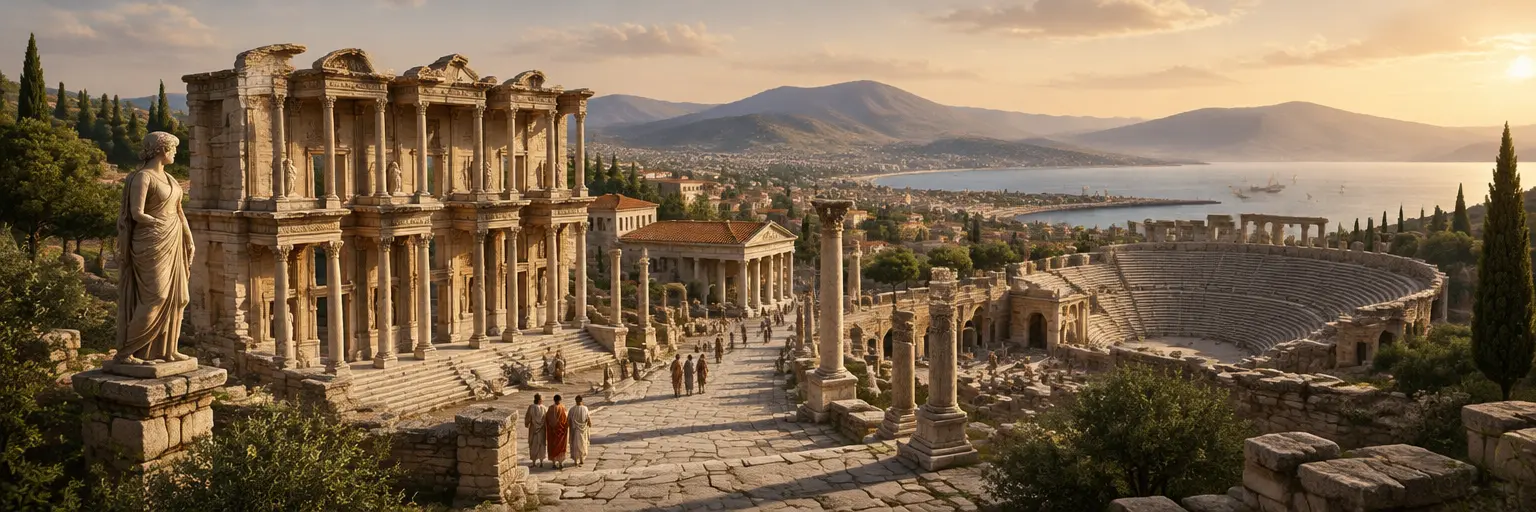
Ephesus exemplifies the grandeur of Roman urban design—a grid of streets, monumental gates, and public squares that mirrored Rome itself. The Arkadiane (Harbor Street) and the Curetes Street served as major arteries, lined with colonnades, shops, and statues of emperors. This section unravels how the city’s planners integrated topography with imperial ideology, creating a walkable, awe-inspiring civic center that still defines our modern understanding of provincial capital life.
Notably, the State Agora and the Commercial Agora showcase distinct functions—political and mercantile—revealing a sophisticated zoning system. Excavation grids and insulae (city blocks) demonstrate high-density habitation, while the Tetragonos Agora offers insights into slave trade and daily market dynamics. By examining drainage systems, fountains, and public latrines, we see how Roman engineering prioritized hygiene and spectacle, making Ephesus a benchmark for ancient urbanism.
📜 The Library of Celsus: Knowledge and Power
The Library of Celsus, built in 117 AD, is more than a repository—it is a political monument dedicated to Tiberius Julius Celsus Polemaeanus, a Roman senator. Its richly ornamented façade, with four female statues representing Sophia (Wisdom), Arete (Virtue), Ennoia (Intelligence), and Episteme (Knowledge), underscores the Roman ideal of cultured governance. This section provides a detailed architectural analysis, including its double-wall construction to protect scrolls from humidity—an early example of climate-controlled storage.
Our artifact profiles highlight the 9,000-scroll collection, mostly Greek literary and philosophical works, signaling Ephesus as a Hellenistic intellectual center beneath Roman rule. Inscriptions on the library’s steps record benefactions and civic honors, linking literacy to social status. For visitors, the recent reconstruction (1970s) offers a sensory experience of light and shadow, but our interpretive essays delve into how this building functioned as a tomb, a public monument, and a reading room—trifold purposes that make it unique in Roman architecture.
🛕 The Temple of Artemis: A Wonder of the Ancient World
Though today only one column stands, the Temple of Artemis was one of the Seven Wonders of the Ancient World, a colossal Ionic structure measuring 115 by 55 meters. Built around 550 BC and rebuilt after arson in 356 BC, it served as a major pilgrimage site, attracting worshippers, merchants, and bankers. Our subcategory covers its 127 columns, each 18 meters high, adorned with sculpted reliefs, and its role as a treasury, holding votive offerings and city funds.
This section examines the temple’s syncretic cult, where the local mother goddess Kybele merged with Greek Artemis, reflecting Anatolian-Roman religious fusion. Artifact profiles include coins bearing the temple’s image, votive figurines, and altars, revealing ritual practices like animal sacrifice and sacred prostitution (though debated). The Artemision also functioned as an asylum; criminals and refugees could claim sanctuary within its temenos. Through excavation reports, we trace its decline—sacked by Goths in 263 AD and later dismantled for building materials, yet its legacy persists in early Christian writings.
🏟️ The Great Theatre: Spectacle and Society
Capable of seating 25,000 spectators, the Great Theatre of Ephesus is a striking testament to Roman entertainment culture. Cut into the slope of Mount Pion, its cavea (seating area) offers perfect acoustics, and its stage building once rose three stories, decorated with columns and reliefs. This subcategory explores gladiator combats, theatrical performances, and political assemblies held here, including the famous riot instigated by silversmiths against Saint Paul (Acts 19).
Our interpretive analysis focuses on how the theatre mirrored social hierarchies: front rows for elites, upper tiers for commoners, and a separate section for women (in certain periods). The vomitoria (entrance tunnels) allowed efficient crowd flow, a marvel of Roman crowd management. Recent conservation projects, detailed in our timelines, have restored the stage wall, aiding modern performances. For researchers, inscriptions on seats document local guilds—such as fishermen, silversmiths, and weavers—providing rare evidence of occupational identity in Roman Asia.
🏡 Terrace Houses: Elite Living and Roman Domesticity
The Terrace Houses (or “Slope Houses”) on Curetes Street are luxurious multi-story residences of Ephesus’ wealthiest citizens, often called the “houses of the rich.” These aristocratic villas, built into the hillside, boast intricate mosaic floors, frescoed walls depicting mythological scenes, and private baths with underfloor heating (hypocausts). This section offers a room-by-room guide—from peristyle courtyards to triclinia (dining rooms)—demonstrating Roman otium (leisure) and negotium (business) practices in a provincial setting.
Our artifact profiles include tableware (late Roman Red Slip Ware), glassware, and iron tools, while faunal remains reveal elite diets high in meat and seafood. Crucially, these houses preserve wall inscriptions—graffiti and painted notices—offering unfiltered voices: lovers’ notes, complaints, and slave records. The abandonment in the 7th century due to earthquakes preserved this snapshot, making the Terrace Houses a top priority for conservation. Through interactive 3D reconstructions on our site, you can virtually walk through their marble-tiled courtyards, imagining daily life under Roman rule.
Frequently Asked Questions
What is the best time of year to visit the Roman Forum in Rome?
The ideal period is from April to June or September to October, when temperatures are mild and crowds are thinner. Summer (July–August) is hot and packed, while winter rain can make marble surfaces slippery. Early morning visits are recommended for softer light and fewer tour groups, allowing better photos and a more reflective experience of the ancient ruins.
Are the Ephesus Terrace Houses included in the standard admission ticket?
No, the Terrace Houses require a separate ticketed entry (currently around 40 Turkish Lira, separate from the main site fee). This premium access protects the delicate mosaics and frescoes, limiting visitor numbers. We advise purchasing the combined “Ephesus Multi-Pass” at the southern entrance to save time, and note that guided tours often include this area; confirm with your operator.
How long does it take to explore the full site of Ephesus?
Most visitors need approx. 3–4 hours to cover key highlights—Library of Celsus, Great Theatre, and Terrace Houses—without rushing. History enthusiasts might allocate a full day, especially if using our audio guides or interpretive panels. Add 30 minutes for the adjacent Museum of Ephesus (in Selçuk) to see portable artifacts like statues and coins.
Were women allowed to run businesses in Roman Ephesus?
Yes! Despite legal restrictions in other Roman cities, Ephesus has epigraphic evidence of female patrons and benefactors, such as a woman named Velia Procula who funded a public building. Women could own property and sometimes operate taverns or textile workshops, though they rarely held magistracies. Our artifact profiles include a stele documenting a female coppersmith, challenging older male-centric narratives.
What happened to the Temple of Artemis after its destruction?
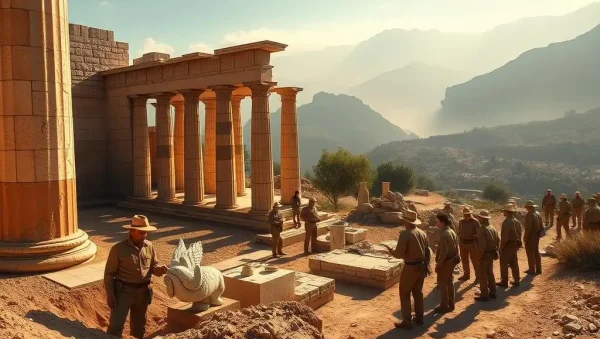
After the Gothic raid in 263 AD, the temple gradually fell into ruin, and its marble was quarried for building materials—the stones were used in the construction of Hagia Sophia in Constantinople and local churches. By the 5th century, only the foundation remained. In the 1860s, British archaeologist John Turtle Wood rediscovered the site, but today only one reconstructed column stands, a poignant symbol of antiquity’s impermanence.