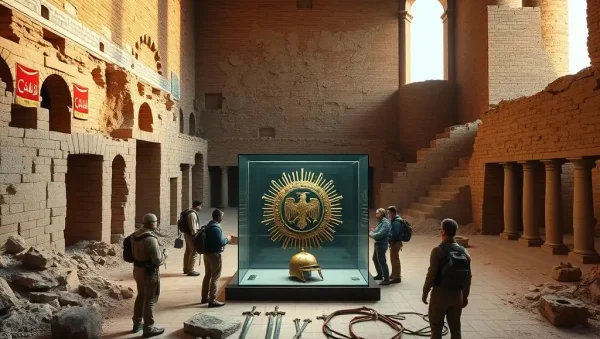
Weapons and Armor from Achaemenid Sites: The Military Aspect of Palace Life
🔍 Explore the military life of the Achaemenid Empire through detailed weapons and armor analysis from ancient sites, revealing insights into palace…
Read article
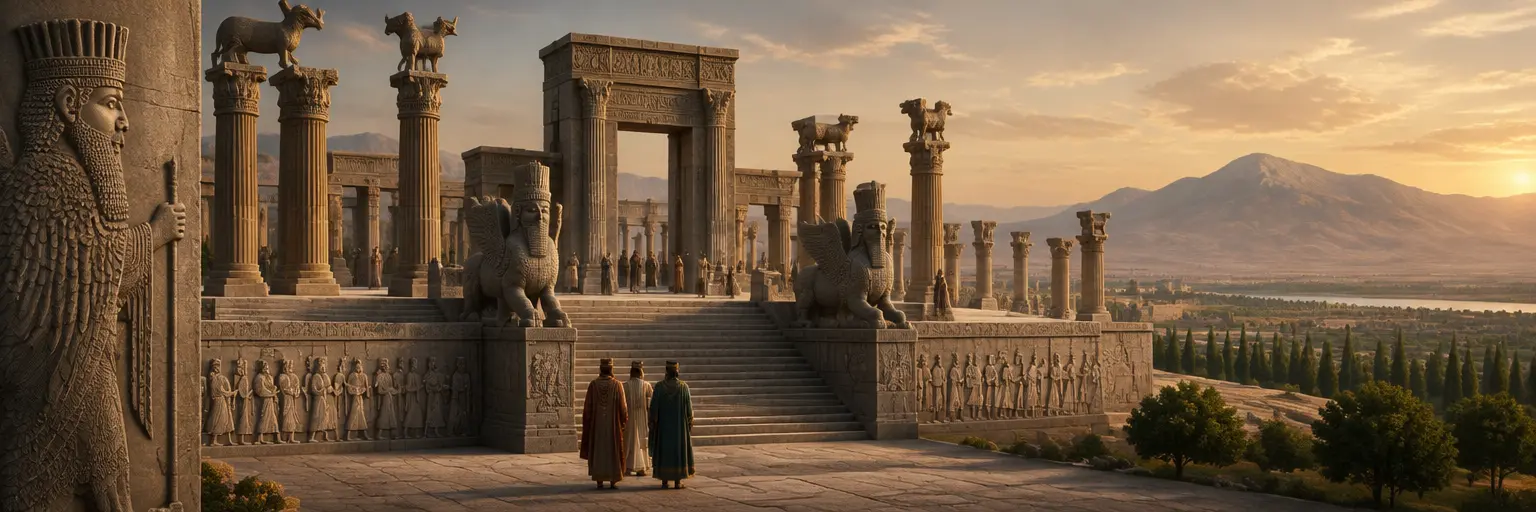
Discover the awe-inspiring legacy of the Achaemenid Empire through our deep dive into Persepolis and its majestic palaces—a cornerstone of ancient Persian architecture and one of the world’s most significant archaeological treasures. Built by Darius I around 515 BCE, this ceremonial capital showcases monumental staircases, towering columns, and exquisite reliefs that narrate the empire’s cultural and political might. Uncover how modern excavations reveal the site’s complex engineering, from the Apadana Palace’s audience halls to the intricate drainage systems, while our interpretive analyses illuminate the symbolism behind each carved figure and inscription. Whether you’re a student of ancient civilizations or a curious traveler, this resource offers timelines, artifact profiles, and scholarly insights into a city that was burned by Alexander the Great yet still resonates with glory. Perfect for history enthusiasts and archaeology fans, our coverage connects Persepolis to the broader Achaemenid landscape, including Susa and Pasargadae, enhancing your understanding of ancient Near Eastern power and artistry.
Welcome to ArchaeologyHub.org’s dedicated hub for the ceremonial capital of the ancient Achaemenid Empire. This subcategory dives deep into the stone reliefs, towering columns, and royal inscriptions of Persepolis, alongside the lesser-known but equally majestic palaces at Susa, Pasargadae, and Ecbatana. Here, you’ll uncover the architectural genius, administrative sophistication, and cultural fusion that defined the world’s first true superpower, spanning from Cyrus the Great to Darius I and beyond. Whether you are a student, a traveler, or a seasoned historian, this resource maps the ruins to their living history.
Discover how Darius I and his successors transformed a remote rocky plateau into a dazzling display of imperial power. The grand double staircase, the imposing Gate of All Nations, and the sprawling Apadana palace are more than just stones—they are a carefully orchestrated political statement. Our analysis breaks down the orientation, drainage systems, and the use of cedar, gold, and lapis lazuli, revealing how engineering met artistry to create a city that still awes visitors 2,500 years later.
You will also learn about the function of the great hypostyle halls—where 10,000 guests could dine—and how the reliefs on the eastern stairways depict delegations from 23 nations bringing tribute. This is not merely archaeology; it’s a window into ancient diplomacy, logistics, and the daily rhythm of a royal court, where every column and carving served to legitimize the king’s divine mandate.
While Persepolis steals the spotlight, the Achaemenid empire boasted multiple capitals. At Susa, Darius built a lavish palace using materials from across the realm—Babylonian bricks, Lydian gold, and Bactrian cedar—as detailed in his own foundation charter. We guide you through the excavated layout of Susa’s Royal City, including the famous frieze of the Immortals and the audience hall of the Apadana, which rivaled Persepolis in scale.
Further north, explore Pasargadae, the first capital founded by Cyrus the Great, with its serene garden and the simple yet profound tomb of Cyrus. Our pages then take you to Ecbatana (modern Hamadan), once the summer retreat of the kings, where recent excavations have uncovered colossal column bases and royal mansions. Comparative plans and artifact profiles will help you visualize how these centers interlocked administratively.
The walls of Persepolis are covered in cuneiform texts in Old Persian, Elamite, and Babylonian—a trilingual broadcast of royal ideology. This section deciphers the key inscriptions, such as the famous “I am Darius, the Great King, King of Kings” proclamation, and explains how these texts were used to communicate with a multi-ethnic population. We also analyze the iconography of the reliefs, from the lion-and-bull combat (symbolizing the change of seasons) to the king enthroned with the royal hero, decoding every gesture and garment.
Expect detailed high-resolution descriptions of the relief panels at the Hundred-Column Hall and the enigmatic “Treasury Relief” motifs. You’ll learn how stylistic differences between the palaces reflect regional workshops and changing tastes under Xerxes and Artaxerxes, giving you a visual grammar to read these ancient royal narratives on your own visit or study.
Persepolis’ rediscovery began with the travels of the Venetian Ambrogio Bembo in the 17th century and continued with early 20th-century expeditions by Ernst Herzfeld and Erich Schmidt, who pioneered aerial photography from a biplane. This subcategory chronicles each major campaign, including the Iranian restoration efforts of the 1960s and 1970s, and the damage inflicted during the 1971 Imperial Celebration that contradicted modern preservation ethics.
Today, archaeologists use ground-penetrating radar, LiDAR, and 3D scanning to map unexcavated areas without disturbing the fragile remains. We highlight current debates, such as the true function of the mysterious “southern gate” and whether Persepolis was primarily ceremonial or also a working treasury. By following this history, you will appreciate how our knowledge evolves with technology and politics.
The artistic influence of the Achaemenid palaces did not die with Alexander’s burning of Persepolis in 330 BCE. This section traces how Sasanian rock reliefs, Islamic architecture, and even modern Iranian national identity have drawn upon the imagery of the “city of Persians.” We discuss the Nachleben (afterlife) of motifs like the winged sun disk and the lotus bud, which appear in later Persian carpets, miniatures, and even contemporary film.
You will also encounter critical discussions about site preservation versus tourism pressure—how modern visitors, climate change, and agricultural encroachment threaten the fragile bas-reliefs. Our interpretive essays explore what the palaces mean today for the Iranian diaspora and world heritage, ensuring you leave with a richer sense of why these ruins remain emotionally charged monuments to a lost golden age.
Planning a trip to Iran or exploring from your desk? This practical section provides a field-walker’s guide to the Persepolis complex, including ticket info, best hours for photography, and the most intact reliefs to prioritize if you have limited time. We also recommend route suggestions that combine Persepolis with Naqsh-e Rustam (the royal necropolis) and the adjacent site of Istakhr for a full day’s immersion.
For those who cannot travel, we feature curated links to 3D models of the Apadana, official museum collections, and a series of audio guides you can download. Our visitor tips include how to read the weather patterns, where to hire local guides, and the cultural etiquette for entering sacred spaces—making this the only resource you need before stepping into the ruins of the Achaemenid world.
The optimal period is from late October to early April, when temperatures are mild (15-25°C) and the sun is not scorching. Summer months can be brutally hot (40°C+), making the open-air site exhausting. Early mornings, especially just after opening, offer soft light for photography and fewer crowds, allowing you to appreciate the sharpness of the reliefs without tourist congestion.
Plan at least 4 to 6 hours for a thorough visit. This includes walking the grand staircase, exploring the Apadana and Hundred-Column Halls, and climbing the eastern fortification to view the site from above. If you wish to see the nearby Naqsh-e Rustam tombs and the museum, allocate a full day (8-10 hours). Rushing in 2 hours only covers the main highlights superficially.
Historical sources agree that Alexander’s troops burned the buildings in 330 BCE, likely as an act of revenge for the Persian invasion of Greece. However, archaeology shows the destruction was selective—some columns remain unburnt, and administrative tablets survived, indicating not all structures were consumed. The fire preserved clay tablets, ironically providing us with the empire’s financial records, which aid modern research.
Most reliefs on the eastern stairways and Apadana are original, though they suffered from weathering and past removal attempts (some fragments are in museums in Chicago, Berlin, and Tehran). Others, especially on the southern stairways, have been partially reconstructed by Iranian teams using salvaged blocks. Always check our artifact profile labels for exact provenance, as some “complete” scenes are modern anastylosis.
Yes, personal photography and video without flash are generally permitted. However, using tripods, drones, or commercial filming requires a special permit from the Cultural Heritage Organization and often an extra fee. Be respectful of signs in the main halls, as some fragile reliefs are roped off for preservation, and avoid touching the stone to protect the patina for future generations.







