Explore Polynesian Marae Complexes: The Sacred Heart of Taputapuatea
Welcome to ArchaeologyHub.org’s deep dive into Oceanian Sites: Polynesian Marae Complexes (Taputapuatea), a cornerstone of our global archaeological coverage. This subcategory illuminates the spiritual, political, and social engineering of Polynesian societies through their most sacred architecture—the marae. Focusing on the UNESCO-listed Taputapuatea on Raiatea, you’ll uncover how these stone courtyards functioned as living maps of genealogy, navigation, and cosmic order. Perfect for students, travelers, and history enthusiasts, this guide synthesizes excavation reports, oral traditions, and material culture analysis to reveal why Taputapuatea remains the “cradle of Polynesia” and a pivotal node in the vast Pacific diaspora.
🗿 Architectural Anatomy: Unpacking the Marae’s Sacred Layout
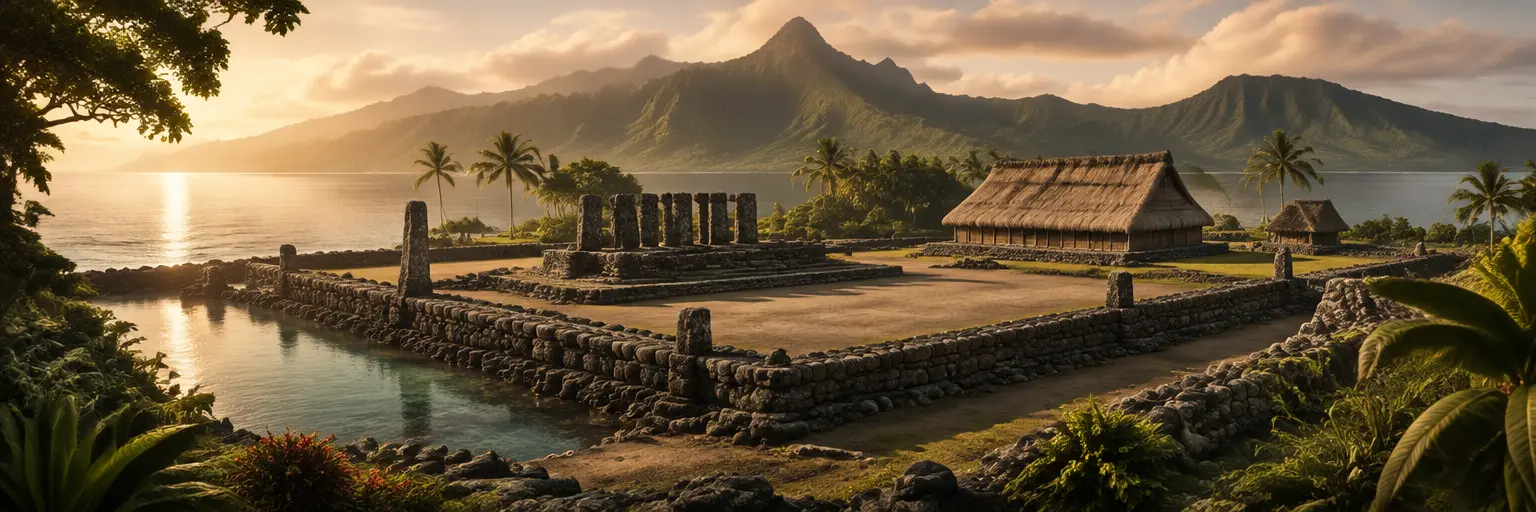
Here, you’ll explore the precise engineering and symbolic zoning of marae complexes, from the ahu (raised platform) to the upright stone slabs (tiki or pou) that anchor ritual space. Each element—from the coral paving to the basalt uprights—carried distinct mana (spiritual power), and we break down how orientation toward the rising sun or ocean currents dictated ceremonial flows. Expect detailed diagrams and comparisons between Taputapuatea’s central courtyard and smaller island marae, showing a standardized yet locally adapted blueprint.
Our content emphasizes recent LiDAR surveys and ground-penetrating radar findings that have revealed hidden sub-surface features, such as offering pits and postholes for temporary shelters. You’ll learn how archaeologists map the transition from simple earth mounds to elaborate paved platforms, reflecting increasing social stratification. The section also addresses preservation challenges, including coastal erosion and invasive vegetation, providing a clear picture of conservation efforts safeguarding these open-air temples.
🌊 Navigational Cults: Marae as Cosmic and Wayfinding Hubs
This section demystifies the dual role of Taputapuatea as both a religious center and a launchpad for oceanic exploration. Polynesian navigators used the marae’s alignments with specific stars and swell patterns to encode navigational knowledge into ritual practice. You’ll discover how the temple compound housed the Tohunga (priest-navigators), who memorized star compasses and sea route charts known as māramataka, turning every voyage into a sacred reenactment of ancestral migrations.
We contextualize this with ethnohistorical records from early European contact, including Cook’s expedition journals, which describe ceremonial fleets gathering at Raiatea. Modern experimental archaeology—such as reconstructed voyaging canoes (e.g., Hōkūleʻa)—has validated the celestial alignments, and we feature interviews with master navigators who still consult marae markers. This content positions Taputapuatea not merely as a ruin but as a living database of Pacific maritime intelligence, crucial for understanding how Polynesians colonized islands across thousands of miles.
🏛️ Political Ceremony and Territorial Power at Taputapuatea
Delve into the marae’s role as a political stage where alliances, tribute, and succession were negotiated. Taputapuatea was historically a meeting ground for rival chieftains, and we analyze excavation evidence of feasting platforms and central fire pits that hosted massive communal meals. Artifact assemblages—including whale-tooth pendants, adze heads, and shell fishhooks—are interpreted as status markers, revealing how the temple’s layout mirrored a hierarchical cosmos where the high chief mediated between gods and people.
We also compare Taputapuatea with other regional marae, such as those on Tahiti and the Cook Islands, to show how political centralization intensified marae size and ornamentation. Detailed case studies from recent fieldwork on Raiatea’s district boundaries suggest marae clusters delineated territorial claims. This section offers a nuanced view of power, showing that ritual was not separate from governance but its primary instrument—useful for readers interested in complex societies without written records.
🕰️ Chronology and Cultural Revival: From Abandonment to Resurgence
Trace the timeline of Taputapuatea from its legendary foundation around 1000 CE by the chief Tafa’i, through its peak in the 14th–16th centuries, to its decline after missionary contact in the 18th century. We provide a stratified sequence of radiocarbon dates and ceramic typologies (e.g., plainware and dentate-stamped) that anchor the site’s occupation phases. You’ll learn how abandonment was linked to political shifts, not just foreign disruption, and why the site was preserved as a memory marker despite active worship ceasing.
Critically, we feature the modern revival of marae rituals, including the 2018 reopening ceremony that reclaimed Taputapuatea as a UNESCO World Heritage Centre. Interviews with local custodians and cultural practitioners highlight efforts to restore traditional protocols aboard canoes and within the courtyard. This section underscores that archaeology is not just about the past—it’s an ongoing dialogue, and we show how Indigenous knowledge systems are now co-managing research and conservation, bridging scientific and ancestral methodologies.
🔬 Field Research Methods: How Archaeologists Study Open-Air Sacred Sites
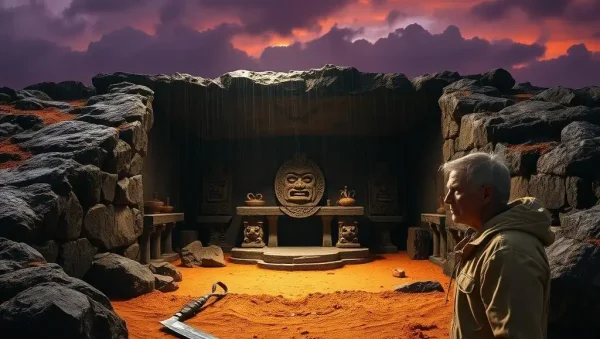
Peer behind the scenes into the toolkit used to investigate marae complexes. We explain stratigraphic excavation beneath coral pavements, soil chemistry analysis for ancient food residues, and photogrammetric 3D modeling that digitizes carved stones. A focus on non-invasive survey—including magnetometry and drone-based thermal imaging—shows how teams identify buried features without disturbing sacred soil, respecting local taboos. You’ll gain practical insights into artifact cataloguing, especially the classification of basalt adzes that reveal long-distance exchange networks.
Additionally, we discuss ethical challenges, such as repatriating ancestral remains and negotiating excavation permits with indigenous communities. Real-world examples from Taputapuatea’s 2020 field school illustrate how archaeologists train local students in digital recording and heritage interpretation. This section is invaluable for aspiring archaeologists or amateur historians who want to understand the theoretical frameworks—from processualism to post-colonial critique—that shape how we interpret these monumental landscapes.
🌏 Global Significance and Comparative Insights
Position Taputapuatea within the wider spectrum of world archaeological monuments, comparing it to megalithic sites like Stonehenge or Easter Island’s moai. We highlight shared features—such as astronomical alignments and monumental construction—but stress Polynesian uniqueness in their maritime focus. You’ll explore how marae complexes articulate with other Oceanian structures, like Tongan langi tombs and Hawaiian heiau, revealing a shared cultural grammar adapted to distinct environments. This comparative lens enriches your understanding of convergent human innovation.
Global heritage debates are also unpacked: how Taputapuatea’s UNESCO status impacts tourism, local economy, and preservation funding. We cite visitor statistics and management plans that balance accessibility with ritual sanctity. Additionally, we touch on climate change threats—rising sea levels and storm surges—posing existential risks to coastal marae, and outline adaptive strategies. By closing this subcategory, you’ll see why Taputapuatea is not an isolated curiosity but a key puzzle piece in humanity’s story of exploration and belief.
Frequently Asked Questions
What is the exact meaning of the name “Taputapuatea”?
In Tahitian and related Polynesian languages, “Taputapuatea” translates roughly to “sacrifices from afar” or “offerings from overseas.” This reflects its historic role as a focal point for inter-island pilgrimage and tribute, where chiefs from distant atolls brought offerings to honor the god ʻOro. The name underscores the site’s transnational importance in the Polynesian sphere.
Are there any human remains found at Taputapuatea?
Limited human remains have been excavated, primarily as fragmented bones in offering pits. However, due to cultural sensitivity and legal restrictions, archaeology teams do not publicly display or catalog these in detail. Instead, studies focus on associated artifacts like fishhooks and adzes, with DNA analysis permitted only under strict indigenous oversight and ethical review.
Can visitors still participate in traditional ceremonies at Taputapuatea?
Yes, but only during designated cultural festivals, such as the annual reunion of Polynesian canoe societies. Local families and the Taputapuatea Society organize public rituals, including stone-draping and greeting ceremonies, which are open to respectful tourists. However, the inner courtyard’s most sacred areas remain off-limits without a formal invitation from hereditary guardians.
How does Taputapuatea compare to other well-known marae like Ahu Tongariki?
Taputapuatea is a complex of multiple marae structures, not a single statue avenue like Ahu Tongariki on Easter Island. It features a central courtyard with the main ahu, plus several smaller platforms dedicated to different deities. Ahu Tongariki is monumental in scale but single-purpose, whereas Taputapuatea is a ceremonial administrative hub with extensive oral history tying it to navigation and politics.
What discoveries were made during the latest 2023 excavation season at Taputapuatea?
The 2023 season, led by a joint French-New Zealand team, found a previously unknown side platform with a coral-paved path leading to a natural spring. Artifacts included pearl-shell lures and a rare complete basalt adze. Soil samples indicate high phosphorus levels, suggesting ritual animal sacrifices. The team also documented a series of postholes that may correspond to temporary roofed structures for high-ranking visitors.