Oceanian Sites: Nan Madol & Pacific Ceremonial Centers
Welcome to ArchaeologyHub.org’s dedicated exploration of Oceania’s most enigmatic archaeological treasures. This subcategory focuses on the monumental basalt islets of Nan Madol and the diverse ceremonial centers scattered across the Pacific, from Polynesian marae to Melanesian earthworks. Here, you will uncover the engineering genius, spiritual significance, and ongoing preservation challenges of these remote wonders. Dive deep into how island societies shaped their environments, creating sacred landscapes that continue to intrigue researchers and travelers alike.
🏛️ Nan Madol: The Venice of the Pacific
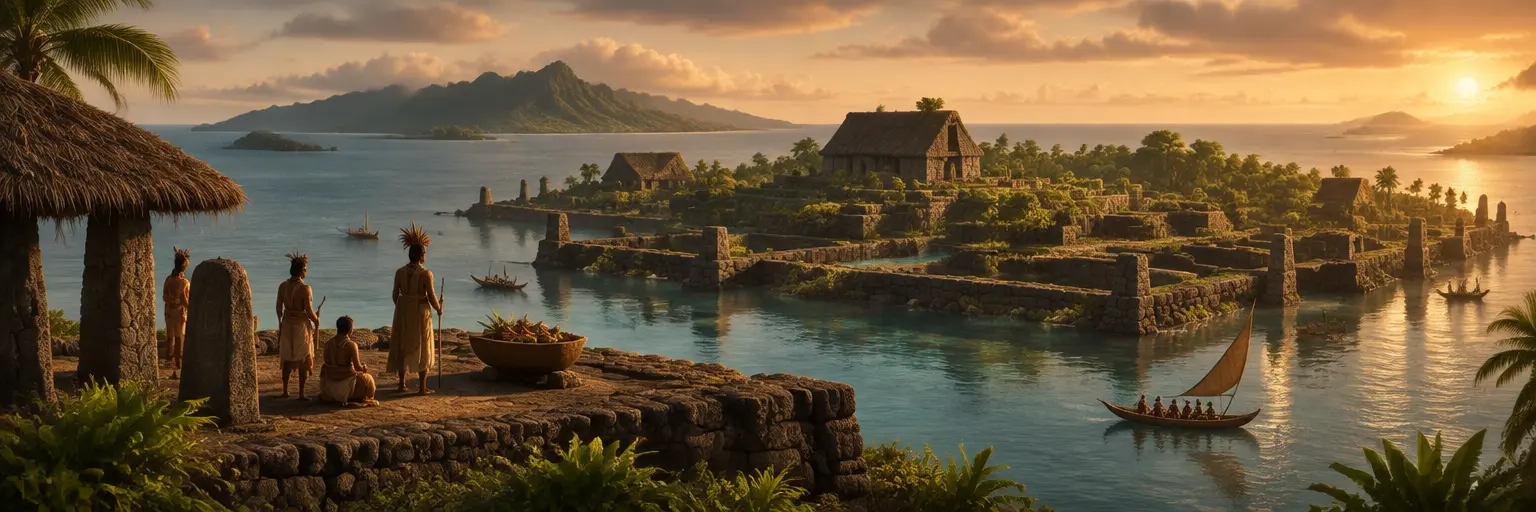
Nan Madol, built atop a coral reef off Pohnpei in Micronesia, comprises over 90 artificial islets enclosed by tidal canals. Constructed from massive basalt columns, this 1,500-year-old city served as the ceremonial and political seat of the Saudeleur dynasty. The sheer scale of logistics—rafting columnar basalt from distant quarries—demonstrates centralized authority and sophisticated maritime engineering. Excavations reveal elite tombs, defensive walls, and residential compounds, offering clues about social stratification and ritual life. Expect detailed site maps, drone imagery, and comparative analysis with other megalithic cultures in this section.
Researchers debate how Nan Madol’s builders moved an estimated 250,000 metric tons of stone without wheels or draft animals. Our content synthesizes recent geochemical sourcing studies, oral traditions linking the site to the mythical founders Olisihpa and Olosohpa, and conservation reports from UNESCO, which listed Nan Madol as a World Heritage Site. You’ll also find discussions on environmental threats, including mangrove encroachment and storm surge, and how local communities balance tourism with ancestral reverence.
🌺 Polynesian Marae: Sacred Courtyards & Ancestral Power
Marae are open-air ceremonial platforms found across Polynesia, from the Society Islands to New Zealand’s marae-ātea. Constructed from coral, stone, or earth, these sites hosted religious rites, social gatherings, and chiefly investitures. The architecture varied regionally, with Tahitian marae featuring stepped ahu (altars) and Easter Island’s ahu evolving into giant moai statues. Our coverage includes typologies, radiocarbon dating of construction phases, and ethnographic accounts from early European explorers to contextualize their significance. You’ll learn how marae functioned as central nodes linking genealogy, land tenure, and cosmic order.
Beyond physical descriptions, we explore the living nature of marae—they remain active cultural hubs in many communities. This section provides case studies of restored sites like Taputapuātea on Ra’iātea, another UNESCO listing, and contrasts them with abandoned or repurposed examples. Expect insights into astronomical alignments, such as solstice orientations, and how oral histories preserve the meaning of specific stone arrangements. We also cover the controversial reuse of marae in modern political and identity movements across the Pacific diaspora.
🗿 Rapa Nui (Easter Island): Moai Ahu & Ceremonial Villages
Rapa Nui’s iconic moai statues stand as global symbols of Polynesian achievement, but their ceremonial context is often oversimplified. This subcategory delves into the 300-plus ahu platforms, the quarry at Rano Raraku, and the village of Orongo, associated with the birdman cult. The island’s socio-political collapse remains a debated topic; our articles critically examine new evidence on deforestation, resource competition, and contact-era diseases. You will find 3D reconstructions of ahu with their pukao (topknots) and analyses of petroglyphs that depict marine and bird motifs.
We also highlight recent archaeological surveys that challenge the “ecocide” narrative, suggesting resilient adaptations rather than total collapse. This section covers the 2024 statute of limitations debates around repatriation of moai to international museums, plus practical visitor guides to protocols and conservation zones. By integrating geospatial data and pollen records, we offer a nuanced view of ceremonial spatial organization, demonstrating how ahu alignments correlate with freshwater sources and territorial boundaries—crucial insights for understanding Polynesian land management.
🏝️ Melanesian & Micronesian Earthwork Ceremonial Complexes
Beyond the Pacific Polynesian triangle, Melanesia and Micronesia boast remarkable but less-publicized ceremonial centers. Examples include the earthen mounds of the Lápita culture (ancestral to Polynesians) on islands like Vanuatu and Fiji, and the Niah Caves in Borneo, though the latter is Southeast Asian. These sites often feature artificial terraces, stone-lined paths, and elevated platforms used for ritual dances, feasting, and secondary burials. Our content reviews excavation reports from sites like Tongatapu’s Langi tombs, which are megalithic, and the coral pavement at Lekinyá in Palau.
This section emphasizes cross-cultural comparisons, such as the similar engineering solutions between Nan Madol and the yet-unstudied islet complexes in Chuuk. You’ll gain insights into how trade networks in obsidian, shell, and pottery connected these communities, and how ceremonial landscapes were integrated with horticultural systems. We also address the challenges of dating organic materials in humid tropical soils, offering methodological primers on luminescence dating and stratigraphic analysis, which are essential for researchers planning fieldwork in these regions.
🔍 Preservation & Digital Reconstruction Techniques
Given the remote and often imperiled nature of Oceanian sites, this subcategory provides an in-depth look at modern preservation strategies. From ground-penetrating radar to drone-based LiDAR, we explain how non-invasive technologies map buried structures without disturbing sacred grounds. The use of photogrammetry allows archaeologists to create virtual models for study and public engagement, as seen with the CyArk projects on Rapa Nui. We also cover climate-change adaptation measures, such as sea-wall designs and relocation of vulnerable artifacts, trained local guardianship programs, and legal frameworks like the Pacific Heritage Hub.
Additionally, we profile collaborative repatriation efforts, where museums work with native communities to return ancestral remains and artifacts. This section includes case studies on the successful stabilization of Nan Madol’s collapsing sea walls and the rebuilding of a marae in Ra’iātea using traditional methods. By emphasizing sustainable tourism models—such as permit caps and immersive cultural exchanges—we help readers understand how to support these sites without contributing to their degradation. You’ll leave equipped with actionable knowledge for advocacy, funding, or academic research.
Frequently Asked Questions
What is the best time of year to visit Nan Madol?
The dry season between January and March offers clearer waters and lower rain, ideal for boat tours to the islets. However, tides can restrict access to certain canals. Always check local weather advisories and obtain permission from Pohnpei’s heritage office, as the site is sacred. Avoid typhoon season from June to December for safety.
How are marae still used today in Polynesia?
Marae play vital roles in contemporary Māori and Tahitian communities as venues for formal welcomes, school graduations, and funerals. They symbolize continuing ancestral ties and are often managed by iwi (tribes) or family groups. While some ancient rituals have been adapted, the core function of uniting people with their history remains unchanged.
Can visitors touch or climb the moai statues?
No, touching or climbing moai is prohibited to prevent erosion and damage. You can view them from designated trails and platforms. The Rapa Nui National Park enforces strict fines for rule breakers. Guided tours offer comprehensive historical context while ensuring respectful interactions with the monuments.
What are the main threats to ceremonial centers in Micronesia?
Sea-level rise and increasingly intense storms cause coastal erosion and flooding at sites like Nan Madol. Pollution, invasive mangroves, and unregulated tourist foot traffic further degrade infrastructure. Limited funding for local conservation and lack of legal enforcement exacerbate risks. International collaborations are crucial for monitoring and mitigation efforts.
Do I need archaeological expertise to explore these sites?
No, many sites have accessible visitor trails and interpretive signage. However, for remote or less-developed locations like Nan Madol, hiring a local guide is essential for safety and cultural respect. Enthusiastic beginners can enjoy self-guided tours if they prepare by reading our detailed guides and any provided site literature.