The Royal Tombs and Great Ziggurat of Ur: An Archaeological Overview
🌟 Explore the Ur royal tombs and the Great Ziggurat of Ur, key archaeological sites that unveil the grandeur of Sumerian civilization.…
Read article
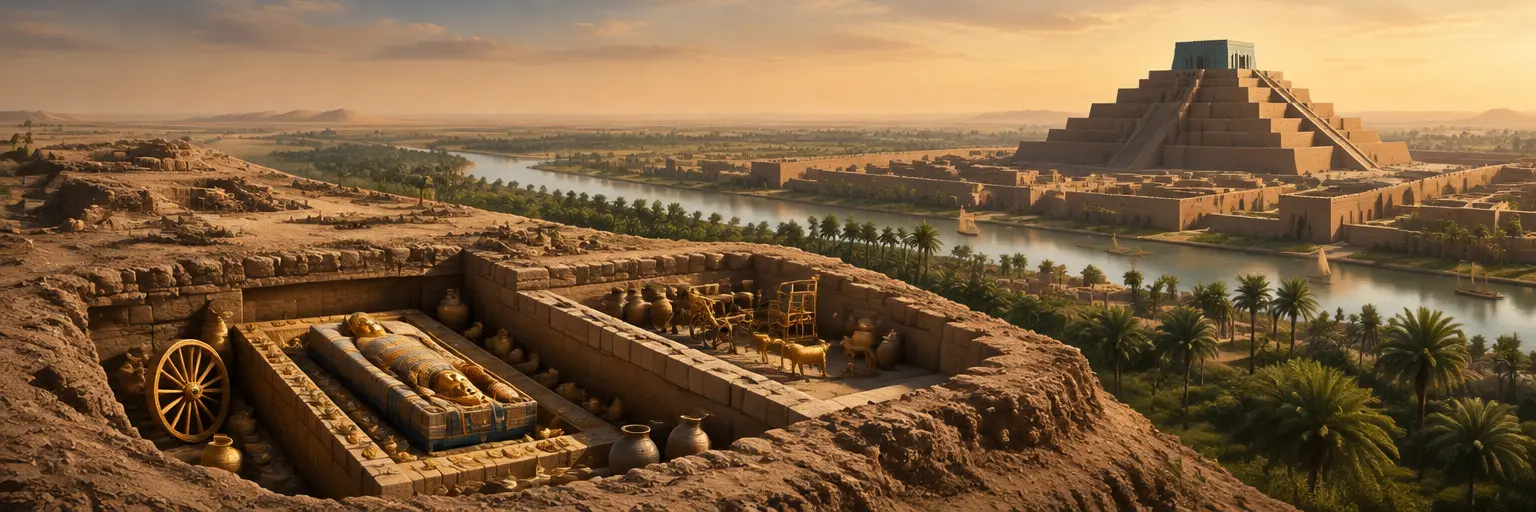
Explore the legendary Royal Tombs of Ur and the monumental Ziggurat of Ur, two of Mesopotamia’s most awe-inspiring archaeological treasures. Nestled in modern-day Iraq, these Near East sites offer a breathtaking window into Sumerian civilization, its opulent burial rituals, and its architectural genius. The Royal Tombs—dating back to around 2600 BCE—yielded stunning gold artifacts, intricate jewelry, and the famous Standard of Ur, revealing a society of immense wealth and complex social hierarchy. Rising nearby, the Ziggurat of Ur, a towering stepped temple dedicated to the moon god Nanna, showcases advanced engineering and religious devotion that shaped urban life millennia ago. For enthusiasts of ancient history, excavation techniques, or cultural heritage, these sites are a cornerstone of global archaeological study. Dive into their excavation stories, artifact profiles, and interpretive analyses to understand why Ur remains a benchmark for Sumerian power and mystery. Uncover the secrets of these royal graves and sacred terraces—a journey through time that illuminates the cradle of civilization like no other.
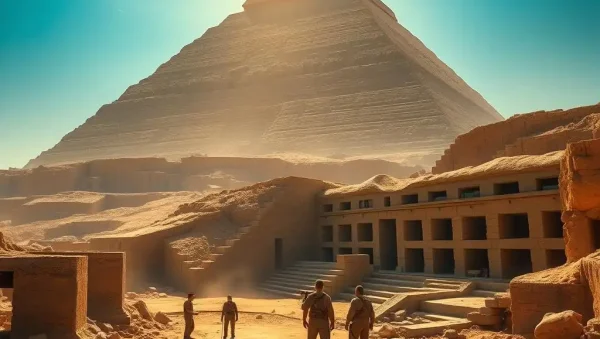
🌟 Explore the Ur royal tombs and the Great Ziggurat of Ur, key archaeological sites that unveil the grandeur of Sumerian civilization.…
Read article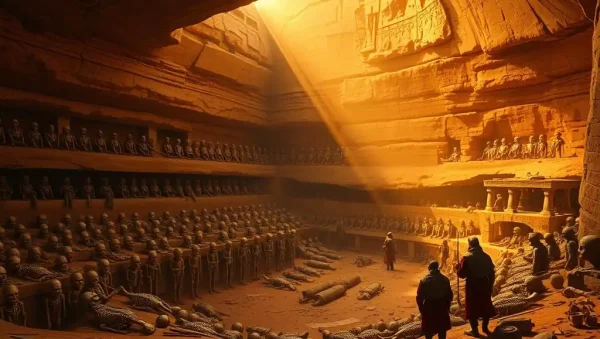
🔍 The Ur Great Death Pit reveals a shocking mass burial at Ur, highlighting ritual sacrifices and social hierarchies in ancient Mesopotamia.…
Read articleWelcome to ArchaeologyHub.org’s dedicated deep-dive into the Near East Sites: Ur - Royal Tombs & Ziggurat subcategory. Here, we unearth the splendor of ancient Mesopotamia’s most iconic city-state, focusing on its funerary practices and monumental sacred architecture. This section is your digital gateway to understanding Sumerian civilization, from the lavish burial goods of the Royal Cemetery to the towering remnants of the Great Ziggurat of Ur. Optimized for archaeology enthusiasts, students, and travelers, our content blends scholarly research with accessible storytelling.
Explore the Royal Cemetery of Ur, excavated by Leonard Woolley in the 1920s, which revealed over 2,000 burials, including sixteen lavish "royal" tombs. These graves contained exquisite artifacts like the Golden Lyre of Ur, the Ram in a Thicket, and intricate jewelry made of gold, lapis lazuli, and carnelian. The tombs also featured courtiers, soldiers, and musicians sacrificed to accompany rulers into the afterlife, offering profound insights into Sumerian beliefs about death, divinity, and social hierarchy.
Our subcategory provides artifact-by-artifact analysis, contextualizing each find within the broader Mesopotamian cultural landscape. You will discover how burial practices evolved over 500 years, the significance of the death pit, and the debates among scholars about which burials were truly "royal." We also examine the modern ethical and technical challenges of re-excavating and preserving these fragile treasures, ensuring they remain accessible for future generations.
The Great Ziggurat of Ur, dedicated to the moon god Nanna, stands as a testament to Sumerian engineering brilliance. Originally built around 2100 BCE by King Ur-Nammu, this massive stepped pyramid measured 64 by 45 meters and rose to a height of 30 meters. Unlike Egyptian pyramids, ziggurats were not tombs but terrestrial homes for deities, with a temple shrine at their summit where priests performed rituals. The structure’s baked-brick core, bitumen waterproofing, and terraced gardens reflect advanced urban planning and religious devotion.
In this section, we chronicle the ziggurat’s construction phases, its partial reconstruction in the 1980s by Saddam Hussein (which sparked controversy), and its current status as a UNESCO World Heritage Site. Learn about the symbolism of the seven-tiered design connecting earth to heaven, the role of processional ways, and how the ziggurat functioned as an economic hub for the temple bureaucracy. We also guide you through virtual tours and 3D reconstructions that bring this ancient wonder back to life.
From the first surveyors to modern digital archaeologists, the history of excavation at Ur is a story of evolving methodology. Leonard Woolley’s meticulous field records allowed for unprecedented forensic reconstruction of the tombs, yet his conclusions about "royal" identity are now questioned. Recent re-analysis of skeletal remains and distribution of grave goods suggests a more complex social structure, possibly indicating a priestly or mercantile elite, not just monarchy. Our subcategory presents these alternative hypotheses without undermining the site’s foundational importance.
We also highlight the role of Iraqi archaeologists, such as Tahir al-Naqib, whose post-Woolley work contributed vital stratigraphic data. The looting during the Gulf Wars and the subsequent recovery efforts are documented here, emphasizing the fragile balance between global heritage and local custodianship. Expect critical reviews of excavation archives, funding controversies, and the ethical repatriation debates that continue to shape Near Eastern archaeology today.
Beyond the royal courts, the subcategory reveals how ordinary Sumerians lived: their crafts, trade networks, and domestic architecture. Cylinder seals, pottery, and weaving tools found in residential quarters paint a vivid picture of Ur’s bustling economy, which connected the Persian Gulf to Anatolia. The Standard of Ur, a mosaic box, famously depicts scenes of war and banquet, serving as a visual document of social stratification. We analyze each motif to decode Sumerian iconography, from warfare chariots to agricultural abundance.
Our content includes comparisons with contemporary sites like Eridu and Uruk, showing how Ur fit into a broader urban network. We also discuss the cuneiform tablets found at Ur—administrative records, hymns, and personal letters—that illuminate legal systems, education, and family life. This multifaceted approach ensures readers understand Ur as a living city, not just a collections of tombs and temples, with everyday challenges and triumphs.
Today, the site of Ur faces significant threats from climate change, groundwater salinity, and armed conflict. Our subcategory offers a dedicated resource on preservation science, including novel methods like radar imaging and chemical stabilizers. We outline both international collaborations (e.g., the British Museum’s Ur Digitization Project) and grassroots Iraqi initiatives to protect the ziggurat’s mudbrick from erosion. Visitor guides cover practical travel details, permits, and local customs, ensuring respectful engagement.
We also analyze the politicization of heritage, as the site has been co-opted by various regimes for nationalistic narratives. Our balanced reporting covers the restoration aesthetics (e.g., the modern façade) versus authenticity debates. By reading this section, you’ll gain tools to critically assess heritage tourism and support sustainable practices. Expect links to drone footage, interactive maps, and downloadable educational materials for classrooms or self-study.
A royal tomb featured a stone-built chamber for the primary individual, while a death pit was a mass grave of attendants, animals, and offerings surrounding or near the chamber. Death pits lack a separate central burial, suggesting mass sacrifice, whereas tombs held a single elite body with elaborate grave goods.
The ziggurat was a religious structure dedicated to Nanna, the moon god, serving as his terrestrial abode. It allowed priests to perform rituals in his presence, and its height symbolized a bridge between mortal realm and divine heavens. It also functioned as a center for temple administration and grain storage.
Yes, the site is open to visitors, located near Nasiriyah in Dhi Qar Province, Iraq. The Iraqi State Board of Antiquities manages access, and permits may be required. Due to security conditions, check current travel advisories and local tour operators. The ziggurat’s reconstructed outer façade is visible, though upper terraces remain exposed to weather.
Many treasures were sent to the British Museum, the University of Pennsylvania Museum, and the Iraq Museum in Baghdad. Some were tragically looted after 2003, but many headline pieces, like the Golden Lyre, have been recovered. Digital databases now provide global access to high-resolution images and catalog data.
Dating relies on stratigraphy, ceramic typology, and cross-dating with other Mesopotamian sites. Woolley initially placed them around 2500-2300 BCE, but modern radiocarbon samples from organic materials suggest a slightly later range, around 2450-2200 BCE. Artifact styles, such as cylinder seals with known king names, help refine the chronology.







