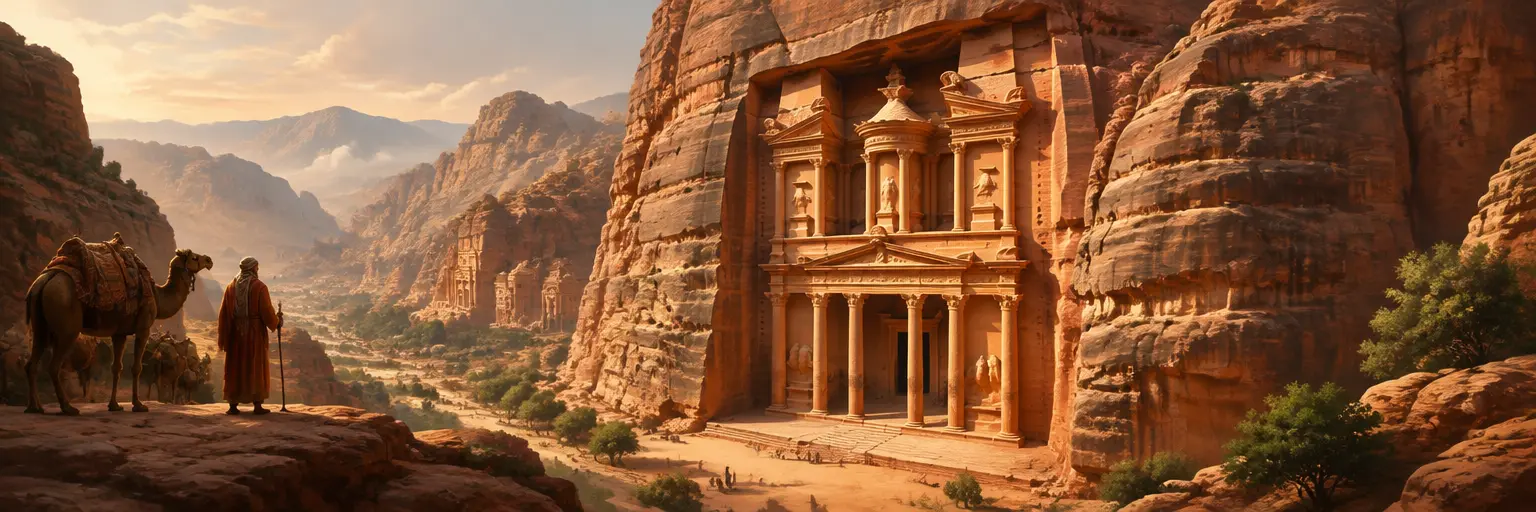
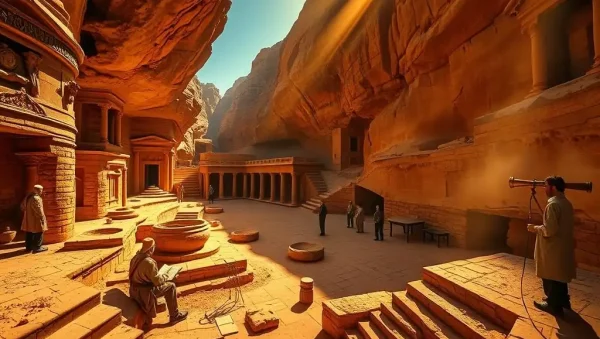
Explore Petra & Nabataean Rock-Cut Architecture
Welcome to ArchaeologyHub.org’s dedicated subcategory on Near East Sites: Petra & Nabataean Rock-Cut Architecture. Here, we dive into the rose-red city of Petra, Jordan, and the ingenious engineering of the Nabataean civilization. You’ll uncover how this ancient trading empire carved monumental facades, temples, tombs, and water systems directly into sandstone cliffs. Perfect for students, travelers, and history enthusiasts, this section combines archaeology, geology, and cultural interpretation to reveal why Petra is a UNESCO World Heritage Site and one of the New Seven Wonders of the World.
🏛️ The Rise of the Nabataean Kingdom
The Nabataeans emerged around the 4th century BCE as nomadic traders controlling the lucrative incense, spice, and silk routes between Arabia, Egypt, and the Mediterranean. Their capital, Petra, flourished as a caravan hub, accumulating immense wealth that funded ambitious construction projects. Unlike other empires, they left no grand palaces for kings but instead carved tombs and temples that reflected their blended cultural influences—Hellenistic, Egyptian, and Assyrian.
This section explains the political and economic factors behind Petra’s growth, including the strategic Siq canyon approach and the ingenious water management that made life possible in a desert. You’ll learn how the Nabataeans transformed a rugged landscape into a thriving metropolis of over 20,000 inhabitants, using rock-cut architecture not just for burial but for religious ceremonies and public gatherings. Expect detailed timelines, maps, and insights into their trade networks.
⚒️ Engineering Marvels: Water Systems & Quarrying
Among the most impressive aspects of Nabataean architecture is their mastery of hydraulic engineering. With annual rainfall under 15 cm, they built an extensive network of channels, cisterns, terracotta pipes, and dams that captured every drop of seasonal rain. The Siq, a 1.2 km narrow gorge, featured carved water channels that directed runoff into reservoirs, enabling agriculture and daily life. Their quarrying techniques involved selecting high-quality sandstone layers and using iron chisels, wooden wedges, and water expansion to split rock precisely.
This subcategory focuses on the technical processes behind rock-cut architecture, from initial surveying to finishing touches. You’ll discover how stonemasons achieved flawless facades like the Treasury (Al-Khazneh) and the Monastery (Ad-Deir), which rise up to 45 meters high. We also compare Nabataean methods to those of Egyptian and Roman builders, highlighting their unique adaptation to vertical cliffs and natural fracture lines. Detailed diagrams and step-by-step reconstruction explanations are included.
🗿 Iconic Monuments: Treasury, Monastery & Royal Tombs
Petra boasts over 800 rock-cut monuments, but a few stand out for their grandeur and artistry. The Treasury (Al-Khazneh), famously featured in *Indiana Jones*, is a 39-meter-high facade with Corinthian columns, broken pediments, and mythological reliefs—likely a royal tomb or temple. The Monastery (Ad-Deir), larger and less ornate, required climbing 800 steps and may have served as a religious sanctuary. The Royal Tombs, including the Urn, Silk, and Corinthian Tombs, showcase evolving styles from simple to elaborate, reflecting Hellenistic influence.
Here, you’ll get virtual tours, high-resolution imagery, and architectural breakdowns of each monument. We analyze iconography, construction chronology, and modern conservation challenges, such as erosion from flash floods and tourism. You’ll also learn about lesser-known structures like the High Place of Sacrifice and the Colonnaded Street, which reveal everyday Nabataean life. This is your go-to guide for identifying and appreciating Petra’s most celebrated landmarks.
🌍 Cultural Significance & Global Influence
Nabataean rock-cut architecture was not isolated to Petra—similar sites exist at Madain Saleh (Hegra) in Saudi Arabia, which is also UNESCO-listed, and at Shivta or Avdat in the Negev. Their style influenced later Byzantine and Islamic builders, particularly in the use of monumental facades and integrated water features. The tradition of carving into living rock also parallels Indian rock-cut temples and Cappadocia’s underground cities, showcasing a universal human desire to merge architecture with nature.
This section explores the symbolic meaning of tombs as “houses for the dead,” mirroring domestic houses, and how the Nabataeans used architecture to assert power and claim ancestral ties. We discuss their polytheistic religion, featuring gods like Dushara and Al-Uzza, and how subsequent Roman annexation in 106 CE altered but did not erase their legacy. You’ll also see how Petra’s rediscovery by Swiss explorer Johann Ludwig Burckhardt in 1812 sparked global fascination and continues to inspire modern architects.
📜 Excavation History & Modern Preservation
Archaeological research at Petra began in earnest in the 1920s with the British School of Archaeology, but systematic excavations only accelerated after Jordan’s independence in 1946. Key discoveries include the Temple of the Winged Lions, the Great Temple complex, and a network of scrolls from a Byzantine church. Modern non-invasive techniques like ground-penetrating radar and LiDAR have uncovered hidden structures beneath the sand, including a massive monumental platform from the 2nd century BCE.
Preservation efforts face severe threats from weathering, flash floods, and over-tourism—over a million visitors annually. The Jordanian government and UNESCO have implemented drainage improvements, visitor pathway controls, and digital documentation using 3D scanning. You’ll learn about the Petra National Trust’s work and the debate over using laser cleaning versus chemical treatments on delicate sandstone. This section also covers ethical tourism practices and how you can contribute to conservation from afar.
Frequently Asked Questions
Why is Petra called the "Rose-Red City"?
Petra is nicknamed the Rose-Red City because its sandstone cliffs and carved facades exhibit hues of pink, red, and ochre, especially during sunrise and sunset. The name comes from the famous 1845 poem "The Rose-Red City" by John William Burgon, who actually wrote it without ever seeing Petra. The coloration results from iron oxide deposits in the sandstone, creating a stunning visual effect praised worldwide.
Were the Nabataeans nomadic or sedentary?
Initially, the Nabataeans were nomadic pastoralists and traders, but by the 1st century BCE they became largely sedentary, building permanent cities like Petra and Hegra. They maintained seasonal patterns for grazing and trade but developed sophisticated urban centers with permanent water systems and architecture. This hybrid lifestyle allowed them to control desert routes while enjoying urban amenities and long-distance commerce.
How did the Nabataeans carve such precise rock-cut facades?
They used iron tools like chisels, hammers, and picks, starting from the top of the cliff and working downward. This technique, called "top-down carving," allowed gravity to help remove debris and prevented damage to finished lower sections. They also used water to soften sandstone, wooden wedges to split layers, and pulleys for scaffolding. Precision was ensured by geometric ratio systems and plaster models, not modern templates.
Is Petra only a tomb city, or were there houses and marketplaces?
Petra was a fully functional city with homes, markets, temples, and administrative buildings. While rock-cut tombs dominate surviving remains, free-standing structures existed in the city center, including the Great Temple, Qasr el-Bint, and the Colonnaded Street with shops. Many houses were built from stone or mudbrick but decayed over time, unlike tombs that survived due to their rock-cut nature. Excavations continue to reveal residential and commercial districts.
Can I visit Petra today, and what are the best times to go?
Yes, Petra is open year-round and is Jordan’s most visited tourist attraction. The best times are spring (March-May) and autumn (September-November) when temperatures are mild (20-25°C). Mornings are ideal for the Siq and Treasury to avoid crowds and heat. The site opens at 6 AM, and a two-day pass is recommended to explore main monuments and hike to the Monastery. Remember to bring water, sunscreen, and comfortable shoes.