Explore the Dawn of Monumental Architecture at Göbekli Tepe
Welcome to ArchaeologyHub.org’s dedicated section on Near East Sites: Göbekli Tepe & Early Monumental Sanctuaries, a cornerstone of our global coverage of archaeological wonders. This subcategory plunges into the revolutionary prehistoric world of the Upper Mesopotamian basin, where hunter-gatherers erected massive stone circles millennia before Stonehenge or the pyramids. Here, you will uncover the latest excavation findings, radiocarbon dating debates, and interpretive studies on ritual landscapes, megalithic construction, and the Neolithic Revolution. Whether you are an enthusiast, student, or researcher, this curated resource connects you with stratigraphic analyses, artifact profiles (including T-shaped pillars), and geoarchaeological context, all optimized to enrich your understanding of humanity’s first monumental sanctuaries.
🏛️ The Architectural Marvel of Göbekli Tepe’s Enclosures
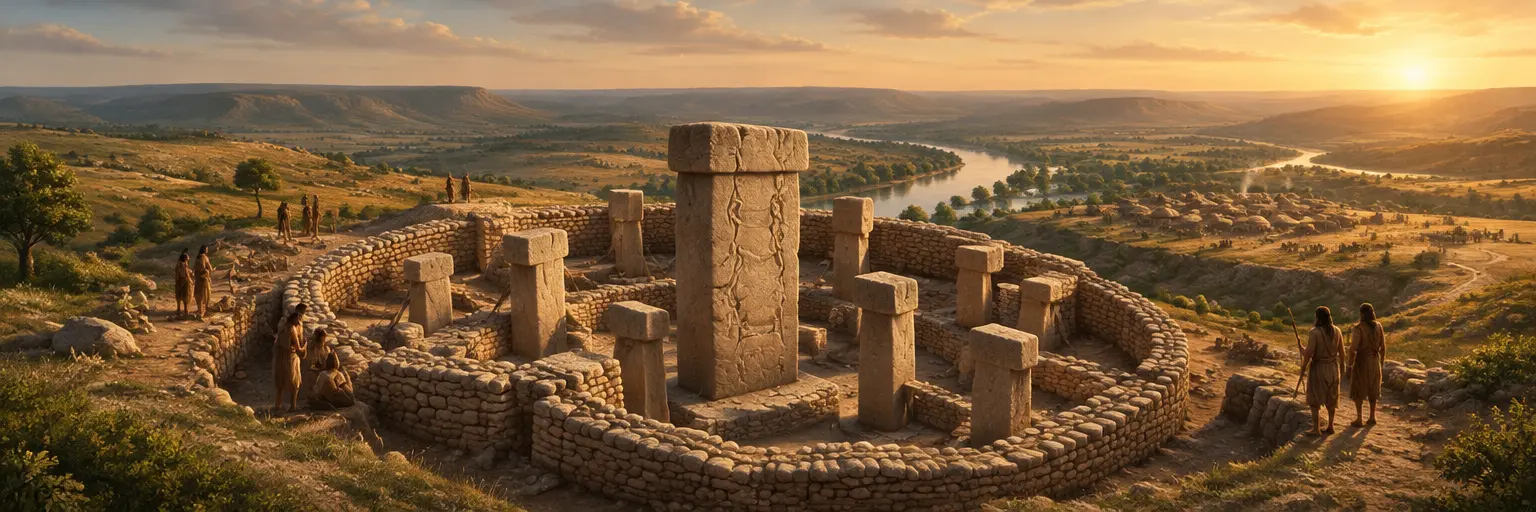
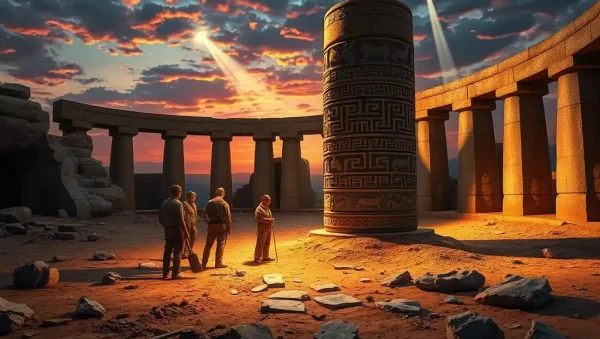
Dive into the engineering genius of Göbekli Tepe’s circular and oval enclosures, constructed around 9600–8000 BCE. These structures feature massive limestone T-pillars weighing up to 20 tons, arranged in concentric rings with intricate animal reliefs—foxes, snakes, boars, and birds. Excavations reveal that enclosures were deliberately backfilled, a practice that preserved them for millennia. You will learn about the construction phases, from Layer III (Pre-Pottery Neolithic A) to Layer II (PPNB), and how this site reshaped theories on social organization, labor mobilization, and symbolic communication before agriculture.
Our profiles include detailed floor plans, pillar measurements, and iconographic analyses, linking each enclosure to its ritual function. We also discuss the recent excavations at nearby sites like Karahan Tepe and Sayburç, which extend the “Taş Tepeler” phenomenon beyond Göbekli Tepe itself. Expect comparative studies on stone-working techniques, quarrying methods, and the use of limestone pillars as totemic markers. This content is tailored for archaeology enthusiasts seeking technical depth without jargon overload.
🔍 Ritual Landscapes and Neolithic Cosmology
Unearth the symbolic universe of early Neolithic societies through our interpretive essays on ritual landscapes. The T-pillars are not just architectural supports; they are anthropomorphic abstractions, likely representing ancestral beings or deities. We analyze recurring motifs—cranes, scorpions, and aurochs—to decode shamanistic practices, totemism, and seasonal gatherings. The absence of domestic dwellings at Göbekli Tepe suggests a pilgrimage center, drawing dispersed hunter-gatherer groups for feasting, initiation, and celestial observation. This subcategory offers a deep dive into paleoethnobotany, zooarchaeology, and residue analysis of grinding stones, uncovering beer-making and communal bread consumption.
Explore our interactive timelines that juxtapose Göbekli Tepe with contemporary sites like Çayönü and Nevalı Çori, highlighting regional variations in cultic architecture. We also address debates on whether such sanctuaries catalyzed the transition to farming, as proposed by Klaus Schmidt and later refined by Jens Notroff. Our content emphasizes evidence-based speculation, balanced with alternative theories linking monumentality to climate shifts and population pressures. Readers will gain a comprehensive grasp of how worldview and environment co-evolved in the prehistoric Near East.
📜 Excavation History and Research Controversies
Trace the remarkable discovery journey of Göbekli Tepe, from Klaus Schmidt’s initial surveys in 1994 to the ongoing global research consortium. This section chronicles the stratigraphic challenges, the meticulous sieving and flotation techniques, and the use of geophysical prospection (ground-penetrating radar and magnetometry) to map unexcavated enclosures. We highlight controversies, such as the dating of the site’s backfill, the reuse of pillars, and the interpretation of “pillar 43” as a possible comet impact commemoration. You’ll also find critiques of popular media claims that overstate the site’s role as a “world’s first temple” versus a multi-purpose communal space.
We guarantee an evidence-first approach, providing primary excavation reports, carbon-14 calibration curves, and comparative stratigraphy from adjacent mounds. Our research logs feature interviews with field archaeologists and conservators, discussing preservation threats from weathering and tourism. For students, we offer a glossary of terms like “PPNA,” “terrazzo flooring,” and “intentional burial,” ensuring clarity. This balanced narrative helps you separate fact from speculative fiction, empowering you to form your own conclusions about the site’s purpose.
🌍 Comparative Megalithic Traditions and Global Connections
Broaden your perspective by examining Göbekli Tepe within the wider context of early monumental architecture across the globe. This subcategory contrasts the Near Eastern sanctuaries with West African Tassili n’Ajjer rock art, Maltese megalithic temples, and Andean stone circles at Buena Vista. We analyze convergent patterns—centralized ritual gathering, astronomical alignments, and labor specialization—while emphasizing regional uniqueness. You’ll discover how the shift from hunter-gatherer to farmer is not a linear narrative but a mosaic of cultural experiments. Our comparative charts illustrate technological exchanges along obsidian trade routes, from Anatolia to the Levant.
Expect essays on the psychological and sociological implications of building for the dead or the gods, versus fortification or dwelling. We also tackle the “Neolithic package” concept, questioning whether monumentality preceded sedentism. By placing Göbekli Tepe alongside contemporaneous sites like Jericho’s tower and Wadi Faynan’s ritual pits, you’ll appreciate the diversity of early social complexity. This section is ideal for cross-cultural researchers and casual readers seeking a macro-view of human innovation.
🛠️ Preservation, Tourism, and Ethical Archaeology
Learn about the critical conservation efforts safeguarding Göbekli Tepe, a UNESCO World Heritage site since 2018. We discuss protective shelters, drainage systems, and the controversial decision to rebury some enclosures to halt erosion. Our guide covers ethical issues—local community engagement, artifact looting risks, and the balance between public access and scientific integrity. You’ll find practical information for virtual tours, museum exhibits (like Şanlıurfa Museum), and 3D reconstructions, making the site accessible to you from anywhere. We also highlight citizen science projects and volunteer excavation opportunities.
Furthermore, we examine how climate change and geopolitical instability threaten Near Eastern heritage, proposing sustainable tourism models. Our content includes interviews with Turkish heritage officials and conservation scientists, offering first-hand insights into site management. We advocate for responsible tourism—emphasizing that visitors should prioritize educational impact over photo opportunities. This section empowers you to become a steward of cultural heritage, whether by donating to research initiatives or advocating for stricter antiquities laws. Join us in protecting these irreplaceable testimonies to early human spirituality.
Frequently Asked Questions
What is the exact age of Göbekli Tepe, and why does it matter?
Radiocarbon dating places its earliest enclosures at approximately 9600–9000 BCE, during the Pre-Pottery Neolithic A period. This predates Stonehenge by about 6,000 years, challenging the assumption that complex monumentality required agriculture. The site’s age redefines our timeline of human social organization, proving that hunter-gatherers could coordinate large-scale construction and symbolic expression millennia before farming villages emerged.
Were the T-shaped pillars at Göbekli Tepe meant to represent humans?
Most archaeologists agree yes. The pillars have carved arms, hands, and belts, suggesting anthropomorphic figures, possibly ancestors or deities. The absence of faces may indicate abstraction, preventing direct worship of a specific individual. Some argue they represent supernatural guardians. The consistency of this motif across enclosures implies a shared belief system, but definitive interpretations remain speculative.
How were the massive stones at Göbekli Tepe moved and erected?
Workers quarried limestone from nearby ridges, using flint tools to shape and detach blocks. They likely transported stones on wooden rollers or sledges, using ropes and human muscle. Erecting pillars involved ramps and counterweights. Experiments suggest a crew of 50–100 people per pillar, a remarkable feat given no draft animals or wheels existed. This demonstrates sophisticated engineering without metal tools.
Why did people at Göbekli Tepe deliberately bury their monumental buildings?
Excavations show that enclosures were filled with limestone rubble, animal bones, and sediment intentionally. Theories include ritual closure after a ceremonial period, creating a “memory mound,” or protecting sacred spaces from desecration. This backfilling inadvertently preserved reliefs, but the act’s symbolic meaning—possibly linked to renewal or ancestor veneration—remains a mystery central to ongoing research.
Can I visit Göbekli Tepe today, and what should I expect?
Yes, the site is open to visitors with a protective canopy over Enclosure D. You’ll see reconstructed pillars, excavation trenches, and interpretive signage. Expect a remote, hot environment; wear sturdy shoes and bring water. A nearby visitor center offers exhibits and 3D models. Group tours from Şanlıurfa are available. Always follow path restrictions to protect exposed archaeological layers.