Explore Catalhoyuk & Neolithic Anatolian Settlements
Welcome to the heart of prehistoric innovation—the Near East’s earliest urban experiments. This subcategory on ArchaeologyHub.org dives deep into Catalhoyuk, the iconic 9,000-year-old settlement, alongside other pivotal Neolithic Anatolian sites such as Çayönü, Göbekli Tepe, and Aşıklı Höyük. Here, you’ll uncover how hunter-gatherers transitioned to farming, built densely packed mudbrick homes, and created symbolic art that reshaped human society. Perfect for students, travelers, and history enthusiasts, our content blends excavation data, radiocarbon timelines, and interpretive essays to illuminate daily life, ritual practice, and environmental adaptation. From wall paintings to obsidian trade, prepare to explore the dawn of civilization in the Anatolian plateau.
🏛️ Catalhoyuk: The World’s First Megacity?
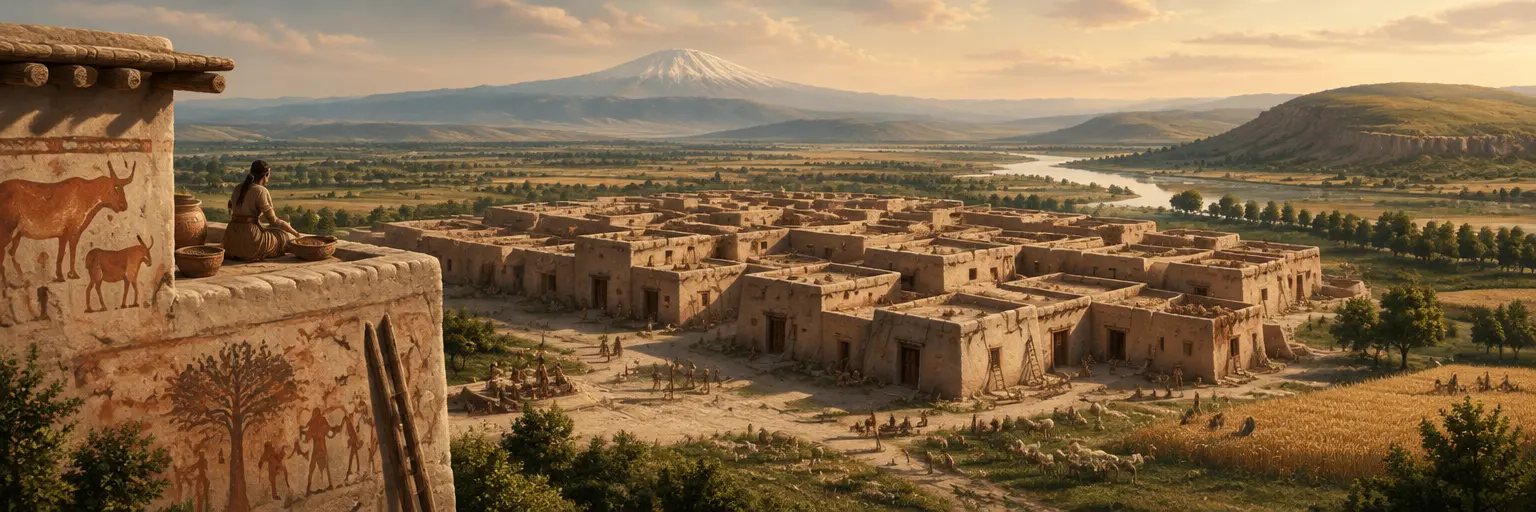
Often called the "first city," Catalhoyuk (7400–6000 BCE) housed up to 8,000 people in contiguous mudbrick dwellings with rooftop entrances. Unlike later urban centers, it had no streets—instead, residents moved across rooftops, creating a unique social fabric. Our site pages detail the excavation history led by James Mellaart and Ian Hodder, including the famous shrine rooms decorated with bull horns, leopard reliefs, and mother goddess figurines. Expect interactive floor plans, 3D reconstructions of hearths and ovens, and analysis of burial practices beneath house floors, revealing ancestor veneration and community bonding.
You’ll also find comparative data showing how Catalhoyuk’s egalitarian layout contrasts with later hierarchical cities like Uruk. We explain the obsidian trade networks that brought volcanic glass from Cappadocia, used for mirrors, arrowheads, and ritual blades. Through pollen and faunal analysis, we reconstruct diets of wheat, barley, and sheep—evidence of early animal domestication. Whether you’re researching social complexity or prehistoric art, this subpage offers peer-reviewed summaries and high-resolution artifact galleries, making complex archaeological theory accessible.
🪨 Göbekli Tepe & Ritual Landscapes
Though technically older than Catalhoyuk, Göbekli Tepe (9600–8200 BCE) redefines Neolithic Anatolia as a hub of monumental ritual. This site features massive T-shaped limestone pillars carved with foxes, snakes, and boars, arranged in circular enclosures—predating Stonehenge by 6,000 years. Our content explains how hunter-gatherers, without pottery or agriculture, organized labor to quarry, shape, and erect 20-ton pillars. We highlight the social cohesion hypothesis: feasting and pilgrimage drove settlement patterns, as later evidenced by adjacent domestic sites. Explore aerial drone imagery, excavation diaries, and debates on whether Göbekli Tepe was a temple or a communal gathering space.
For deeper insight, we connect Göbekli Tepe to the broader Neolithic Revolution theory, challenging the idea that farming preceded complex society. Instead, ritual may have inspired sedentism. The subcategory also covers lesser-known sites like Nevalı Çori and Karahan Tepe, which share iconography and architectural motifs. You’ll learn about the pillar iconography—arms, belts, and loincloths suggest anthropomorphic ancestors—and how recent excavations in 2024 uncovered new enclosures. Our timeline maps migration and cultural exchange across Upper Mesopotamia, positioning Anatolia as a crucible of innovation.
🏠 Domestic Life & Architecture in Aşıklı Höyük
Aşıklı Höyük (8200–7400 BCE) offers a pristine window into early Neolithic urban planning, before Catalhoyuk’s dense sprawl. Here, rectangular mudbrick houses share party walls, with narrow corridors and central courtyards for communal activities. Our subcategory details the phased evolution of building techniques—from wattle-and-daub to sun-dried bricks—and how residents adapted to river flooding via raised platforms. Excavations at Aşıklı have uncovered the earliest known copper ore beads, evidence of incipient metallurgy, plus grinding stones and granaries that indicate surplus storage. We provide floor-by-floor reconstructions of hearths, storage bins, and sleeping platforms, showing gender-divided work areas.
You’ll also discover the site’s mortuary practices, including skull removal and plastering—similar to later Catalhoyuk, suggesting a shared cultural tradition. Our interpretive essays discuss child burials under house floors, possibly as foundation sacrifices or lineage markers. With a robust paleobotanical database, we explain the transition from wild einkorn to domesticated emmer wheat. For educators, downloadable lesson plans and 3D printable models of house layouts make this an invaluable teaching resource. Aşıklı Höyük’s excavation reports, available in full text, allow advanced researchers to verify stratigraphy and radiocarbon dates.
🌾 Subsistence & Technology: Farming, Trade, and Crafts
Neolithic Anatolia wasn’t only about houses—it was a laboratory of agricultural innovation. This section synthesizes archaeobotanical remains from Catalhoyuk, Çayönü, and Hacılar to trace the domestication of emmer wheat, barley, lentils, and chickpeas. You’ll find charts comparing seed sizes and weed assemblages, plus stable isotope analyses of human bones revealing dietary shifts from hunting to cereal-based meals. We also explore animal husbandry, from sheep and goat management to pig raising, including evidence of selective breeding for docility. Special reports cover early milking, cheese-making, and wool production, showing how dairy economies boosted population growth.
Beyond food, our craft analyses cover obsidian knapping, bone tool manufacturing, and the first woven textiles—impressions on clay show linen or flax. Ceramics emerged late, around 7000 BCE, and our subcategory includes typologies of early painted pottery from sites like Çatalhöyük West Mound. Trade routes are mapped using neutron activation analysis, revealing networks stretching to Cyprus and Mesopotamia. Interactive maps let you visualize exchange of seashells, timber, and pigments. For technological history buffs, we explain the invention of the bow drill and fire-making techniques, supported by experimental archaeology videos.
🎨 Iconography, Symbolism, and Social Identity
The artistic legacy of Neolithic Anatolia is staggering, from Catalhoyuk’s wall paintings of red aurochs and geometric patterns to plaster reliefs of goddess figures. This subcategory interprets these works through multiple lenses: shamanism, fertility cults, and totemic kinship. We provide high-resolution image galleries with annotations on pigment sourcing (red ochre, azurite) and application methods. Iconographic databases allow you to search motifs across sites, revealing regional variations—for instance, the prevalence of vultures at Göbekli Tepe versus leopards at Catalhoyuk. Additionally, we discuss the figurine debates: were "mother goddesses" idols, toys, or tools for social conditioning? Our expert commentaries weigh evidence from context and breakage patterns.
Social identity is examined through body ornamentation—dental abrasion patterns suggest labret lip plugs, while beads made of stone, bone, and shell were buried with certain individuals. We also analyze skull caching and plastered skulls, which likely honored ancestors and legitimized land rights. Explore theoretical essays on how public rituals at enclosures may have reinforced group cohesion against environmental stress. For art historians, we compare iconography with later Mesopotamian or Anatolian Bronze Age motifs, tracing continuity and rupture. Virtual reality tours give you a 360-degree view of shrine interiors, complete with ambient soundscapes of wind and birds, for immersive learning.
🚶 Excavation Techniques & Modern Research Methods
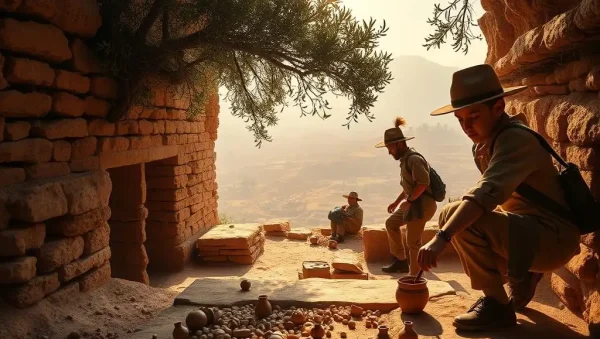
Understanding how we know what we know is key to appreciating these sites. Our subcategory offers a behind-the-scenes look at field methodology at Catalhoyuk, including flotation for micro-botanical remains, micro-stratigraphy, and intra-site GIS mapping. You’ll learn about the shift from conventional grid digging to context-based recording, championed by Ian Hodder, which preserves artifact relationships. We feature interviews with archaeologists, video logs from excavation seasons, and open datasets from the Çatalhöyük Research Project. Techniques like high-resolution 3D scanning and from-line mapping are explained, alongside geophysical surveys using ground-penetrating radar to locate undiscovered structures.
For aspiring archaeologists, we provide a step-by-step guide to seriation and radiocarbon calibration, using Ancestral Anatolian sequences as case studies. We also cover bioarchaeology—how skeletal analysis reveals health, trauma, and labor division. Ethical discussions include repatriation of artifacts to Turkey and community engagement with local villages. Digital humanities tools, such as linked open data for site records, are highlighted for research reproducibility. Finally, our comparative section shows how methods differ at smaller sites like Boncuklu Höyük, allowing nuanced chronological resolution. By demystifying the scientific process, you gain confidence in interpreting the evidence yourself.
Frequently Asked Questions
What is the significance of Catalhoyuk in Neolithic archaeology?
Catalhoyuk is vital because it demonstrates deliberate urban planning without streets, egalitarian social structure, and rich ritual life at 9,000 years ago. It challenges assumptions about how cities and complex institutions develop, showing that dense populations can thrive without central authorities. Its well-preserved art and burials provide rare insights into prehistoric cognition and social bonding.
How did Göbekli Tepe predate agriculture if barley was farmed there?
Recent evidence indicates sheep were domesticated by 8500 BCE, slightly later than the first enclosure construction. However, most food at Göbekli Tepe came from wild game, legumes, and nuts. The site’s builders likely cultivated wild cereals before full domestication, using surplus for feasts. Thus, ritual may have motivated agriculture, not vice versa.
What are plastered skulls, and why were they made?
Plastered skulls are human crania with facial features modeled in plaster, often painted. Found at Catalhoyuk and Aşıklı Höyük, they likely represented deceased ancestors, perhaps to honor lineage or claim territorial rights. They may also have been objects of veneration during house foundation rituals, reinforcing social memory and kinship ties.
Are Catalhoyuk and Çatalhöyük the same site?
Yes, Catalhoyuk (often spelled Çatalhöyük using Turkish diacritics) is the same settlement in central Anatolia. The name means "forked mound," referring to twin tells. Digital resources may use either spelling; ArchaeologyHub employs both for search optimization.
Can I visit these Neolithic sites today?
Yes, Catalhoyuk has a visitor center with a shelter over the East Mound, plus walking paths and reconstructed houses. Göbekli Tepe is open for tours with elevated walkways around enclosures. Check Turkish Ministry of Tourism hours, and consider guided excursions from Konya or Şanlıurfa. Many sites are UNESCO World Heritage, ensuring preservation.