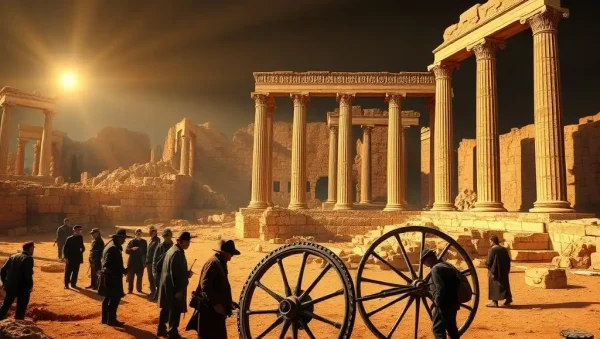
The Roman Destruction of Carthage: Myth vs. Archaeological Reality
🌟 Explore the Roman Carthage destruction archaeology to uncover the true events behind Rome’s conquest. This article compares myth and reality, highlighting…
Read article
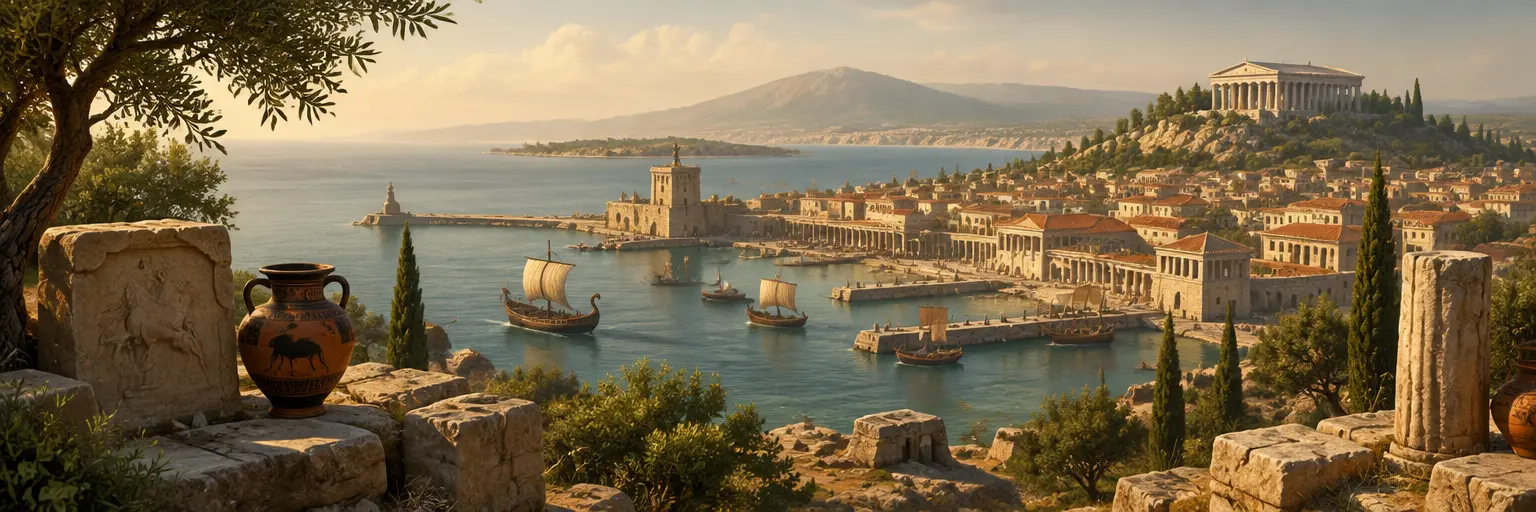
Explore the maritime legacy of one of antiquity’s most formidable powers with ArchaeologyHub.org’s dedicated coverage of Carthage & Punic Settlements. From the legendary harbors of Tunis to far-flung trading posts across Sicily, Sardinia, and Iberia, our digital encyclopedia delves into the urban planning, ritual tophets, and naval engineering that defined Punic civilization. Uncover how these Mediterranean sites reveal a culture of fierce independence, intricate trade networks, and enduring conflict with Rome, all through excavation reports, artifact analyses, and interactive timelines. Whether you’re tracing the rise of a merchant empire or the resilience of its colonial outposts, this curated collection illuminates the archaeological fingerprints left by Carthaginian settlers—offering a fresh lens on ancient maritime power and cultural exchange.
Welcome to ArchaeologyHub.org’s dedicated section on Mediterranean Sites: Carthage & Punic Settlements. Here, we dive deep into the maritime empire that once rivaled Rome, tracing its origins from Phoenician traders to the legendary city of Carthage. Discover excavation reports, urban planning insights, and the daily life of Punic people across the Mediterranean basin. This subcategory is your gateway to understanding how a seafaring civilization shaped trade, religion, and warfare from the 9th century BCE to the Roman destruction—and revival—of its greatest city.
When you explore this subcategory, expect a detailed analysis of the city’s dual harbors—the military cothon and the commercial port—which were engineering marvels of their time. Articles here break down the grid-like street systems, the Byrsa Hill citadel, and the residential quarters, using geospatial data from recent LiDAR surveys. You’ll learn how the city’s topography influenced defensive strategies and trade routes, with evidence from amphora distributions and shipwrecks in the nearby Gulf of Tunis.
Furthermore, we examine the Tophet precincts—controversial burial grounds for children and animals—as well as sanctuaries dedicated to Baal Hammon and Tanit. Our guides synthesize French and Anglo-American excavation reports, from 19th-century pioneers to contemporary Tunisian-Italian projects. Each entry includes interactive maps and 3D reconstructions, allowing you to visualize how Punic urbanism adapted Phoenician prototypes to North African conditions, creating a unique cultural fusion that influenced später Roman Africa.
Dive into the economic backbone of the Punic world through our curated shipwreck databases and harbor studies. This subcategory covers cargoes of Murex dye, timber, metals, and ceramics, tracing their distribution from Cadiz to Cyprus. You’ll find case studies on the Marsala Punic ship, the Skerki Bank wrecks, and the recently discovered deep-sea sites off Sicily. Our experts analyze amphora typologies and lead anchor stocks to reconstruct seasonal sailing routes and merchant networks that linked Carthage to Iberian and Balearic colonies.
Expect also a focus on emporia (trading posts) such as Motya, Sulcis, and Ebusus, where local populations interacted with Punic settlers. We provide comparative tables of coinage, weights, and measures, sourced from numismatic databases and metallurgical analyses. The section emphasizes how piracy, state sponsorship, and commercial competition shaped the Punic economy, ultimately enabling Carthage to field large mercenary armies funded by trade surplus. This is essential reading for understanding the First Punic War’s economic origins.
This facet of the subcategory focuses on the sacred spaces and burial rites of Punic communities. Learn about the layout of rural sanctuaries, such as those at Kerkouane and Sbeitla, and the evolution of the Tophet from simple urn fields to monumental enclosures. Our articles interpret stelae iconography, votive masks, and amulets, connecting them to Phoenician and Near Eastern precedents. We also present bioarchaeological data from recent osteological analyses, offering nuanced perspectives on infant mortality and sacrifice debates.
Additionally, explore funerary architecture, including rock-cut tombs, hypogea, and mausolea, with detailed inventories from the necropoleis of Carthage, Jebel Mlezza, and Tharros. Special attention is given to grave goods—scarabs, glass paste, ostrich eggs—and their symbolic meanings. By combining epigraphic texts like the Carthago inscriptions with material culture, our content reveals a religion that blended official state cults with regional and family-level devotions. This helps correct older colonial-era interpretations of Punic “barbarism.”
Here, expect a tactical and architectural analysis of Punic defenses, from the triple walls of Carthage to coastal watchtowers and inland forts. We detail the stone masonry techniques, use of ditches and ramparts, and the integration of naval bases with land-based fortifications. Case studies include the siegeworks of Agrigento, the fortifications of Lilybaeum (Marsala), and the outpost at Kerkouane. Each entry includes diagrams of siege engines, range estimates, and troop deployment patterns based on Polybius and Diodorus accounts.
Delve also into the role of mercenaries—Numidians, Iberians, Ligurians, and Campanians—and how their camps, armaments, and pay are reflected in archaeological assemblages. We analyze ballista bolts, sling stones, and catapult components found at defensive sites, linking them to siege warfare innovations. This subcategory presents a balanced view of Punic military effectiveness, countering the notion that Carthage was purely a maritime power. You’ll gain insight into how colonial settlements were militarized landscapes, with urban plans often prioritizing defense against both external invaders and internal revolts.
Immerse yourself in the mundane yet revealing aspects of Punic existence, from cooking wares and amphorae to textile production and metalworking. Our subcategory provides thematic guides on household organization, including the courtyard houses of Kerkouane with their iconic red stucco decorations. You’ll find analyses of faunal remains, seed impressions, and pollen data that reconstruct diet, agriculture, and animal husbandry. Special articles cover ceramic kilns, glass workshops, and the production of the famous.
Additionally, explore epigraphic sources—Phoenician and Neo-Punic inscriptions on stone, pottery, and coins—that reveal personal names, professions, and legal formulae. We include translations and commentaries on texts like the Tariff of Marseille and the Nora Stone. By integrating documentary evidence with artifacts, this section paints a vivid picture of social stratification, gender roles, and economic activities. Expect also community-driven posts on experimental archaeology, such as recreating Punic bread or sailing a replica of the Marsala ship.
The term “Carthaginian” refers specifically to the city-state of Carthage and its direct colonies or territories. “Punic” is a broader descriptor used by Romans for all Phoenician-derived cultures in the western Mediterranean, including settlements in Sardinia, Sicily, Spain, and North Africa that shared linguistic and religious traits but had distinct local identities.
Archaeological evidence from Tophets shows cremated remains of infants and young animals, often in elaborate urns. Recent bioarchaeological studies suggest most were natural deaths, but some textual sources indicate ritual sacrifice during crises. The debate remains unresolved, but our articles present both interpretive camps with current data from DNA and isotope analyses.
The dual harbor at Carthage included a circular cothon for warships and a rectangular commercial harbor, separated by a narrow channel. It featured ship sheds, administrative islands, and secure facilities. This design allowed for efficient naval logistics and rapid fleet deployment, contributing to Carthage’s dominance in the western Mediterranean.
Punic settlements often emphasized commerc and defense over civic monuments, with less monumental religious architecture than Greek poleis. They also integrated more extensively with indigenous populations, leading to hybrid cultures like the Libyphoenician. However, both shared urban grid planning and reliance on maritime trade, though they differed in political structures—Carthage wasoligarchic rather than democratic.
Yes, many are open to the public, including Carthage’s Byrsa Hill, the Antonine Baths, and the Tophet in Tunisia. Other accessible sites include Motya in Sicily, Tharros in Sardinia, and Cádiz in Spain. However, some are fragile or unexcavated, so check with local heritage authorities for access permits, especially for underwater or remote locations.







