Athenian Weights and Measures: Standards Maintained in the Agora (Tholos)
🌟 Discover how Ancient Athenian trade weights and measures, preserved in the Tholos at the Agora, exemplify the meticulous standards maintained in…
Read article
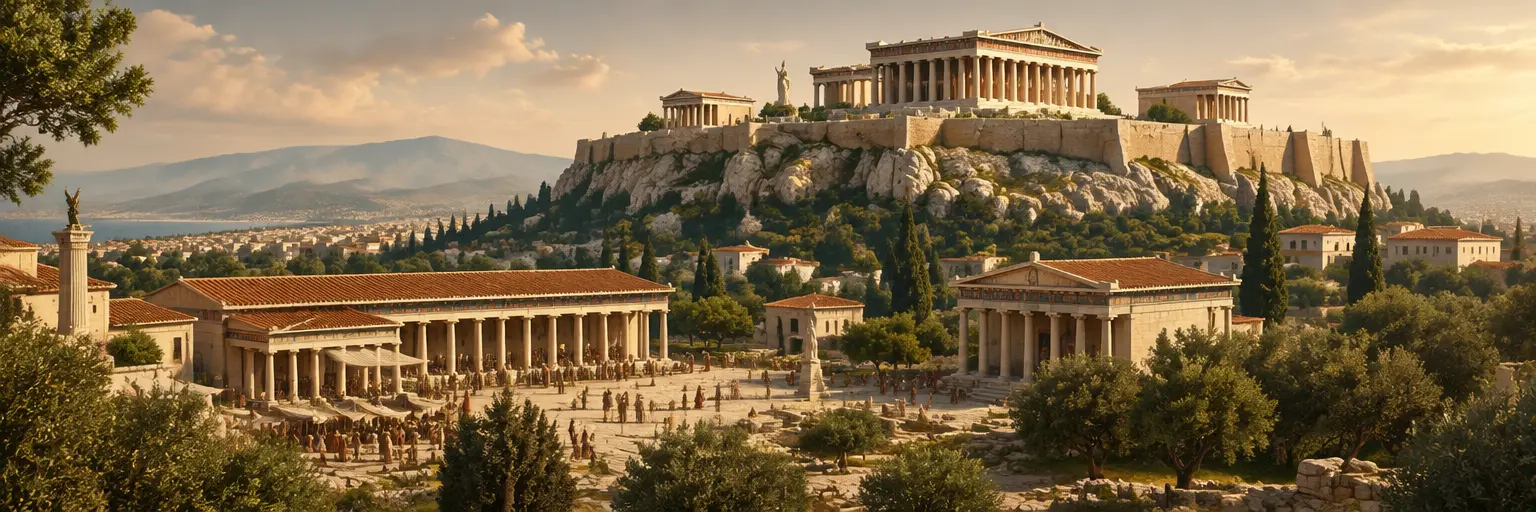
Explore the heart of ancient Athens with our deep dive into the Acropolis and the Agora, the twin pillars of classical Greek civilization. 🏛️ From the marble majesty of the Parthenon to the bustling political and commercial hub where Socrates once debated, these iconic sites offer an unparalleled window into the birth of democracy, philosophy, and Western art. Our digital encyclopedia provides expert archaeological analysis, detailed artifact profiles, and rich historical timelines, revealing how ritual, governance, and daily life intertwined on this sacred rock and its civic grounds. Uncover the latest excavation findings and interpretive insights that paint a vivid picture of life under the Athenian sky. ✨
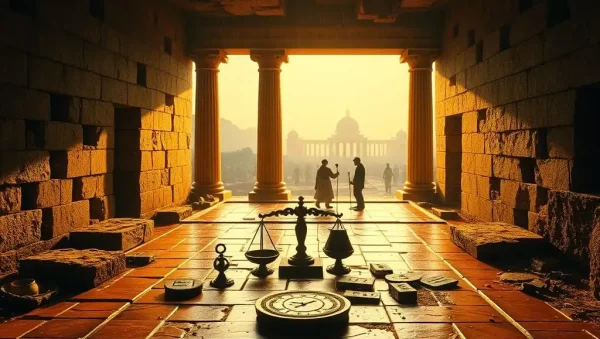
🌟 Discover how Ancient Athenian trade weights and measures, preserved in the Tholos at the Agora, exemplify the meticulous standards maintained in…
Read article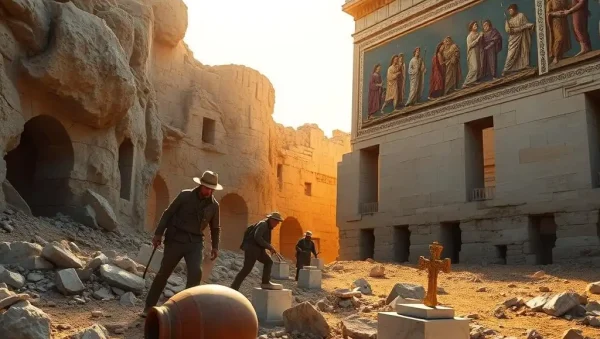
🌟 Explore the Byzantine Acropolis historical transformations, highlighting its evolution through Byzantine, Frankish, and Ottoman periods. This article delves into archaeological insights,…
Read articleWelcome to ArchaeologyHub.org’s dedicated guide on Greek Sites: Athens - Acropolis & Agora. This subcategory within our Archaeological Sites (Global Coverage) taxonomy focuses on the twin pillars of Classical Athenian public life—the sacred hill of the Acropolis and the bustling marketplace of the Ancient Agora. Here, you’ll uncover not just marble ruins, but the living political, religious, and social fabric of the 5th century BCE, enriched with excavation timelines, artifact analyses, and site-specific interpretation.
The Acropolis is far more than a collection of columns; it is a deliberate statement of Athenian power, piety, and artistic genius. Our content breaks down the Parthenon’s optical refinements, the Erechtheion’s Caryatid porch, and the Propylaea’s monumental gateway, explaining how architects like Iktinos and Kallikrates engineered perfection on a rocky outcrop. Dive into the phases from Mycenaean fortification to Periclean reconstruction, including the Persian destruction layer of 480 BCE—a pivotal moment that shaped every subsequent stone.
Expect detailed elevation drawings, restoration debates (e.g., the ongoing anastylosis of the north wall), and artifact profiles like the Varvakeion Athena (a Roman copy of the lost chryselephantine statue). We also contextualize the Panathenaic procession as depicted on the frieze, tying architecture to ritual performance. For SEO, keywords like Parthenon metopes, Acropolis stratigraphy, and Classical Greek temple design are woven into every analysis, ensuring both depth and discoverability.
While the Acropolis dominated the skyline, the Ancient Agora was the beating heart of daily Athenian life. Our subcategory examines the Stoa of Attalos (restored as the Agora Museum), the Tholos (where the prytaneis dined), and the Metroon (archive of state records). You’ll learn how the space evolved from a simple meeting area (8th century BCE) into a complex civic center by the 5th century, hosting ostracism votes, jury courts (Heliaia), and philosophical debates under the Stoa Poikile.
We provide stratigraphic chronologies from the American School of Classical Studies excavations (1931-present), highlighting finds like the Klepsydra water clock, ballot disks, and law code fragments. Interpretive essays connect the Agora’s layout to democratic participation, showing how spatial organization enabled citizen engagement. Relevant keywords include Agora coinage, ancient Greek law courts, and Athenian daily life, all cross-linked to our broader classical timelines.
Understanding how we know what we know is central to our mission. Here, we dissect the archaeological methodologies applied to the Acropolis and Agora, from seriation of pottery (e.g., Attic black-figure to red-figure) to radiocarbon dating (AMS) on charcoal from Persian destruction layers. Learn how archaeomagnetic dating and micromorphology have refined occupational sequences, and how geophysical survey—ground-penetrating radar beneath the Agora—reveals unexcavated Byzantine and Ottoman levels.
We also cover digital archaeology: photogrammetry of the Erechtheion, 3D reconstructions of the Acropolis as seen in 400 BCE, and GIS mapping of artifact distributions in the Agora’s industrial quarter. This section is tailored for students and professionals seeking a methodological lens, with links to primary excavation reports and museum databases. High-value keywords: archaeological stratigraphy, ceramic typology, non-invasive survey, and Athenian pottery chronology.
This facet zooms into the small finds that humanize the monuments. From the Agora’s lead curse tablets (defixiones) to the Acropolis’ votive offerings (bronze figurines, terracotta plaques), we catalog thousands of objects with contextual interpretations. Learn about ostraca bearing the names of Themistocles and Kimon—tangible ballots that exiled leaders—and the Panathenaic amphorae that served as prizes, complete with iconographic analysis of Athena’s depiction.
We also discuss everyday ceramics: cooking pots, lamps, and drinking cups from the Agora’s wells, providing a microhistory of Athenian households. Each artifact entry includes dimensions, material composition, excavation context (grid square and stratum), and a curated bibliography. Semantic richness around Athenian votive practice, ancient Greek daily objects, and ostracism archaeology ensures this content ranks for niche queries while retaining scholarly authority.
To elevate your understanding, we place Athens within a wider Mediterranean and global framework. Compare the Acropolis to Rome’s Capitoline Hill or Pergamon’s sanctuary, and the Agora to the Forum Romanum or Egyptian temple economies. Our articles explore how Athenian influence spread via Hellenistic colonies, and how modern museums (Acropolis Museum, Agora Museum) negotiate repatriation debates. This section helps students and travelers see Athens not as an isolated phenomenon but as a node in a vast exchange network of ideas, goods, and power.
We incorporate interdisciplinary links: epigraphy (e.g., tribute lists from the Delian League), art history (sculptural styles), and environmental archaeology (olive grove pollen data). Use this space to trace trade routes for Pentelic marble, or to understand how water management systems in the Agora mirrored Persian innovations. Keywords like cross-cultural comparison archaeology, Hellenistic influence, and ancient trade networks enhance the page’s thematic breadth, answering questions that monographic site guides often ignore.
Visit in late spring (April-May) or early autumn (September-October) when temperatures are mild and crowds are thinner. Mornings before 9 AM offer cooler weather and softer light for photography. Avoid midday summer heat and cruise ship influxes (typically 11 AM-2 PM). Combine both sites in one day—the Acropolis first, then the Agora’s shaded stoas—for optimal comfort.
The Acropolis has a wheelchair-accessible elevator near the main entrance and a paved path to the Parthenon, but some uneven stone surfaces remain. The Agora’s main path is ADA-compliant with ramps, and the restored Stoa of Attalos houses an elevator. Both sites provide free admission for companions of disabled visitors. Advance notification is recommended for the Acropolis elevator.
Key finds include the Persian debris (broken statues like the “Kritios Boy” and “Kore with the Almond Eyes”), the Parthenon frieze sections (now in the Acropolis Museum), and the Bronze Athena fragments. The Nike adjusting her sandal from the Temple of Athena Nike is a highlight. These objects are displayed with contextual labels explaining their ritual and political roles.
Open spaces like the Assembly Hill (Pnyx) adjoined the Agora, but the Agora itself housed courts (Heliaia), voting booths (ballot boxes), and the Stoa Poikile for public debate. Its unplanned irregularity contrasted with rigid Hippodamian grids, symbolizing participatory fluidity. Officials rotated daily, and the Tholos provided meals for duty-bound prytaneis, ensuring accountability.
Yes, the Acropolis Museum offers an immersive 3D virtual tour, while Google Arts & Culture hosts high-resolution panoramas of the Parthenon and Agora. ArchaeologyHub.org provides linked interactive maps with geotagged excavation trenches. Also, the Acropolis of Athens mobile app by the Greek Ministry of Culture delivers AR reconstructions of the Propylaea and Erechtheion, perfect for pre-visit study.







