Explore Gandharan Sites: Buddhist Art & Monasteries (Taxila, Swat Valley)
Welcome to ArchaeologyHub.org’s dedicated guide on Gandharan Sites, a treasure trove of Buddhist art, monastic ruins, and cross-cultural heritage nestled between the mountains of modern Pakistan. This subcategory zooms into the ancient regions of Taxila and the Swat Valley, where Greco-Roman aesthetics fused with Indian Buddhist iconography to create the iconic Gandhara style. Whether you are a student of archaeology, a traveler of history, or a spiritual seeker, here you will uncover excavation timelines, artifact analyses, and monastery layouts that shaped Silk Road Buddhism.
🏛️ The Unique Fusion of Greco-Buddhist Art in Gandhara
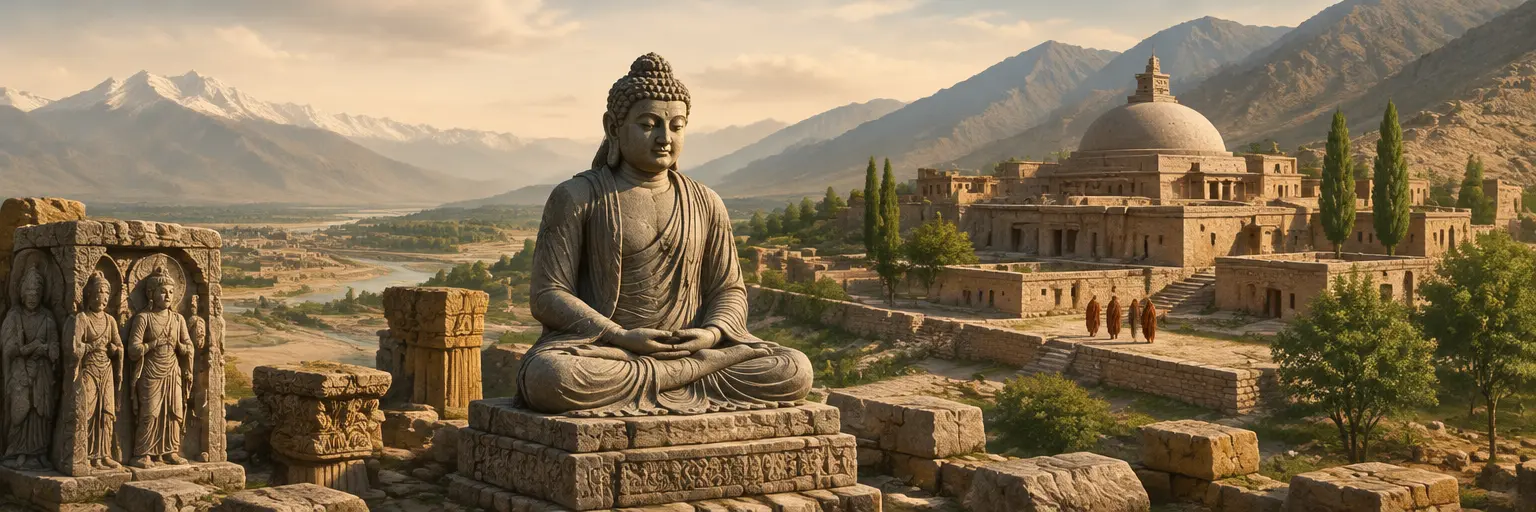
Gandharan art is celebrated for its realistic portrayal of the Buddha in human form, a radical departure from earlier symbolic representations. At Taxila’s Sirkap and Swat’s Butkara Stupa, you will discover stone carvings, stucco heads, and friezes depicting the Bodhisattva, often dressed in flowing Hellenistic robes. The influence of Alexander’s successors—the Indo-Greeks—created a visual language where curly hair, aquiline noses, and draped garments mimic classical Greek sculpture, yet carry deep Buddhist meaning.
This section provides high-resolution artifact profiles and stylistic comparisons, helping you identify the chronological evolution from the 1st century BCE to the 5th century CE. For SEO, we emphasize keywords like Greco-Buddhist art, Gandhara sculpture, and Buddhist iconography. You will learn how local schist stone, clay, and lime plaster were used, and why the Swat Valley’s rock carvings offer a more rustic, indigenous flavor compared to Taxila’s polished urban workshops.
⛩️ Inside Taxila’s Great Monasteries: Dharmarajika and Julian
Taxila, a UNESCO World Heritage site, boasts over 50 archaeological mounds, with Dharmarajika Stupa and the Julian Monastery standing out as prime examples of monastic life. Dharmarajika, founded by Emperor Ashoka, served as a major relic shrine, while Julian’s courtyards, chapels, and bathing pools reveal a thriving community of monks from the 2nd to 5th centuries CE. Excavation reports detail the layout of stupa courts, votive tablets, and coin hoards that date the site’s peak under the Kushan Empire.
Expect detailed virtual tours, floor plans, and excavation diaries. We highlight monastic quarters, stupa circumambulation paths, and water management systems—essential for understanding daily rituals. For archaeology enthusiasts, we explain stratigraphy layers and pottery typologies, while for tourists, we offer practical tips on visiting current conservation zones. Keywords like Taxila monastery ruins, Dharmarajika stupa, and Julian monastery are woven throughout to boost search visibility.
🏞️ The Swat Valley: The “Uddiyana” of Tantric Buddhism
Often called the “Switzerland of the East,” the Swat Valley is not just scenic but historically sacred as the birthplace of Vajrayana Buddhism. Sites like Butkara Stupa, Shingardar Stupa, and the rock carvings at Manglawar reveal a dense network of rural monasteries and pilgrimage routes. The valley served as a crucial corridor linking Gandhara to Central Asia, where monks translated texts and spread esoteric rituals. Our coverage includes recent drone surveys and restoration efforts post-conflict, showing how looting has been countered with digital documentation.
Here, you will find thematic essays on Vajrayana origins, Swat stupas, and Buddhist pilgrimage circuits. We analyze the schist reliefs of the “Miraculous Buddha” and the unique double-headed eagle carvings that signify Indo-Scythian influences. For researchers, we compile excavation reports from the Italian Archaeological Mission, emphasizing thermoluminescence dating and ceramic sequences. Travelers will appreciate our suggested itineraries linking Swat’s museums and monasteries.
📜 Chronology and Key Dynasties: Mauryan to Kushan Influence
Understanding the timeline of Gandharan sites requires a deep dive into the Mauryan Empire’s spread of Buddhism, followed by Indo-Greek, Scythian, Parthian, and Kushan patronage. The chronology table on this page will guide you from Ashoka’s 3rd-century BCE pillars to the final Buddhist abandonment under Huna invasions in the 5th century CE. Each dynasty left distinct architectural fingerprints—the Indo-Greeks introduced fortifications, the Scythians built circular stupas, and the Kushans commissioned colossal Buddha statues.
We break down the Kushan golden age under Kanishka, when artists migrated to workshops in Taxila and Swat, perfecting narrative reliefs of the Buddha’s life. You’ll learn how numismatic evidence—coins of Gondophares and Vasudeva—anchor precise dating. For students, we provide a downloadable PDF timeline; for enthusiasts, we discuss how radiocarbon dating of charcoal layers from the Swat’s Butkara II has reshaped earlier assumptions. Keywords such as Kushan dynasty art and Mauryan Buddhist expansion are optimized.
🔍 Excavation Techniques and Preservation Challenges
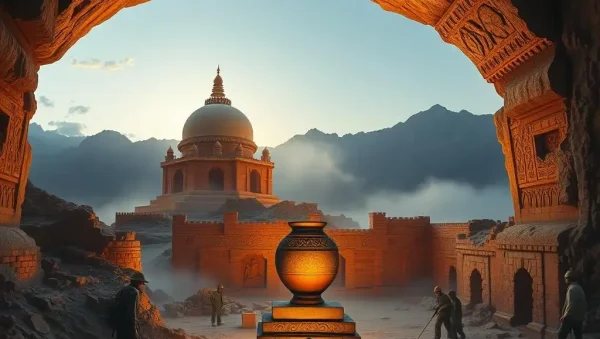
Modern archaeology at Gandharan sites employs advanced methods like magnetometry, ground-penetrating radar, and 3D laser scanning to reveal unexcavated stupas without damaging them. The famous Taxila excavations by Sir John Marshall (1913–1934) are contrasted with modern stratigraphic digs at Swat’s Amluk-Dara Stupa. Preservation is a race against time—monsoon erosion, illegal digging, and urban expansion threaten fragile stucco and schist artifacts.
Our section details non-invasive archaeology, artifact conservation, and community engagement. We explain how climate-controlled shelters protect carved panels, and how local training programs help villagers become site guardians. For SEO, we target terms like Gandhara preservation, archaeological remote sensing, and site management plans. You’ll also read about recent UNESCO initiatives to re-bury important floors to protect them, a technique known as “backfilling” for long-term survival.
Frequently Asked Questions
What is the significance of the Gandhara region in Buddhist history?
The Gandhara region, covering Taxila and Swat, was a major crossroads for trade and culture on the Silk Road. It served as a premier center for Buddhist learning, where monks translated scriptures into Sanskrit and developed Mahayana philosophies. Its art pioneered the first anthropomorphic depictions of the Buddha, influencing Buddhist art across Asia.
How did Greco-Roman culture influence Gandharan Buddhist art?
Following Alexander the Great’s campaigns, Indo-Greek kingdoms (2nd century BCE) introduced Hellenistic sculptural techniques and aesthetics. This resulted in Buddha statues with realistic anatomy, wavy hair, and draped togas resembling Greco-Roman gods. Later, Roman trade brought stucco and plaster techniques, enriching local styles with narrative reliefs.
Which is better to visit: Taxila or Swat Valley for Buddhist ruins?
Taxila offers more excavated and accessible sites, including museums, with excellent guides and infrastructure. Swat Valley, while more scenic and spiritually charged, has fewer restored monuments but offers raw, evocative ruins like Butkara. Choose Taxila for education and organization, Swat for off-the-beaten-path exploration and natural beauty.
What are the main artifacts discovered at Taxila’s Dharmarajika Stupa?
Excavations uncovered relic caskets, gold and silver coins, inscribed Brahmi tablets, and hundreds of small votive stupas. These artifacts, now in the Taxila Museum, helped date the site’s continuous occupation from the 3rd century BCE to the 5th century CE. The relic caskets contained Buddhist holy relics, proving the site’s ceremonial importance.
How are modern archaeologists protecting Gandharan sites from looting?
Modern efforts include surveillance drones, community rewards for reporting looters, and digital 3D recording of every artifact before removal. International collaborations, like the Italian Mission in Swat, train local police and guards. Additionally, legal frameworks under the Pakistan Antiquities Act help repatriate smuggled Gandharan sculptures from auction houses worldwide.