Discover the Megalithic Landscapes of Stonehenge and Avebury
Welcome to ArchaeologyHub.org’s dedicated exploration of European Prehistoric Sites: Stonehenge & Avebury, a cornerstone of our global archaeological taxonomy. This subcategory delves into the awe-inspiring Neolithic and Bronze Age monuments of Wiltshire, England, recognized as a UNESCO World Heritage Site. Here, you’ll uncover the mysteries of massive sarsen stones, ancient earthworks, and ritual landscapes that have puzzled historians for centuries. Our content focuses on the construction techniques, astronomical alignments, and cultural significance of these iconic sites, offering a rich resource for enthusiasts, students, and researchers seeking in-depth archaeological analysis.
🏛️ The Architecture of Stonehenge: Engineering Marvels
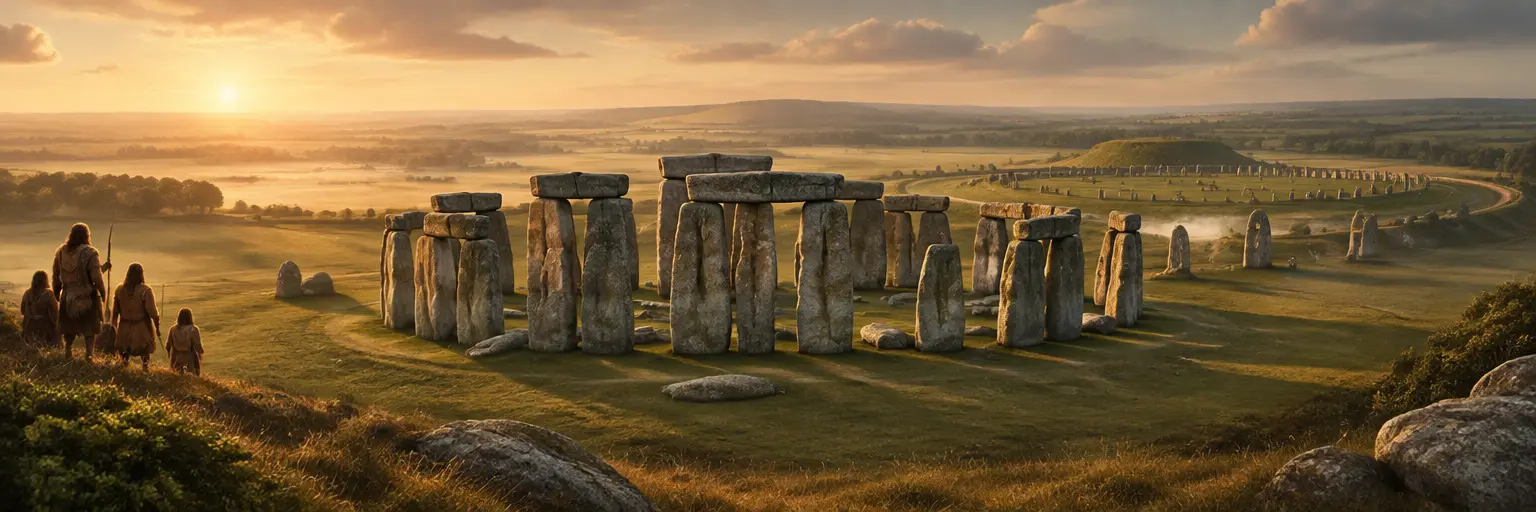
This section breaks down the structural evolution of Stonehenge, from its earliest ditch-and-bank phase around 3000 BCE to the iconic trilithons erected centuries later. Expect detailed analyses of the bluestone transportation from Wales and the sarsen sourcing from local Marlborough Downs. You’ll learn about the ingenious methods—lever, ramp, and rope—used to raise and cap stones weighing up to 25 tons, showcasing remarkable prehistoric engineering.
Our interpretive content also examines the astronomical precision of the monument’s alignment with the summer solstice sunrise and winter solstice sunset. We explore theories ranging from a celestial observatory to a ceremonial healing center, supported by archaeological evidence like cremated human remains. This subcategory ensures you grasp not just the “what” but the “how” and “why” behind each stone placement, making it invaluable for understanding megalithic architecture across Europe.
🌿 Avebury’s Great Henge: A Village Within a Stone Circle
Here, we focus on Avebury, the largest stone circle in the world, encompassing a village and roads within its massive earthwork. Unlike Stonehenge’s imposing verticality, Avebury offers a sprawling landscape of roughly 100 standing stones, a perimeter ditch, and an outer bank. Our content details its construction phases, from 2850 BCE onwards, and the social organization required to mobilize hundreds of workers for quarrying and erecting local sarsen stones.
You’ll also discover the site’s ritualistic purpose, including possible processional pathways linking to nearby structures like the West Kennet Avenue and the Sanctuary. We analyze excavations that reveal animal bones, pottery, and evidence of feasting, suggesting Avebury was a hub for communal gatherings and seasonal ceremonies. This section enriches your understanding of how megalithic landscapes functioned as social and spiritual centers, not just static monuments.
🗿 The West Kennet Long Barrow & Silbury Hill: Funerary & Earthen Giants
Extending beyond the famous circles, this subcategory explores auxiliary features within the same UNESCO landscape. The West Kennet Long Barrow, one of Europe’s largest chambered tombs, offers insight into Neolithic burial practices. Here, you’ll find descriptions of its five chambers, multiple burial phases, and the deliberate blocking of the entrance—symbolizing the end of its funerary use. We interpret the skeletal remains and grave goods as evidence of ancestry veneration.
Silbury Hill, Europe’s tallest prehistoric man-made mound at 40 meters, presents a contrasting mystery. Despite centuries of investigation, no burial or ritual purpose has been confirmed. Our content covers recent geophysical surveys and core sampling, revealing complex internal structures built from chalk and soil. We discuss theories ranging from a territorial marker to a symbolic “earth mother,” showcasing how even non-monumental features demand rigorous archaeological analysis.
📜 Cultural & Mythological Significance Across Millennia
This segment connects the physical remains to their enduring legacy in human imagination. We trace how Stonehenge and Avebury were perceived by later societies—from Romano-British visitors leaving coins to medieval legends attributing the stones to Merlin’s magic. Our content highlights folklore, such as the “Heel Stone” story and the association with giants, which shaped local identity for generations.
Additionally, we examine modern interpretations, including neo-Druid ceremonies and astronomical hypotheses like the “Neolithic computer” theory. By studying these evolving narratives, you’ll grasp how prehistoric sites are not static artifacts but dynamic cultural symbols. This subcategory ensures a holistic view, blending archaeology with anthropology and popular heritage studies, perfect for understanding the intangible value of megalithic landscapes.
🧭 Visitor’s Guide & Preservation Efforts
For those planning a visit or interested in conservation, this section offers practical and ethical insights. We detail access routes, visitor centers, and the current management challenges, such as footpath erosion and balancing tourism with preservation. Expect recommendations on best times to visit for solstice events, as well as tips for respecting site restrictions, like the cordoned-off stone circles at Stonehenge.
Our content also highlights ongoing archaeological research, including the Stonehenge Riverside Project and Avebury’s community archaeology initiatives. We explain how modern technology like LiDAR and 3D scanning aids in monitoring structural stability. By engaging with this subcategory, you’ll become an informed advocate for these irreplaceable heritage sites, understanding the delicate balance between public access and long-term conservation.
Frequently Asked Questions
How old are Stonehenge and Avebury?
Stonehenge’s earliest phase dates to around 3000 BCE, with its iconic stone circle constructed between 2500–2000 BCE. Avebury’s massive henge and stone circles were built slightly earlier, starting around 2850 BCE. Both sites reflect over a millennium of continuous use, modification, and ritual activity, making them among the most ancient monumental landscapes in Europe.
What is the difference between a henge and a stone circle?
A henge is a prehistoric earthwork consisting of a circular bank and internal ditch, often with one or more entrances. A stone circle is a ring of standing stones, which may or may not be enclosed by a henge. Stonehenge is an unusual henge because its ditch sits outside the bank, while Avebury is a classic henge enclosing multiple stone circles.
Why were the stones at Stonehenge brought from such great distances?
The bluestones, weighing up to 4 tons, originate from the Preseli Hills in Wales, over 240 kilometers away. Researchers believe they held sacred or healing properties for prehistoric peoples, possibly linked to their source’s geological uniqueness. Alternatively, they served as symbols of alliance or conquest, showing the site’s pan-regional importance and logistical power.
Can you visit Stonehenge and Avebury on the same day?
Yes, but it requires planning. The two sites are about 30 minutes apart by car. Many visitors start at Stonehenge’s visitor center, then drive to Avebury, which offers free access to its stone circles and village. Budget at least 4–5 hours total to appreciate both landscapes without rushing, especially if walking the West Kennet Avenue.
Are there any ongoing excavations at these sites?
While large-scale digs are rare due to preservation rules, small-scale research projects periodically occur. The Stonehenge Riverside Project (2003–2009) revolutionized understanding, and recent work at Avebury has focused on geophysical surveys and remote sensing. Future excavations require special permissions, ensuring scientific rigor and minimal disturbance to the prehistoric landscape.