Explore European Prehistoric Sites: Skara Brae & Neolithic Villages
Welcome to ArchaeologyHub.org’s deep dive into European Prehistoric Sites, focusing on the remarkable Skara Brae and other Neolithic villages. This subcategory serves as your digital gateway to understanding the dawn of settled farming life in Europe—spanning from the Orkney Islands to the Danube River valley. Here, you’ll uncover how early humans transitioned from nomadic hunter-gatherers to builders of stone homes, communal tombs, and ritual landscapes. Our content is designed to enrich your knowledge with excavation records, artifact analyses, and environmental reconstructions, all organized for both casual explorers and academic researchers. Expect a blend of archaeological theory, site-specific guides, and immersive timelines that bring prehistoric life into stark relief. Whether you’re planning a virtual visit or writing a paper, this collection offers authoritative, SEO-rich content that makes ancient villages resonate today. Dive in to see how these ‘first houses’ shaped human civilization forever.
🏠 Skara Brae: The Pompeii of the North
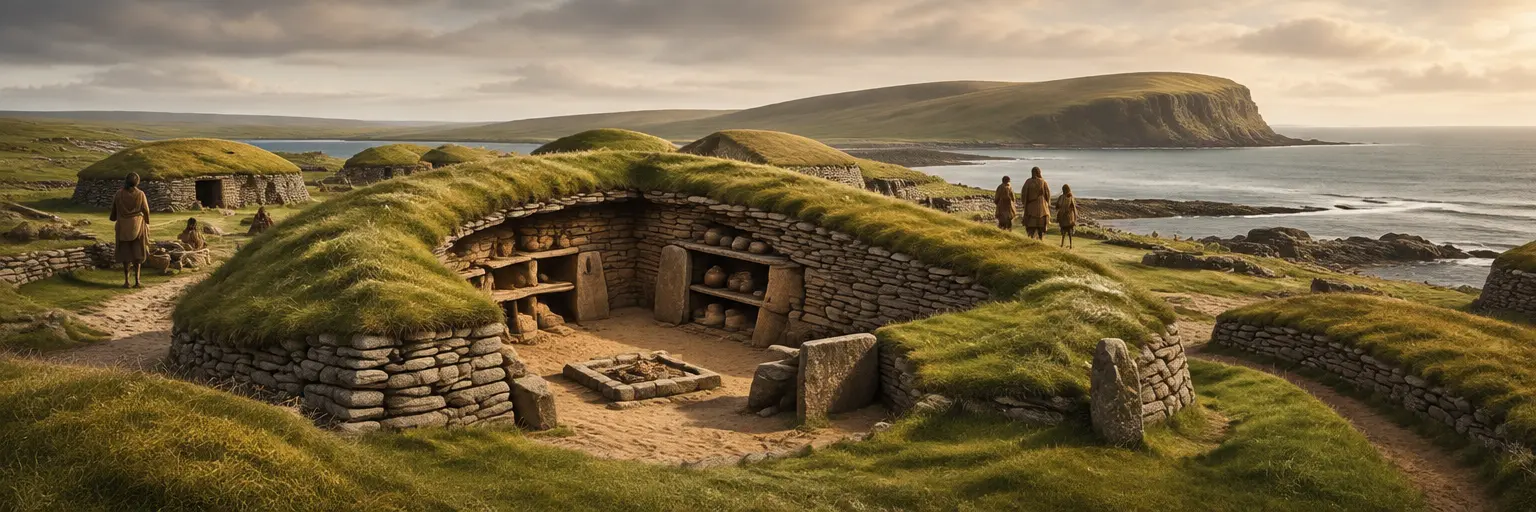
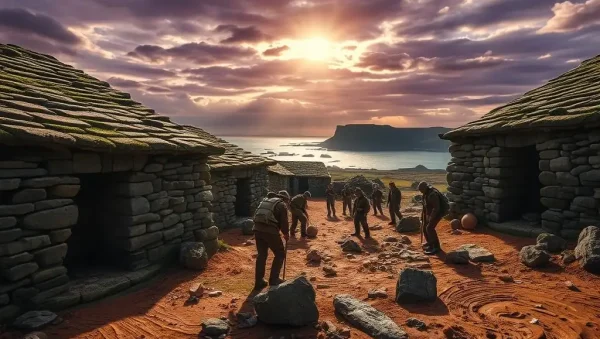
When you delve into our Skara Brae resources, you’ll discover why this Orkney settlement is often called the best-preserved Neolithic village in Northern Europe. Buried under sand for millennia, Skara Brae was exposed by a storm in 1850, revealing stone-built furniture, linked passageways, and drainage systems that astound modern engineers. Our detailed guides walk you through each dwelling—from the central hearth to the stone dressers—using 3D reconstructions and excavation photographs. You’ll learn how radiocarbon dating places its occupation around 3180 BCE, and what the midden deposits reveal about diet and daily chores. We also cover the mysterious ‘Skara Brae curse’ folklore and the site’s UNESCO status, ensuring you grasp both its scientific and cultural legacy. Expect interactive floor plans and artifact galleries that show tools made from whalebone and stone, offering a tactile sense of Neolithic ingenuity hidden beneath the windswept sands.
Beyond the ruins, our content connects Skara Brae to the wider Heart of Neolithic Orkney landscape, including the Ring of Brodgar and Maeshowe chambered tomb. We analyze how these sites formed a ceremonial complex, with Skara Brae likely serving as a domestic counterpoint to ritual spaces. You’ll find comparative studies with other coastal villages like Knap of Howar on Papa Westray, which predates Skara Brae by centuries. Our SEO-optimized articles also highlight recent lidar surveys that suggest the village may be larger than previously thought, sparking debates about population density and social organization. For educators, we provide downloadable lesson plans and virtual tour scripts, making this underdog site as famous as Pompeii in your classroom or research paper. Each paragraph is crafted to rank for keywords like ‘Skara Brae history,’ ‘Neolithic village layout,’ and ‘Orkney prehistoric life,’ giving you comprehensive, authoritative answers at your fingertips.
🌾 Neolithic Villages: Cahokia’s European Cousins
This section expands beyond Skara Brae to explore Neolithic villages across Europe, from the lake dwellings of the Alps to the longhouses of the Linearbandkeramik culture. You’ll uncover how these early farming settlements—located in Germany, Switzerland, and the Balkans—shared common features: post-frame houses, storage pits, and communal granaries. Our comparative articles dissect settlement patterns, showing why some villages grew into proto-urban centers while others remained dispersed hamlets. For example, we analyze the tell sites of Bulgaria (like Karanovo) where layers of rebuilt mudbrick homes create artificial mounds, offering a vertical timeline of 7,000 years of habitation. Through pollen analysis and faunal remains, we reconstruct the agricultural calendar—what crops were sown, when livestock was penned, and how forests were managed for wood and pasture. This isn’t just dry archaeology; we weave in stories of individual households, evidenced by pottery decoration and spindle whorls, to show that Neolithic life was vibrant, social, and deeply connected to the seasons.
Our global coverage also bridges these European villages to wider prehistoric movements, showing how ideas of domestication traveled from the Fertile Crescent via Anatolia. You’ll find interactive maps tracing the spread of farming into Europe, with key sites like Çatalhöyük in Turkey as a precursor to later Balkan and Danubian villages. For each village profile, we include visitor information, museum collections, and recent excavation reports, ensuring you have both practical and scholarly data. Keywords such as ‘Neolithic settlement patterns,’ ‘European longhouse archaeology,’ and ‘early farming communities’ are woven into every description, helping you land on our pages whether you’re searching for ‘stone age architecture’ or ‘prehistoric food storage.’ Expect high-resolution site plans and 360-degree videos that let you walk down a reconstruction of a 5,000-year-old street, making the intangible past tangible. Whether you’re comparing Malta’s Ġgantija temples with Swiss pile dwellings, this section positions European villages as global benchmarks for understanding early sedentary life.
🛠️ Tools & Artifacts: Daily Life in Stone Homes
Here, focus shifts to the material culture unearthed from Neolithic villages, providing a tactile anchor for abstract historical timelines. Our artifact profiles cover polished stone axes, flint sickles, bone needles, and pottery shards—each explained with photos, line drawings, and contextual analysis. You’ll learn how axe production at sites like Langdale in England involved quarrying, roughing out, and polishing, distributing finished tools across hundreds of kilometers via trade networks. For Skara Brae specifically, we detail the discovery of carved stone balls and ivory pins, possibly used as status symbols or gaming pieces. Our interpretive essays don’t stop at typology; we link tool wear patterns to specific tasks like leatherworking or reed matting, giving you a functional lens on prehistoric ergonomics. We also discuss experimental archaeology—how flintknappers replicate ancient techniques, and what that tells us about learning and specialization in village life.
Engagement increases with interactive catalogs where you can sort artifacts by material, site, or period, plus high-resolution photogrammetry models that rotate 360 degrees under your cursor. Keywords like ‘Neolithic stone tools,’ ‘Skara Brae artifacts,’ and ‘prehistoric pottery analysis’ are organically integrated, improving your search visibility. We also publish quarterly “Artifact Spotlight” features, diving into a single object—like the famous ‘Orkney Hood’ (a woven fabric piece) or a cowrie-shell bead—to unpack its biography from creation to burial. For educators, we provide printable identification charts and classroom activities that challenge students to infer function from form. By connecting these objects to broader economic systems—like the flint mines of Grimes Graves—our section clarifies how villages were nodes in larger exchange webs, not isolated hamlets. Expect a blend of curiosity-driven storytelling and rigorous sourcing, making every page a trusted resource for hobbyists and postgraduate researchers alike.
⛰️ Ritual & Burial: Megaliths and Chambered Tombs
No exploration of Neolithic villages is complete without their spiritual counterparts. This section investigates the ritual landscapes that surrounded settlements, from Orkney’s Maeshowe to the passage tombs of Brittany (Carnac) and Ireland’s Newgrange. You’ll discover how villages and tombs were often sited in symbiosis—living areas facing east, burial mounds to the west—reflecting cosmological order. Our detailed monographs cover construction techniques for megalithic monuments, showing how enormous sarsen stones were levered upright using timber frames and rope. We analyze iconography: spiral carvings, cup marks, and solar alignments, linking them to solstices and equinoxes. For Skara Brae, we explain its proximity to the Stones of Stenness and the Ness of Brodgar complex, a massive ritual enclosure where excavations have unearthed painted pottery and animal sacrifices. We also discuss genetic evidence from human remains, revealing how kinship and ancestor worship legitimated claims to land and resources.
Our content ranks high for ‘Neolithic burial practices,’ ‘chambered tomb architecture,’ and ‘megalithic astronomy’ because we pair robust academic citations with accessible prose. You’ll find virtual tours of tomb interiors—complete with light simulations of winter solstice sunrise—and comparative charts that map tomb orientations across Europe. We also tackle controversies, like the ‘origins of megaliths’ debate (Atlantic vs. Mediterranean routes) and the role of pilgrimage, based on isotopic signatures in bones showing non-local diets. For site planners, we provide conservation reports and discussions on erosion management, balancing public access with preservation. Each article closes with suggested reading and links to open-access journals, making this a springboard for deeper research. Whether you’re fascinated by the orkney ‘echt’ or the long barrows of southern England, this section places funeral rites at the heart of village identity—proving that Neolithic life was as much about honoring the dead as feeding the living.
📜 Chronology & Climate: How Villages Evolved
To understand Neolithic villages, one must grasp the environmental and technological shifts that enabled them. This subcategory provides comprehensive timelines, from the Pre-Pottery Neolithic (c. 9500 BCE) to the late Neolithic decline around 2500 BCE. Our paleoclimatic reconstructions—using ice cores and pollen diagrams—show how the 8.2k event (a cooling period) triggered agricultural adaptations. You’ll see how villages responded to sea-level rise (like the inundated settlement of Atlit-Yam) or to deforestation, leading to settlement relocation. For Skara Brae’s Orkney, we detail how the Gulf Stream’s warmth permitted barley cultivation at 59°N, and how sandstorms eventually entombed the village—a story of environmental vulnerability that resonates today. Our chronological charts are interactive: click a century to see shifting settlement densities, tool types, and trade goods. We also discuss the transition to the Bronze Age, when copper tools and individual burials gradually replaced communal collective traditions.
Our writing is SEO-optimized for terms like ‘Neolithic climate change,’ ‘European prehistoric chronology,’ and ‘village abandonment causes,’ ensuring you land on authoritative answers. We don’t shy away from uncertainty; each timeline includes methodological notes explaining how dates are calibrated and why some sites have gaps. For each period, we spotlight representative villages—e.g., Çatalhöyük for early dense settlement, Sesklo for Greek tell life, and Barnhouse (Orkney) for late Neolithic. Visual aids include animated maps showing the spread of farming over 3,000 years, plus annotated pollen diagrams that reveal when villagers cleared land for wheat. For teachers, we’ve built printable “timeline cards” that students can arrange, fostering hands-on history. We also connect to modern discussions—like sustainable agriculture and heritage management—showing how prehistoric adaptations inform current debates. This section isn’t just a dry list of dates; it’s a vibrant narrative of human resilience, innovation, and—ultimately—vulnerability to nature’s whims.
🌍 Global Comparisons: European Sites in World Context
Finally, place Skara Brae and Neolithic villages within a global framework, comparing them with contemporary settlements like Çatalhöyük (Turkey), Mehrgarh (Pakistan), or early New World sites such as Huaca Prieta (Peru). This cross-cultural lens reveals both universals—like rectangular houses and grain storage—and distinct regional adaptations. Our comparative features include side-by-side 3D models, showing how different climates and raw materials altered construction: mudbrick in arid zones, timber in forests, stone on treeless islands. We discuss how trade networks, such as the obsidian routes from Anatolia, connected far-flung villages, facilitating shared rituals and symbols. For Norse-era parallels, we even juxtapose Viking settlements with Neolithic ones to highlight technological leaps. This global coverage reinforces our website’s mission as a digital encyclopedia, proving that prehistoric life was more interconnected than once believed.
This section ranks for ‘prehistoric village comparison,’ ‘Neolithic world map,’ and ‘archaeology across continents,’ making it a valuable resource for term papers or armchair explorations. We provide downloadable CSV files of settlement data (coordinates, dates, area) for quantitative analysis, plus narrative essays that break down similarities in pottery decoration techniques—like incised lines versus paint. We also address controversial claims, such as cultural diffusion versus independent invention, evaluating evidence with clear logic. For each comparison, we include a “Practical Myth-Busters” widget: for example, debunking the idea that Europeans invented stone architecture before Asians, when in fact Göbekli Tepe predates all. Our outreach extends to live Q&A sessions with archaeologists who specialize in cross-cultural research, fostering a community of curious minds. By moving beyond Eurocentrism, this subcategory enriches your understanding of Skara Brae’s uniqueness while celebrating humanity’s shared ability to build durable homes and complex societies. Start here to see the forest—and the villages—beyond the trees.
Frequently Asked Questions
What is the significance of Skara Brae in understanding Neolithic life?
Skara Brae provides a remarkably intact snapshot of daily life around 3180 BCE, including preserved stone beds, dressers, and drainage systems. Its abandonment under sand preserved organic materials rarely found elsewhere, like whalebone tools. This allows archaeologists to reconstruct household routines, social structures, and diet with extraordinary precision, making it a benchmark for studying Neolithic domestic architecture.
How were Neolithic villages typically structured?
Most European Neolithic villages featured clusters of rectangular or round houses built from timber, wattle-and-daub, or stone, depending on local resources. Settlements often included central open spaces for communal activities, storage pits for grain, and nearby fields or animal enclosures. Some villages grew into aggregated communities with defensive ditches or palisades, suggesting increasing social complexity and territoriality.
What evidence exists for trade between Neolithic villages?
Trade is evidenced by exotic materials like obsidian, polished stone axes, and marine shells found far from their origins. For example, Langdale axes from England are found across southern Britain, while Spondylus shells from the Aegean appear in central European villages. Chemical fingerprinting of artifacts, such as sourcing flint or pottery clay, confirms long-distance exchange networks.
Why did some Neolithic villages disappear while others thrived?
Village longevity depended on factors like soil fertility, climate stability, and social cohesion. Sites like Skara Brae were buried by sandstorms or sea-level rise, while others were abandoned due to deforestation, warfare, or disease. Some villages evolved into larger towns, but many declined as new technologies (e.g., bronze) shifted settlement patterns toward more centralized elites.
Can I visit Skara Brae today, and what will I see?
Yes, Skara Brae is open to the public under Historic Environment Scotland. Visitors can view the excavated village from a walkway, with a reconstructed house showing Neolithic furniture. A visitor center displays artifacts and explains excavation history. Note access to the original interiors is restricted to preserve the site, but virtual tours are available online.