Architectural Evolution of Royal Tombs in the Valley of the Kings
🔍 Explore the architectural evolution of the Royal Tombs in the Valley of the Kings, uncovering how design, construction techniques, and cultural…
Read article
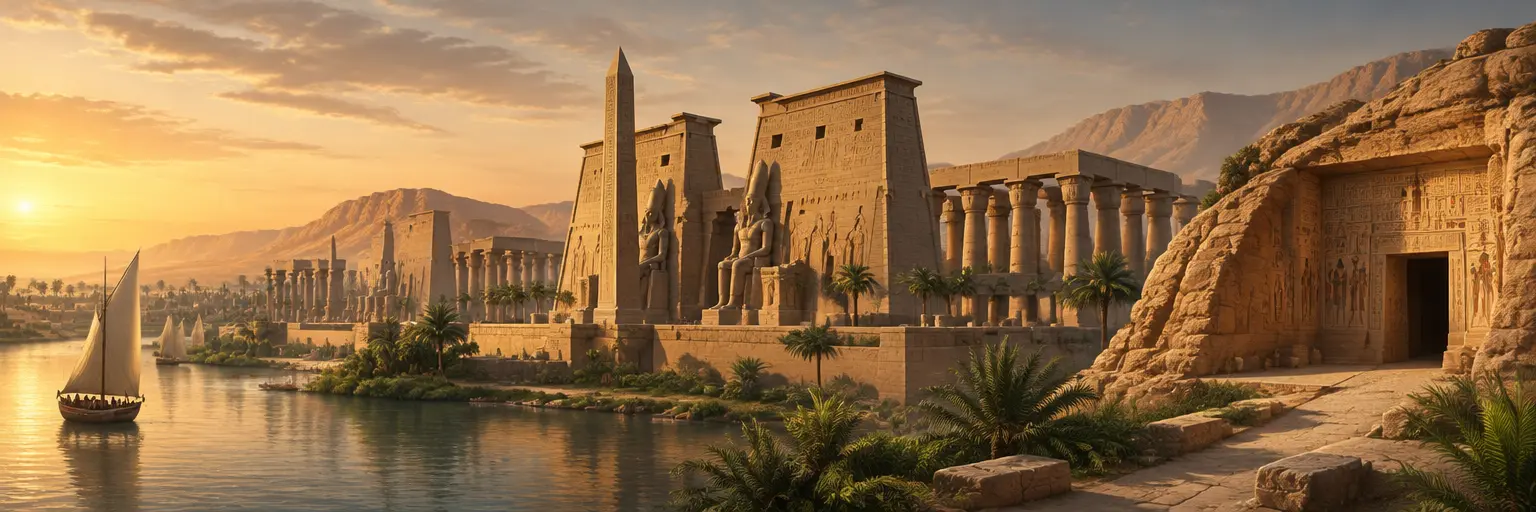
Discover the awe-inspiring grandeur of Thebes, ancient Egypt’s most sacred and powerful city, now known as Luxor and Karnak. This digital encyclopedia entry immerses you in the world’s largest open-air museum, where colossal temples and hidden tombs reveal the spiritual and political life of the New Kingdom pharaohs. From the hypostyle hall of Karnak, with its 134 towering columns, to the rock-cut splendor of the Valley of the Kings—resting place of Tutankhamun—this guide offers detailed timelines, excavation histories, and artifact profiles. Explore the mortuary temple of Hatshepsut, the Ramesseum’s colossi, and the intricate reliefs of the Theban necropolis, all contextualized within broader archaeological research. Ideal for students, travelers, and history enthusiasts, this content bridges field discoveries and interpretive analysis, making the sands of Thebes come alive with every scroll. Uncover how modern technology, from ground-penetrating radar to 3D reconstructions, continues to unearth secrets of these sacred sites, while preserving their fragile legacy for future generations.
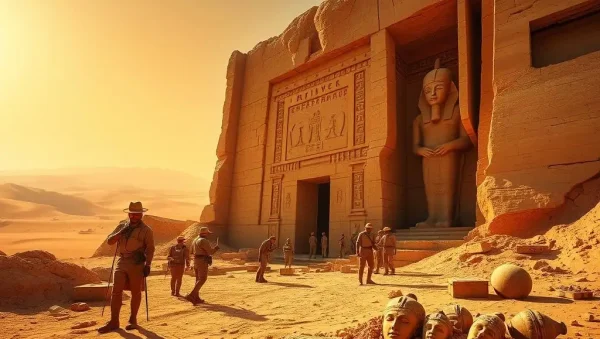
🔍 Explore the architectural evolution of the Royal Tombs in the Valley of the Kings, uncovering how design, construction techniques, and cultural…
Read article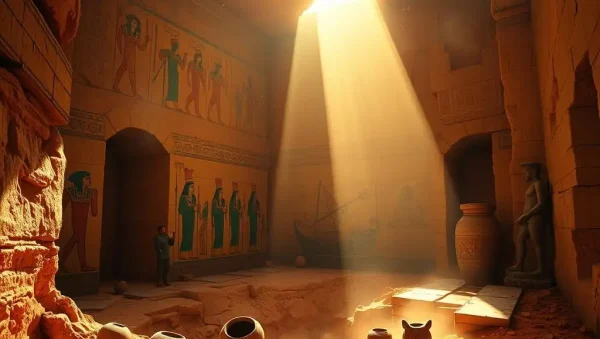
🌟 Explore the fascinating world of Theban tomb color symbolism, where hues convey spiritual meanings and social status. This article delves into…
Read articleWelcome to the heart of ancient Egyptian civilization, where the city of Thebes—modern-day Luxor and Karnak—unveils a majestic tapestry of monumental temples and sacred tombs. This subcategory on ArchaeologyHub.org offers an immersive journey into the religious, political, and funerary life of pharaohs, priests, and artisans. From the colossal hypostyle halls of Karnak to the hidden burial chambers of the Valley of the Kings, we delve into the architecture, artistry, and archaeology that define this UNESCO World Heritage site. Discover how modern excavations, epigraphy, and conservation techniques are rewriting our understanding of this enduring legacy, providing a comprehensive resource for students, travelers, and history enthusiasts alike.
Karnak is not merely a temple but a sprawling complex of sanctuaries, pylons, and obelisks dedicated primarily to the god Amun-Ra. Here, you will explore the Great Hypostyle Hall, with its 134 towering columns, and the sacred lake used for purification rituals. Our content provides a detailed floor plan, timeline of construction across nearly 2,000 years, and insights into the Festival of Opet, where statues of Amun traveled from Karnak to Luxor Temple.
Through archaeological surveys and photogrammetry, we showcase how each dynasty—from the Middle Kingdom to the Ptolemaic period—added its distinctive mark, creating a rich palimpsest of religious devotion. Expect interpretations of reliefs depicting military triumphs and divine processions, helping you decode the complex symbolism embedded in every pillar and gateway. This section serves as your essential guide to understanding Karnak’s role as the spiritual powerhouse of ancient Thebes.
Unlike Karnak’s vast complex, Luxor Temple is a more compact yet exquisitely designed structure centered on the rejuvenation of kingship. This section focuses on its unique alignment with the Karnak processional route and its association with the Opet Festival and the divine birth of pharaohs. You will learn about the impressive colonnade of Amenhotep III, the later Roman additions, and the mosque of Abu Haggag—a testament to continuous human occupation.
Our archaeological narratives detail the epigraphic evidence found on walls, including texts from Alexander the Great and the famous scenes of Amun’s marriage to Mut. By examining the excavation history, from the original clearing of the temple by Georges Daressy to modern restorations, we reveal how Luxor Temple functioned as a ceremonial stage for the divine renewal of the king. This knowledge enriches your visit and provides a deeper appreciation for its architectural and cultural significance.
The Valley of the Kings is a necropolis that holds over 60 tombs, including those of Tutankhamun, Ramesses II, and Seti I. This part of our subcategory offers an exhaustive overview of tomb typologies, from simple single-chambered pits to elaborate multi-corridor structures adorned with the Amduat and Book of the Dead. We provide detailed tomb-by-tomb guides, complete with floor plans, decorative programs, and discovery histories.
Explore the geological challenges and construction techniques used by ancient quarrymen and artisans, as well as the modern threats from tourism and flash floods. Our in-depth analysis covers conservation projects like the Getaway Tomb’s stabilization and the use of non-invasive radar to locate undiscovered chambers. By understanding the rituals of burial and tomb robbery, you gain a holistic view of ancient funerary practice and the eternal quest for immortality.
Beyond the kings, Thebes is home to the Valley of the Queens and the Tombs of the Nobles, offering a vibrant glimpse into the lives of royal consorts, princes, and high officials. This section highlights notable tombs such as that of Queen Nefertari, famed for its vividly painted walls, and the artisan village of Deir el-Medina, whose workers created exceptional funerary art.
We delve into the social hierarchies and daily life of the non-royal elite, presenting artifacts like shabtis, ushabtis, and wooden models. Through the study of ostraca and papyri discovered in these areas, you will learn about the economy, legal disputes, and personal letters of tomb builders. Our interpretive essays connect these decorative motifs to the broader theological concepts of resurrection and the afterlife, making every burial site a window into ancient human aspirations.
Modern archaeology in Thebes is a dynamic field, using a blend of traditional methods and cutting-edge technology. This section explains the process of excavation, from surface survey and geophysical prospecting to stratigraphic digging and artifact cataloguing. You will read about significant recent finds, such as the discovery of the “Lost Golden City” of Aten near Luxor, which has reshaped our understanding of Amenhotep III and Akhenaten’s reign.
We emphasize the importance of contextual recording and 3D digitization for preserving fragile ornamentation and inscriptions. Our experts share case studies on the conservation of painted reliefs, the analysis of mummified remains using CT scans, and the DNA sequencing of royal mummies. By following these advances, you appreciate how archaeology is not just about finding artifacts but about rigorous scientific inquiry and ethical stewardship of the cultural heritage.
Understanding Thebes requires a solid grasp of its chronological development from the Middle Kingdom’s rise to the Ptolemaic decline. This subcategory provides a detailed timeline, highlighting key pharaohs, dynasties, and political upheavals that shaped the city’s monumental landscape. We discuss the Theban triad (Amun, Mut, and Khons), the Amarna interlude, and the Ramesside reconfiguration of religious power.
Our content also examines the economic and trade networks that financed these massive construction projects, including agricultural surpluses and long-distance exchange with Punt and the Levant. By correlating textual evidence, such as the Karnak King List and administrative ostraca, with architectural stratigraphy, you will see how history is reconstructed with precision. This foundation allows you to place each temple, tomb, and artifact within its rightful era, enriching your overall comprehension of ancient Thebes.
Luxor Temple is a compact sanctuary dedicated to the rejuvenation of kingship, primarily built by Amenhotep III and Ramesses II, and directly linked to the Opet Festival. Karnak is a massive complex of multiple temples, pylons, and chapels centered on Amun-Ra, constructed over many centuries by successive pharaohs. While both are in modern Luxor, Karnak is the larger religious epicenter, whereas Luxor Temple serves as its ceremonial counterpart connected via the sphinx-lined avenue.
There are over 60 known tombs in the Valley of the Kings, but not all are accessible to visitors. The open selection varies seasonally to preserve delicate wall paintings and manage visitor flow. Famous tombs like Tutankhamun’s are usually open, while others, such as Seti I’s, may close for conservation. Always check current restrictions and consider visiting less-traveled tombs for a quieter experience.
The optimal periods are from October to April when daytime temperatures range from 20°C to 30°C (68°F to 86°F). Early mornings and late afternoons are ideal for temple and tomb visits, as midday sun can be intense. Night tours of Luxor Temple are also popular, offering dramatic lighting and a cooler atmosphere. Avoid summer months (June-August) when heat is oppressive.
Yes, significant archaeological work continues, and new discoveries are regularly reported. Using ground-penetrating radar and infrared thermography, researchers have identified likely cavities in the Valley of the Kings and the West Bank. For instance, recent scans suggest possible undiscovered chambers near Tomb KV62. These finds remain unopened, pending careful feasibility studies and ethical clearance, but the potential is high.
You can start with self-study books like “How to Read Egyptian Hieroglyphs” by Mark Collier and Bill Manley, which offer practical lessons. Online platforms like Coursera and Egyptology institutes provide free introductory courses. For a hands-on experience, join guided tours led by Egyptologists who explain key signs on-site. Practice with real inscriptions at Karnak, and remember that most texts are formulaic—proper names and offering phrases are easy to recognize first.







