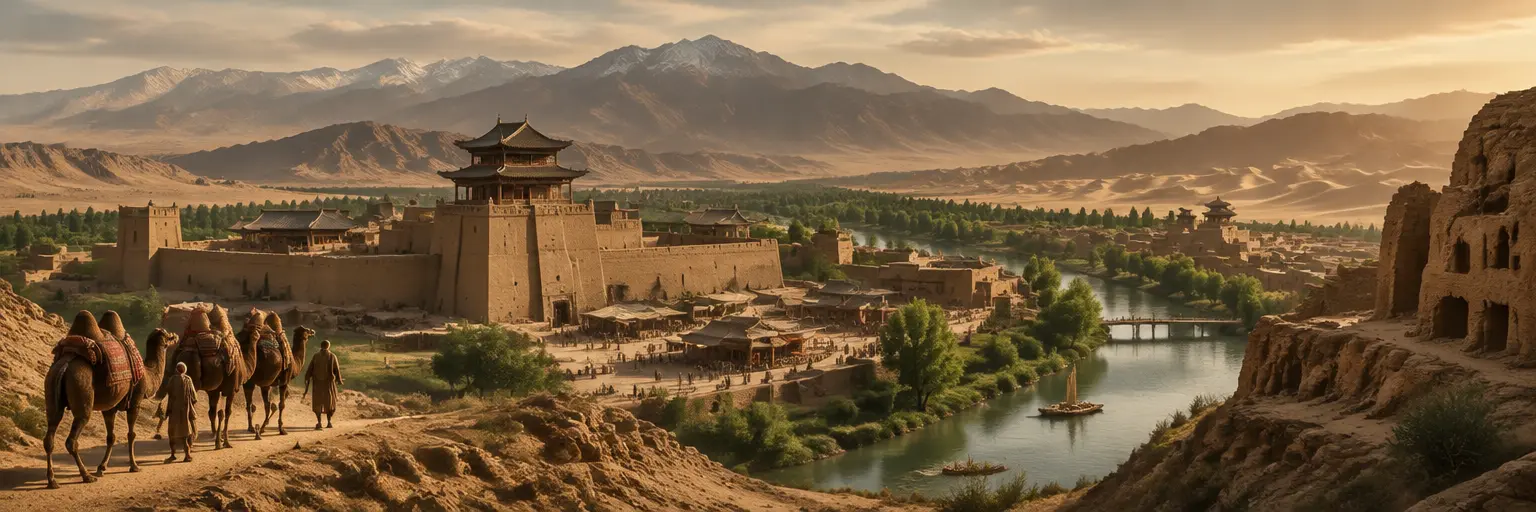
East Asian Sites: Silk Road Cities in Xinjiang (Loulan, Turpan)
Uncover the enigmatic desert ruins of ancient Xinjiang, where the legendary Silk Road once pulsed with caravans, monks, and merchants. This subcategory on ArchaeologyHub.org delves into the lost cities of Loulan and Turpan, offering a gateway to understand how civilizations thrived in one of Earth’s harshest environments. Explore archaeological evidence, environmental challenges, and cultural exchanges through meticulously curated timelines, artifact profiles, and excavation insights that bring these sand-buried metropolises back to life.
🏜️ Loulan: The Vanished Oasis Kingdom
Loulan, a once-prosperous kingdom near the now-dry Lop Nur lake, flourished between the 2nd century BCE and 4th century CE as a crucial hub on the Silk Road’s northern route. Its sudden disappearance has captivated archaeologists for decades, and here you’ll explore the mound of ruins, ancient wooden tablets, and mummified remains that reveal a sophisticated society blending Chinese, Indian, and Hellenistic influences. Discover how climate change and shifting trade routes likely led to its abandonment, making Loulan a case study in human vulnerability.
Through interactive maps and 3D reconstructions, you’ll trace the city’s defensive walls, Buddhist stupas, and irrigation canals, all unearthed by early 20th-century explorers and modern Chinese expeditions. Expect detailed analyses of the infamous “Loulan Beauty” mummy, including her weaving techniques and dietary evidence, which paint a vivid picture of daily life. This section also addresses current threats from looting and desertification, tying ancient history to present-day conservation efforts.
🍇 Turpan: The Fire-Belt Oasis of the Tianshan
Nestled in a topographical depression, Turpan is renowned for its extreme heat and ancient underground irrigation systems called karez, which still water vineyards today. Its archaeological treasures include the ruins of Jiaohe and Gaochang—cities that served as capitals for the Cheshi, Tang Dynasty, and Uyghur Kingdom—spanning over a millennium. Here, you’ll explore Buddhist cave temples, Manichaean manuscripts, and Nestorian crosses that prove Turpan was a religious and cultural melting pot, strategically positioned between East and West.
Our coverage emphasizes the exceptionally dry climate’s role in preserving organic artifacts, including wooden lintels, silk fragments, and even bread loaves from medieval times. You’ll follow the excavation history from Albert von Le Coq’s controversial expeditions to recent Sino-German collaborative digs, revealing how modern technology like ground-penetrating radar has uncovered buried neighborhoods without disturbing the soil. Moreover, we explore Turpan’s adaptive urban planning, including mud-brick architecture and wind towers, offering lessons in sustainable desert living that resonate today.
🏺 Artifacts and Trade Goods: Unearthing Global Connections
The material culture from these sites—such as Sogdian coins, Roman glassware, and Chinese lacquerware—demonstrates the extraordinary reach of Silk Road commerce. This section curates a rotating gallery of artifact profiles, each with high-resolution images, provenance, and chemical composition analyses. You’ll understand how ceramics from Chang’an and gold jewelry from Persia passed through Loulan and Turpan, leaving behind testaments to a globalized ancient economy that predates modern globalization by millennia.
Careful attention is given to organic remnants, including botanical and faunal remains, which illuminate agricultural practices and dietary customs. For instance, grape seeds from Turpan confirm viticulture dating back 2,300 years, while woolen textiles from Loulan show weaving patterns identical to those from the Tarim Basin mummies. Each artifact entry includes links to peer-reviewed studies and our internal database, so you can cross-reference with other regions in our global taxonomy, fostering a holistic understanding of cultural diffusion.
⛏️ Excavation Techniques and Preservation Challenges
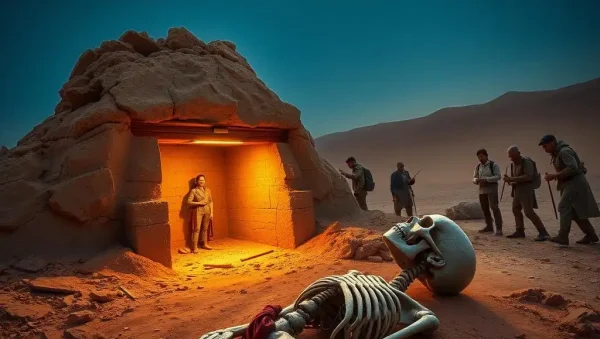
Uniquely, this subcategory pulls back the curtain on the archaeological process itself, detailing how teams tackle the harsh conditions of the Taklamakan Desert. You’ll learn about the use of dendrochronology to date wooden structures, the application of multispectral imaging to read faded manuscripts, and the ethical debates on repatriating artifacts taken by early explorers. We share field notes and video logs from recent excavations, offering a real-time glimpse into daily life on a dig site—from navigating sandstorms to preserving fragile murals with consolidants.
Moreover, we emphasize community engagement and sustainable tourism, as local Uyghur populations collaborate with archaeologists to protect these sites from development and climate-induced erosion. Technical articles explain how GIS mapping tracks site degradation, while interviews with conservationists highlight innovative methods like shade netting and controlled humidity for exposed ruins. This section aims to inspire not just armchair historians but also students considering fieldwork in extreme environments, complete with practical guidance and academic resources.
📜 Historical Timelines and Interpretive Essays
To frame these cities within global history, we offer interactive timelines that compare Loulan’s rise with Rome’s fall and Turpan’s golden age with the Islamic Caliphate’s expansion. Our interpretive essays challenge conventional narratives, such as the hypothesis that Loulan was not a city but a network of settlements, and that Turpan’s prosperity hinged on its role as a “neutral zone” between empires. These pieces are authored by leading Silk Road scholars and are updated quarterly to reflect new discoveries.
Each essay is accompanied by a curated bibliography and discussion prompts, making them ideal for university classrooms or independent study. You’ll also find critical reviews of primary sources, from Xuanzang’s travel records to Persian geographies, teaching you how to evaluate historical biases. In essence, this section transforms raw archaeological data into compelling human stories, emphasizing how ecological, political, and economic forces interwove to create—and eventually erase—these remarkable urban centers.
Frequently Asked Questions
Why are Loulan and Turpan considered “lost cities”?
Both cities were abandoned centuries ago and buried under sand, remaining unknown to the outside world until 19th-century explorers like Sven Hedin and Aurel Stein rediscovered them. Their ruins were so well-preserved by the arid environment that they appeared frozen in time, earning the nickname “lost” due to their sudden disappearance from historical records.
What makes Turpan’s karez irrigation system unique?
The karez system consists of underground tunnels that tap into aquifers and transport water to the surface via gravity, minimizing evaporation in the scorching heat. This ancient engineering, still in use today, extends over hundreds of kilometers and is a UNESCO-recognized cultural heritage, showcasing brilliant adaptation to desert conditions.
Can I visit Loulan or Turpan today?
Turpan is accessible to tourists via China’s high-speed rail, with open sites like Jiaohe and the Bezklik Caves. Loulan, however, lies in a restricted military zone near Lop Nur, requiring special permits that are rarely granted. Virtual tours and our 3D reconstructions offer an alternative for those unable to travel.
How did climate change affect these Silk Road cities?
Paleoclimate data indicate that intensified aridity and shifting river courses after 500 CE reduced water availability, making agriculture unsustainable. For Loulan, the desiccation of Lop Nur was catastrophic; for Turpan, karez systems delayed decline but ultimately couldn’t overcome prolonged droughts, leading to gradual depopulation.
Are artifacts from these sites displayed in major museums?
Yes, significant collections reside in the Xinjiang Regional Museum, British Museum, and Berlin’s Asian Art Museum, among others. However, many items remain in local storage due to fragility. Our artifact profiles link to international databases, helping you locate digital records and exhibition catalogs for further study.