Exploring East Asian Sites: Japanese Kofun Tombs & Imperial Capitals
Dive into the heart of ancient Japan with ArchaeologyHub.org’s dedicated subcategory on Japanese Kofun Tombs & Imperial Capitals, focusing on the legendary cities of Nara and Kyoto. This resource decodes the monumental earthwork burial mounds of the Kofun period (circa 250–538 CE) alongside the political and spiritual hubs that shaped early state formation. Whether you are a student of Asian archaeology, a history enthusiast, or a traveler planning a heritage itinerary, this section offers layered insights into funerary rituals, imperial power, and the architectural evolution from tomb complexes to grid-planned capitals. Discover how these sites bridge prehistoric traditions and the classical age, supported by excavation data, artifact analyses, and comparative timelines.
🏺 The Origins and Architecture of Kofun Burial Mounds
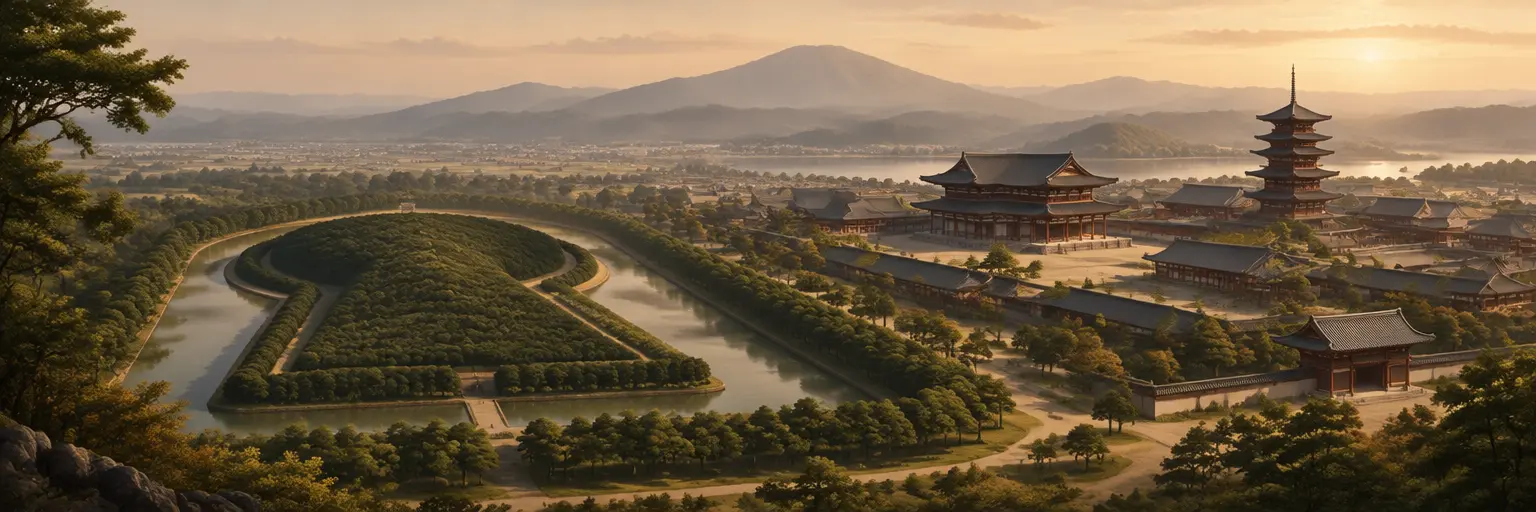
The Kofun period, named after these distinctive keyhole-shaped tumuli, marks a transformative era in Japanese prehistory. This section unpacks the engineering brilliance behind the zenpokoenfun (keyhole-shaped) tombs, the largest of which, such as the Daisen Kofun in Sakai, stretches over 486 meters. You will learn about the tiered construction methods, moat systems, and the symbolic orientation of these mounds toward sacred mountains. Excavations have revealed haniwa terracotta cylinders—both decorative and ritualistic—lining the perimeters, along with bronze mirrors and iron weaponry buried with elites. Understanding these structures clarifies the centralized power of regional chieftains who marshaled vast labor forces, laying the groundwork for the Yamato state and its eventual imperial lineage.
Beyond mere burial, Kofun tombs functioned as territorial markers and ancestral worship sites. This guide details the typological classification—from round (empun) and square (hōfun) to the iconic scalloped shapes—and explains how their evolution mirrors political consolidation. For archaeology enthusiasts, we include recent LiDAR surveys that uncovered hidden burial chambers and the ongoing debate over whether some tombs, like the Hashihaka Kofun, belong to legendary figures such as Queen Himiko. Each paragraph pairs artifact profiled imagery with stratigraphic diagrams, helping readers visualize how these monumental landscapes were planned and contested. The emphasis here is on connecting physical form to social hierarchy, a core theme in East Asian archaeological interpretation.
🏯 Nara: The First Permanent Imperial Capital (Heijō-kyō)
Nara, or Heijō-kyō, established in 710 CE, represents Japan’s first true city designed on a Chinese-inspired grid, modeled after Chang’an. This subcategory focuses on the urban archaeology of this ancient capital, including the sprawling Imperial Palace complex, its grand audience halls, and the intricate water management systems that sustained a population of over 100,000. Excavations at the Heijō Palace have unearthed wooden mokkan (inscribed wooden tablets) that function as administrative records, providing a rare primary source for understanding taxation, trade, and daily bureaucracy. Learn how these finds transform our knowledge of state formation, moving beyond myth to measurable economic and political activity.
This section also explores the religious landscape of Nara, home to the iconic Tōdai-ji temple with its colossal bronze Buddha. Yet, the archaeological focus extends beyond iconic monuments to include residential quarters, artisan workshops, and market areas. We analyze the transition from the Nara to the Heian period (794 CE), explaining why the capital shifted to Kyoto—often attributed to Buddhist political interference and the desire for a fresh start. Through comparative site plans and artifact typologies of ceramics and roof tiles, you will see how Nara’s grid layout influenced later Japanese city planning. For educators, we provide downloadable stratigraphic charts and timeline infographics to facilitate classroom engagement.
🏮 Kyoto (Heian-kyō): Ritual Landscapes and Imperial Residences
Kyoto, established in 794 CE as Heian-kyō, served as the imperial capital for over a millennium and remains a living archaeological palimpsest. Unlike Nara’s relatively short-term occupation, Kyoto offers a complex layering of rebuilds, fires, and reconfigurations. This subcategory examines the sacred geography of the city, with its alignment of major temples, shrines, and the Imperial Palace along cardinal axes tied to Shugendō mountain worship. We delve into the archaeology of the Kyoto Imperial Palace (Gosho) and the detached palaces like Katsura and Shugaku-in, whose gardens encode cosmological principles of borrowed scenery (shakkei). Each excavation reveals not just elite life but the intricate relationships between courtiers, craftsmen, and the natural environment.
Here, we spotlight recent discoveries at the Heian Palace site, including water features and banquet halls, alongside rescue archaeology conducted during urban renewal projects. The narrative emphasizes how Kyoto’s historical layers are managed today—from preserved Heian-era street grids to medieval merchant quarters. We also address the challenges of excavating in a densely inhabited modern city, using ground-penetrating radar and archival documents to reconstruct lost neighborhoods. For heritage professionals, we outline conservation strategies that balance development with preservation. By connecting the physical remains to literary sources like The Tale of Genji, this section enriches any study of Japanese aesthetics and political symbolism.
🗿 Funerary Practices and Artifact Interpretations
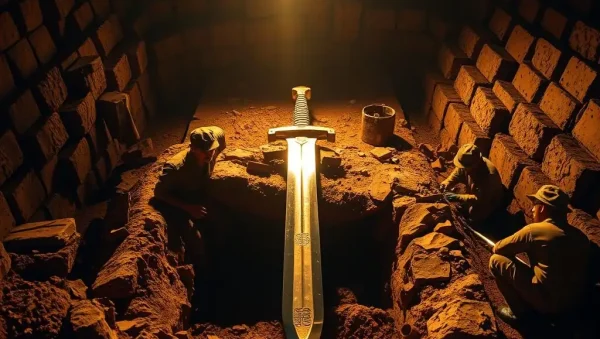
The artifacts recovered from Kofun tombs and capital sites are more than relics; they are keys to understanding belief systems. This section offers a close examination of grave goods, including bronze mirrors, magatama (curved jewels), and Sue stoneware, explaining their symbolic roles in ensuring the deceased’s journey to the afterlife. We feature detailed profiles of famous finds, such as the iron swords from Inariyama Kofun, which bear inscriptions linking their owners to the Yamato court. Additionally, we explore the evolution of haniwa from simple cylinders to figures of warriors, animals, and houses, shedding light on social roles and daily life intended to serve the dead ritually. Each artifact profile includes high-resolution imagery, conservation notes, and contextual dating methods like dendrochronology and radiocarbon analysis.
Beyond the elite tombs, this subcategory touches on commoner burials and ritual deposits outside the capital, revealing regional variations in spirituality. We compare Japanese practices with contemporaneous East Asian cultures, including Korean mounded tombs and Chinese imperial necropolises, to highlight both influences and indigenous innovations. For researchers, we provide bibliographies of primary excavation reports from Japan’s Agency for Cultural Affairs. Whether you are decoding the meaning of a specific mirror motif or examining trade networks for exotic gems, this content is designed to support deep interpretive work while remaining accessible to general readers. The goal is to bridge artifact typology with anthropological theory.
📜 Comparative Chronologies and Global Connections
This section positions Japanese Kofun and capital sites within a broader global archaeological framework, emphasizing synergies and divergences. Using side-by-side timelines, you can compare the construction of Nara’s imperial grid with the Maya city of Tikal or the Abbasid capital of Baghdad, understanding how urban planning reflected centralized power across continents. We analyze the maritime Silk Road connections, tracing continental Asian influences like Buddhism and writing systems that arrived via the Korean Peninsula. This comparative lens is crucial for archaeology students preparing for comprehensive exams, offering thematic threads that link disparate regions. Each comparison is supported by curated maps and artifact overlays, demonstrating trade routes for obsidian, silk, and glass.
Furthermore, we examine the legacy of these sites in modern Japanese identity and heritage tourism. From UNESCO World Heritage inscriptions to the controversial imperial tombs that remain unexcavated due to their sacred status, we discuss the politics of archaeology. You will find case studies on how digital reconstructions and virtual museums are making these inaccessible sites available globally. This content is optimized for readers searching for “East Asian archaeology,” “Kofun period,” “Nara historical sites,” and “Kyoto heritage,” with a focus on user engagement through interactive timelines and downloadable PDFs. Ultimately, we aim to show that archaeology is not just about ancient objects but about ongoing narratives that shape national and global cultures today.
Frequently Asked Questions
What is the significance of the keyhole shape in Kofun tombs?
The keyhole shape (zenpokoenfun) is uniquely Japanese and likely symbolizes a ritualistic connection between the ruler and the landscape, with the round portion representing the burial chamber and the rectangular part serving as a ceremonial platform. It also functioned as a visible display of political power, differentiating elites from commoners.
Are any Kofun tombs open to the public for excavation or viewing?
Yes, several smaller Kofun mounds are accessible, such as the Ishibutai Kofun in Asuka, which exposes its stone burial chamber. However, many large imperial tombs, like the Daisen Kofun, remain off-limits due to their status as imperial property, with the Imperial Household Agency prohibiting excavation.
How did Nara influence the design of later Japanese capitals?
Nara’s grid layout, modeled on Chinese Chang’an, set a precedent for urban planning. Kyoto adopted the same orthogonal design but expanded it with wider streets and more elaborate drainage systems. This enduring pattern influenced castle towns like Edo (Tokyo), making Nara’s blueprint foundational to Japanese city planning.
What types of artifacts are most common from Kyoto’s Heian-period excavations?
Common finds include green-glazed ceramics, wooden chopsticks, roof tiles, and inscribed wooden tablets (mokkan) used for records. These items reveal daily life, trade networks, and administrative practices. Excavations near the Imperial Palace also yield ornate bronze fittings and fragments of Buddhist statues.
Why did the capital move from Nara to Kyoto?
The move in 794 CE was motivated by a desire to escape powerful Buddhist temples’ political influence in Nara, reduce court factionalism, and create a fresh start symbolically. Kyoto’s location offered better water access and mountain protection, aligning with Chinese geomancy for imperial longevity.