Trade and Commerce in Merv: A Silk Road Emporium
🌟 Explore the vibrant Merv Silk Road Trade hub, a crucial nexus in ancient Central Asia that fostered cross-cultural exchange, economic prosperity,…
Read article
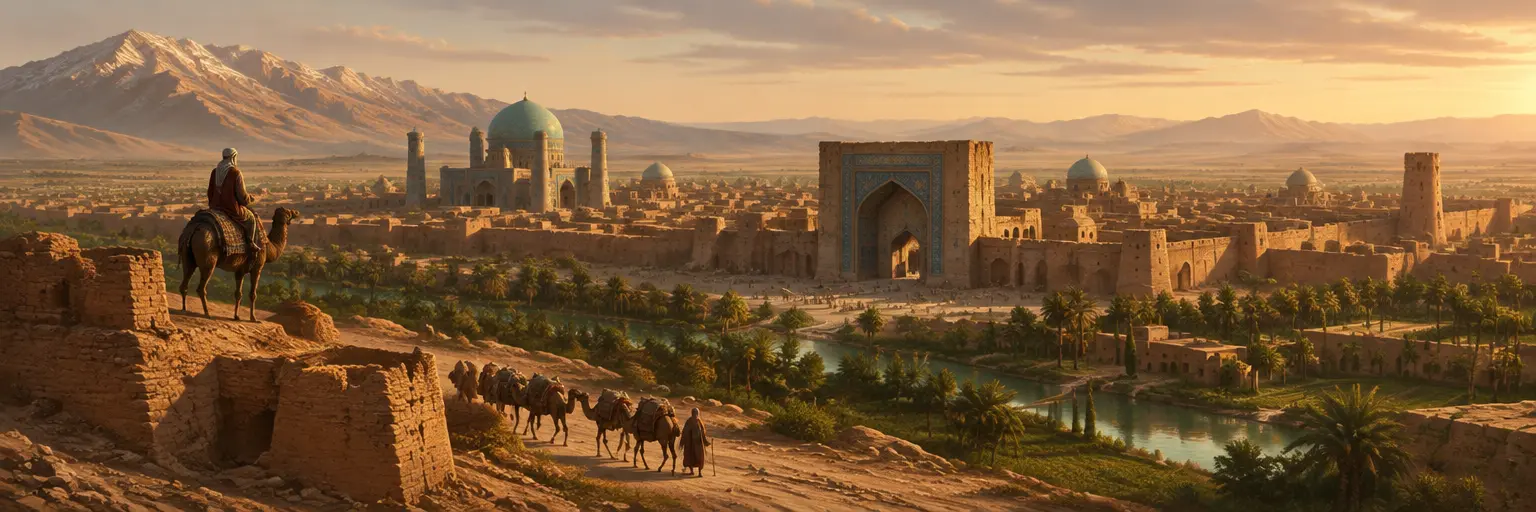
Explore the heart of the ancient Silk Road with our digital deep dive into Central Asian Sites, focusing on the legendary Merv and the surrounding oasis cities that thrived as bustling crossroads of trade, culture, and faith. As a cornerstone of *ArchaeologyHub.org*’s global coverage, these archaeological treasures reveal how desert settlements harnessed water, managed caravans, and absorbed Persian, Islamic, and nomadic influences. From Merv’s monumental city walls to the crumbling citadels of Bukhara and Samarkand’s precursor settlements, our interpretive analyses decode each layer of mud-brick and pottery to reconstruct daily life, commercial networks, and urban planning. Whether you are tracing the spread of Zoroastrianism, the impact of Mongol invasions, or the engineering marvels of *qanat* irrigation, this curated resource offers timeline-specific artifacts, excavation reports, and geographic context. Ideal for students, historians, and virtual travelers, this feature transforms remote ruins into vivid stories of resilience and exchange—making Central Asia’s oasis cities essential to understanding global heritage.
🌟 Explore the vibrant Merv Silk Road Trade hub, a crucial nexus in ancient Central Asia that fostered cross-cultural exchange, economic prosperity,…
Read article
🌍 Discover how Alexander the Great’s campaigns in Central Asia shaped legendary oasis foundation myths, influencing local cultures and archaeological narratives. This…
Read articleWelcome to ArchaeologyHub.org’s dedicated guide to Central Asian Sites: Merv & Oasis Cities of the Silk Road. This subcategory plunges you into the arid heart of ancient trade, where mud-brick metropolises like Merv, Bukhara, and Samarkand once thrived as pivotal crossroads between East and West. Here, we decode the archaeological layers of these UNESCO-listed wonders, from fortified walls and caravanserais to irrigation systems and Zoroastrian fire temples. Expect rich, interpretive content designed for students, travelers, and history enthusiasts seeking authoritative insights into Central Asia’s urban and cultural legacy.
Merv, located in modern Turkmenistan, was not just a city but a sequence of settlements spanning millennia, from the Achaemenid era to the Mongol destruction in 1221. Our archaeological profiles walk you through its successive urban phases – Erk Kala, Gyaur Kala, and Sultan Kala – revealing how each layer reflects changing empires and trade flows. Excavations have unearthed potters’ quarters, glassworks, and monumental citadels, offering a vivid picture of cosmopolitan life.
Deepen your understanding of Merv’s sophisticated water management, including the Great Kyz Kala’s corrugated walls and the intricate network of kariz (underground canals). These feats enabled a population of over 200,000 to flourish in a semi-desert environment. We contextualize these finds within broader Silk Road exchange, showing how Merv’s strategic position funneled goods, religions, and ideas between Persia, China, and the Mediterranean.
The oasis cities of Transoxiana – Bukhara and Samarkand above all – formed the cultural backbone of the Silk Road. This section highlights urban archaeology beyond monumental architecture, focusing on marketplaces, bathhouses, and residential quarters that reveal everyday mercantile life. Recent excavations at Bukhara’s Shahristan and Samarkand’s Afrasiab have uncovered Sogdian murals, ivory carvings, and Chinese ceramics, proving long-distance connectivity.
Explore how these cities were engineered as rest stops and redistribution hubs, with caravanserais designed to house camels, merchants, and goods. Our interpretive guides explain the logistics of caravan travel, including tariffs, security, and the translation of multiple languages within bazaars. By examining trade goods such as silk, spices, precious metals, and glass, you’ll see how these oasis nodes shaped regional economies and political alliances.
This subcategory offers a detailed artifact inventory from Central Asian excavations, emphasizing unique ceramic styles like the turquoise-glazed wares of Merv and the red-slip pottery of Sogdiana. Learn to identify diagnostic sherds and decorative motifs that help archaeologists date strata and trace cultural influences. We also profile metalwork, including bronze mirrors and silver vessels, which bore both Chinese and Hellenistic iconography.
Religious life forsook singular doctrine; you’ll discover temples of Zoroastrian fire, Buddhist stupas, Nestorian crosses, and early Islamic mosques coexisting within a single city. Our analytical essays unpack how archaeologists interpret burnt offering layers, ossuary burials, and iconoclastic destructions. This material culture approach reveals a society remarkably tolerant and adaptive, a key engine of Silk Road creativity.
Modern archaeology at these sites is a race against erosion, looting, and development. We detail geophysical surveys using magnetometry and ground-penetrating radar that map buried streets without excavation. You’ll see how stratigraphic excavation at Merv’s citadel has differentiated Parthian and Sasanian phases, and how archaeomagnetic dating helps constrain baked clay structures.
Preservation is equally critical: mud-brick architecture disintegrates rapidly when exposed. Learn about conservation techniques like mud-plaster consolidation, protective shelters, and digital 3D documentation. We also discuss the ethical dilemmas of reconstructing monuments, balancing tourism revenue against authenticity. By understanding these practical challenges, you gain a realistic view of how knowledge is painstakingly recovered and safeguarded for future generations.
The oasis cities were not isolated pockets; they were nodes in a global network. Through our research summaries, you’ll examine how the Silk Road transmitted not just goods but also pathogens, such as the plague that may have traveled from Central Asia to Europe. We analyze genetic evidence from human remains, linking populations across the steppe and settled zones.
Furthermore, we compare Central Asian sites to contemporary hubs like Palmyra and Dunhuang, highlighting shared architectural forms, artistic motifs, and administrative systems. This comparative approach illuminates the interculturality of the medieval world. By situating Merv and its peers within a broader global archaeology, you’ll appreciate how regional histories cascade into macro-historical narratives of connectivity and resilience.
Merv’s strategic oasis location at the intersection of major caravan routes made it a vital hub for trade, military control, and cultural exchange. Its extensive archaeological remains, including multiple walled cities and sophisticated irrigation systems, demonstrate a complex urban center that flourished for over two millennia.
Key finds include Sogdian wall murals from Afrasiab, turquoise-glazed ceramics from Merv, Chinese silk fragments, and personal items like glass beads and bronze mirrors. These objects reveal long-distance trade networks and the fusion of Persian, Turkic, and Chinese artistic traditions.
Archaeologists use a combination of methods: stratigraphy, pottery typology, radiocarbon dating of organic inclusions in mud bricks, and archaeomagnetic dating of kiln-fired floors. Calibrated sequences help pinpoint construction phases despite the challenges posed by reused materials and seismic rebuilding.
Yes, ongoing international missions, including teams from Turkmenistan, the UK, and Japan, continue to excavate Merv and Samarkand. Recent work focuses on suburban areas, industrial zones, and early Islamic palatial structures, employing non-invasive remote sensing to map before digging.
Primary threats include urban expansion, agricultural encroachment, illegal digging for artifacts, and rapid weather-driven erosion of exposed mud-brick. Climate change increases sandstorms and flash floods, while tourism infrastructure sometimes disturbs fragile unexcavated contexts without proper archaeological oversight.







