Exploring the Sacred Landscape of Bamiyan & Buddhist Monasteries in Afghanistan
Welcome to ArchaeologyHub.org’s dedicated subcategory on Central Asian Sites: Bamiyan & Buddhist Monasteries in Afghanistan. This collection delves into the remote valleys and cliff faces where Gandharan art, Silk Road trade, and profound Buddhist spirituality converged. From the colossal standing Buddhas to the intricate cave complexes of Kakrak and Foladi, you will uncover the archaeological, historical, and cultural significance of these UNESCO-listed wonders—alongside the modern challenges of preservation and heritage protection. This page serves as your digital gateway to the heart of Afghanistan’s pre-Islamic heritage, offering layered insights for enthusiasts, students, and researchers alike.
🏛️ The Colossal Buddhas and the Cliff Carvings of Bamiyan
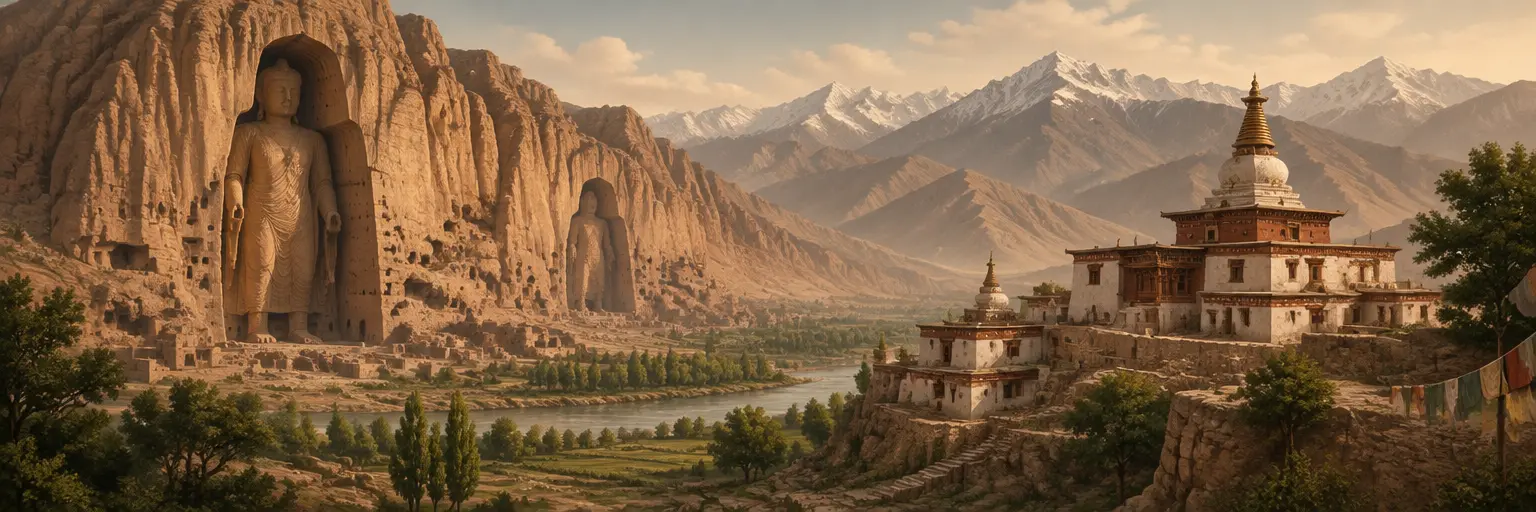
The most iconic features of this subcategory are the two monumental standing Buddhas (55m and 38m tall) carved directly into the sandstone cliffs of the Bamiyan Valley during the 6th century CE. These statues were not merely isolated sculptures but the focal points of a vast monastic complex, surrounded by painted grottoes, stupas, and pilgrimage routes. Our content traces their construction techniques, from the wooden armatures to the plaster and pigment finishes, explaining their original vibrant appearance.
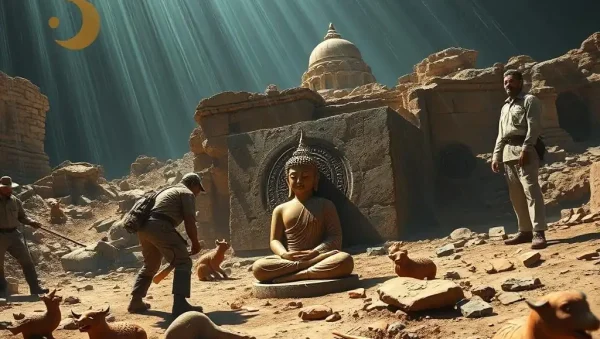
Beyond the Buddhas, you will find detailed excavations of the niche interiors, which revealed fragments of mural paintings believed to be the oldest surviving oil paintings in the world. We analyze the iconographic program, the influence of Gupta and Sassanian art, and how the site functioned as a major stop on the northern Silk Road, blending Hellenistic, Persian, and Indian artistic traditions into a unique Central Asian style.
⛰️ The Cave Monasteries and Hermitages of the Bamiyan Valley
Surrounding the main niches are over 700 caves, ranging from simple hermit cells to elaborate multi-story monastic complexes with courtyards, kitchens, and assembly halls. This subcategory provides a virtual tour of compounds like the Group E caves and the Kakrak Valley, which housed hundreds of monks at its peak. Our articles explain the geological stratigraphy of the cliffs, the water management systems, and the daily rhythms of monastic life, including meditation, manuscript copying, and communal dining.
We also highlight the distinctive architectural features, such as dome-shaped ceilings painted with celestial motifs, and the use of chorten or stupa shrines within cave walls. Excavations have unearthed significant collections of Buddhist manuscripts in Gandhari and Sanskrit, plus textile fragments, wooden implements, and iron tools, offering a rare glimpse into the material culture of early medieval Afghanistan. Our interpretive pieces connect these finds to wider Buddhist networks stretching to China and Tibet.
📜 Art History and Iconographic Analysis of Bamiyan Murals
This section is dedicated to the rich painted decoration that once covered nearly every interior wall of the Bamiyan grottoes. Recent scientific analysis, using techniques like radiocarbon dating and synchrotron radiation, has identified the presence of drying oils in the paint, predating European oil painting by several centuries. We explore the pigments—ultramarine from lapis lazuli, cinnabar, and orpiment—and how they were sourced and mixed locally.
Art historians will appreciate our detailed breakdowns of the narrative scenes depicting the life of the Buddha, jataka tales, and celestial audiences. We compare the stylistic features with those of neighbouring sites like Ajanta in India and Dunhuang in China, tracing the flow of visual ideas across the Pamir and Hindu Kush. The subcategory also features digital reconstructions of faded murals, allowing you to visualize the original polychrome intensity and understand the patrons’ motivations—likely a mix of royal commissions and merchant donations.
🕌 Post-Buddhist Transformations and the Rise of Islamic Heritage
While the Buddhist phase dominates the site’s fame, the Bamiyan Valley underwent significant transformation after the 9th century Islamic conquests. Our content covers how caves were repurposed as caravanserais, warehouses, and even temporary residences. You will find archaeological evidence of pottery, copper coins, and early Islamic glazed wares that indicate continued habitation and trade long after the monasteries were vacated.
We also discuss the partial reuse of the cliff face for defensive fortifications during the Ghurid period and the later settlement patterns in the valley, including the historic citadel known as Shahr-e Gholghola (City of Screams). This section helps contextualize the site within the broader Islamic history of central Afghanistan, showing how the “Buddhist” identity was layered over time. This perspective is crucial for understanding the contested cultural memory and the 2001 destruction by the Taliban, which we address in a separate, deeply researched H3 section.
🛠️ Preservation, Reconstruction Controversies, and Future Archaeology
One of the most pressing issues covered here is the ongoing debate about whether to rebuild the destroyed Buddhas or preserve the empty niches as a testament to the destruction. We outline the various proposals—from full-scale anastylosis to minimalist digital projections—and the ethical considerations surrounding archaeological intervention in a conflict zone. Our pieces include interviews from UNESCO missions, ICOMOS reports, and local community perspectives.
Additionally, we report on the latest remote sensing surveys using LIDAR and ground-penetrating radar, which have uncovered previously unknown cave structures and subterranean chambers beneath the valley floor. These new technologies are revealing a much larger settlement footprint than previously thought, potentially including ancient irrigation canals and gardens. We also detail the emergency conservation efforts for surviving murals and the training of Afghan archaeologists in modern preservation techniques, offering a hopeful outlook for future research at this fragile, world-class site.
Frequently Asked Questions
Why were the Bamiyan Buddhas located so prominently in the valley?
The Buddhas were placed at a major crossroads of the Silk Road, where trade caravans and pilgrims passed through the Hindu Kush. Their massive scale served both as a demonstration of royal patronage and a spiritual beacon, marking the valley as a significant pilgrimage center and ensuring that Buddhist teachings reached diverse travelers.
Are there any original Buddhas left intact at Bamiyan?
No, both the large and small Buddhas were destroyed by the Taliban in March 2001. However, the Eastern Buddha’s niche still contains fragments of its original feet and some plaster sections. Additionally, some smaller carved Buddha figures in subsidiary caves remain partially intact, though heavily damaged.
What is the age of the Bamiyan Buddhist complex?
The bulk of the monastic settlement and the main Buddhas date from the 5th to 7th centuries CE. However, radiocarbon dating of organic materials from the cave paintings suggests earlier activity, with some occupation layers dating back to the 3rd century CE, during the Kushan period.
Can visitors currently travel to Bamiyan for archaeological tourism?
Yes, Bamiyan is one of the more accessible and safer regions of Afghanistan for tourists, though a security situation remains dynamic. You can visit the cliff niches, walk through the cave complexes, and view the Small Buddha niche, but certain areas may require special permits. Always consult local authorities and professional travel advisories.
Is the reconstruction of the Buddhas being actively pursued?
Active reconstruction has not started. The Afghan government and UNESCO currently focus on stabilizing the cliff face, preserving murals, and developing a museum for artifacts. Proposals for partial reconstruction exist, but global consensus favors preservation of the void as a memorial, with digital reconstruction options being preferred.