Australian Sites: Lake Mungo & Early Human Occupation
Welcome to ArchaeologyHub.org’s dedicated portal for Lake Mungo, one of the most significant archaeological landscapes in the world. This subcategory explores the earliest evidence of human habitation in Australia, dating back over 40,000 years. From ancient hearths and shell middens to the famous Mungo Lady and Mungo Man, you’ll uncover how these finds reshaped our understanding of human migration, ritual behavior, and adaptation in extreme environments. Perfect for students, researchers, and history enthusiasts, this section combines stratigraphic detail with cultural narratives.
🌏 The Geological & Environmental Setting of Lake Mungo
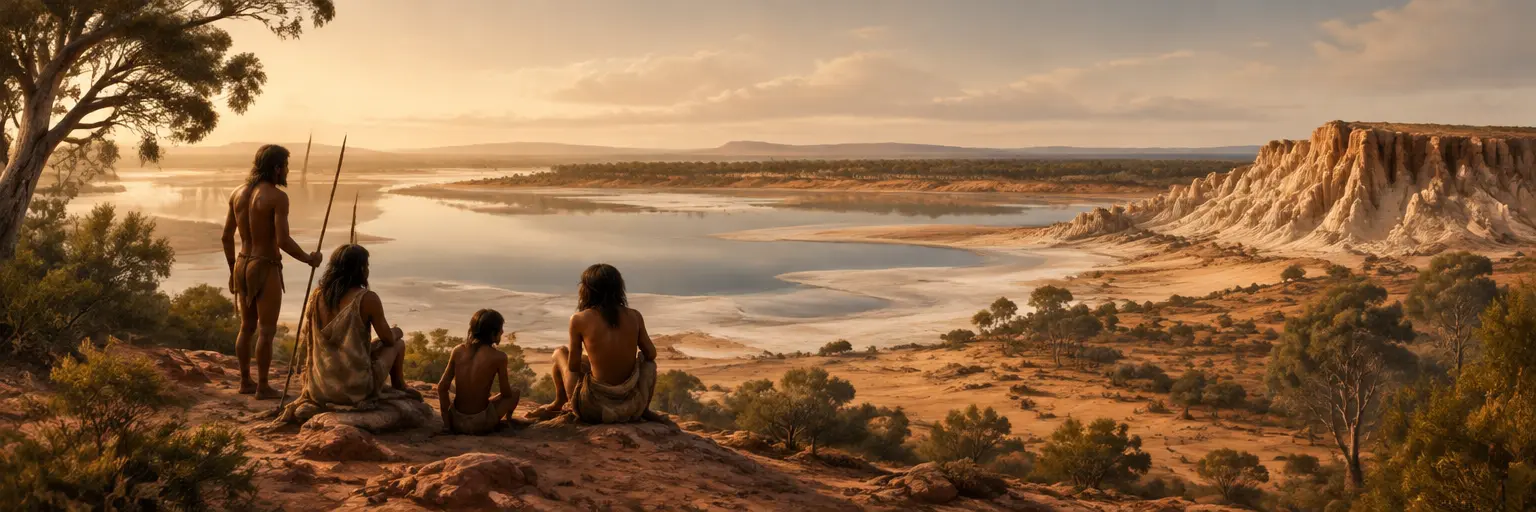
Lake Mungo lies within the Willandra Lakes World Heritage Area in New South Wales. The site’s lunette dunes, known as the Walls of China, preserve stratified sediment layers that act as a natural archive of climate change and human activity. As you explore, you’ll learn how shifting lake levels, arid phases, and megafaunal extinctions created a dynamic backdrop for early Australians. Understanding this environment is key to interpreting the archaeological record, as it reveals how people survived dramatic ecological transformations over millennia.
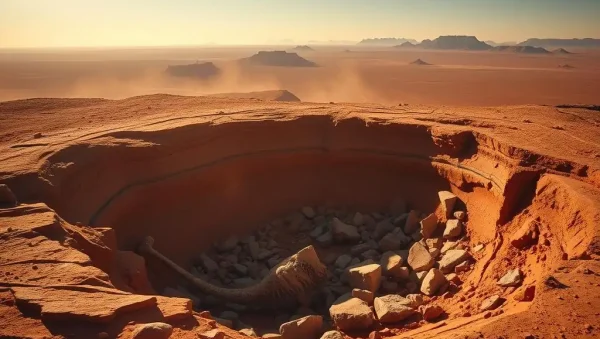
Our content dives into the geomorphological processes that exposed ancient surfaces and the excavation techniques used to date them. We provide interactive maps of the lunette, cross-sections of the stratigraphy, and comparisons with other Willandra lakes. Expect clear explanations of OSL (optically stimulated luminescence) dating and how researchers reconstruct vegetation, rainfall, and resource availability. This foundation sets the stage for appreciating why Mungo became a hub for early human occupation, not just a transient campsite.
🦴 Mungo Lady & Mungo Man: Redefining Human History
The discoveries of Mungo Lady (1968) and Mungo Man (1974) revolutionized Australian archaeology. These cremated and buried remains, dating to roughly 40,000 years ago, represent the world’s oldest known ritual burials. Mungo Lady’s cremation demonstrates sophisticated funerary practices, while Mungo Man’s ochre-dusted grave suggests symbolic belief systems. This section provides detailed osteological analyses, DNA research updates, and the ongoing repatriation debates with the traditional custodians, the Mutthi Mutthi, Ngiyampaa, and Paakantji peoples.
We synthesize primary research papers, including the controversial “Mungo Man” mitochondrial DNA findings that challenge the Out-of-Africa model. You’ll find timelines of excavation history, artifact catalogs, and high-resolution imagery of the skeletal elements. Importantly, we frame these remains within their cultural and ethical context, respecting Indigenous knowledge systems while offering scientific insights. This balanced approach ensures a nuanced understanding of what these individuals tell us about early human cognition and social complexity.
🔍 The Material Culture: Tools, Hearth Stones & Shell Middens
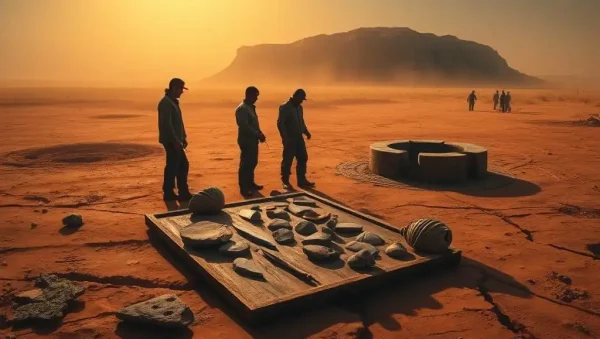
Beyond human remains, Lake Mungo yields an extensive lithic and organic toolkit. Stone scrapers, grinding stones, and quartz flakes reveal technological adaptations, while the hearths contain charcoal fragments used for dating and dietary reconstruction. Shell middens from freshwater mussels provide proof of consistent foraging and seasonal settlement patterns. This subcategory details each artifact class, its manufacturing method, and its likely use, from plant processing to animal butchering.
You’ll also explore the starch grain and phytolith analyses that document the consumption of yams, seeds, and tubers—evidence of early plant management. Our interpretive essays compare these assemblages with contemporaneous sites in Southeast Asia and New Guinea to trace migration routes. The emphasis is on practical archaeology: how excavation units are laid out, how sieving recovers micro-debitage, and how ethnoarchaeological comparisons with modern Aboriginal groups illuminate past behaviors. This is essential reading for anyone interested in the daily lives of Australia’s First Peoples.
🏺 The Great Wall of China & Stratigraphic Dating Methods
The “Walls of China” are crescent-shaped dunes that have become iconic for their eroding layers, each representing a distinct climatic period. This section demystifies how archaeologists read these strata—using paleomagnetism, radiocarbon, and uranium-series dating—to build a reliable chronology. You’ll learn why the site’s stratigraphy is considered a global reference standard for Late Pleistocene environments, with over 30 meters of sediment covering the last 120,000 years.
We provide step-by-step guides to relative and absolute dating, including the challenges of dating arid-zone bone and charcoal. Case studies highlight how a single misread layer once led to erroneous claims of 60,000-year-old occupation, later corrected through more precise techniques. Additionally, we discuss the impact of erosion and tourism on site integrity, emphasizing modern conservation efforts. By the end, you’ll appreciate the meticulous science behind every age estimate and why debates over ‘first arrivals’ remain contentious among archaeologists.
🌿 Megafauna, Diet & Environmental Adaptation
Did early Australians hunt giant wombats, marsupial lions, and flightless birds? Lake Mungo’s fossil record offers tantalizing clues. While direct predation evidence is scarce, the association of stone tools with extinct megafauna bones suggests at least opportunistic scavenging. This section evaluates the controversial overkill hypothesis versus climate-driven extinction, using site-specific data and continental models. You’ll explore ethological reconstructions of the Pleistocene ecosystem and how human fire management altered vegetation patterns.
We also delve into isotopic analyses of tooth enamel and bone collagen to reconstruct ancient diets, revealing a mixed foraging strategy—not just big-game hunting. Seasonal camps along the lake margins exploited bird eggs, fish, and reptiles, while inland forays collected tubers and seeds. This flexibility likely allowed human populations to persist through severe droughts. Our content includes illustrated paleoenvironmental reconstructions, faunal inventory tables, and comparative studies with other Australian sites like Cuddie Springs, providing a holistic view of human–environment interactions.
📜 Cultural Heritage, Indigenous Custodianship & Repatriation
Lake Mungo is not merely a scientific treasure; it is a living cultural landscape for Aboriginal communities. This section addresses the ethical dimensions of archaeological practice, including the repatriation of Mungo Man’s remains in 2017 after decades of study. We highlight the role of Indigenous rangers and elders in co-managing the site, and the legal frameworks under the National Parks and Wildlife Act. Expect discussions on free, prior, and informed consent, and the balance between research and respect for traditional beliefs.
You’ll read personal narratives from custodians, documentation of oral traditions connected to the lakes, and analyses of how archaeology aligns—or conflicts—with Aboriginal histories. We also tackle the controversial display of human remains in museums and the shift toward digital repatriation using 3D scans. This section is essential for understanding modern heritage management, offering practical guidelines for researchers and students who wish to work ethically in Indigenous contexts. It demonstrates that archaeology is as much about people today as it is about the past.
Frequently Asked Questions
How old are the human remains at Lake Mungo?
The skeletal remains, including Mungo Lady and Mungo Man, are dated to approximately 40,000 to 42,000 years before present, based on OSL dating of the sand that covered them. This makes them among the oldest anatomically modern human remains found outside Africa. More recent luminescence analyses suggest some artifacts may be slightly older, but the conservative consensus remains around 40,000 years.
Why is Mungo Lady’s cremation significant?
Mungo Lady’s cremation is the earliest known evidence of intentional cremation in the world. Her bones were smashed, burned at high temperature, then reburied in a small pit—the remains of the ritualized disposal of the dead. This practice implies complex social behavior, symbolic thought, and a defined funerary tradition among Australia’s first inhabitants, predating similar practices elsewhere by thousands of years.
What does the DNA research on Mungo Man reveal?
Initial mitochondrial DNA extraction attempted in 2001 failed due to contamination and poor preservation in hot climates. Later studies using advanced techniques have not yielded complete ancient genomes. Consequently, genetic relationships remain speculative. However, modern Aboriginal DNA indicates deep local evolution, suggesting that populations have been in Australia for over 50,000 years, distinct from other early human groups. The site does not currently provide conclusive genetic data.
Can tourists visit the Lake Mungo excavation site?
Yes, the Walls of China and the main archaeological areas are open to the public via guided tours led by Indigenous rangers. Access to certain sensitive zones, especially where human remains were found, is restricted to protect integrity and respect cultural protocols. Visitors can walk along designated tracks, view the lunette from viewing platforms, and learn through interpretive signage. Best visits occur at sunrise or sunset for clarity and minimal heat.
How do researchers date the artifacts and sediments at Lake Mungo?
Researchers primarily use Optically Stimulated Luminescence (OSL) dating on quartz and feldspar grains from the sediment, which measures the time since they were last exposed to sunlight. Radiocarbon dating is applied to charcoal and shell fragments, though it is limited to materials younger than 50,000 years. Stratigraphic correlation with other Willandra Lakes sites and paleomagnetic analysis also help anchor the chronology, ensuring cross-validated age estimates.