Exploring Andean Sites: Machu Picchu & Inca Royal Estates
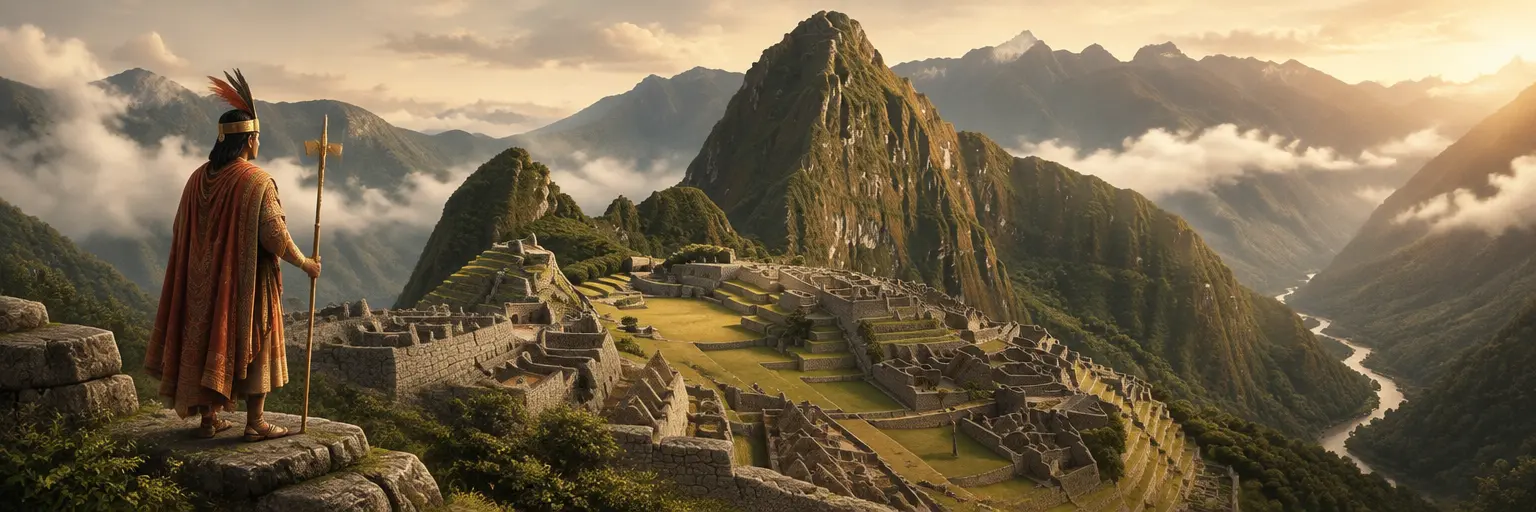
Welcome to ArchaeologyHub.org’s dedicated subcategory on Andean Sites: Machu Picchu & Inca Royal Estates, part of our global archaeological taxonomy. Here, we delve into the heart of the Inca Empire, focusing on the awe-inspiring citadel of Machu Picchu and the lesser-known but equally significant royal estates that dotted the Andes. Our content bridges academic research, archaeological fieldwork, and cultural heritage interpretation, offering you a comprehensive digital journey through high-altitude palaces, sacred plazas, and intricate terrace systems that defined Inca imperial power.
🏔️ Architectural Marvels of Machu Picchu’s Urban Core
When you explore this section, expect a deep dive into the precision stonework and spatial organization of Machu Picchu’s temples, residential sectors, and ceremonial baths. We analyze the ashlar masonry technique, where stones fit without mortar, and explain how the site’s alignment with solstices reflects Inca astronomical knowledge. You’ll learn about the Intihuatana stone, the Temple of the Sun, and the water canalization system that still functions today. Our profiles include 3D reconstructions and excavation photos that reveal how terraces prevented erosion while creating microclimates for agriculture. This content is tailored for students, travelers, and virtual tourists seeking a deeper understanding of Inca engineering beyond the classic postcard views.
Furthermore, we contextualize Machu Picchu not as an isolated “lost city” but as a royal estate of Emperor Pachacuti, built around 1450 CE. We compare its layout to other sites in the region, highlighting the kancha (enclosed courtyard) patterns and the deliberate separation of elite and agricultural zones. By examining recent lidar surveys, we reveal hidden structures beneath the vegetation, offering fresh insights into how the site functioned as a political and religious center. Expect detailed artifact profiles—from ceremonial keros (wooden vessels) to bronze tools—each linked to our global timeline, helping you trace trade and cultural exchange across the Andes.
🌄 Inca Royal Estates: Beyond the Mountain Sanctuary
This subcategory shines a spotlight on other royal estates like Chinchero, Ollantaytambo, and Pisac, each built by different emperors as personal retreats and administrative hubs. You’ll discover how these estates functioned as economic nodes, controlling agricultural production, textile manufacture, and ceremonial rituals. Our interpretive essays explain the concept of mitmaqkuna (relocated laborers) and how royal estates integrated local ethnic groups into the Inca state. We provide virtual tours with drone footage and annotated maps, showing how each estate’s location along the Sacred Valley was chosen for defensive, agricultural, and cosmological reasons. This content enriches your understanding of Inca governance, moving beyond Machu Picchu’s fame to reveal a network of power.
Additionally, we address the destruction and survival of these estates after the Spanish conquest. For example, Ollantaytambo served as a refuge for Manco Inca during the rebellion, and its massive terraces were the scene of a rare Inca victory against Spanish cavalry. Our excavation updates detail recent findings of pre-Inca foundations, suggesting that these sites often reused earlier Wari or Killke structures. We also analyze colonial modifications, such as the Church of Our Lady of the Assumption in Chinchero, built directly on Inca walls. By comparing royal estates, we help you see patterns in imperial strategy—how rulers stamped their identity on the landscape while adapting to local geographies. This section is ideal for history buffs and archaeology enthusiasts seeking comparative regional knowledge.
🔍 Excavation Techniques & Preservation Challenges
Here, we pull back the trowel to explain how archaeologists study high-altitude Inca sites. Expect detailed articles on pole-and-earth archaeology, preservation of perishable artifacts, and the use of geophysical surveys to map buried structures without excavation. We cover the challenges of working at 2,430 meters above sea level, including oxygen debt, seasonal rains, and extreme UV exposure, which require specialized fieldwork protocols. You’ll read about the Pachamama protocols—ritual offerings made by teams to respect local beliefs before digging. We also feature interviews with project directors from Yale, the University of Tokyo, and Peru’s Ministry of Culture, sharing firsthand accounts of discovering new huacas (sacred shrines) on steep slopes. This content demystifies the scientific process, from permits to laboratory analysis of soil samples, ceramics, and botanical remains.
Preservation is a critical theme, as tourism pressures threaten Machu Picchu’s structural integrity. We analyze the 2017 UNESCO warning about excessive visitor numbers and the subsequent ticketing reforms. Our conservation articles explain how lichen growth, stone displacement, and landslide risks are monitored using laser scanning and drone photogrammetry. We also discuss the complex politics of artifact repatriation, particularly the return of Hiram Bingham’s collections from Yale University to Peru. You’ll find practical guides on sustainable visiting practices, including trail alternatives like the Inca Trail vs. the Salkantay trek, and how to support local Quechua communities. This blend of science and advocacy makes our subcategory a valuable resource for professionals and concerned travelers alike.
🌿 Sacred Landscapes & Inca Cosmology
Delve into the spiritual dimension of these sites, exploring how the Incas viewed mountains, rivers, and celestial bodies as living deities. We explain the concept of ceque lines—invisible ritual paths emanating from Qoricancha in Cusco—that connected royal estates to sacred shrines called wak’a (also spelled huaca). Our articles on huacas in Machu Picchu, such as the cave of the Temple of the Moon, reveal how natural features were integrated into architecture. We interpret the alignment of windows and doors with the June solstice sunrise, using archaeoastronomical models to show how the Inca calendar guided planting and fiesta cycles. Expect visual aids like star charts superimposed on site plans, plus audio narratives of Quechua myths that explain the origin of the Incas.
Moreover, we discuss the ritual importance of water in royal estates, with fountains, channels, and baths symbolizing the Pachamama’s fertility. You’ll learn about recent discoveries of offering basins containing seashells and tropical feathers, indicating long-distance pilgrimage networks. Our comparative studies with other Andean sites, such as Tiwanaku in Bolivia, highlight shared cosmological beliefs but unique imperial expressions. We also incorporate ethnoarchaeological research with modern Quechua communities who still revere these sites as living ancestors. This section enriches your appreciation of Inca heritage, shifting from a purely structural view to a holistic understanding of landscape and belief. It’s perfect for readers interested in religion, anthropology, and indigenous knowledge.
📜 Historiography & Digital Humanities in Andean Archaeology
Here, we critically examine how Machu Picchu’s story has been told from Hiram Bingham’s 1911 “discovery” to contemporary postcolonial narratives. Expect articles discussing the myth of the “lost city” and the erasure of local Andean knowledge in early scholarship. We analyze Bingham’s photographs and logbooks, now digitized in the Yale University archives, to reconstruct his methods and biases. Our digital humanities projects include interactive timelines that juxtapose Spanish chronicles, such as Garcilaso de la Vega’s writings, with modern archaeological evidence to correct historical inaccuracies. You’ll find essays on the role of mestizo scholars like Julio C. Tello, who championed indigenous perspectives, and how decolonial approaches are reshaping site interpretation today. This content encourages critical thinking about heritage ownership and the politics of archaeology.
We also showcase cutting-edge digital tools used to engage global audiences. Our subcategory includes virtual reality walkthroughs of royal estates, 3D-printed artifact replicas for schools, and crowdsourced annotation projects where volunteers help transcribe 18th-century land records. We discuss open-access databases like the Archaeological Map of the Sacred Valley, which centralizes excavation reports in real time. Additionally, we explore ethics in digital reconstruction—how do we avoid fabricating details without evidence? Our articles feature collaborations with Berkeley’s Uncharted project and local coders from Cusco, ensuring that technology enhances rather than replaces on-site research. Whether you’re a student looking for reliable sources or a tech enthusiast curious about heritage applications, this section provides bridge-content between field science and public knowledge.
Frequently Asked Questions
Why is Machu Picchu called a royal estate and not a typical city?
Machu Picchu lacks the dense, mixed-use population of a typical Inca city like Cusco or Ollantaytambo. Instead, its layout, elite artifacts, and limited residential space suggest it was built as a private country retreat for Emperor Pachacuti around 1450 CE. It served as a ceremonial center, astronomical observatory, and agricultural testing ground, with a small permanent staff rather than a large urban population.
How do archaeologists date wooden or organic objects from these sites?
Two primary methods are used: radiocarbon dating for organic materials like charcoal or seeds, and dendrochronology when tree rings are preserved. For wood objects from Machu Picchu, small samples are analyzed in laboratories, providing a date range of about 1420–1530 CE. These dates cross-check pottery styles and historical records from Spanish chronicles.
Are there any unexcavated royal estates left to discover?
Yes! LiDAR surveys in the Vilcabamba region have identified at least a dozen large residential complexes hidden under dense cloud forest that are only beginning to be excavated. Many are attributed to later Inca rulers after the Spanish conquest. Excavation is slow due to remoteness and preservation laws, so new finds emerge every few years.
Can tourists visit other royal estates besides Machu Picchu?
Absolutely. Ollantaytambo, Pisac, and Chinchero are all open to tourists, often with fewer crowds than Machu Picchu. Ollantaytambo is particularly well-preserved and accessible by train from Cusco. To protect fragile terraces, some areas may require a guide, but trails and plazas are generally open for self-guided visits.
What is the current conservation status of Machu Picchu’s stone structures?
Despite 500 years of exposure, the dry-stone walls are remarkably stable, but daily foot traffic has caused micro-cracks and stone displacement in high-traffic zones. Since 2022, site managers use a rotating entry system and limit visitors to under 5,000 per day. Ongoing laser scanning monitors any shift, and emergency stabilization teams are always on standby.