Investigating the Role of Music and Soundscapes in CaralSupe Rituals
🎶 Explore the profound influence of sound in CaralSupe rituals through detailed CaralSupe music ritual analysis, revealing how ancient soundscapes and melodies…
Read article
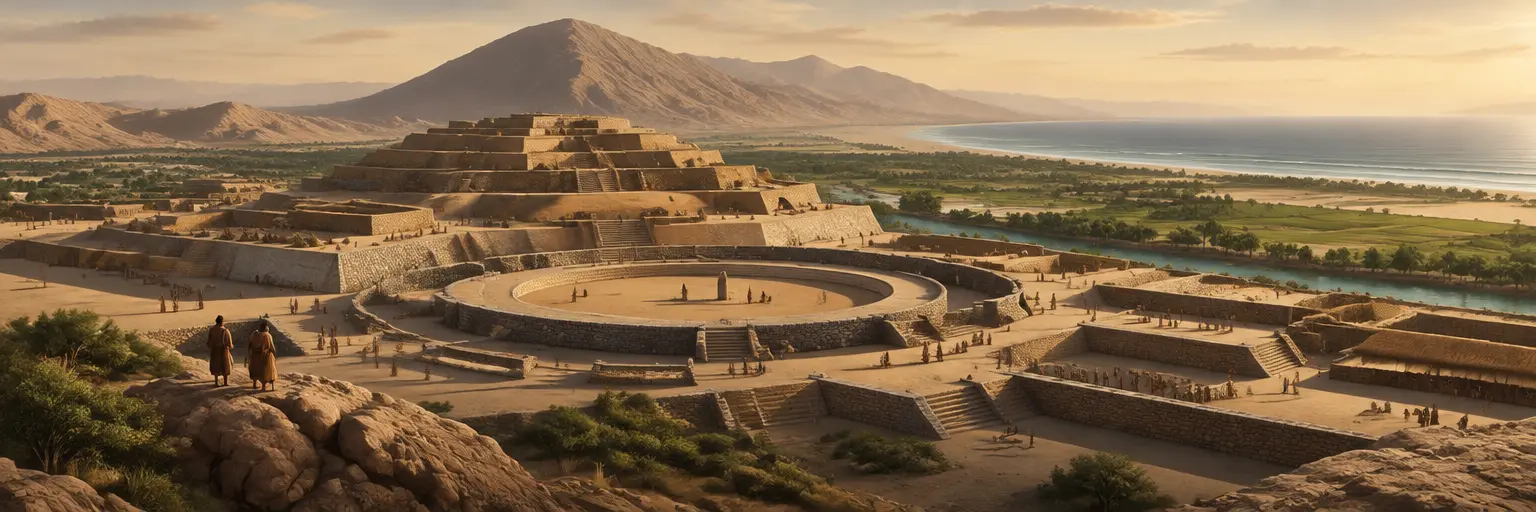
Discover the birthplace of civilization in the Americas at Caral-Supe, a UNESCO World Heritage site on Peru’s central coast, where monumental pyramids, sunken plazas, and complex urban planning date back over 5,000 years. This subcategory explores the earliest known urban centers of the Andean region—predating the Inca by millennia—offering a deep dive into the Norte Chico civilization, a society that thrived without ceramics or writing yet engineered impressive architecture aligned to astronomical events. From the Sacred City of Caral with its quipu records and geoglyphs, to neighboring settlements like Aspero and Vichama, these sites reveal advanced irrigation, maritime trade, and ceremonial rituals that shaped later Andean cultures. Uncover excavation techniques, radiocarbon dating breakthroughs, and artifact profiles—including flutes, figurines, and textile fragments—that illuminate daily life, social hierarchy, and environmental adaptation.
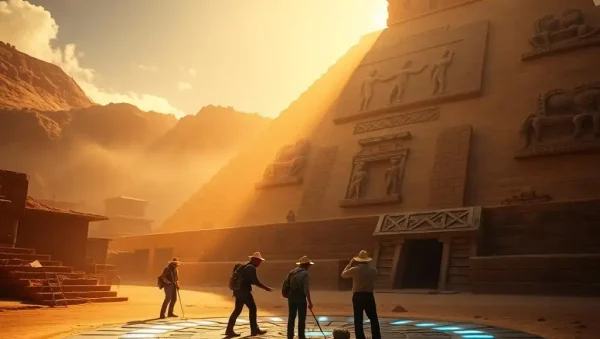
🎶 Explore the profound influence of sound in CaralSupe rituals through detailed CaralSupe music ritual analysis, revealing how ancient soundscapes and melodies…
Read article
🌎 Discover the CaralSupe ancient urbanism development timeline, highlighting its significance as one of the earliest known civilizations. This article explores its…
Read articleJourney back over 5,000 years to the arid coast of Peru, where the ancient city of Caral emerged as the oldest known urban center in the Americas. This subcategory within ArchaeologyHub.org’s global coverage delves deep into the monumental architecture, societal structures, and enduring mysteries of the Caral-Supe civilization and other formative Andean sites. Discover how these early urban centers laid the groundwork for later empires like the Inca, featuring pioneering agricultural techniques, complex trade networks, and the enigmatic quipu recording system.
Within this section, you will uncover the meticulous design of Caral, a UNESCO World Heritage site that boasts six large platform mounds, sunken circular plazas, and residential quarters arranged in a deliberate hierarchy. The absence of warfare evidence—no city walls, weapons, or mutilated remains—suggests a peaceful, theocratic society focused on ritual and commerce. Explore how the builders used "shicra" bags filled with stones to stabilize structures against earthquakes, a testament to their advanced engineering knowledge.
Our interpretive analyses highlight the astronomical alignments of Caral’s pyramids, which likely served as calendars for agricultural cycles. The site’s scale, spanning over 600 hectares, indicates a highly organized labor force and centralized authority. By studying the construction phases, you’ll grasp how urban planning evolved from simple dwellings to complex ceremonial centers, influencing later Andean cultures. This deep dive provides a chronological timeline of Caral’s rise and eventual decline around 1800 BCE, offering insights into early state formation.
The survival of Caral-Supe’s population depended on ingenious resource management. This section details the irrigation canals that diverted water from the Supe River, enabling the cultivation of cotton, gourds, beans, and squash in a desert environment. Meanwhile, coastal settlements like Aspero, just 23 kilometers away, supplied anchovies and shellfish, creating a symbiotic exchange system. You’ll learn how cotton was crucial for fishing nets, linking agricultural and maritime economies.
Trade networks extended beyond the valley, as evidenced by finds of Spondylus shells from Ecuador and medicinal plants from the Andes. Our artifact profiles examine the use of quipu—knotted cords believed to be an early form of record-keeping—which predates any comparable system by millennia. These discoveries reshape our understanding of prehistoric economic complexity, showing that long-distance exchange and specialized labor were not exclusive to later civilizations.
Delve into the ceremonial artifacts recovered from Caral, Vichama, and other early sites. This subcategory showcases effigy figurines made from clay, flutes crafted from condor and pelican bones, and carved monoliths depicting anthropomorphic beings. These objects were likely used in public rituals within the sunken plazas, where attendees could observe priestly ceremonies from above. The absence of grave goods in residential areas suggests that ancestor veneration differed from later Andean practices.
Our excavation diaries reveal how stratigraphic layers at these sites help date the introduction of maize, a staple that arrived later than previously assumed. The “Platform of the Sacrifices” at Vichama includes details of ritual offerings, though no evidence of human sacrifice exists at Caral itself. By examining these material remains, you’ll understand how ideology, power, and social cohesion were maintained without a standing army, relying instead on shared belief systems.
This section broadens your horizon by comparing Caral with contemporaneous sites like Sechín Bajo, La Galgada, and Buena Vista. While Caral is preceramic, these centers exhibit earlier or concurrent architectural developments, such as the circular plaza at Sechín Bajo dated to 3500 BCE. Through side-by-side timelines, you’ll see how urbanization spread along the coast and into highland valleys, with regional variations in temple design and iconography. Our interpretive essays discuss whether Caral was a primary center or one node in a larger network of interacting polities.
Geographic and environmental factors—such as El Niño events—likely triggered cultural shifts, prompting new architectural responses. This comparative lens helps identify common triggers for social complexity, such as resource unpredictability and population pressure. We also analyze the transition from the Fluted Point period to the Kotosh Religious Tradition, linking early homes with later ceremonial architecture. This holistic view positions Caral-Supe not as an isolated marvel but as part of a broader Andean trajectory.
Understand the temporal framework that defines this era, spanning from roughly 3000 BCE to 1800 BCE. Our detailed chronologies integrate radiocarbon dates from multiple labs, refining the succession of cultural phases: from the Late Archaic to the Initial Period. This section explains why Caral was abandoned—likely due to prolonged drought and the shifting of river courses—while other sites like Aspero continued for centuries. The decline was gradual, not catastrophic, with populations dispersing into smaller villages.
The legacy of these early centers persisted in later cultures, influencing the Chavín, Moche, and Wari civilizations. You’ll explore how elements like the sunken plaza and platform mound reappear with modifications, showcasing cultural continuity. Our interpretive essays argue that Caral’s collapse was a strategic decision to reorganize rather than a societal failure. By tracing these threads, you’ll appreciate how foundational knowledge of irrigation, textile production, and record-keeping became cornerstones of Andean life, contributing to the rise of the Inca Empire.
Caral-Supe is the oldest known urban center in the Americas, dating to around 2600 BCE, making it contemporaneous with Mesopotamian and Egyptian civilizations. Its monumental architecture, peaceful society without evidence of warfare, and use of quipu for recording predate any comparable developments in the New World, offering a unique case study of early state formation.
Builders relied on human labor, using stone tools and woven bags called shicra, filled with stones to create earthquake-resistant foundations. They transported materials from nearby quarries and riverbeds using manual carrying techniques. The social organization likely involved rotating labor drafts from surrounding communities, coordinated by priestly leaders.
Yes, the Supe Valley contains over 20 nearby settlements, including the coastal site of Aspero, which has its own pyramid complex. Other notable centers like Vichama, located further inland, show similar architectural features. Together, these sites formed an interconnected network that shared technological and ritual practices.
No written texts have been found, but the quipu—knotted cords—likely served as an early recording system for numerical and possible narrative data. More evidence comes from architectural alignments, artifact distributions, and coastal trade goods, which reveal their social hierarchies, religious ceremonies, and economic exchanges.
Evidence points to a prolonged period of drought and tectonic shifts that altered river flows, making agriculture unsustainable. The population gradually dispersed into smaller settlements, preserving their cultural knowledge. Over centuries, these groups adapted and merged with highland communities, passing on technologies that influenced later Andean civilizations.







