Documenting Amazonian Geoglyphs: Methods and Challenges
🌿 Explore the innovative methods used to document Amazonian geoglyphs, highlighting the Amazonian geoglyph documentation challenges faced by researchers. This article delves…
Read article
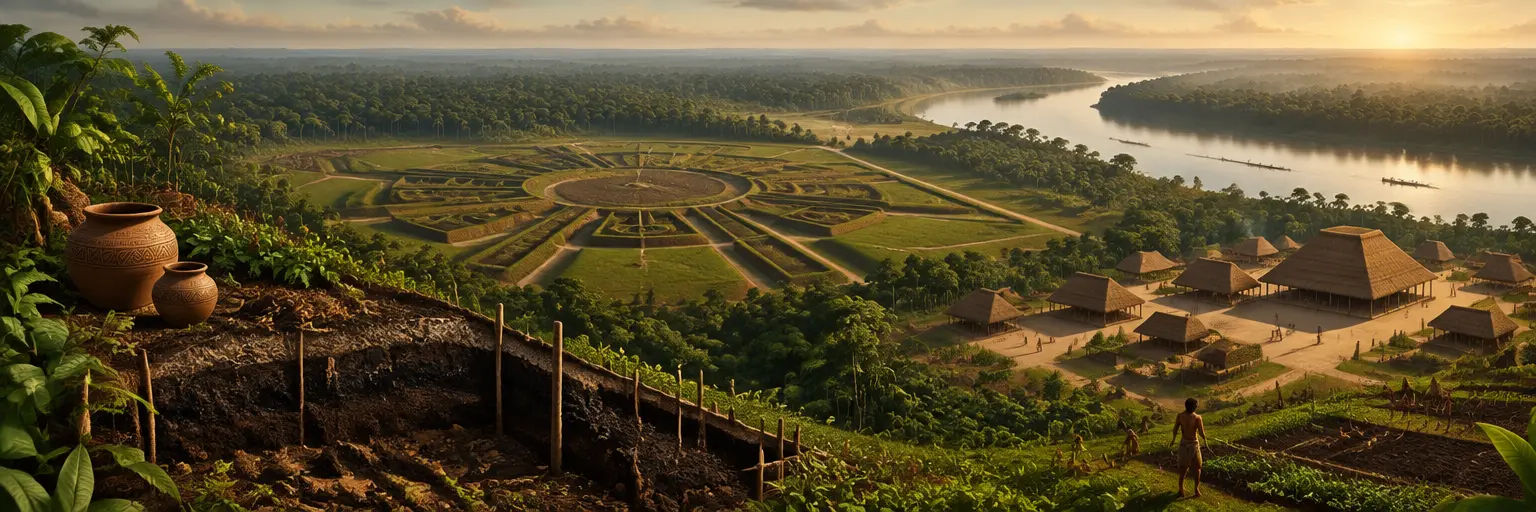
Explore the hidden wonders of the Amazonian Archaeological Sites, where ancient civilizations left behind enigmatic Geoglyphs and nutrient-rich Terra Preta Soils—a testament to sophisticated pre-Columbian engineering. These monumental earthworks, carved into the landscape over centuries, and the fertile dark earths that still enrich the forest today, challenge conventional views of the Amazon as a pristine wilderness. Dive into the latest discoveries and interpretive analyses that reveal how these ancient peoples shaped their environment, offering a compelling glimpse into a lost world of innovation and resilience. Perfect for archaeology enthusiasts and history buffs alike, this resource illuminates the global significance of these remarkable findings.

🌿 Explore the innovative methods used to document Amazonian geoglyphs, highlighting the Amazonian geoglyph documentation challenges faced by researchers. This article delves…
Read article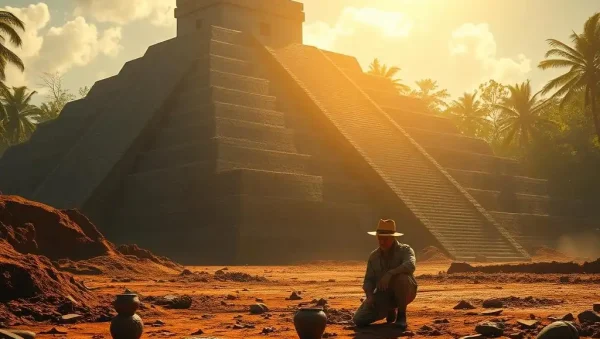
🌱 Discover how Terra Preta soil longevity analysis reveals its exceptional long-term stability and nutrient retention, offering valuable insights into sustainable land…
Read articleWelcome to ArchaeologyHub.org’s deep dive into the astonishing archaeological heritage of the Amazon rainforest. Far from being a pristine, untouched wilderness, the Amazon was home to complex, populous societies that engineered their landscape in remarkable ways. This subcategory focuses on two of the most transformative discoveries in South American archaeology: the massive geoglyphs carved into the earth and the fertile terra preta (dark earth) soils that reveal centuries of intentional human cultivation. Here, you will uncover how these features are rewriting the history of pre-Columbian civilization, challenging old narratives, and offering sustainable lessons for the present.
Amazonian geoglyphs are monumental ditches and embanked enclosures, often geometric in shape, etched into the clay subsoil. Recent satellite imagery and LiDAR surveys have revealed thousands of these structures hidden beneath the forest canopy, primarily in the western Amazon (e.g., Acre, Brazil, and Bolivia). These earthworks range from simple circles to complex octagons and hexagons, some spanning over 300 meters in diameter. Constructed between 1,000 and 2,000 years ago, they upend the belief that the rainforest lacked sophisticated permanent settlements. On this page, you will explore excavation reports, dating evidence, and theories about their ceremonial, defensive, or water-management purposes.
For the enthusiast or scholar, we provide interactive maps cataloging geoglyph clusters, 3D reconstructions of the earthworks, and a comparative analysis with other global geoglyph traditions, such as the Nazca Lines. The term “geoglyph” itself, derived from Greek and meaning “ground carving,” is examined in context, alongside the ecological impact of their construction—how digging these vast trenches actually improved soil drainage and created microhabitats for native species. This section is your gateway to understanding the sheer scale and intentionality of ancient Amazonian engineering, a field still rapidly evolving with each new discovery.
Terra preta, or “dark earth,” is a type of anthropogenic (human-made) soil found scattered across the Amazon basin. Unlike the naturally poor, acidic soils of the region, terra preta is rich in charcoal, organic matter, and nutrients like phosphorus, calcium, and zinc. This immense fertility persists for centuries, even millennia, thanks to the inclusion of biochar—a form of charcoal that resists decomposition. Archaeologists believe this soil was intentionally created by Indigenous peoples through a blend of composting, waste management, and low-temperature burning. This subcategory dives into the chemical signatures of terra preta, its distribution patterns, and the often-overlooked evidence of large, sedentary populations supported by these enriched plots.
Here, you will find detailed analytical profiles of soil samples from sites like the Caquetá region and the Upper Xingu River, correlating terra preta presence with settlement size and social complexity. We also highlight experimental archaeology projects attempting to recreate these soils, linking ancient practices to modern sustainable agriculture. The implications are profound: terra preta could inform contemporary climate change mitigation strategies via carbon sequestration in soils. This section is designed to bridge archaeology, ecology, and anthropology, offering a holistic view of how humans can positively transform their environment over long timescales—a striking counterpoint to the narrative of inevitable ecological degradation.
While the monumental earthworks and dark soils are the headline discoveries, the true richness of these sites lies in the artifacts they yield. Excavations at terra preta locales often uncover fragmented ceramics, polished stone axes, grinding stones, and occasional adornments, revealing a material culture distinct from other South American traditions. The pottery is frequently decorated with incised or painted geometric motifs corresponding to the shapes of the geoglyphs, suggesting a cultural coherence between their ceremonial landscapes and domestic arts. In this section, we catalogue and interpret these objects, contextualizing them within the daily rhythms of cooking, farming, and communal gatherings. You can expect high-resolution image galleries and detailed typologies of pottery styles, including the famous “Incised Rim” tradition of the Acre region.
Beyond pottery, faunal remains and phytoliths (silica bodies from plants) recovered from these sites provide a wealth of data on diet and crop management. Evidence of maize, manioc, sweet potatoes, and various fruits confirms a sophisticated agroforestry system, likely maintained over generations. We explore how the presence of terra preta correlated with fish weirs and artificial ponds, indicating an integrated aquatic-terrestrial subsistence economy. This section offers virtual “artifacts tours” and expert commentaries on what these objects imply about social stratification, trade networks, and ceremonial life. It is an essential resource for understanding that geoglyph builders were not just engineers but also skilled farmers, artists, and community organizers.
Establishing a precise timeline for the construction and occupation of Amazonian geoglyph and terra preta sites is central to this subcategory. Radiocarbon dating places most geoglyph construction between 1000 BCE and 1250 CE, with terra preta formation starting even earlier, around 4500 BCE. This staggered chronology suggests a gradual evolution from nomadic hunter-gatherer lifestyles to semi-sedentary and then fully settled societies, driven by the development of soil management techniques. Here, we present a detailed chronological table, cross-referencing phases of geoglyph construction with the expansion of terra preta, shifts in ceramic styles, and climatic episodes such as the Medieval Warm Period. Understanding this timeline is key to assessing whether these societies collapsed before European contact or persisted to be decimated by introduced diseases and colonial violence.
We also examine the debated link between geoglyphs and the ancestors of modern Indigenous peoples, such as the Arawak-speaking groups. Linguistic and genetic studies propose that the builders may have migrated along river corridors, spreading their soil-improvement knowledge. The abandonment of many geoglyph sites around 1300 CE coincides with societal reorganization, perhaps due to internecine conflict or resource stress, but terra preta continued to be used in some areas into the colonial era. This section offers a narrative synthesis of current hypotheses and standing controversies, providing readers with the necessary chronological framework to appreciate the long-term resilience and eventual transformation of these Amazonian kingdoms.
The Amazonian geoglyphs and terra preta are not isolated phenomena; they offer crucial comparative insights for global archaeology. They challenge the conventional distinction between “civilized” agrarian states and “primitive” tropical forest dwellers, placing the Amazon on par with other centers of independent innovation such as Mesopotamia or Mesoamerica. By comparing these earthworks with those of the North American mound builders, the raised fields of the Andes, and the terracing of Southeast Asia, we can identify universal principles of landscape engineering and sustainable soil management. This comparative lens underscores how human resilience, not environmental limits, often dictates societal success. In this section, we provide scholarly essays and infographics that juxtapose the Amazonian achievements with counterparts across the world, highlighting similar patterns of population density, water control, and shared ceremonial architecture.
Furthermore, the study of terra preta has direct modern implications, particularly in the fields of regenerative agriculture and carbon farming. Researchers and NGOs are now working with Indigenous communities to revive these ancient soil practices as a scalable solution for improving tropical soil fertility and reducing deforestation. This page includes case studies of ongoing initiatives, such as the Terra Preta Program in the Manaus region, where biochar production is being integrated into mainstream farming. We also discuss the ethical responsibilities of archaeologists to collaborate with descendant communities, ensuring that the benefits of this research—both scientific and commercial—are shared equitably. This global and forward-looking perspective positions ArchaeologyHub.org as not just a repository of the past, but a catalyst for future sustainable practices.
Amazonian geoglyphs are geometric earthworks—ditches, embankments, and walls—created by ancient peoples by digging into the clay ground. They are typically hundreds of meters long, forming squares, circles, and hexagons, and are visible from the air. Primarily found in deforested areas of the western Amazon, they likely served ceremonial, defensive, and possibly astronomical purposes, proving complex social organization.
Terra preta is an extremely fertile, dark, human-modified soil rich in charcoal and nutrients, unlike the red, acidic, nutrient-poor latosol typical of the Amazon. Regular soil leaches minerals quickly, but terra preta retains phosphorus, calcium, and zinc for centuries. Its resilience comes from biochar and other organic wastes, making it a radical example of sustainable ancient agriculture.
Yes, many Indigenous groups, including the Kuikuro in the Upper Xingu region, continue to recognize and use terra preta for their gardens. They often associate these dark soils with ancestral spirits and maintain traditional knowledge about their creation. Some geoglyph sites are also regarded as sacred ceremonial spaces, though access is often restricted by modern land ownership or preservation laws.
Archaeologists employ LiDAR (Light Detection and Ranging) to map geoglyphs hidden under forest cover, alongside satellite imagery and drone photography. For terra preta, soil micromorphology, elemental analysis via X-ray fluorescence, and phytolith analysis reveal past plant use. Radiocarbon dating of charcoal fragments in the soil provides reliable chronologies. These non-invasive methods minimize site destruction.
For decades, the Amazon was seen as a pristine forest that could not support large, settled societies. Geoglyphs and terra preta overturn this view, proving that millions of people lived there with advanced engineering and agriculture. This contradicts colonial and modern narratives of Indigenous “primitiveness” and has significant implications for land rights, conservation policies, and the history of human-environment interaction.







