
Tell Aswad: Early Agricultural Practices and Settlement in the Damascus Basin

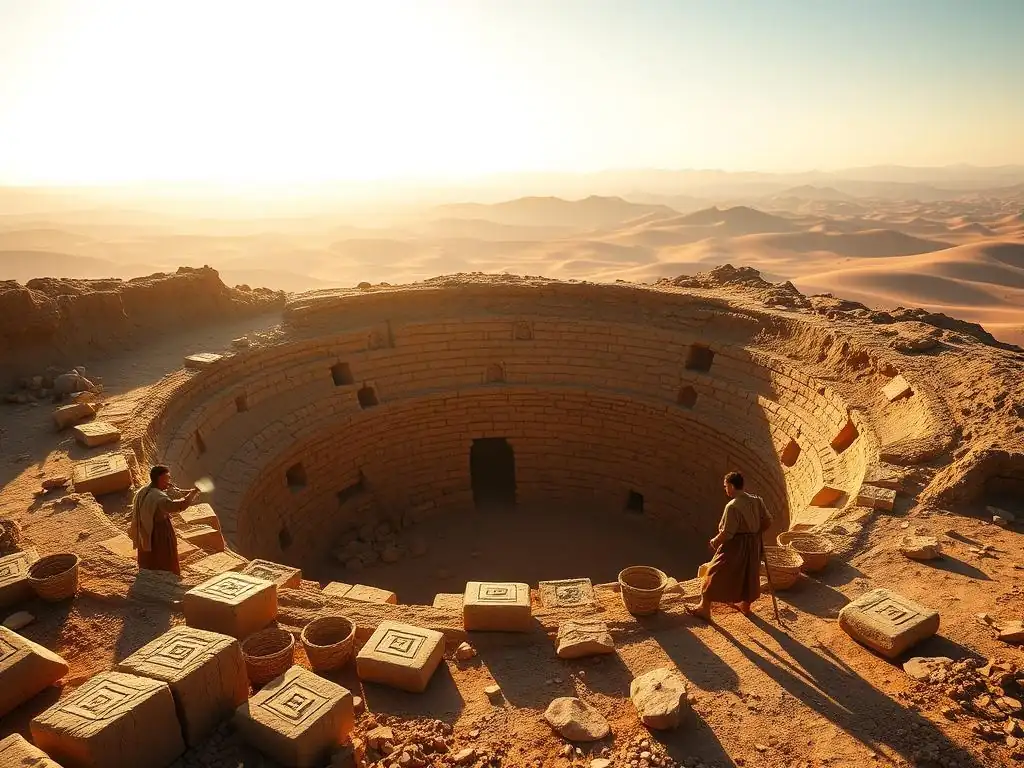
Welcome to ArchaeologyHub.org, your comprehensive gateway to the past! Delve into the mysteries unearthed from the sands of time, and join us as we explore pivotal archaeological discoveries across the globe. Ever wondered how early agricultural practices shaped ancient civilizations? Our featured article, "Tell Aswad: Early Agricultural Practices and Settlement in the Damascus Basin," unearths groundbreaking insights into the lives of some of humanity's earliest farmers.
Discover how this Syrian site rewrites the narrative of Neolithic agriculture and settlement in the Damascus region and uncover the secrets buried beneath its tells. Intrigued? Read on to learn more and embark on a journey through millennia!
- Introduction to Tell Aswad: A Key Site in Levantine Archaeology
- The Early Settlement at Tell Aswad: Unveiling the Layers of History
- Early Agricultural Practices at Tell Aswad: Evidence and Analysis
- The Significance of Tell Aswad's Agricultural Practices in the Damascus Basin
- Archaeological Discoveries at Tell Aswad: Artifacts and Insights
- Tell Aswad and the Transition to Sedentary Life in the Damascus Region
- Preservation and Future Research at Tell Aswad
-
Frequently Asked Questions
- How significant is Tell Aswad in the context of early agriculture?
- What specific crops were cultivated at Tell Aswad during its early occupation?
- How does the location of Tell Aswad, within the Damascus Basin, contribute to its archaeological importance?
- What archaeological techniques are typically employed to study sites like Tell Aswad?
- What is the relationship between Tell Aswad and other contemporary early agricultural sites in the Near East?
- Final Reflection: Seeds of the Future from Ancient Fields
- Unearth Your Own Connection to Ancient Farming!
Introduction to Tell Aswad: A Key Site in Levantine Archaeology
Locating Tell Aswad: Geographical Significance in the Damascus Region
Tell Aswad, an archaeological tell situated approximately 25 kilometers southeast of Damascus, Syria, holds a pivotal position within the fertile Damascus Basin. This strategic location, nestled near the Barada River and its ancient tributaries, provided an ideal environment for early human settlement. The site benefits from consistent water sources and rich alluvial soils, characteristics that were instrumental in fostering the development of early agricultural practices in the region. Its relatively low elevation, around 600 meters above sea level, combined with the basin's microclimate, created a highly productive landscape capable of sustaining intensive cultivation.
The geographical context of Tell Aswad places it at a critical juncture for understanding the spread and innovation of Neolithic practices across the Near East. The Damascus Basin acts as a natural corridor connecting various parts of the Levant, making Tell Aswad a significant point of interaction and cultural exchange. Its proximity to other early Neolithic sites, while being distinct in its environmental setting, underscores its unique contribution to the broader narrative of the Neolithic Revolution. The site's longevity, spanning several millennia, further attests to the enduring viability of its location for sustained human habitation and agricultural development.
The Importance of Tell Aswad for Understanding Neolithic Levant
Tell Aswad stands as one of the most significant early Neolithic sites in the southern Levant, offering unparalleled insights into the origins of agriculture and the establishment of permanent settlements. Its occupation sequence, primarily spanning the Pre-Pottery Neolithic A (PPNA) and Pre-Pottery Neolithic B (PPNB) periods (roughly 9500-7000 BCE), provides a continuous record of the transition from foraging to farming. The meticulously excavated layers reveal crucial evidence of the earliest domesticated cereals and legumes in the region, alongside indications of early animal management, making it a cornerstone for studying the "Neolithic Revolution."
The discoveries at Tell Aswad have fundamentally reshaped our understanding of when and how agricultural practices emerged in the Near East. Prior to its extensive excavation, many theories focused on specific core areas for domestication, but Tell Aswad demonstrated an independent or at least very early development of complex agricultural systems in the Damascus Basin. This evidence challenges simplistic diffusion models and highlights the regional diversity and multiple origins of agricultural innovation, underscoring Tell Aswad's unique and indispensable role in the archaeological discourse surrounding the Neolithic Levant.
The Early Settlement at Tell Aswad: Unveiling the Layers of History
Pre-Pottery Neolithic A (PPNA) Phase at Tell Aswad: The First Settlers
The earliest occupation at Tell Aswad dates back to the Pre-Pottery Neolithic A (PPNA) period, commencing around 9500 BCE. During this foundational phase, the first settlers established a rudimentary yet significant presence on the tell. Archaeological investigations have unearthed evidence of semi-subterranean structures, typically circular or oval in plan, constructed from packed earth and possibly reinforced with organic materials. These early dwellings suggest a community transitioning towards a more settled existence, though their subsistence strategies likely still heavily relied on a combination of intensive foraging and initial experiments with cultivation.
The material culture of the PPNA phase at Tell Aswad includes distinctive lithic assemblages, characterized by tools such as Khiamian points and various types of bladelets, reflecting a continued emphasis on hunting and processing wild resources. However, even in this early stage, hints of resource management and early cultivation are discernible, setting the groundwork for the more pronounced agricultural developments of subsequent periods. The PPNA layers at Tell Aswad provide a rare glimpse into the very initial steps of sedentarization and the precursor activities to full-scale Tell Aswad early agriculture in the Damascus Basin.
Pre-Pottery Neolithic B (PPNB) Phase at Tell Aswad: Developments and Changes
The transition to the Pre-Pottery Neolithic B (PPNB) period, beginning around 8700 BCE, marks a period of significant development and transformation at Tell Aswad. This phase is characterized by a marked shift in architectural styles, with the emergence of more substantial, rectilinear mudbrick houses, often built on stone foundations. These structures indicate a more permanent and organized settlement layout, supporting a larger and more stable population. The PPNB layers also reveal increasingly sophisticated tool technologies, including the widespread use of pressure flaking for the production of finely crafted arrowheads and sickle blades, essential for the burgeoning agricultural economy.
Furthermore, the PPNB phase at Tell Aswad is renowned for its distinctive cultural practices, most notably the discovery of plastered human skulls. These meticulously reconstructed skulls, often adorned with shells or pigments, were typically found buried beneath house floors, suggesting complex ritualistic practices and ancestor veneration within the community. The overall archaeological record from the PPNB at Tell Aswad points to a flourishing, well-established society that had largely embraced a sedentary, agricultural way of life, with the successful Tell Aswad early agriculture in the Damascus Basin serving as its economic backbone.
Early Agricultural Practices at Tell Aswad: Evidence and Analysis
The Dawn of Agriculture: Plant Domestication at Tell Aswad
Tell Aswad provides some of the most compelling and early evidence for plant domestication in the Near East, positioning it as a crucial site for understanding the origins of agriculture. The archaeobotanical record from the site indicates that systematic cultivation and selective breeding of wild plants were well underway by the early PPNB period, if not earlier. This transition from opportunistic gathering to controlled production of food resources represents a monumental shift in human subsistence strategies, fundamentally altering the relationship between humans and their environment in the Damascus Basin.
The presence of domesticated plant species, identified through specific morphological changes in their seeds and fruits, signifies a deliberate human intervention in the reproductive cycles of these plants. This evidence from Tell Aswad suggests that the process of domestication was not a singular event but a gradual continuum of interaction and manipulation. The site's rich archaeobotanical assemblage offers a detailed snapshot of this pivotal period, illustrating how the inhabitants of Tell Aswad were at the forefront of agricultural innovation, laying the groundwork for widespread farming in the Levant.
Emmer Wheat and Barley: Key Crops in Early Aswad Agriculture
Among the most significant plant discoveries at Tell Aswad are the exceptionally early occurrences of domesticated emmer wheat ( Triticum dicoccum) and two-row barley ( Hordeum distichon). These cereals, identified through their non-shattering rachis and larger grain sizes compared to their wild progenitors, are present from the earliest PPNB levels, dating back to approximately 8700 BCE. The abundance of these domesticated forms indicates that they formed the staple crops of the Tell Aswad diet, providing a reliable and calorie-rich food source that could be stored for extended periods, thus supporting a growing sedentary population.
Beyond these primary cereals, archaeobotanical analyses have also revealed the cultivation of various legumes, including lentils ( Lens culinaris) and peas ( Pisum sativum), and potentially chickpeas ( Cicer arietinum). The cultivation of multiple crop types suggests a diverse and resilient agricultural system. The evidence from Tell Aswad confirms that the inhabitants were not only cultivating wild resources but actively managing and domesticating a suite of plants, establishing a complex system of Tell Aswad early agriculture that was highly advanced for its time in the Damascus Basin.
Identifying Plant Remains: Archaeobotanical Studies at Tell Aswad
The identification and analysis of plant remains at Tell Aswad have been instrumental in reconstructing its early agricultural practices. Archaeobotanists employ techniques such as flotation, where soil samples are processed in water to separate light organic materials (like seeds and charcoal) from heavier sediments. These recovered macro-remains are then meticulously examined under a microscope to identify species and assess morphological changes indicative of domestication, such as the toughening of the rachis in cereals or increased seed size.
Detailed studies of the carbonized plant remains from Tell Aswad have provided quantitative data on the proportion of wild versus domesticated species throughout the site's occupation. For example, analyses have shown a significant prevalence of domesticated emmer wheat and barley, often making up over 70% of the cereal remains in later PPNB levels. The presence of specific weed species associated with cultivated fields further corroborates the evidence for systematic farming. These rigorous archaeobotanical investigations offer robust proof of the sophisticated Tell Aswad early agriculture in the Damascus Basin.
Animal Husbandry: The Role of Animals in the Tell Aswad Economy
While plant domestication was a cornerstone of the Tell Aswad economy, the management and eventual domestication of animals also played a significant role in diversifying and stabilizing the community's food supply. The transition from hunting wild game to controlling and breeding animals provided a more predictable source of protein, fat, and secondary products, contributing to the overall resilience of the settlement. This shift represents another critical facet of the Neolithic Revolution unfolding at Tell Aswad.
Zooarchaeological studies, which involve the analysis of animal bones recovered from archaeological contexts, have provided compelling evidence for the progression of animal husbandry at Tell Aswad. The changing proportions of species, age profiles of slaughtered animals, and morphological changes in bone structure offer insights into the inhabitants' increasing control over animal populations. This integrated approach to both plant and animal resources highlights the comprehensive nature of Tell Aswad early agriculture and subsistence strategies.
Evidence of Animal Domestication: Sheep, Goats, and Pigs
Evidence for the domestication of sheep ( Ovis aries) and goats ( Capra hircus) at Tell Aswad appears prominently during the PPNB phase, with some indications potentially earlier. Zooarchaeological analyses show a shift in the faunal assemblage, with a significant increase in the proportion of these species, often comprising over 60-70% of the total identifiable mammalian remains in later PPNB levels. Key indicators of domestication include a predominance of juvenile and sub-adult animals in the bone assemblages, suggesting controlled culling patterns for meat production, and subtle changes in bone morphology compared to their wild counterparts.
Furthermore, there is compelling evidence for the early domestication of pigs ( Sus scrofa) at Tell Aswad, possibly making it one of the earliest sites to demonstrate this in the Near East, alongside sites like Cayönü in Anatolia. The presence of a high percentage of young pigs and a reduction in overall body size compared to wild boars point towards controlled breeding.
While sheep and goats likely provided milk and potentially wool, pigs were primarily valued for their meat. The multi-species approach to animal husbandry underscores the advanced nature of the Tell Aswad early agriculture and its diverse economic base in the Damascus Basin.
The Impact of Animal Husbandry on Tell Aswad's Society
The adoption of animal husbandry had profound implications for the social and economic organization of Tell Aswad. A stable supply of domesticated animals reduced the risks associated with hunting and provided a consistent source of protein and fat, which complemented the carbohydrate-rich diet derived from cereals. This reliable food base contributed to population growth and allowed for greater sedentism, as communities no longer needed to follow migratory wild herds.
Moreover, animal husbandry offered secondary products beyond meat, such as milk from sheep and goats, which could be processed into cheese or yogurt, adding nutritional value and variety to the diet. The presence of domesticated animals also had implications for labor organization, requiring communal effort for herding, penning, and processing. This integration of animal resources with sophisticated Tell Aswad early agriculture solidified the community's self-sufficiency and fostered a more complex, settled society in the Damascus Basin.
The Significance of Tell Aswad's Agricultural Practices in the Damascus Basin
Tell Aswad's Contribution to the Neolithic Revolution in the Levant
Tell Aswad's archaeological record stands as a testament to the profound and early agricultural innovations that took place in the Damascus Basin, making it a critical contributor to our understanding of the Neolithic Revolution in the Levant. The clear evidence for the domestication of both key plant species like emmer wheat and barley, and animal species such as sheep, goats, and pigs, from the early PPNB period, demonstrates a comprehensive and sophisticated agricultural system.
This indicates that the Damascus Basin was not merely a recipient of agricultural ideas from other regions but a significant center of independent or co-developing innovation.
The sustained success of Tell Aswad early agriculture allowed for a stable, sedentary population to thrive for millennia, fostering social complexity and technological advancements. The site's long occupational sequence provides a unique window into the gradual refinement of farming techniques and the increasing reliance on domesticated resources. Tell Aswad thus underscores the multi-regional nature of agricultural origins in the Near East and highlights the specific environmental and cultural factors that propelled the Damascus Basin to the forefront of this transformative period.
Comparing Tell Aswad's Agriculture with Other Early Neolithic Sites: Jericho and Mureybet
When comparing Tell Aswad's agricultural practices with other prominent early Neolithic sites in the Levant, such as Jericho (Tell es-Sultan) and Mureybet, both similarities and crucial distinctions emerge. Jericho, located in the Jordan Valley, is famous for its early PPNA occupation and monumental architecture like the Jericho Tower, with evidence for the intensive exploitation of wild cereals and a gradual transition towards cultivation. While Jericho shows early sedentism, clear morphological evidence for fully domesticated cereals appears slightly later or less definitively in its earliest phases compared to the robust evidence at Tell Aswad for PPNB.
Mureybet, situated on the Euphrates in northern Syria, provides another important comparative case, with early PPNA and PPNB levels showing strong evidence for the domestication of rye and wheat. Like Tell Aswad, Mureybet demonstrates a multi-species approach to plant domestication.
However, Tell Aswad's distinct contribution lies in its specific combination of early domesticated cereals (emmer wheat and two-row barley) and, notably, its strong evidence for early pig domestication, which is less pronounced or later at some other sites. The evidence from Tell Aswad for early agriculture in the Damascus Basin thus complements and enriches the broader picture of diverse agricultural origins across the Fertile Crescent, showcasing regional variations in the pace and scope of domestication.
Archaeological Discoveries at Tell Aswad: Artifacts and Insights
Lithic Technology: Stone Tools and their Use in Early Agriculture
The lithic (stone tool) assemblages recovered from Tell Aswad provide invaluable insights into the daily lives and agricultural practices of its inhabitants. Throughout the PPNA and PPNB phases, there is a clear evolution in tool types and manufacturing techniques. Early PPNA tools include Khiamian points and bladelets, reflecting a foraging and hunting economy. By the PPNB, the technology becomes more sophisticated, with the widespread adoption of pressure flaking for the production of finely crafted arrowheads, indicating continued hunting alongside farming.
Crucially, the presence of numerous sickle blades with characteristic "sickle gloss" (a sheen caused by cutting silica-rich plant stems) provides direct evidence of cereal harvesting. Grinding stones and querns, used for processing grains into flour, are also abundant, highlighting the importance of cereal consumption. Axes and adzes, made from ground stone, suggest activities related to land clearance and woodworking for construction. These specialized tools underscore the advanced nature of Tell Aswad early agriculture and the technological adaptations necessary for a farming lifestyle.
Architectural Remains: Houses and Storage Structures at Tell Aswad
The architectural remains at Tell Aswad offer a tangible record of the settlement's growth and the increasing complexity of its social organization. The earliest structures from the PPNA period were typically small, semi-subterranean circular or oval huts, often with packed earth floors. This modest architecture reflects a community still in the early stages of permanent settlement.
With the advent of the PPNB, a dramatic architectural transformation occurred. Houses became larger, rectilinear, and constructed primarily from mudbrick, often laid on stone foundations. These more substantial dwellings suggest a greater investment in permanent habitation and a more organized settlement plan. Importantly, archaeological excavations have also revealed evidence of dedicated storage structures, such as pits and possibly small granaries, within or adjacent to the houses. These storage facilities are crucial indicators of surplus production from Tell Aswad early agriculture, allowing for food security and potentially supporting non-agricultural specialists within the community.
Other Notable Finds: Human Remains and Lime Plastered Skulls
Beyond tools and structures, Tell Aswad has yielded several other remarkable archaeological finds that shed light on the cultural and symbolic world of its Neolithic inhabitants. A significant number of human burials have been uncovered, often found beneath the floors of houses, a common practice in the PPNB Levant. These burials frequently included grave goods, such as shell beads or small personal ornaments, providing insights into burial rituals and social status.
However, the most iconic and enigmatic discoveries at Tell Aswad are the lime-plastered skulls. These human skulls, carefully removed from the deceased, had their facial features meticulously reconstructed with lime plaster, sometimes painted or adorned with shells for eyes. Dating primarily to the PPNB period, these unique artifacts are interpreted as evidence of complex ancestor veneration practices, where the revered dead remained a tangible presence within the living community. The presence of these highly specialized objects further illustrates the sophisticated cultural practices that developed alongside the successful Tell Aswad early agriculture in the Damascus Basin.
Tell Aswad and the Transition to Sedentary Life in the Damascus Region
From Hunter-Gatherers to Farmers: The Sedentary Lifestyle at Tell Aswad
The archaeological record at Tell Aswad provides compelling evidence for the profound transition from a mobile, hunter-gatherer existence to a permanent, sedentary lifestyle, driven largely by the adoption of agriculture. Prior to the Neolithic, human groups in the region were characterized by seasonal movements in pursuit of wild resources. However, the systematic cultivation of cereals and legumes, coupled with the management of animals, created a reliable and localized food supply that eliminated the necessity for frequent relocation.
The shift to sedentism at Tell Aswad is reflected in the construction of increasingly robust and permanent architectural structures, from early circular huts to later multi-roomed mudbrick houses. The significant investment in building materials and the accumulation of material culture within these dwellings point to a commitment to long-term occupation. This stability, underpinned by the burgeoning Tell Aswad early agriculture, allowed for population growth, the development of more complex social structures, and a deeper connection to the specific landscape of the Damascus Basin.
The successful implementation of agriculture at Tell Aswad had far-reaching consequences for its social structures and settlement patterns. The ability to produce food surpluses supported a larger, more concentrated population than foraging could sustain. This increased population density likely led to the emergence of more complex social organization, potentially involving a greater division of labor beyond basic subsistence tasks. For example, the crafting of plastered skulls or specialized stone tools might have been undertaken by individuals with specific skills.
The sedentary nature of the community also fostered a stronger sense of territoriality and communal identity, as evidenced by the permanent architecture and burial practices. The need for cooperative labor in farming activities, such as planting, harvesting, and irrigation (if present), could have reinforced communal bonds and potentially led to the development of early forms of leadership or decision-making bodies. Thus, the foundation of Tell Aswad early agriculture not only transformed the economy but also fundamentally reshaped the social fabric and the very layout of human habitation in the Damascus region.
Preservation and Future Research at Tell Aswad
Challenges in Preserving Tell Aswad: Agricultural Expansion and Urban Development
Despite its immense archaeological significance, Tell Aswad faces considerable challenges in its preservation, primarily due to modern agricultural expansion and the relentless urban development emanating from nearby Damascus. The fertile soils that once attracted early farmers are now extensively cultivated using modern machinery, leading to deep plowing that can disturb and destroy shallow archaeological layers. Irrigation practices can also lead to soil erosion and chemical changes that degrade buried remains.
Furthermore, the rapid growth of Damascus and its surrounding suburbs poses a constant threat of encroachment. Construction projects for housing, infrastructure, and industrial zones can directly obliterate portions of the tell or indirectly impact it through changes in the water table and increased human activity. Safeguarding the integrity of Tell Aswad early agriculture's archaeological record requires continuous monitoring, protective legislation, and public awareness campaigns to mitigate these ongoing pressures and ensure the site's long-term survival.
Future Research Directions: Genetic Analysis of Plant and Animal Remains
Future research at Tell Aswad holds immense potential, particularly with the application of advanced scientific techniques to its rich archaeological record. One promising avenue is the genetic analysis of ancient plant and animal remains. Techniques such as ancient DNA (aDNA) extraction and sequencing from carbonized seeds or bone fragments can provide unprecedented insights into the precise genetic pathways of domestication. This could help clarify whether the domesticated species found at Tell Aswad represent local domestication events or the introduction of already domesticated forms from elsewhere.
Beyond aDNA, isotopic analysis of human and animal bones can reveal detailed information about diet, mobility, and environmental conditions. For instance, stable isotope analysis can differentiate between reliance on wild versus domesticated resources and track dietary shifts over time, while strontium isotopes can indicate whether individuals were born and raised within the Tell Aswad community or migrated from other regions. These cutting-edge scientific approaches promise to unlock further secrets about Tell Aswad early agriculture and the complex dynamics of its ancient inhabitants in the Damascus Basin.
Frequently Asked Questions
How significant is Tell Aswad in the context of early agriculture?
Tell Aswad is considered a highly significant archaeological site because it provides crucial evidence of some of the earliest agricultural practices in the Levant. It demonstrates early settled life predating many other known settlements.
What specific crops were cultivated at Tell Aswad during its early occupation?
Archaeological evidence suggests that early inhabitants of Tell Aswad cultivated crops like emmer wheat, einkorn wheat, and barley. These findings are pivotal for understanding the origins of agriculture in the region.
How does the location of Tell Aswad, within the Damascus Basin, contribute to its archaeological importance?
The Damascus Basin's fertile lands and access to water resources made it an ideal location for early settlement and agriculture. Tell Aswad's location within this basin highlights the interplay between environment and human development.
What archaeological techniques are typically employed to study sites like Tell Aswad?
Excavation, radiocarbon dating, and analysis of plant remains are commonly used to investigate Tell Aswad. These techniques help to determine the age of the site and understand past agricultural practices.
What is the relationship between Tell Aswad and other contemporary early agricultural sites in the Near East?
Tell Aswad provides a valuable point of comparison for understanding the development of agriculture across the Near East. It helps archaeologists to identify regional variations and patterns of agricultural innovation during this period.
Final Reflection: Seeds of the Future from Ancient Fields
The exploration of Tell Aswad and its early agricultural practices in the Damascus Basin isn't just an archaeological endeavor; it's a vital connection to the very roots of human civilization and our relationship with food. Understanding how our ancestors cultivated the land thousands of years ago provides crucial insights into sustainable practices and the challenges of feeding a growing population, issues that resonate profoundly in our world today.
This journey into the past underscores the enduring power of innovation and adaptation. Witnessing the ingenuity of the people of Tell Aswad, their pioneering efforts in domesticating plants and establishing settled communities, reminds us of our shared human heritage and the importance of preserving these invaluable historical sites. The past is never dead. It's not even past.
- William Faulkner. This quote encapsulates the enduring relevance of Tell Aswad; its story continues to inform our present and shape our future.
As we reflect on the lessons gleaned from Tell Aswad, consider how these ancient agricultural practices can inspire us to cultivate a more sustainable and resilient future. Let us learn from the past, embrace innovation, and nurture the seeds of progress to ensure food security and environmental stewardship for generations to come.
Unearth Your Own Connection to Ancient Farming!
Thank you for exploring the fascinating story of Tell Aswad and its pioneering agricultural practices. Now, let's bring the past to life!
Here are a few ways you can delve deeper:
- Visit a local historical farm or museum to experience the tools and techniques of early agriculture firsthand. Imagine the ingenuity of those first farmers!
- Share this article with friends or family who share an interest in archaeology or ancient history and spark a discussion about the origins of agriculture.
- Explore locally grown food options at your farmers market and consider how these traditions have been passed down through generations.
What sustainable farming practices do you admire and how can we learn from the past to shape a better future?