
Imperial Quarries to Distant Markets: Roman Marble Shipwrecks

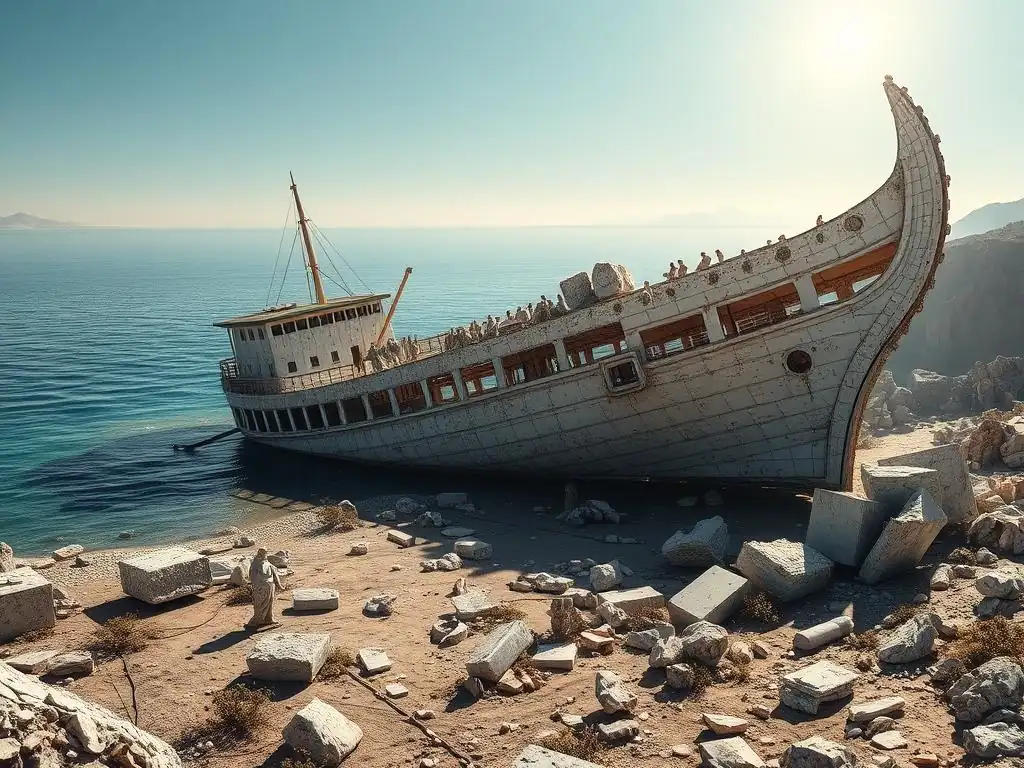
Welcome to ArchaeologyHub.org, your gateway to uncovering the past! Ever wondered how magnificent Roman marble, quarried with Imperial ambition, reached the far corners of the empire? Imperial Quarries to Distant Markets: Roman Marble Shipwrecks explores precisely that, tracing the intricate Roman marble shipwreck trade routes that connected bustling ports and left lasting legacies beneath the waves. Dive in to discover the secrets hidden within these submerged vessels and unlock a new understanding of Roman commerce and artistry. What stories do these marble-laden wrecks tell? Let's find out!
- Introduction: Unveiling Ancient Roman Maritime Trade Through Marble Shipwrecks
- The Marble Trade in the Roman Empire: Demand and Supply
- Roman Shipwrecks: Silent Witnesses to the Marble Trade
- Case Studies: Key Roman Marble Shipwreck Discoveries
- Roman Marble Shipwreck Trade Routes: Mapping the Network
- The Economic Impact of the Roman Marble Trade
- Preservation and Conservation of Roman Marble Shipwreck Artifacts
- Future Research Directions in Roman Marble Shipwreck Studies
- Conclusion: The Enduring Legacy of Roman Marble and Maritime Trade
-
Frequently Asked Questions
- How did Roman marble travel across the Mediterranean?
- What is the significance of shipwrecks in understanding Roman marble trade?
- Where were the main quarries that supplied Roman marble?
- What types of artifacts, other than marble blocks, are commonly found in Roman marble shipwrecks?
- How does the study of Roman marble shipwrecks enhance our understanding of the Roman economy?
- Final Reflection: Echoes of Ancient Ambition
- Unearth Your Own Marble Masterpiece!
Introduction: Unveiling Ancient Roman Maritime Trade Through Marble Shipwrecks
The Significance of Roman Marble Shipwrecks in Archaeological Research
Roman marble shipwrecks represent unique archaeological time capsules, offering unparalleled insights into the economic, technological, and social fabric of the ancient Roman Empire. Unlike terrestrial sites, which are often subject to extensive disturbance over centuries, submerged shipwrecks can preserve their contents and structural integrity with remarkable fidelity, protected by the marine environment. This exceptional preservation allows archaeologists to recover entire cargoes, ship components, and even personal effects of the crew, providing a direct, undisturbed snapshot of a moment in time.
These maritime discoveries are crucial for understanding Roman commerce, revealing not just what was traded, but also the scale, methods, and routes of ancient shipping. For instance, the discovery of a shipwreck laden with hundreds of amphorae or dozens of marble blocks offers quantifiable data on trade volumes that literary sources often lack. It is estimated that thousands of Roman shipwrecks lie unexcavated across the Mediterranean, each holding the potential to redefine our understanding of the Roman world's intricate maritime economy.
Tracing Roman Trade Routes: Marble as a Key Indicator
Marble, due to its weight, value, and distinct geological signatures, serves as an exceptionally powerful indicator for tracing ancient Roman marble shipwreck trade routes. Unlike perishable goods or even common pottery, large blocks of marble are often preserved intact and can be precisely sourced to their quarries of origin through scientific analysis. This provenance information, combined with the shipwreck's location, directly maps out the specific maritime pathways used for transporting this high-demand commodity.
The sheer volume of marble required for Rome's monumental building programs meant that its transport was a massive logistical undertaking, primarily conducted by sea. Consequently, Roman marble shipwrecks provide direct, tangible evidence of these long-distance trade networks. For example, finding a shipwreck off the coast of Italy carrying marble identified as originating from Proconnesos in the Sea of Marmara unequivocally confirms a specific Roman marble shipwreck trade route spanning thousands of kilometers across the Mediterranean. This direct evidence is far more robust than inferences drawn solely from scattered finds on land, offering a precise cartography of ancient maritime commerce.
The Marble Trade in the Roman Empire: Demand and Supply
The Imperial Quarries: Sources of Roman Marble (Carrara, Proconnesos, Pentelikon)
The Roman Empire's insatiable demand for marble fueled the extensive exploitation of several key quarries across its vast territories, each producing distinct types of stone that defined Roman architecture and sculpture. Carrara, located in modern-day Tuscany, Italy, was the source of "Luna marble," renowned for its brilliant white, fine-grained quality, making it ideal for high-status sculpture and monumental facing. During its peak in the Imperial period, the Carrara quarries were capable of extracting tens of thousands of cubic meters of marble annually, supplying Rome and its surrounding regions.
Another vital source was Proconnesos, situated on Marmara Island in the Sea of Marmara (modern Turkey). This quarry yielded a distinctive greyish-white marble, often with blue-grey banding, highly favored for architectural elements like columns, capitals, and sarcophagi due to its durability and ease of carving. Its strategic location near major maritime routes made it a primary supplier for the eastern Roman Empire and beyond.
Lastly, Pentelikon, near Athens in Greece, was famous for its pure white, slightly crystalline marble, which had been used since classical Greek times for iconic structures like the Parthenon. Under Roman rule, Pentelic marble continued to be highly prized, particularly for its aesthetic qualities in public buildings and temples, demonstrating the continuity of specific Roman marble shipwreck trade routes.
Marble Types and Their Uses in Roman Architecture and Sculpture
The diverse range of marbles available to the Romans allowed for a sophisticated palette in their architectural and sculptural endeavors, with specific types chosen for their aesthetic properties, workability, and symbolic value. Luna marble from Carrara was the preferred choice for intricate portraiture and life-sized statues, its fine grain allowing for precise detail and a luminous finish. Its purity often symbolized classical ideals and was extensively used in the imperial city of Rome itself.
Proconnesian marble, with its distinctive veining, was frequently employed for large-scale architectural components such as monolithic columns, floor tiles, and elaborate sarcophagi. Its visual impact and structural integrity made it a staple in grand public buildings and private villas throughout the Mediterranean.
Beyond these primary white marbles, the Romans also imported a stunning array of colored marbles like pavonazzetto (from Phrygia, Turkey), giallo antico (from Numidia, modern Tunisia), and africano (from Teos, Turkey). These polychrome stones were used for decorative veneers, creating opulent interiors in bathhouses, basilicas, and imperial residences, demonstrating the vast reach of Roman marble shipwreck trade routes that facilitated such exotic imports.
Organization and Control of the Roman Marble Industry
The Roman marble industry, particularly the production and distribution of high-value imperial marbles, was largely under the direct control of the emperor, reflecting its strategic importance to the state's monumental building programs and its economic significance. Major quarries like Carrara and Proconnesos were imperial property ( marmorarii), managed by imperial procurators and worked by a combination of slaves, condemned criminals, and skilled free laborers. This centralized control ensured a steady supply of high-quality stone for state projects, from the construction of forums and temples to the creation of imperial statues.
While the emperor controlled the largest quarries, private contractors and merchants also played a significant role, often acquiring licenses to extract marble or engaging in its transport and distribution. The logistical challenges were immense, involving the initial quarrying of massive blocks, their rough shaping, and then the arduous overland transport to coastal ports.
From these ports, specialized merchant ships, often designed to carry heavy and dense cargo, embarked on long voyages across the Mediterranean, following established Roman marble shipwreck trade routes, delivering these precious materials to distant construction sites. The coordination between quarry masters, transporters, and receiving agents highlights the sophisticated organizational capacity of the Roman economy.
Roman Shipwrecks: Silent Witnesses to the Marble Trade
Overview of Known Roman Marble Shipwreck Sites in the Mediterranean
The Mediterranean Sea, a vital artery for Roman commerce, holds a remarkable number of Roman marble shipwreck sites, each a frozen moment in the history of ancient trade. These discoveries are widely distributed, concentrated along major Roman marble shipwreck trade routes that connected imperial quarries to consumption centers. Significant concentrations of marble-laden wrecks have been found off the coasts of Italy (particularly the Tyrrhenian Sea), Greece, Turkey, and North Africa, areas that were central to the empire's economic network.
For instance, the waters around Sicily and Sardinia, key navigational points, have yielded multiple marble wrecks, indicating the hazards and volume of traffic passing through these straits. Similarly, the coasts of Asia Minor, home to several important quarries, are rich in such finds. While precise numbers fluctuate with ongoing discoveries, dozens of Roman shipwrecks carrying substantial marble cargoes have been identified and, in some cases, partially excavated, providing invaluable data on the specific types of marble traded, the size of shipments, and the vessels used for their transport. These sites underscore the pervasive nature of the Roman marble trade.
Challenges in Locating and Excavating Underwater Archaeological Sites
Locating and excavating ancient shipwrecks, especially those carrying heavy marble cargoes, presents formidable challenges that demand specialized technology and expertise. Many Roman marble shipwrecks lie in deep waters, beyond the reach of conventional diving, requiring the use of remotely operated vehicles (ROVs) or even manned submersibles for initial surveys and documentation. Visibility can be extremely limited due to sediment, currents, or depth, complicating detailed examination and recovery efforts.
Furthermore, the sheer scale and weight of marble blocks often necessitate innovative lifting techniques to bring them to the surface without damage. The cost associated with such operations is substantial, frequently running into millions of euros for a major excavation, often requiring international collaboration and significant funding. Beyond recovery, the subsequent conservation of waterlogged timber and marble artifacts, which can be fragile after centuries underwater, adds another layer of complexity, demanding a controlled environment and lengthy desalination processes to prevent deterioration.
Dating Marble Shipwrecks: Methods and Considerations
Accurately dating Roman marble shipwrecks is crucial for placing them within the broader historical and economic context of Roman marble shipwreck trade routes. Archaeologists employ a combination of methods, with the most common being ceramic typology. Associated pottery, such as amphorae (used for transporting wine, oil, or garum) or fine wares, often provides a terminus post quem (the earliest possible date) for the wreck, as ceramic styles evolve over time and can be dated with relative precision. For example, the presence of specific African Red Slip Ware types might indicate a 3rd-century CE date.
Another valuable dating tool is the discovery of coins within the shipwreck's cargo or the crew's personal effects. Coins, being precisely dated by their minting year and imperial reign, offer a very specific chronological marker. Ship construction techniques, while less precise, can also provide a general timeframe, as Roman shipbuilding evolved over centuries. Finally, radiocarbon dating of organic materials, such as timber from the ship's hull or any preserved ropes, offers an independent scientific date, complementing archaeological evidence and helping to pinpoint the period during which these Roman marble shipwreck trade routes were active.
Case Studies: Key Roman Marble Shipwreck Discoveries
The Marausa Shipwreck Case Study: Cargo Analysis and Trade Route Reconstruction
The Marausa shipwreck, discovered off the coast near Trapani, Sicily, provides a compelling case study for understanding Roman marble shipwreck trade routes and the nature of heavy-cargo transport in the 2nd century CE. This wreck, dated to approximately the mid-2nd century CE, was found laden primarily with large, roughly hewn marble blocks, indicating it was transporting raw material directly from a quarry to a major consumption center. The cargo consisted of around 10 tons of marble, a significant weight that necessitated a robust merchant vessel.
The composition of the cargo, consisting almost exclusively of uncarved blocks, suggests a shipment destined for a construction project or a workshop where the marble would be further processed. This direct quarry-to-market model provides clear evidence of the logistical chain involved in supplying the Roman world with its primary building material. The location of the wreck near Sicily, a central point in the Mediterranean, further underscores its importance for reconstructing the extensive network of Roman marble shipwreck trade routes that crisscrossed the sea.
Marble Provenance Studies: Identifying the Origin of the Marble
A critical aspect of the Marausa shipwreck study involved detailed provenance analysis of its marble cargo. Using scientific techniques such as isotopic analysis (measuring stable oxygen and carbon isotopes) and trace element analysis, researchers were able to pinpoint the exact quarries from which the marble originated. These studies revealed that the majority of the marble blocks came from the imperial quarries of Proconnesos in the Sea of Marmara.
This definitive identification of the marble's source is invaluable. It unequivocally confirms a long-distance Roman marble shipwreck trade route stretching from the eastern Aegean, across the central Mediterranean, and likely heading towards a destination in Italy or North Africa. The fact that an entire cargo was sourced from a single, distant quarry highlights the efficiency and scale of Roman maritime transport and the centralized control over major marble production centers, enabling precise mapping of these ancient supply chains.
Insights into Ship Construction and Navigation Techniques
The Marausa shipwreck also offered significant insights into Roman shipbuilding practices and the capabilities required for transporting heavy and dense cargoes like marble. While the entire hull was not preserved, recovered sections indicated a robust construction, consistent with a large merchant vessel designed for deep-sea voyages. The ship was estimated to be around 20-30 meters in length, a typical size for a Roman freighter capable of carrying hundreds of tons.
The vessel's construction likely employed the mortise-and-tenon joinery technique, a characteristic feature of Roman shipbuilding that provided strong, durable hulls resistant to the stresses of heavy loads and challenging sea conditions. The nature of the cargo itself, large uncarved blocks, suggests that the ship was optimized for carrying bulk, undifferentiated material, rather than delicate finished products. While direct evidence of navigational tools is rare in Roman shipwrecks, the presence of such heavy cargo on a long-distance Roman marble shipwreck trade route implies sophisticated knowledge of prevailing winds, currents, and celestial navigation for successful passage.
The Punta Scifo Shipwreck Case Study: The Socio-Economic Context of the Marble Trade
The Punta Scifo shipwreck, discovered off the coast of Calabria in southern Italy, offers a contrasting and equally illuminating perspective on the Roman marble trade, highlighting its socio-economic complexities. Dated to the late 1st or early 2nd century CE, this wreck's cargo was remarkably diverse, including not only rough marble blocks but also a significant quantity of semi-finished and finished marble products, such as columns, capitals, and even carved sarcophagi. This varied consignment suggests a more complex trade operation than a simple quarry-to-market shipment.
The presence of both raw material and processed goods, possibly from multiple quarries, provides a unique snapshot of a diversified Roman marble trade route. It indicates that the ship was likely servicing a market with varied demands, perhaps supplying both large-scale construction projects requiring raw blocks and private commissions needing specific architectural elements or funerary monuments. The shipwreck's location near a major shipping lane also underscores its role in the broader network of Roman marble shipwreck trade routes that connected the eastern and western halves of the empire.
The Role of Merchants and Shipowners in the Marble Distribution Network
The mixed cargo of the Punta Scifo shipwreck offers valuable clues about the entrepreneurial spirit and distribution strategies of Roman merchants and shipowners involved in the marble trade. Unlike imperial shipments of raw blocks, this diverse consignment suggests that a private merchant, or perhaps a consortium, consolidated various marble types and finished products to meet a wide range of market demands. This approach would have minimized risk by diversifying the cargo, making the voyage more economically viable even if some items were more speculative.
Merchants often acted as intermediaries, sourcing marble from different quarries (or through other suppliers) and arranging its transport to specific markets where demand was identified. Shipowners, sometimes the same individuals as the merchants, bore the considerable financial risk of maritime transport, including potential losses from shipwrecks. The Punta Scifo discovery highlights the intricate network of private enterprise that complemented imperial control, with merchants playing a crucial role in ensuring the widespread distribution of marble along established Roman marble shipwreck trade routes.
Evidence of Regional Variations in Marble Demand
The specific composition of the Punta Scifo cargo also provides compelling evidence for regional variations in marble demand across the Roman Empire. The presence of both unfinished blocks and finished architectural elements or sarcophagi suggests that the intended market in southern Italy had a need for both raw material for ongoing construction and specialized, pre-fabricated items. This contrasts with wrecks carrying only raw blocks, which might indicate a market dominated by large-scale public works or major sculptural workshops.
The diversity implies that the merchant was catering to a clientele that included both wealthy private citizens undertaking elaborate building projects and those requiring specific funerary monuments, in addition to potential demand from public building initiatives. This granular insight into market preferences, revealed through the direct evidence of a shipwreck's cargo, helps archaeologists reconstruct the nuanced economic landscape of Roman Italy and the specific demands that shaped Roman marble shipwreck trade routes.
Roman Marble Shipwreck Trade Routes: Mapping the Network
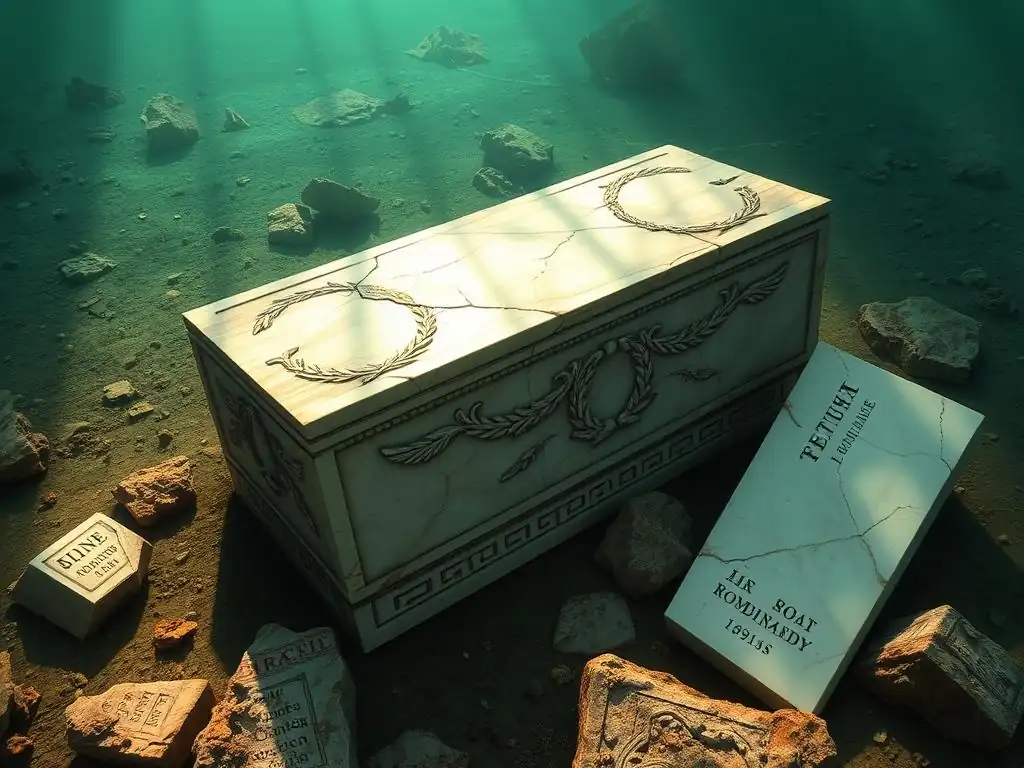
Reconstructing Roman Maritime Routes Using Shipwreck Data
The systematic study of Roman marble shipwrecks is fundamental to accurately reconstructing the complex network of Roman maritime routes, particularly the specialized Roman marble shipwreck trade routes. By plotting the locations of these wrecks and meticulously identifying the provenance of their marble cargoes, archaeologists can trace the specific pathways taken by ancient merchant ships. This data, when combined with historical geography and knowledge of prevailing winds and currents, allows for a precise mapping of ancient shipping lanes.
For example, the consistent discovery of shipwrecks carrying Proconnesian marble along a corridor stretching from the Sea of Marmara, through the Aegean, around the southern coast of Sicily, and up the Tyrrhenian Sea towards Ostia, clearly delineates a major imperial marble route. Similarly, wrecks with Luna marble primarily point to coastal routes along the Italian peninsula. The sheer number of these discoveries provides statistical weight to these reconstructions, offering a robust understanding of the arteries that fueled the Roman economy and facilitated the vast distribution of marble across its empire.
Major Ports and Trading Hubs Involved in the Marble Trade (Ostia, Piraeus, Alexandria)
The success of the Roman marble trade depended heavily on a network of strategically located major ports and trading hubs that served as crucial nodes in the Roman marble shipwreck trade routes. Ostia, Rome's primary port at the mouth of the Tiber, was undoubtedly the most important receiving hub for imperial marble.
Its extensive infrastructure, including massive warehouses ( horrea), dedicated marble yards ( marmora), and hundreds of quays, was designed to handle the immense volume of incoming raw materials for the capital's monumental building projects. Evidence from the Piazzale delle Corporazioni shows offices of marble merchants, highlighting Ostia's role as an administrative and logistical center.
In the eastern Mediterranean, Piraeus, the port of Athens, served as a key transit point and export hub for Pentelic marble, as well as a transshipment point for marbles originating further east. Its well-established maritime connections made it a vital link in the chain. Similarly, Alexandria in Egypt was a major port, not only for the export of unique Egyptian stones like porphyry and granite but also as a critical hub for the broader eastern Mediterranean trade, facilitating the movement of various goods, including marble, along the intricate Roman marble shipwreck trade routes that connected the empire.
The Impact of Weather and Sea Conditions on Roman Maritime Commerce
Weather and sea conditions exerted a profound influence on Roman maritime commerce, shaping the patterns and risks associated with Roman marble shipwreck trade routes. The Romans generally observed a "closed sea" period during the winter months (roughly November to March), when storms were more frequent and severe, making long-distance voyages perilous. Most large-scale transport, especially of heavy goods like marble, was concentrated during the navigable season from spring to early autumn.
Despite these precautions, storms and adverse currents remained a constant threat. The majority of known Roman shipwrecks, including those carrying marble, are found in coastal waters rather than the open sea. This suggests that many vessels met their end either by being driven onto reefs or shorelines during gales, or by attempting to seek shelter in unfamiliar bays.
The weight of marble cargo, while providing stability, could also make a ship less maneuverable in rough seas, increasing the risk of capsizing or grounding. Understanding these environmental factors is crucial for interpreting the distribution of Roman marble shipwreck trade routes and the reasons behind their ultimate demise.
The Economic Impact of the Roman Marble Trade
The Scale and Value of the Roman Marble Trade
The Roman marble trade was an enterprise of astonishing scale and immense economic value, representing a significant portion of the empire's long-distance commerce. While precise figures are difficult to ascertain, archaeological evidence and historical accounts indicate that hundreds of thousands, if not millions, of tons of marble were transported across the Mediterranean over several centuries. It's estimated that Rome alone imported over a million cubic meters of marble during the Imperial period, a volume that underscores the vast logistical and financial investment involved.
Unlike bulk goods like grain or amphorae containing wine or oil, marble was a high-value commodity. A single large block of marble could represent a substantial investment, equivalent to the annual wages of several laborers. The sheer volume and inherent value of these shipments meant that the marble trade contributed significantly to the Roman economy, stimulating related industries and generating considerable wealth for those involved in its extraction, transport, and artistic application. The network of Roman marble shipwreck trade routes was a testament to this economic might.
The Role of Marble in Roman Economic Development
The marble trade played a multifaceted role in Roman economic development, extending far beyond the mere transport of stone. It stimulated growth in numerous ancillary industries, creating a complex economic ecosystem. Quarrying operations, which involved thousands of laborers, engineers, and overseers, were major employers. The specialized skills required for dressing, shaping, and loading massive blocks also fostered a skilled workforce.
Furthermore, the demand for ships capable of carrying such heavy cargo spurred innovation in shipbuilding and maritime logistics. Thousands of sailors, dockworkers, and merchants found employment in the transport sector. Once the marble reached its destination, it fueled the construction industry, employing architects, masons, sculptors, and a vast array of artisans. The continuous flow of marble along Roman marble shipwreck trade routes was a direct driver of economic activity, generating wealth, creating jobs, and fostering specialized skills across the empire.
Marble as a Symbol of Roman Power and Prestige
Beyond its economic utility, marble served as a potent symbol of Roman power, prestige, and imperial ambition. Emperor Augustus famously boasted of transforming Rome from a city of brick to a city of marble, directly linking the use of this material with imperial glory and the grandeur of the Roman state. Grand public buildings, temples, forums, and imperial residences, adorned with imported marbles, were tangible manifestations of Rome's wealth, engineering prowess, and its ability to command resources from across its vast empire.
The use of exotic and rare colored marbles, sourced from distant lands like Egypt, Greece, and Asia Minor, further emphasized Rome's global reach and sophistication. These opulent displays were not merely aesthetic; they were carefully curated expressions of political authority and cultural dominance, designed to impress both citizens and foreign dignitaries. Thus, the Roman marble shipwreck trade routes were not just conduits for commerce, but also arteries through which the very symbols of Roman imperial might flowed, transforming cities and reinforcing the image of an all-powerful empire.
Preservation and Conservation of Roman Marble Shipwreck Artifacts
Challenges in Preserving Submerged Marble Artifacts
The preservation of marble artifacts recovered from Roman shipwrecks presents unique and significant challenges due to the marine environment and the inherent properties of the stone. While submergence can protect marble from atmospheric erosion, it exposes it to other forms of degradation. Marine organisms, such as boring bivalves ( lithophaga), can tunnel into the marble, causing significant structural damage and surface pitting over centuries. Chemical dissolution can also occur, particularly in acidic waters, leading to surface erosion and loss of detail.
Upon recovery, the primary challenge is preventing the formation of salt crystals within the marble's pores as it dries. If not properly desalinized, these crystals can expand, causing the marble to crack, spall, and disintegrate. The sheer weight and size of marble blocks also complicate handling and transport, requiring specialized equipment and careful planning to avoid mechanical damage during the recovery process from ancient Roman marble shipwreck trade routes.
Conservation Techniques for Recovered Marble
Effective conservation of recovered Roman marble artifacts requires a multi-stage, meticulous approach to ensure their long-term stability and preservation. The initial and most critical step is desalination. Large marble blocks are typically immersed in tanks of fresh, deionized water for extended periods, sometimes several years, with the water being regularly changed to gradually leach out accumulated salts. This slow process prevents the damaging crystallization that occurs during rapid drying.
Once desalinized, the marble may undergo consolidation treatments, where a dilute polymer solution (such as Paraloid B-72) is applied to strengthen any fragile or friable areas, particularly those affected by bio-erosion. For pieces with significant damage or fragmentation, careful reassembly may be undertaken by conservators. Finally, recovered marble artifacts must be housed in controlled museum environments with stable temperature and humidity levels to prevent further degradation from atmospheric fluctuations, ensuring these tangible links to Roman marble shipwreck trade routes endure.
The Importance of Protecting Underwater Cultural Heritage
The protection of underwater cultural heritage, including Roman marble shipwreck sites, is of paramount importance due to its non-renewable nature and immense historical value. These sites are fragile and highly vulnerable to damage from human activities and natural processes. Threats include illegal salvage and looting, which can destroy archaeological context and lead to the loss of invaluable data. Commercial fishing practices, such as trawling, can also cause severe damage to submerged wrecks.
International conventions, such as the UNESCO 2001 Convention on the Protection of the Underwater Cultural Heritage, aim to prevent the commercial exploitation and destruction of these sites, advocating for their preservation in situ where possible. Protecting these submerged archives ensures that future generations can study and learn from them, providing direct insights into ancient economies, technologies, and the intricate Roman marble shipwreck trade routes that shaped the Roman world. An estimated 3 million shipwrecks lie on the seabed globally, with only a tiny fraction currently protected or documented.
Future Research Directions in Roman Marble Shipwreck Studies
Emerging Technologies for Underwater Archaeology
The field of Roman marble shipwreck studies is poised for significant advancements thanks to the continuous development of emerging technologies in underwater archaeology. Autonomous Underwater Vehicles (AUVs) and Remotely Operated Vehicles (ROVs) equipped with high-resolution sonar, multi-beam echo sounders, and advanced cameras are revolutionizing the way large areas of the seabed can be surveyed efficiently and non-invasively. These technologies allow for the detection and preliminary mapping of new shipwreck sites, including those carrying marble, in depths previously inaccessible.
Photogrammetry and 3D modeling are also transforming documentation practices. By taking thousands of overlapping photographs, archaeologists can create highly detailed, accurate 3D models of entire wreck sites and individual artifacts, providing unprecedented levels of spatial data and allowing for virtual reconstruction and analysis. These technological leaps promise to accelerate the discovery rate of new Roman marble shipwreck trade routes and enhance our ability to study existing ones with greater precision.
Potential for New Discoveries and Further Insights
Despite centuries of exploration, vast areas of the Mediterranean seabed remain unexplored, holding immense potential for new discoveries related to Roman marble shipwrecks. Deeper waters, once beyond the reach of divers, are becoming increasingly accessible with advanced robotics, opening up new frontiers for archaeological investigation. These deep-water sites often offer exceptional preservation conditions due to the absence of oxygen and human disturbance, potentially yielding intact hulls and organic materials that can provide unprecedented insights into ship construction, daily life aboard, and the specific dynamics of Roman marble shipwreck trade routes.
Furthermore, advancements in scientific analysis, such as more refined provenance studies using new isotopic or elemental markers, promise to provide even more precise origins for marble cargoes, allowing for an even more detailed mapping of ancient trade networks. The integration of environmental data, such as paleoclimatic reconstructions, with shipwreck data can also offer deeper insights into how weather patterns influenced Roman maritime commerce.
Integrating Shipwreck Data with Terrestrial Archaeological Evidence
A key future direction in Roman marble shipwreck studies involves the more comprehensive integration of data from submerged sites with evidence gathered from terrestrial archaeological excavations. By correlating the types of marble found in shipwrecks with those used in specific Roman villas, public buildings, or sculptural workshops on land, archaeologists can create a holistic picture of supply chains and consumption patterns. This cross-referencing can confirm the intended destinations of specific marble shipments and reveal the economic links between distant quarries, maritime transporters, and urban centers.
For example, if a shipwreck carrying distinctive green marble from Thessaly is found off the coast of Italy, and the same marble is identified in a Roman villa in Campania, it strengthens the connection along that particular Roman marble shipwreck trade route. This integrated approach allows researchers to move beyond isolated case studies, building a more comprehensive understanding of the Roman economy, its logistical complexities, and the profound impact of the marble trade on the empire's development and artistic expression.
Conclusion: The Enduring Legacy of Roman Marble and Maritime Trade
The Contribution of Roman Marble Shipwrecks to Our Understanding of Roman History
Roman marble shipwrecks have made an invaluable and often unique contribution to our understanding of Roman history, offering direct, tangible evidence that complements and enriches textual sources and terrestrial archaeology. These submerged time capsules reveal the true scale and sophistication of Roman maritime trade, showcasing the impressive logistical capabilities required to transport millions of tons of heavy, valuable stone across vast distances. They provide concrete details on shipbuilding technology, cargo organization, and the specific Roman marble shipwreck trade routes that connected the empire's furthest reaches.
Beyond the purely economic, these wrecks illuminate the societal aspects of Roman enterprise: the daring of merchants, the skill of mariners, and the immense demand for marble that transformed Rome's urban landscape. They are silent yet eloquent witnesses to the prosperity, ambition, and interconnectedness of the Roman world, offering insights into daily life, economic strategies, and the imperial ambitions that drove such monumental endeavors.
The Importance of Continued Research and Preservation Efforts
The enduring legacy of Roman marble and maritime trade, vividly brought to life by these shipwrecks, underscores the critical importance of continued research and preservation efforts. With vast areas of the Mediterranean seabed still unexplored and new technologies constantly emerging, there is immense potential for further discoveries that will deepen our understanding of Roman marble shipwreck trade routes and the wider ancient economy. Each new wreck offers a fresh perspective, challenging existing theories and adding new layers to the narrative.
Equally vital is the commitment to protecting these non-renewable underwater cultural heritage sites from looting, damage, and neglect. Through responsible archaeological practices, scientific conservation, and international cooperation, these precious fragments of the past can be safeguarded for future generations. By preserving and studying Roman marble shipwrecks, we not only honor the ingenuity of ancient mariners and traders but also gain profound insights into the complex forces that shaped one of history's greatest empires.
Frequently Asked Questions
How did Roman marble travel across the Mediterranean?
Roman marble was primarily transported by sea routes using ships. These vessels sailed along established trade routes, often hugging the coastline for safety and access to ports.
What is the significance of shipwrecks in understanding Roman marble trade?
Shipwrecks offer invaluable insights because they are like time capsules, preserving the cargo and construction details of Roman trading vessels, which reveal details about the Roman marble shipwreck trade routes.
Where were the main quarries that supplied Roman marble?
The primary sources of Roman marble were located in areas like Carrara (Italy) and other quarries throughout the Roman Empire, including regions in Greece and North Africa.
What types of artifacts, other than marble blocks, are commonly found in Roman marble shipwrecks?
Besides marble blocks, shipwrecks often contain items like amphorae, used for transporting liquids, tools, and personal belongings of the crew, providing a more complete picture of life aboard these vessels.
How does the study of Roman marble shipwrecks enhance our understanding of the Roman economy?
The analysis of these wrecks provides data on the scale, efficiency, and organization of the Roman economy, revealing the economic importance of marble in construction, art, and trade, which is a key aspect of the Roman marble shipwreck trade routes.
Final Reflection: Echoes of Ancient Ambition
The journey through the Roman marble shipwreck trade routes reveals more than just submerged vessels and fragmented sculptures; it unearths a complex network of ambition, engineering prowess, and insatiable demand that resonates even today. The scale of the Roman Empire's logistical operations, evident in the recovered marble cargoes scattered across the Mediterranean seabed, serves as a stark reminder of humanity's enduring drive to conquer, consume, and leave its indelible mark on the world.
The enduring allure of marble, and the lengths to which the Romans went to acquire and transport it, speaks volumes about the power of aesthetics and the pursuit of lasting legacy. Reflecting on these submerged stories, I am struck by the realization that our own consumer habits and globalized trade networks are, in many ways, echoes of this ancient system. The sea is everything. It covers seven tenths of the terrestrial globe. Its breath is pure and healthy. It is an immense desert, where man is never lonely, for he feels life stirring on all sides. The sea is only the embodiment of a supernatural and wonderful existence. It is nothing but love and emotion; it is the 'Living Infinite'.
- Jules Verne. This quote, though not directly about marble, captures the spirit of adventure and the vastness of the sea that facilitated this trade, and the enduring human fascination with both.
As we contemplate the remnants of these Roman marble shipwreck trade routes, let us consider the implications of our own globalized world. What materials are we consuming? What are the environmental and social costs of their extraction and transportation? Let us strive to build a future where our ambition is tempered by responsibility, and where our legacy is one of sustainability and respect for the planet, rather than one of exploitation and waste. Consider the echoes of the past, and choose to build a future worthy of remembrance.
Unearth Your Own Marble Masterpiece!
Thank you for exploring the fascinating world of Roman marble trade! We hope you’ve enjoyed learning about the shipwrecks that reveal so much about this ancient industry. Now, it's time to put that knowledge into action.
- Visit a local museum or archaeological site and discover the stories hidden within their marble artifacts. Imagine the journey each piece has taken!
- Share this article with fellow history enthusiasts and ignite a conversation about the scale and impact of the Roman marble trade.
- Research and identify a modern-day equivalent of the Roman marble trade and reflect on what we can learn from those ancient practices.
What surprising marble treasures will you uncover on your next adventure?