
Chichen Itza's Great Ball Court: Ritual Sport, Symbolism, and Sacrifice

Welcome to ArchaeologyHub.org!
Delve into the past and uncover the secrets of lost civilizations. This article explores the fascinating world of Chichen Itza's Great Ball Court rituals, a testament to the complex interplay of sport, symbolism, and sacrifice in ancient Mayan society. What secrets lie buried within the stone walls of this iconic structure, and how did these games shape the destiny of a civilization? Read on to discover the captivating story behind one of Mesoamerica's most impressive archaeological marvels and understand the profound significance of its ball court.
- Introduction to the Great Ball Court at Chichen Itza
- The Architectural Marvel of Chichen Itza's Ball Court
- The Ritual Game: Ulama and its Significance
- Symbolism Embedded in the Ball Court's Design
- Ritual Sacrifice and the Ballgame
- The Afterlife and the Ballgame: Funerary Associations
- The Sound of the Ballgame: Acoustics and Spectacle
- Comparative Analysis: Chichen Itza's Ball Court in the Mesoamerican Context
- The Decline of the Ballgame and its Legacy
- Conclusion: Rituals and Their Enduring Mystery
-
Frequently Asked Questions
- What was the primary purpose of the ball court at Chichen Itza?
- How does the Chichen Itza ball court reflect Mayan cosmology?
- What archaeological evidence supports the idea of sacrifice at the Chichen Itza ball court?
- What types of artifacts have been found at or near the Chichen Itza ball court?
- How does the size of the Great Ball Court at Chichen Itza compare to other Mayan ball courts?
- Final Reflection: Echoes of the Sacred Game
- Unearth Your Inner Explorer: Continue the Chichen Itza Adventure!
Introduction to the Great Ball Court at Chichen Itza
Unveiling the Majesty of Chichen Itza's Ball Court
The Great Ball Court at Chichen Itza stands as an unparalleled testament to the sophisticated spiritual and social life of the ancient Maya civilization. As the largest and most well-preserved ball court in Mesoamerica, it offers invaluable insights into the complex Chichen Itza ball court rituals that once animated this monumental space. Its sheer scale and intricate carvings speak volumes about the importance of the ritual ballgame, known as pok-ta-pok or pitz, to the Classic and Postclassic Maya, serving not merely as a sport but as a profound reenactment of cosmic struggles and divine narratives.
Archaeological investigations suggest that the construction of this particular ball court, likely completed during the Late Classic to Terminal Classic periods (roughly 800-1000 CE), was a massive undertaking, requiring significant labor and resources. Its prominence within the ceremonial center of Chichen Itza underscores its central role in public life, where rulers, priests, and the populace gathered to witness and participate in events that intertwined sport, religion, and political power, fundamentally shaping the Chichen Itza ball court rituals.
Mesoamerican Rituals and Societal Structures
Mesoamerican civilizations, including the Maya, Aztec, and Toltec, integrated ritual practices deeply into their societal fabric, linking daily life with cosmological beliefs. The ballgame was a prime example of this integration, serving as a powerful ritual that mirrored the movements of celestial bodies, the cyclical nature of agriculture, and the eternal struggle between opposing forces—light and darkness, life and death. These Chichen Itza ball court rituals were not confined to the playing field but permeated various aspects of governance, warfare, and spiritual devotion.
The societal structures that supported these elaborate rituals were highly stratified, with rulers and elites often performing priestly duties or acting as central figures in ceremonial events. The ball court, therefore, functioned as a stage for these performances, reinforcing social hierarchies and legitimizing political authority. The outcomes of the games, whether symbolic victories or profound sacrifices, often carried significant implications for the community, influencing everything from agricultural success to military campaigns, making the study of Chichen Itza ball court rituals crucial for understanding Maya society.
The Architectural Marvel of Chichen Itza's Ball Court
Dimensions and Construction of the Ball Court
The Great Ball Court at Chichen Itza is an architectural marvel, showcasing the advanced engineering and design capabilities of the ancient Maya. Measuring approximately 168 meters (551 feet) in length and 70 meters (230 feet) in width, it is the largest ball court of its kind in Mesoamerica.
The playing alley itself is about 96 meters (315 feet) long and 30 meters (98 feet) wide, flanked by two parallel walls standing about 8 meters (26 feet) high. These impressive dimensions allowed for a grand spectacle, accommodating a large number of players and spectators during the Chichen Itza ball court rituals.
The construction involved massive amounts of cut stone, primarily limestone, meticulously shaped and fitted without the use of mortar in some sections, a hallmark of Maya masonry. The walls are not vertical but slope slightly inwards, culminating in rings positioned high on the walls—a distinctive feature not always present in other Mesoamerican ball courts. The precision required to align these structures and to ensure their stability over centuries speaks to a profound understanding of architectural principles, all designed to facilitate the intricate Chichen Itza ball court rituals.
Acoustics and Engineering of the Game
Beyond its impressive dimensions, the Great Ball Court exhibits remarkable acoustic properties, a testament to the Maya's sophisticated understanding of sound propagation. It is widely reported that a whisper spoken at one end of the court can be heard clearly at the opposite end, nearly 100 meters away. This acoustic phenomenon is attributed to the careful alignment and smooth surfaces of the court's parallel walls, which act as giant resonators, amplifying and directing sound waves across the playing field.
This deliberate acoustic engineering suggests that sound played a crucial role in the Chichen Itza ball court rituals. Speeches, chants, or the sounds of the game itself could have been heard by the entire assembled audience, enhancing the dramatic and spiritual impact of the event. The design not only facilitated communication but also created an immersive auditory experience, drawing spectators deeper into the sacred performance of the ballgame, making the court a truly multi-sensory arena for ancient Maya ceremonies.
The Ritual Game: Ulama and its Significance
Understanding Ulama: The Mesoamerican Ballgame
The game played in the Great Ball Court, known by various names across Mesoamerica such as pok-ta-pok or pitz among the Maya, and ullamaliztli by the Aztecs, is often referred to collectively as Ulama today. This ancient sport was far more than a recreational activity; it was a deeply symbolic and ritualistic event, central to the religious and political life of the Maya. The Chichen Itza ball court rituals involved a complex interplay of physical skill, spiritual devotion, and often, profound sacrifice, mirroring the cosmic struggle between life and death, light and darkness.
Archaeological evidence, including surviving ball courts, carved reliefs, and codices, indicates that the game has roots dating back at least 3,500 years, making it one of the oldest known sports in the world. Its widespread presence across Mesoamerica, from Teotihuacan to Copán, suggests a shared cultural significance, though rules and specific Chichen Itza ball court rituals varied regionally. The game often served as a proxy for warfare, a means of conflict resolution, or a way to appease the gods and ensure agricultural fertility.
Rules and Objectives of the Game
While the precise rules of the ancient ballgame are not fully known, scholars have pieced together much from archaeological findings, historical accounts, and observations of modern Ulama variations still played in parts of Mexico. The primary objective typically involved propelling a solid rubber ball through one of the two stone rings mounted high on the court walls, using only the hips, elbows, or knees—hands and feet were generally forbidden. Successfully passing the ball through a ring was often an extremely rare event, sometimes leading to an immediate victory for the scoring team.
More commonly, points were likely scored by keeping the ball in play and preventing it from touching the ground in designated areas, or by forcing the opposing team to make an error. The intensity of the game, combined with the difficulty of maneuvering the heavy rubber ball, demanded immense physical prowess and strategic thinking from the players. The high stakes involved, particularly in the context of Chichen Itza ball court rituals, transformed the game into a dramatic spectacle with profound spiritual and societal implications for both participants and observers.
The Rubber Ball: Symbolism and Production
Central to the Mesoamerican ballgame was the rubber ball itself, a remarkable artifact of ancient technology and profound symbolic meaning. These balls were crafted from the latex of the Castilla elastica tree, a native species to Mesoamerica.
The sap was processed and combined with other plant extracts, such as the juice of the morning glory vine ( Ipomoea alba), to create a resilient and highly elastic material—a process that predates Charles Goodyear's vulcanization by millennia. The balls varied in size and weight, with archaeological examples ranging from small hand-sized spheres to larger ones weighing several kilograms, some estimated to be up to 4 kg (9 lbs) or more, as indicated by finds at sites like El Manatí.
Symbolically, the rubber ball represented celestial bodies—the sun, moon, and stars—whose movements were mimicked during the game. Its bouncing motion was also linked to the cycles of life, death, and rebirth, reflecting the cyclical nature of the cosmos and agricultural seasons. The production of these balls was a specialized craft, requiring knowledge of specific plants and chemical processes, underscoring their value and sacred nature within the context of Chichen Itza ball court rituals and beyond.
Symbolism Embedded in the Ball Court's Design
Iconography and Reliefs: Deciphering the Ball Court's Messages
The walls of Chichen Itza's Great Ball Court are adorned with intricate stone reliefs that offer crucial insights into the symbolism and purpose of the Chichen Itza ball court rituals. These panels depict scenes of the ballgame, often with highly stylized figures and powerful iconography.
One of the most famous and chilling reliefs shows a player being decapitated, with streams of blood gushing forth in the form of serpents or flowering vines. This vivid imagery strongly suggests a connection between the ballgame, ritual sacrifice, and fertility, implying that the shedding of blood was seen as a life-giving act, essential for the cosmos and agricultural abundance.
Other reliefs portray players wearing elaborate protective gear, indicating the physical dangers of the game. The presence of skull racks ( tzompantli) in some depictions further emphasizes the association with death and sacrifice. These visual narratives not only commemorated significant games or events but also served as didactic tools, reinforcing the spiritual and societal values embedded in the Chichen Itza ball court rituals for all who witnessed them.
Serpent Imagery and Cosmic Significance
Serpent imagery is pervasive throughout Mesoamerican art and is particularly prominent at Chichen Itza, where the Feathered Serpent deity, Kukulkan (the Maya equivalent of the Aztec Quetzalcoatl), held immense significance. Within the Great Ball Court, serpentine motifs are intricately woven into the architectural design and carved reliefs. The ball court itself, with its long, narrow shape and high walls, can be seen as representing a mythical serpent or a passageway to the underworld, a common theme in Maya cosmology.
The presence of Kukulkan's head at the base of the ball court walls, particularly near the rings, further emphasizes the cosmic dimension of the Chichen Itza ball court rituals. The game was not just a human endeavor but a sacred performance watched over by deities, a reenactment of divine battles. The movement of the ball through the ring could symbolize the sun's passage through the sky or its descent into the underworld, linking the game directly to celestial cycles and the fundamental forces of the universe.
The Meaning of the Ball Court's Orientation
The orientation of the Great Ball Court at Chichen Itza, like many other significant structures at the site, was likely chosen with astronomical and cosmological considerations in mind. While its precise alignment details require further specialized study, many Mesoamerican ceremonial centers were meticulously oriented to mark solstices, equinoxes, or the rising and setting points of significant celestial bodies. Such alignments connected earthly structures with the heavens, imbuing them with sacred power.
For the ball court, this orientation could have enhanced the dramatic effect of the games, perhaps aligning with specific solar events during which Chichen Itza ball court rituals were performed. The interplay of light and shadow on the court walls at critical times of the year might have added another layer of mystical significance to the proceedings, reinforcing the Maya belief in the interconnectedness of the cosmos, human action, and divine will.
Ritual Sacrifice and the Ballgame
Ritual Sacrifice and the Ballgame: Evidence and Interpretations
The association between the Mesoamerican ballgame and ritual sacrifice is one of its most striking and debated aspects. At Chichen Itza, the prominent relief depicting a decapitated ballplayer unequivocally points to human sacrifice as an integral component of some Chichen Itza ball court rituals. This scene shows a player kneeling, headless, with streams of blood emanating from his neck, transforming into seven serpents, one of which forms a skull. This imagery is believed by many scholars to represent the revitalization of the earth and the cosmos through the shedding of precious human blood, a recurring theme in Mesoamerican spirituality.
Interpretations vary regarding who was sacrificed: the losing team, the winning team, or captives specifically designated for the ritual. While the popular narrative often posits the losing captain as the victim, some scholars suggest that the winning team might have offered their captain as a supreme honor, a direct offering to the gods. Regardless of the specific identity of the sacrificed, the evidence strongly suggests that these Chichen Itza ball court rituals were deeply intertwined with concepts of life, death, and regeneration, serving as a powerful mechanism for cosmic renewal.
The Role of the Players: Warriors and Captives
The players in the Mesoamerican ballgame were not merely athletes; they often held significant social or political status, or were captives designated for ritual purposes. The game could serve as a non-lethal form of combat, resolving disputes between rival polities, or as a ritualized reenactment of mythological battles. In some cases, captured warriors from defeated groups were forced to play, with the outcome determining their fate, potentially leading to their sacrifice. This aspect highlights the political and military dimensions of the Chichen Itza ball court rituals.
Elite players, on the other hand, might have been members of the ruling class, participating in the game as a demonstration of their physical prowess, spiritual connection, and leadership. Their involvement underscored the game's importance as a public spectacle that reinforced social hierarchies and demonstrated the power of the ruling elite. The specialized gear found in archaeological contexts, such as padded yokes and knee protectors, indicates the professional nature of some players and the intense physical demands of the game.
Connections to Fertility and Agricultural Cycles
Beyond warfare and political power, the Chichen Itza ball court rituals were profoundly connected to fertility and agricultural cycles, particularly the cultivation of maize, the staple crop of Mesoamerica. The shedding of blood in sacrifice was believed to nourish the earth, ensuring the success of crops and the continuation of life. The serpents emerging from the decapitated player in the Chichen Itza relief are often interpreted as symbols of fertility and regeneration, linking the ritual act directly to the growth of plants and the abundance of harvests.
The rubber ball itself, with its bouncing motion, could symbolize the cyclical nature of life, death, and rebirth, mirroring the annual cycle of planting, growth, and harvest. The game's outcome, particularly when involving sacrifice, was seen as a way to maintain cosmic balance and appease deities responsible for rain and agricultural prosperity. Thus, the ballgame was a vital spiritual technology for the Maya, ensuring the well-being of their communities and their sustained relationship with the natural world.
The Afterlife and the Ballgame: Funerary Associations
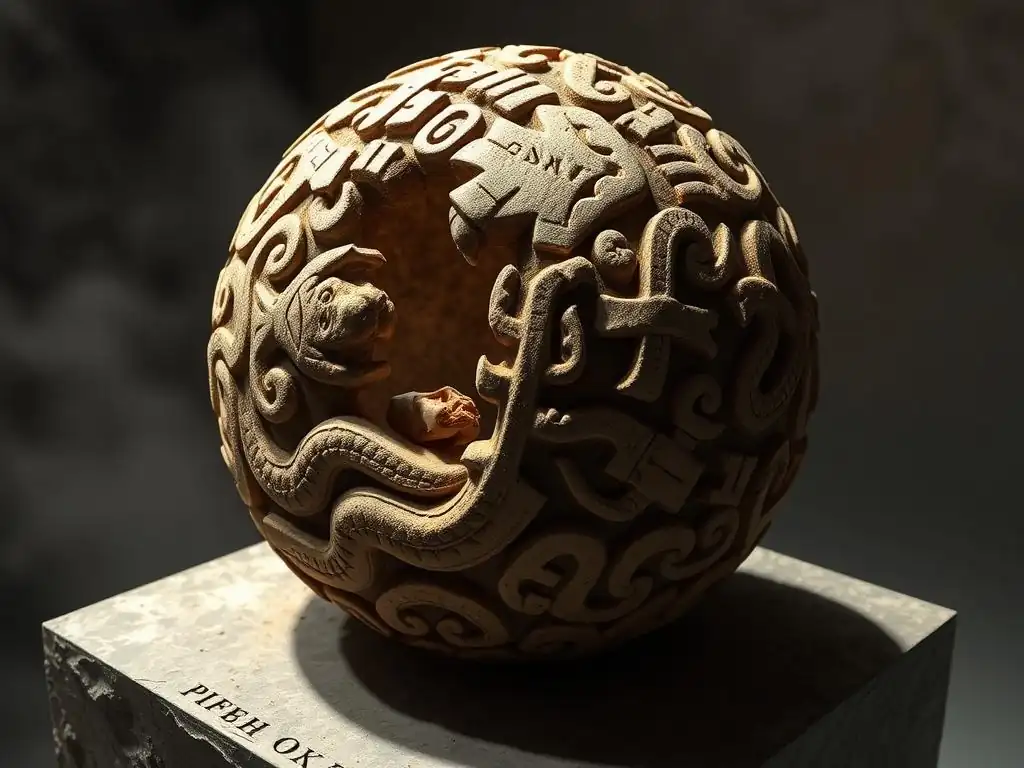
Ballgame Representations in Maya Art and Funerary Contexts
The significance of the ballgame extended beyond the living realm, permeating Maya beliefs about the afterlife. Representations of the ballgame frequently appear in funerary contexts, including ceramic vessels, murals, and carved stelae found in tombs. For instance, the famous "Dresden Codex," a pre-Columbian Maya book, features images related to the ballgame and its astronomical connections. These depictions often show mythological figures or deceased rulers engaging in the game, suggesting its role as a passage or a challenge in the journey through the underworld.
One of the most compelling connections is found in the Popol Vuh, the sacred book of the K'iche' Maya, which recounts the epic tale of the Hero Twins, Hunahpu and Xbalanque. They famously defeat the Lords of Xibalba (the underworld) in a series of ballgames.
This narrative underscores the belief that the ballgame was a metaphor for overcoming death and achieving rebirth, thereby providing a path for the deceased to navigate the dangers of the underworld and attain eternal life. The presence of ballgame imagery in tombs indicates that the Chichen Itza ball court rituals and their associated myths were seen as vital for the spiritual well-being of the departed.
Human Remains and Artifacts Associated with the Ball Court
Archaeological excavations at Chichen Itza and other Mesoamerican ball courts have occasionally yielded human remains and artifacts that further illuminate the funerary and sacrificial associations of the ballgame. While direct evidence of sacrifice within the Great Ball Court at Chichen Itza itself is primarily iconographic, nearby findings provide broader context. For example, the Sacred Cenote, or Well of Sacrifice, at Chichen Itza, located just a short distance from the ball court, contained numerous human remains, including those of children, and precious offerings, suggesting large-scale ritual activity.
Artifacts such as ceramic effigies of ballplayers, stone yokes (ceremonial versions of the protective gear worn during the game), and hachas (thin stone effigies resembling axes, possibly worn on the yokes) have been found in both ritual and funerary contexts across Mesoamerica. These objects not only attest to the game's importance but also suggest that ballplayers, whether living or deceased, held a special status. The meticulous preservation of these items, often buried with individuals, indicates their significance in facilitating the journey to the afterlife or commemorating a life dedicated to the profound Chichen Itza ball court rituals.
The Sound of the Ballgame: Acoustics and Spectacle
Acoustic Properties and the Spectator Experience
The extraordinary acoustic properties of Chichen Itza's Great Ball Court were not merely an accidental byproduct of its construction but a deliberate design choice that significantly amplified the spectacle of the Chichen Itza ball court rituals. As noted earlier, the court's parallel walls create an echo chamber effect, allowing sounds to travel great distances.
This meant that the shouts of the players, the thud of the rubber ball, and the cheers or gasps of the thousands of spectators could have resonated powerfully throughout the vast space. Such an auditory experience would have been deeply immersive, enhancing the drama and emotional impact of the game.
The strategic placement of the court within the ceremonial heart of Chichen Itza meant that the sounds of the game would have carried across the plaza, reaching even those who could not directly see the action. This would have contributed to a sense of communal participation and engagement, drawing the entire city into the sacred performance. The deliberate engineering of sound transformed the ball court into an amphitheater, where the auditory landscape was as crucial as the visual one in shaping the experience of the Chichen Itza ball court rituals.
Reconstructing the Atmosphere of a Ballgame
Reconstructing the full atmosphere of an ancient Mesoamerican ballgame involves imagining a vibrant, multi-sensory spectacle. Beyond the unique acoustics, the air would have been filled with the rhythmic drumming, the blast of conch shell trumpets, and the chants of priests and spectators. The players, adorned in their protective gear and perhaps body paint or elaborate headdresses, would have moved with intense focus and agility, their movements a dance between skill and ritual. The heavy thud of the rubber ball striking their hips or the wall would have punctuated the sounds of the crowd.
The presence of the high rings, often seen as challenging targets, would have added to the tension and excitement, with a successful shot potentially bringing the game to an immediate and dramatic conclusion. The political and religious stakes, including the potential for sacrifice, would have imbued every play with profound significance. Imagining the collective awe and anticipation of the thousands gathered to witness these Chichen Itza ball court rituals helps us grasp the central role the ballgame played in the social, political, and spiritual life of the ancient Maya.
Comparative Analysis: Chichen Itza's Ball Court in the Mesoamerican Context
Comparing Chichen Itza to Other Prominent Ball Courts
While Chichen Itza's Great Ball Court is the largest and arguably most iconic, it is but one of over 1,300 known ball courts scattered across Mesoamerica, each with its own unique characteristics and regional variations in construction and associated rituals. For example, the ball court at El Tajín, a Classic Veracruz site, is renowned for its elaborate reliefs depicting scenes of sacrifice and mythological narratives, offering a different artistic style and perhaps a distinct ritual emphasis compared to the more austere yet powerful imagery at Chichen Itza.
The "Palace of the Columns" ball court at El Tajín, for instance, features a unique "I" shape and a sunken playing field, differing from Chichen Itza's open-ended design.
Another notable example is the ball court at Monte Albán in Oaxaca, a Zapotec site, which dates to the Preclassic period and showcases an earlier form of the ball court with sloped walls but lacking rings. This suggests an evolution in the game's rules and architectural features over centuries.
The ball court at Copán, a major Maya city in Honduras, while smaller than Chichen Itza's, is distinguished by its intricate markers and the well-preserved sculptures of macaws, symbolizing the sun god. Comparing these sites highlights both the shared cultural significance of the ballgame across Mesoamerica and the regional specificities in the Chichen Itza ball court rituals and their counterparts.
Variations in Ballgame Rituals Across Mesoamerican Cultures
The universal presence of the ballgame across Mesoamerica belies a fascinating diversity in its ritualistic expressions. While the core concept of a rubber ball game was shared, the specific Chichen Itza ball court rituals differed from those practiced by the Zapotec, Olmec, or Aztec civilizations, reflecting distinct theological beliefs, political structures, and artistic traditions.
For instance, while human sacrifice was clearly linked to the ballgame at Chichen Itza and depicted in Aztec codices, the frequency and specific methods of sacrifice varied. Some cultures might have emphasized the game as a proxy for warfare, while others focused more on its role in fertility rites or astronomical observation.
The types of offerings found at ball courts also varied; while jade and other precious materials were common across sites, specific ceramic styles or unique artifacts were often localized. Furthermore, the architectural features themselves, such as the presence or absence of rings, the shape of the court, and the types of reliefs, point to different ritual emphases.
These variations underscore the dynamic and adaptive nature of Mesoamerican cultures, where a fundamental shared practice like the ballgame could be reinterpreted and re-contextualized to suit diverse local needs and spiritual frameworks, making the study of Chichen Itza ball court rituals a specific window into a much broader phenomenon.
The Decline of the Ballgame and its Legacy
Factors Contributing to the Ballgame's Decline
The decline of the ritual ballgame, and specifically the elaborate Chichen Itza ball court rituals, is closely tied to the broader collapse of Classic Maya civilization and the subsequent Postclassic shifts in Mesoamerica. Several factors likely contributed to this decline. Environmental changes, such as prolonged droughts and resource depletion, may have led to societal stress and population movements, disrupting the complex social structures necessary to maintain such large-scale ceremonial events. Political instability, increased warfare, and the fragmentation of regional power centers also played a significant role, as the centralized authority required to organize and fund these monumental games diminished.
Furthermore, the arrival of the Spanish conquistadors in the early 16th century delivered a decisive blow. The Spanish viewed the ballgame and its associated rituals, particularly human sacrifice, as pagan and barbaric. They actively suppressed indigenous religious practices, destroyed ceremonial centers, and forcibly converted populations to Christianity. While some forms of the ballgame, like modern Ulama, survived in isolated communities, the grand public spectacles and profound religious significance of the ancient Chichen Itza ball court rituals largely faded under colonial rule.
The Enduring Symbolism of the Ball Court
Despite its decline as a widespread ritual practice, the symbolism of the ball court and the ballgame has endured, leaving an indelible mark on Mesoamerican cultural memory and archaeological study. The ruins of the Great Ball Court at Chichen Itza, along with hundreds of others across the region, continue to stand as powerful reminders of the ingenuity, spiritual depth, and complex societal structures of the ancient civilizations. These architectural remains serve as crucial primary sources for understanding ancient cosmology, political power, and religious beliefs.
Today, the ball court remains a potent symbol of Mesoamerican heritage, attracting millions of visitors annually and inspiring ongoing archaeological research. Its iconography and the narratives associated with the Chichen Itza ball court rituals continue to inform our understanding of ancient art, mythology, and human sacrifice. The rediscovery and study of these sites allow modern scholars to piece together the profound significance of a game that was once central to the very fabric of ancient life, ensuring its legacy continues to resonate centuries later.
Conclusion: Rituals and Their Enduring Mystery
Reflecting on the Significance of Ulama
The Great Ball Court at Chichen Itza stands as a monumental testament to the profound significance of Ulama, the Mesoamerican ballgame, in ancient Maya society. Far from a mere sport, the game embodied a complex tapestry of religious beliefs, political power, and cosmic understanding.
The Chichen Itza ball court rituals were not just performances but vital acts of creation and renewal, believed to influence everything from agricultural fertility to the movements of celestial bodies. The intricate carvings, the acoustically engineered walls, and the very scale of the court speak to a civilization deeply committed to these ritual practices, seeing them as essential for maintaining cosmic balance and societal well-being.
The game's association with sacrifice, particularly evident in the decapitated player relief, highlights a worldview where life and death were inextricably linked, and the shedding of blood was a sacred act of reciprocity with the divine. This deep integration of ritual into daily life, governance, and spiritual belief makes the study of the ball court and its practices fundamental to comprehending the ancient Maya. The enduring mystery surrounding the exact rules, the full scope of its symbolism, and the precise nature of its outcomes only adds to its allure and importance in archaeological discourse.
Further Research and Ongoing Discoveries
Despite extensive research, the Great Ball Court at Chichen Itza and the broader context of Chichen Itza ball court rituals continue to be subjects of active archaeological inquiry and scholarly debate. New technologies, such as LiDAR scanning and advanced geophysical surveys, are providing unprecedented insights into the hidden structures and subtle features of ancient sites, potentially revealing more about the construction and use of ball courts. Ongoing excavations may uncover additional artifacts, burials, or hidden chambers that shed further light on the ceremonial practices.
Furthermore, comparative studies with newly discovered ball courts across Mesoamerica continue to refine our understanding of regional variations and shared traditions. Epigraphic research on newly deciphered texts may also unlock more detailed accounts of specific games, players, and rituals. The mysteries surrounding the motivations behind the sacrifices, the exact social roles of the players, and the full cosmological implications of the game ensure that the Great Ball Court at Chichen Itza will remain a focal point for archaeological exploration, continually enriching our understanding of this fascinating ancient sport and its profound ritualistic dimensions.
Frequently Asked Questions
What was the primary purpose of the ball court at Chichen Itza?
The primary purpose was for ritualistic sport, with games often having significant religious and political implications. These games could even end in human sacrifice.
How does the Chichen Itza ball court reflect Mayan cosmology?
The ball court itself is a symbolic representation of the Mayan underworld, Xibalba. The game mirrored the cosmic struggle between good and evil forces.
What archaeological evidence supports the idea of sacrifice at the Chichen Itza ball court?
Archaeologists have discovered skeletal remains near the ball court, along with depictions of sacrifice in carvings and reliefs. These findings suggest a direct link between the game and ritualistic killings.
What types of artifacts have been found at or near the Chichen Itza ball court?
Artifacts discovered include ballgame equipment like yokes and handstones, as well as offerings such as pottery, jade, and obsidian. These artifacts provide insights into the ceremonial context of the games.
How does the size of the Great Ball Court at Chichen Itza compare to other Mayan ball courts?
The Great Ball Court is significantly larger than most other Mayan ball courts, indicating its importance. Its impressive size reflects the power and influence of Chichen Itza as a major center.
Final Reflection: Echoes of the Sacred Game
The echoes of the Great Ball Court at Chichen Itza resonate even today, reminding us of the profound connection between sport, ritual, and sacrifice that permeated ancient Mayan society. Understanding the intricate details of these ball court rituals offers a powerful lens through which to view the complexities of their worldview and the enduring legacy of their civilization. The game was more than just a sport; it was a symbolic reenactment of cosmic battles, a plea for fertility, and a demonstration of power, all interwoven into the fabric of their daily lives.
The enduring fascination with the Chichen Itza ball court speaks volumes about our own search for meaning and purpose. The sheer scale of the structure, coupled with the chilling implications of potential human sacrifice, forces us to confront the darker aspects of human history and the lengths to which societies will go to appease their gods and maintain order. The ballgame was a ritual drama that mirrored the cosmic struggle between opposing forces, a struggle that was essential to the maintenance of the universe.
This quote underscores the profound spiritual significance of the game, a significance that transcends the simple act of playing a sport.
As we contemplate the legacy of the Chichen Itza ball court rituals, let us not simply marvel at the architectural grandeur and the historical significance. Instead, let us reflect on the values and beliefs that shaped this ancient civilization. What sacrifices are we willing to make for our own beliefs? What games do we play, both literally and figuratively, that define our own society? Consider the lessons embedded within those ancient stones, and strive to build a future where ritual and sacrifice are replaced with understanding and compassion.
Unearth Your Inner Explorer: Continue the Chichen Itza Adventure!
Thank you for delving into the fascinating world of Chichen Itza's Great Ball Court. We hope you've enjoyed uncovering the rituals and symbolism surrounding this ancient game. Now, it's time to take your exploration even further!
Here are some ways to keep the Chichen Itza adventure alive:
- Embark on a virtual tour: Immerse yourself in a 3D reconstruction of the Great Ball Court and explore its intricate details from the comfort of your own home.
- Share your insights: Discuss the significance of the ballgame with fellow archaeology enthusiasts in the comments section below or on social media.
- Plan your future visit: Research other Mesoamerican ball courts and start dreaming about experiencing these incredible sites firsthand.
What aspect of the Great Ball Court's symbolism resonated with you the most, and why? Share your thoughts below!