
The Great Marae of Mahaiatea, Tahiti: History and Archaeology of a Colossal Structure

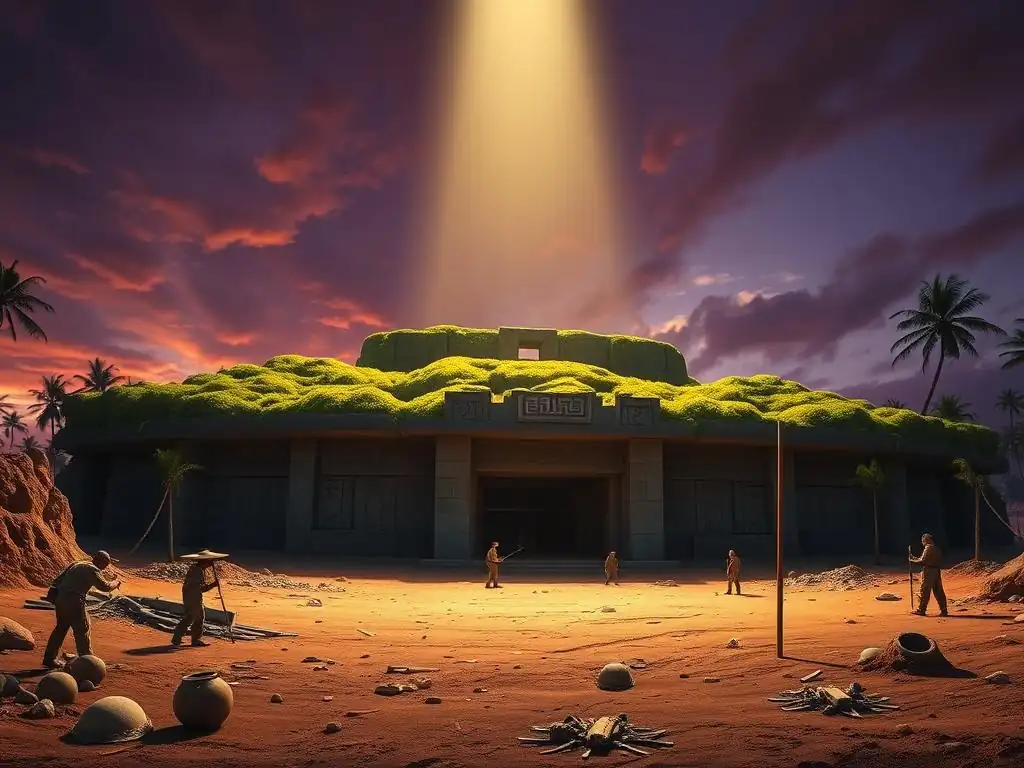
Welcome to ArchaeologyHub.org, your gateway to unraveling the mysteries of the past. Ever wondered about the colossal structures that once dominated the landscapes of ancient civilizations? Delve into the fascinating world of Tahitian marae archaeology history and discover the secrets hidden within the stones of the Great Marae of Mahaiatea, a breathtaking testament to ingenuity and cultural significance. Prepare to embark on a journey through time and uncover the stories etched in stone, leaving you eager to explore the depths of this remarkable archaeological site.
- Introduction to Mahaiatea: A Monumental Tahitian Marae
- Historical Accounts of Mahaiatea: Early Explorers and Missionaries
- Archaeological Investigations at Mahaiatea: Uncovering the Past
- Mahaiatea's Architectural Features: A Detailed Examination
- The Ritual Landscape of Mahaiatea: Sacred Space and Ceremony
- Mahaiatea in the Context of Tahitian Marae Archaeology
- The Current State of Mahaiatea: Preservation and Conservation Efforts
- Conclusion: Mahaiatea's Enduring Legacy in Tahitian Archaeology and History
-
Frequently Asked Questions
- What is a marae and why are they significant in Tahitian archaeology?
- What is the Great Marae of Mahaiatea, and what makes it unique?
- What can archaeological investigations at Mahaiatea reveal about Tahitian history?
- How does the marae of Mahaiatea fit into the broader context of Polynesian archaeology?
- What are the key challenges faced by archaeologists studying Tahitian marae like Mahaiatea?
- Final Reflection: Echoes of Ancient Tahiti
- Unveil the Secrets of Ancient Tahiti!
Introduction to Mahaiatea: A Monumental Tahitian Marae
Tahitian marae were open-air sacred spaces, typically constructed with stone platforms and courtyards, serving as the focal points for religious, social, and political life in ancient Polynesia. These monumental structures were more than just temples; they were the embodiment of a community's spiritual connection to its ancestors and deities, as well as tangible representations of chiefly power and social hierarchy. Rituals performed at marae included offerings of food and goods, elaborate ceremonies, and, in some cases, human sacrifices, all aimed at maintaining mana (spiritual power) and ensuring the prosperity of the community.
The design and scale of a marae often reflected the status of the ari'i (chief) who commissioned it, with larger and more elaborate structures belonging to paramount chiefs. They were central to the tapu system, a complex set of prohibitions and sacredness that governed daily life and ensured social order. Understanding the role of marae is fundamental to comprehending Tahitian marae archaeology history, as these sites provide invaluable insights into the intricate belief systems and societal structures of pre-European contact Tahiti.
Mahaiatea's Unique Scale: A Colossal Structure in Polynesian History
The Great Marae of Mahaiatea stands out as one of the most imposing and architecturally significant ceremonial structures in all of Polynesia, particularly within the context of Tahitian marae archaeology history. Located on the southwestern coast of Tahiti, near the district of Papara, its sheer size dwarfed many contemporary marae across the archipelago. Historical accounts suggest its base measured approximately 81 meters (267 feet) in length and 26 meters (87 feet) in width, rising to a height of around 13.5 meters (44 feet) through a series of stepped terraces.
This colossal scale required an immense mobilization of labor and resources, indicating the extraordinary power and ambition of the chief who ordered its construction. Unlike many smaller, family-oriented marae, Mahaiatea was a state-level religious complex, designed to serve a broad political and religious purpose, solidifying the authority of a rising paramount chief. Its distinctive stepped pyramid form, constructed primarily from coral limestone and basalt, sets it apart as a pinnacle of ancient Tahitian engineering and architectural prowess.
Historical Accounts of Mahaiatea: Early Explorers and Missionaries
European Encounters with Mahaiatea: Wallis, Cook, and Bougainville's Descriptions
The first European accounts of Mahaiatea provide crucial historical context for its understanding within Tahitian marae archaeology history. Captain Samuel Wallis, commanding HMS Dolphin, was the first European to sight Tahiti in 1767. His crew observed the massive structure, noting its impressive size and the reverence with which it was held by the local population. Two years later, in 1769, Captain James Cook, aboard HMS Endeavour, provided more detailed descriptions and even commissioned drawings of the marae during his extensive stay for astronomical observations.
Cook's journals describe the marae as a "pyramidical pile," expressing astonishment at the scale of its construction and the apparent effort involved. Louis Antoine de Bougainville, the French explorer who visited Tahiti shortly after Wallis in 1768, also noted the grandeur of such structures, though his observations of Mahaiatea specifically were less detailed than Cook's. These early European records confirm Mahaiatea's existence and monumental status at the time of initial contact, providing a baseline for later archaeological investigations into its decline.
The Role of Chief Tu in Mahaiatea's Construction: Ambition, Power, and Religious Innovation
Mahaiatea's construction is intimately linked to the rise of Chief Tu, who would later become Pomare I, the founder of the powerful Pomare dynasty that eventually unified Tahiti. Built around 1766, just prior to European contact, Mahaiatea was a deliberate political and religious statement. Tu commissioned the marae as a major center for the worship of 'Oro, the god of war and fertility, whose cult was rapidly gaining prominence and becoming a tool for political centralization across Tahiti.
By dedicating such a massive structure to 'Oro, Tu aimed to legitimize his claims to paramount chieftainship and consolidate power over rival clans. The immense undertaking showcased his ability to command vast resources and labor, reinforcing his authority and prestige. This strategic use of religious architecture highlights a crucial period of political innovation in Tahitian marae archaeology history, where monumental construction became a direct expression of evolving power dynamics.
18th and 19th-Century Observations: Erosion, Abandonment, and Shifting Power Dynamics
Following European contact, the fortunes of Mahaiatea, like much of traditional Tahitian society, began to decline. Observations from the late 18th and early 19th centuries, particularly from missionaries like William Ellis, describe the marae in a state of increasing disrepair. The introduction of foreign diseases, the disruption of traditional political structures, and the eventual widespread adoption of Christianity led to the gradual abandonment of traditional religious practices and the structures associated with them.
Missionaries actively encouraged the dismantling of marae as symbols of paganism, and stones from Mahaiatea were often repurposed for new buildings, including churches and homes. By the mid-19th century, Mahaiatea was largely overgrown by vegetation, its once imposing form succumbing to the relentless forces of tropical erosion and human neglect. These observations underscore the rapid societal transformation that occurred in Tahiti and provide a poignant record of the site's transition from a vibrant ceremonial center to a relic of a bygone era in Tahitian marae archaeology history.
Archaeological Investigations at Mahaiatea: Uncovering the Past
Excavation Techniques and Challenges: Mapping, Stratigraphy, and Limited Funding
Archaeological investigations at Mahaiatea have faced significant challenges due to the site's extensive size, dense tropical vegetation, and the effects of natural erosion and human disturbance over centuries. Early archaeological work often involved extensive site mapping using traditional survey techniques like transit and tape, later supplemented by more precise methods such as total stations or GPS. Test pits and trenches were strategically excavated to establish stratigraphic sequences, revealing layers of construction and activity.
A major challenge has been the sheer volume of fill material and the large coral blocks used in construction, requiring considerable effort for excavation. Furthermore, tropical environments rapidly degrade organic materials, making radiocarbon dating difficult without well-preserved charcoal samples. Limited funding and logistical support for large-scale projects in remote locations have also constrained the scope and duration of detailed Tahitian marae archaeology history investigations at Mahaiatea.
Stratigraphic Analysis: Multiple Construction Phases and Rebuilding Efforts
Despite the challenges, stratigraphic analysis has provided valuable insights into Mahaiatea's construction sequence, revealing that the marae was not built in a single phase but underwent multiple periods of construction, modification, and enlargement. Excavations have identified distinct layers of coral rubble, basalt stones, and compacted earth, indicating successive additions to the main platform. For instance, evidence suggests at least two major construction phases, with earlier, smaller platforms being encased and expanded upon to create the final monumental form observed by European explorers.
These rebuilding efforts likely reflect shifting political power, evolving religious practices, or the ambition of successive chiefs to enhance the marae's grandeur. The meticulous study of these layers allows archaeologists to reconstruct a chronological sequence of events, providing a dynamic picture of Mahaiatea's development within Tahitian marae archaeology history. Such analyses often involve differentiating between primary construction fill and later deposits related to ritual activity or decay.
Artifact Recovery: Adzes, Fishhooks, and Potential Ritual Objects
Artifact recovery at Mahaiatea, while sometimes limited by preservation conditions, has yielded important clues about the site's function and the activities conducted there. Common finds include stone adzes, typically made from basalt, which would have been essential tools for quarrying, shaping, and moving the massive coral and volcanic rock blocks used in the marae's construction. These adzes vary in size and form, reflecting different stages of tool production and use.
Other recovered artifacts might include shell fishhooks, coral abraders, and various types of grinding stones, suggesting broader domestic or subsistence activities in the vicinity, or perhaps offerings. While organic ritual objects like carved wood or woven mats rarely survive, the presence of certain types of faunal remains (e.g., pig bones, dog bones, or human bones in specific contexts) can indicate past sacrificial practices. These material remains, though sometimes fragmentary, contribute significantly to our understanding of the daily life and ceremonial practices associated with this pivotal site in Tahitian marae archaeology history.
Mahaiatea's Architectural Features: A Detailed Examination
The Stepped Pyramid Structure: Coral Blocks, Volcanic Rock, and Engineering Expertise
The most striking architectural feature of Mahaiatea is its massive, stepped pyramid structure, known as the ahu. This primary platform was constructed using a combination of carefully cut and fitted coral limestone blocks for the outer facing and volcanic basalt stones for the internal fill and foundational layers. The coral blocks, often weighing several tons each, were quarried from nearby reefs and transported to the site, a testament to the sophisticated engineering and logistical capabilities of ancient Tahitians.
The structure rose in a series of distinct terraces, or steps, which diminished in size towards the top, creating the characteristic pyramidal form. While the exact number of steps varies in historical accounts due to decay, early descriptions suggest up to ten or more. The precision with which these massive, unmortared stones were laid demonstrates an advanced understanding of dry-laid masonry and structural stability, allowing the colossal structure to withstand centuries of tropical weather and seismic activity, a remarkable achievement in Tahitian marae archaeology history.
The Central Platform (Ahu): Ritual Performance and Ancestral Veneration
The uppermost and most sacred part of the Mahaiatea marae was the central platform, also referred to as the ahu. This elevated area served as the primary stage for the most important religious rituals and ceremonies. It was here that offerings were presented to the gods and ancestors, and where high-ranking priests ( tahu'a) and chiefs would perform their sacred duties. The ahu often featured a large upright slab or a series of smaller stones, known as unu, which represented the presence of deities or ancestral spirits.
Access to the ahu was highly restricted, emphasizing its sacredness and the tapu nature of the rituals performed there. The platform's strategic placement and elevated position would have ensured that ceremonies conducted on it were visible to a large congregation gathered in the surrounding courtyard, reinforcing the power and divine connection of the ruling elite. The ahu was the spiritual heart of Mahaiatea, central to both its religious function and its significance in Tahitian marae archaeology history.
Associated Structures: Dwelling Platforms, Enclosures, and Functionality
Beyond the main stepped pyramid, Mahaiatea was part of a larger ceremonial complex that included several associated structures, indicative of its multifaceted functionality. Archaeological surveys have identified evidence of smaller stone platforms and paved areas surrounding the central marae, which may have served as dwelling platforms for priests ( tahu'a) or as preparation areas for rituals. These platforms often contained hearths and refuse pits, suggesting a more permanent presence of ritual specialists.
Additionally, stone enclosures and low walls might have delineated sacred areas or served as boundaries for ceremonial processions. These ancillary structures indicate that Mahaiatea was not merely a standalone monument but a vibrant sacred landscape, designed to accommodate various aspects of religious life, from the preparation of offerings to the housing of ritual paraphernalia and the temporary residency of those involved in the ceremonies. The complexity of these associated features speaks to the sophisticated organization of religious life in ancient Tahitian marae archaeology history.
The Ritual Landscape of Mahaiatea: Sacred Space and Ceremony
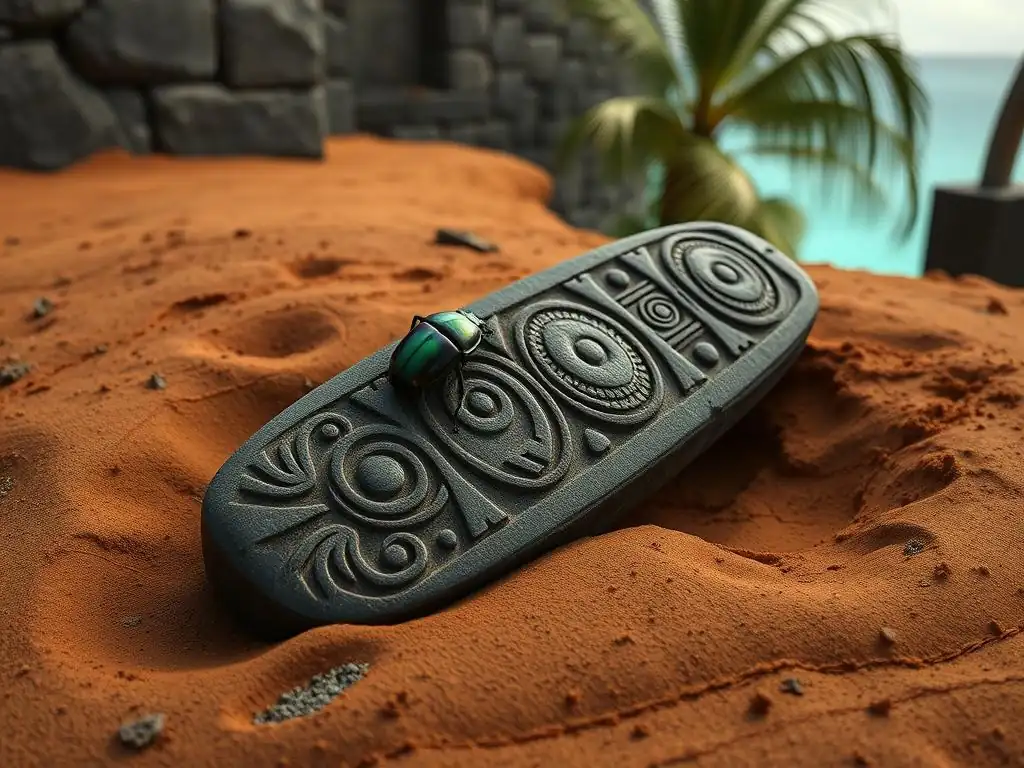
Religious Practices and Beliefs: 'Oro Worship, Human Sacrifice, and Tapu
Mahaiatea was a primary center for the worship of 'Oro, a powerful and increasingly dominant deity in 18th-century Tahiti, associated with war, fertility, and political authority. The rituals performed at Mahaiatea were elaborate and often intense, designed to appease 'Oro and secure divine favor for Chief Tu and his burgeoning empire. These practices included intricate chants, dances, and the presentation of various offerings.
A significant, albeit controversial, aspect of 'Oro worship at major marae like Mahaiatea was the practice of human sacrifice ( ta'ata tapu). Victims, often captured enemies or individuals of lower social status, were offered to 'Oro to ensure success in warfare, political stability, or bountiful harvests. The entire marae complex was governed by strict tapu (sacred prohibitions), dictating who could enter, what actions were permissible, and which objects were sacred, reinforcing the site's profound religious significance in Tahitian marae archaeology history.
Offerings and Sacrifices: Animal Bones, Food Remains, and Symbolic Offerings
Archaeological investigations at Mahaiatea and similar Tahitian marae archaeology history sites have provided tangible evidence of the types of offerings and sacrifices made. Faunal remains recovered from ritual contexts often include bones of domesticated animals such as pigs ( pua'a) and chickens ( moa), which were highly valued and frequently offered during ceremonies. Fish bones and shellfish remains also indicate the importance of marine resources in their diet and as offerings.
Beyond animal and food remains, other symbolic offerings might have included specific types of stones, polished shells, or perishable items like kava ( 'awa) and breadfruit ( 'uru), which rarely survive in the archaeological record. While direct evidence of human sacrifice can be challenging to interpret, the discovery of human bone fragments in ritual contexts at some marae sites aligns with historical accounts. These material traces offer critical insights into the religious economy and ceremonial practices that defined Mahaiatea's sacred landscape.
At Mahaiatea, the interaction between the tahu'a (priests) and the ari'i (chiefs) was central to the functioning of the marae and the broader societal structure. The ari'i, particularly Chief Tu, held ultimate political and often religious authority, believed to be descended from the gods themselves. They commissioned the construction of massive marae like Mahaiatea, demonstrating their control over vast labor and material resources.
The tahu'a, or priests, were the interpreters of divine will and the orchestrators of complex rituals. They possessed specialized knowledge of chants, genealogies, and the intricacies of the tapu system. Their role was to mediate between the human and divine realms, ensuring the efficacy of offerings and sacrifices. This symbiotic relationship between chiefs and priests, where chiefs provided the means and priests the spiritual expertise, solidified their joint control over both secular and sacred spheres, deeply shaping the Tahitian marae archaeology history landscape.
Mahaiatea in the Context of Tahitian Marae Archaeology
Comparison with Other Major Marae Sites: Taputapuatea (Ra'iatea) and Afareaitu (Mo'orea)
To fully appreciate Mahaiatea's significance, it is essential to compare it with other prominent marae sites in the Society Islands, which collectively define Tahitian marae archaeology history. Taputapuatea on Ra'iatea, for instance, holds unparalleled pan-Polynesian importance as an ancient spiritual and political center, serving as a hub for inter-island voyaging and the dissemination of religious ideas for centuries before Mahaiatea's construction. While Taputapuatea's antiquity and spiritual reach were arguably greater, Mahaiatea's sheer scale in the 18th century was exceptional for Tahiti.
Another notable comparison is Afareaitu marae on Mo'orea, also a large and complex structure, though generally smaller than Mahaiatea. Afareaitu, like Mahaiatea, was a significant regional ceremonial center, reflecting the power of local chiefs. The stylistic differences in construction materials (e.g., preference for basalt vs. coral) and specific architectural layouts between these sites provide valuable data for understanding regional variations and developments in Tahitian marae archaeology history, illustrating distinct approaches to monumental building.
Mahaiatea's Significance in Polynesian History: Political Centralization and Religious Change
Mahaiatea represents a pivotal moment in Polynesian history, particularly for Tahiti, signaling a period of intense political centralization and significant religious transformation. Its construction coincided with Chief Tu's ambitious efforts to unify Tahiti under his rule, leveraging the growing power of the 'Oro cult as a unifying ideological force. The marae was not merely a religious site; it was a powerful symbol of state-building, demonstrating the chief's ability to command resources and labor on an unprecedented scale.
The shift towards the increasingly dominant 'Oro worship, often accompanied by human sacrifice, marked a departure from earlier, more localized religious practices. Mahaiatea served as a primary stage for these new, more centralized rituals, which were instrumental in legitimizing the authority of paramount chiefs. Thus, Mahaiatea's role in Tahitian marae archaeology history is not just about its impressive architecture, but about its embodiment of dynamic political and religious change in the decades leading up to sustained European contact.
Dating Mahaiatea: Relative Dating and Limited Radiocarbon Evidence
Dating the construction and primary use phases of Mahaiatea relies primarily on a combination of relative dating methods and, where possible, limited absolute dating. The most concrete evidence for its construction period comes from the detailed historical accounts of European explorers like Wallis and Cook, who described the marae as a recently completed or actively used structure in the late 1760s. This places its major construction phase firmly in the mid-18th century, likely between 1760 and 1767.
Archaeological efforts to obtain precise radiocarbon dates have been challenging due to the scarcity of well-preserved organic materials directly associated with the primary construction phases. However, charcoal samples from associated features or underlying layers can provide terminus post quem dates (dates after which the structure must have been built). Stylistic analysis of the architecture and comparison with other dated Tahitian marae archaeology history sites also help to corroborate the historical timeline, firmly placing Mahaiatea in the generation immediately preceding sustained European influence.
The Current State of Mahaiatea: Preservation and Conservation Efforts
Challenges to Preservation: Vegetation Overgrowth, Weathering, and Vandalism
The Great Marae of Mahaiatea faces numerous challenges in its ongoing preservation, typical of ancient stone structures in tropical environments. Rapid and dense vegetation overgrowth is a constant threat, with tree roots capable of dislodging massive coral blocks and causing significant structural damage over time. The tropical climate, characterized by heavy rainfall and high humidity, contributes to the physical weathering of the porous coral limestone, leading to erosion and degradation of the surfaces.
Furthermore, centuries of abandonment and neglect have left the site vulnerable to human impact. In the 19th and early 20th centuries, many stones were removed from the marae for use in local construction, including roads and buildings, effectively dismantling parts of the structure. While large-scale stone removal has largely ceased, the site remains susceptible to incidental damage and, occasionally, deliberate vandalism, necessitating continuous monitoring and intervention for the future of Tahitian marae archaeology history.
Conservation Initiatives: Local Community Involvement and Government Programs
Despite the challenges, significant conservation initiatives have been undertaken to protect and preserve Mahaiatea, highlighting a growing recognition of its importance in Tahitian marae archaeology history. These efforts often involve a collaboration between local community groups, cultural associations, and the government of French Polynesia. Regular vegetation clearance campaigns are crucial to prevent further root damage and to make the site more accessible for study and controlled visitation.
Structural stabilization efforts, though complex, have also been considered or implemented on a limited basis to prevent the collapse of weakened sections. Educational programs aimed at local communities, especially younger generations, seek to foster a sense of pride and responsibility for the marae's upkeep. These initiatives are vital for ensuring that this remarkable piece of Tahitian heritage endures for future generations to study and appreciate.
Mahaiatea as a Cultural Heritage Site: Tourism Potential and Educational Opportunities
Recognizing its immense value, Mahaiatea is increasingly seen as a crucial cultural heritage site with significant potential for both cultural tourism and educational opportunities. While not as easily accessible or heavily promoted as some other sites, its unique scale and historical significance make it a compelling destination for those interested in Polynesian history and archaeology. Developing sustainable tourism models, including guided tours, could help generate revenue for ongoing preservation efforts while raising global awareness.
More importantly, Mahaiatea serves as an invaluable educational resource. It offers a tangible link to Tahiti's pre-European past, allowing students and researchers to learn about ancient Tahitian engineering, religious practices, and political structures. Workshops, archaeological field schools, and interpretive signage can enhance the educational experience, making the site a living classroom for understanding the rich tapestry of Tahitian marae archaeology history and the ingenuity of its ancient builders.
Conclusion: Mahaiatea's Enduring Legacy in Tahitian Archaeology and History
The Importance of Continued Research: Remote Sensing and Interdisciplinary Studies
The Great Marae of Mahaiatea, despite extensive historical accounts and archaeological work, still holds many secrets, underscoring the critical importance of continued research. Future investigations could significantly benefit from advanced remote sensing techniques such as LiDAR (Light Detection and Ranging) and GPR (Ground-Penetrating Radar), which can reveal buried features and the full extent of the complex without invasive excavation, even beneath dense vegetation. These technologies offer the potential to uncover associated structures or earlier phases of the marae that remain hidden.
Furthermore, an interdisciplinary approach, combining archaeological findings with ethnohistorical research, oral traditions, and environmental studies, is essential for a holistic understanding of Mahaiatea. Integrating linguistic analysis of ancient chants and genealogies, for instance, can provide deeper insights into the specific rituals performed and the socio-political context of the marae. Such comprehensive studies will continue to enrich our knowledge of this monumental site and its place in Tahitian marae archaeology history.
Mahaiatea as a Symbol of Tahitian Identity: Resilience and Cultural Revival
Beyond its archaeological significance, Mahaiatea stands as a powerful symbol of Tahitian identity, embodying the resilience and cultural richness of its people. It represents the pinnacle of pre-European contact Tahitian societal organization, engineering prowess, and spiritual depth. In an era where traditional practices faced immense pressure and decline, the enduring presence of Mahaiatea serves as a tangible link to a glorious past, inspiring contemporary cultural revival movements.
For Tahitians today, the marae is not merely an ancient ruin but a living testament to the ingenuity, spiritual beliefs, and political acumen of their ancestors. Its preservation and study contribute directly to fostering a sense of cultural pride and continuity. Mahaiatea's legacy in Tahitian marae archaeology history is therefore multifaceted: it is a scientific treasure, a historical record, and a profound emblem of the enduring spirit of the Tahitian people.
Frequently Asked Questions
What is a marae and why are they significant in Tahitian archaeology?
A marae is a traditional Polynesian sacred place, serving as a center for religious, social, and political activities. They are significant because they provide insights into ancient Tahitian culture, social hierarchies, and religious beliefs.
What is the Great Marae of Mahaiatea, and what makes it unique?
The Great Marae of Mahaiatea was a massive and imposing structure on Tahiti, distinguished by its pyramidal form and immense scale. It is unique due to its size and complex construction, suggesting a powerful ruling class.
What can archaeological investigations at Mahaiatea reveal about Tahitian history?
Archaeological investigations can reveal details about the construction techniques, materials used, and the social dynamics of the people who built and used the marae. This helps to understand Tahitian political power and the religious practices of the time.
How does the marae of Mahaiatea fit into the broader context of Polynesian archaeology?
Mahaiatea represents a significant example of monumental architecture in Polynesia. Its scale and complexity help to understand the cultural connections and divergences across the Pacific islands.
What are the key challenges faced by archaeologists studying Tahitian marae like Mahaiatea?
Challenges include erosion, vegetation overgrowth, and the preservation of fragile materials. The understanding of oral traditions and local knowledge is also critical for accurate interpretation, which presents its own challenges.
Final Reflection: Echoes of Ancient Tahiti
The journey through the history and archaeology of the Great Marae of Mahaiatea reveals more than just the physical remnants of a colossal structure; it unveils a profound connection to the past that resonates powerfully in the present. Understanding the intricate social, political, and religious landscape that birthed this monument is crucial for appreciating the enduring legacy of Tahitian culture. The echoes of chants, rituals, and ancestral power still linger within the stones, reminding us of the ingenuity and spiritual depth of the people who built and revered this sacred space.
The impact of Mahaiatea extends far beyond its physical boundaries, influencing our understanding of Polynesian history and cultural identity. Its sheer scale and complexity challenge simplistic narratives and underscore the sophisticated societal organization that existed in pre-European Tahiti. This knowledge fosters a deeper appreciation for the resilience and adaptability of Tahitian culture, which continues to thrive despite centuries of external influence. We are not defined by our past, but we are informed by it.
This quote encapsulates the spirit of Mahaiatea, a testament to the enduring power of cultural heritage in shaping our present and future.
As we conclude this exploration of the Great Marae of Mahaiatea, I invite you to reflect on the lessons it offers. Consider how the dedication, artistry, and spiritual conviction of the ancient Tahitians can inspire your own endeavors. Let the story of Mahaiatea serve as a reminder of the importance of preserving cultural heritage and honoring the wisdom of our ancestors. Embrace the spirit of innovation and resilience that built this magnificent structure, and strive to create your own lasting legacy, one that echoes with purpose and meaning for generations to come.
Unveil the Secrets of Ancient Tahiti!
Thank you for exploring the fascinating history of the Great Marae of Mahaiatea with us. Now that you've journeyed through its colossal structure and rich past, it's time to connect with its legacy on a deeper level.
- Plan a virtual exploration: Use online resources like Google Earth or virtual museum tours to examine the marae's layout and architectural details, gaining a fresh perspective on its scale and design.
- Share your newfound knowledge: Discuss the Great Marae of Mahaiatea with friends and family, sparking interest in Polynesian history and archaeology.
- Write a short story or create artwork inspired by the marae, imagining life during its construction and use.
What specific aspect of the Great Marae of Mahaiatea most ignited your curiosity, and how will you continue to explore it?