
The Uluburun Cargo: A Royal Consignment of Unprecedented Richness

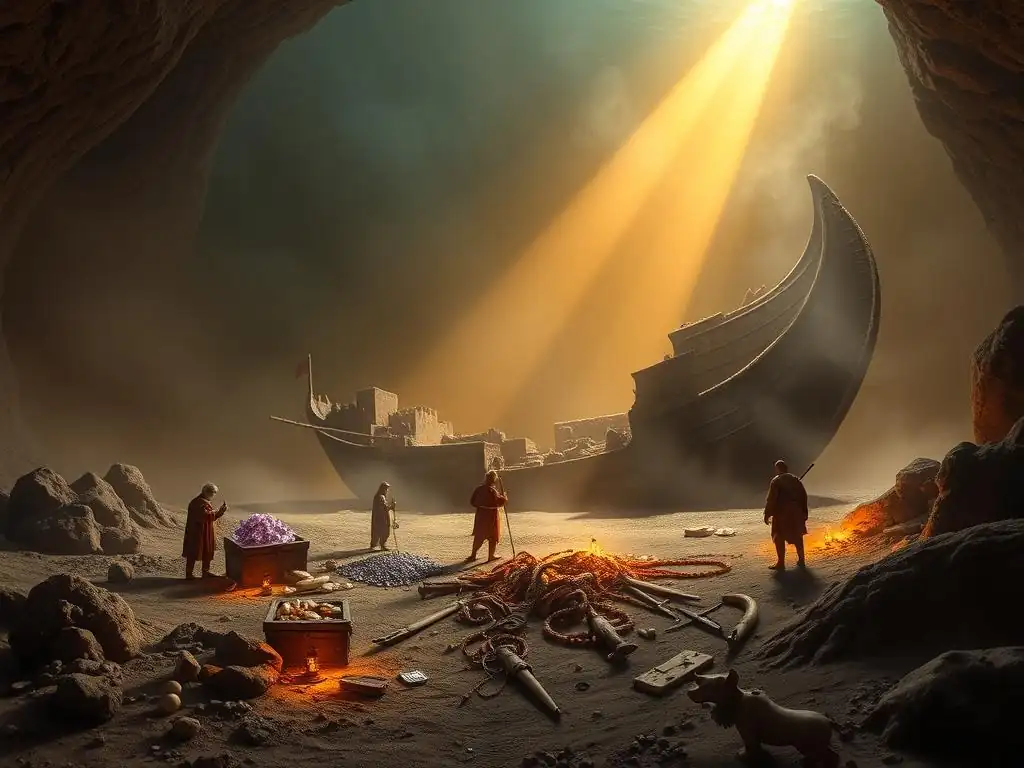
Welcome to ArchaeologyHub.org, your gateway to unraveling the mysteries of the past!
Delve into the fascinating world of ancient civilizations and groundbreaking discoveries. Ever wondered about the untold stories hidden beneath the waves? Our comprehensive exploration of the Uluburun shipwreck cargo details unveils a treasure trove of information, revealing the luxurious life and complex trade networks of the Bronze Age. Discover how this royal consignment offers an unparalleled glimpse into a pivotal era. Intrigued? Read on to uncover the secrets held within this remarkable underwater time capsule.
- Introduction to the Uluburun Shipwreck and Its Cargo
- The Diverse Cargo of the Uluburun Ship
- Royal Connections and the Uluburun Cargo's Destination
- A Detailed Look at Specific Uluburun Artifacts
- Unraveling the Mystery: Trade Routes and Uluburun's Journey
- Legacy of the Uluburun Shipwreck: Impact on Archaeological Understanding
-
Frequently Asked Questions
- How was the Uluburun shipwreck significant to archaeologists?
- What were some of the most valuable items found in the Uluburun shipwreck cargo?
- Where did the goods found on the Uluburun shipwreck originate from?
- What evidence suggests the Uluburun cargo was a "royal consignment"?
- How did the Uluburun shipwreck contribute to our understanding of Bronze Age maritime technology?
- Final Reflection: Echoes of a Bronze Age Legacy
- Unearth Your Inner Archaeologist: Delve Deeper Now!
Introduction to the Uluburun Shipwreck and Its Cargo
Discovering the Uluburun: A Bronze Age Time Capsule
The Uluburun shipwreck, discovered in 1982 by a local sponge diver named Mehmet Çakir off the coast of Uluburun, Turkey, represents one of the most significant archaeological finds of the 20th century. Lying at depths ranging from 42 to 61 meters (138 to 200 feet), the site required a decade of meticulous excavation between 1984 and 1994, led by the Institute of Nautical Archaeology (INA) and George F. Bass. This monumental effort yielded an astonishingly preserved snapshot of Late Bronze Age maritime trade, offering unparalleled Uluburun shipwreck cargo details.
The vessel itself, estimated to be around 15 meters (50 feet) long, sank around 1300 BCE, carrying an incredibly diverse and rich consignment of goods from at least seven different cultures. Its discovery provided the first truly comprehensive look at an international trade ship from this period, revealing not just individual artifacts but an entire economic system in motion. The sheer volume and variety of the Uluburun shipwreck cargo details have allowed archaeologists to reconstruct aspects of ancient life, trade, and diplomacy with unprecedented clarity.
Significance of the Uluburun Find for Maritime Archaeology
The Uluburun shipwreck revolutionized the field of maritime archaeology and our understanding of the Late Bronze Age. Prior to its discovery, much of our knowledge about international trade during this era was based on textual evidence and scattered land finds. The wreck provided tangible, direct evidence of the scale, scope, and nature of trade networks that crisscrossed the Mediterranean and Near East. The preservation of organic materials, such as wood and textiles, in the deep, oxygen-poor waters was exceptional, offering unique insights into ancient technologies and materials that rarely survive on land.
Furthermore, the meticulous excavation techniques employed at Uluburun set new standards for underwater archaeology. The team systematically mapped and recovered every artifact, ensuring that the contextual relationships between items were preserved. This rigorous approach allowed for detailed analysis of the Uluburun shipwreck cargo details, enabling scholars to piece together the ship's origin, destination, crew, and the complex web of interactions that characterized the Late Bronze Age world. It stands as a testament to the sophistication of ancient seafaring and commercial enterprise.
Overview of the Uluburun Shipwreck Cargo
The Uluburun shipwreck carried an estimated 20 tons of cargo, comprising raw materials, finished luxury goods, and personal items, representing a truly royal consignment. The primary bulk of the cargo consisted of metals: approximately 10 tons of copper ingots and 1 ton of tin ingots, crucial raw materials for bronze production. Alongside these, there were 175 glass ingots, weighing about 3.5 tons, showcasing early glass manufacturing and trade.
Beyond these bulk commodities, the Uluburun shipwreck cargo details reveal an astonishing array of precious and exotic items. These included elephant and hippopotamus ivory, exotic woods, aromatic resins, and a diverse collection of pottery from various regions. Personal belongings of the crew, tools, weapons, and even a gold scarab bearing the name of Queen Nefertiti further enrich the understanding of this extraordinary vessel and its journey. This comprehensive inventory provides a unique window into the material culture and economic arteries of the 14th century BCE.
The Diverse Cargo of the Uluburun Ship
Copper and Tin Ingots: Raw Materials for Bronze Age Production
The most substantial portion of the Uluburun cargo, by weight, consisted of raw metals essential for the production of bronze. Approximately 354 oxhide-shaped copper ingots, weighing about 10 tons in total, formed the primary bulk. Each of these ingots typically weighed around 27 kilograms (60 pounds), making them manageable for human transport but cumulatively a massive load. These distinctive ingots, shaped like stretched animal hides, were a standard form of trade currency in the Late Bronze Age Mediterranean.
Accompanying the copper were about 120 tin ingots, totaling approximately 1 ton. Tin was a far rarer commodity than copper, with its sources geographically concentrated in a few key areas, possibly as far as Afghanistan's Badakhshan region, or from tin fields in Anatolia or Europe. The ratio of tin to copper in the Uluburun cargo—roughly 1:10 by weight—is remarkably close to the ideal ratio (often 1:9 or 1:10) for producing high-quality bronze, suggesting the cargo was specifically assembled for metallurgical purposes. These Uluburun shipwreck cargo details indicate a deliberate collection of primary resources for an industrial-scale operation.
Cypriot Copper Ingots: Identifying the Source
Isotopic analysis of the copper ingots from the Uluburun shipwreck has provided strong evidence pointing to Cyprus as their primary origin. Specifically, lead isotope analysis (LIA) of samples from the ingots correlates closely with ore deposits found at ancient mining sites on Cyprus, such as Ayia Varvara-Almyras and Enkomi. This finding confirms Cyprus's pivotal role as a major copper producer and exporter during the Late Bronze Age, supplying the raw material that fueled the bronze industries across the Near East and Aegean.
The standardized oxhide shape of the ingots further supports their origin from established production centers like Cyprus. These shapes facilitated stacking and transport, and many bear incised marks or symbols, possibly indicating their origin, weight, or ownership. The sheer volume of copper, estimated to be enough to produce bronze for thousands of weapons or tools, underscores the scale of interregional trade and the importance of these Uluburun shipwreck cargo details for understanding Bronze Age economies.
Tin Ingots: Unveiling Trade Routes
The 120 tin ingots found among the Uluburun shipwreck cargo details are particularly significant due to the scarcity of tin sources in the ancient world. Unlike copper, which was relatively abundant, tin was a rare commodity, making its trade routes critical for bronze production. While some theories suggest sources in Central Asia (like Afghanistan's Badakhshan) or even as far as Britain, recent research using lead isotope analysis on tin ingots from other Bronze Age sites, including the Uluburun cargo, points towards potential sources in the Taurus Mountains of Anatolia (e.g., Kestel and Göltepe) or even Central Europe.
The presence of such a substantial quantity of tin, carefully weighed and packed alongside the copper, highlights the sophisticated logistics of Bronze Age trade. It suggests a well-established network capable of sourcing and transporting this vital metal across vast distances. The Uluburun shipwreck cargo details related to tin are crucial for understanding the globalized nature of raw material procurement in the 14th century BCE and the complex supply chains that underpinned the era's technological advancements.
Glass Ingots: Early Examples of Glass Production and Trade
The Uluburun ship carried approximately 175 disc-shaped glass ingots, weighing around 3.5 tons, representing one of the earliest and largest known caches of raw glass. These ingots, typically weighing between 10 to 25 kilograms (22 to 55 pounds) each, were destined to be melted down and re-worked into various finished glass objects, such as vessels, beads, and inlays. This find provides invaluable insights into the nascent stages of glass manufacturing and its role as a traded commodity in the Late Bronze Age.
The colors of the glass ingots were predominantly cobalt blue, turquoise, and a smaller quantity of lavender. The presence of these specific colors, particularly the vibrant cobalt blue, suggests specialized production centers. Chemical analysis of the glass composition points to origins in Egypt or the Near East, specifically Mesopotamia and the Levant, regions known for their early development of glass technology. These Uluburun shipwreck cargo details demonstrate the early interregional trade in refined raw materials.
Cobalt Blue Glass: Rarity and Value
Among the glass ingots, the cobalt blue examples are particularly noteworthy due to the rarity and high value of this color in the Bronze Age. The rich, deep blue hue was achieved by adding cobalt oxide as a colorant during the glass manufacturing process. Cobalt was a scarce mineral, and its controlled use in glass production suggests sophisticated technological knowledge and a centralized industry, likely in Egypt or the Mycenaean world.
The presence of such a large quantity of cobalt blue glass in the Uluburun cargo underscores its status as a luxury commodity. It was likely destined for royal workshops to create prestige items for elites, such as elaborate vessels, jewelry, or decorative inlays for furniture. These Uluburun shipwreck cargo details illuminate the appreciation for vibrant colors and the specialized craftsmanship that characterized high-status goods in the Late Bronze Age.
Turquoise Glass: Chemical Composition Analysis
In addition to the cobalt blue, a significant proportion of the Uluburun glass ingots were turquoise. Chemical composition analysis of these turquoise ingots has provided further clues about their origins and the techniques used in early glassmaking. The distinctive chemical signatures often align with glass production centers in Egypt, particularly those associated with the New Kingdom pharaohs, or the Levant. The turquoise color was typically achieved through the addition of copper compounds.
The study of these Uluburun shipwreck cargo details reveals the consistent recipes and production methods employed across different batches of glass. This consistency suggests a degree of industrialization and standardization in the production of raw glass, which was then traded across the Mediterranean. The presence of both cobalt blue and turquoise glass highlights the diverse palette available to Bronze Age artisans and the wide-reaching trade networks that supplied these specialized materials.
Elephant and Hippopotamus Ivory: Luxury Goods and Trade
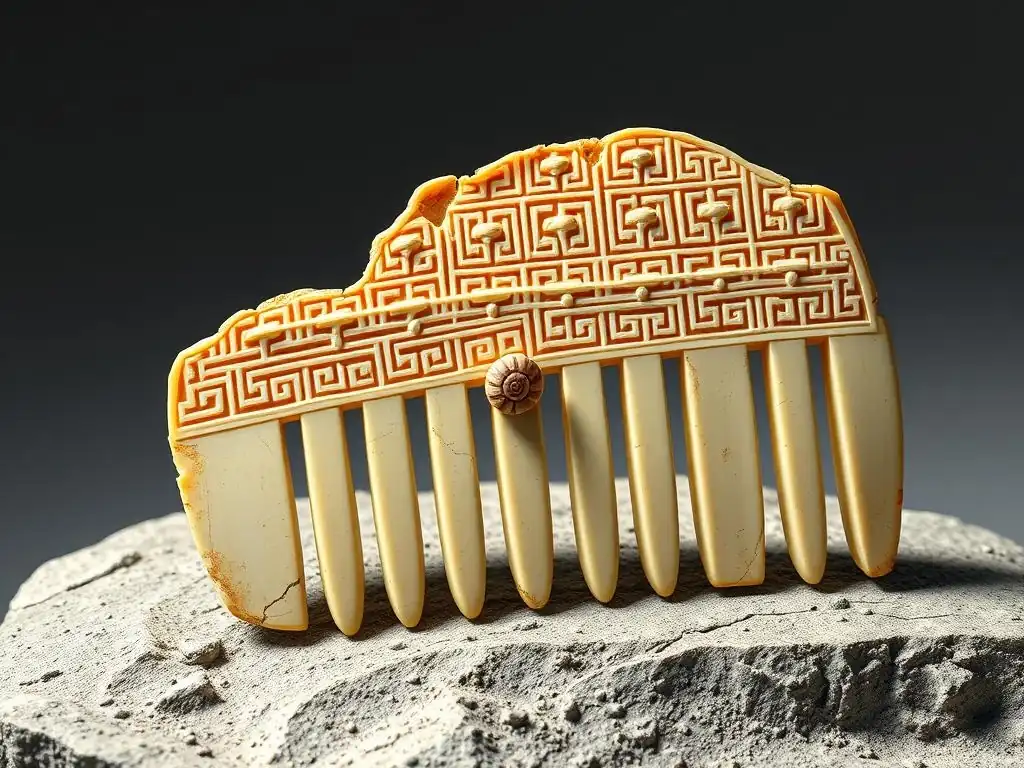
The Uluburun shipwreck carried a substantial collection of ivory, a highly prized luxury material in the Bronze Age. The cargo included 17 intact elephant tusks, some still bearing tool marks from their initial processing, and a number of hippopotamus teeth. These materials were raw stock, likely intended for carving into intricate objects such as furniture inlays, boxes, combs, and figurines, showcasing the artistic and economic value of these Uluburun shipwreck cargo details.
The elephant tusks likely originated from Syria, a region known for its Asian elephant populations in antiquity, or potentially from Africa. Hippopotamus ivory, identifiable by its distinct density and structure, would have come from the Nile River in Egypt or the Levant. The presence of both types of ivory underscores the extensive reach of the trade networks that supplied exotic materials to the major powers of the Late Bronze Age.
Ivory Carvings: Artistic Expressions on Board
Among the raw ivory, archaeologists also discovered several partially carved ivory pieces and a few finished artifacts, providing glimpses into the artistic expressions of the period. These included fragments of ivory boxes, cosmetic containers, and decorative inlays, some still attached to wooden furniture frames. One notable find was a small, intricately carved ivory head, possibly part of a figurine or decorative element, exhibiting a distinct Near Eastern artistic style.
The presence of both raw tusks and finished or semi-finished ivory objects suggests a multi-stage trade process, or perhaps even on-board craftsmanship. It is possible that skilled artisans or their materials were part of the ship's complement, preparing the valuable cargo for its final destination. These Uluburun shipwreck cargo details offer a rare look at the production chain of luxury goods, from raw material to finished artistry, illuminating the craftsmanship of the era.
The Role of Ivory in Royal Gift Exchange
Ivory, due to its rarity, beauty, and the difficulty of its procurement, was a quintessential luxury good often reserved for royal and elite consumption. Its presence in such large quantities on the Uluburun ship strongly suggests that it was part of a royal consignment, possibly intended as a diplomatic gift or tribute between powerful rulers. Ancient texts, such as the Amarna Letters, frequently mention ivory as a component of royal gift exchanges between pharaohs of Egypt, kings of the Hittites, and rulers of Mycenaean Greece.
The Uluburun shipwreck cargo details of ivory thus align perfectly with the concept of a state-sponsored voyage carrying goods of immense prestige. Such items were not merely commodities; they were symbols of wealth, power, and international relations. The ivory from Uluburun provides tangible archaeological evidence for the elaborate systems of royal diplomacy and luxury trade described in contemporary textual records, reinforcing the interconnectedness of the Bronze Age elite.
Exotic Woods and Resins: Aromatic Treasures from the East
The Uluburun cargo also included exotic woods and aromatic resins, materials highly valued in the ancient world for their practical uses, fragrance, and ceremonial significance. Although much of the wood naturally degraded over millennia, identifiable fragments and logs were recovered. These findings shed light on the trade in specialized timber and botanical products, further enriching the Uluburun shipwreck cargo details.
The presence of such diverse organic materials underscores the ship's role as a carrier of high-value goods from various ecosystems. These items were likely destined for elite workshops or palaces, where they would be transformed into furniture, decorative objects, perfumes, or used in religious ceremonies. The trade in these materials demonstrates the extensive reach of Bronze Age commerce beyond just metals and pottery.
Ebony and Cedar: Wood Types Discovered
Among the preserved wood fragments, archaeologists identified pieces of what is believed to be African blackwood ( Dalbergia melanoxylon), often referred to as "ebony" in ancient texts. This dense, dark wood was highly prized for its durability and aesthetic qualities, frequently used for luxury furniture, inlays, and small carved objects. Its presence confirms trade links with regions where this wood was indigenous, likely from Sudan or Ethiopia, reaching the Levant via Egypt.
Additionally, fragments of cedar wood were identified, likely from the extensive cedar forests of Lebanon or Syria. Cedar was valued for its strength, resistance to decay, and aromatic properties, making it ideal for shipbuilding, construction, and fine carpentry. The ship itself was constructed primarily of cedar, indicating the availability and strategic importance of this timber. These Uluburun shipwreck cargo details highlight the specific types of valuable timber traded across the Mediterranean.
Frankincense and Myrrh: Trade in Aromatic Resins
While not explicitly identified as frankincense or myrrh, the Uluburun cargo included a substantial quantity of terebinth resin, preserved within large Canaanite jars. Chemical analysis confirmed the presence of this resin, which was widely used in antiquity for various purposes, including perfumes, incense, pharmaceuticals, and as a component in embalming processes. Terebinth resin was highly valued for its aromatic qualities and medicinal properties.
The trade in such aromatic resins was a significant aspect of Bronze Age commerce, connecting regions of the Near East with the Aegean and Egypt. These Uluburun shipwreck cargo details suggest the importance of luxury consumables beyond just visible wealth, encompassing sensory experiences and ritualistic uses. The deliberate transport of these resins in specialized containers further emphasizes their economic and cultural significance in the ancient world.
Mycenaean Pottery: Evidence of Aegean Connections
A significant portion of the pottery found on the Uluburun ship was of Mycenaean origin, providing crucial evidence of the ship's intended destination or at least its strong connections with the Aegean world. This pottery was not merely ballast; it represented valuable containers for other goods or traded items in their own right. The presence of Mycenaean wares among the Uluburun shipwreck cargo details firmly places the ship within the broader network of Late Bronze Age Mediterranean trade that involved the powerful Mycenaean kingdoms.
The diversity of the Mycenaean pottery, including both fine ware and utilitarian vessels, offers insights into the everyday life and consumption patterns of the period. Its widespread distribution across the Mediterranean, exemplified by the Uluburun find, underscores the economic and cultural influence of the Mycenaean civilization during its zenith.
Pottery Shapes and Decoration: Cultural Insights
The Mycenaean pottery from Uluburun included a variety of shapes, with stirrup jars being particularly prominent. These distinctive jars, characterized by a false neck and a stirrup-shaped handle, were commonly used for transporting liquids such as olive oil and wine. Their presence in large numbers suggests that these valuable commodities, or the containers themselves, were part of the ship's trade. Other forms included kraters, bowls, and drinking cups, some adorned with typical Mycenaean decorative motifs like octopus, fish, and geometric patterns.
The stylistic analysis of these Uluburun shipwreck cargo details provides valuable cultural insights, revealing the aesthetic preferences and artistic conventions of the Mycenaean civilization. The high quality of many of these vessels indicates that they were not just utilitarian but also objects of value, possibly exchanged as gifts or sold as prestige items.
Analyzing Pottery Fragments for Origin and Dating
Archaeologists meticulously analyzed thousands of pottery fragments from the Uluburun wreck, including both Mycenaean and Canaanite wares. Through typological studies and petrographic analysis (examining the mineral composition of the clay), researchers were able to pinpoint the precise origins of many vessels. For instance, the Mycenaean pottery was confirmed to have originated from various centers on the Greek mainland, such as Mycenae, Tiryns, and other Argolid sites.
This detailed analysis of the Uluburun shipwreck cargo details has been crucial for dating the wreck to approximately 1300 BCE, as Mycenaean pottery chronology is well established. Furthermore, by identifying the specific production centers, archaeologists can reconstruct the precise trade routes and connections that linked different regions of the Bronze Age world, illustrating the interconnectedness of supply and demand across vast distances.
Royal Connections and the Uluburun Cargo's Destination
Identifying the Intended Recipient of the Royal Cargo
The sheer scale, diversity, and immense value of the Uluburun shipwreck cargo strongly suggest that it was not a private merchant's venture but rather a state-sponsored or royal consignment. While the ultimate destination cannot be definitively proven, the prevailing theory, supported by archaeological evidence and historical context, is that the cargo was intended for a Mycenaean king or a major Bronze Age ruler in the Aegean. The presence of high-value raw materials like copper, tin, and glass, alongside luxury goods such as ivory and exotic woods, aligns perfectly with the needs and desires of a powerful palace economy.
Given the ship's presumed route along the Anatolian coast towards the Aegean, and the significant quantity of Mycenaean pottery on board, a major Mycenaean center like Tiryns or Mycenae itself is considered a highly plausible recipient. These palatial centers were hubs of administration, craftsmanship, and international diplomacy, making them ideal destinations for such a rich and diverse collection of goods. The Uluburun shipwreck cargo details point towards a direct transaction between powerful entities.
Evidence Supporting a Royal Gift Exchange
Numerous elements within the Uluburun shipwreck cargo details provide compelling evidence for its nature as a royal gift exchange or state-level transaction. The gold scarab bearing the name of Nefertiti, the Egyptian queen, is a powerful indicator of high-level diplomatic exchange. Such an artifact would not typically be found in common merchant trade; it signifies a direct connection to the Egyptian royal court. Similarly, cylinder seals from Mesopotamia and the Levant, some bearing royal iconography, suggest official provenance.
Furthermore, the unprecedented quantity of raw materials — 10 tons of copper and 1 ton of tin — represents a strategic reserve vital for a state's bronze industry, necessary for producing weapons, tools, and prestige objects. Private merchants would rarely amass such a critical supply. The inclusion of luxury items like ivory, exotic woods, and valuable glass, frequently mentioned in ancient diplomatic correspondence (such as the Amarna Letters) as components of royal gifts, further bolsters the theory that the Uluburun shipwreck cargo details were part of a high-stakes diplomatic or economic exchange between rulers.
The Uluburun Shipwreck as a State-Sponsored Voyage
The monumental undertaking of assembling, loading, and transporting the Uluburun cargo points to a state-sponsored or royally sanctioned voyage rather than a purely private commercial enterprise. The sheer volume and strategic nature of the raw materials, coupled with the extraordinary value of the luxury goods, would have required significant capital, logistical planning, and political authority that only a state could provide. Such a valuable consignment would have also necessitated protection, implying official backing.
The diverse origins of the Uluburun shipwreck cargo details – from Cyprus, Egypt, Mesopotamia, the Levant, and the Aegean – indicate a complex network of procurement that extended far beyond the capabilities of an individual merchant. This complexity suggests that the ship was either collecting tribute, fulfilling diplomatic obligations, or engaging in large-scale state-to-state trade. The Uluburun ship, therefore, serves as a tangible illustration of the intricate geopolitical and economic relationships that defined the Late Bronze Age, a period characterized by powerful empires and their extensive interactions.
A Detailed Look at Specific Uluburun Artifacts
The Uluburun Diptych: A Folding Writing Tablet
Among the most intriguing and historically significant artifacts recovered from the Uluburun shipwreck is a wooden diptych, a hinged folding writing tablet. This object, meticulously crafted from boxwood and measuring approximately 15 x 10 cm when closed, featured recessed inner surfaces designed to hold a layer of wax. Scribes would then use a stylus to inscribe cuneiform or other scripts onto the wax, which could be smoothed over and reused. This specific Uluburun shipwreck cargo detail is one of the earliest known examples of such a portable writing board, predating similar Roman examples by over a millennium.
The diptych's presence on board offers rare insights into literacy and administrative practices in the Bronze Age. It suggests that someone on the ship, perhaps a scribe, a merchant, or an official representative, was capable of writing and recording information, whether it be inventory lists, diplomatic correspondence, or personal notes. This artifact provides tangible evidence of the sophisticated administrative tools available during this period, highlighting the importance of written communication in facilitating complex trade and diplomatic relations.
Gold Scarab with Nefertiti's Name: Egyptian Royal Connection
A small, exquisitely crafted gold scarab bearing the cartouche of Nefertiti, the powerful queen of Akhenaten, stands as one of the most remarkable Uluburun shipwreck cargo details. This artifact, measuring just over 2.5 cm (1 inch) in length, provides a crucial chronological anchor for the wreck, dating it firmly to the Amarna period or shortly thereafter (late 14th century BCE). Its material and royal inscription signify its immense value and high-status origin.
The scarab is not merely a piece of jewelry; it is a direct link to the Egyptian royal court and points strongly to the diplomatic nature of the cargo. Such an item would have been a prestige gift, part of a royal exchange between pharaohs and foreign rulers. Its presence on the ship underscores the close political and economic ties between Egypt and the wider Mediterranean world during this period, suggesting that the Uluburun vessel was carrying goods intended for a very important recipient, possibly a Mycenaean king, from the Egyptian realm.
Weapons and Tools: Bronze Age Technology
The Uluburun shipwreck cargo details include a diverse array of weapons and tools, offering a comprehensive look at Bronze Age technology, craftsmanship, and daily life on board. These items, made primarily of bronze, copper, and stone, illustrate the practical necessities of travel, defense, and trade during this era. The collection represents both local and foreign manufacturing traditions, reflecting the international character of the ship and its crew.
The presence of both military and utilitarian items among the Uluburun shipwreck cargo details indicates the dual nature of seafaring in the Late Bronze Age: commerce often went hand-in-hand with the need for protection against piracy or other threats. The variety of tools also suggests that the crew was equipped to handle various tasks, from ship maintenance to cargo management.
Bronze Daggers and Swords: Craftsmanship and Design
Several bronze weapons were recovered from the Uluburun wreck, including at least six Mycenaean swords, various daggers, spearheads, and arrowheads. The swords, typically of the "Naue II" type, showcase the sophisticated metallurgical skills of Mycenaean armorers, known for their effective and elegant designs. These weapons were likely personal possessions of the crew or guards, intended for defense against potential threats like pirates, which were a known hazard in the Mediterranean during the Late Bronze Age.
Alongside the Aegean-style weapons, Near Eastern daggers and axes were also found, indicating the diverse origins of the crew or the widespread adoption of different weapon styles. The craftsmanship evident in these bronze artifacts highlights the advanced metallurgical techniques of the period, including casting, hammering, and sharpening. These Uluburun shipwreck cargo details provide tangible examples of the martial technology and personal armaments used by individuals traversing the ancient seas.
Stone Tools: Functionality and Origin
In addition to metal objects, the Uluburun cargo included a variety of stone tools, essential for various practical tasks. These encompassed grinding stones, used for processing grains or pigments; whetstones, for sharpening metal tools and weapons; and stone weights, some of which were shaped like anchors, possibly used for fishing nets or as part of the ship's rigging. A significant number of stone mace-heads were also found, perhaps serving as weapons or ceremonial objects.
The geological analysis of these stone tools helps determine their origins, often pointing to regional sources in Anatolia or the Levant. Their presence among the Uluburun shipwreck cargo details underscores the fundamental reliance on stone implements for everyday functions, even in an era of advanced metalworking. These utilitarian objects provide valuable insights into the practical aspects of life and work aboard a Bronze Age merchant vessel.
Unraveling the Mystery: Trade Routes and Uluburun's Journey
Reconstructing the Ship's Route: From East to West
Based on the diverse origins of the Uluburun shipwreck cargo details, archaeologists have meticulously reconstructed the ship's likely journey. The consensus suggests the vessel began its voyage from a port in the Levant, possibly Ugarit or another major trade hub on the Syro-Palestinian coast. Evidence for this includes the large quantity of Canaanite jars, cylinder seals, and specific luxury goods originating from the Near East and Egypt. From there, it is believed the ship sailed north, potentially stopping at Cyprus to load copper ingots, which constitute the bulk of the cargo.
After Cyprus, the ship would have proceeded westward along the southern coast of Anatolia, hugging the shoreline for navigation and perhaps making additional stops. The final destination is widely believed to be a major Mycenaean center in the Aegean, such as Tiryns or Mycenae, given the presence of Mycenaean pottery and the nature of the luxury goods suitable for a royal palace. The shipwreck occurred off Uluburun, a promontory on the Turkish coast, suggesting it was nearing the end of its long and complex journey, perhaps caught in a storm or encountering a navigational hazard.
Examining the Ship's Construction: Shipbuilding Techniques
The Uluburun ship itself provides invaluable Uluburun shipwreck cargo details regarding Late Bronze Age shipbuilding techniques. The vessel was constructed primarily of cedar planks, joined together using a sophisticated mortise-and-tenon technique. This method involved cutting rectangular mortises into the edges of the planks and inserting corresponding tenons, which were then secured with wooden pegs. This created a strong, interlocking hull, characteristic of Mediterranean shipbuilding traditions that continued for millennia.
The ship's estimated length was around 15 meters (50 feet), and it was designed as a sturdy cargo vessel, capable of carrying the immense weight of its diverse consignment. The construction details, including the use of specific wood types and joinery methods, offer critical insights into the technological capabilities and engineering prowess of Bronze Age shipwrights. The preservation of significant portions of the hull allows for direct study of these ancient maritime technologies.
The Role of the Uluburun Shipwreck in Understanding Bronze Age Trade Networks
The Uluburun shipwreck stands as the single most comprehensive source of Uluburun shipwreck cargo details for understanding the intricate and far-reaching trade networks of the Late Bronze Age (c. 1400-1200 BCE). Its cargo represents a microcosm of the interconnected world economies of the period, demonstrating the exchange of raw materials, manufactured goods, and luxury items across vast geographical distances. The ship's contents reveal direct links between Egypt, the Near East (Syria, Palestine, Mesopotamia), Cyprus, and the Aegean (Mycenaean Greece).
This single wreck provides tangible evidence for the "international system" described in contemporary textual sources like the Amarna Letters and Hittite archives, showing how commodities like copper, tin, glass, and ivory moved between powerful states. It illustrates the complexity of supply chains, the importance of maritime routes, and the economic interdependence that characterized this era. The Uluburun shipwreck has fundamentally reshaped our understanding of Bronze Age globalization, revealing a dynamic and sophisticated commercial landscape.
Legacy of the Uluburun Shipwreck: Impact on Archaeological Understanding
The Uluburun Collection at the Bodrum Museum of Underwater Archaeology
Following its decade-long excavation, the vast majority of the Uluburun shipwreck cargo details and artifacts were meticulously conserved and subsequently put on display at the Bodrum Museum of Underwater Archaeology in Turkey. This museum, housed within the medieval Bodrum Castle, has dedicated significant exhibition space to the Uluburun collection, making it the centerpiece of its displays. The artifacts are presented in a way that allows visitors to visualize the ship's cargo as it lay on the seabed, offering a compelling narrative of the wreck and its historical context.
The museum's presentation includes reconstructed sections of the hull, life-sized displays of the stacked copper ingots, and carefully arranged cases showcasing the myriad of smaller, exquisite items. This public accessibility ensures that the invaluable Uluburun shipwreck cargo details continue to educate and inspire, drawing researchers and enthusiasts from around the world to study this unparalleled archaeological treasure. The collection serves as a permanent testament to the monumental achievement of both the ancient mariners and the modern archaeologists who brought its story to light.
Uluburun Shipwreck: Continued Research and Analysis
Despite the completion of the physical excavation in 1994, research and analysis of the Uluburun shipwreck and its cargo are far from over. Scholars continue to apply new scientific techniques to the artifacts, yielding fresh insights into their origins, composition, and significance. For instance, advanced chemical and isotopic analyses are continuously refining our understanding of the sources of the metals and glass, challenging previous assumptions and opening new avenues of inquiry into Bronze Age trade routes.
Ongoing research also focuses on the cultural context of the Uluburun shipwreck cargo details, exploring the identities of the crew, the specific political and economic circumstances surrounding the voyage, and the broader implications of the wreck for understanding the collapse of the Late Bronze Age system. The Uluburun site remains a living laboratory for archaeological investigation, with new publications and theories regularly emerging from the sustained study of its rich material culture.
Uluburun Cargo: A Window into the Bronze Age World
The Uluburun cargo stands as an unparalleled archaeological discovery, providing an extraordinary window into the intricate and vibrant world of the Late Bronze Age. Its rich and diverse contents offer tangible evidence of the era's sophisticated trade networks, advanced shipbuilding techniques, and complex international relations. From the strategic raw materials like copper and tin to the exquisite luxury goods such as ivory and glass, every artifact contributes to a holistic understanding of this pivotal period in human history.
The Uluburun shipwreck cargo details have fundamentally reshaped our perceptions of ancient economies, demonstrating a level of interconnectedness and commercial enterprise previously underestimated. It serves as a powerful reminder of the enduring human drive for exploration, trade, and the exchange of ideas across cultures, making the Uluburun shipwreck not just a collection of artifacts, but a profound narrative of a bygone era.
Frequently Asked Questions
How was the Uluburun shipwreck significant to archaeologists?
The Uluburun shipwreck provided an unprecedented snapshot of Bronze Age trade and maritime exchange. Its well-preserved cargo offered invaluable insights into the economic and political landscape of the late 14th century BCE.
What were some of the most valuable items found in the Uluburun shipwreck cargo?
The cargo included raw materials like copper and tin ingots, crucial for bronze production, as well as exotic goods such as elephant ivory, gold jewelry, and glass ingots. These items highlight the international trade networks of the era.
Where did the goods found on the Uluburun shipwreck originate from?
The goods originated from various regions, including the Eastern Mediterranean, Near East, and possibly even Africa. This demonstrates the extensive reach of Bronze Age trade routes.
What evidence suggests the Uluburun cargo was a "royal consignment"?
The sheer volume and high value of the goods, along with the presence of luxury items like royal seals and weapons, strongly suggest a consignment destined for a royal court.
How did the Uluburun shipwreck contribute to our understanding of Bronze Age maritime technology?
The discovery provided crucial information about shipbuilding techniques, navigation methods, and the challenges of long-distance sea travel in the Bronze Age. The ship's design itself was a major discovery.
Okay, here's a final reflection designed to close your article, connect with the reader, and subtly reinforce the keyword "Uluburun shipwreck cargo details," all while adhering to the Markdown format and structure you provided:
Final Reflection: Echoes of a Bronze Age Legacy
The meticulous Uluburun shipwreck cargo details we've explored offer far more than just a glimpse into the past; they resonate powerfully today, reminding us of the interconnectedness of ancient civilizations and the enduring human drive for trade and cultural exchange. The sheer opulence and diversity of the cargo, painstakingly documented and analyzed, provide irrefutable evidence of a sophisticated Bronze Age world, one that challenges simplistic narratives of isolated societies.
The impact of the Uluburun discovery continues to shape our understanding of the Late Bronze Age, influencing archaeological research and inspiring countless imaginations. The meticulous preservation of these artifacts allows us to connect with the lives and aspirations of people who lived millennia ago, fostering a deeper appreciation for our shared human heritage. The Uluburun shipwreck is arguably the most important single source of information about the Late Bronze Age Mediterranean world.
- Cemal Pulak, Nautical Archaeologist. This quote encapsulates the profound significance of the shipwreck and its cargo in rewriting our understanding of this pivotal era.
As you reflect on the Uluburun shipwreck cargo details and the world they reveal, consider how this ancient story of trade, diplomacy, and cultural exchange mirrors our own modern world. What lessons can we learn from the successes and challenges of these Bronze Age societies? Let the richness of the Uluburun cargo inspire you to explore the connections that bind us together, both across time and across cultures, and to appreciate the enduring legacy of human ingenuity and collaboration.
Unearth Your Inner Archaeologist: Delve Deeper Now!
Thank you for joining us on this incredible journey into the Bronze Age with the Uluburun shipwreck. We hope you’ve enjoyed uncovering the mysteries of this royal consignment and its invaluable cargo. Now, it's your turn to engage further with this fascinating discovery:
- Visit a local museum with a Near Eastern or Bronze Age exhibit to see artifacts from the same period and gain a tangible connection to this era.
- Share this article with fellow history buffs or on your social media to spread the word about the incredible riches of the Uluburun shipwreck.
- Consider donating to archaeological organizations that support underwater excavation and research, helping to uncover more hidden treasures.
What other ancient shipwrecks pique your interest, and what do you hope they will reveal about the past?