
The Symbolic Use of Color in Theban Tomb Paintings and Temple Reliefs

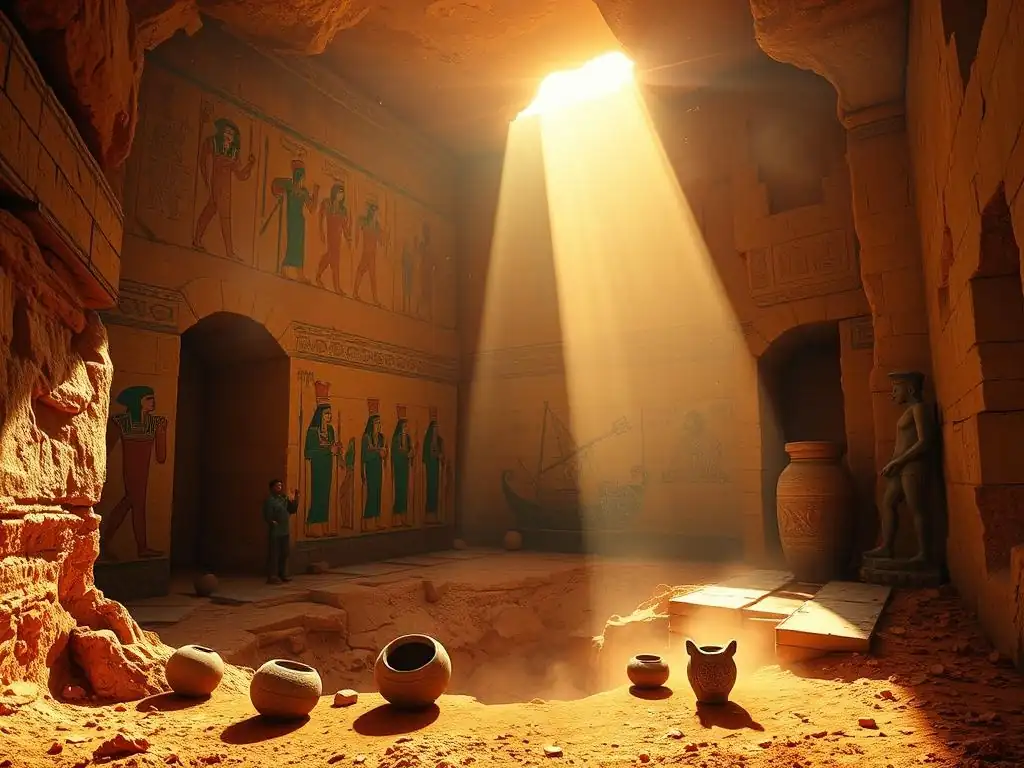
Welcome to ArchaeologyHub.org, your comprehensive guide to the world's ancient wonders. Ever wondered why the vibrant hues in ancient Egyptian art endure even today? Delve into the fascinating world of Theban tomb color symbolism and unlock the secrets hidden within the pigments. Explore our detailed analysis and discover how color played a vital role in conveying religious beliefs, social status, and even the afterlife. What tales do these ancient palettes whisper? Read on to uncover the captivating story...
- Introduction: Unveiling Theban Tomb Color Symbolism
-
Understanding the Palette: Colors and Their Meanings in Theban Art
- Red: Power, Vitality, and Destruction in Theban Imagery
- Blue: Divinity, Creation, and Rebirth in Theban Religious Art
- Green: Regeneration, Fertility, and the Afterlife as Depicted in Theban Tombs
- Yellow: Eternity, Immortality, and the Sun God Ra in Theban Temple Reliefs
- White: Purity, Innocence, and the Sacred in Theban Funerary Art
- Black: Death, the Underworld, and Regeneration in Theban Mortuary Contexts
- Color Symbolism in Theban Tomb Paintings: Examples and Analysis
- Color Symbolism in Theban Temple Reliefs: Examples and Analysis
- Theban Color Symbolism: Context and Cultural Significance
- Challenges in Interpreting Theban Color Symbolism
- Conclusion: The Enduring Legacy of Theban Tomb Color Symbolism
-
Frequently Asked Questions
- What was the general significance of color in ancient Egyptian art, particularly within Theban tombs?
- How did specific colors, such as red, blue, and green, function symbolically within Theban tomb paintings?
- Can you provide an example of how color symbolism was used to convey a specific message in a Theban tomb?
- Did the use of color symbolism in Theban tombs differ significantly from its use in temple reliefs?
- How does understanding Theban tomb color symbolism enhance our comprehension of ancient Egyptian beliefs and rituals?
- Final Reflection: Unveiling Ancient Truths Through Color
- Unveil the Secrets: Paint Your Own Ancient Story!
Introduction: Unveiling Theban Tomb Color Symbolism
The Significance of Color in Ancient Egyptian Art
In ancient Egypt, color transcended mere aesthetic appeal, serving as a profound language deeply interwoven with religious beliefs, cosmology, and the very identity of beings and objects. Far from being arbitrary decorative choices, the hues applied to tomb paintings, temple reliefs, and various artifacts were meticulously selected to convey specific meanings about the depicted subject, its inherent nature, and its relationship to the divine realm or the eternal afterlife.
This systematic approach meant that understanding the ancient Egyptian palette is not simply about appreciating their artistic skill, but about unlocking a crucial layer of their worldview and deciphering their complex system of thought.
The symbolic power of color was fundamental to how the Egyptians perceived and interacted with their world. For instance, the skin tone of a deity, the color of a pharaoh's crown, or the shades used for plants in an afterlife scene were all deliberate choices designed to communicate specific attributes—whether vitality, divinity, purity, or regeneration. This intricate web of associations meant that every colored surface in ancient Egyptian art was a visual statement, contributing to a holistic narrative that educated, ritualized, and ensured cosmic order.
Theban Tombs and Temples: A Canvas of Ancient Beliefs
Thebes, known today as Luxor, stands as an unparalleled testament to the monumental scale and artistic sophistication of ancient Egyptian civilization. As the religious capital for much of the New Kingdom, its vast necropolis on the West Bank—encompassing the Valley of the Kings, Valley of the Queens, and numerous private tombs—alongside the colossal temple complexes of Karnak and Luxor on the East Bank, provides an extraordinary canvas for studying ancient Egyptian art.
The sheer volume and remarkable preservation of tomb paintings and temple reliefs in this region offer an invaluable opportunity to explore the nuances of Theban tomb color symbolism.
These magnificent structures were not merely places of burial or worship; they were meticulously designed sacred spaces intended to facilitate the deceased's journey to the afterlife, ensure the pharaoh's eternal reign, and maintain cosmic balance through ritual. The artistry within Theban tombs and temples was therefore directly linked to deeply held beliefs about resurrection, divine kingship, and the cyclical nature of existence. Colors played an indispensable role in manifesting these abstract concepts into tangible, visual forms, guiding the viewer through narratives of creation, transformation, and eternal life.
Understanding the Palette: Colors and Their Meanings in Theban Art
Red: Power, Vitality, and Destruction in Theban Imagery
Red, derived primarily from readily available red ochre (hematite), was a pigment charged with potent and often dualistic meanings in ancient Egyptian art. It was strongly associated with the sun, fire, and blood, embodying concepts of life force, vitality, energy, and robust health. In Theban tomb paintings, men were consistently depicted with a reddish-brown skin tone, symbolizing their active, dynamic existence and connection to the fertile earth. This can be observed in numerous private tombs, where male figures engaged in agriculture or daily life are rendered with this vibrant hue.
Conversely, red also symbolized danger, chaos, and destruction. It was the color of the arid desert, contrasting sharply with the fertile black land of the Nile Valley. Deities associated with chaos, such as Seth, were sometimes depicted with red features, and the Red Crown of Lower Egypt signified earthly dominion. In temple reliefs, red might highlight the raw power of the pharaoh in smiting enemies or denote the destructive forces held at bay by divine order, demonstrating the complex layers of Theban tomb color symbolism.
Blue: Divinity, Creation, and Rebirth in Theban Religious Art
Blue, particularly the synthetic pigment Egyptian blue (calcium copper silicate), held profound sacred connotations, linking it to the heavens, the primeval waters of creation, and the divine realm. It was the color of truth, fertility, and rebirth, mirroring the life-giving Nile and the celestial expanse. Deities such as Amun, the king of the gods, and Nut, the sky goddess, were frequently depicted with blue skin or garments, emphasizing their cosmic origins and divine power.
In Theban temples, blue was extensively used for ceilings to represent the night sky, often dotted with yellow stars, as seen in the astronomical ceilings of the Ramesseum. In Theban tomb paintings, the elaborate wigs of high-status individuals, both male and female, were often rendered in a rich blue, signifying not only luxury but also a connection to the divine and a purified, ideal state. The prevalence of blue in funerary contexts, on scarabs, or in depictions of water, further underscored its role in Theban tomb color symbolism as a harbinger of rebirth and eternal existence.
Green: Regeneration, Fertility, and the Afterlife as Depicted in Theban Tombs
Green, primarily sourced from malachite (copper carbonate), was the quintessential color of life, growth, and regeneration in ancient Egyptian thought. It symbolized the lush vegetation of the Nile Valley, agricultural fertility, and the promise of new beginnings. Most notably, green was intimately associated with Osiris, the god of the afterlife and resurrection, who was often depicted with green skin, embodying the concept of rebirth after death.
In Theban tomb paintings, particularly those of agricultural officials like Menna (TT69), scenes of lush fields, papyrus thickets, and vibrant plant life are rendered in various shades of green. This abundance of green was not merely decorative; it symbolized the deceased's eternal sustenance and the continuation of life in a revitalized form within the afterlife, directly reflecting the Theban tomb color symbolism tied to perpetual renewal. The use of green in eye makeup (kohl) also had protective and regenerative connotations.
Yellow: Eternity, Immortality, and the Sun God Ra in Theban Temple Reliefs
Yellow, derived from yellow ochre (limonite) or the rarer orpiment, held powerful associations with gold, the sun, eternity, and the flesh of the gods. Gold was considered an incorruptible, divine metal, making yellow a color symbolic of immortality and divine essence. The sun god Ra, a central figure in the Egyptian pantheon, was invariably linked to yellow, with his divine flesh often depicted in this radiant hue.
In Theban temples like Luxor and Karnak, yellow was frequently used for the skin of deities and pharaohs, especially when they were depicted in their divine aspects or engaged in sacred rituals. This emphasized their connection to the sun and their eternal nature.
For instance, in the Divine Birth Chamber at Luxor Temple, the skin of Amun and the royal mother might incorporate yellow to highlight the pharaoh's divine origins. Furthermore, objects imitating gold, such as jewelry, sarcophagi, and cultic implements, were often painted yellow in Theban tombs, reinforcing the deceased's transformation into an eternal, divine being in the afterlife, a key aspect of Theban tomb color symbolism.
White: Purity, Innocence, and the Sacred in Theban Funerary Art
White, typically made from gypsum (calcium sulfate) or calcite (calcium carbonate), symbolized purity, sacredness, simplicity, and clarity. It was the color of ritual cleanliness and truth, often associated with sacred linen, offerings, and the divine essence. White was frequently used for the garments of priests and for the backgrounds of scenes to create a sense of pristine sanctity.
In Theban funerary art, white was particularly prominent. The pure linen bandages used in mummification were white, linking the color to the process of preservation and the journey to the afterlife. In tomb paintings, the white clothing worn by figures in offering scenes or by deities like Ma'at (goddess of truth and cosmic order) underscored their purity and the sanctity of their actions. White could also represent the bones of the deceased, signifying the enduring, indestructible essence of the individual, thereby reinforcing its role in Theban tomb color symbolism as a marker of the sacred.
Black: Death, the Underworld, and Regeneration in Theban Mortuary Contexts
Black, primarily derived from carbon black (soot) or manganese oxide, was a color of profound significance, deeply intertwined with concepts of death, the underworld, and regeneration. Crucially, it was the color of the fertile Nile silt ( kemet, "the black land"), which annually renewed the land after the inundation, making it a powerful symbol of rebirth and life emerging from darkness. This regenerative aspect meant black was not solely associated with negativity.
In Theban mortuary contexts, black was the color of Osiris, the lord of the underworld, who was often depicted with black skin, symbolizing his role in resurrection and the fertile earth from which new life springs. The god Anubis, associated with embalming and funerary rites, was also depicted with black skin or as a black jackal, guiding the deceased through the darkness of the underworld towards rebirth.
The use of black in Theban tomb paintings for the night sky, or for scenes depicting the underworld journey, emphasized the transformative passage through death to a new existence, highlighting the complex and nuanced Theban tomb color symbolism surrounding mortality and renewal.
Color Symbolism in Theban Tomb Paintings: Examples and Analysis
The Tomb of Nakht (TT52): A Case Study in Color Use
The Tomb of Nakht (TT52), dating to Dynasty 18 (circa 1425 BCE), belonged to a scribe and astronomer of Amun. It is celebrated for its small size yet remarkably vibrant and well-preserved paintings that offer a quintessential glimpse into the artistic conventions and daily life of the New Kingdom elite. The tomb's exquisite artistry, particularly its use of color, provides a compelling case study for understanding Theban tomb color symbolism.
The scenes within TT52, ranging from agricultural activities to elegant banquets, are masterfully rendered with a palette that subtly yet powerfully conveys status, gender, and spiritual meaning. The meticulous application of pigments demonstrates the skilled craftsmanship of the Theban artisans, whose work was designed to ensure the deceased's prosperous existence in the afterlife through visual manifestation.
Analysis of Red Pigments in the Agricultural Scenes
In the agricultural scenes of Nakht's tomb, the male figures, including Nakht himself and his servants engaged in harvesting, winnowing, and plowing, are consistently depicted with a reddish-brown skin tone. This choice of red ochre is not merely a naturalistic representation but a deliberate symbolic convention, emphasizing their active life force, vitality, and their connection to the fertile land. The robust red hue conveys strength and the physical labor involved, which was essential for the sustenance of the deceased in the eternal realm.
For instance, in the detailed scene of the grape harvest, the arms and torsos of the workers are rendered in a deep red, visually communicating their vigor and the energetic nature of their tasks. This vibrant red contrasts sharply with the lighter skin tones of women in other scenes, visually distinguishing gender roles and their associated symbolic energies. The use of red in these productive scenes reinforces the idea of perpetual activity and abundant provision, ensuring Nakht's continued well-being in the afterlife, a cornerstone of Theban tomb color symbolism.
The Significance of Blue in the Banquet Scene
The banquet scene in Nakht's tomb is renowned for its elegant portrayal of elite social life, and blue pigments play a significant role in conveying luxury, beauty, and divine connection. Blue, likely Egyptian blue, is prominently featured in the elaborate, tripartite wigs of the female musicians and guests, often depicted as a rich, deep hue. This choice signifies not only their elevated social status and aesthetic refinement but also their connection to the divine, as blue was associated with the heavens and the gods.
The intricate blue patterns on their collars, jewelry, and sometimes even their garments further emphasize their sacred purity and the elevated nature of the funerary feast, which was intended to ensure the deceased's eternal well-being. Additionally, the detailed blue pigments on the lotus flowers held by the female figures evoke the primeval waters and the concept of rebirth, transforming a seemingly social gathering into a scene imbued with deeper spiritual meaning for the deceased. The pervasive use of blue elevates the scene, making it a powerful expression of Theban tomb color symbolism.
The Tomb of Menna (TT69), also from Dynasty 18, belonged to a Scribe of the Fields of the Lord of the Two Lands. It is celebrated for its exquisitely detailed and lively scenes, particularly those depicting agricultural activities and hunting in the marshes. Menna's tomb provides an exceptional window into the life of an elite official and the symbolic use of color to convey profound meanings about prosperity, regeneration, and the afterlife.
The artistry in TT69 is characterized by its vivid palette and meticulous execution, which were crucial for ensuring Menna's eternal provision and successful transition to the next world. The specific choice and application of colors in various scenes were deliberate, aiming to manifest the ideal existence the tomb owner hoped to achieve.
Examining Green Hues in the Hunting and Fishing Scenes
In Menna's tomb, the hunting and fishing scenes set in the marshes are a riot of green, showcasing the ancient Egyptians' mastery of this pigment. The papyrus plants, reeds, and water (often rendered with green-blue shades to suggest depth and vegetation) are meticulously painted using varying shades of malachite green. This abundance of green directly symbolizes the fertile, life-giving environment of the Nile Delta, which was seen as a source of endless provision and regeneration for the deceased.
The vibrant greens underscore the promise of eternal sustenance and the continuation of life in the afterlife, directly reflecting Menna's earthly role as a supervisor of fields. The detailed rendering of individual papyrus stalks and the lush foliage in the fowling scenes, almost universally depicted in a range of green tones, emphasizes the concept of perpetual renewal and abundance, key aspects of Theban tomb color symbolism related to the deceased's eternal journey and his desire to replicate the prosperity of his earthly life.
The Role of Yellow in the Weighing of the Heart Ceremony
While the "Weighing of the Heart" ceremony is most famously depicted in funerary papyri like the Book of the Dead, if such a scene were present or implied in a tomb like Menna's, yellow would be crucial in its symbolic articulation. Yellow, representing gold and the flesh of the gods, would be used for divine figures presiding over the judgment, such as Osiris, or for sacred objects like the scales of justice. This application of yellow emphasizes the divine judgment and the deceased's potential to achieve immortality and become "justified" (ma'a kheru), akin to a god.
In depictions of the Hall of Ma'at, the golden scales upon which the heart is weighed would be rendered in a rich yellow, signifying the incorruptible, divine nature of truth and justice. The skin of Osiris, often depicted with a yellow or golden hue, would further reinforce his divine status and his role as the lord of the afterlife, through whom the deceased seeks eternal life.
The sun disk, a symbol of Ra and eternal cycling, would also be rendered in yellow, further linking the ceremony to cosmic order and eternal rebirth, illustrating the profound Theban tomb color symbolism at play in the journey of the soul.
Color Symbolism in Theban Temple Reliefs: Examples and Analysis
Karnak Temple: Decoding Color in Royal Depictions
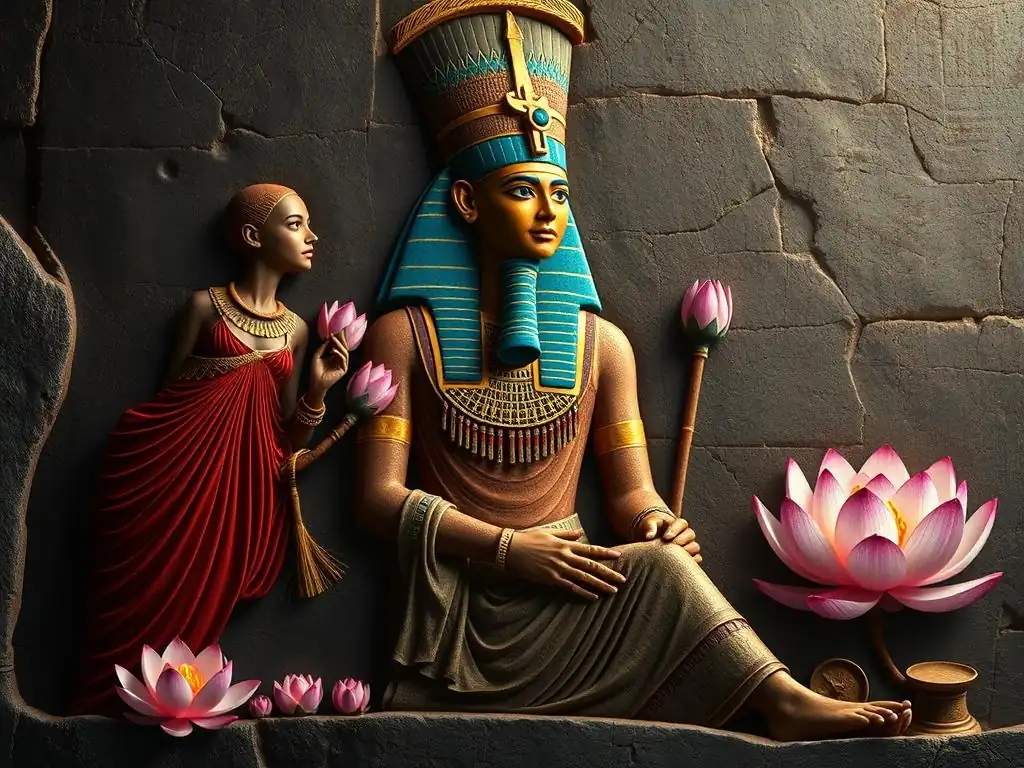
Karnak Temple, a monumental complex dedicated primarily to Amun-Ra, represents centuries of continuous construction and artistic endeavor. Its vast halls, courtyards, and towering pylons are adorned with countless reliefs depicting royal rituals, battles, and interactions with the gods. These reliefs, though often faded by time, still bear traces of their original vibrant colors, offering vital insights into how color was used to convey the pharaoh's divine authority and the sacred nature of temple activities.
The sheer scale of Karnak meant that monumental reliefs were designed to be seen by large audiences, and color played a crucial role in making these visual narratives impactful and immediately understandable. The symbolic use of color in these royal depictions was a powerful tool of propaganda and religious expression, reinforcing the king's role as mediator between the human and divine realms.
Color and the Representation of Pharaohs in Karnak Reliefs
In Karnak's colossal hypostyle hall and on its outer walls, pharaohs such as Seti I and Ramesses II are frequently depicted in monumental reliefs. Their skin, particularly when interacting with deities or performing sacred rituals, often utilized a yellow or reddish-brown pigment. Yellow signified their divine essence and connection to Ra, mirroring the flesh of the gods, emphasizing their divine right to rule. In contrast, reddish-brown hues highlighted their active, vital, and powerful human form, particularly in scenes of military triumph or physical prowess.
The pharaoh's crowns—such as the Red Crown of Lower Egypt, the White Crown of Upper Egypt, or the blue Khepresh war crown—would be painted in their respective symbolic colors, reinforcing their dominion over the Two Lands and their various aspects of kingship. For instance, the battle reliefs of Ramesses II on the outer walls of the Great Hypostyle Hall, while faded, show traces of red ochre on the pharaoh's form, emphasizing his vigor and dominance in combat.
Within the temple's inner sanctums, the pharaoh's divine aspects might be highlighted with yellow, suggesting a transformation or profound divine connection, illustrating the nuanced Theban tomb color symbolism applied to royal imagery.
The Symbolic Use of Color in Religious Rituals at Karnak
Religious ritual scenes abound at Karnak, showing pharaohs making offerings to deities or participating in sacred processions. The offerings themselves, whether bread, flowers, or liquids, would be depicted with colors symbolizing their nature and purpose: green for fertility (vegetation), red for vital offerings (blood, wine), or white for purity (linen, milk). These color choices were not merely descriptive; they conveyed the intrinsic qualities and spiritual efficacy of the offerings.
The ceremonial garments of priests and the pharaoh would often be white, signifying purity and ritual cleanliness, essential for approaching the divine. Divine symbols and cult objects, such as the sacred barques or standards, would incorporate blue (divinity), yellow (gold, eternity), and black (fertility, underworld) to convey their profound religious meaning. In the reliefs depicting the Opet Festival, the sacred barque of Amun-Ra would have been adorned with vibrant blues and yellows, signifying the deity's celestial and eternal nature as it processed along the Nile, illustrating the rich Theban tomb color symbolism inherent in the temple's grandest festivals.
Luxor Temple: Color as a Narrative Tool
Luxor Temple, largely built by Amenhotep III and Ramesses II, served a unique purpose: it was dedicated to the rejuvenation of kingship, particularly through the annual Opet Festival. Unlike Karnak, which focused on the cult of Amun-Ra, Luxor Temple emphasized the divine aspect of the pharaoh and his connection to the gods. As such, the temple's reliefs often employ color as a sophisticated narrative tool, guiding the viewer through theological concepts and royal legitimacy.
The narrative quality of Luxor Temple's art is enhanced by the deliberate application of color, which not only distinguishes figures and objects but also imbues them with symbolic weight. The vivid palette helps to communicate complex theological doctrines and royal propaganda in an accessible visual language.
The Use of Color to Depict Divine Birth in Luxor Temple
The Divine Birth Chamber in Luxor Temple, particularly the reliefs depicting the miraculous birth of Amenhotep III, is a prime example of color serving as a powerful narrative tool. Amun-Ra, often depicted with blue skin, is shown impregnating Queen Mutemwia, emphasizing his divine, celestial nature and the cosmic origin of the pharaoh. The queen, typically with a lighter, yellowish skin tone (signifying her royal, somewhat divine status), receives the divine essence.
The god Khnum, who molds the child and its ka (life force) on his potter's wheel, might be depicted with a greenish hue, linking him to creation and regeneration. Hathor, present at the birth, might be shown with her characteristic yellow skin, signifying her role as a nurturing, divine mother. The combined use of these colors visually tells the story of a divine conception and birth, legitimizing the pharaoh's rule and underscoring the sacred nature of his lineage through potent Theban tomb color symbolism.
Color and the Representation of Offerings in Luxor Temple Reliefs
The offering scenes throughout Luxor Temple are rich in color, each hue contributing to the narrative of sustenance, piety, and divine favor. For instance, offerings of bread and beer might be rendered in earthy browns and yellows, representing staple foods essential for both human and divine sustenance. Flowers and plants, crucial for rituals, would be depicted in vibrant greens and blues, symbolizing fertility, the life-giving power of the Nile, and the cyclical nature of existence.
The vessels holding these offerings, often imitating stone or metal, would use colors like red (for red jasper or copper) or yellow (for gold), indicating their preciousness and ritual significance. The purity of the act is often underscored by the white garments of the priests and the pristine white backgrounds of some offering tables, creating a visual hierarchy of sacredness.
In the colonnade of Amenhotep III, where offering scenes are prominent, the detailed rendering of offerings with specific colors—red for meat, green for vegetables, yellow for bread—paints a vivid picture of the abundance and variety of sustenance provided to the gods, a testament to the comprehensive nature of Theban tomb color symbolism.
Theban Color Symbolism: Context and Cultural Significance
The Relationship Between Color and Ancient Egyptian Religion
The relationship between color and ancient Egyptian religion was intrinsic and inseparable. Colors were not arbitrary choices but a codified language reflecting cosmic order, divine attributes, and the intricate path to the afterlife. Each hue was systematically imbued with profound religious meaning, serving as a visual theology that reinforced the core beliefs of their civilization. For example, green and black were intrinsically tied to Osiris and the fertile land, embodying the cyclical nature of rebirth and the promise of eternal sustenance, while blue and yellow were consistently linked to celestial deities and the concept of eternity.
This systematic approach meant that every painted surface, from the smallest amulet to the grandest temple wall, was a deliberate statement of faith and cosmic understanding. The consistent application of these symbolic colors across millennia in Theban art underscores their foundational role in the religious beliefs of the ancient Egyptians, shaping their understanding of creation, death, rebirth, and the divine. Understanding Theban tomb color symbolism is therefore essential for comprehending the spiritual depth of their visual culture.
The Influence of Geography and Materials on Color Choices in Thebes
The natural environment of Thebes and the broader Egyptian landscape profoundly influenced the availability and choice of pigments used in ancient art. Red and yellow ochres, derived from iron oxides, were readily available from the abundant desert quarries surrounding the Nile Valley. Malachite (green) and azurite (blue) were sourced from mines, often in the Eastern Desert or Sinai. Carbon black came from soot, and white from local gypsum or calcite. This geographical availability made certain colors economically viable and widely used for large areas, such as the extensive red and yellow backgrounds or figures in Theban tombs.
The development of Egyptian blue, a synthetic pigment requiring heating silica, copper, and calcium carbonate to around 800-900°C, demonstrates their mastery of chemistry. Despite its complex manufacturing process, its vibrant, stable blue was highly prized for its profound symbolic associations with divinity and the heavens, ensuring its widespread use in temples and elite Theban tomb paintings. The choice of pigment was thus a blend of symbolic intent, practical availability, and technological innovation.
The application and quality of color in ancient Theban art could subtly denote social status and wealth. While general conventions for skin tones (reddish-brown for men, lighter yellow/white for women) were broadly applied regardless of status, the use of more expensive or difficult-to-produce pigments often correlated with the tomb owner's standing. For instance, the extensive use of Egyptian blue, a costly synthetic pigment, for elaborate wigs, jewelry, or backgrounds in elite tombs signaled access to skilled artisans and valuable materials.
The sheer quantity and vibrancy of certain colors, particularly gold/yellow for divine figures or pharaohs, further emphasized their elevated status and divine favor. The quality and purity of pigments, as well as the meticulousness of their application, often varied with the status of the tomb owner.
For example, while commoners' tombs might use simpler, less refined pigments, the elaborate tombs of high officials in Thebes, such such as Ramose (TT55), display a masterful application of a full spectrum of rich colors, including extensive use of expensive blue and yellow, indicating the owner's elevated social standing and access to skilled artisans and costly materials. This nuanced application of Theban tomb color symbolism extended even to the economic and social strata of ancient Egyptian society.
Challenges in Interpreting Theban Color Symbolism
Pigment Degradation and Reconstruction Challenges
Interpreting the original intent of Theban tomb color symbolism faces significant challenges due to pigment degradation over millennia. Time, light exposure, fluctuating humidity, and human activity have severely impacted the original colors. Many organic pigments have faded, while mineral pigments can darken, change hue, or flake away. For instance, the once brilliant yellows and blues, particularly those exposed to centuries of light and fluctuating temperatures in open tombs, have significantly dulled or vanished.
Reconstructing the original vibrancy and precise shade of these ancient colors is a complex task. It relies heavily on scientific analysis, such as X-ray fluorescence (XRF) and X-ray diffraction (XRD), to identify the chemical composition of remaining pigments, alongside comparative studies with better-preserved examples. In some sections of the Valley of the Kings, the original vibrant blues of the ceilings, representing the night sky, now appear as faint outlines or have completely vanished, requiring meticulous digital reconstruction or chemical analysis to approximate their ancient glory and fully grasp the intended Theban tomb color symbolism.
The Subjectivity of Color Perception Across Cultures
Another challenge in interpreting Theban tomb color symbolism lies in the inherent subjectivity of color perception across different cultures and historical periods. It is crucial to acknowledge that modern interpretations of color symbolism might not perfectly align with ancient Egyptian perception. For example, the ancient Egyptian language often used a single word, wadj, to describe both green and blue, or a spectrum of hues within that range. This linguistic nuance suggests a conceptual grouping that differs from modern Western chromatic distinctions.
This implies that their perception of "green" or "blue" might have encompassed a broader range of hues or focused more on the underlying symbolic associations (e.g., fertility, divinity, water) rather than strict chromatic separation. Therefore, imposing contemporary color frameworks can lead to misinterpretations. Understanding Theban tomb color symbolism requires a deep dive into the cultural and linguistic context of ancient Egypt, rather than solely relying on universal color theories.
The Need for Interdisciplinary Approaches to Understanding Theban Art
To overcome these challenges and fully comprehend Theban tomb color symbolism, an interdisciplinary approach is absolutely essential. No single discipline can fully unlock the complexities of ancient Egyptian art. Combining the insights of archaeology, art history, Egyptology, chemistry (for pigment analysis), conservation science, and even cognitive science provides a holistic understanding. Each discipline brings unique tools and perspectives to the table.
Chemical analysis identifies the precise composition of pigments, revealing manufacturing techniques and potential degradation pathways. Art history interprets iconography and stylistic conventions. Egyptology provides the crucial linguistic and textual context, linking visual symbols to written beliefs.
Conservation addresses the preservation challenges, ensuring the longevity of these fragile artworks. A recent collaborative project on the Tomb of Tutankhamun (KV62), for example, involved archaeometric analysis to identify pigment composition alongside Egyptological studies of accompanying texts. This interdisciplinary effort allowed for a more accurate understanding of the artistic techniques and symbolic intentions behind the Theban tomb color symbolism within the royal burial chamber.
Conclusion: The Enduring Legacy of Theban Tomb Color Symbolism
Color as a Key to Unlocking Ancient Egyptian Beliefs
The study of color in Theban tomb paintings and temple reliefs reveals that color was far more than a decorative element; it was an integral and profound language central to ancient Egyptian religious, social, and cosmological understanding. Every hue carried specific symbolic weight, systematically conveying meaning about divine attributes, the cycle of life and death, and the path to eternal existence.
Understanding Theban tomb color symbolism allows us to delve deeper into their worldview, their hopes for the afterlife, and their intricate relationship with the divine. It is a fundamental aspect of deciphering their rich visual narratives and truly comprehending the spiritual depth of their civilization.
The consistent and deliberate application of specific color palettes across thousands of Theban tombs and temple reliefs, from the earliest Dynasties through the New Kingdom, serves as a testament to the enduring power of color as a symbolic language. It provides invaluable insights into their core beliefs about creation, death, rebirth, and the eternal cycle, making it a cornerstone of Egyptological study and a critical lens through which to view their enduring cultural legacy.
The Importance of Preserving and Studying Theban Art for Future Generations
The magnificent artworks of Thebes, with their vibrant Theban tomb color symbolism, are incredibly fragile and face ongoing threats from environmental factors, natural degradation, and the impact of tourism. The preservation of these invaluable archaeological sites is paramount. Conservation efforts, such as the multi-million dollar project on the Tomb of Nefertari (QV66) or ongoing work in the Valley of the Kings, are crucial to stabilize delicate pigment layers and protect them from further deterioration.
Furthermore, continued study, utilizing new technologies and interdisciplinary approaches, is vital to further unravel the complexities of Theban tomb color symbolism. Projects by organizations like the American Research Center in Egypt (ARCE) in the Theban Necropolis, focusing on documentation, conservation, and environmental monitoring of sites like the Tomb of Ramose (TT55), exemplify this commitment. These efforts ensure that the intricate messages conveyed through color remain visible and accessible for future scholarship and public appreciation, allowing generations to come to connect with the profound beliefs of ancient Egypt.
Frequently Asked Questions
What was the general significance of color in ancient Egyptian art, particularly within Theban tombs?
Color in ancient Egypt was not merely decorative; it held deep symbolic meaning. Specific colors were associated with deities, concepts like life and death, and the natural world, influencing the overall message of Theban tomb paintings.
How did specific colors, such as red, blue, and green, function symbolically within Theban tomb paintings?
Red often represented fire, blood, and vitality, but could also symbolize danger. Blue was tied to the Nile River, the sky, and regeneration. Green symbolized vegetation, fertility, and rebirth.
Can you provide an example of how color symbolism was used to convey a specific message in a Theban tomb?
The depiction of Osiris with green skin in many Theban tombs illustrates his connection to resurrection and the afterlife. This color choice directly linked him to themes of renewal and eternal life.
Did the use of color symbolism in Theban tombs differ significantly from its use in temple reliefs?
While both used color symbolically, Theban tombs often focused on personal journeys in the afterlife, leading to a greater emphasis on colors associated with death and rebirth. Temple reliefs often highlighted colors representing royal power and divine authority.
How does understanding Theban tomb color symbolism enhance our comprehension of ancient Egyptian beliefs and rituals?
By deciphering the symbolic meanings of colors, we gain deeper insights into the religious beliefs, social structures, and worldview of the ancient Egyptians. It unlocks a richer understanding of their complex relationship with life, death, and the cosmos.
Final Reflection: Unveiling Ancient Truths Through Color
The exploration of Theban tomb color symbolism reveals more than just artistic preferences; it offers a profound glimpse into the ancient Egyptian worldview, their beliefs about the afterlife, and their intricate understanding of the cosmos. Today, understanding these symbolic color choices allows us to connect with a civilization long past, appreciating their sophisticated spiritual and artistic sensibilities in a way that transcends millennia.
Delving into the pigments and their meanings has been a truly illuminating journey. It's remarkable how something as seemingly simple as color could hold such immense power, shaping religious beliefs and artistic expression. Color speaks to the soul in a thousand different ways,
as Wassily Kandinsky so eloquently stated. The enduring legacy of these vibrant hues continues to inspire artists and historians alike, reminding us of the profound connection between art, belief, and the human experience.
As we conclude this exploration of Theban tomb color symbolism, I invite you to reflect on the power of symbols in your own life. What colors resonate with you? What meanings do you ascribe to them? Just as the ancient Egyptians used color to communicate their deepest beliefs, consider how you can use symbolism to enrich your own understanding of the world and express your unique perspective. Let the vibrant legacy of Theban art inspire you to find meaning and beauty in the everyday, and to appreciate the enduring power of human creativity.
Unveil the Secrets: Paint Your Own Ancient Story!
Thank you for exploring the vibrant world of Theban art with us. We hope you've enjoyed learning about the profound meanings hidden within the colors used by ancient Egyptian artists. Now, it's your turn to connect with this rich history!
Here are a few ways you can bring the spirit of Thebes into your own life:
- Create your own symbolic artwork using a limited palette inspired by Theban tomb paintings. Consider what stories you want to tell and which colors best represent them.
- Dive deeper: Research a specific Theban tomb or temple to uncover more nuanced details about its color symbolism. Share your findings with a friend!
- Visit a local museum with an Egyptian art collection and challenge yourself to decipher the symbolic meanings of the colors used in the artifacts you see.
What story will your colors tell? Share your artistic interpretation of Theban symbolism in the comments below!