
Anyang: A Comprehensive Archaeological Profile of a Shang Capital

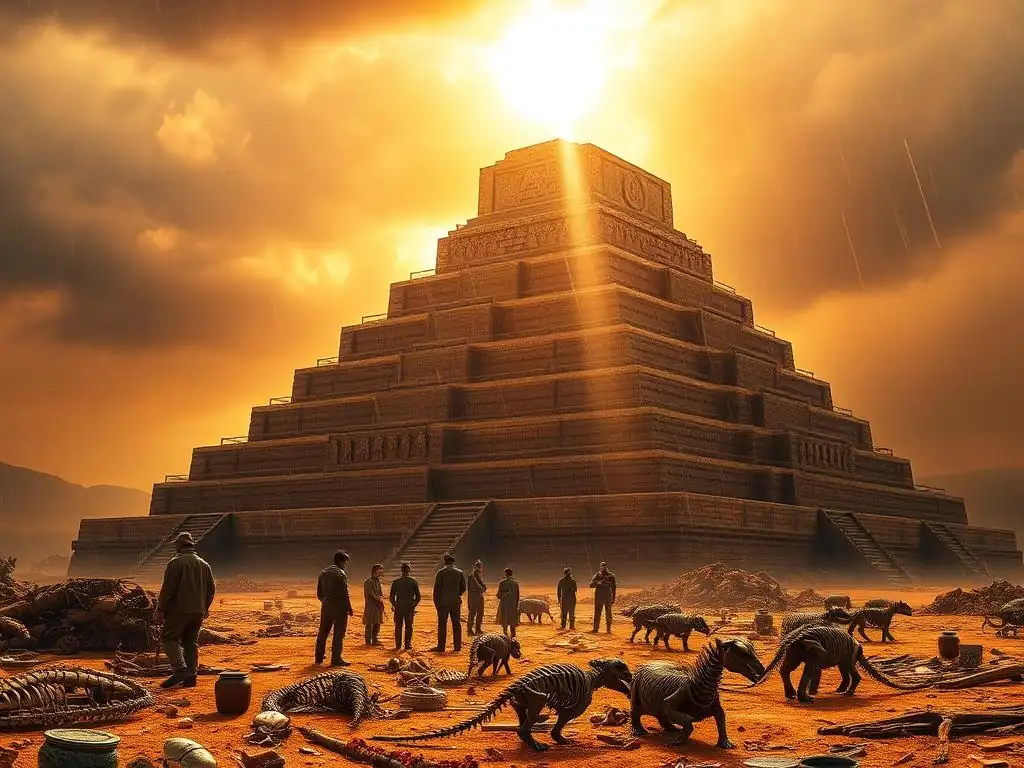
Welcome to ArchaeologyHub.org, your portal to the past!
Delve into the fascinating world of archaeological discovery as we unravel the mysteries of ancient civilizations. Are you ready to explore one of the most significant sites in Chinese history? Prepare to embark on a journey to Anyang, a pivotal capital of the Shang Dynasty. This comprehensive profile offers an in-depth look at the groundbreaking discoveries, intricate artifacts, and enduring legacy of this remarkable city. Intrigued? Continue reading to uncover the secrets that lie beneath the soil of Anyang...
- Introduction to Anyang: Unveiling a Lost Shang Dynasty Capital
- Historical Background: The Shang Dynasty and its Capital at Anyang
- Archaeological Excavations at Anyang: A Timeline of Discovery
- Royal Tombs at Anyang: Insights into Shang Dynasty Rulers
- Oracle Bones: Deciphering the Shang Dynasty Script and Divination Practices
- Bronze Vessels and Craftsmanship: Technological Achievements of the Shang Dynasty
- Urban Planning and Architecture at Anyang: Reconstructing the Shang Capital
- Anyang's Role in Shang Dynasty Trade and Economy
- The Decline and Abandonment of Anyang: Theories and Evidence
- Anyang Today: Preservation and Interpretation of the Shang Dynasty Legacy
- Conclusion: Reflecting on the Archaeological Significance of Anyang
-
Frequently Asked Questions
- ### What is Anyang and why is it archaeologically significant?
- ### What types of artifacts have been discovered at the Anyang site?
- ### What is the significance of the oracle bones found at Anyang?
- ### What excavation techniques are typically used at the Anyang archaeological site?
- ### How does the Anyang site contribute to our understanding of the Shang Dynasty?
- Final Reflection: Echoes of the Shang Dynasty
- Unearth Your Inner Archaeologist!
Introduction to Anyang: Unveiling a Lost Shang Dynasty Capital
The Significance of Anyang in Shang Dynasty Archaeology
Anyang, specifically the site of Yinxu (Ruins of Yin), holds an unparalleled position in the field of Chinese archaeology. It served as the last capital of the Shang Dynasty for approximately 273 years, from around 1300 BCE until its downfall in 1046 BCE. The extensive archaeological work conducted at Anyang has provided definitive proof of the Shang Dynasty's existence, transforming it from a legendary period into a tangible historical reality.
This critical site has yielded a wealth of information, including tens of thousands of oracle bone inscriptions, monumental royal tombs, and exquisite bronze vessels, all of which are fundamental to understanding early Chinese civilization. The sheer volume and quality of discoveries at Anyang make it a cornerstone of Anyang Shang Dynasty archaeology, offering insights into the political, social, economic, and religious life of this pivotal era.
The findings at Anyang have reshaped our understanding of ancient China, providing direct evidence of a highly organized, sophisticated state that predates the classical Zhou Dynasty. Before the systematic excavations at Anyang, the Shang Dynasty was largely known through later historical texts like the Records of the Grand Historian by Sima Qian, which were often viewed with skepticism due to their mythical elements.
The concrete archaeological evidence from Anyang, including stratified occupational layers, monumental architecture, and a vast corpus of written records on oracle bones, validated these historical accounts and established a firm chronological framework for early Chinese history. This archaeological triumph firmly placed Anyang at the center of studies concerning the origins of Chinese statecraft, writing systems, and complex social structures, making Anyang Shang Dynasty archaeology an essential discipline.
Locating Anyang: Geographical Context and Modern-Day Identification
The ancient capital of Anyang, known archaeologically as Yinxu, is situated near the modern city of Anyang in Henan Province, China. The site spans both banks of the Huan River, a tributary of the Yellow River, which was a crucial factor in its ancient prosperity, providing water resources and facilitating transportation.
This strategic location within the fertile plains of northern China allowed the Shang Dynasty to leverage agricultural productivity and maintain control over key trade routes. The identification of Yinxu with the historical Shang capital of Yin was a significant breakthrough in Anyang Shang Dynasty archaeology, confirming the location mentioned in ancient texts.
The Yinxu site itself covers an expansive area of approximately 30 square kilometers, encompassing various distinct archaeological zones. These include the Xiaotun palace and ancestral temple complex, the Houjiazhuang and Wuguan Village royal cemeteries, and numerous workshops, residential areas, and sacrificial pits.
The modern city of Anyang has developed around parts of the ancient site, necessitating careful urban planning and preservation efforts to protect this invaluable historical legacy. The geographical setting, with its rich loess soil and proximity to water, was instrumental in sustaining the large population and complex activities of the Shang capital, making its precise location a key element in understanding the scope of Anyang Shang Dynasty archaeology.
Historical Background: The Shang Dynasty and its Capital at Anyang
The Late Shang Period: Kings and Chronology at Yinxu
The period of Shang rule at Anyang, often referred to as the Late Shang period, commenced around 1300 BCE with King Pan Geng's relocation of the capital to Yin. This move is believed to have brought stability and prosperity after a period of political unrest and shifting capitals.
The Anyang phase saw the reigns of the last 12 Shang kings, starting with Pan Geng and culminating with Di Xin, who was overthrown by the Zhou Dynasty in 1046 BCE. The chronological framework for this period is largely derived from the meticulous records inscribed on oracle bones found at Anyang, which list royal genealogies, sacrificial schedules, and significant events, often accompanied by cyclical dates.
Among the most prominent rulers of the Anyang period was King Wu Ding, whose reign is extensively documented through oracle bone inscriptions. His consort, Fu Hao, a military general and high priestess, is also a significant figure whose tomb, discovered intact at Anyang, provided extraordinary insights into the wealth and power of the Shang elite.
The oracle bone records detail the kings' divinatory practices, military campaigns, hunting expeditions, and ritual offerings, providing a rich narrative of their daily concerns and the broader political landscape. The meticulous study of these inscriptions forms a core component of Anyang Shang Dynasty archaeology, allowing scholars to reconstruct a precise chronology and understand the personalities of the late Shang rulers.
The layout and archaeological remains at Anyang vividly reflect the highly stratified and centralized political and social structure of the Late Shang Dynasty. At the apex was the Shang king, who held supreme authority as both a political and religious leader, mediating between the human realm and the ancestors/deities. The grand rammed-earth foundations of palaces and ancestral temples at Xiaotun underscore the king's central role and the importance of ritual in maintaining his authority. Surrounding these elite structures were specialized workshops for bronze casting, jade carving, and pottery production, indicating a sophisticated system of state-controlled craft industries.
Below the king were various aristocratic clans, military commanders, diviners, and scribes who formed the ruling elite. Their elevated status is evident in the elaborate burial practices and rich grave goods found in the royal tombs, such as those at Houjiazhuang and Wuguan Village. Further down the social ladder were artisans, farmers, and laborers, whose dwellings were simpler and whose burials contained fewer precious items.
The widespread evidence of human sacrifice, particularly in royal burials and foundational deposits, points to a highly authoritarian state where human life was expendable for ritual and political purposes. The distinct separation of elite and commoner areas, along with the monumental scale of royal and ritual structures, provides compelling archaeological evidence for the hierarchical and centralized nature of the Shang state, a crucial aspect explored by Anyang Shang Dynasty archaeology.
Archaeological Excavations at Anyang: A Timeline of Discovery
Early Explorations and the Identification of Yinxu as Anyang
The initial discovery of oracle bones in the late 19th century marked the unofficial beginning of Anyang Shang Dynasty archaeology. Farmers in the Xiaotun village area frequently unearthed inscribed "dragon bones," which were sold to apothecaries as traditional medicine. In 1899, the scholar Wang Yirong recognized the inscriptions as ancient Chinese writing, prompting further investigation.
This led to the realization that these bones were remnants of a lost ancient civilization. Subsequent preliminary excavations in the early 20th century by scholars like Luo Zhenyu and Wang Guowei confirmed that the site was indeed Yinxu, the legendary capital of the Shang Dynasty, thus bridging the gap between historical texts and archaeological reality.
The first systematic archaeological excavations at Anyang began in 1928, led by the Academia Sinica's Institute of History and Philology, under the directorship of Li Ji. These pioneering efforts, which continued until 1937, were instrumental in establishing modern archaeological practices in China.
The teams meticulously mapped the site, excavated various areas, and recovered an unprecedented volume of artifacts, including tens of thousands of oracle bone fragments, magnificent bronze vessels, and the first identified royal tombs. These early explorations laid the foundation for all subsequent Anyang Shang Dynasty archaeology, proving the historical existence of the Shang Dynasty and providing the initial framework for understanding its material culture.
Key Excavation Sites: From Royal Tombs to Oracle Bone Pits
Anyang's archaeological landscape is dotted with several key excavation zones, each offering unique insights into the Shang Dynasty. The Xiaotun area, located on the northern bank of the Huan River, served as the administrative and ritual heart of the capital. Here, archaeologists uncovered the foundations of numerous rammed-earth palace and ancestral temple buildings, along with large pits containing the vast majority of the oracle bones (including the famous Pit H127, an oracle bone archive). This area also revealed residential quarters for the elite and various craft workshops.
On the southern bank of the Huan River, primarily at Houjiazhuang and Wuguan Village, lies the royal cemetery complex. These sites contain a series of colossal cruciform tombs, believed to be the resting places of Shang kings.
While most of these tombs had been extensively looted in antiquity, the sheer scale of their construction, the remains of sacrificial victims, and some surviving grave goods (like the intact tomb of Fu Hao at Xiaotun) provided invaluable information about Shang burial practices and beliefs. Other significant areas include the numerous sacrificial pits and chariot burials found across the site, which collectively paint a comprehensive picture of life and death in the Shang capital, making each site crucial for Anyang Shang Dynasty archaeology.
Major Discoveries: Artifacts and Structures Uncovered at Anyang
The archaeological endeavors at Anyang have yielded an astonishing array of artifacts and structural remains, collectively forming the backbone of our knowledge about the Shang Dynasty. Foremost among these are the oracle bones, primarily ox scapulae and turtle plastrons, inscribed with the earliest known systematic Chinese writing. Over 150,000 fragments have been recovered, providing direct textual evidence of Shang politics, economy, warfare, and religion. These inscriptions are the primary source for identifying Shang kings and understanding their concerns.
Another hallmark of Anyang Shang Dynasty archaeology is the discovery of magnificent bronze vessels. Thousands of these intricate artifacts, ranging from ritual containers (like the famous Houmuwu Ding, the largest ancient bronze vessel ever found) to weapons and tools, have been unearthed. These bronzes showcase the Shang's advanced metallurgical technology and artistic prowess, utilizing the piece-mold casting technique.
Additionally, vast quantities of jade carvings, pottery, bone artifacts, and chariot burials (complete with horses and drivers) have been found. The monumental rammed-earth foundations of palaces and temples at Xiaotun further attest to the Shang's architectural capabilities and the organized labor force required for such large-scale construction projects. These diverse discoveries collectively illuminate the material culture and societal complexity of the Shang capital.
Royal Tombs at Anyang: Insights into Shang Dynasty Rulers
Layout and Construction of the Royal Tombs Complex
The royal tombs at Anyang, primarily located in the Houjiazhuang and Wuguan Village areas, represent monumental feats of ancient engineering and provide profound insights into Shang funerary practices. These tombs are characterized by their cruciform or cross-shaped burial chambers, typically consisting of a central pit with four ramps leading down from the cardinal directions.
The main burial chamber, often reaching depths of over 10 meters, was constructed with a wooden coffin chamber at its core. For instance, Tomb 1001 at Houjiazhuang, believed to be the tomb of King Wu Ding, measures approximately 18 meters deep with ramps extending over 50 meters, indicating the immense labor investment.
The construction of these tombs involved thousands of laborers, who painstakingly dug the massive pits and then built the intricate wooden structures within. While most of these royal tombs were looted centuries ago, their sheer scale and the surviving archaeological evidence, such as the numerous sacrificial pits around them, confirm their status as royal burial grounds. The only intact royal tomb discovered, Tomb 5 at Xiaotun, belonging to Fu Hao, a consort of King Wu Ding, provided an unprecedented glimpse into the wealth and ritual practices associated with royal burials, becoming a landmark discovery in Anyang Shang Dynasty archaeology.
Grave Goods and Ritual Offerings: Unveiling Shang Dynasty Beliefs
The grave goods recovered from the royal tombs and associated sacrificial pits at Anyang are astounding in their quantity and quality, reflecting the Shang elite's belief in an afterlife and the importance of ancestral worship. The intact tomb of Fu Hao (Tomb 5) alone yielded over 1,928 artifacts, including 468 bronze vessels (weighing approximately 1.6 tons), 755 jade objects, 560 bone artifacts, and numerous pottery and stone items. These objects were not merely possessions but were intended to accompany the deceased into the afterlife, ensuring their well-being and continued influence.
Bronze vessels, particularly ding tripods and gui bowls, were central to ritual offerings to ancestors, serving as containers for food and drink during ceremonies. The presence of elaborate jade ornaments, ritual weapons, and musical instruments further underscores the sophisticated material culture and the symbolic significance placed on these items. The sheer opulence and variety of these grave goods provide crucial data for understanding Shang religious beliefs, their highly developed craftsmanship, and the vast resources controlled by the ruling elite, making them central to the study of Anyang Shang Dynasty archaeology.
Analysis of Human and Animal Sacrifices within the Tombs
A particularly striking and somber aspect of the Anyang royal tombs is the pervasive evidence of human and animal sacrifices. Hundreds, and in some cases, thousands of human sacrificial victims (known as qiang) were interred within the royal tombs themselves, in the ramps, and in surrounding sacrificial pits. These victims, often young males, were typically decapitated or dismembered, suggesting ritualistic killing rather than battle casualties.
For instance, the main pit of Tomb 1001 at Houjiazhuang contained the remains of at least 15 human sacrificial victims, with hundreds more in surrounding pits. Tomb 5, Fu Hao's tomb, contained the skeletons of 16 human sacrificial victims and 6 dogs.
The practice of human sacrifice, documented extensively through archaeological findings and oracle bone inscriptions, served multiple purposes: accompanying the deceased into the afterlife, serving as guardians, or as offerings to deities and ancestors to ensure prosperity and stability for the Shang state. Alongside human sacrifices, numerous animals—including cattle, sheep, pigs, and dogs—were also ritually killed and buried.
The presence of complete chariots with horses and charioteers further emphasizes the elaborate and brutal nature of Shang funerary rites. The systematic study of these sacrificial remains provides chilling yet invaluable insights into the Shang Dynasty's religious cosmology, social control, and the deeply ingrained practice of ritual violence, a significant area of focus in Anyang Shang Dynasty archaeology.
Oracle Bones: Deciphering the Shang Dynasty Script and Divination Practices
The Discovery and Significance of Oracle Bones at Anyang
The discovery of oracle bones at Anyang stands as one of the most pivotal events in Chinese archaeology and epigraphy. Uncovered primarily at the Xiaotun site, these inscribed ox scapulae and turtle plastrons represent the earliest substantial body of written records in East Asia.
Their initial recognition by scholars in the late 19th century, after being sold as "dragon bones" for medicinal purposes, quickly led to the realization of their profound historical value. The systematic excavations by the Academia Sinica from 1928 onwards brought forth tens of thousands of these fragments, revealing a direct textual window into the Shang Dynasty.
The significance of the oracle bones lies in their ability to corroborate and expand upon later historical accounts of the Shang, transforming a semi-legendary dynasty into a verifiable historical entity. They contain the names of Shang kings, their ancestors, and the concerns of their reigns, providing a precise chronology for the late Shang period.
The inscriptions also offer unparalleled insights into the Shang writing system, which is the direct ancestor of modern Chinese characters, making them an indispensable resource for the study of Chinese philology and Anyang Shang Dynasty archaeology. The sheer volume of these textual artifacts, over 150,000 fragments, makes Anyang the single most important site for understanding early Chinese literacy and statecraft.
The Content of Oracle Bone Inscriptions: Royal Concerns and Rituals
The inscriptions on the oracle bones primarily record the divinatory practices of the Shang kings and their diviners. The process involved heating a polished bone or plastron until it cracked, then interpreting the cracks and carving the question, prognosis, and sometimes the outcome onto the surface. The content of these questions reveals the wide array of concerns that occupied the Shang royal court. Common topics include:
- Weather and Harvest: Queries about rain, drought, and the success of millet and other crops.
- Warfare: Divinations regarding military campaigns, battles, and the capture of enemies.
- Hunting Expeditions: Questions about the success of royal hunts and the safety of the king.
- Illness and Dreams: Inquiries about the king's health, the well-being of the royal family, and the interpretation of dreams.
- Ritual Offerings: Detailed records of sacrifices to ancestors and various deities, specifying the type of offering (e.g., cattle, sheep, human victims) and the recipient.
- Birth and Future Events: Divinations concerning childbirth, particularly the gender of royal offspring, and other prospective events.
These records provide a unique, unfiltered glimpse into the daily life, anxieties, and ritualistic worldview of the Shang elite. For instance, specific inscriptions detail campaigns against neighboring tribes like the "Qiang" or mention specific royal hunting trips where hundreds of animals were captured. This direct textual evidence, combined with archaeological findings, provides a rich tapestry of information for Anyang Shang Dynasty archaeology.
Oracle Bone Analysis: Insights into Shang Dynasty Language and Society
The systematic analysis of oracle bone inscriptions has yielded profound insights into the early Chinese language and the complex social structure of the Shang Dynasty. Linguistically, the inscriptions represent a crucial stage in the development of Chinese script, showcasing a mature writing system with a mix of pictographic, ideographic, and phonetic elements. While around 5,000 distinct characters have been identified, approximately 1,500 have been reliably deciphered, providing a lexicon for Shang Chinese. The consistent grammar and syntax across thousands of inscriptions allow scholars to reconstruct aspects of spoken Shang language.
Sociologically, the oracle bones illuminate the hierarchical nature of Shang society, with the king at its apex, followed by the diviners and scribes who managed the state's ritual and administrative functions. The frequent mention of ancestral spirits and deities underscores the profound religious underpinnings of Shang political authority. Inscriptions also detail kinship structures, the roles of various officials, and economic activities, such as the acquisition of resources and the organization of labor.
For example, some inscriptions mention specific groups of artisans or refer to the tribute received from subordinate territories. The detailed records of warfare, including the names of enemies and the scale of military operations, provide a unique perspective on Shang expansion and control. Thus, the oracle bones are not just linguistic artifacts but invaluable historical documents, forming the textual bedrock of Anyang Shang Dynasty archaeology.
Bronze Vessels and Craftsmanship: Technological Achievements of the Shang Dynasty
Bronze Foundries and Workshops at Anyang: Evidence of Specialized Production
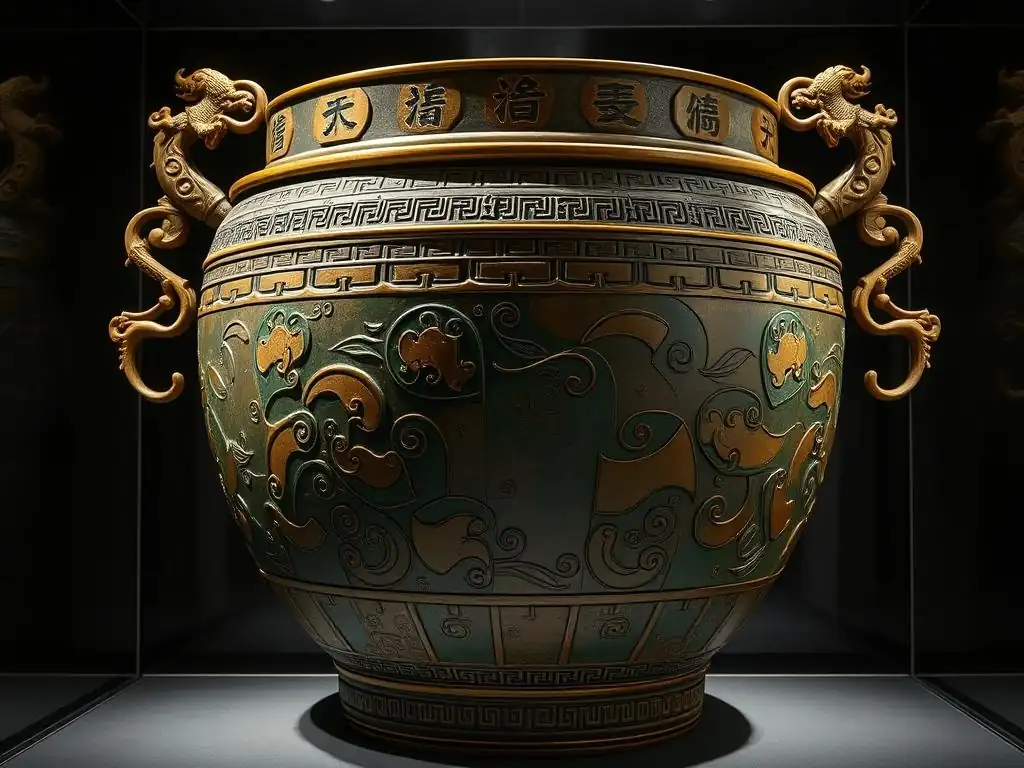
The discovery of extensive bronze foundries and workshops at Anyang provides compelling evidence of the Shang Dynasty's highly organized and specialized metallurgical production. Archaeological investigations have unearthed remnants of large-scale casting pits, furnaces, crucibles, and thousands of ceramic piece-molds, particularly in areas like Miaopu Bei and Xiaotun. These findings indicate a sophisticated, state-controlled industry capable of mass-producing intricate bronze vessels and weapons. The sheer volume of bronze artifacts recovered from Anyang, including the massive Houmuwu Ding (which weighs 875 kg and required an estimated 200-300 people to cast), underscores the scale of these operations.
The Shang bronze casters employed an advanced piece-mold casting technique, which allowed for the creation of complex shapes and intricate surface decorations. This method involved creating a clay model, then forming separate clay molds around it, which were then removed, fired, and reassembled for pouring the molten bronze.
The presence of numerous mold fragments and casting debris at the workshop sites confirms this highly efficient and precise method. The concentration of these workshops within the capital suggests a centralized control over the acquisition of raw materials—copper, tin, and lead—and the skilled labor force, highlighting the technological prowess and economic organization that underpinned Anyang Shang Dynasty archaeology.
Styles and Decoration of Shang Dynasty Bronze Vessels
Shang Dynasty bronze vessels from Anyang are renowned for their distinctive styles and elaborate decoration, reflecting a unique artistic sensibility and profound ritualistic significance. The most iconic motif is the taotie, a stylized animal mask often depicted with prominent eyes and horns, believed to represent a mythical, protective creature. Other common motifs include dragons, birds, cicadas, and geometric patterns like the leiwen (spiral thunder pattern). These designs are typically rendered in high relief, creating a striking visual impact.
The vessels themselves come in a wide array of forms, each with a specific ritualistic function. Common types include:
- Ding: Tripodal cauldrons for cooking or holding food offerings.
- Gui: Two-handled bowls for grain.
- Jue and Gu: Tripodal libation cups and tall, slender beakers for wine.
- You and Gong: Covered jars and tureens for wine or food.
- Zun: Wine vessels often shaped like animals.
The intricate details, precise craftsmanship, and consistent stylistic elements across thousands of bronzes from Anyang demonstrate a highly developed aesthetic and a shared symbolic language. The evolution of these styles over the Anyang period also provides a valuable chronological marker for Anyang Shang Dynasty archaeology, allowing scholars to date specific finds based on their decorative characteristics.
The Role of Bronze in Ritual and Power within the Shang Dynasty
Bronze played a multifaceted and indispensable role in the Shang Dynasty, serving as a primary medium for ritual, a symbol of political authority, and a crucial component of military power. The vast majority of bronze vessels found at Anyang were not for daily use but were meticulously crafted for ancestral worship and state rituals.
These elaborate ceremonies, often involving feasting and libations, were central to the king's legitimacy, as he mediated between the human world and the powerful ancestral spirits who controlled the natural order. The quantity and quality of bronze vessels owned by an individual were direct indicators of their social status and political influence.
Beyond ritual, bronze was essential for military might. Weapons such as daggers, axes, spears, and arrowheads were cast from bronze, giving the Shang armies a significant technological advantage over their contemporaries. The control over bronze production—from mining distant raw materials to the skilled labor required for casting—was a closely guarded royal prerogative, reinforcing the king's centralized power.
The discovery of bronze chariot fittings also highlights its role in elite transportation and warfare. Thus, bronze was not merely a material but a fundamental pillar of Shang society, embodying their religious beliefs, political structure, and technological achievements, a key focus of Anyang Shang Dynasty archaeology.
Urban Planning and Architecture at Anyang: Reconstructing the Shang Capital
The Layout of the City: Palaces, Temples, and Residential Areas
Reconstructing the urban planning of Anyang, the last Shang capital, reveals a sophisticated, if not entirely walled, settlement pattern. The core of the capital was concentrated at Xiaotun, on the north bank of the Huan River. Here, archaeologists have uncovered the massive rammed-earth foundations of over 50 large palace and ancestral temple buildings, oriented along a north-south axis.
These structures, some measuring over 80 meters in length, indicate a highly organized administrative and ritual center. The absence of a continuous defensive wall around the entire city suggests that Anyang may have functioned as a dispersed capital, with distinct functional zones rather than a single fortified urban core.
Surrounding the central palace-temple complex were various specialized areas. To the east and south of Xiaotun, residential areas for the elite and commoners have been identified, alongside craft workshops for bronze casting, jade carving, and pottery production. The royal cemeteries, located at Houjiazhuang and Wuguan Village on the south bank of the Huan River, formed another distinct zone, separated from the living areas. This functional zoning, with its clear distinction between sacred, administrative, elite residential, and industrial areas, demonstrates a deliberate approach to urban organization, providing critical insights for Anyang Shang Dynasty archaeology.
Building Techniques and Materials Used in Shang Dynasty Construction
The architectural remains at Anyang showcase the Shang Dynasty's mastery of rammed-earth construction (hangtu), a technique that had been in use in China for millennia. For the monumental palace and temple foundations, layers of earth were meticulously pounded into compact, incredibly durable platforms, often several meters thick and covering thousands of square meters. These rammed-earth foundations provided a stable base for large wooden superstructures. Archaeological evidence suggests that the buildings themselves were predominantly timber-framed, utilizing substantial wooden pillars to support roofs, which were likely thatched or tiled.
Other materials included stone, primarily used for pillar bases to protect the wooden columns from moisture, and sometimes for decorative elements. Traces of plaster and paint indicate that walls were often finished and adorned. The scale of these structures, with their massive foundations and complex timber frameworks, implies a highly organized labor force and sophisticated architectural knowledge. The discovery of drainage systems and intricate pathways further highlights the advanced nature of Shang urban infrastructure. Understanding these building techniques is crucial for Anyang Shang Dynasty archaeology, as they reflect the technological capabilities and the aesthetic preferences of the Shang elite.
The urban planning and architectural diversity at Anyang provide compelling archaeological evidence for the pronounced social stratification within the Shang Dynasty. The monumental scale and elaborate construction of the palace and ancestral temple complex at Xiaotun clearly demarcate the king's supreme authority and the centrality of the royal lineage. These grand structures, requiring immense labor and resources, were exclusively reserved for the ruling elite and their ritual activities, physically embodying their elevated status.
In contrast, the residential areas show a clear gradient of dwelling size and construction quality. Elite residences, often found closer to the palace complex, were larger, more robust, and built on rammed-earth foundations, sometimes with multiple rooms. The discovery of valuable artifacts within these dwellings further distinguishes them.
Commoner residences, conversely, were typically smaller, simpler, often semi-subterranean pit-houses or modest surface dwellings constructed with less durable materials. The spatial segregation of these living areas, along with the distinct craft workshops (e.g., bronze foundries for the elite, pottery kilns for common use), vividly illustrates the hierarchical nature of Shang society and the clear divisions between the ruling class, artisans, and laborers. This differentiation in living spaces is a key interpretative lens for Anyang Shang Dynasty archaeology.
Anyang's Role in Shang Dynasty Trade and Economy
Evidence of Trade Networks and Resource Acquisition
Anyang's position as the Shang capital necessitated extensive trade networks and sophisticated resource acquisition to sustain its large population and specialized industries. The most striking evidence of these networks comes from the raw materials used in bronze casting. Copper, tin, and lead, essential for bronze production, were not locally available in significant quantities and had to be sourced from distant mines, likely in southern China or other peripheral regions. Similarly, the vast quantities of jade artifacts found at Anyang indicate trade with regions as far away as Xinjiang or the Yangtze River valley.
Other exotic materials found at the site include cowrie shells, used as a form of currency or valuable ornament, which originated from coastal areas, hundreds of kilometers away. The presence of ivory and rhinoceros horn also points to trade or tribute from southern regions, where these animals were endemic.
These discoveries paint a picture of a wide-ranging economic sphere controlled or influenced by the Shang state, essential for maintaining its power and prestige. The logistical challenges of transporting such heavy and valuable materials over long distances highlight the organizational capabilities of the Shang economy, a crucial aspect explored by Anyang Shang Dynasty archaeology.
Agricultural Practices and Food Production in the Anyang Region
The fertile plains surrounding Anyang were the agricultural heartland that supported the large population of the Shang capital. Archaeological evidence, including botanical remains and ancient field systems, indicates that millet was the primary staple crop, cultivated extensively throughout the region. Wheat, barley, and rice were also grown, though to a lesser extent, demonstrating a diverse agricultural base. The Shang likely employed advanced agricultural techniques for the period, possibly including irrigation, to maximize yields.
Animal husbandry was also a significant component of the Shang economy. Remains of domesticated animals such as pigs, cattle, sheep, chickens, and dogs are abundant at Anyang, indicating their importance for food, labor, and sacrificial offerings. The oracle bone inscriptions frequently refer to agricultural activities, including requests for favorable weather for harvests and records of livestock numbers, underscoring the vital role of agriculture in the Shang economy and the king's concern for food security. Understanding these subsistence strategies is fundamental to Anyang Shang Dynasty archaeology, as they reveal how such a complex society was sustained.
Economic Organization and Labor Specialization during the Shang Dynasty
The economic organization of the Shang Dynasty at Anyang was characterized by a high degree of centralization and labor specialization, reflecting a complex state-level society. The royal court exerted significant control over key industries, particularly bronze production, which required vast amounts of raw materials, skilled artisans, and organized labor. The presence of distinct workshops for bronze casting, jade carving, bone working, and pottery production suggests a system where different crafts were performed by specialized groups of artisans, likely under state patronage or direct control.
Labor was often mobilized through corvée (forced) labor, as evidenced by the massive construction projects like the royal tombs and rammed-earth foundations. Oracle bone inscriptions also mention tribute payments from subordinate regions or conquered peoples, which likely included raw materials, foodstuffs, and perhaps even skilled laborers.
The use of cowrie shells as a valuable commodity, alongside bronze and jade, suggests a nascent system of exchange beyond simple barter. The complex interplay of agriculture, resource acquisition through trade and tribute, and highly specialized craft production illustrates a sophisticated economic system that underpinned the power and longevity of the Shang Dynasty at Anyang, a critical area of study in Anyang Shang Dynasty archaeology.
The Decline and Abandonment of Anyang: Theories and Evidence
Potential Factors Contributing to the Shang Dynasty's Downfall
The decline and eventual abandonment of Anyang as the Shang capital are subjects of ongoing debate in Anyang Shang Dynasty archaeology, with several theories proposed. The most commonly accepted narrative, derived from later historical texts, attributes the Shang's downfall to the tyrannical rule of its last king, Di Xin (also known as King Zhou), and the subsequent rise of the virtuous Zhou. This "Mandate of Heaven" theory posits that the Shang lost divine favor due to misrule and moral decay. While this explanation is largely a retrospective justification by the conquering Zhou, internal weaknesses likely played a role.
Other factors potentially contributing to the Shang's demise include:
- Internal Strife: Evidence from oracle bones suggests ongoing conflicts and dissent within the Shang ruling elite.
- Environmental Change: Shifts in the course of the Yellow River or prolonged droughts could have severely impacted agricultural productivity, leading to famine and unrest.
- Overextension: The Shang's continuous military campaigns against neighboring tribes and states might have overstretched their resources and manpower.
- Rise of the Zhou: The growing power and strategic acumen of the Zhou, a semi-nomadic group from the west, who were able to forge alliances with other disaffected states, ultimately posed an insurmountable external threat.
The precise interplay of these factors remains complex, but the archaeological record at Anyang often provides subtle clues to these internal and external pressures.
Archaeological Evidence of Conflict or Environmental Change at Anyang
Archaeological findings at Anyang offer some insights, though not always definitive, into the factors leading to its abandonment. While there is no widespread evidence of a catastrophic destruction layer across the entire site that would suggest a sudden, violent overthrow, some areas show signs of abandonment or gradual decline. The royal tombs, for instance, were extensively looted, likely in the immediate aftermath of the Shang's collapse, indicating a breakdown of central authority. Some later Shang oracle bone inscriptions hint at increasing military pressures from the west, consistent with the rising power of the Zhou.
Evidence of large-scale human sacrifice, particularly in the later periods of Anyang's occupation, might also be interpreted as a sign of desperation or intensified ritual efforts to appease ancestors in times of crisis. While direct archaeological proof of widespread environmental catastrophe (like a major flood that devastated the capital) is elusive, analysis of ancient pollen and sediment cores from the region can provide data on climate shifts.
Ultimately, the archaeological record primarily indicates a cessation of royal activity and large-scale construction at Anyang after 1046 BCE, aligning with the historical account of the Battle of Muye, where the Zhou decisively defeated the Shang army, leading to the capital's eventual abandonment as a political center. This transition is a key focus for Anyang Shang Dynasty archaeology.
The Transition from Anyang to Later Dynastic Capitals
Following the defeat of the Shang Dynasty by the Zhou in 1046 BCE, Anyang ceased to function as the political and ritual center of China. The Zhou established their own capitals further west, initially near present-day Xi'an (e.g., Haojing and Feng), marking a significant geographical and political shift. While Anyang was no longer a vibrant capital, it was not immediately or entirely abandoned. Some areas continued to be inhabited, and the site remained known as "Yin" or "Yinxu" (Ruins of Yin) throughout subsequent dynasties, serving as a powerful reminder of the fallen Shang.
The transition from Anyang to the Zhou capitals signifies a fundamental change in Chinese history, moving from the Shang's bronze-age state to the more expansive and ideologically distinct Zhou Dynasty. Although the Zhou adopted many Shang practices, including bronze technology and ancestral worship, their administrative and feudal systems differed significantly.
The archaeological record at Anyang thus marks the end of a pivotal era and the beginning of a new one. The study of this transition, through comparative Anyang Shang Dynasty archaeology and early Zhou sites, helps to understand the continuities and disjunctions in early Chinese civilization, providing context for the development of later imperial traditions.
Anyang Today: Preservation and Interpretation of the Shang Dynasty Legacy
The Yinxu Site: A UNESCO World Heritage Designation
Today, the Yinxu site at Anyang stands as a testament to the enduring legacy of the Shang Dynasty and the importance of its archaeological preservation. Recognizing its outstanding universal value, UNESCO inscribed Yinxu on its World Heritage List in 2006. This designation underscores the site's critical role in understanding early Chinese civilization, particularly as the earliest verifiable capital of a dynastic period that laid the foundation for subsequent Chinese culture. The UNESCO status provides international recognition and encourages rigorous protection and management of the extensive archaeological remains.
The Yinxu site is now managed as an archaeological park, with designated areas open to the public, including the palace and ancestral temple foundations at Xiaotun, the Fu Hao tomb, and the chariot pits. The Yinxu Museum, located near the site, houses many of the remarkable artifacts unearthed during excavations, including oracle bones, bronze vessels, and jade carvings, providing visitors with a comprehensive overview of the Shang Dynasty's material culture.
The UNESCO designation and the dedicated efforts of Chinese authorities ensure that this unparalleled site remains protected for future generations of researchers and the public, reinforcing its status in Anyang Shang Dynasty archaeology.
Ongoing Research and Future Directions in Anyang Shang Dynasty Archaeology
Despite nearly a century of intensive archaeological work, Anyang continues to be a vibrant center for ongoing research, with new discoveries and interpretive insights constantly emerging. Modern Anyang Shang Dynasty archaeology employs advanced techniques, including geophysical surveys (ground-penetrating radar, magnetometry) to identify buried structures without extensive excavation, and remote sensing to map the broader ancient landscape. These technologies help in understanding the full extent of the Shang capital and its surrounding settlements.
Future directions in Anyang research include interdisciplinary approaches, combining traditional archaeological methods with scientific analyses. For instance, isotopic analysis of human and animal remains can provide information on diet, migration patterns, and the origin of sacrificial victims. DNA analysis of ancient remains could shed light on kinship relationships and population movements.
Continued decipherment of newly discovered oracle bone fragments, along with comparative studies with other contemporary sites, promises to deepen our understanding of Shang society, its interactions with neighboring cultures, and the environmental context of its existence. The vastness of the Yinxu site ensures that Anyang Shang Dynasty archaeology will remain a dynamic and productive field for many decades to come.
Anyang's Importance in Understanding Early Chinese Civilization
Anyang's archaeological significance cannot be overstated; it is fundamental to understanding the origins and early development of Chinese civilization. As the first archaeologically confirmed capital of a Chinese dynasty, it provides the earliest tangible evidence of a complex state society with a sophisticated writing system, monumental architecture, and advanced metallurgy. The oracle bones from Anyang represent the genesis of Chinese writing, providing direct textual evidence that validates and enriches later historical accounts, thereby establishing a firm chronological and cultural anchor for early Chinese history.
The wealth of artifacts—from magnificent bronze ritual vessels and weapons to intricate jade carvings and detailed pottery—reveals the artistic prowess, technological innovation, and religious beliefs of the Shang people. The evidence of urban planning, specialized labor, extensive trade networks, and stratified social structures provides a comprehensive picture of a highly organized political entity. Anyang Shang Dynasty archaeology has thus not only illuminated a previously obscure period but also laid the foundational knowledge for understanding the subsequent trajectory of Chinese culture, statecraft, and philosophical thought, making it an indispensable site for global archaeological studies.
Conclusion: Reflecting on the Archaeological Significance of Anyang
The comprehensive archaeological profile of Anyang unequivocally establishes its paramount importance in understanding early Chinese civilization. As the last capital of the Shang Dynasty, Yinxu has yielded an unparalleled wealth of material culture and textual evidence, fundamentally transforming our knowledge of a period once shrouded in legend. The systematic excavations at Anyang have provided the definitive archaeological proof for the existence of the Shang state, offering a tangible link to ancient historical records and laying the bedrock for all subsequent studies of early Chinese history.
From the monumental royal tombs and their grim evidence of human sacrifice to the exquisite bronze vessels that embody technological mastery and ritual power, and crucially, to the tens of thousands of oracle bones bearing the earliest systematic Chinese script, Anyang offers a vivid panorama of a complex and sophisticated society. The insights gleaned from Anyang Shang Dynasty archaeology illuminate the political, social, economic, and religious dimensions of a pivotal era, revealing the foundations of Chinese statecraft, writing, and cultural identity.
Anyang stands as a monumental testament to the ingenuity and complexity of the Shang people, solidifying its place as one of the most significant archaeological sites in the world and an enduring beacon for the study of ancient China.
Frequently Asked Questions
### What is Anyang and why is it archaeologically significant?
Anyang was the last capital of the Shang Dynasty in China. Its archaeological significance stems from the wealth of information it provides about Shang Dynasty civilization, including their political structure, religious practices, and social hierarchy.
### What types of artifacts have been discovered at the Anyang site?
The Anyang site has yielded a diverse range of artifacts, including bronze vessels, oracle bones used for divination, jade ornaments, and pottery. These finds offer insights into the craftsmanship and daily life of the Shang people.
### What is the significance of the oracle bones found at Anyang?
Oracle bones are crucial because they contain the earliest known form of Chinese writing. They provide valuable information about Shang Dynasty religious beliefs, divination practices, and political events.
### What excavation techniques are typically used at the Anyang archaeological site?
Archaeologists employ a variety of techniques at Anyang, including stratigraphic excavation to understand the layers of occupation, remote sensing to identify potential buried features, and artifact analysis to interpret the finds.
### How does the Anyang site contribute to our understanding of the Shang Dynasty?
The Anyang site is central to our understanding of the Shang Dynasty because it offers direct archaeological evidence of their capital city. This evidence allows researchers to reconstruct Shang political, social, and religious systems with greater accuracy.
Final Reflection: Echoes of the Shang Dynasty
The exploration of Anyang, as detailed in this article, transcends mere historical documentation; it offers a profound connection to the foundations of Chinese civilization. By meticulously examining the archaeological evidence, we've unearthed not just artifacts, but also the intricate tapestry of a society that shaped the cultural and political landscape of East Asia. The relevance of understanding Anyang today lies in its ability to illuminate the enduring legacy of the Shang Dynasty and its continuing influence on modern Chinese identity.
The impact of Anyang's discoveries resonates far beyond the academic sphere. The meticulous unearthing of oracle bones, bronze vessels, and royal tombs has not only rewritten history books but has also sparked a renewed appreciation for China's ancient heritage. This archaeological site serves as a powerful reminder of the ingenuity and sophistication of the Shang people. A nation which does not know its past has no future.
- Winston Churchill. This quote underscores the critical importance of preserving and understanding sites like Anyang, for they are the cornerstones upon which future generations build their understanding of self and nation.
As we conclude this journey through the archaeological wonders of Anyang, I invite you to reflect on the enduring power of the past. Consider how the echoes of the Shang Dynasty continue to shape our understanding of art, governance, and cultural identity. Let the discoveries at Anyang inspire you to delve deeper into the histories that surround you, to appreciate the intricate threads that connect us to those who came before, and to actively participate in preserving these invaluable legacies for generations to come.
Unearth Your Inner Archaeologist!
Thanks for diving into the rich history of Anyang! We hope you’ve enjoyed exploring this fascinating Shang capital with us. Now, it’s time to put that newfound knowledge into action and further connect with the world of archaeology.
Here are a few ways to do just that:
- Visit Your Local Museum: Seek out exhibits on ancient civilizations or Chinese history. Seeing artifacts firsthand brings the past to life!
- Explore ArchaeologyHub.org's other articles: Dig deeper into related topics, like the bronze casting techniques used in Anyang!
- Share your newfound insights: Start a conversation with friends and family about the discoveries at Anyang.
What one surprising fact did you learn about Anyang that you're excited to share with others?