
Babylon in Mesopotamian Archaeology: From Mythical City to Excavated Reality

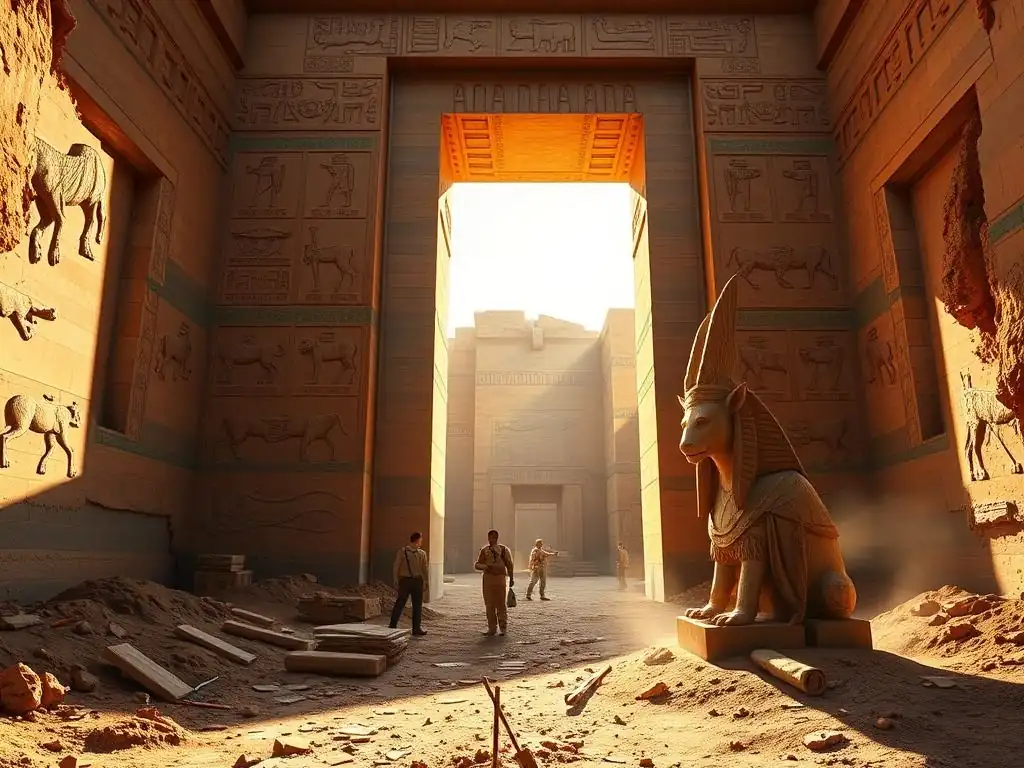
Welcome to ArchaeologyHub.org, your gateway to unraveling the mysteries of the past.
Delve into the heart of Mesopotamian history with our exploration of Babylon, a city steeped in legend and now revealed through meticulous archaeological work. Ever wondered how archaeologists pieced together the story of this ancient metropolis? This article unearths the history of Babylon excavation techniques, tracing the evolution of methods used to uncover the secrets buried beneath its sands. Discover how these techniques shaped our understanding of this iconic site and its place in the grand narrative of human civilization. Prepare to embark on a journey of discovery!
- Unveiling Babylon: An Archaeological Introduction
- The Dawn of Babylon Excavation Techniques: Early Explorations and Discoveries
-
Key Archaeological Discoveries at Babylon: Reconstructing the Ancient City
- The Ishtar Gate: A Symbol of Babylonian Art and Architecture
- The Processional Way: Unveiling Babylon's Grand Avenue
- Excavating the Ziggurat Etemenanki: The Tower of Babel's Foundation
- The Royal Palaces of Babylon: Evidence of Babylonian Kingship
- Cuneiform Tablets: Insights into Babylonian Law, Literature, and Administration
- Modern Babylon Excavation Techniques: Advancements and Challenges
- The History of Babylon Through Archaeological Interpretation: Shifting Perspectives
- Babylon's Legacy: From Ancient Capital to Modern Archaeological Site
-
Frequently Asked Questions
- How did early archaeological approaches impact our understanding of Babylon?
- What were some of the key excavation techniques employed at Babylon, and how did they evolve?
- How has the history of Babylon been reconstructed through archaeological findings?
- What types of artifacts have been discovered at Babylon, and what do they tell us about daily life?
- How does modern archaeological research build on previous work at Babylon, and what are some current research focuses?
- Final Reflection: Unearthing Echoes of the Past
- Unearth Your Inner Archaeologist!
Unveiling Babylon: An Archaeological Introduction
Tracing Babylon's Significance in Mesopotamian History
Babylon, strategically located on the Euphrates River in ancient Mesopotamia, rose to become one of the most influential cities in the ancient world. Its historical trajectory spans millennia, marked by periods of immense power and profound cultural output. During the Old Babylonian period, notably under King Hammurabi (c. 1792-1750 BCE), Babylon established itself as a regional hegemon, renowned for its legal code and advancements in mathematics and astronomy. This early prominence laid the groundwork for its later resurgence.
The zenith of Babylon's power was achieved during the Neo-Babylonian Empire (626-539 BCE), particularly under Nebuchadnezzar II (605-562 BCE). At this time, Babylon was arguably the largest city on Earth, with an estimated population ranging from 100,000 to 200,000 inhabitants within its extensive walls. It served as a vital administrative, religious, and economic hub, controlling vast territories and fostering an environment of monumental building projects that solidified its reputation as a marvel of the ancient world. Its enduring legacy is a testament to its pivotal role in shaping Mesopotamian civilization and influencing subsequent cultures.
From Literary Accounts to Archaeological Evidence: The Evolution of Babylon
For centuries, the primary understanding of Babylon stemmed from literary sources, often imbued with a sense of myth and wonder. Biblical narratives, such as the story of the Tower of Babel (Genesis 11) and the Hanging Gardens, painted a picture of a magnificent yet often morally ambiguous city.
Classical Greek historians like Herodotus, in his Histories, provided descriptions of its immense walls and grand structures, though these accounts were often based on second-hand information and mixed with legend. Cuneiform tablets, unearthed from various Mesopotamian sites, offered more direct textual insights, but the physical reality of the city remained largely speculative.
The advent of systematic archaeology in the late 19th and early 20th centuries fundamentally transformed this perception. The application of scientific Babylon excavation techniques began to peel back layers of earth, revealing the tangible remains of the legendary city. This shift from literary accounts to concrete archaeological evidence allowed scholars to verify, refute, or contextualize ancient narratives, providing a much more accurate and nuanced understanding of Babylon's urban planning, architecture, daily life, and historical events. The transition from myth to excavated reality showcased the power of archaeological inquiry in reconstructing the past.
The Dawn of Babylon Excavation Techniques: Early Explorations and Discoveries
19th-Century Pioneers: Initial Excavations at the Babylon Site
The earliest European engagements with the ruins of Babylon in the 19th century were characterized by exploratory ventures rather than systematic archaeological endeavors. Figures like Claudius James Rich, a British resident in Baghdad, visited the site in 1811 and 1817, producing the first relatively accurate maps and descriptions of the prominent mounds.
His observations, though limited to surface features and small soundings, were crucial in identifying the vast extent of the ancient city. Later in the century, Austen Henry Layard, renowned for his work at Nimrud and Nineveh, also made brief visits to Babylon in the mid-1800s, confirming its identity but not conducting extensive excavations.
These early explorations, while significant for their initial identification and mapping, largely lacked the systematic methodology that would define later archaeology. Methods typically involved superficial trenching or the removal of visible artifacts for collection, often without detailed stratigraphic recording. The focus was primarily on acquiring impressive objects for European museums, reflecting the prevailing "treasure hunting" ethos of the time. Despite these limitations, these pioneers laid the groundwork, drawing scholarly attention to the immense potential hidden beneath the mounds of ancient Babylon.
Robert Koldewey and the German Oriental Society: A New Era of Babylon Excavation
A pivotal moment in the history of Babylon excavation techniques arrived with the extensive and systematic work undertaken by Robert Koldewey for the German Oriental Society (Deutsche Orient-Gesellschaft). Beginning in 1899, Koldewey's team embarked on an ambitious, nearly two-decade-long excavation project, continuing until the outbreak of World War I in 1917. This marked a significant departure from previous efforts, as it was the first truly scientific, long-term archaeological investigation at the site, employing a much more rigorous methodology for its time.
Koldewey's approach emphasized large-scale, methodical clearing of substantial areas, rather than merely digging for individual artifacts. He meticulously mapped the city's layout, paying close attention to architectural remains, street plans, and the overall urban fabric. His team systematically dug through layers of accumulation, carefully documenting the stratigraphy to understand the city's various construction phases and periods of occupation. This comprehensive strategy allowed for the reconstruction of Neo-Babylonian Babylon on an unprecedented scale, revealing its grandeur and complexity.
Documenting and Interpreting: Early Methodologies in Babylon Archaeology
Robert Koldewey's expedition at Babylon established a new standard for archaeological documentation in the early 20th century. His team diligently produced detailed plans, cross-sections, and elevations of architectural structures, often at a scale of 1:100 or 1:50, which were then compiled into comprehensive site maps. Photographs were taken extensively to record the progress of the digs and the in situ appearance of discoveries, a practice that was still relatively nascent in archaeological fieldwork. Field notes were meticulously kept, detailing the context of finds, soil changes, and structural relationships.
These early methodologies, though lacking the technological sophistication of modern Babylon excavation techniques, were revolutionary for their time. They prioritized understanding the architectural context of artifacts and the chronological sequence of the city's development. Interpreting the complex stratigraphy of a deeply layered site like Babylon, with its mudbrick architecture that often disintegrated into indistinguishable earth, presented significant challenges. However, Koldewey's commitment to systematic recording and his focus on revealing the city's monumental structures provided an invaluable foundation for all subsequent studies of ancient Babylon.
Key Archaeological Discoveries at Babylon: Reconstructing the Ancient City
The Ishtar Gate: A Symbol of Babylonian Art and Architecture
One of the most spectacular discoveries during the Babylon excavation was the Ishtar Gate, unearthed by Robert Koldewey's team between 1902 and 1914. This monumental gateway, dating to the reign of Nebuchadnezzar II (c. 605-562 BCE), served as the principal ceremonial entrance to the inner city of Babylon. It was constructed from glazed bricks, predominantly blue, symbolizing lapis lazuli, and adorned with alternating rows of over 575 bas-relief figures of mušḫuššu (mythical dragons) and aurochs (wild bulls), sacred to the gods Marduk and Adad, respectively.
The gate's impressive scale, originally standing approximately 14 meters high with twin towers rising even higher, showcased the peak of Neo-Babylonian artistic and architectural prowess. Its vibrant colors and intricate animal representations were designed to awe visitors and assert the power and divinity of the Babylonian king. Although much of the original gate remains in situ, a magnificent reconstruction of the main facade stands in the Pergamon Museum in Berlin, meticulously reassembled from thousands of excavated glazed bricks, allowing a global audience to appreciate this iconic symbol of ancient Babylon.
The Processional Way: Unveiling Babylon's Grand Avenue
Leading directly from the Ishtar Gate, the Processional Way was a grand ceremonial avenue that stretched approximately 250 meters through the city to the main temple complex of Marduk, the Esagila. Excavated extensively by Koldewey's team, this sacred thoroughfare was paved with large limestone slabs and red breccia, and its high walls were decorated with over 120 relief figures of striding lions, symbolizing the goddess Ishtar, patron of war and love. These lions, also rendered in glazed bricks, provided a stunning visual spectacle for those traversing the path.
The Processional Way was not merely a thoroughfare but a central element in Babylonian religious life, particularly during the Akitu (New Year) festival. During this annual celebration, cultic statues of the gods, led by Marduk, were paraded along this route, reenacting sacred myths and reaffirming the king's divine mandate. The excavation of this grand avenue, with its intact paving and distinctive lion reliefs, provided crucial insights into the urban planning, religious practices, and public rituals of Neo-Babylonian Babylon, offering a vivid glimpse into the heart of the ancient city.
Excavating the Ziggurat Etemenanki: The Tower of Babel's Foundation
Among the most anticipated discoveries at Babylon was the ziggurat Etemenanki, widely identified as the inspiration for the biblical Tower of Babel. Robert Koldewey's excavations uncovered the massive foundations of this towering structure, a square base measuring approximately 91 meters (300 feet) on each side. Although the ziggurat itself had largely disintegrated due to its mudbrick construction and subsequent erosion, the archaeological evidence confirmed its immense scale and central location within the city's sacred precinct, near the Esagila temple.
The excavation of Etemenanki presented unique challenges due to its extensive erosion and the sheer volume of debris. Koldewey's team meticulously documented the remaining mudbrick core and the baked brick casing, which provided clues to its original seven-tiered structure. Based on the archaeological findings and cuneiform texts, scholars estimate that the ziggurat originally reached a height of about 91 meters, mirroring its base dimensions. While the "Tower of Babel" described in the Bible was a literary construct, the archaeological reality of Etemenanki reveals a monumental structure that undoubtedly inspired tales of human ambition reaching towards the heavens.
The Royal Palaces of Babylon: Evidence of Babylonian Kingship
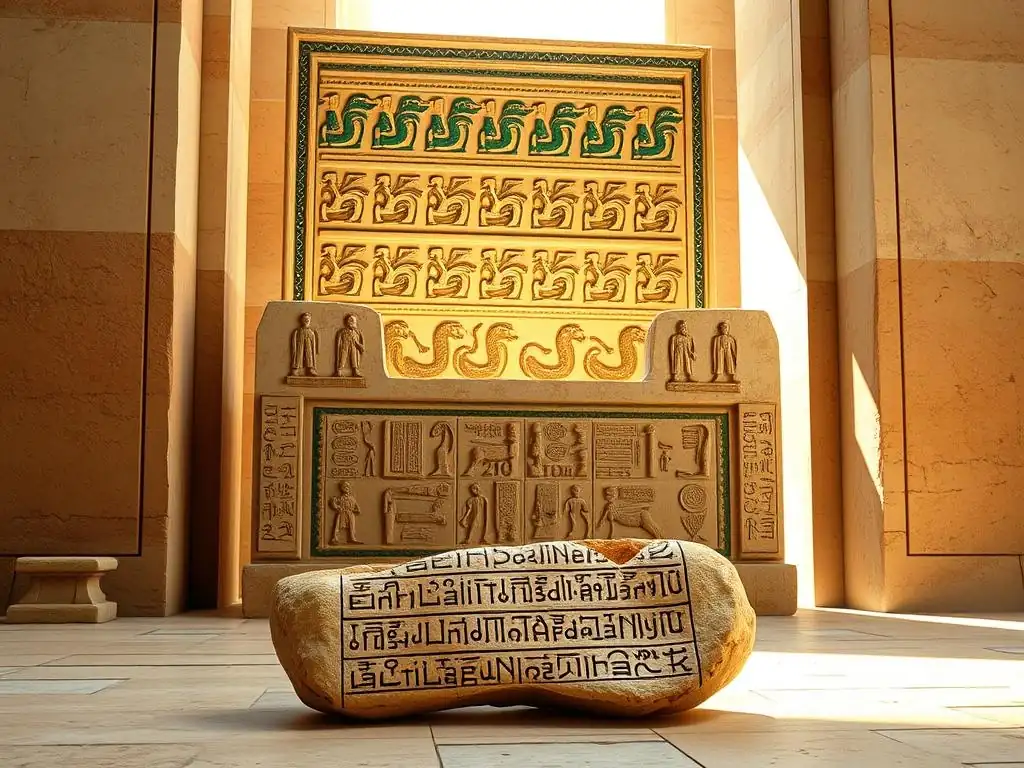
The Babylon excavation also brought to light the extensive royal palaces, particularly the Southern Palace of Nebuchadnezzar II, located north of the Processional Way. This vast complex encompassed multiple courtyards, throne rooms, and hundreds of smaller rooms, suggesting its function as both a royal residence and a major administrative center. Archaeologists identified the remains of a unique vaulted structure within the palace, which Koldewey famously interpreted as the substructure of the legendary Hanging Gardens, though this association remains a subject of academic debate due to lack of definitive textual or archaeological proof.
Further excavations revealed other palace structures, including the Summer Palace located outside the inner city walls. These discoveries provided invaluable insights into the opulence, architectural sophistication, and administrative complexity of the Neo-Babylonian monarchy. The sheer scale of these palaces, constructed with millions of mudbricks and thousands of baked bricks, underscores the immense resources and centralized power wielded by kings like Nebuchadnezzar II. They serve as tangible evidence of the grandeur and daily life of Babylonian kingship.
Cuneiform Tablets: Insights into Babylonian Law, Literature, and Administration
While monumental architecture dominated the landscape of the Babylon excavation, the discovery of thousands of cuneiform tablets provided an equally crucial window into the ancient city. These clay tablets, inscribed with wedge-shaped script, were unearthed from various contexts, including palace archives, private houses, and temple libraries. They encompass a vast range of subjects, from mundane administrative records, economic transactions, and legal documents to sophisticated literary compositions, religious rituals, astronomical observations, and omens.
The tablets offer unparalleled direct evidence of Babylonian society, complementing the physical remains of the city. For instance, administrative texts detail the provisioning of the royal court, the management of temple estates, and the organization of labor, including rations for foreign captives. Literary texts, such as the Epic of Gilgamesh (though earlier versions exist, Neo-Babylonian copies were found), provide insights into their mythology and worldview. These cuneiform archives, alongside the archaeological findings, are fundamental to reconstructing the intricate fabric of Babylonian law, literature, economy, and intellectual life, making them cornerstones of the history of Babylon excavation techniques.
Modern Babylon Excavation Techniques: Advancements and Challenges
Stratigraphic Analysis and Dating Methods in Babylonian Archaeology
Modern Babylon excavation techniques have significantly refined the principles of stratigraphic analysis first applied by pioneers like Koldewey. Contemporary archaeologists meticulously record the sequence of soil layers (strata) and their contents, understanding that deeper layers generally represent older periods. This systematic approach allows for the establishment of precise relative chronologies for the site's various phases of occupation, construction, and destruction, providing a clearer timeline of Babylon's long and complex history.
In addition to relative dating, absolute dating methods are increasingly employed to provide specific calendar dates. While radiocarbon dating (Carbon-14) is less applicable to the largely inorganic mudbrick architecture of Babylon, it can be used on organic materials like charcoal or seeds found in specific contexts. Typological analysis of pottery and other artifacts, along with comparisons to well-dated sequences from other Mesopotamian sites, further refines the chronology. These advanced methods allow archaeologists to pinpoint specific events, such as the fall of Babylon in 539 BCE, with greater accuracy and to reassess traditional historical timelines based on new archaeological data.
Digital Archaeology and 3D Modeling: Reconstructing Babylon Virtually
The application of digital technologies represents a major leap forward in modern Babylon excavation techniques. Geographic Information Systems (GIS) are now routinely used for comprehensive mapping and spatial analysis of the site, integrating data from past excavations with new surveys. Remote sensing techniques, including satellite imagery and ground-penetrating radar (GPR), allow archaeologists to identify buried structures and features without invasive digging, providing a non-destructive means to explore the vastness of the site.
Perhaps most visually impactful is the use of 3D modeling and virtual reality. Based on detailed archaeological plans and architectural reconstructions, sophisticated 3D models of ancient Babylon are created, allowing researchers and the public to virtually explore the city as it once stood. This technology not only aids in the interpretation and visualization of complex architectural remains but also serves as an invaluable tool for public outreach, enabling a wider audience to experience and understand the grandeur of Babylon's past in an immersive and engaging way.
Preserving and Conserving Babylonian Artifacts: Challenges of the Mesopotamian Environment
The arid Mesopotamian environment, while contributing to the preservation of some artifacts like cuneiform tablets, poses significant challenges for the long-term conservation of archaeological remains at Babylon. The primary building material, mudbrick, is highly susceptible to erosion from wind and rain, as well as degradation from salt efflorescence and rising groundwater levels, which can dissolve the bricks and destabilize structures. The vibrant glazed bricks of the Ishtar Gate, once exposed, are also vulnerable to weathering and chemical reactions.
Conservation efforts at Babylon are ongoing, involving both the Iraqi State Board of Antiquities and Heritage and international teams. Strategies include the stabilization of existing walls, the construction of protective shelters, and the implementation of drainage systems to manage groundwater. For artifacts, specialized conservation laboratories are crucial for cleaning, desalting, and stabilizing fragile materials like tablets and pottery fragments. These efforts are vital to ensure that the rich archaeological heritage unearthed by Babylon excavation techniques history is preserved for future generations, battling both natural decay and past human impacts like military occupation.
Ethical Considerations in Excavating and Presenting Babylon's Past
Modern archaeology, including the continued work at Babylon, operates under stringent ethical guidelines that were largely absent during earlier excavations. One significant consideration revolves around the ownership and display of cultural heritage, particularly artifacts removed from their original contexts, such as the Ishtar Gate in Berlin. Debates surrounding repatriation and the right of origin nations to their heritage are central to contemporary discussions, emphasizing the importance of international cooperation and equitable partnerships.
Furthermore, the presentation of Babylon's past must be sensitive to local communities and avoid perpetuating colonial narratives. This involves training and empowering local Iraqi archaeologists, ensuring that research benefits the host country, and developing sustainable management plans that balance preservation with responsible tourism. The recent inscription of Babylon as a UNESCO World Heritage Site in 2019 underscores the global recognition of its significance and the collective responsibility to manage and present this invaluable site ethically, ensuring its integrity and accessibility for all.
The History of Babylon Through Archaeological Interpretation: Shifting Perspectives
Reassessing Babylonian Chronology: New Insights from Excavation Data
The extensive history of Babylon excavation techniques has profoundly impacted our understanding of Babylonian chronology, often leading to reassessments of established timelines. Early historical reconstructions relied heavily on king lists and limited textual sources, which sometimes presented gaps or ambiguities. However, the systematic stratigraphic analysis of the archaeological layers at Babylon, combined with the typological dating of pottery and other artifacts, has provided a more granular and empirically grounded chronological framework.
For example, detailed studies of the destruction layers and rebuilding phases within the city's various sectors have helped to clarify the sequence of events during periods of political upheaval, such as the turbulent centuries following the Kassite dynasty. While absolute dating methods remain challenging for some periods, the wealth of relative chronological data derived from the archaeological record has allowed scholars to refine the dating of key architectural phases, correlate them with specific rulers, and even shed new light on the "Dark Ages" in Mesopotamian history, offering a more precise and nuanced understanding of Babylon's long lifespan.
Understanding Babylonian Society: Insights from Domestic Archaeology
While monumental structures like the Ishtar Gate and Etemenanki dominate the public imagination, the Babylon excavation has also yielded crucial insights into the daily lives of ordinary Babylonians through domestic archaeology. The uncovering of residential quarters, particularly in areas like the Merkes, has revealed typical house layouts, street patterns, and the distribution of various crafts and trades within the city. These excavations have shown that houses were often built around central courtyards, reflecting a common Mesopotamian architectural tradition.
Artifacts found within these domestic contexts—including pottery, tools, weights, seals, and even fragments of textiles—provide tangible evidence of economic activities, household organization, and social stratification. For instance, the presence of specific types of kilns or workshops indicates areas of specialized production, such as metallurgy or pottery. By analyzing these everyday objects and the spatial organization of domestic life, archaeologists have moved beyond the narrative of kings and temples to reconstruct the vibrant social fabric, economic practices, and living conditions of the diverse population that inhabited ancient Babylon.
Babylon's Religious Practices: Evidence from Temples and Ritual Spaces
Archaeological investigations at Babylon have provided extensive evidence for the city's complex religious practices, supplementing and often confirming information from cuneiform texts. The excavation of the colossal Esagila, the temple dedicated to Marduk, the patron god of Babylon, revealed its massive foundations and intricate layout, including numerous shrines and courtyards. Smaller temples dedicated to other deities, such as Ninmah or Ishtar, were also unearthed, offering a broader picture of the Babylonian pantheon and cultic activities.
Beyond the major temple complexes, the discovery of altars, votive figurines, cultic vessels, and other ritual paraphernalia within both public and private contexts sheds light on the daily religious life of Babylonians. The Processional Way, with its specific iconography, directly illustrates the grand public rituals, such as the Akitu festival. Combined with the vast corpus of cuneiform tablets detailing hymns, prayers, omens, and ritual instructions, the archaeological evidence from these religious spaces provides a comprehensive understanding of Babylon's rich spiritual landscape and the central role of its gods in civic life.
The Role of Babylon in Mesopotamian Trade and Economy: Archaeological Evidence
The archaeological record from Babylon provides compelling evidence of its pivotal role in the extensive trade networks and sophisticated economy of ancient Mesopotamia. Excavations have uncovered a wide array of imported materials, indicating long-distance connections. For instance, lapis lazuli, originating from Afghanistan, and carnelian, likely from the Indus Valley, have been found in various artifacts, demonstrating Babylon's reach and its participation in interregional exchange. Timber, a scarce resource in Mesopotamia, was imported from the Levant, likely through the city's strategic position on the Euphrates.
The city's urban layout itself supports its economic importance, with evidence of a probable harbor area along the Euphrates and a network of canals that facilitated both irrigation and transportation of goods. Furthermore, the vast number of cuneiform tablets related to administrative and economic transactions—including contracts, receipts, loans, and records of tribute—directly illustrate the complex financial systems, agricultural production, and mercantile activities that underpinned Babylon's immense wealth and power. These archaeological and textual findings collectively paint a picture of Babylon as a bustling economic powerhouse of the ancient Near East.
Babylon's Legacy: From Ancient Capital to Modern Archaeological Site
The Impact of Excavations on Our Understanding of Babylonian Civilization
The long and intricate history of Babylon excavation techniques has fundamentally reshaped our understanding of Babylonian civilization. Prior to systematic archaeological work, Babylon existed largely as a legendary city, known primarily through biblical narratives and classical accounts. The tireless efforts of archaeologists, from Koldewey's pioneering work to modern scientific investigations, have transformed this mythical perception into a tangible, historically verifiable reality.
Through the meticulous uncovering of monumental architecture like the Ishtar Gate, the Processional Way, and the foundations of Etemenanki, as well as the excavation of domestic quarters and the discovery of thousands of cuneiform tablets, scholars have been able to reconstruct the city's urban planning, its social structure, economic systems, religious practices, and political history with unprecedented detail. This archaeological evidence has provided concrete proof of Babylon's immense scale, its technological sophistication, and its pivotal role as a cultural and political center in the ancient Near East, solidifying its place in human history far beyond its legendary status.
Babylon as a UNESCO World Heritage Site: Balancing Preservation and Tourism
In 2019, Babylon was officially inscribed as a UNESCO World Heritage Site, recognizing its outstanding universal value. This designation brings heightened international attention and increased responsibility for its long-term preservation. However, it also presents the challenge of balancing conservation needs with the potential for increased tourism. While tourism can generate revenue for site maintenance and local communities, uncontrolled visitor access can lead to degradation of fragile archaeological remains, particularly the mudbrick structures that constitute much of the site.
The Iraqi government, in collaboration with international heritage organizations, is actively working on developing sustainable tourism management plans. These plans aim to protect the integrity of the archaeological site from environmental factors and human impact, including damage from previous military occupation, while also enhancing visitor facilities and interpretation. The goal is to ensure that Babylon remains accessible for educational and cultural purposes without compromising its archaeological authenticity, thus safeguarding this irreplaceable heritage for future generations.
Future Directions in Babylon Archaeology: Research and Conservation Priorities
Looking ahead, future directions in Babylon archaeology will likely focus on a combination of advanced research methodologies and critical conservation efforts. While much of the Neo-Babylonian city has been extensively explored, there remains significant potential for non-invasive surveys using technologies like ground-penetrating radar to identify buried features in unexplored areas, such as the outer city walls or earlier occupational layers. Targeted excavations, guided by these surveys, could shed light on aspects of Babylon's earlier periods or its residential and industrial zones.
Furthermore, the application of cutting-edge scientific techniques, such as archaeometric analysis of materials, could provide new insights into ancient Babylonian technology, trade routes, and environmental conditions. Alongside research, long-term conservation remains a paramount priority. This includes continued efforts to stabilize mudbrick structures, manage groundwater, and protect artifacts from decay. Capacity building for Iraqi heritage professionals and fostering international collaborations are crucial to ensure the sustainable management and ongoing exploration of Babylon, allowing this ancient capital to continue revealing its secrets.
Frequently Asked Questions
How did early archaeological approaches impact our understanding of Babylon?
Early approaches often focused on finding spectacular artifacts and confirming Biblical accounts, sometimes neglecting the broader social and economic context. This led to a biased and incomplete understanding of Babylonian society.
What were some of the key excavation techniques employed at Babylon, and how did they evolve?
Early excavations relied on large-scale trenching and were less focused on precise stratigraphic recording. Later, more refined techniques like Wheeler box-grid method were implemented to improve accuracy.
How has the history of Babylon been reconstructed through archaeological findings?
Archaeology has revealed Babylon's rise as a major political and cultural center, its periods of domination and decline, and its contributions to law, mathematics, and astronomy.
What types of artifacts have been discovered at Babylon, and what do they tell us about daily life?
Discoveries include cuneiform tablets, cylinder seals, and architectural remains. These artifacts provide insights into Babylonian administration, religious beliefs, and everyday activities.
How does modern archaeological research build on previous work at Babylon, and what are some current research focuses?
Modern research utilizes advanced dating techniques, GIS mapping, and artifact analysis. Current focuses include environmental reconstruction, social stratification, and the impact of climate change.
Final Reflection: Unearthing Echoes of the Past
The journey through Babylon, from its mythical status to its tangible reality unearthed through meticulous excavation, underscores the enduring power of archaeology to bridge the gap between legend and history. The techniques employed, evolving through time, have not only revealed the physical remnants of this ancient metropolis but have also illuminated the lives, beliefs, and innovations of its inhabitants, offering invaluable insights into the cradle of civilization and its lasting impact on our world.
The story of Babylon, now brought to life through painstaking archaeological work, serves as a potent reminder of the cyclical nature of civilizations – their rise, their zenith, and their eventual decline. This understanding, gleaned from the very soil of Mesopotamia, compels us to consider our own place in the grand narrative of human history. The past is never dead. It's not even past.
- William Faulkner. This quote resonates deeply when we contemplate Babylon, for its influence, though often subtle, continues to shape our understanding of law, mathematics, and urban planning.
As we stand on the shoulders of those who painstakingly unearthed Babylon's secrets, let us not only marvel at their discoveries but also reflect on the responsibility we bear to preserve and interpret these fragile remnants of the past. Consider how the lessons learned from Babylon – its triumphs and its failures – can inform our present and guide us toward a more sustainable and equitable future. Let the echoes of Babylon inspire you to become a steward of history, ensuring that its stories continue to resonate for generations to come.
Unearth Your Inner Archaeologist!
Thank you for delving into the fascinating world of Babylon with us. We hope you’ve enjoyed uncovering the historical reality behind the myths. Now, it's time to take your newfound knowledge and turn it into action!
Here are a few ways to continue your archaeological adventure:
- Visit your local museum and explore their Mesopotamian artifacts. Immerse yourself in the tangible remnants of this ancient civilization.
- Share this article with friends or family who are also fascinated by ancient history. Spread the archaeological bug!
- Research lesser-known aspects of Babylonian culture, such as their legal system or mathematical advancements. You might be surprised by what you discover.
What specific question about Babylonian history are you most curious to explore further?