
Animal Mummies of Saqqara: Insights into Ancient Egyptian Religious Practices

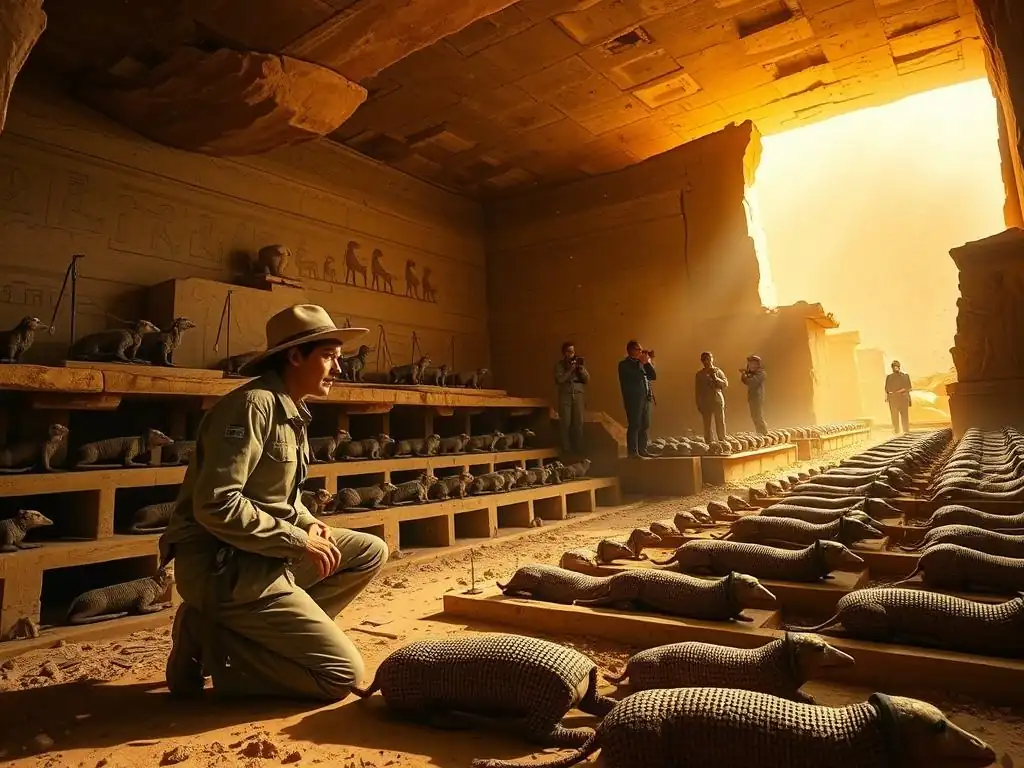
Welcome to ArchaeologyHub.org, your window into the past!
Delve into the fascinating world of ancient civilizations and uncover the secrets buried beneath the sands of time. Ever wondered about the purpose behind animal mummies in Ancient Egypt? Our featured article, "Animal Mummies of Saqqara: Insights into Ancient Egyptian Religious Practices," explores this intriguing aspect of their culture. Unearth the significance of these rituals and the beliefs they reveal about life, death, and the divine. Ready to explore?
- Introduction: Unveiling the Secrets of Animal Mummification at Saqqara
- Saqqara: A Necropolis of Gods and Animals
- The Practice of Animal Mummification: Rituals and Techniques
- Types of Animal Mummies Found at Saqqara
- The Purpose and Meaning Behind Animal Offerings
- Discoveries and Archaeological Findings at Saqqara
- Interpreting the Symbolism: What Animal Mummies Tell Us
- The Conservation and Preservation of Animal Mummies
- Conclusion: Saqqara's Enduring Legacy in Understanding Ancient Egyptian Animal Mummification Rituals
-
Frequently Asked Questions
- What was the primary purpose of animal mummification in Ancient Egypt?
- What types of animals were commonly mummified in Saqqara?
- How did the mummification process for animals differ from that of humans?
- What can animal mummies tell us about Ancient Egyptian religious beliefs?
- Where in Saqqara have the largest collections of animal mummies been found?
- Final Reflection: Echoes of Devotion in Ancient Sands
- Unearth Your Own Ancient Discovery
Introduction: Unveiling the Secrets of Animal Mummification at Saqqara
Saqqara's Unique Contribution to Understanding Ancient Egypt
Saqqara, a monumental necropolis sprawling over an area of approximately 7 kilometers by 1.5 kilometers west of Memphis, offers an unparalleled window into ancient Egyptian civilization. While renowned for its royal burials, including the iconic Step Pyramid of Djoser from the Third Dynasty, its most profound contribution to understanding daily religious life lies in its vast animal cemeteries. These subterranean complexes, filled with millions of mummified animals, reveal a dimension of ancient Egyptian belief systems that complements the insights gained from human burials, showcasing the pervasive nature of animal worship and votive practices.
The sheer volume and diversity of animal mummies at Saqqara, encompassing species from falcons and ibis to cats, dogs, and even bulls, provide unique data on the economic, social, and spiritual fabric of ancient Egypt. Unlike royal tombs that primarily reflect elite customs, the animal mummification complexes shed light on popular religious devotion, the industrial scale of cultic activities, and the intricate relationship between ordinary Egyptians and their myriad deities. These discoveries are fundamental to comprehending the widespread practice of Ancient Egyptian animal mummification rituals.
The Significance of Animal Mummies in Ancient Egyptian Belief Systems
Animal mummies held a multifaceted significance within the intricate tapestry of ancient Egyptian beliefs, extending far beyond mere companionship in the afterlife. The Egyptians perceived certain animals as living manifestations or sacred symbols of specific deities, believing that by mummifying these creatures, they could preserve a divine essence or create a direct conduit to the gods. This practice was deeply intertwined with their understanding of the cosmos and the afterlife, serving as a tangible expression of reverence and a means to seek divine favor.
Primarily, the vast majority of animal mummies found at Saqqara served as votive offerings, gifts presented by pilgrims to specific deities in exchange for blessings, protection, or the fulfillment of prayers. This spiritual transaction underscored a profound connection between the human and divine realms, where the mummified animal acted as an intermediary. The practice of Ancient Egyptian animal mummification rituals was thus a cornerstone of popular piety, allowing individuals from all social strata to participate actively in religious life and express their devotion.
Saqqara: A Necropolis of Gods and Animals
Saqqara's Historical Context: From Early Dynastic Tombs to Animal Cults
Saqqara's history as a burial ground stretches back to the dawn of Egyptian civilization, with its earliest tombs dating to the First Dynasty (c. 3100 BCE). It gained immense prominence with the construction of King Djoser's Step Pyramid, the world's first major stone building, during the Third Dynasty. Initially a royal and elite necropolis for the capital city of Memphis, Saqqara gradually evolved into a significant cultic center, particularly during the Late Period (c. 664-332 BCE) and the subsequent Ptolemaic Period (332-30 BCE).
During these later periods, the focus at Saqqara expanded dramatically to include extensive animal cults, transforming vast sections of the necropolis into sprawling catacombs dedicated to sacred animals. The practice of Ancient Egyptian animal mummification rituals reached an industrialized scale, with millions of mummies, primarily ibis and cats, being interred. This shift reflects a profound change in religious emphasis, where popular piety increasingly centered on animal manifestations of deities, leading to the construction of massive subterranean galleries for their sacred burials.
The Geographical Significance of Saqqara for Animal Burials
Saqqara's strategic location on the high desert plateau overlooking the ancient capital of Memphis on the west bank of the Nile made it an ideal site for large-scale necropolises. Its elevated position offered protection from the annual Nile floods, ensuring the preservation of tombs and burial complexes. Furthermore, its proximity to Memphis, a bustling religious and economic hub, provided easy access for pilgrims and priests involved in the burgeoning animal cults.
The vast, arid expanse of the Saqqara plateau offered ample space for the construction of extensive underground catacombs and temples dedicated to animal worship. These subterranean networks, often carved deep into the limestone bedrock, provided stable, protected environments perfect for housing millions of mummified creatures. This geographical advantage facilitated the development of the large-scale Ancient Egyptian animal mummification rituals, allowing for the systematic breeding, mummification, and burial of sacred animals in unprecedented numbers.
The Practice of Animal Mummification: Rituals and Techniques
Why Animals Were Mummified: Exploring Religious Motivations
The primary motivation behind the widespread practice of animal mummification in ancient Egypt was deeply rooted in religious beliefs, mainly serving as votive offerings to deities. Pilgrims would purchase mummified animals, often from temple priests, to present as gifts to specific gods, believing that this act would secure divine favor, facilitate prayers, or even embody a direct connection to the deity. This spiritual transaction was a cornerstone of popular piety, allowing individuals to actively participate in cultic worship.
Beyond votive offerings, some animals were mummified because they were considered living manifestations of specific deities, such as the Apis bull of Memphis, revered as the living embodiment of the god Ptah. These sacred animals received elaborate, high-quality mummification treatments, akin to those afforded to royalty. A smaller, yet significant, number of animals were also mummified as beloved pets, intended to accompany their owners into the afterlife, although this practice was less common than the mass-produced votive mummies that characterized Ancient Egyptian animal mummification rituals.
The Mummification Process: A Step-by-Step Guide for Animals
The mummification process for animals, while sharing some fundamental principles with human mummification, varied significantly in complexity and meticulousness depending on the animal's sacred status and the donor's financial means. Generally, the process involved dehydration of the body, often through the use of natron salt, followed by anointing with resins and oils, and finally, meticulous wrapping in linen bandages.
For the vast majority of votive animals, particularly the millions of ibis and cats, the process was streamlined and mass-produced, reflecting an industrialized approach to Ancient Egyptian animal mummification rituals. These might involve less thorough evisceration or simply drying and wrapping the carcass. In contrast, highly sacred animals like the Apis bulls received an elaborate and costly treatment, mirroring the most sophisticated human mummification techniques, including internal packing and extensive resin application.
Embalming Techniques Used on Animals at Saqqara
The core embalming technique for animals at Saqqara involved dehydration using natron, a naturally occurring salt. For smaller animals like birds and cats, the evisceration process was often minimal or omitted entirely; the carcass might simply be packed in natron or soaked in a natron solution to draw out moisture. This simpler approach allowed for the rapid processing of millions of animals destined for votive offerings.
For larger, more sacred animals, such as the Apis bulls, the embalming techniques were far more sophisticated, closely resembling those used for human pharaohs. This included thorough evisceration, removal of internal organs, packing the body cavity with linen and resin-soaked materials, and prolonged immersion in natron. The quality of resins and oils used also varied, with more expensive and fragrant materials reserved for highly revered creatures, reflecting the profound importance of these specific Ancient Egyptian animal mummification rituals.
Materials and Bandages: Wrapping the Sacred Creatures
Once dehydrated and treated, the animal bodies were meticulously wrapped in layers of linen bandages. These bandages were often made from strips of repurposed textiles, indicating a practical use of available materials, especially for the millions of mass-produced votive mummies. The wrapping process was not merely functional but often highly artistic, with bandages arranged in intricate patterns or geometric designs, particularly for more significant animals.
Some mummified animals, especially larger or more sacred specimens, were further protected by being placed in elaborately decorated coffins made of wood, bronze, or even stone sarcophagi. Small amulets, often representing protective deities or symbols like the scarab, were sometimes included within the wrappings or placed on the body, intended to provide additional magical protection for the sacred creature in its journey to the divine, emphasizing the ritualistic depth of Ancient Egyptian animal mummification rituals.
Variations in Animal Mummification Based on Species
The specific mummification techniques employed varied significantly based on the species of animal, reflecting both their size and their perceived sacred status. Large animals, such as the Apis bulls, underwent a process very similar to human mummification, involving extensive evisceration, prolonged natron treatment, and careful anointing with resins. Their sheer size necessitated a more robust and costly embalming procedure.
In contrast, smaller creatures like birds, rodents, or reptiles often received simpler treatments. Many bird mummies, for instance, show evidence of minimal evisceration, with the body simply dried and tightly wrapped. Some extremely small animals or even portions of animals might have been merely encased in resin or mud before wrapping. These variations highlight the adaptability and economic considerations inherent in the widespread Ancient Egyptian animal mummification rituals.
Types of Animal Mummies Found at Saqqara
Sacred Ibis Mummies: Thoth's Avian Representatives
Among the most numerous animal mummies discovered at Saqqara are those of the sacred ibis, estimated to number in the millions across various sites, including Saqqara and Tuna el-Gebel. These elegant birds were intimately associated with Thoth, the god of wisdom, writing, and the moon. Vast underground catacombs at Saqqara are entirely filled with their mummified remains, often stacked in pottery jars or linen bundles.
The presence of such immense numbers suggests a highly organized breeding and mummification industry. Pilgrims would purchase an ibis mummy as a votive offering to Thoth, believing that by presenting the mummified bird, their prayers would be heard and their requests granted. This widespread practice underscores the profound spiritual connection between the Egyptians, their deities, and the specific animals chosen for Ancient Egyptian animal mummification rituals.
Falcon Mummies: Honoring the Sky God Horus
Numerous falcon mummies have been unearthed at Saqqara, often found in dedicated catacombs or in association with other bird burials. The falcon was a powerful symbol in ancient Egypt, primarily associated with Horus, the sky god, protector of the pharaoh, and avenger of his father Osiris. His iconic image, often depicted as a falcon or a man with a falcon's head, permeated Egyptian art and religion.
Offering a mummified falcon was a direct invocation of Horus's protective powers or a demonstration of devotion to this vital deity. The birds were seen as living embodiments of divine kingship and celestial power, making their mummification a significant act of piety. The reverence for falcons, as evidenced by their mummified remains, highlights their critical role in the complex pantheon and the specific forms of Ancient Egyptian animal mummification rituals.
Cat Mummies: Bastet, the Protector Goddess, and her Feline Forms
The discovery of millions of cat mummies at Saqqara and other sites attests to the immense popularity of the cult of Bastet, the goddess of home, fertility, and protection, often depicted as a lioness or a domestic cat. Dedicated catacombs, particularly at the Bubasteion in Saqqara, reveal the widespread veneration for these felines.
These cat mummies range from elaborately prepared specimens, sometimes housed in miniature wooden or bronze sarcophagi, to simple bundles containing hastily mummified remains. The sheer volume indicates that offering a cat mummy to Bastet was a common and accessible practice for Egyptians seeking her benevolent protection for their families and homes. This reflects the pervasive nature of feline worship and the scale of Ancient Egyptian animal mummification rituals dedicated to Bastet.
Dog and Jackal Mummies: Anubis, Guardian of the Dead, and his Canine Companions
Saqqara has also yielded numerous mummies of dogs and jackals, animals closely linked to the funerary realm and the afterlife. These canines were primarily associated with Anubis, the jackal-headed god of mummification and the underworld, and Wepwawet, the "opener of the ways," who guided the deceased through the afterlife.
The mummification of dogs and jackals served to honor these deities and invoke their protection for the deceased in their perilous journey through the underworld. These animals were perceived as loyal companions and vigilant guardians, making their mummified forms powerful votive offerings to secure safe passage and divine favor. Their presence underscores the rich symbolism inherent in Ancient Egyptian animal mummification rituals and their connection to the eschatological beliefs.
Bull Mummies: Apis, the Sacred Bull of Memphis
Among the most magnificent animal mummies found at Saqqara are those of the Apis bull, considered the living manifestation of Ptah, the creator god of Memphis. Unlike the mass-produced votive offerings, only one Apis bull lived at a time, chosen for specific markings. Upon its death, it received an exceptionally elaborate and costly mummification and burial, unparalleled in its grandeur.
The Serapeum at Saqqara is the monumental underground burial complex dedicated to these sacred bulls. Discovered by Auguste Mariette in the 1850s, it houses colossal sarcophagi, each weighing up to 80 tons, carved from granite or basalt, containing the mummified remains of 64 Apis bulls. This site stands as a testament to the supreme reverence paid to these animals, showcasing the pinnacle of Ancient Egyptian animal mummification rituals.
The Purpose and Meaning Behind Animal Offerings
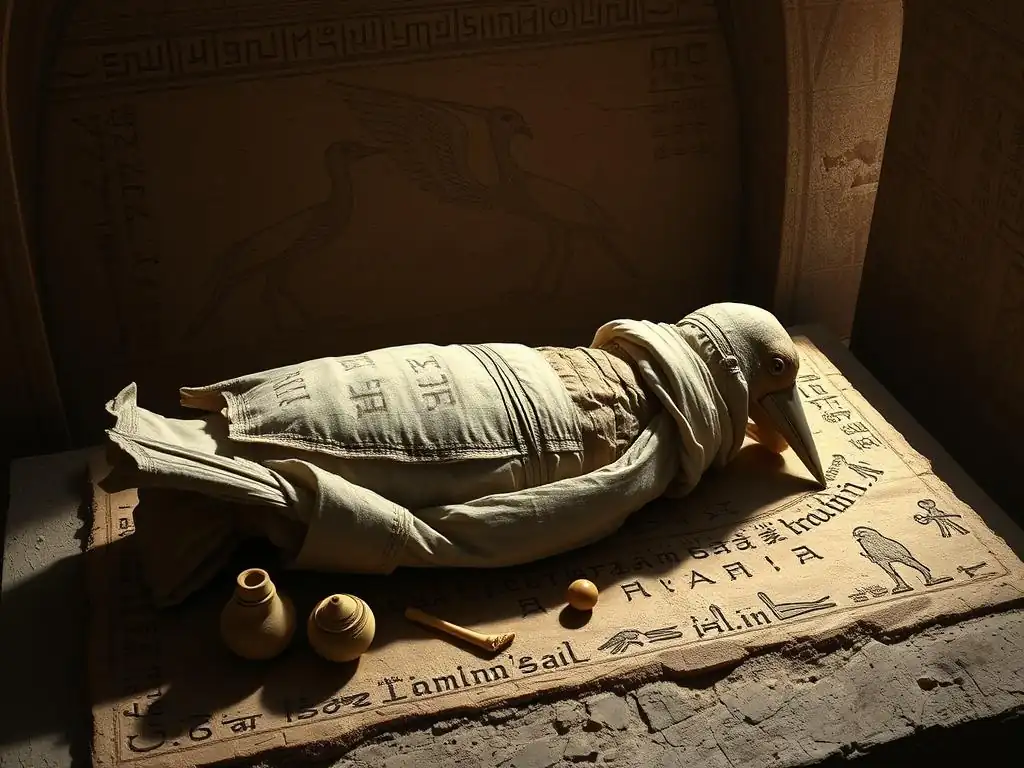
Animal Cults and Their Connection to Specific Deities
The practice of animal mummification at Saqqara was inextricably linked to the flourishing animal cults that permeated ancient Egyptian religion. Each specific animal species was revered as a sacred manifestation or symbol of a particular deity – the ibis for Thoth, the cat for Bastet, the falcon for Horus, and the bull for Ptah. These cults were often centered around temples where the sacred animals were bred, housed, and ultimately mummified.
These animal cults provided a tangible and accessible way for ordinary Egyptians to connect with their gods. By venerating the animal, they were in essence venerating the deity it represented. The symbiotic relationship between the animal, the deity, the priests who cared for them, and the worshippers who made offerings was a fundamental aspect of Egyptian religious life, driving the demand for and execution of Ancient Egyptian animal mummification rituals on a grand scale.
Votive Offerings: Gaining Favor with the Gods
The overwhelming majority of animal mummies discovered at Saqqara were votive offerings, meaning they were gifts presented to deities by pilgrims. These offerings were not merely symbolic gestures but were believed to be active instruments for gaining divine favor, seeking blessings, or fulfilling specific prayers. An individual might offer an ibis mummy to Thoth for wisdom, or a cat mummy to Bastet for protection of their home.
This practice also had significant economic implications. Pilgrims would purchase the mummified animals from temple priests, thereby contributing to the temple's economy and supporting the vast infrastructure required for breeding, mummifying, and burying the animals. This commercial aspect facilitated the widespread adoption of Ancient Egyptian animal mummification rituals, making religious participation accessible across various social strata.
Animal Mummies as a Form of Communication with the Divine
Beyond gaining favor, animal mummies were believed to serve as direct conduits for communication between the human and divine realms. The act of offering a mummified animal was seen as a way to transmit prayers, requests, or expressions of gratitude directly to the associated deity in the afterlife or the divine sphere. This belief provided a profound spiritual connection for the worshipper.
This unique form of communication allowed ordinary Egyptians to engage personally with their complex pantheon of gods, reinforcing their religious beliefs and societal structures. The tangible nature of the mummified offering provided reassurance and a sense of direct interaction with the divine, making the Ancient Egyptian animal mummification rituals not just a ritualistic act but a deeply personal and spiritual experience for millions.
Discoveries and Archaeological Findings at Saqqara
Key Excavations that Revealed Animal Mummy Complexes
The vast animal mummy complexes at Saqqara have been progressively revealed through centuries of exploration and systematic archaeological excavations. Early discoveries, such as Auguste Mariette's groundbreaking unearthing of the Serapeum in the 1850s, brought the scale of animal cults to international attention. Subsequent missions, including those by the Egypt Exploration Society and various Egyptian archaeological teams, have continued to uncover extensive networks of catacombs.
These excavations have not only revealed millions of mummified animals but also provided crucial insights into the organization and scale of the animal cults. The systematic mapping of the subterranean tunnels and the careful documentation of burial practices have illuminated the intricate logistics involved in the mass production of mummies, offering unprecedented details about Ancient Egyptian animal mummification rituals.
The Serapeum of Saqqara: A Focus on Bull Mummies
The Serapeum, located in the northern part of Saqqara, stands as one of the most remarkable archaeological findings related to animal mummification. Discovered by Auguste Mariette, this monumental underground gallery system served as the principal burial place for the sacred Apis bulls. The main gallery stretches for hundreds of meters, with side chambers containing immense sarcophagi.
Within these colossal granite or basalt sarcophagi, each weighing an average of 60 to 80 tons, Mariette found the mummified remains of 64 Apis bulls, interred over many centuries. The sheer scale of the Serapeum and the monumental effort required to carve, transport, and install these sarcophagi underscore the extraordinary reverence and resources dedicated to the Apis cult, representing the apex of Ancient Egyptian animal mummification rituals.
The Catacomb of the Sacred Animals at North Saqqara
In addition to the Serapeum, Saqqara is home to extensive catacombs dedicated to other sacred animals, notably the vast complexes for ibis, baboons, falcons, and cats in the northern sector. These subterranean networks comprise kilometers of intricately carved tunnels, with chambers and niches filled to capacity with mummified creatures, often neatly stacked in pottery jars or linen bundles.
The systematic organization of these burials, often by species, provides invaluable archaeological evidence for the industrial-scale production of animal mummies for votive purposes. These discoveries have allowed researchers to estimate the millions of animals mummified and offered to deities, providing a tangible record of popular religious practices and the economic underpinnings of Ancient Egyptian animal mummification rituals.
Interpreting the Symbolism: What Animal Mummies Tell Us
Insights into Ancient Egyptian Cosmology and Beliefs
The animal mummies of Saqqara offer profound insights into the complex cosmology and religious beliefs of ancient Egyptians. The selection of specific animals for mummification and their association with particular deities reveals the intricate pantheon and the Egyptians' holistic view of the world, where humans, animals, and the divine were deeply interconnected. Animals were not merely creatures but were seen as possessing divine attributes or serving as earthly vessels for gods.
These mummies provide tangible evidence of beliefs in animal sentience and their sacred roles in mediating between the earthly and divine realms. They underscore the concept of an afterlife that was not exclusively human-centric, but one where animals played significant roles as companions, offerings, or even direct manifestations of divine power. This rich symbolism is central to understanding the depth of Ancient Egyptian animal mummification rituals.
The Role of Animals in the Afterlife
While a small number of pets were mummified to accompany their owners into the afterlife, the overwhelming majority of animal mummies at Saqqara served a different purpose in relation to the afterlife: they were votive offerings. These mummified creatures were believed to act as spiritual intermediaries, carrying the donor's prayers, messages, or requests directly to the gods in the divine realm.
This concept highlights the functional role of animals in bridging the gap between mortals and deities. The mummified animal was not merely a symbol but an active participant in the spiritual economy, facilitating communication and ensuring divine favor for the living and the deceased. This distinct role underscores the multifaceted nature of Ancient Egyptian animal mummification rituals in their comprehensive understanding of the afterlife.
The large-scale practice of animal mummification at Saqqara had significant social and economic implications for ancient Egyptian society. It fostered a specialized industry that encompassed the breeding of specific animals in vast quantities, the employment of a dedicated workforce of embalmers, priests, and artisans, and a thriving trade in mummified offerings. This industry generated substantial wealth for temples and supported a complex network of related services.
Socially, the accessibility of animal mummies as votive offerings allowed individuals from all social strata, from commoners to elite officials, to actively participate in religious life and demonstrate their piety. This widespread engagement fostered a shared cultural and religious identity. The economic infrastructure and social participation demonstrate that Ancient Egyptian animal mummification rituals were not just religious acts but deeply integrated societal practices.
The Conservation and Preservation of Animal Mummies
Challenges in Preserving Delicate Organic Remains
The conservation of animal mummies presents unique and formidable challenges due to the delicate and organic nature of their remains. Factors such as fluctuating humidity, temperature extremes, and the presence of pests (insects, rodents) can cause rapid degradation, leading to desiccation, mold growth, or structural collapse. The inherent fragility of ancient linen bandages and the mummified tissues themselves makes them highly susceptible to physical damage during excavation, transport, and storage.
Furthermore, many animal mummies, particularly the mass-produced votive offerings, received less thorough embalming treatments than human mummies, making them even more vulnerable to decomposition over millennia. The sheer volume of discoveries at sites like Saqqara also poses a logistical challenge, requiring extensive resources and specialized expertise for their proper preservation and study.
Modern Techniques for Studying and Protecting Animal Mummies
Modern archaeological science has revolutionized the study and protection of animal mummies through the application of non-invasive techniques. Technologies such as CT scanning, X-rays, and micro-CT have allowed researchers to analyze the internal structures, identify species, assess mummification techniques, and even detect pathologies without damaging the fragile wrappings. DNA analysis is also being employed to trace animal origins and genetic relationships.
For their long-term preservation, conservators utilize climate-controlled environments, specialized display cases that regulate temperature and humidity, and inert gas atmospheres to prevent degradation. Digital documentation, including 3D modeling and high-resolution photography, aids in cataloging and studying these invaluable artifacts, ensuring that the legacy of Ancient Egyptian animal mummification rituals can be explored for generations to come.
Collections Showcasing Saqqara's Animal Mummies in the Egyptian Museum, Cairo and the Louvre
The most comprehensive collection of animal mummies from Saqqara is housed in the Egyptian Museum in Cairo, where numerous galleries are dedicated to showcasing these fascinating artifacts. Visitors can observe a wide array of species, from intricately wrapped falcons and cats to the colossal sarcophagi that once held sacred Apis bulls, offering an unparalleled glimpse into ancient Egyptian religious practices.
Beyond Egypt, significant collections of Saqqara's animal mummies can be found in prominent international museums. The Louvre Museum in Paris, for instance, exhibits notable examples of mummified animals, providing global access to these unique historical insights. These collections serve as vital resources for ongoing research and public education, highlighting the enduring significance of Ancient Egyptian animal mummification rituals.
Conclusion: Saqqara's Enduring Legacy in Understanding Ancient Egyptian Animal Mummification Rituals
The Ongoing Importance of Saqqara for Archaeological Research
Saqqara continues to be an exceptionally active and fruitful archaeological site, constantly yielding new discoveries that profoundly refine our understanding of ancient Egyptian civilization. Its vast necropolis, particularly the extensive animal mummy complexes, remains a primary source for deciphering the nuances of popular religious practices, the mechanics of cultic worship, and the intricate relationship between humans, animals, and the divine. Each new finding contributes to a more complete picture of daily life and spiritual beliefs.
The sheer scale of animal mummification at Saqqara underscores its pivotal role as a center for animal cults, far beyond its significance as a royal burial ground. Ongoing excavations and interdisciplinary studies involving bioarchaeology, radiography, and genetic analysis continue to uncover previously unknown aspects of these practices, solidifying Saqqara's status as an indispensable site for future research into Ancient Egyptian animal mummification rituals.
Future Directions in the Study of Animal Mummies from Saqqara.
The study of animal mummies from Saqqara is poised for exciting advancements with the application of cutting-edge scientific techniques. Future research will likely focus on more extensive, non-invasive analyses such as advanced CT scanning and even more precise DNA sequencing to identify species with greater accuracy, trace their geographic origins, and understand ancient breeding programs. Comparative studies across different animal cult sites will also provide a broader understanding of regional variations in mummification practices.
Furthermore, detailed analyses of the materials used in the mummification process, including resins and bandages, will offer insights into ancient trade networks and resource management. The integration of archaeological data with scientific findings will continue to unveil new layers of meaning, ensuring that the study of Ancient Egyptian animal mummification rituals from Saqqara will remain a dynamic and illuminating field, contributing significantly to our global understanding of ancient spiritual connections.
Frequently Asked Questions
What was the primary purpose of animal mummification in Ancient Egypt?
The primary purpose wasn't always about pets. It was often about religious offerings to specific deities. Animals were seen as representations of gods, and their mummies were dedicated in temples.
What types of animals were commonly mummified in Saqqara?
A wide range of animals were mummified, including cats (associated with Bastet), dogs, ibises (associated with Thoth), and falcons (associated with Horus). This diversity reflects the variety of deities worshipped at the time.
How did the mummification process for animals differ from that of humans?
While similar principles applied, animal mummification was often less elaborate than human mummification. The complexity varied depending on the animal and the dedication's purpose.
What can animal mummies tell us about Ancient Egyptian religious beliefs?
Animal mummies provide valuable insights into the symbology and worship of various gods. They reveal the importance of animals in the Ancient Egyptian worldview.
Where in Saqqara have the largest collections of animal mummies been found?
Significant quantities of animal mummies have been discovered in the catacombs and sacred animal complexes within the Saqqara necropolis. These sites were specifically dedicated to animal cults.
Final Reflection: Echoes of Devotion in Ancient Sands
The exploration of Ancient Egyptian animal mummification rituals through the lens of Saqqara's discoveries reveals more than just burial practices; it unveils a profound connection between humans, animals, and the divine that resonates even today. The sheer scale and dedication involved in these rituals underscore a deep-seated belief system that shaped ancient Egyptian society, offering invaluable insights into their worldview and spiritual aspirations.
The enduring fascination with these animal mummies speaks volumes about our own search for meaning and connection. The meticulous care taken in preparing these creatures for the afterlife highlights a reverence for life, both human and animal, that we can learn from in our modern world. Animals, as well as humans, were believed to have a soul and could be reborn in the afterlife.
This belief, so central to ancient Egyptian culture, challenges us to reconsider our relationship with the natural world and the spiritual dimensions of existence.
As we reflect on the animal mummies of Saqqara, let us consider the enduring power of belief and the profound impact it can have on shaping civilizations. Take a moment to contemplate the lessons these ancient rituals offer – the importance of reverence, the interconnectedness of life, and the enduring human quest for meaning beyond mortality. Embrace the spirit of inquiry and let the mysteries of the past illuminate your path forward, inspiring a deeper appreciation for the world around you and the beliefs that shape our shared human experience.
Unearth Your Own Ancient Discovery
Thanks for delving into the captivating world of Saqqara's animal mummies! We hope you've gained a deeper appreciation for the rich religious tapestry of ancient Egypt. Now, it's time to take your exploration further:
- Become an armchair archaeologist: Choose one Egyptian deity discussed in the article (like Bastet, Anubis, or Thoth) and research their associated animal and myths in detail. Discover how their symbolism influenced the mummification practices.
- Share this fascinating insight with your friends! Tell one person what you've learned about the Saqqara find.
- Consider donating to a reputable archaeological organization dedicated to the preservation and study of Egyptian antiquities.
What personal connection did you form with any of the sacred animals mentioned, and how might you apply their symbolic traits to your own life?