
Reconsidering the "Seven Wonders": The Artemision in its Historical Context

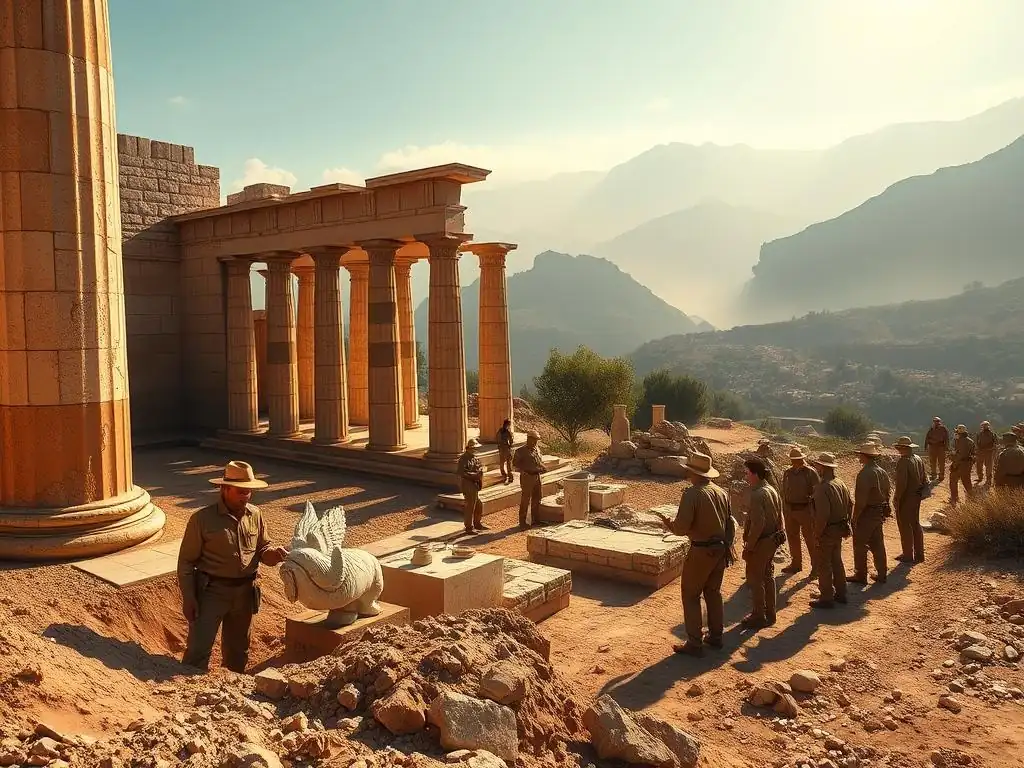
Welcome to ArchaeologyHub.org, your portal to the past. Ever wondered how we piece together the stories of vanished civilizations? Dive into the intricate world of archaeological investigation as we embark on a journey to reconstruct Artemision’s historical context. Discover the secrets held within this ancient wonder and explore the challenges and triumphs of bringing its history to light. Uncover the layers of the past and begin your exploration now!
- Introduction: The Artemision and its Enduring Legacy
- Geographical and Cultural Setting: Ephesus and the Artemision
- Artemision’s Historical Context Reconstruction: A Multi-Layered Approach
- Phases of Construction and Destruction: Tracing the Artemision's Timeline
- Religious and Economic Significance of the Artemision
- The Artemision's Architectural Marvel: Design and Innovation
- Comparing the Artemision to Other Ancient Wonders
- The Artemision's Impact on Ephesian Society and Culture
- Rediscovering the Artemision: Archaeological Excavations and Interpretations
- Challenges in Artemision’s Historical Context Reconstruction
- The Artemision Today: Preservation and Tourism
- Conclusion: The Artemision's Place in History
-
Frequently Asked Questions
- ### What was the Artemision, and why is it considered significant in archaeological terms?
- ### Where was the Artemision located, and how does its geographical location impact its historical context?
- ### What are some of the key challenges archaeologists face when attempting to reconstruct the historical context of the Artemision?
- ### What types of artifacts and archaeological evidence are crucial for understanding the Artemision's history and evolution over time?
- ### How does the Artemision fit within the broader narrative of ancient Greek religion and its relationship with other cultures in the region?
- Final Reflection: Reimagining Ancient Grandeur
- Unearth Your Inner Historian: Explore the Ancient World!
Introduction: The Artemision and its Enduring Legacy
ArchaeologyHub.org: Unveiling the Artemision's Story
ArchaeologyHub.org is dedicated to providing in-depth, accurate information on archaeological discoveries and historical sites worldwide. Through detailed timelines, artifact profiles, and interpretive analyses, we aim to transform complex archaeological subjects into accessible narratives. This article exemplifies our commitment by delving into the rich history of the Artemision, moving beyond its legendary status to explore its profound significance within its ancient setting.
Our objective is to offer a comprehensive understanding of the Artemision, meticulously piecing together its story from fragmented evidence and ancient accounts. This includes examining the various phases of its construction, its societal impact, and the challenges inherent in reconstructing such an ephemeral wonder. We seek to provide readers with an unparalleled Artemision’s historical context reconstruction, highlighting its true place in the ancient world.
The Artemision: A Wonder of the Ancient World
The Temple of Artemis at Ephesus, often referred to as the Artemision, stood as one of the most magnificent structures of the ancient world, earning its place among the Seven Wonders. Its sheer scale and artistic ambition were unparalleled, drawing admiration and pilgrims from across the Mediterranean for centuries. Accounts from ancient writers describe a temple of gleaming white marble, adorned with exquisite sculptures and an awe-inspiring cult statue.
However, its inclusion in the list of "Wonders" often overshadows the intricate historical, religious, and economic roles it played. This article aims to peel back the layers of myth and legend to present a more nuanced understanding of the Artemision. By focusing on its Artemision’s historical context reconstruction, we can appreciate not only its architectural grandeur but also its profound influence on Ephesian society and the broader ancient world.
Geographical and Cultural Setting: Ephesus and the Artemision
Ephesus: A Thriving Metropolis in Asia Minor
Ephesus was one of the most significant and prosperous cities of the ancient world, strategically located on the western coast of Asia Minor (modern-day Turkey), near the mouth of the Cayster River. Its natural harbor and position at the crossroads of major trade routes made it a vital commercial and cultural hub, connecting the Aegean world with the Anatolian hinterland and beyond. During its peak in the Roman period, estimates suggest its population could have reached between 250,000 and 500,000 inhabitants, making it one of the largest cities in the Roman Empire.
Throughout its long history, Ephesus experienced rule under various empires, including the Lydians, Persians, Greeks, and Romans, each leaving an indelible mark on its development. It flourished as a center for philosophy, art, and commerce, becoming the capital of the Roman province of Asia. This vibrant urban environment, characterized by monumental public buildings, intricate infrastructure, and a diverse population, provided the backdrop for the Artemision's rise and enduring influence.
The Temple of Artemis: Location and Significance
The Artemision was situated about 1.5 kilometers (approximately one mile) northeast of the main city center of Ephesus, in a low-lying, marshy plain. This location, though seemingly challenging for construction, was likely chosen due to its association with a sacred spring or an older, pre-existing cult site dedicated to a local Anatolian mother goddess, which was later syncretized with the Greek Artemis. The temple grounds were vast, encompassing not only the main sanctuary but also ancillary buildings and a sacred precinct.
For the Ephesians, the Temple of Artemis was far more than just a place of worship; it was the very heart of their identity, prosperity, and civic pride. It functioned as a major banking institution, a safe haven for refugees and wealth, and a bustling marketplace where trade and pilgrimage intertwined. Its immense wealth, derived from offerings and financial activities, made it an economic powerhouse, intrinsically linked to the city's fortunes and a crucial element in any Artemision’s historical context reconstruction.
Artemision’s Historical Context Reconstruction: A Multi-Layered Approach
Primary Sources: Examining Ancient Accounts of the Artemision
The Artemision’s historical context reconstruction relies heavily on the accounts of ancient writers, who, despite their biases and occasional inaccuracies, provide invaluable glimpses into the temple's appearance, scale, and significance. Pliny the Elder, in his Natural History (Book XXXVI, Chapter 21), offers the most detailed description of the Hellenistic temple, citing its dimensions as 425 feet (approximately 129 meters) long and 225 feet (approximately 69 meters) wide, with 127 columns, each 60 feet (approximately 18 meters) high. He also mentions the architects and sculptors involved.
Other significant ancient authors include Strabo, who describes the temple's vast size and its cultic importance in his Geography, and Vitruvius, who discusses its architectural principles in De Architectura. While these texts provide crucial starting points, their figures and descriptions must be critically evaluated against archaeological findings. For instance, Pliny's dimensions are slightly larger than modern archaeological estimates for the Hellenistic temple's platform, which is closer to 115 meters by 55 meters, highlighting the need for a multi-layered approach to Artemision’s historical context reconstruction.
Archaeological Evidence: Unearthing the Temple's History
The physical remains of the Artemision, though tragically sparse, form the bedrock of its historical context reconstruction. The first significant archaeological breakthrough occurred in 1869 when John Turtle Wood, an English architect, rediscovered the temple's foundations after years of painstaking excavation through meters of alluvial silt and debris, guided by ancient descriptions. His discoveries included parts of the massive platform, column drums, and fragments of the sculptured frieze.
Subsequent and ongoing excavations, particularly those by the Austrian Archaeological Institute (OeAI) since the early 20th century, have systematically unearthed the different building phases of the Artemision. Through meticulous stratigraphy and the analysis of thousands of artifacts, including votive offerings from the Archaic period, archaeologists have been able to establish a more precise chronology for the temple's various iterations, from its earliest cultic origins to its final destruction. This continuous archaeological endeavor is essential for refining and deepening our Artemision’s historical context reconstruction.
Phases of Construction and Destruction: Tracing the Artemision's Timeline
The Archaic Artemision: Origins and Early Development
The earliest evidence of cultic activity at the Artemision site dates back to the 8th or 7th century BCE, suggesting a long history of veneration for a local deity before the construction of monumental temples. The first large-scale temple, known as Archaic Temple I, was likely built around 600 BCE. This structure was made of local limestone and wood, and its remains are deeply buried beneath later layers.
This early temple was destroyed, possibly by a flood, leading to the construction of the second Archaic temple (Archaic Temple II), often attributed to the architects Chersiphron and his son Metagenes, around 560 BCE. This was a truly colossal Ionic dipteral (double peristyle) temple, setting a new standard for Greek architecture.
It was largely constructed of marble and featured an impressive array of sculptured elements. Tragically, this magnificent structure was famously burned down by Herostratus in 356 BCE, on the very night Alexander the Great was born, an event that marks a pivotal moment in the Artemision’s historical context reconstruction.
The Hellenistic Artemision: Peak of Grandeur and Influence
Following the destruction of the Archaic temple, the Ephesians immediately began rebuilding an even grander structure, the Hellenistic Artemision (Temple III), which would become the most celebrated of the "Seven Wonders." Construction commenced shortly after 356 BCE, with contributions from leading architects and sculptors of the era, including Scopas, Praxiteles, and Damophon of Messene. Alexander the Great reportedly offered to finance its completion, an offer the Ephesians politely declined, stating it was inappropriate for one god to build a temple for another.
This Hellenistic temple was the largest and most lavish of all its iterations, measuring approximately 115 meters (377 feet) in length and 55 meters (180 feet) in width for its platform. It featured 127 colossal Ionic columns, each standing about 18 meters (60 feet) high, arranged in a double row. The temple was entirely constructed of gleaming white marble, adorned with intricate friezes and sculptured column bases. Its unparalleled scale and artistic ambition cemented its status as a global marvel, representing the zenith of Artemision’s historical context reconstruction.
Roman Era: Adaptation and Eventual Decline
Under Roman rule, Ephesus thrived as the capital of the province of Asia, and the Artemision continued to play a central role in the city's religious and civic life. While the temple's physical structure remained largely the Hellenistic masterpiece, it adapted to the changing political landscape. The cult of Artemis remained strong, though increasingly integrated into the broader Roman imperial cult. The temple continued to function as a major banking institution and a place of asylum, maintaining its considerable influence.
However, the temple's fortunes began to wane in the later Roman period. In 262 CE, it suffered significant damage during a raid by the Goths, who plundered its treasures and likely set it ablaze.
Although there may have been attempts at restoration, the rise of Christianity in the 4th century CE gradually led to the abandonment of pagan cults. By the early 5th century CE, the Artemision was definitively closed, its marble blocks systematically quarried for other constructions, including churches and public buildings in Ephesus itself, marking its final physical demise and the culmination of its Artemision’s historical context reconstruction.
Religious and Economic Significance of the Artemision
Artemis: The Goddess and Her Cult in Ephesus
The Ephesian Artemis was a unique deity, distinct from the slender, huntress goddess of the Greek pantheon. The cult in Ephesus predated the arrival of the Greeks and was rooted in an ancient Anatolian mother goddess tradition, likely Cybele. The cult statue, often depicted with multiple breasts or egg-like protuberances, symbolized fertility, abundance, and the nurturing power of nature. This syncretic figure, known as Artemis Ephesia, was revered across the Mediterranean and was the focal point of the Artemision.
The temple housed the revered cult statue and served as the epicenter for elaborate cultic practices and annual festivals, such as the Artemisia, which attracted thousands of pilgrims from across the ancient world. The temple employed a vast and influential priesthood, including eunuchs known as Megabyzi and numerous priestesses, who managed the temple's extensive affairs and performed rituals. This complex religious administration underscores the profound spiritual and cultural significance of the Artemision in Ephesus, crucial for a complete Artemision’s historical context reconstruction.
The Artemision as a Center of Trade and Pilgrimage
Beyond its primary religious function, the Artemision was an economic powerhouse and a vital node in the ancient world's commercial network. Its immense wealth, accumulated from offerings, donations from kings and wealthy individuals, and its function as a secure vault, made it one of the largest banks of antiquity. States and private citizens alike deposited their treasures there, trusting in the goddess's protection and the temple's neutrality amidst political upheavals.
The temple's status as a sanctuary also made it a place of asylum, further enhancing its importance. The constant flow of pilgrims, particularly during the Artemisia festivals, transformed the temple precinct into a bustling marketplace. Craftsmen produced and sold countless votive offerings, miniature replicas of the temple, and small statues of Artemis, generating significant revenue for the city and contributing to Ephesus's reputation as a prosperous trading hub. This multifaceted economic role is an indispensable aspect of Artemision’s historical context reconstruction.
The Artemision's Architectural Marvel: Design and Innovation
Dimensions and Materials: Exploring the Temple's Scale
The Hellenistic Artemision was a colossal undertaking, a testament to ancient engineering and architectural ambition. While ancient sources like Pliny the Elder provide figures such as 425 Roman feet (approximately 129 meters) in length and 225 Roman feet (approximately 69 meters) in width, modern archaeological surveys suggest the temple platform measured closer to 115 meters (377 feet) long and 55 meters (180 feet) wide. The temple building itself, a dipteral Ionic structure, was slightly smaller.
The entire structure was built from gleaming white marble, primarily sourced from nearby quarries, which provided a striking visual contrast against the blue Aegean sky. The temple featured 127 colossal Ionic columns, each standing approximately 18 meters (60 feet) high. These columns were arranged in a double peristyle, creating an imposing and spacious colonnade. The sheer volume of marble and the precise craftsmanship required to erect such a monumental edifice highlight the advanced capabilities of ancient Ephesian artisans and are central to Artemision’s historical context reconstruction.
Sculptural Decoration: The Amazonomachy Frieze and Other Notable Features
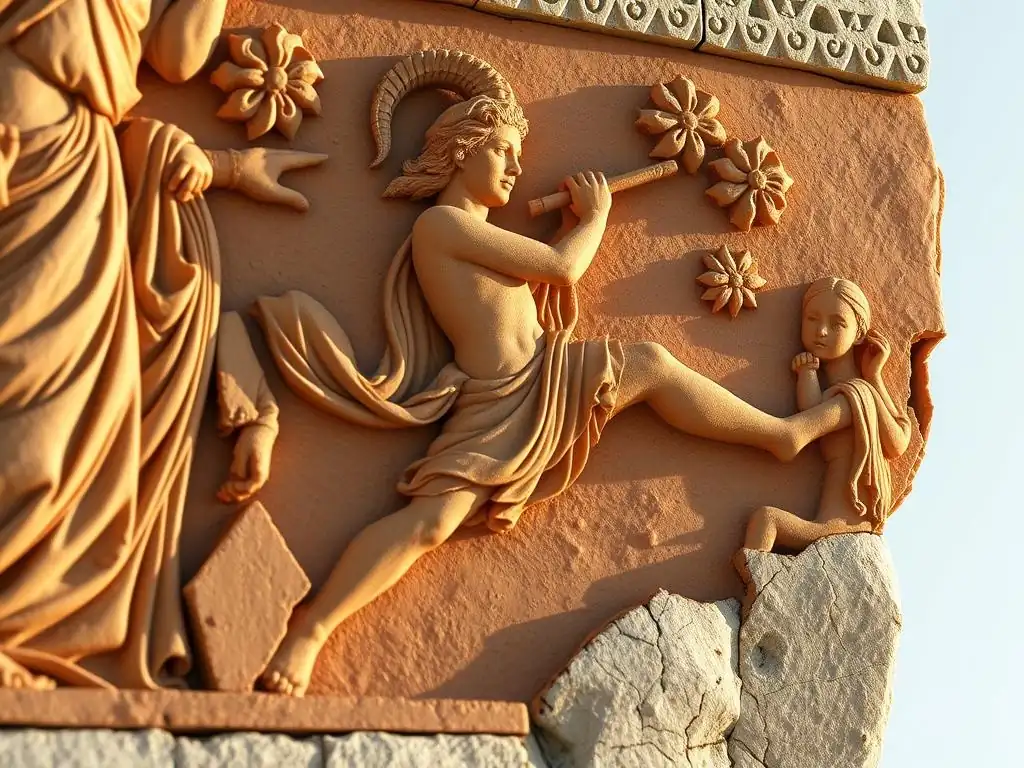
The Artemision was not only impressive in its scale but also in its lavish sculptural decoration, which contributed significantly to its fame. Among its most celebrated features was the Amazonomachy frieze, depicting the mythical battle between Greeks and Amazons. Although only fragments survive, this frieze is believed to have adorned the upper parts of the cella walls or the pteron (the space between the inner and outer rows of columns), providing a dynamic narrative element to the temple's exterior.
Beyond the frieze, the temple's sculptural program included intricate relief carvings on the bases of some of its massive columns, known as columnae caelatae. These sculptured column drums, unique to the Artemision, featured figures in high relief and added another layer of artistic sophistication. While much of the pedimental sculpture is lost, the cult statue of Artemis, likely made of wood and adorned with gold, silver, and precious stones, stood as the temple's spiritual and artistic centerpiece. These decorative elements provided a rich visual language for understanding the Artemision’s historical context reconstruction.
Comparing the Artemision to Other Ancient Wonders
Architectural Similarities and Differences
When comparing the Artemision to other ancient wonders, its architectural distinctiveness becomes apparent. While temples like the Parthenon in Athens (a Doric temple measuring approximately 69.5m x 30.9m) were celebrated for their harmonious proportions and Doric order, the Artemision stood out for its sheer colossal size and its innovative use of the Ionic order. Its dipteral (double peristyle) plan and extraordinary length were unprecedented, making it significantly larger than most contemporary Greek temples.
The use of marble was common among many wonders, such as the Mausoleum at Halicarnassus and the Parthenon. However, the Artemision's unique features, like the sculptured column bases ( columnae caelatae) and its groundbreaking scale, established new benchmarks in monumental architecture. Its design influenced subsequent Hellenistic and Roman temples across Asia Minor, demonstrating its profound impact on architectural trends and serving as a crucial point of reference for Artemision’s historical context reconstruction.
Cultural and Religious Context Comparisons
The cultural and religious context of the Artemision also sets it apart from other wonders. While the Statue of Zeus at Olympia was central to pan-Hellenic athletic games and the worship of the chief Olympian god, the Artemision's cult was deeply rooted in local Anatolian traditions, featuring a syncretized goddess of fertility and abundance. This local character made it a unique pilgrimage site, attracting devotees specifically to Ephesian Artemis rather than a universal Greek deity.
Furthermore, the Artemision's multifaceted role as a temple, bank, marketplace, and asylum distinguished it from wonders like the Great Pyramid of Giza (a tomb), the Lighthouse of Alexandria (a navigational aid), or the Colossus of Rhodes (a symbolic statue). The Artemision was an integral civic institution, deeply interwoven with the daily life, economy, and politics of Ephesus. This comprehensive integration into society highlights a broader societal function that is vital for a complete Artemision’s historical context reconstruction.
The Artemision's Impact on Ephesian Society and Culture
Influence on Art and Architecture
The Artemision exerted a profound influence on the art and architecture of Ephesus and the wider Hellenistic and Roman worlds. Its colossal scale and innovative use of the Ionic order, particularly the sculptured column drums, inspired architects and patrons across Asia Minor. Later temples and public buildings in Ephesus, such as the Library of Celsus and the Theatre, often incorporated elements of monumental design and decorative richness that echoed the grandeur of the Artemision.
Leading sculptors of the Hellenistic period, including Scopas and Praxiteles, contributed to the temple's artistic program, setting new standards for monumental sculpture. The temple's reputation attracted skilled artisans and craftsmen to Ephesus, fostering a vibrant artistic community. The Artemision thus became a beacon of artistic excellence, shaping the visual culture of the region for centuries and leaving an indelible mark that is critical for Artemision’s historical context reconstruction.
Beyond its religious and artistic significance, the Artemision played a crucial social and political role in Ephesian society. Its vast wealth and status as a sacred sanctuary gave it considerable political leverage. The temple treasury often acted as a public bank, providing loans and managing civic funds, making it an indispensable part of Ephesus's economic infrastructure. Its right of asylum also influenced local politics, as individuals seeking refuge could find protection within its sacred boundaries.
The temple was the focal point for major civic festivals and processions, drawing the community together and reinforcing a shared Ephesian identity. The extensive staff, including priests, priestesses, and administrative personnel, formed a significant social group within the city. The Artemision's pervasive influence touched every aspect of Ephesian life, from economic stability to social cohesion, making its societal impact an essential dimension of Artemision’s historical context reconstruction.
Rediscovering the Artemision: Archaeological Excavations and Interpretations
Early Explorations and Discoveries
The rediscovery of the Artemision began in the mid-19th century, driven by a desire to locate the legendary wonder. John Turtle Wood, an English architect sponsored by the British Museum, undertook the challenging task of excavating the site from 1863 to 1874. Following ancient descriptions, particularly Pliny the Elder's account of its location in a marshy area outside the city, Wood meticulously dug through 6 to 7 meters of accumulated silt and debris.
His perseverance paid off when he unearthed the massive marble platform of the Hellenistic temple, along with fragments of its colossal columns, sculptured drums, and portions of the Amazonomachy frieze. These discoveries provided the first tangible evidence of the temple's immense scale and confirmed its location, laying the crucial groundwork for all subsequent archaeological work and providing the initial physical data for Artemision’s historical context reconstruction.
Modern Archaeological Investigations: The Austrian Archaeological Institute's Work
Following Wood's pioneering efforts, systematic archaeological investigations at the Artemision site have been primarily conducted by the Austrian Archaeological Institute (OeAI) since the early 20th century, continuing to the present day. Modern archaeological techniques, including meticulous stratigraphy, advanced surveying, and detailed artifact analysis, have allowed for a far more nuanced understanding of the temple's long history.
The OeAI's work has been instrumental in identifying and differentiating between the various building phases of the Artemision, from the earliest Archaic structures to the Hellenistic and Roman iterations. Their excavations have yielded thousands of votive offerings, including exquisite ivory figurines, gold ornaments, and ceramics dating back to the 8th century BCE, providing invaluable insights into the cult's origins and development. This ongoing research by the OeAI is fundamental to refining and enhancing our Artemision’s historical context reconstruction.
Challenges in Artemision’s Historical Context Reconstruction
Fragmentary Evidence and Interpretative Debates
One of the greatest challenges in the Artemision’s historical context reconstruction is the extremely fragmentary nature of the surviving evidence. Unlike other ancient wonders such as the Pyramids, which largely stand intact, the Artemision was systematically dismantled and plundered for building materials over centuries. Today, only a few scattered marble blocks, remnants of the foundations, and a single reconstructed column (assembled from various fragments) stand on the marshy site.
This scarcity of intact structures leads to significant interpretative debates among archaeologists and art historians. Questions persist regarding the precise dimensions of certain phases, the exact number and arrangement of columns, the detailed appearance of the cult statue, and the original placement of various sculptural elements, such as the famous Amazonomachy frieze. Reconstructing the temple's original glory from such limited remains requires careful analysis, comparative studies, and informed conjecture.
Reconstructing the Temple's Appearance: Anathyrosis and Column Drum Reconstruction
Despite the challenges, archaeologists employ specialized techniques to piece together the Artemision's appearance. One such technique is the study of anathyrosis, a method of stone dressing where only the edges of a block are precisely smoothed to ensure tight-fitting joints, leaving the central portion rough. By examining the anathyrosis on foundation blocks and other surviving elements, researchers can deduce how individual components fit together, helping to reconstruct the temple's overall layout and dimensions.
Another painstaking process involves the reconstruction of the massive marble column drums. Thousands of fragments, some weighing many tons, have been unearthed. Archaeologists meticulously identify, match, and piece together these fragments, often guided by unique chisel marks or profiles, to reconstruct portions of the colossal columns. While these reconstructions are often partial, they provide crucial visual information about the temple's immense scale and decorative richness, making them indispensable to Artemision’s historical context reconstruction.
The Artemision Today: Preservation and Tourism
The Site as a Historical Landmark
Today, the Artemision site in Ephesus presents a stark contrast to its ancient splendor. Visitors to the archaeological park will find primarily a single, re-erected column, assembled from assorted fragments, standing sentinel over the low-lying, often waterlogged foundations of the temple. Surrounding this solitary column are scattered marble blocks and architectural elements, remnants of the once-magnificent structure.
Despite its severely limited physical remains, the Artemision continues to draw visitors from around the world. It stands as a powerful historical landmark, inviting contemplation on the ephemeral nature of human achievement and the relentless march of time. Its significance is not diminished by its ruinous state; rather, it prompts a deeper appreciation for the historical and cultural forces that shaped this unparalleled monument within the broader context of ancient Ephesus.
Limited Remains and Conservation Challenges
The marshy environment of the Artemision site poses significant ongoing conservation challenges. The constant presence of groundwater threatens the stability of the exposed foundations and promotes the degradation of the remaining marble fragments. Conservation efforts focus on managing water levels, protecting the fragile archaeological layers from further erosion, and preventing biological growth that can damage the stone.
The decision to erect the single reconstructed column was a deliberate effort to provide visitors with a tangible sense of the temple's immense scale and to mark its precise location. However, this also presents its own challenges in terms of long-term preservation and maintenance. Balancing the need for conservation with the desire to present the site effectively for education and tourism remains a continuous effort, vital for sustaining the legacy of Artemision’s historical context reconstruction for future generations.
Conclusion: The Artemision's Place in History
Reassessing the Artemision's Wonder
The Artemision was undoubtedly a "wonder" in its architectural grandeur and scale, a testament to ancient engineering and artistic prowess. However, a comprehensive Artemision’s historical context reconstruction reveals that its true marvel extended far beyond its physical dimensions. It was a dynamic, multifaceted institution that served as the spiritual heart of Ephesus, an economic powerhouse, a political sanctuary, and a vibrant cultural hub. Its influence permeated every aspect of Ephesian life for over a millennium.
By delving into its archaeological layers, examining ancient texts, and understanding its profound societal roles, we move beyond a superficial appreciation of its legendary status. The Artemision's enduring wonder lies not merely in its vanished beauty but in its complex narrative – a story of innovation, resilience, destruction, and enduring cultural impact that continues to be unearthed and interpreted by scholars today.
The Enduring Allure of Ephesus and its Temple of Artemis
Ephesus remains one of the most compelling archaeological sites in the world, and the Artemision, despite its limited physical presence, stands as its profound spiritual anchor. The story of its rise, its splendor, and its eventual decline is a microcosm of the ancient world's ambitions and vulnerabilities. Its allure persists because it embodies the human capacity for monumental creation and the powerful interplay between religion, economy, and society.
The continuous pursuit of Artemision’s historical context reconstruction ensures that its legacy remains alive. Each new discovery and every reinterpretation of existing evidence adds another layer to our understanding, allowing us to connect with a lost world of unparalleled grandeur. The Artemision's narrative continues to inspire, reminding us of the enduring power of history and the timeless quest to uncover the stories of our shared past.
Frequently Asked Questions
### What was the Artemision, and why is it considered significant in archaeological terms?
The Artemision was an ancient Greek temple dedicated to the goddess Artemis, located in Ephesus. Its significance lies in its status as one of the Seven Wonders of the Ancient World, showcasing exceptional architectural and artistic achievements.
### Where was the Artemision located, and how does its geographical location impact its historical context?
The Artemision was situated in Ephesus, a prominent city in ancient Ionia (modern-day Turkey). Its location as a major port city facilitated cultural exchange and trade, influencing its artistic style and historical importance.
### What are some of the key challenges archaeologists face when attempting to reconstruct the historical context of the Artemision?
Reconstructing the Artemision's historical context is challenging due to fragmentary remains, reliance on ancient texts that might be biased, and the difficulty in definitively interpreting artistic and architectural styles.
### What types of artifacts and archaeological evidence are crucial for understanding the Artemision's history and evolution over time?
Key artifacts include sculptural fragments, architectural elements, and votive offerings. These items provide insights into the temple's construction phases, religious practices, and artistic influences throughout its history.
### How does the Artemision fit within the broader narrative of ancient Greek religion and its relationship with other cultures in the region?
The Artemision reflects the syncretism of Greek religious beliefs with local Anatolian traditions. Its dedication to Artemis, a goddess with pre-Greek origins, highlights cultural interactions and adaptations within the ancient Mediterranean world.
Final Reflection: Reimagining Ancient Grandeur
The journey through the Artemision's historical context, as we've explored, underscores the enduring power of human ambition and artistic expression. Even in ruins, the temple's story resonates, reminding us that architectural marvels are not merely structures of stone, but powerful reflections of the societies that conceived and built them. The Artemision, in its rise and fall, offers a potent lesson in the cyclical nature of civilizations and the lasting impact of cultural heritage.
This exploration has profoundly influenced my understanding of historical narratives, revealing the importance of contextualizing achievements within their specific social, political, and economic landscapes. It's not enough to admire the grandeur; we must strive to understand the forces that shaped it. As the historian Robin Lane Fox eloquently stated, History is not the past. It is a map of the past, drawn from a particular point of view, to be useful to the modern traveller.
This perspective compels us to continually re-evaluate our understanding of the past, ensuring it remains relevant and insightful.
Now, consider the Artemision's fate and its enduring legacy. How can we, in our own lives, contribute to the preservation and understanding of cultural heritage? Let us strive to be mindful stewards of the past, ensuring that future generations can learn from the triumphs and tribulations of those who came before us. Let the Artemision's story inspire you to seek deeper meaning in the world around you, to appreciate the intricate tapestry of human history, and to actively participate in shaping a future where cultural understanding and preservation are paramount.
Unearth Your Inner Historian: Explore the Ancient World!
Thank you for diving into the fascinating story of the Artemision. We hope this exploration has sparked a new appreciation for the rich tapestry of history beneath our feet. Now, let's bring that curiosity to life!
Here's how you can continue your journey:
- Embark on a personal research quest:Identify a lesser-known historical site near you and delve into its past.
- Share your newfound insights: Start a discussion in the comments below to share your experience with learning about the Artemision and share your thoughts and feelings about it.
- Get a friend involved: Suggest your friend visit the world's leading archaeological museum and share their experience with you.
What other forgotten wonders of the ancient world deserve to be brought back into the spotlight?