Pottery & Ceramics: Typology, Technology & Analysis
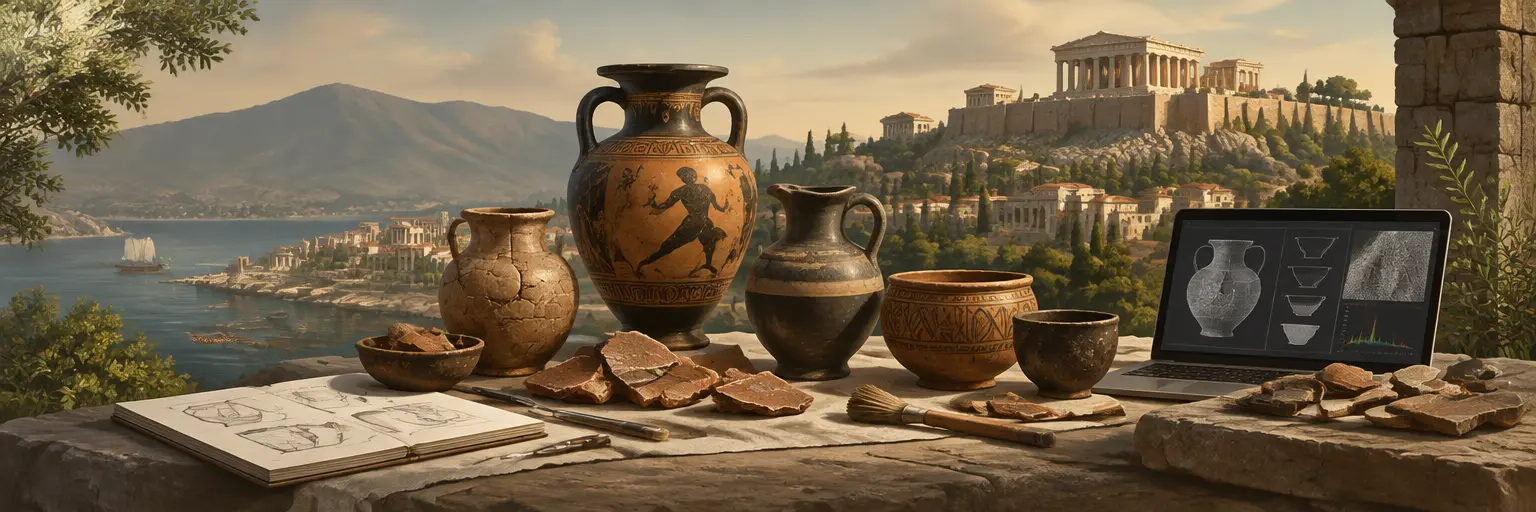
Welcome to ArchaeologyHub.org’s dedicated gateway for understanding the silent storytellers of past civilizations—pottery and ceramics. Here, we decode the clay’s secrets, exploring everything from the earliest hand-coiled vessels to intricately painted wares. This subcategory unpacks the scientific and interpretive methods archaeologists use to classify, date, and understand ancient communities, offering a rich blend of theoretical frameworks and practical, hands-on analytical techniques.
🏺 Understanding Ceramic Typology & Chronology
Typology is the backbone of ceramic study, involving the systematic classification of pottery based on form, fabric, decoration, and manufacturing technique. In this section, you will learn how archaeologists create seriation charts that place vessel types in a chronological sequence, enabling site dating and regional comparisons. Key methods include type-variety analysis, cross-dating with stratigraphy, and the use of type fossils for horizon markers.
You’ll explore case studies from the Aegean Bronze Age to Pre-Columbian Mesoamerica, demonstrating how subtle changes in rim profiles or slip colors can shift a site’s timeline. Expect insights into the strengths and pitfalls of typological systems, including the risk of circular reasoning and the ongoing debate between typological and more holistic approaches. This foundational knowledge is essential for any serious student of material culture.
🔬 Technological Analysis: From Clay to Kiln
Technological analysis moves beyond the finished object to examine the entire manufacturing chaîne opératoire—from raw material selection to firing techniques. Here, we delve into macroscopic and microscopic studies, including fabric analysis, temper identification, and porosity testing. You will discover how petrography and X-ray diffraction (XRD) reveal the geological origins of clay, linking pots to specific landscapes and trade networks.
This section also covers experimental archaeology and replication studies, where modern potters recreate ancient wares to test hypotheses about forming methods and firing temperatures. Learn to distinguish between wheel-thrown, coil-built, and slab-constructed pieces, and how kiln atmospheres (oxidizing vs. reducing) create distinct color and hardness characteristics. This technical lens transforms a simple shard into a detailed record of human ingenuity and environmental constraints.
⚗️ Geochemical & Residue Analysis in Ceramics
A cutting-edge frontier, geochemical and residue analysis extracts invisible data from ceramic matrices and vessel surfaces. Explore how instrumental neutron activation analysis (INAA) and laser ablation inductively coupled plasma mass spectrometry (LA-ICP-MS) fingerprint clay sources with high precision. Such provenance studies reveal long-distance exchange and local production, reconstructing economic spheres often invisible in historical texts.
Residue analysis, including gas chromatography-mass spectrometry (GC-MS), detects ancient foodstuffs, beeswax, or oils absorbed into vessel walls. This opens a direct window into diet, cuisine, perfume preparation, and even ritual practices. We’ll examine groundbreaking studies from the Mediterranean to the Andes, showing how lipid biomarkers and organic residue analysis, combined with DNA analysis, provide a sensory and functional understanding of ceramic use, moving beyond mere classification.
📜 Decorative Styles, Iconography & Social Meaning
Ceramics are canvases for prehistoric art and cultural expression. This section interprets painted motifs, incised patterns, and relief decorations as symbolic systems. Analyze iconography through the lens of semiotics and structuralism, linking motifs to religious beliefs, social status, gender roles, and ethnic identity. We will explore famous traditions like Greek black-figure pottery, Moche figurative vessels, and Pueblo black-on-white ware.
Beyond aesthetics, you’ll learn how decoration frequency and style distribution can infer social boundaries and interaction spheres. Statistical analysis of motif distribution helps map cultural transmission. Additionally, we’ll discuss the role of pottery in feasting, burial offerings, and display, demonstrating that ceramic design is rarely arbitrary—it is a deliberate, communicative act loaded with cultural information for both its makers and modern interpreters.
🏗️ Field & Laboratory Workflow: A Practical Guide
For aspiring archaeologists, this practical segment outlines the standard workflow from excavation trench to museum shelf. Learn correct methods for lifting, cleaning, labeling, and mending shards, as well as how to record diagnostic attributes using standardized coding systems. Digital tools like 3D scanning and GIS integration now enhance traditional drawings and photographs, enabling virtual reconstruction of complete vessels from fragments.
We’ll cover crucial steps such as establishing a type collection, creating detailed catalogues, and using relational databases for intra- and inter-site comparative studies. You’ll also encounter best practices in cultural resource management (CRM), including how to comply with legal antiquities laws and ethical curation standards. This guide ensures that you not only understand theory but can confidently conduct a professional ceramic analysis, contributing reliable data for future scholarly research.
Frequently Asked Questions
What is the difference between typology and technology in ceramic analysis?
Typology focuses on classifying vessels into types based on visual attributes like shape, decoration, and fabric, primarily for dating and seriation. Technology, in contrast, investigates the manufacturing process itself, including clay sources, temper, forming methods, and firing conditions. While typology answers “what” and “when,” technology explores “how” and “why,” offering complementary insights into cultural choices and skill.
How can pottery be dated?
Pottery is dated using several methods: relative dating through stratigraphy and seriation, where changes in style indicate time; absolute dating via thermoluminescence (TL) that measures trapped electrons since firing; and cross-dating using associated datable artifacts or historical records. Archaeomagnetic dating and radiocarbon on organic residues also help, but TL remains the most direct method for ceramics themselves.
What is petrography and why is it useful?
Petrography is the microscopic study of thin sections of ceramic fabric using a polarizing microscope. It identifies mineral inclusions, clay matrix texture, and voids, allowing analysts to infer clay provenance, temper choices, and firing temperature ranges. This method is invaluable for sourcing raw materials, detecting imitation or trade, and understanding technological traditions without destroying artifacts.
Can pottery tell us about ancient diet?
Yes, residue analysis on ceramic surfaces or absorbed into pores can detect lipids, proteins, starches, and plant microfossils like phytoliths. Using gas chromatography and mass spectrometry, researchers identify specific biomarkers of animal fats (beef, dairy, fish), plant oils, or beeswax. Even trace amounts from cooking, storage, or fermentation provide direct evidence of food preparation and consumption habits.
What ethical considerations exist in ceramic analysis?
Ethical practices include respecting cultural heritage laws, ensuring proper excavation and export permits, and involving descendant communities in research design. Analysts must avoid destructive or sampling techniques on unique, rare, or sacred objects unless absolutely necessary and with permission. Publication should responsibly include provenience data, avoiding looting incentives, and curate collections for public benefit and repatriation where appropriate.