Exploring Organic Remains: Textiles, Wood, Basketry & Cordage
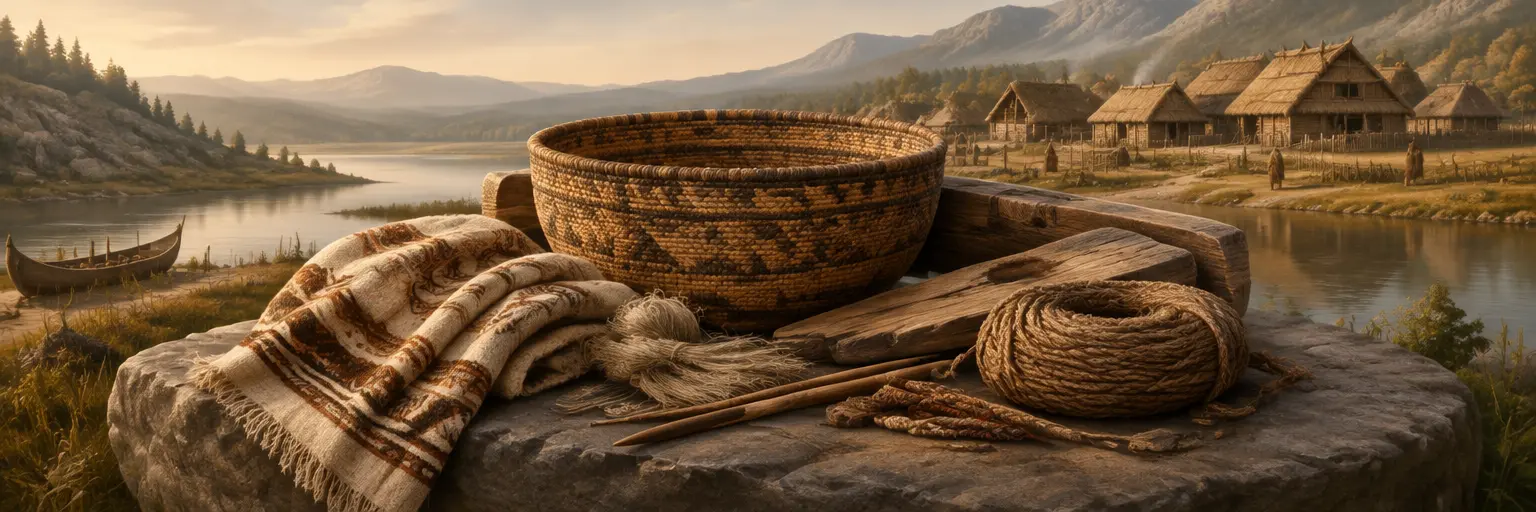
Welcome to ArchaeologyHub.org’s deep dive into organic remains—the fragile, often overlooked evidence of ancient daily life. Unlike stone or metal, organic materials like textiles, wood, basketry, and cordage decompose rapidly, yet when preserved in arid, waterlogged, or frozen conditions, they offer an unmatched glimpse into craftsmanship, trade, and social identity. This subcategory within Artifact & Material Culture Studies focuses on how these perishable technologies were produced, used, and valued across civilizations, from Egyptian linen to Andean quipus.
🌿 Preservation and Discovery: How Ancient Organics Survive
Here, you’ll learn about the rare environmental conditions that allow organic remains to endure: anoxic waterlogged sites (e.g., Danish bogs), extreme aridity (e.g., Peruvian deserts), and permafrost (e.g., Siberian kurgans). We detail excavation techniques like wet sieving and floatation, which recover tiny fibers and fragments that dry excavation would miss.
Understanding these processes is key for interpreting archaeological context. For example, a preserved wooden plow from a waterlogged settlement tells us about agricultural technology, but its recovery method influences its dating and conservation. This section also covers the ethical challenges of handling human-made organic artifacts, including their rapid degradation post-excavation and the role of conservation laboratories in stabilizing them for study.
🧵 Weaving Cultures: Textile Production and Social Meaning
Ancient textiles were far more than clothing—they encoded status, ethnicity, and belief systems. This area explores fiber sources (wool, flax, cotton, silk) and spinning/weaving technologies, from simple looms to complex warp-weighted frames. Case studies include Egyptian mummy wrappings, Andean tapestry tunics, and the color-fast dyes of Roman purple.
You’ll also examine textile evidence for trade and technological diffusion. For instance, the spread of basket-weave patterns across Neolithic Europe suggests shared cultural practices, while the presence of Chinese silk in Central Asian burials reveals ancient Silk Road exchanges. We emphasize how textile fragments, even small ones, can yield aDNA and dye analyses, offering direct insights into domestication and craft specialization.
🪵 Wood Technology: Tools, Structures, and Symbolism
Wood served as the “plastic” of antiquity—used for handles, hafts, building posts, dowels, and even statues. This subcategory details wood identification via anatomical analysis (vessel patterns) and dendrochronology for precise dating. Expect to see famous examples like the Iron Age Vimose planks or the Bronze Age waterlogged villages of the Alps.
Beyond utility, wood held symbolic power in many cultures, from sacred groves to carved totems. Articles here discuss the chaîne opératoire—the full sequence from tree felling to final product—using microscopic wear traces. You’ll learn how seasonal tree-ring data can even reconstruct climate and labor logistics, making wood a dual resource for both artifact study and paleoenvironmental reconstruction.
🧺 Basketry and Cordage: Intricate Craft and Everyday Function
Basketry and cordage represent humanity’s oldest “container” and “binding” technologies, often predating pottery and metal. This section investigates manufacturing methods—coiling, twining, plaiting—and fibers used (reeds, grasses, bark, sinew). Artifacts like shell-midden baskets in Florida or Egyptian coiled straw mats provide direct evidence of domestic and ritual life.
Functional analyses reveal how basketry facilitated food gathering, storage, and even warfare (e.g., shields and boats). Cordage, meanwhile, was essential for fishing nets, gill nets, load-bearing ropes, and textile production. We explore experimental archaeology that recreates ancient methods, measuring strength and flexibility. These studies help reconstruct the labor division, seasonal schedules, and technical skills passed down generations.
⚔️ Case Studies and Methodological Innovations
This section offers in-depth profiles of iconic sites and groundbreaking research. You’ll read about the Ötzi the Iceman’s footwear and cordage, the well-preserved Cladh Hallan mummies with woven garments, and the frozen Scythian felt fabrics from Pazyryk. Each case highlights how modern multi-proxy techniques—micro-CT, proteomics, spectroscopy—extract new data from old specimens.
Methodologically, we discuss the critical role of ethnographic analogy and experimental replication in interpreting organic remains. For instance, studying modern Navajo weaving informs ancient Pueblo textile fragment analysis. We also cover the growing importance of digital reconstruction and 3D modeling for fragile specimens that cannot be handled repeatedly. These innovative approaches push ArchaeologyHub.org’s mission of translating complex archaeological data into accessible narratives for enthusiasts and scholars alike.
Frequently Asked Questions
What is the main difference between preservation in dry vs. waterlogged sites?
In dry sites (like deserts), water is scarce, preventing microbial decay; in waterlogged sites (bogs), lack of oxygen stops aerobic microbes. Both inhibit decomposition, but dry sites preserve structural integrity better, while waterlogged sites may retain organic fibers but often need complex conservation to prevent collapse upon drying.
How do archaeologists date organic remains without destroying them?
Radiocarbon dating (C-14) is standard, requiring a small sample. For wood, dendrochronology offers exact calendar years via ring patterns. For textiles, new AMS methods allow dating of single threads. Non-destructive techniques like Fourier-transform infrared spectroscopy (FTIR) can help narrow period without invasive sampling.
Why do organic artifacts often appear “different” in museums than when discovered?
Post-excavation, organic materials react to oxygen and humidity. Conservators may consolidate, freeze-dry, or replace original moisture with synthetic polymers. This can alter color and texture. Museums often display replicas or digitized copies, preserving the original in controlled storage.
Can DNA be extracted from ancient textiles or cordage?
Yes, ancient DNA (aDNA) can survive in fibers, especially from leather or bark. Analysis can identify animal species (e.g., sheep vs. goat) or plant origins. However, contamination from human touch and environmental microbes is a major challenge, requiring strict clean-room protocols during extraction.
Are there modern Indigenous communities that continue traditional basketry or cordage techniques?
Absolutely. Many Indigenous groups—like the Tlingit, Maori, and various African tribes—actively practice and teach these crafts. These living traditions are invaluable for archaeologists, providing direct empirical knowledge of production time, material selection, and social meaning, bridging past and present through experimental collaboration.