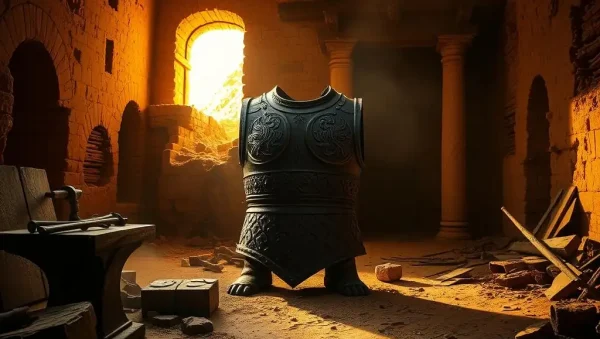
The Craft of the Ancient Armorer: Master Techniques and Material Selection
🔧 Discover the secrets of ancient armorer techniques and material selection, revealing how skilled craftsmen forged legendary weapons and armor. This article…
Read article
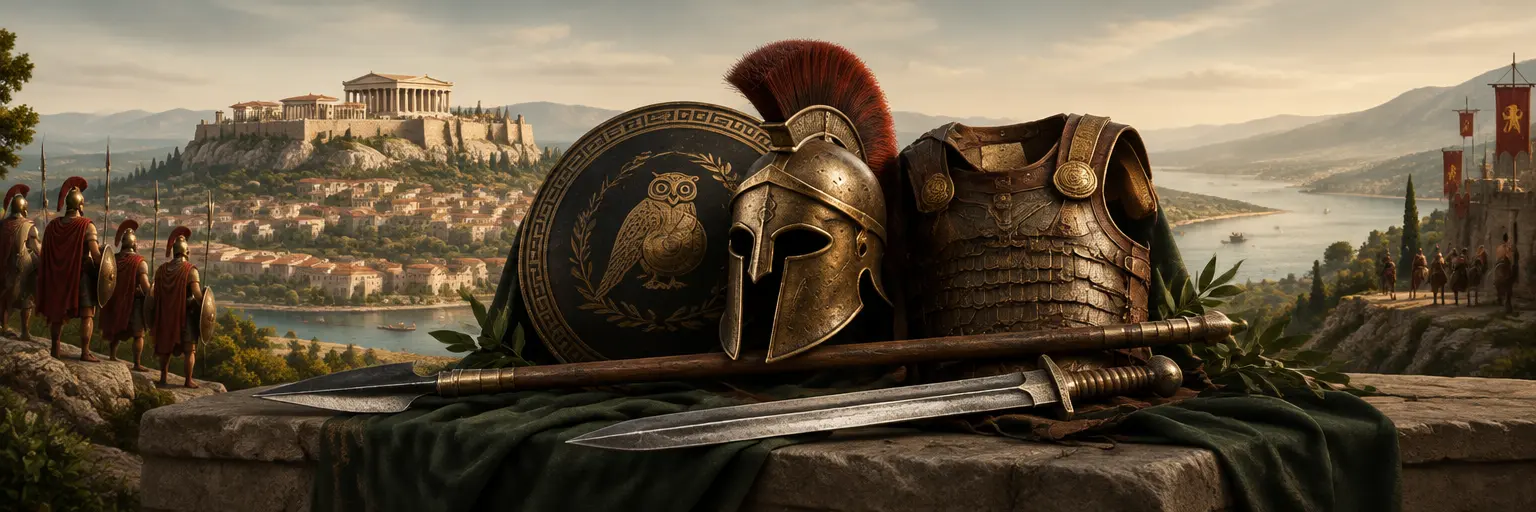
Journey through the evolution of ancient weaponry and armor, where every blade, shield, and siege engine tells a story of human ingenuity and survival. From the bronze khopesh of Egypt to the layered lamellar armor of the East, this exploration reveals how metallurgy, warfare tactics, and cultural exchange shaped the tools of conflict. Uncover the transition from stone to iron, the rise of the composite bow, and the protective innovations that defined empires—each artifact a testament to the interplay between technology and terror on ancient battlefields. Perfect for enthusiasts of archaeological artifact analysis, this thematic study decodes the functional design and symbolic power of weaponry, connecting physical remains to broader historical narratives of conquest, defense, and daily life. Delve into the archaeological evidence—from excavated spearheads to well-preserved helmets—to understand how combat gear evolved in response to new enemy tactics and available resources. Here, each piece of gear is more than a relic; it’s a key to unlocking ancient mindsets, social hierarchies, and the relentless march of martial progress.
Welcome to ArchaeologyHub.org’s deep dive into ancient weaponry and armor, a thematic subcategory within our Artifact & Material Culture Studies. Here, we explore how tools of war shaped societies, driven by metallurgy, tactics, and cultural exchange. From bronze-age khopesh blades to Roman segmented plate armor, this collection reveals the ingenuity and brutal necessity behind human conflict, offering artifact profiles, technological timelines, and interpretive analyses for enthusiasts and researchers alike.
Our journey begins with the transition from flint-tipped spears to bronze-cast swords, a revolution that redefined power structures. Early weaponry was not merely functional but symbolic, often buried with elites as status markers. Discover how smiths in Mesopotamia and the Aegean pioneered alloying techniques, creating stronger edges and standardized forms like the sickle-sword (khopesh). This section examines archaeological finds from Ur to Mycenae, linking compositional analysis (e.g., tin ratios) to trade networks and battlefield effectiveness.
Expect detailed case studies on experimental archaeology, where modern replicas are tested against pig carcasses to gauge penetration and durability. We also cover the social impact: bronze’s costliness meant only state-sponsored warriors could wield advanced arms, accelerating class stratification. By understanding ore sourcing through lead isotope analysis, you’ll see how resource control drove ancient geopolitics, making metallurgy as much a diplomatic tool as a military one.
Armor evolution is a story of countermeasures against ever-deadlier weapons. This section highlights iconic protections—from Greek hoplite bronze corselets to Celtic chainmail—and their regional adaptations. We explore how materials dictated design: linen linothorax for flexibility, iron plates for blunt-force resistance, and scale armor for archery defense. Archaeological evidence from bog bodies and battlefields (e.g., Tollense Valley) provides rare insights into actual wear patterns and repair marks, revealing life on the front lines.
You’ll learn about craftsmanship, including riveting techniques and leather backing that distributed impact. We also analyze iconography on pottery and stelae to reconstruct armor usage in formation (e.g., Macedonian phalanx). Each profile links to museum collections and excavation reports, ensuring depth. Notably, we debunk myths like the “invincible Roman legionary,” showing how armor evolved from the pilum’s bendable shanks to the lorica segmentata’s dismantling efficiency for logistics.
Projectile technology changed combat dynamics, enabling standoff attacks and sieges. Here, we dissect composite recurve bows from nomadic cultures (Scythians, Huns) versus European longbows, comparing draw weight, arrowhead shapes (bodkin vs. broadhead), and armor penetration. Through forensic analysis of skeletal trauma—like embedded arrowheads healed over—we infer tactical usage. Slings, often underestimated, are covered with found stone ammunition and experimental velocity tests.
Siege engines, from Assyrian battering rams to Roman scorpiones, receive special attention. We detail reconstruction plans based on Vitruvius and recent finds at Masada, including torsion spring mechanisms. This subcategory also explores psychological warfare—incendiary pots and poisoned projectiles—using residue analysis from amphorae. By correlating usage with fortification designs, you’ll see how offensive innovation forced defensive architecture, such as angled walls and murder holes, in a perpetual arms race.
No ancient arsenal is complete without swords and mounted combat. We trace the evolution from thrusting rapiers (Bronze Age) to slashing falcatas and later spathas, linking blade geometry to fighting styles reconstructed from manuals like the Stele of Merenptah. Using traceological wear marks on blades, we infer parrying techniques and edge alignment. Cavalry’s rise—from chariots to true horsemen—is examined with stirrup absence debates and saddle development through iconography and leather fragments found in Central Asian kurgans.
This section emphasizes cultural transfer, such as the diffusion of the Scythian bow into Greek and Indian warfare. We provide comparative analytics of lance lengths and armor on cataphracts versus light skirmishers. Historical reenactment groups contribute practical insights, but we anchor arguments in archaeology—e.g., horse dental wear from bits, and buttock bone changes indicating prolonged riding. Expect nuanced discussion on the “heroic” individual versus disciplined formations, backed by battlefield archaeology from Kalkriese (Teutoburg Forest).
Weapons were never purely utilitarian; they carried profound ritual weight. This subcategory investigates votive deposits—like the Danish bog sacrifices—where weapons were deliberately bent or broken, signaling a termination of their power. We analyze inscriptions and inlays on swords (e.g., runic or cuneiform) to reveal ownership and blessings. In some cultures, weapons became regalia, signifying kingship, as seen in the Sutton Hoo helmet’s ornate face mask, which blended military function with divine ancestry.
We also explore ceremonial executions and gladiatorial weaponry, where edge use was performance. Through isotopic analysis of residues, we sometimes find traces of blood or oil used in rituals. Artifact profiles include amulets shaped as miniatures, suggesting protective magic. This section bridges the tangible and intangible, demonstrating how material culture studies interpret cosmology. By examining weapon sacrifices in Greece (e.g., at Olympia) and Near Eastern temple deposits, we argue that disposing of arms was a strategic offering to gods, securing victory in future conflicts.
Effectiveness depends on context. The Roman pilum and gladius combo excelled in disciplined infantry, while the composite bow dominated open steppe. Siege engines broke city walls. Thus, no single weapon; adaptability and logistics mattered most.
Heavy bronze cuirasses restricted torso bending but were often supplemented by greaves and helmets. Roman segmentata allowed better shoulder movement for shield use. Cavalry wore lighter scale or mail to preserve horse stamina.
Yes, though rarely. The Vimose bog in Denmark yielded wooden shields, and Egyptian burial deposits include leather or wood. Most decayed, but impressions in mud or metal boss fittings often preserve shape.
Battle damage shows impact patterns on edges or tips with corresponding deformation, while ritual breakage involves deliberate bending or cutting outside combat zones. Context—like a hoard versus a grave—also informs interpretation.
Women rarely wielded arms but forged them (smiths) and managed production camps. Exceptions like Sarmatian female warriors are evidenced by weapons and riding gear in graves. Ritual roles included offering weapons to deities.