Exploring Bone, Antler & Ivory Artifacts: Tools, Art & Ornaments
Welcome to ArchaeologyHub.org’s dedicated subcategory on Bone, Antler & Ivory Artifacts, a fascinating corner of material culture studies where organic materials reveal the ingenuity, artistry, and daily life of ancient peoples. Here, we delve into how prehistoric and historic societies transformed animal byproducts into utilitarian tools, symbolic ornaments, and exquisite works of art. This subcategory bridges archaeology, anthropology, and art history, offering rich interpretive analysis of craftsmanship, trade networks, and cultural beliefs.
🦴 Functional Tools: From Awls to Harpoons
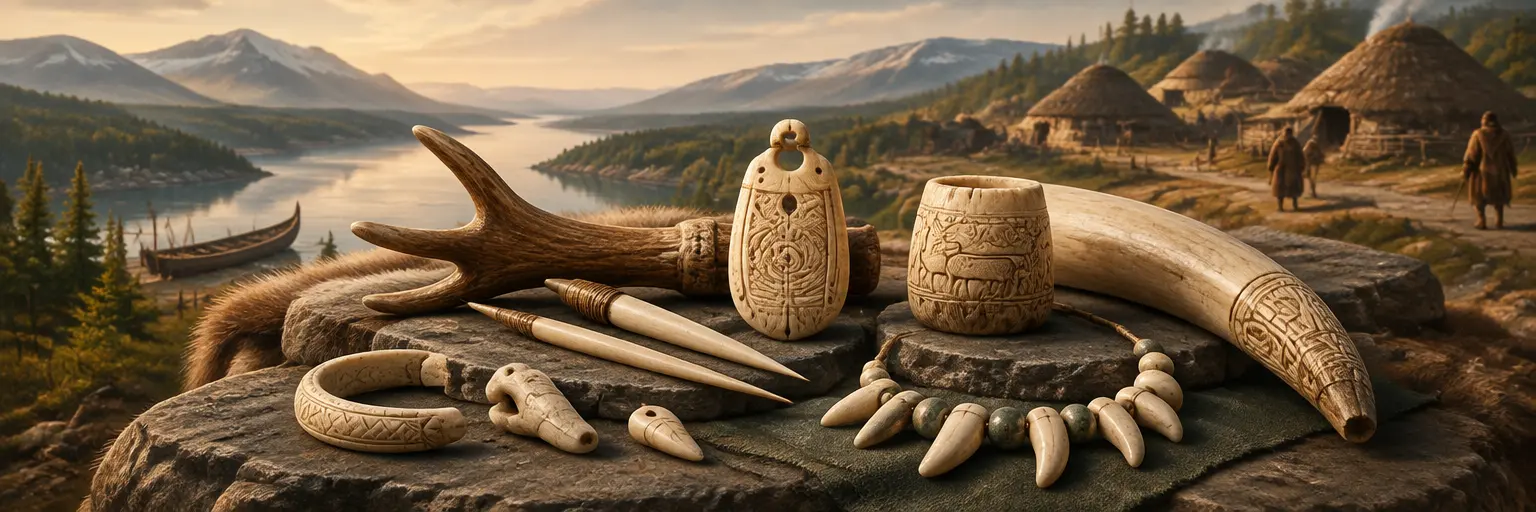
Bone, antler, and ivory were prized for their durability and workability, making them ideal for crafting essential tools. Expect detailed profiles of sewing needles, fishhooks, harpoon points, and spear throwers, each analyzed for design efficiency and wear patterns. Archaeological experiments and use-wear studies show how these implements were hafted, sharpened, and repaired, revealing the technical expertise of ancient artisans.
Beyond simple functionality, tools often carried symbolic meaning, such as engraved hunting scenes on antler batons. We explore ethnographic parallels and microwear analysis to decipher how tool shape evolved alongside subsistence strategies—from Magdalenian harpoons to Inuit snow goggles. This content emphasizes the adaptive brilliance of using animal resources for survival, highlighting regional variations in raw material selection and manufacturing techniques.
🎨 Artistic Expressions: Carved Figurines & Decorative Items
Artifacts like the Venus figurines, engraved spear-throwers, and ivory combs showcase the aesthetic sensibilities and spiritual lives of ancient communities. Here, you’ll find in-depth interpretations of motifs, such as animals, geometric patterns, and human forms, linking them to shamanistic practices or social status. Our galleries include high-resolution imagery and 3D models to appreciate fine carving techniques.
We also examine the role of ivory in luxury items across civilizations, from Egyptian cosmetic spoons to Chinese oracle bones. Material choice often signified power, as ivory from exotic species was traded over long distances. By analyzing production waste and workshop sites, we reconstruct the chaîne opératoire—the full sequence from raw material acquisition to finished object—offering a holistic view of artistic production in ancient economies.
🔮 Ornaments & Personal Adornment
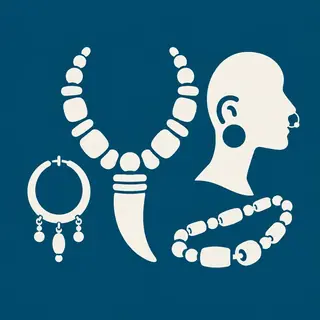
Personal ornaments such as beads, pendants, and belt fasteners made from bone and antler reveal individual identity, group affiliation, and social hierarchies. This subcategory covers typologies of beads from Paleolithic burials to Viking-age brooches, examining manufacturing methods like sawing, drilling, and polishing with flint or metal tools. We discuss how color, shape, and source material (e.g., red deer antler vs. sperm whale tooth) encoded cultural messages.
Contextual analysis of grave goods and settlement finds helps interpret gender roles, age grades, and trade contacts. For instance, the widespread distribution of spondylus-shell and amber alongside bone ornaments suggests extensive exchange networks. We also address conservation challenges, such as degradation and preservation methods, ensuring these fragile artifacts can be studied and displayed for future generations.
🌍 Regional Case Studies & Temporal Trends
From the European Upper Paleolithic to North American Northwest Coast, this subcategory presents comparative case studies. Expect chronological overviews of technological shifts, like the transition from simple bone points to composite barbed harpoons during the Mesolithic. For each region, we provide maps, timeline infographics, and links to excavation reports, making complex datasets accessible to both students and enthusiasts.
We also highlight zooarchaeological methods, such as species identification from artifact collagen or stable isotopes, to trace animal sources and habitat exploitation. This comparative lens reveals convergent innovations—for example, similar harpoon designs emerging independently in different continents. By integrating environmental and cultural evidence, we demonstrate how bone, antler, and ivory technologies were deeply intertwined with climate change, resource availability, and social complexity.
🔬 Identification & Conservation Techniques
For professionals and collectors, this section covers how to distinguish bone from antler from ivory using macroscopic features, histology, and chemical tests. We explain the significance of Schreger lines in ivory, the porous structure of antler, and the Haversian canals in bone. Detailed photographic guides and decision trees are provided, helping you identify artifacts in museum collections or fieldwork.
Conservation is equally vital; we share best practices for cleaning, stabilizing, and storing these organic materials, which are prone to cracking, warping, and insect attack. This includes reversible adhesives, climate-controlled storage, and documentation of original surface modifications. We also discuss ethical considerations, such as repatriation of ivory objects under CITES regulations, ensuring that research respects both heritage and modern wildlife protection.
Frequently Asked Questions
How can I tell if an artifact is made of bone, antler, or ivory?
Check for surface patterns: bone has tiny pores and sometimes visible Haversian canals; antler is lighter with a spongy interior and rough outer texture; ivory shows fine cross-hatching lines called Schreger lines. Density tests, UV light, and microscopy are reliable methods.
What are the oldest known bone or ivory artifacts?
The earliest bone tools date to around 2 million years ago at Olduvai Gorge, likely used for digging. Ivory beads from Moldova, dated to 32,000 years ago, are among the oldest personal ornaments, while carved ivory figurines from Swabian Jura are about 40,000 years old.
Why did ancient peoples use antler instead of bone for certain tools?
Antler is tougher and more shock-resistant, making it ideal for projectile points and harpoons. It also can be shaped by grooving and splitting, allowing long, thin implements. Bone is denser and better for fine needles or awls requiring stiffness.
How were ivory artifacts traded in prehistory?
Ivory from mammoth, walrus, and elephant was traded across hundreds of kilometers, often as raw blocks or finished goods. Evidence from shipwrecks and isotopic analysis shows long-distance networks, such as Baltic amber exchanged for Mediterranean ivory during the Bronze Age.
Are there ethical concerns with studying ivory artifacts today?
Yes, modern ivory trade is banned under CITES to protect elephants. Archaeologists must verify that artifacts are genuinely ancient, not freshly carved. Some institutions decline new acquisitions of worked ivory unless provenanced, focusing on digital replication and non-invasive analysis instead.