Bronze Age Musical Instruments: The Lurs of Northern Europe
🎶 Discover the fascinating world of Bronze Age lurs in Northern Europe, intricately crafted musical instruments that reveal cultural practices and artistic…
Read article
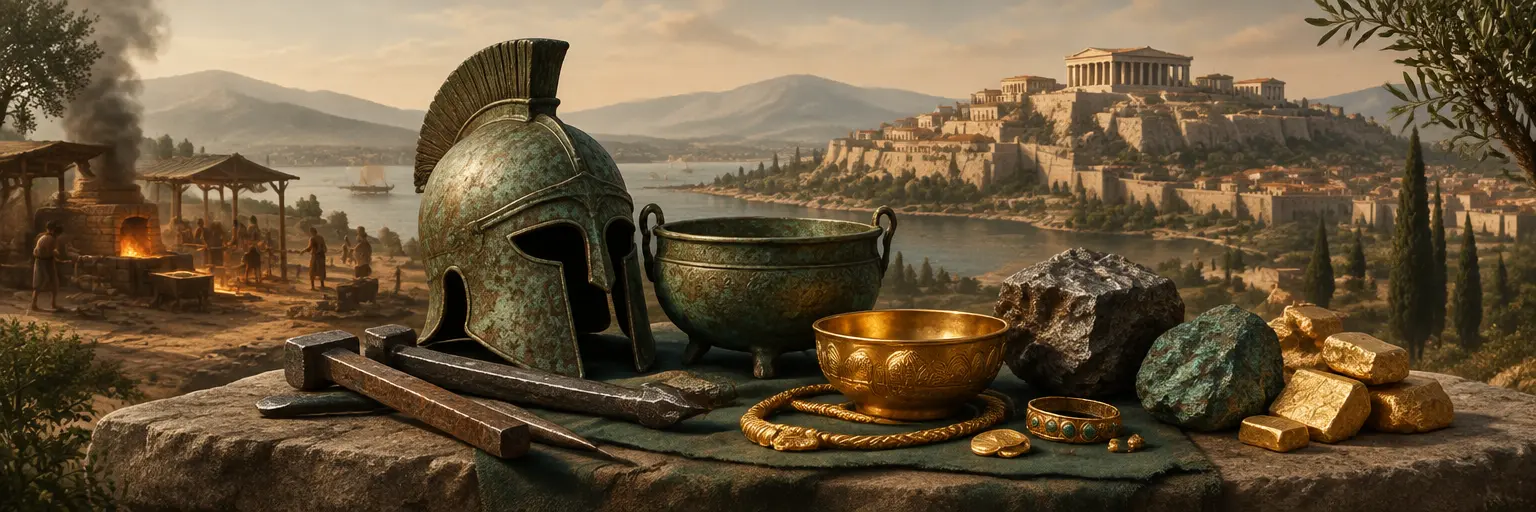
Explore the transformative power of ancient metallurgy, where the mastery of bronze, iron, and precious metals reshaped human civilization. From the gleaming ritual vessels of early dynasties to the resilient weaponry of iron-age warriors, this collection decodes the artistry, trade networks, and technological breakthroughs behind metal artifacts. Uncover how alloying techniques and smithing traditions reveal cultural identities, economic power, and symbolic meaning—whether in gilded tombs or everyday tools. Perfect for enthusiasts of archaeometallurgy and material culture studies, each profile connects scientific analysis with historical context, illuminating the fingerprints of ancient hands on metal surfaces. Dive into analyses of trace-element sourcing, casting molds, and decorative inlays, and see how these durable relics bridge the gap between myth and measurable history.

🎶 Discover the fascinating world of Bronze Age lurs in Northern Europe, intricately crafted musical instruments that reveal cultural practices and artistic…
Read article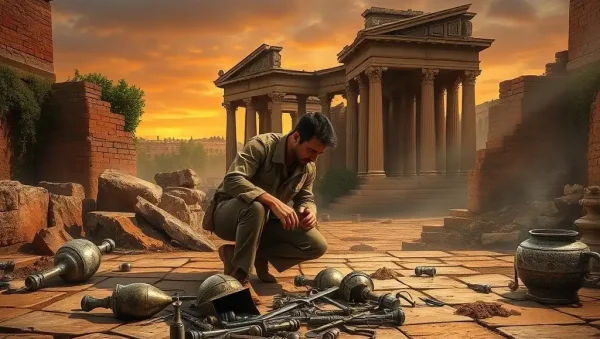
🌟 Discover essential metal artifact conservation strategies for bronze, iron, and silver artifacts. This guide highlights techniques to preserve archaeological treasures, ensuring…
Read articleWelcome to the core of human innovation, where fire, earth, and ingenuity collided to forge civilizations. At ArchaeologyHub.org, this subcategory delves deep into the transformative eras of metallurgy—from the gleaming dawn of copper and bronze to the ironclad might of empires and the enduring allure of gold and silver. Here, we decode the scientific processes, cultural impacts, and masterful artistry behind ancient metalwork, offering a rich narrative that connects ore to artifact and artifact to ideology. Explore how metallurgical advances shaped trade networks, social hierarchies, and warfare across the ancient world.
Dive into the era that ended the Stone Age, as we explore the serendipititous discovery of alloying copper with tin. This section unpacks the chaîne opératoire of early bronze production, from mining and smelting to casting techniques like lost-wax and bivalve molds. Readers will understand why bronze was more than a material—it was a strategic resource that fueled the rise of Minoan, Mycenaean, and Shang dynasties, creating vast trade routes stretching from Cornwall to the Indus Valley. Expect detailed case studies of shipwrecks carrying copper ingots and analyses of how metal hoards reveal political and economic power structures.
Key topics include the origins of smelting (circa 5000 BCE in the Balkans), the social implications of bronze weapons vs. utilitarian tools, and the environmental costs of early mining. We also examine regional variations, such as arsenical bronze in the Andes versus tin-bronze in the Near East, using elemental analysis from excavated artifacts. By connecting metallurgical innovation to monumental architecture and state formation, this section establishes a foundational narrative for understanding how a single alloy shifted the axis of human history.
Iron’s rise around 1200 BCE was not merely a technological upgrade but a democratizing force. This section explores the complex carburization and quenching processes that produced hardenable steel, as revealed by metallographic studies of artifacts from Hittite Anatolia and later Celtic Europe. We focus on how iron’s abundance—relative to tin—lowered costs, arming larger armies and enabling agricultural expansion with durable ploughshares. Yet, we also highlight the paradox: early iron was often softer than bronze; its adoption was driven by disruption in tin trade networks, not superior performance.
Beyond utility, iron held symbolic weight. Ritual deposits of swords, spears, and tools in bogs and rivers across Scandinavia and Britain suggest offerings to deities or ancestors. We analyze decorative inlays, pattern-welding techniques, and the social status of blacksmiths—often revered as magicians due to their transformative craft. Through case studies of the Hallstatt and La Tène cultures, we trace how iron enabled the rise of urban centers, coinage, and the first large-scale militarized states, reshaping geopolitical boundaries across Eurasia.
Gold and silver were never just currency; they were the embodiment of divine authority and eternal power. This section investigates the extraction, refinement, and intricate crafting of precious metals, from Egyptian funerary masks to Scythian animal-style jewelry. Techniques such as granulation, filigree, and repoussé are explained through high-resolution imagery and step-by-step reconstructions based on experimental archaeology. We emphasize the symbolic role of these metals in royal regalia, religious iconography, and diplomatic gifts, linking them to solar and lunar cults across Mesoamerica, the Andes, and the Old World.
Readers will also explore silver’s economic impact, particularly the Laurion mines of Athens, which funded the Parthenon and the Athenian navy. We discuss the phenomenon of "hacksilver" in Viking hoards, revealing bullion economies and weight-based transactions. Analytical studies of trace elements in gold artifacts help us source ore deposits, reconstructing ancient trade routes that spanned continents. This section offers a multidisciplinary lens, merging art history, archaeometallurgy, and numismatics to show how precious metals financed empires and expressed ideologies.
How do we know what we know about ancient metal? This H3 unveils the cutting-edge laboratory methods used to decode metallurgical artifacts. We explain X-ray fluorescence (XRF) for compositional analysis, scanning electron microscopy (SEM) for microstructures, and lead isotope analysis for provenance tracing. Each technique is illustrated with real-world case studies, such as the detection of trace elements indicating the use of specific ores or the identification of recycling patterns that hint at scrap economies. We also cover experimental replication—modern smiths recreating ancient tools to test hypotheses about production methods and efficiency.
This section is ideal for students and enthusiasts seeking a behind-the-scenes look at scientific archaeology. Ethical considerations regarding destructive sampling versus non-invasive methods are addressed, alongside the growing use of portable devices for in-field analysis. We highlight breakthrough discoveries, like the identification of meteoric iron in Tutankhamun’s dagger via neutron diffraction. By demystifying the lab, we empower readers to appreciate the rigorous evidence behind every claim about ancient craftsmanship and trade, ensuring a nuanced understanding of the field’s reliability and limitations.
Metallurgy was not a singular invention but a mosaic of independent developments and diffusions. This section offers geographic deep-dives, comparing and contrasting metalworking traditions across Africa, Asia, Europe, and the Americas. For instance, we explore sub-Saharan Africa’s early iron smelting in Nigeria (Nok culture), which predates European contact, and its use of natural draft furnaces. In the Andes, we examine the Moche’s sophisticated gilding of copper (depletion gilding) to mimic gold, a puzzle of chemistry and aesthetics. We also cover China’s unique preference for bronze ritual vessels versus India’s early steel (wootz).
Each regional profile includes artifact spotlights, such as the Nebra Sky Disk (Germany) or the Benin Bronzes (Nigeria), providing context on production techniques and cultural value. We analyze how geography influenced ore availability, trade partnerships, and technological borrowing—or rejection. This comparative approach highlights how metallurgy adapted to local environments and belief systems, refuting outdated notions of a single linear progression. By the end, readers will see metallurgy as a global human endeavor, rich with diversity, innovation, and resilience.
The oldest known metal artifacts are small copper pendants from Çatalhöyük in modern Turkey, dating to around 9000 BCE. However, these were hammered native copper, not smelted. The earliest smelting evidence appears in the Balkans around 5000 BCE, producing copper axes and ornaments, marking the true advent of metallurgy.
Iron became dominant due to the scarcity of tin, which disrupted bronze production around 1200 BCE. While early iron was softer than bronze, its widespread availability and lower cost allowed mass production. Advances in carburization and quenching later produced steel, surpassing bronze in hardness and edge retention.
Archaeologists use lead isotope analysis and trace element fingerprinting, comparing ratios in artifacts to known ore deposits. Additionally, platinum group elements and silver content can indicate specific geological sources. These methods require careful sampling and are often combined with historical trade records for robust hypotheses.
Pattern-welding involved forging twisted layers of iron and steel, creating a visible wavy pattern. It combined flexibility and hardness, yielding superior blades. Beyond function, the patterns symbolized status and mastery, often seen in Viking and Anglo-Saxon swords, where they were believed to hold magical or heroic properties.
Yes, placer gold from river beds is often naturally pure, containing 65-85% gold mixed with silver. However, most ancient gold artifacts required refining via cupellation or cementation to remove impurities. Trace amounts of copper, tin, or iron were sometimes intentionally added for hardness or color variation, as seen in Egyptian electrum.