
The Craft of the Ancient Armorer: Master Techniques and Material Selection

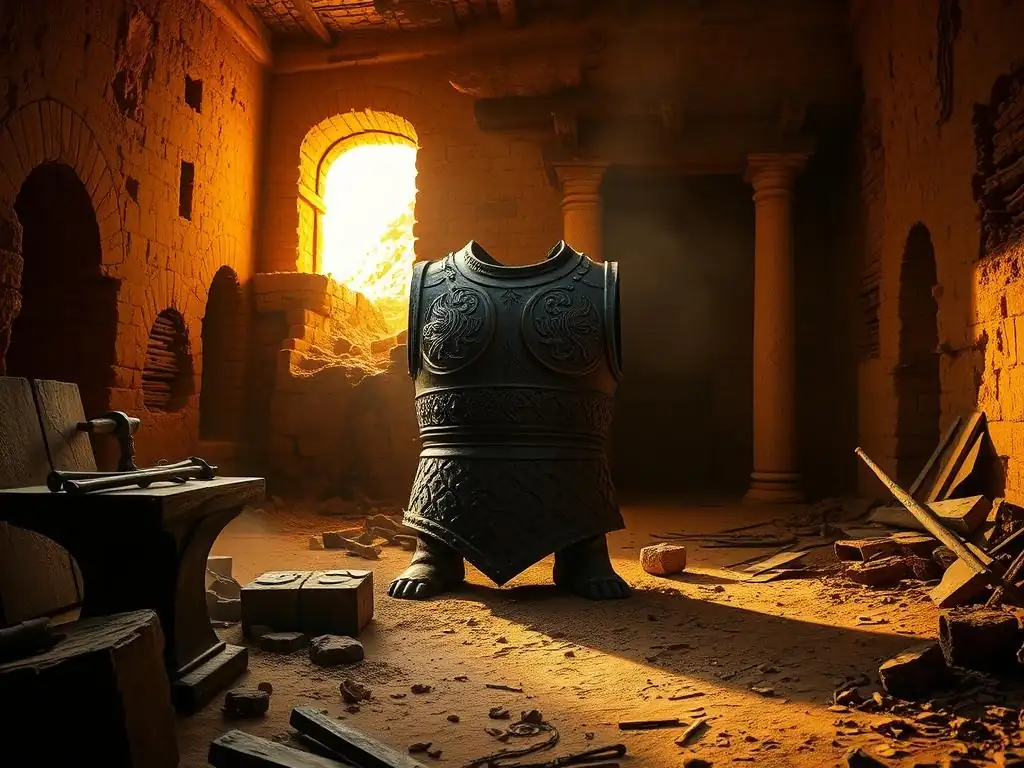
Welcome to ArchaeologyHub.org, your digital gateway to unearthing the past! Ever wondered how ancient warriors were equipped for battle? Dive deep into the fascinating world of Ancient Armorer Techniques and Material Selection. Discover the secrets behind crafting resilient armor, from ingenious metalworking to the strategic choice of materials. Uncover the history, the skill, and the innovation that protected warriors of old, and begin your journey into the art and science of ancient warfare. What secrets will you unearth today?
- Introduction to Ancient Armor Craftsmanship
- Master Techniques of Ancient Armorers
- Material Selection in Ancient Armor Production
- Regional Variations in Ancient Armor Techniques and Materials
- The Evolution of Ancient Armor: A Timeline
- The Archaeological Evidence of Ancient Armor Craft
- Conclusion: The Legacy of the Ancient Armorer
-
Frequently Asked Questions
- What materials were commonly used by ancient armorers, and why?
- How did ancient armorers select materials for different parts of armor?
- What were some of the key techniques employed by ancient armorers?
- How did geographic location influence the materials and techniques used in ancient armor making?
- What evidence do archaeological discoveries provide about ancient armorer's skills and material knowledge?
- Final Reflection: Forging the Legacy of Craftsmanship
- Unleash Your Inner Archaeologist!
Introduction to Ancient Armor Craftsmanship
ArchaeologyHub.org's Exploration of Ancient Armorer Skills
ArchaeologyHub.org dedicates significant resources to unraveling the intricate world of ancient armorer techniques material selection. Our exploration delves into the sophisticated processes and profound knowledge possessed by artisans who crafted protective gear for warriors across millennia. From the earliest hammered bronze plates to the complex segmented steel of later empires, the evolution of armor is a testament to humanity's ingenuity in material science and engineering, often pushed by the relentless demands of warfare.
Our research highlights how ancient armorers were not merely blacksmiths but master craftsmen who understood metallurgy, ergonomics, and even rudimentary ballistics. They meticulously selected raw materials, refined them through laborious processes, and assembled components with precision. The study of these ancient armorer techniques material selection provides invaluable insights into the technological capabilities, trade networks, and societal structures of past civilizations.
The Significance of Armor in Ancient Warfare and Society
Armor held immense significance in ancient societies, extending far beyond its primary function of physical protection in combat. It was a powerful symbol of status, wealth, and military might, often adorned with elaborate decorations that conveyed rank, allegiance, or religious beliefs. A warrior's panoply could represent years of skilled labor and access to rare materials, making it an incredibly valuable asset.
Beyond individual warriors, the development and mass production of armor systems profoundly impacted ancient warfare strategies and societal organization. The Roman lorica segmentata, for instance, enabled standardized legionary formations, while the heavy bronze armor of Greek hoplites facilitated the phalanx. Understanding ancient armorer techniques material selection is crucial for comprehending the tactical advantages and limitations faced by ancient armies, and how these factors shaped historical conflicts and the rise and fall of empires.
Master Techniques of Ancient Armorers
Forging Techniques in Ancient Armor Production
Hammering and Shaping Methods
The fundamental process for ancient armorers was forging, which involved heating metal to a malleable state and then shaping it with hammers on an anvil. Early Bronze Age armor, such as the Mycenaean Dendra panoply (circa 1450-1400 BCE), demonstrates sophisticated hammering techniques used to create large, anatomically contoured bronze plates. These plates were hammered from ingots, often requiring multiple heating cycles and skilled manipulation to achieve the desired thickness and curvature without cracking the metal.
As iron and steel became prevalent, the challenges of forging increased due to their higher melting points and different working properties. Iron bloom, produced in primitive furnaces, was highly impure and required extensive "faggoting" or "folding and welding" – repeatedly heating, folding, and hammering the metal to expel slag and homogenize the material, thereby improving its strength and ductility. This iterative process was crucial for creating durable armor components like helmet bowls and breastplates.
Heat Treatment and Tempering Processes
Beyond simple shaping, ancient armorers developed rudimentary but effective heat treatment processes to enhance the properties of their metals. Carburization, the process of introducing carbon into iron to create steel, was known in various forms as early as the Iron Age. This could involve heating iron in contact with carbon-rich materials like charcoal for extended periods, resulting in a harder, more resilient surface.
Quenching and tempering were also employed to achieve specific material properties. Quenching involved rapidly cooling hot metal (typically in water or oil) to make it extremely hard but brittle. Tempering, a subsequent reheating to a lower temperature followed by controlled cooling, reduced this brittleness while retaining significant hardness. Evidence of such practices is seen in Roman sword blades and, by extension, likely applied to armor components requiring greater resilience against impacts. These ancient armorer techniques material selection choices were critical for the armor's effectiveness.
Joining and Assembly Techniques
Riveting and Lacing Techniques for Armor Construction
The assembly of multi-component armor demanded sophisticated joining methods. Riveting was a primary technique, particularly evident in Roman lorica segmentata, where individual iron plates were joined by rows of brass or iron rivets. These rivets, often peened over washers, allowed for articulation while maintaining structural integrity. The precise placement and secure fastening of hundreds of rivets were essential for the armor's flexibility and durability in combat.
Lacing, another widespread technique, involved using cords or leather thongs to connect small, overlapping plates (lamellae) or scales. This method was central to lamellar armor, prevalent across vast regions from ancient Assyria to East Asia. Each small plate, often made of bronze, iron, leather, or horn, had multiple perforations through which laces were threaded, creating a flexible, yet robust, protective shell. The intricate lacing patterns not only secured the plates but also contributed to the armor's aesthetic.
The Role of Adhesives in Ancient Armor
While less common than mechanical fasteners like rivets and lacing, adhesives played a supporting role in ancient armor construction. Natural glues derived from animal hides or plant resins were used, for instance, to secure internal linings, attach padding, or bind layers of composite materials. For padded armor like the Greek linothorax, layers of linen were laminated together, likely using a form of animal glue or resin, to create a stiff, yet surprisingly effective, protective body piece.
Additionally, some forms of scale armor or segmented armor might have utilized adhesives to temporarily hold components in place before riveting or lacing, or to provide additional reinforcement. While not the primary structural element, the judicious use of adhesives could enhance comfort, reduce friction, or provide a secondary layer of protection by bonding disparate materials.
Surface Finishing and Decoration
Etching and Engraving on Ancient Armor
Beyond pure functionality, ancient armor often served as a canvas for artistic expression and social signaling, employing techniques like etching and engraving. While true acid etching became more prevalent in the medieval period, ancient armorers used mechanical engraving tools to incise patterns, mythological scenes, and inscriptions directly onto the metal surface. Roman parade armor, for example, frequently featured finely engraved motifs on helmets and cuirasses, showcasing the wearer's status or military prowess.
Another form of "etching" could be achieved through repoussé and chasing, where designs were hammered into the metal from the reverse side (repoussé) and then refined on the front (chasing). This created raised, three-dimensional decorations, often seen on ceremonial helmets and breastplates, adding considerable visual impact and demonstrating exceptional ancient armorer techniques material selection and artistic skill.
Gilding and Inlaying Techniques
For high-status armor, gilding and inlaying were employed to impart luxurious finishes. Gilding involved applying a thin layer of gold or silver to the surface of the base metal. Fire gilding, using a mercury-gold amalgam, was a known technique, though less commonly applied to functional armor due to its toxicity and fragility. More commonly, gold or silver foil could be mechanically attached or hammered onto a roughened surface, sometimes with the aid of a small amount of adhesive or by being pressed into heated metal.
Inlaying involved embedding contrasting materials, typically other metals like silver, copper, or niello (a black metallic alloy), into recesses cut into the armor's surface. This created intricate patterns that stood out against the base metal. The Coppergate Helmet, an Anglo-Saxon artifact from the 8th century CE, exemplifies this with its intricate silver and gilded bronze inlays on an iron base, showcasing the pinnacle of ancient armorer techniques material selection and decorative artistry.
Material Selection in Ancient Armor Production
Metals Used in Ancient Armor
Iron and Steel: Properties and Availability
The advent of iron, and later steel, revolutionized ancient armorer techniques material selection. Iron offered greater availability than copper or tin, making it more accessible for widespread armor production, though early bloomery iron was often inconsistent in quality. Its primary advantage was superior hardness and toughness compared to bronze when properly worked and heat-treated. The challenge lay in its production; ancient furnaces could not reach temperatures high enough to fully melt iron, resulting in a spongy bloom that required extensive hammering to consolidate.
Steel, an iron-carbon alloy, emerged through accidental or intentional carburization of iron. Early steel possessed significantly improved strength and edge retention, making it ideal for weapons and critical armor components. Roman armor, particularly the lorica segmentata, utilized iron and low-carbon steel, demonstrating a practical understanding of these materials' properties. This shift marked a significant leap in the effectiveness and widespread availability of protective gear.
Bronze and Copper: Early Armor Materials
Before the Iron Age, bronze was the premier material for armor, a testament to the sophisticated ancient armorer techniques material selection of the Bronze Age. Copper, though too soft for effective armor on its own, became viable when alloyed with tin to create bronze, which is significantly harder and more durable. The Mycenaean Dendra panoply, dating to approximately 1450 BCE, is a prime example, featuring heavy, expertly hammered bronze plates designed to protect nearly the entire body.
Bronze had several advantages: it was relatively easy to cast into complex shapes (though most armor was hammered), resistant to corrosion, and could be polished to a gleaming finish, adding to its visual appeal. However, its higher material cost and the labor-intensive hammering process meant that full bronze panoplies were often reserved for elite warriors or ceremonial purposes.
Wootz Steel in Persian Armor: Properties and Production
Wootz steel, originating in India around the 6th century BCE and later adopted by Persian and other Near Eastern armorers, represents one of the most advanced ancient armorer techniques material selection. This crucible steel was produced by melting iron and carbon-rich materials in a sealed crucible, allowing for controlled carburization and the formation of a high-carbon alloy with a distinctive patterned surface (often called Damascus steel when forged into blades).
Wootz steel possessed exceptional hardness, toughness, and flexibility, making it highly desirable for both weapons and high-quality armor. Its production involved precise control of temperatures and cooling rates, a remarkable feat for ancient metallurgy. While primarily famous for swords, the superior properties of Wootz steel would have made it an ideal, albeit expensive, material for elite armor components that required extreme resilience and strength.
Non-Metallic Materials in Ancient Armor
Leather and Hide: Applications in Armor Design
Leather and hide were ubiquitous in ancient armor, serving as primary protective elements for less affluent warriors or as crucial components in composite armor systems. Boiled leather, or cuir bouilli, was created by soaking animal hide in hot water or wax, then shaping it and allowing it to dry, resulting in a rigid, hard material. This technique produced effective body armor, shields, and limb protection, as seen in various cultures from Scythians to early medieval Europeans.
Beyond primary protection, leather was essential for straps, linings, and backing for metal scales or plates. Roman lorica hamata (mail armor) often had leather trim, and scale armor typically consisted of metal scales sewn onto a leather or linen backing. Its flexibility, relative lightness, and ease of working made it an indispensable material in ancient armorer techniques material selection.
Bone and Horn: Uses in Reinforcement and Decoration
Bone and horn, readily available animal products, found diverse applications in ancient armor. Their natural rigidity and ease of shaping (especially horn when heated) made them suitable for reinforcement, particularly in scale or lamellar armor. Scythian armor, for example, sometimes incorporated polished bone or horn scales alongside or instead of metal ones, sewn onto a flexible backing.
Beyond structural use, bone and horn were frequently employed for decorative elements, such as pommels, helmet crests, or inlays. Their natural patterns and ability to take a polish made them aesthetically pleasing additions, demonstrating the ancient armorer's ability to utilize all available resources for both function and form.
Linen Padding and its Role in Shock Absorption
While often overlooked, padded linen armor, such as the Greek linothorax, played a crucial role in ancient warfare. Constructed from multiple layers of linen fabric laminated together with glue or resin, the linothorax offered surprisingly effective protection against blunt force trauma and glancing blows. Its light weight and flexibility made it a practical choice, especially in hot climates.
Even when metal armor was worn, linen padding was almost universally present beneath it. This underlying layer, similar to a modern gambeson or aketon, served several vital functions: it absorbed and dispersed the kinetic energy of impacts, preventing blunt force injuries; it provided cushioning against the rigid metal, enhancing comfort and preventing chafing; and it helped distribute the weight of heavy armor more evenly across the wearer's body. The strategic use of linen highlights the comprehensive ancient armorer techniques material selection, prioritizing not just stopping power but also wearability and shock absorption.
Regional Variations in Ancient Armor Techniques and Materials
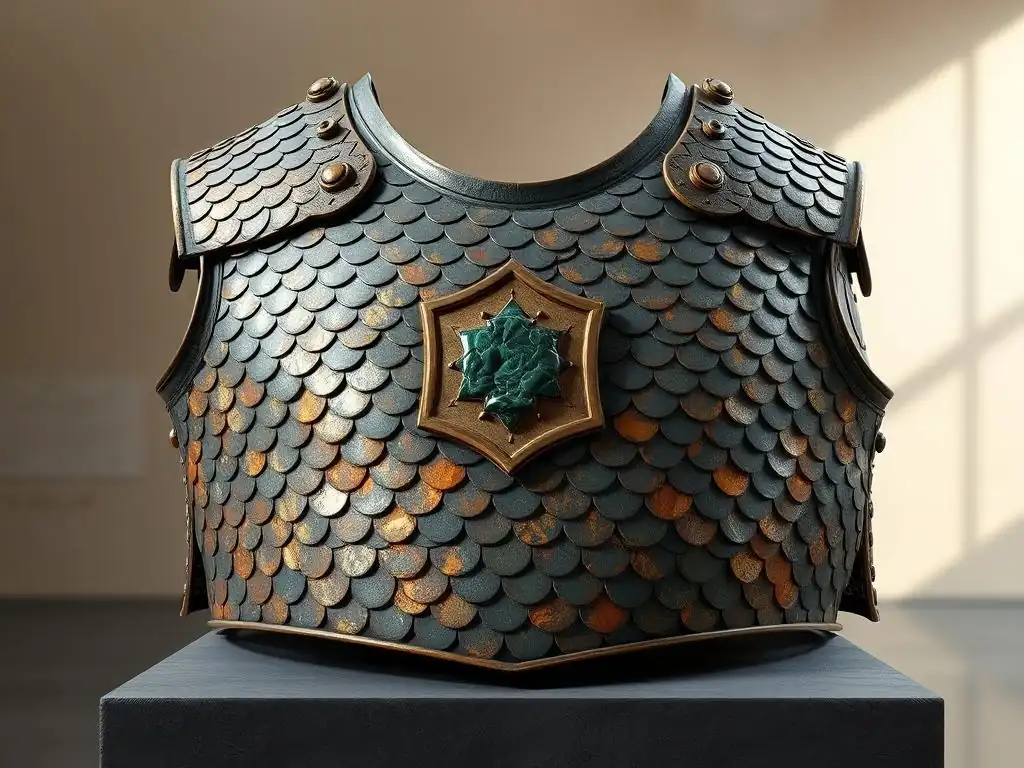
Armor Craftsmanship in Ancient Greece
Hoplite Armor: Construction and Materials
The iconic armor of the Greek hoplite, particularly from the Archaic and Classical periods (c. 750-323 BCE), showcases distinct ancient armorer techniques material selection. The primary body armor was often a bronze "muscle cuirass" – anatomically sculpted breastplates and backplates hammered from a single sheet of bronze or cast in two halves and then joined. These were incredibly labor-intensive to produce, requiring exceptional skill in smithing and chasing. Alternatively, the linothorax, a composite armor of laminated linen, was also widely used due to its lighter weight and lower cost.
Hoplites also wore bronze greaves (shin guards) and various helmet types, most famously the Corinthian helmet. These helmets were typically hammered from a single bronze sheet, offering complete head protection but restricting vision and hearing. The emphasis was on robust, rigid protection, reflecting the close-quarters, phalanx-based combat of the era.
Regional Differences in Greek Armor Styles
While certain armor types like the Corinthian helmet were widespread, regional variations in ancient armorer techniques material selection and style were evident across the Greek city-states. The Attic helmet, for instance, became popular later, offering better visibility and hearing than the Corinthian, often made with hinged cheek pieces. The Chalcidian helmet was another variation, providing a balance between protection and practicality.
Shields, too, displayed regional characteristics. The Argive hoplon, a large, circular wooden shield faced with bronze, was standard, but its specific decorative motifs or internal structures might vary. These subtle differences highlight local ancient armorer techniques material selection preferences, available resources, and evolving tactical needs within the broader Greek world.
Roman Armor Production
The Lorica Segmentata: A Detailed Analysis
The lorica segmentata, the distinctive segmented plate armor of the Roman legionary from the 1st to 3rd centuries CE, exemplifies advanced ancient armorer techniques material selection and mass production capabilities. Made primarily of iron or low-carbon steel plates, this armor consisted of overlapping horizontal strips secured by internal leather straps and external brass or iron fittings and hinges. It offered excellent protection against piercing and slashing blows, particularly to the torso, while allowing for significant flexibility.
The production of the lorica segmentata required standardization and precision. The plates were likely formed using jigs and templates to ensure consistency, and hundreds of rivets were used to join the components. Despite its complexity, its modular design meant damaged sections could be replaced, making it practical for army-wide issue. Examples like the Corbridge Hoard provide invaluable insights into its construction.
Roman Helmet Design and Evolution
Roman helmet design evolved significantly over centuries, reflecting changes in warfare and ancient armorer techniques material selection. Early helmets like the Montefortino type (Republican period) were simple, conical bronze or iron caps, often cast or hammered from a single piece. As the empire expanded and combat became more intense, helmet design became more sophisticated.
The Imperial Gallic and Imperial Italic series (1st-3rd centuries CE) featured deeper bowls, reinforced brows, and hinged cheek pieces, often made of iron with brass decoration. These helmets provided superior protection and comfort, with integrated neck guards. The evolution demonstrates a continuous refinement in ancient armorer techniques material selection, balancing protection, visibility, and the practical needs of the legionary.
Ancient Armor of the Near East
Lamellar Armor: Construction and Spread
Lamellar armor was a dominant form of protection across the Near East, Central Asia, and parts of East Asia for millennia, showcasing its adaptability in ancient armorer techniques material selection. It consists of numerous small, rectangular plates (lamellae) made of metal (iron, bronze), hardened leather, or horn, which are laced together in overlapping horizontal rows. Unlike scale armor, where scales are sewn onto a backing, lamellar plates are directly connected to each other, forming a flexible but robust fabric of armor.
This construction method allowed for great versatility in shaping the armor to fit the body, and its widespread adoption speaks to its effectiveness against various weapon types. Archaeological finds from Assyria to Parthia, and later in the Sasanian Empire, confirm its pervasive use and the consistent application of these ancient armorer techniques material selection for thousands of years.
Scythian Scale Armor: Construction and Materials
Scythian scale armor, prevalent among nomadic peoples of the Eurasian steppe from the 7th century BCE onwards, offers another compelling example of ancient armorer techniques material selection. This armor was typically constructed by sewing individual small scales onto a flexible backing of leather or linen. The scales themselves could be made from bronze, iron, bone, or even hardened leather, often varying in size and shape depending on the body part they protected.
The overlapping nature of the scales provided excellent protection against arrows and slashing blows, while the flexible backing allowed for the mobility crucial to horse archers. Finds from kurgan burials, such as those at Pazyryk, reveal well-preserved examples that demonstrate the meticulous craftsmanship involved in producing hundreds, sometimes thousands, of individual scales and then painstakingly attaching them to form a cohesive garment.
Armor Traditions in Ancient Asia
Samurai Armor: Techniques and Materials
Classical Samurai armor, particularly from the Heian to Muromachi periods (c. 8th-16th centuries CE), represents a highly sophisticated application of ancient armorer techniques material selection. Known as ō-yoroi or dō-maru, it was predominantly lamellar, constructed from thousands of small, individual iron or hardened leather scales ( kozane). These scales were meticulously lacquered to prevent rust and then laced together with colorful silk cords ( odoshi) to form articulated sections.
The lacing provided flexibility and allowed the armor to conform to the wearer's movements, crucial for mounted archery and sword combat. Helmets ( kabuto) were often multi-plate constructions, while shoulder guards ( sode) and thigh guards ( haidate) were also made from laced lamellae. This complex assembly required specialized artisans, demonstrating a pinnacle of ancient armorer techniques material selection and artistry.
Chinese Terracotta Army Armor: Production and Materials
The armor depicted on the Terracotta Army figures (c. 210 BCE) from the tomb of Emperor Qin Shi Huang offers a unique archaeological insight into ancient Chinese armorer techniques material selection, particularly for mass production. While the figures themselves are ceramic, the armor they wear meticulously replicates actual Qin Dynasty armor. Most of the infantry figures wear lamellar armor, composed of rectangular plates, likely made of hardened leather or bronze/iron, laced together.
The armor for cavalry and charioteers shows variations, including more extensive protection. The sheer scale of the Terracotta Army suggests a highly organized and standardized production system for armor. Although the actual materials have degraded, the detailed ceramic renditions provide invaluable data on the design, construction, and probable materials of Qin Dynasty military equipment, showcasing ancient armorer techniques material selection on an unprecedented scale.
The Evolution of Ancient Armor: A Timeline
Early Bronze Age Armor Innovations
The earliest significant innovations in ancient armor techniques material selection emerged in the Bronze Age, particularly in the Near East and Aegean. Around 1500-1400 BCE, civilizations like the Mycenaeans developed sophisticated bronze plate armor, epitomized by the Dendra panoply. This full-body suit, made of hammered bronze sheets, represents a monumental leap from simple shields or leather protection. It demonstrates advanced metallurgical knowledge for the time, including the ability to cast and hammer large, contoured bronze pieces.
Contemporaneously, early forms of scale armor, made from overlapping bronze scales sewn onto a backing, also appeared in the Near East (e.g., Assyria), providing more flexible protection than rigid plate armor. These early developments laid the groundwork for future advancements in ancient armorer techniques material selection.
Iron Age Advancements in Armor Design
The transition to the Iron Age (roughly 1200 BCE onwards in the Near East, later elsewhere) brought profound changes to ancient armorer techniques material selection. Iron, being more abundant than copper and tin, allowed for more widespread production of armor. While early iron was often inferior to high-quality bronze, advancements in bloomery iron production and rudimentary carburization led to stronger, more resilient materials.
This period saw the proliferation of flexible armor types like iron lamellar and scale armor, which offered better mobility than heavy bronze plates. Helmets also evolved, with more complex designs and improved protection. The ability to forge iron into thinner, yet stronger, plates allowed for innovations like the Roman lorica segmentata, which maximized protection while optimizing material use.
The Introduction of Composite Armor Systems
The evolution of ancient armor culminated in the widespread introduction and refinement of composite armor systems. Rather than relying on a single material, ancient armorers increasingly combined different materials to leverage their unique strengths. Examples include metal scales or plates sewn onto leather or linen backings (e.g., Scythian scale armor, some Roman lorica hamata padding), or the sophisticated lamination of multiple textile layers (e.g., Greek linothorax).
This approach optimized protection, flexibility, and weight. A warrior might wear a padded linen gambeson under a mail shirt, topped with a metal helmet and greaves. This layered approach not only distributed impact forces more effectively but also allowed for greater customization based on cost, climate, and specific combat roles. Understanding these complex combinations is key to appreciating the full scope of ancient armorer techniques material selection.
The Archaeological Evidence of Ancient Armor Craft
Excavation and Analysis of Armor Fragments
Archaeological excavations are the primary source for understanding ancient armorer techniques material selection. While complete sets of armor are rare, fragments – corroded plates, individual scales, rivets, or fittings – are frequently unearthed. The analysis of these fragments involves meticulous cleaning, conservation, and scientific examination. Metallurgical analysis, including X-ray fluorescence (XRF) or atomic absorption spectroscopy, can identify the precise elemental composition of alloys, revealing the specific types of bronze, iron, or steel used.
Microscopic examination of surfaces can reveal tool marks, hammering patterns, and evidence of heat treatment, providing direct insight into the manufacturing processes. For instance, the discovery of Roman armor workshop debris, including unfinished components and slag, helps reconstruct the entire production chain, from raw material to finished product, shedding light on the division of labor and specialized ancient armorer techniques material selection.
The Coppergate Helmet: A Case Study
The Coppergate Helmet, discovered in York, England, in 1982 and dating to the 8th century CE, serves as an exceptional case study in ancient armor craftsmanship. This Anglo-Saxon helmet, made primarily of iron, features intricate bronze and silver decorative elements. Its construction reveals sophisticated ancient armorer techniques material selection: the main skullcap was forged from multiple iron plates riveted together, demonstrating advanced ironworking.
The helmet's elaborate crest, cheek pieces, and nasal guard are adorned with tinned copper alloy sheet and silver wire inlays, showcasing high-status decorative artistry. The detailed analysis of its construction, including the precise way the different metal pieces were joined and ornamented, provides unparalleled insight into the metallurgical and artistic prowess of early medieval English armorers. It is a testament to the blend of engineering and art in ancient armorer techniques material selection.
Interpreting Armor Production from Archaeological Sites
Interpreting armor production from archaeological sites goes beyond individual artifacts to encompass the broader context of their discovery. Finds of bloomery furnaces, slag heaps, anvils, hammers, tongs, and other metalworking tools at ancient settlements can indicate localized armor production. For example, evidence of iron smelting and forging activities near Roman military forts suggests that armor repair and possibly manufacture took place on-site or nearby.
The distribution patterns of armor types across regions can also reveal trade networks and technological diffusion. A consistent style of helmet or type of lamellar plate found across disparate geographical areas suggests either shared technological knowledge or the movement of finished goods. By combining artifact analysis with contextual site interpretation, archaeologists can paint a comprehensive picture of the ancient armorer's workshop, their tools, and the economic systems that supported their craft, deepening our understanding of ancient armorer techniques material selection.
Conclusion: The Legacy of the Ancient Armorer
Understanding Ancient Technology Through Armor
The study of ancient armor provides a unique window into the technological capabilities and material sciences of past civilizations. Each piece of armor, from a simple leather shield to a complex segmented cuirass, embodies centuries of accumulated knowledge in metallurgy, engineering, and design. The challenges faced by ancient armorers – sourcing raw materials, controlling furnace temperatures, shaping intractable metals, and joining disparate components – pushed the boundaries of available technology.
By examining the specific ancient armorer techniques material selection employed, we gain a deeper appreciation for the ingenuity required to produce effective protection without modern tools or industrial processes. Armor reveals not just how ancient people fought, but how they thought, innovated, and adapted to their environment, leaving a legacy of craftsmanship that continues to fascinure and inform.
Utilizing Computed Tomography in Ancient Armor Research
Modern scientific techniques, such as Computed Tomography (CT) scanning, are revolutionizing the study of ancient armor, offering unprecedented insights into ancient armorer techniques material selection without causing any damage to precious artifacts. CT scanning allows archaeologists to create detailed 3D internal images of armor pieces, revealing hidden joins, internal structures, repairs, and even the precise thickness variations of hammered plates.
For instance, a CT scan can identify how individual scales in a lamellar armor piece were laced together internally, or how different metal alloys were invisibly joined within a helmet. This non-destructive analysis provides crucial data on an ancient armorer's craftsmanship, assembly methods, and the specific material choices made for different parts of a single artifact, enhancing our understanding of these ancient technological marvels.
Frequently Asked Questions
What materials were commonly used by ancient armorers, and why?
Ancient armorers primarily used materials like bronze, iron, and steel. The choice depended on availability and technological advancements. Bronze was early, followed by iron for its strength, and eventually steel for superior hardness and durability.
How did ancient armorers select materials for different parts of armor?
Material selection was strategic. Harder metals like steel were used for critical areas like chest plates and helmets. More flexible materials, or thinner sections of harder metals, were utilized in areas requiring mobility, such as limb protection.
What were some of the key techniques employed by ancient armorers?
Ancient armorer techniques included forging, hammering, and annealing. These processes shaped the metal, increased its strength, and prevented it from becoming brittle. Quenching and tempering were also vital for steel armor to achieve the desired hardness and flexibility.
How did geographic location influence the materials and techniques used in ancient armor making?
Geographic location significantly impacted material access. Regions rich in iron ore developed advanced ironworking techniques. Trade routes also played a crucial role, allowing access to rare metals and specialized skills from different cultures.
What evidence do archaeological discoveries provide about ancient armorer's skills and material knowledge?
Archaeological finds like well-preserved armor fragments and tool marks reveal a deep understanding of metallurgy. Analysis of the metal composition also shows the extent of their knowledge in alloying and heat treatment.
Final Reflection: Forging the Legacy of Craftsmanship
The journey through the techniques and material selection of ancient armorers reveals more than just historical processes; it illuminates the enduring human desire for protection, artistry, and innovation. Even today, as we develop advanced materials and technologies, the fundamental principles of balance, durability, and aesthetic appeal, so meticulously honed by ancient armorers, remain cornerstones of engineering and design. Their dedication to their craft serves as a powerful reminder of the value of meticulous work and deep understanding of materials.
The influence of these ancient artisans extends far beyond the battlefield. Their mastery, passed down through generations, shaped not only warfare but also art, culture, and the very definition of craftsmanship. The intricate designs and sophisticated techniques they employed speak to a profound understanding of both function and beauty. The beauty of a well-crafted weapon is not in its power to destroy, but in its testament to the skill and dedication of its maker.
This quote encapsulates the enduring legacy of the ancient armorer, a legacy that continues to inspire artists and engineers alike.
As we close this exploration of ancient armorer techniques and material selection, I invite you to consider the lessons learned. How can the dedication, ingenuity, and deep understanding of materials displayed by these ancient artisans inform your own pursuits? Whether you are an artist, an engineer, or simply someone who appreciates the beauty of craftsmanship, let the legacy of the ancient armorer inspire you to forge your own path with skill, passion, and a commitment to excellence.
Unleash Your Inner Archaeologist!
Thank you for delving into the ancient world of armor craftsmanship. We hope you've gained a deeper appreciation for the skill and artistry involved. Now, it's time to bring that knowledge to life!
Here are a few ways you can continue your exploration:
- Visit a local museum with an arms and armor exhibit. Take detailed notes on the construction techniques and materials used.
- Share this article with fellow history enthusiasts and spark a discussion about your favorite aspect of ancient armor.
- Research modern blacksmithing techniques and compare them to what you’ve learned about ancient methods – what surprising similarities or differences can you find?
What specific type of ancient armor are you most inspired to learn more about, and why?