
Comparing Alexandria's Portus Magnus with other Major Hellenistic Harbors like Rhodes

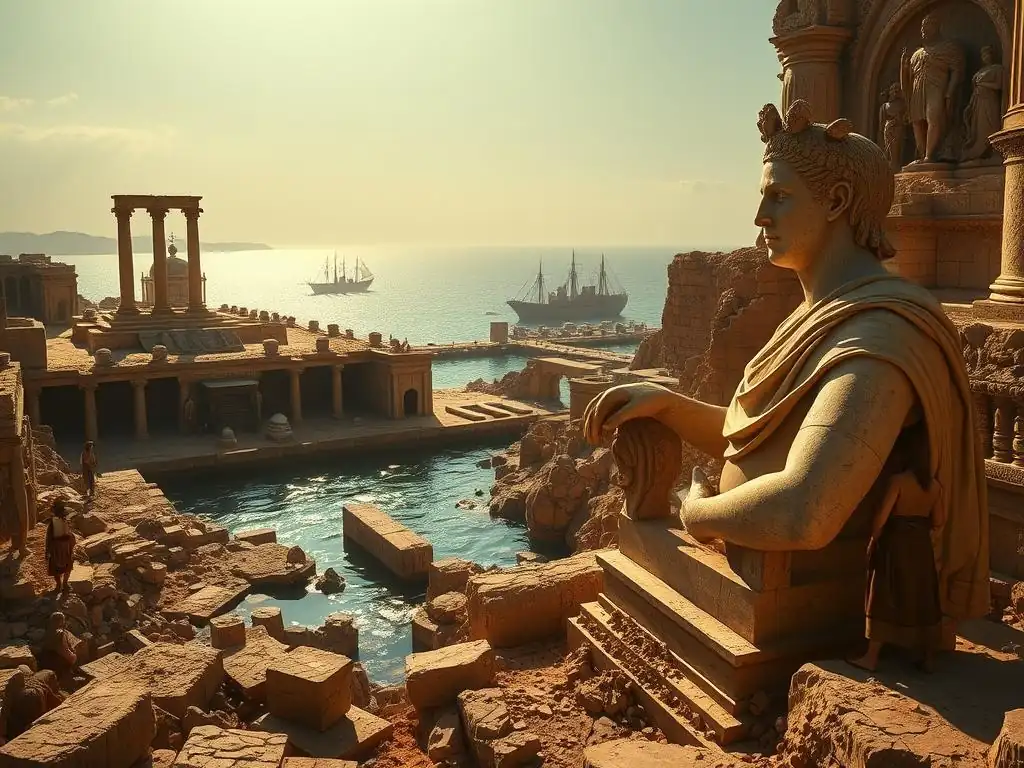
Welcome to ArchaeologyHub.org, your gateway to unlocking the secrets of the past!
Ever wondered how Alexandria's bustling Portus Magnus truly stacked up against other titans of the Hellenistic world? Dive into our detailed exploration comparing Alexandria's harbor with iconic ports like Rhodes, offering a fascinating glimpse into the maritime powerhouses of antiquity. Discover the innovative engineering, strategic importance, and lasting legacy of these incredible sites, and begin your journey through our digital encyclopedia of archaeological wonders. What secrets await beneath the waves?
- Ancient Mediterranean Harbor Comparison: Alexandria and Rhodes
- Introduction: The Significance of Hellenistic Harbors
- Alexandria's Great Harbor: An In-Depth Look
- Rhodes Harbor: A Comparative Analysis
- Comparative Analysis: Key Features of Alexandria and Rhodes
- Maritime Trade and Cultural Exchange
- Decline and Legacy
- Conclusion: Ancient Harbors in Context
-
Frequently Asked Questions
- ### How does the size of Alexandria's Portus Magnus compare to other major Hellenistic harbors, such as Rhodes?
- ### What types of archaeological discoveries within Alexandria's harbor contribute to our understanding of its importance?
- ### What excavation techniques are most effective for uncovering submerged archaeological sites like the Portus Magnus?
- ### In what ways did the design and functionality of Alexandria's harbor influence the city's economic and political power during the Hellenistic period?
- ### How does the Portus Magnus contribute to our understanding of maritime technology and shipbuilding during the Hellenistic era, when compared to other Hellenistic harbors?
- Final Reflection: Echoes of Ancient Maritime Power
- Unearth History: Dive Deeper into Hellenistic Harbors!
Ancient Mediterranean Harbor Comparison: Alexandria and Rhodes
Introduction: The Significance of Hellenistic Harbors
The Hellenistic period, spanning from the death of Alexander the Great in 323 BCE to the rise of the Roman Empire, witnessed an unprecedented surge in maritime activity across the Mediterranean. Harbors were not merely docking points; they were vital arteries for commerce, military projection, and cultural exchange, serving as the economic and strategic linchpins of emerging empires and city-states. These sophisticated maritime infrastructures facilitated the movement of vast quantities of goods, ideas, and people, profoundly shaping the geopolitical landscape of the ancient world.
The development of advanced harbor engineering during this era allowed for the construction of larger, more efficient ports capable of handling the burgeoning trade volumes and supporting powerful naval fleets. Understanding these ancient harbors provides crucial insights into the economic networks, technological capabilities, and strategic thinking of the Hellenistic powers. A detailed Alexandria harbor ancient comparison with other major ports like Rhodes illuminates the diverse approaches to maritime dominance.
Alexandria's Great Harbor: A Center of Commerce and Power
Founded by Alexander the Great in 331 BCE, Alexandria rapidly ascended to become the preeminent city of the Hellenistic world and the capital of the Ptolemaic Kingdom. Its strategic location on the Nile Delta, offering access to both the Mediterranean and the rich resources of Egypt, was meticulously exploited to create a maritime powerhouse. The Great Harbor, known as Portus Magnus, was designed not only for immense commercial traffic but also to project the formidable naval might of the Ptolemies.
Alexandria's harbor system was a testament to Hellenistic engineering ambition. It served as the primary gateway for Egypt's vast grain exports, which fed much of the Mediterranean, cementing its status as a vital economic hub. The city's prosperity, fueled by its port, allowed it to host renowned institutions like the Library of Alexandria and the Mouseion, attracting scholars and merchants from across the known world, thereby solidifying its role as a cultural and intellectual beacon.
Maritime Trade in the Hellenistic Period: A Catalyst for Growth
The Hellenistic period marked an era of unprecedented economic integration across the Mediterranean and beyond, largely driven by robust maritime trade. Harbors acted as crucial nodes in these intricate networks, facilitating the exchange of diverse commodities. Grain from Egypt, timber from Anatolia, metals from Spain, papyrus from the Nile, and luxury goods from the East (spices, silks, precious stones) flowed through these ports.
This extensive trade spurred the growth of specialized industries, banking, and insurance, leading to significant economic prosperity for many coastal cities. The development of larger merchant ships, improved navigation techniques, and sophisticated port management systems enabled higher trade volumes and more efficient transit. The competition and cooperation between major ports like Alexandria and Rhodes illustrate the complex dynamics of this vibrant maritime economy, showcasing how their unique strengths contributed to the overall economic expansion of the Hellenistic world.
Alexandria's Great Harbor: An In-Depth Look
Alexandria's Great Harbor, or Portus Magnus, was the jewel in the crown of the Ptolemaic kingdom, a marvel of ancient engineering and a testament to the city's strategic importance. Its design allowed it to function as both a premier commercial hub and a formidable naval base, reflecting the dual priorities of the Ptolemaic rulers. Archaeological investigations, particularly those conducted by Franck Goddio's team, have revealed significant insights into its submerged structures and layout.
The harbor system was naturally protected by the island of Pharos and further enhanced by the Heptastadion, a monumental causeway approximately 1.3 kilometers long, connecting the island to the mainland. This causeway effectively divided the city's waterfront into two main basins: the Portus Magnus to the east and the Eunostos Harbor (or Western Harbor) to the west. The Portus Magnus, facing the open Mediterranean, was the larger and more prestigious of the two, directly adjacent to the Royal Quarter and hosting the most significant maritime traffic.
Location, Layout, and Infrastructure of Alexandria's Harbor
The Portus Magnus stretched eastward from the Heptastadion, encompassing a vast area estimated to be several square kilometers, providing ample space for hundreds of ships to anchor and maneuver. Its strategic location offered relatively calm waters due to the natural breakwater effect of Pharos Island, despite being exposed to the prevailing northerly winds. The harbor's layout was meticulously planned to accommodate different types of vessels and activities.
Along its extensive coastline, the harbor featured numerous quays and jetties constructed from massive stone blocks, some reaching depths suitable for the largest Hellenistic merchant ships and warships. These quays were specifically designed for efficient loading and unloading of cargo, particularly the prodigious grain shipments from the Nile. The immediate proximity of the Royal Palace complex to the Portus Magnus underscored its importance, allowing direct access for dignitaries and royal fleets.
Key Features: Quays, Warehouses, and the Arsenal
The infrastructure of Alexandria's Portus Magnus was designed for maximum efficiency and security. Extensive stone quays, some stretching for hundreds of meters along the waterfront, provided ample docking space. These quays were often equipped with ramps and possibly rudimentary cranes for handling heavy cargo, facilitating the rapid transfer of goods between ships and shore. The sheer scale of these quays allowed for the simultaneous berthing of numerous large vessels, a crucial factor for a port handling such immense trade volumes.
Behind the quays stood vast complexes of warehouses, known as horrea, where grain, papyrus, and other valuable commodities were stored before export or distribution. These structures were essential for managing the seasonal influx of goods and ensuring a steady supply for trade. Furthermore, the Portus Magnus housed the impressive Ptolemaic naval arsenal.
This facility included shipyards for constructing and repairing warships, dry docks, and storage areas for naval equipment, reflecting Alexandria's role as a dominant naval power in the Eastern Mediterranean. The arsenal could accommodate large galleys, including the massive tessarakonteres, a forty-oared super-galley, showcasing the advanced shipbuilding capabilities supported by the harbor.
Dominating the entrance to the Portus Magnus was the Lighthouse of Alexandria, or the Pharos, one of the Seven Wonders of the Ancient World. Constructed in the 3rd century BCE under Ptolemy I Soter and Ptolemy II Philadelphus, it stood on the eastern tip of Pharos Island, reaching an estimated height of 100 to 137 meters (approximately 330 to 450 feet). Built primarily from massive limestone and marble blocks, its light, produced by a large fire, was reportedly visible from distances of up to 50-60 kilometers (about 30-37 miles) at sea, guiding mariners safely into the bustling harbor.
The Pharos was more than just a navigational aid; it was a monumental symbol of Ptolemaic power, wealth, and engineering ingenuity. Its multi-tiered structure, topped with a statue of Zeus Soter or Poseidon, represented the pinnacle of Hellenistic architectural achievement. Its presence not only ensured safe passage for countless ships but also served as a visible declaration of Alexandria's status as a global maritime hub, a crucial element in any Alexandria harbor ancient comparison.
Rhodes Harbor: A Comparative Analysis
Rhodes, a powerful island city-state in the Dodecanese, emerged as another dominant maritime power in the Hellenistic period, strategically positioned at the crossroads of major trade routes between the Aegean, Anatolia, and the Levant. Unlike Alexandria, which was a royal capital and a primary producer of goods like grain, Rhodes thrived as a free port, a banking center, and a formidable naval power renowned for its expertise in combating piracy and enforcing maritime law.
The city of Rhodes boasted three main harbors: Mandraki (the military port), the Commercial Harbor, and the larger Great Harbor. These interconnected basins were meticulously managed to handle a diverse array of vessels, from small merchant ships to large warships. The Rhodian harbors, though perhaps not as vast as Alexandria's Portus Magnus in terms of sheer area, were highly efficient and strategically vital, playing a distinct but equally crucial role in the Hellenistic maritime economy.
Rhodes Harbor: The Colossus and Strategic Importance
The harbors of Rhodes were integral to the island's prosperity and defense. Mandraki, the military harbor, was designed for the Rhodian fleet, famous for its quinqueremes and other powerful warships that maintained peace and order across the Eastern Mediterranean. The Commercial Harbor facilitated the bustling trade that made Rhodes wealthy, handling goods from across the Greek world, Egypt, and beyond. The Great Harbor provided additional capacity for larger vessels.
Legendarily, the Colossus of Rhodes, a gigantic bronze statue of the sun god Helios, stood astride the entrance to one of its harbors, though archaeological evidence suggests it likely stood beside the harbor entrance rather than straddling it. Regardless of its exact placement, the Colossus, completed around 280 BCE, symbolized Rhodes's immense wealth, engineering prowess, and its deep connection to the sea. It was a beacon of Rhodian power and mercantile success, much like the Pharos was for Alexandria, further emphasizing the need for an Alexandria harbor ancient comparison to understand these symbolic roles.
Comparing Rhodes and Alexandria: Governance and Trade Networks
A key distinction between Rhodes and Alexandria lay in their political structures and, consequently, their approaches to trade. Alexandria, as the capital of the Ptolemaic Kingdom, operated under a centralized, state-controlled system. Its trade was largely managed by royal decree, with the Ptolemies maintaining a monopoly over key commodities like grain and papyrus. This ensured a steady flow of revenue directly to the crown, funding their vast empire and lavish projects. Alexandria's trade networks were primarily focused on exporting Egyptian produce and importing luxury goods for the court and elite.
Rhodes, by contrast, was an independent oligarchy (though with democratic elements) and functioned as a free port. It actively encouraged trade by offering favorable customs duties, robust legal protections for merchants (including its renowned maritime law, the Rhodian Sea Law), and a powerful navy to suppress piracy. This attracted merchants from across the Mediterranean, making Rhodes a major transit hub, a center for banking, and a significant player in the insurance market.
Its networks were more diverse, relying on its neutrality and security to draw in goods from various regions for re-export. This fundamental difference in governance significantly shaped their respective trade profiles.
Other Notable Hellenistic Harbors: Delos and Syracuse
While Alexandria and Rhodes represent the pinnacle of Hellenistic maritime power, other harbors played crucial roles, offering valuable points of comparison. Delos, a small island in the Cyclades, became a major free port after 167 BCE when the Romans declared it a duty-free zone, effectively undermining Rhodes's economic dominance. Without significant natural resources, Delos's prosperity was solely based on its role as an entrepôt, particularly for the slave trade, attracting merchants from Italy and the East. Its strategic location in the Aegean allowed it to become a bustling commercial hub, illustrating how political decisions could rapidly shift maritime power.
Syracuse, on the eastern coast of Sicily, was another vital Hellenistic harbor, particularly under the reign of Hiero II. Its natural double harbor, consisting of the Great Harbor and the Lesser Harbor (Lakkios), provided excellent anchorage and defense. Syracuse was a significant naval base and commercial center, linking Sicily's agricultural wealth with the broader Mediterranean trade routes. It was known for its innovative shipbuilding, including the construction of the Syracusia, one of the largest ships of antiquity. These examples highlight the diverse functions and strategic importance of Hellenistic harbors beyond the two giants, enriching the Alexandria harbor ancient comparison.
Comparative Analysis: Key Features of Alexandria and Rhodes
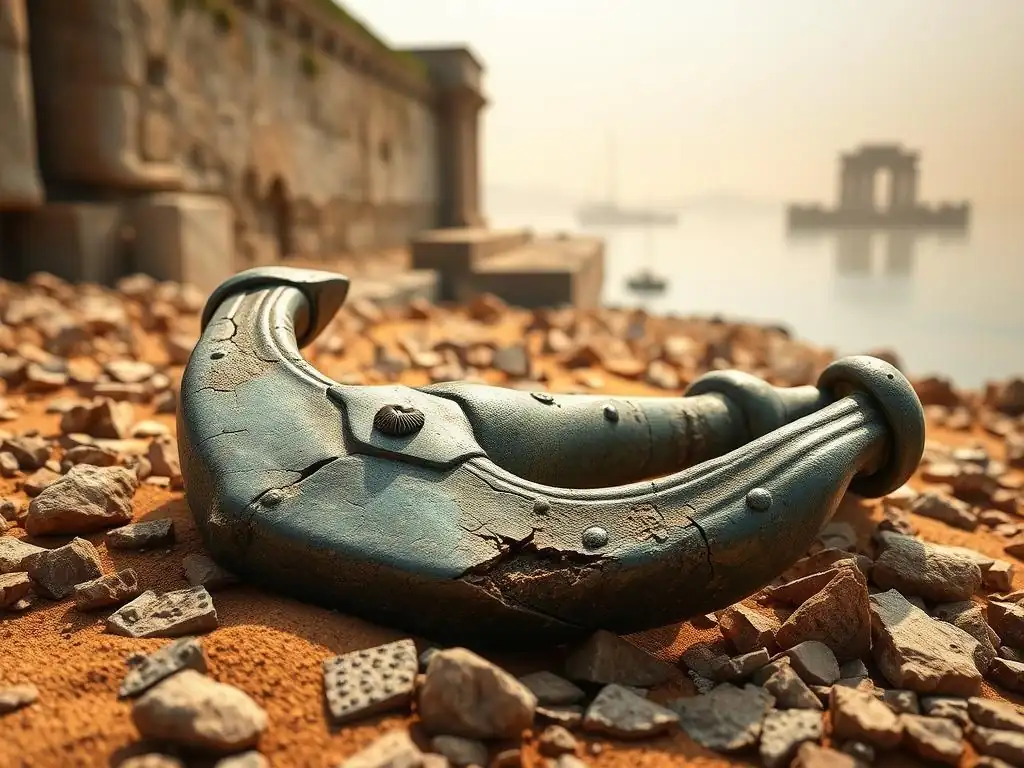
A direct comparison of Alexandria's Portus Magnus and the harbors of Rhodes reveals distinct strengths and operational philosophies. While both were essential to Hellenistic maritime power, their scale, military emphasis, economic models, and engineering approaches differed significantly, reflecting their unique geopolitical contexts and objectives. This detailed Alexandria harbor ancient comparison allows for a deeper understanding of ancient port development.
Harbor Size and Capacity: Relative Advantages
Alexandria's Portus Magnus was undeniably vast. Estimates suggest it could comfortably accommodate hundreds of ships simultaneously, including the largest grain carriers ( navis oneraria) and the formidable Ptolemaic warships. Its immense area provided ample room for maneuvering, anchoring, and berthing, crucial for a port that handled the grain supply for a large portion of the Roman world in later periods. This sheer scale allowed for high-volume, efficient throughput, essential for an imperial capital and a primary exporter.
Rhodes, while possessing multiple harbors (Mandraki, Commercial, and Great Harbor), was geographically more constrained. Its harbors were smaller in total area compared to Alexandria's Portus Magnus. However, they were meticulously planned and highly efficient. Mandraki, the military port, was specifically designed for the Rhodian navy, while the Commercial Harbor focused on rapid loading and unloading of diverse goods. Rhodes compensated for its smaller size with optimized layouts and strict organizational protocols, enabling high-density traffic and quick turnarounds.
Both Alexandria and Rhodes maintained powerful navies, but their military roles within their respective harbors differed. Alexandria was the home base for the massive Ptolemaic fleet, one of the largest and most advanced navies of the Hellenistic world. The Portus Magnus included extensive naval arsenals, shipyards, and docks capable of building and maintaining warships of all sizes, from triremes to the colossal tessarakonteres. The fleet's primary role was to project Ptolemaic power, protect vital trade routes (especially those carrying Egyptian grain), and defend the Nile Delta from invasion.
Rhodes, in contrast, was renowned for its highly disciplined and effective navy, which operated more as an independent force. Its primary military role was to combat piracy, particularly in the Aegean, and to enforce its maritime law, thereby safeguarding its commercial interests. The Rhodian navy was also frequently hired as a mercenary force by other Hellenistic powers, highlighting its reputation for skill and reliability. Mandraki, Rhodes's military harbor, was specifically designed for efficient deployment and maintenance of this formidable fleet, underscoring its strategic defensive and commercial protection capabilities.
Trade Volume and Economic Impact: A Tale of Two Cities
The economic impact of Alexandria and Rhodes, while both immense, stemmed from different sources. Alexandria's economy was intrinsically linked to Egypt's vast agricultural output, particularly grain. The Portus Magnus was the primary export hub for this essential commodity, ensuring a steady flow of wealth into the Ptolemaic treasury. Alexandria also served as a major import point for luxury goods from the East, catering to the opulent Ptolemaic court and the city's burgeoning elite. Its trade volume was characterized by large-scale, state-controlled shipments of bulk goods.
Rhodes's wealth derived primarily from its role as a transit hub, a banking center, and an insurer of maritime trade. As a free port with low duties and strong legal protections, it attracted merchants from across the Mediterranean. Goods from Egypt, Syria, Anatolia, Greece, and Italy converged in Rhodian harbors for transshipment, storage, and financial transactions. While specific trade volumes are difficult to quantify precisely, Rhodes's economic model relied on high turnover of diverse goods and sophisticated financial services, rather than direct production, differentiating it significantly in this Alexandria harbor ancient comparison.
Infrastructure and Engineering: Construction Methods
The construction methods employed in Alexandria and Rhodes reflected the available materials, geographical conditions, and engineering capabilities of the Hellenistic period. Alexandria's Portus Magnus involved significant artificial enhancements. The Heptastadion causeway, built from immense stone blocks, was a monumental feat of engineering, creating protected basins. The construction of the Pharos Lighthouse, a multi-tiered stone tower of unprecedented height, showcased advanced masonry and structural design. Breakwaters and extensive quays were built using large cut stone blocks, often sourced from local quarries or transported via the Nile.
Rhodes, leveraging its natural coves and inlets, also demonstrated impressive hydraulic engineering. Its multiple harbors featured robust breakwaters and quays, constructed from local stone and often reinforced with timber. The Rhodian engineers were adept at adapting the natural coastline to create functional and secure port facilities. While perhaps not on the colossal scale of Alexandria's most famous structures like the Pharos, the efficiency and durability of Rhodian harbor infrastructure were equally remarkable, allowing them to manage complex maritime operations effectively within their more constrained natural settings.
Maritime Trade and Cultural Exchange
The great Hellenistic harbors like Alexandria and Rhodes were not merely economic engines; they were vibrant melting pots of cultures, ideas, and technologies. The constant flow of ships and people through these ports facilitated an unprecedented degree of cultural exchange, profoundly shaping the Mediterranean world and beyond. This aspect is crucial for a complete Alexandria harbor ancient comparison.
Alexandria and the Mediterranean World: A Network of Commerce
Alexandria, with its unparalleled access to the riches of Egypt and its strategic position at the confluence of Mediterranean and Red Sea trade routes, served as a primary nexus of commerce. From its Portus Magnus, Egyptian grain, papyrus, linen, and manufactured goods flowed westward to Greece and Rome, and eastward to the Levant. Simultaneously, luxury items, spices, and exotic animals arrived from India and Arabia via the Red Sea, passing through Alexandria on their way to European markets.
This extensive network of commerce meant that merchants, sailors, and travelers from across the known world converged in Alexandria. The city became a vibrant cosmopolitan center where diverse languages were spoken, different customs observed, and various religions practiced. The Portus Magnus was the physical manifestation of this global connectivity, acting as a gateway through which Egypt engaged with and influenced the broader Mediterranean world.
Cultural Diffusion Through Maritime Activity
The incessant movement facilitated by harbors like Alexandria and Rhodes was a powerful driver of cultural diffusion. As ships carried goods, they also transported people, ideas, and artistic styles. Hellenistic culture, characterized by the spread of Greek language (Koine Greek), architecture, philosophy, and political institutions, was disseminated throughout the Mediterranean largely through these maritime arteries. For instance, archaeological finds in port cities, such as specific types of pottery, coins, or religious figurines, often reveal influences from distant lands, demonstrating the interconnectedness fostered by trade.
Conversely, Hellenistic centers like Alexandria absorbed elements from the cultures they interacted with. Egyptian deities found their way into Greek religious practices, and Eastern artistic motifs influenced Hellenistic art. The intellectual vibrancy of Alexandria's Library and Mouseion, drawing scholars from across the Hellenistic world, was also a direct consequence of its accessibility via the Portus Magnus, showcasing how maritime activity fostered intellectual and cultural cross-pollination.
Impact on Global Trade Networks
The major Hellenistic harbors, particularly Alexandria and Rhodes, played a pivotal role in establishing what could be considered the first truly "globalized" trade networks of antiquity. By connecting disparate regions and civilizations—from the Atlantic coast to India and even parts of Africa—they created an interdependent economic system. The development of sophisticated shipping routes, improved navigation, and standardized commercial practices facilitated this widespread connectivity.
These harbors served as prototypes for future maritime powers, demonstrating the immense economic and strategic advantages of well-managed, strategically located ports. Their operational models and engineering achievements laid the groundwork for Roman imperial trade and beyond, leaving an enduring legacy on the evolution of global commerce. The efficiency and scale achieved by ports like Alexandria set a benchmark for centuries, underscoring their profound impact on the trajectory of ancient trade.
Decline and Legacy
Even the greatest ancient harbors eventually faced decline, influenced by shifting geopolitical landscapes, natural phenomena, and evolving trade patterns. Understanding the factors contributing to the changes in usage and the enduring legacy of Alexandria's and Rhodes's harbors provides crucial insights into the long-term dynamics of ancient maritime infrastructure. This final section of the Alexandria harbor ancient comparison brings the historical narrative to a close.
Factors Contributing to Changes in Harbor Usage
The fortunes of Alexandria's and Rhodes's harbors were inextricably linked to the political and economic shifts of the ancient world. For Alexandria, the decline of the Ptolemaic Kingdom and the subsequent Roman annexation of Egypt in 30 BCE fundamentally altered its status. While it remained a crucial grain supplier for Rome, its role transitioned from an independent imperial capital to a provincial city. Roman administrative changes and the rise of other key Roman ports gradually reduced its unique strategic preeminence, although it remained highly active for centuries.
Rhodes's decline as a dominant free port began earlier, largely due to Roman intervention. The Roman establishment of Delos as a free port in 167 BCE, following the Third Macedonian War, was a deliberate punitive measure against Rhodes, severely undercutting its customs revenues and commercial advantage. Increased piracy, political instability in the Eastern Mediterranean, and a series of devastating earthquakes also contributed to its diminished standing. Natural factors like silting, common in many ancient harbors, also posed ongoing challenges to maintaining navigability and capacity over millennia.
Archaeological Evidence: Reconstructing the Past
The study of ancient harbors like Alexandria's Portus Magnus and the Rhodian basins relies heavily on archaeological evidence, particularly from underwater excavations. For Alexandria, the groundbreaking work of marine archaeologist Franck Goddio and his team has revealed submerged sections of the Royal Quarter, including quays, foundations of palaces, and thousands of artifacts that sank due to earthquakes and tsunamis over centuries. Discoveries of colossal statues, sphinxes, and structural remains provide direct insights into the harbor's layout and the opulence of the Ptolemaic era.
In Rhodes, terrestrial and underwater archaeology have unearthed remains of breakwaters, quays, and ancient shipwrecks, offering tangible proof of the island's extensive maritime activity. Amphorae, anchors, and ship timbers recovered from these sites provide valuable data on trade routes, ship types, and daily life in the ancient ports. These archaeological investigations are vital for reconstructing the physical appearance, operational methods, and economic activities of these once-thriving maritime hubs, adding empirical depth to any Alexandria harbor ancient comparison.
Enduring Legacy of Maritime Engineering
Despite their eventual decline, the Hellenistic harbors of Alexandria and Rhodes left an enduring legacy in the field of maritime engineering and urban planning. The scale and sophistication of the Portus Magnus, particularly the construction of the Heptastadion and the Pharos Lighthouse, demonstrated advanced knowledge of hydraulics, masonry, and large-scale project management. These structures served as models for subsequent Roman and Byzantine harbor constructions, influencing engineering practices for centuries.
The Rhodian emphasis on efficient multi-basin systems, coupled with their expertise in naval architecture and maritime law, also contributed significantly to the evolution of port design and governance. The Rhodian Sea Law, for instance, became a foundational text for later maritime legal codes. The very concept of a free port, pioneered by Rhodes, had a lasting impact on international trade policies. The resilience and ingenuity embedded in these ancient maritime infrastructures continue to inspire modern engineers and historians, underscoring their profound and lasting impact on human civilization.
Conclusion: Ancient Harbors in Context
The detailed Alexandria harbor ancient comparison with Rhodes reveals two distinct yet equally impressive models of Hellenistic maritime power. Alexandria, with its vast Portus Magnus, symbolized the centralized might of an imperial kingdom, a colossal gateway for Egypt's immense resources and a beacon of intellectual and cultural exchange. Rhodes, in contrast, represented the agile efficiency of an independent mercantile republic, a free port whose wealth was built on strategic location, naval prowess, and sophisticated trade practices.
Key Takeaways from the Alexandria and Rhodes Comparison
The comparison highlights several key takeaways. Firstly, geographical advantages were paramount, but human ingenuity in engineering artificial enhancements (like Alexandria's Heptastadion) or optimizing natural features (like Rhodes's multiple basins) determined the ultimate success of a port. Secondly, the political structure significantly influenced a harbor's economic model: state-controlled monopolies in Alexandria versus free-market dynamism in Rhodes. Thirdly, both harbors demonstrated the critical dual role of ports as centers of commerce and vital naval bases for projecting power and ensuring security. Finally, their individual responses to economic shifts, political pressures, and natural disasters shaped their long-term trajectories.
Future Research and Exploration
Despite centuries of study, the ancient harbors of Alexandria and Rhodes continue to offer fertile ground for future research and exploration. Advances in marine archaeology, remote sensing technologies, and historical reconstruction methods promise to unlock further secrets from their submerged remains. Detailed analyses of shipwrecks and artifact distributions can provide more precise data on trade volumes, specific commodities, and the origins of maritime technology.
Ongoing investigations into the precise layout of the Pharos and the Colossus, as well as the daily operational logistics of these bustling ports, remain areas of intense academic interest. Future discoveries will undoubtedly enrich our understanding of these extraordinary maritime achievements, further contextualizing the profound impact of the Alexandria harbor ancient comparison on the study of Hellenistic maritime history and the broader ancient world.
Frequently Asked Questions
### How does the size of Alexandria's Portus Magnus compare to other major Hellenistic harbors, such as Rhodes?
The Portus Magnus in Alexandria was exceptionally large, potentially rivaling or even exceeding the size of Rhodes' harbor. Archaeological evidence suggests it was a major hub of maritime activity.
### What types of archaeological discoveries within Alexandria's harbor contribute to our understanding of its importance?
Discoveries like sunken ships, architectural remains, and artifacts related to trade provide crucial insights. These finds reveal the scale and scope of Alexandria's maritime operations.
### What excavation techniques are most effective for uncovering submerged archaeological sites like the Portus Magnus?
Underwater archaeology relies on techniques like sonar scanning, ROV exploration, and careful excavation by trained divers. These methods minimize damage to fragile artifacts.
### In what ways did the design and functionality of Alexandria's harbor influence the city's economic and political power during the Hellenistic period?
The harbor's design facilitated efficient trade and naval operations. This contributed directly to Alexandria's economic prosperity and its position as a political center.
### How does the Portus Magnus contribute to our understanding of maritime technology and shipbuilding during the Hellenistic era, when compared to other Hellenistic harbors?
The Portus Magnus yielded evidence of advanced shipbuilding and maritime technologies, and its location and access to materials may have influenced these. Studying its shipwrecks and harbor infrastructure offers insights into Hellenistic naval capabilities.
Okay, here's a final reflection tailored for your article "Comparing Alexandria's Portus Magnus with other Major Hellenistic Harbors like Rhodes," optimized for the keyword "Alexandria harbor ancient comparison," and following the structure you outlined:
Final Reflection: Echoes of Ancient Maritime Power
The exploration of Alexandria's Portus Magnus, when juxtaposed with the likes of Rhodes and other Hellenistic harbors, reveals more than just architectural prowess; it underscores the enduring significance of maritime dominance in shaping ancient civilizations. The strategic importance of these harbors, then and now, highlights how control of the seas directly translated into economic prosperity, political influence, and cultural exchange, a lesson that resonates powerfully even in our interconnected world.
The legacy of these ancient harbors continues to ripple through our understanding of history, influencing not only archaeological studies but also our appreciation for the ingenuity and ambition of past societies. Personally, delving into the intricacies of these port cities has deepened my understanding of how geography and human innovation intertwine to create lasting legacies. The sea is everything. It covers seven tenths of the terrestrial globe. Its breath is pure and healthy. It is an immense desert, where man is never lonely, for he feels life stirring on all sides. The sea is only the embodiment of a supernatural and wonderful existence. It is nothing but love and emotion; it is the 'Living Infinite'.
- Jules Verne, Twenty Thousand Leagues Under the Sea. This quote, though later, captures the spirit of awe and dependence that ancient civilizations felt towards the sea, a sentiment that fueled the creation of these magnificent harbors.
As we conclude this comparative analysis of Alexandria's Portus Magnus and its contemporaries, let us consider the enduring power of human ambition and the indelible mark left by those who dared to harness the sea. Reflect on the lessons learned from these ancient harbors: the importance of strategic vision, the power of innovation, and the enduring impact of maritime trade. How can we, in our own lives, embrace a similar spirit of innovation and strategic thinking to build a better future, one that honors the lessons of the past?
Unearth History: Dive Deeper into Hellenistic Harbors!
Thanks for exploring the grandeur of Alexandria's Portus Magnus with us. We hope you've gained a newfound appreciation for the ingenuity of Hellenistic harbor design! Now, it's your turn to connect with this fascinating history.
- Embark on a virtual exploration: Revisit online interactive 3D models of Portus Magnus and Rhodes harbor to compare their architectural innovations and scale side-by-side.
- Share your insights! Start a discussion in the comments section on ArchaeologyHub.org about which engineering feat from these ancient harbors you find most impressive.
- Delve deeper: Research lesser-known Hellenistic harbors and create a short blog post for our community sharing your discoveries.
What overlooked detail about Hellenistic harbor construction sparks your curiosity the most?