
Athenian Weights and Measures: Standards Maintained in the Agora (Tholos)


Welcome to ArchaeologyHub.org!
Delve into the fascinating world of ancient civilizations, where every artifact tells a story. Ever wondered how the bustling marketplace of ancient Athens maintained fairness in trade? Explore our digital encyclopedia and uncover the secrets behind Ancient Athenian trade weights measures, specifically those meticulously preserved and regulated within the Tholos of the Agora. Join us as we excavate the past, uncovering the standards that shaped commerce and society in this pivotal historical site. What stories do these weights and measures reveal about Athenian life and governance? Read on to discover more...
- Introduction: Unveiling Ancient Athenian Trade Through Weights and Measures
- The Significance of Standardized Measurements in Ancient Athens
- The Athenian Agora: A Hub for Commerce and Standardization
- The Tholos and the Guardians of Standards
- Types of Athenian Weights and Measures
- Materials and Construction of Athenian Weights and Measures
- Archaeological Evidence: Discoveries of Weights and Measures in the Agora
- The Evolution of Athenian Measurement Systems
- The Legacy of Athenian Weights and Measures
- Conclusion: The Enduring Importance of Standardized Measurement in Understanding Ancient Athenian Society
-
Frequently Asked Questions
- How were ancient Athenian trade weights and measures standardized, and why was this important?
- What role did the Tholos in the Athenian Agora play in regulating weights and measures?
- What types of artifacts related to Athenian trade weights and measures have been discovered at the Agora?
- How did the use of standardized weights and measures impact the Athenian economy and society?
- Beyond the Agora, where else might evidence of Athenian trade weights and measures be found?
- Final Reflection: The Enduring Legacy of Athenian Precision
- Unearth Your Inner Archaeologist: Start Digging Today!
Introduction: Unveiling Ancient Athenian Trade Through Weights and Measures
Standardization of weights and measures has been a cornerstone of organized societies for millennia, facilitating fair exchange and preventing fraud. In the bustling heart of ancient Athens, the Agora served not only as a political and social hub but also as the primary marketplace where commodities of all kinds were bought and sold. The integrity of these commercial transactions relied heavily on a universally accepted system of "Ancient Athenian trade weights measures."
This article delves into the sophisticated system of weights and measures employed by the Athenians, exploring their critical role in the city's economy and administration. We will uncover how these standards were established, maintained, and enforced within the Agora, particularly focusing on the significance of the Tholos, a pivotal structure in ensuring the consistency and fairness of "Ancient Athenian trade weights measures" for all citizens and merchants.
The Significance of Standardized Measurements in Ancient Athens
Facilitating Fair Trade in the Athenian Agora
The Athenian Agora was a vibrant economic ecosystem, teeming with diverse goods ranging from staple grains and olive oil to luxury crafts and imported commodities. Without standardized "Ancient Athenian trade weights measures," every transaction would have been open to dispute, undermining trust and inhibiting large-scale commerce. The state's commitment to uniform standards ensured that buyers received the agreed-upon quantity and sellers were fairly compensated, fostering an environment of reliability essential for a thriving market economy.
This commitment to equitable exchange enhanced Athens' reputation as a reliable commercial center, attracting merchants from across the Mediterranean. The consistent application of these "Ancient Athenian trade weights measures" meant that a medimnos of grain or a chous of wine held the same value and quantity for everyone, whether a local farmer or an international trader, thereby streamlining transactions and reducing the potential for fraud.
The Role of Weights and Measures in Athenian Economy and Society
Beyond facilitating daily market transactions, "Ancient Athenian trade weights measures" played a fundamental role in the broader Athenian economy and societal structure. They were indispensable for taxation purposes, enabling the state to accurately assess duties on imports and exports, and for collecting tribute from allied states, often paid in silver by weight. Furthermore, these standards were crucial for public works, such as the precise construction of monumental buildings like the Parthenon, which relied on consistent linear measurements for its architectural harmony.
In a society where legal disputes were common, the accuracy of "Ancient Athenian trade weights measures" was also paramount in resolving commercial disagreements. Judicial proceedings often referenced official standards to determine if contractual obligations regarding quantity or weight had been met. This pervasive use underscored their importance not just as economic tools, but as vital components of the Athenian legal and administrative framework, ensuring order and justice.
The Athenian Agora: A Hub for Commerce and Standardization
The Agora as the Center of Athenian Public Life and Trade
The Athenian Agora was far more than just a marketplace; it was the political, social, and cultural heart of the city-state. Here, citizens gathered for assemblies, legal proceedings took place, and philosophical discussions unfolded. Intertwined with these civic functions was its undeniable role as the epicenter of Athenian commerce. From the early morning, vendors would set up stalls, offering everything from fresh produce and fish to pottery, textiles, and metalwork, making it a constant hive of activity where "Ancient Athenian trade weights measures" were in continuous use.
This central location meant that the Agora was the logical place for the state to establish and maintain its official "Ancient Athenian trade weights measures." The sheer volume and variety of goods traded necessitated a robust system to ensure fairness and prevent exploitation. The Agora’s accessibility to all citizens and metics reinforced the transparency and public nature of the standardization process, embedding it deeply within the fabric of daily Athenian life.
The Tholos: Function and Location within the Athenian Agora
Among the many significant structures in the Athenian Agora, the Tholos, also known as the Skias, held a unique and vital function related to "Ancient Athenian trade weights measures." This distinctive circular building, located prominently in the southwestern part of the Agora, served as the headquarters and dining hall for the Prytaneis, the executive committee of the Boule (Council of 500), who were on duty around the clock.
Crucially, the Tholos also functioned as the repository for the official state standards of "Ancient Athenian trade weights measures." It was here that the master weights and measures were kept, providing a central, authoritative reference point against which all commercial instruments could be verified. Its strategic location within the Agora, combined with its role as a state building, underscored the official backing and importance of maintaining accurate trade standards.
The Tholos and the Guardians of Standards
The Officials Responsible for Maintaining Measurement Accuracy
The meticulous maintenance of "Ancient Athenian trade weights measures" was entrusted to specific state officials, primarily the Agoranomoi (market supervisors) and the Metronomoi (inspectors of weights and measures). The Agoranomoi were responsible for general market oversight, ensuring fair practices and maintaining order among vendors. Their duties included preventing price gouging and ensuring that goods were sold according to legal standards.
The Metronomoi, a board of ten officials, were specifically tasked with the calibration and verification of all "Ancient Athenian trade weights measures" used in commerce. They regularly inspected merchants' scales and measuring devices, comparing them against the official standards kept in the Tholos. Any deviation or attempt at fraud was met with swift penalties, including fines or the confiscation of goods, reflecting the Athenian state's serious commitment to economic integrity.
The Public Verification Process of Athenian Weights and Measures
To ensure transparency and public trust, the process of verifying "Ancient Athenian trade weights measures" was often public and accessible. Merchants and citizens could bring their own weights and measures to designated areas, often near the Tholos or other public buildings in the Agora, to have them officially checked against the state's master standards. This allowed individuals to confirm the accuracy of their own instruments and to ensure that those used by others were legitimate.
Once verified, weights and measures might be stamped or marked with official seals, such as the Athenian owl or the letters "ΑΛ" (Alpha-Lambda) signifying Athens, indicating their conformity to the state standard. This public verification process not only deterred fraud but also reinforced the authority of the "Ancient Athenian trade weights measures" system, building confidence among traders and consumers alike in the fairness of the market.
Types of Athenian Weights and Measures
Liquid Measures: Volume Standards in Athenian Trade
For liquid commodities, which were vital to the Athenian diet and economy, a precise system of "Ancient Athenian trade weights measures" was employed. The primary unit was the chous, roughly equivalent to 3.28 liters, often used for wine, olive oil, and other valuable liquids. Subdivisions included the kotyle (approximately 0.27 liters, or 1/12 of a chous) and the oxybaphon (approximately 0.045 liters, or 1/6 of a kotyle).
These standards ensured consistent pricing and fair exchange for goods that were often stored and transported in amphorae or other ceramic vessels. The accuracy of these "Ancient Athenian trade weights measures" was especially critical for olive oil and wine, which were not only consumed locally but also significant export products, contributing substantially to Athens' wealth and trade networks across the Mediterranean.
Dry Measures: Grain and Agricultural Products
Grain was the lifeblood of Athens, a city heavily reliant on imports to feed its population. The principal dry measure was the medimnos, approximately 52.5 liters, used for staples like wheat and barley. This unit was foundational for large-scale transactions, including state grain distributions and the pricing of agricultural imports. Smaller units included the hekteus (1/6 of a medimnos, about 8.75 liters) and the choenix (1/48 of a medimnos, about 1.09 liters), which was considered a daily ration for an adult.
The meticulous standardization of these "Ancient Athenian trade weights measures" for dry goods was paramount for food security and economic stability. Any manipulation of these measures could lead to widespread discontent or even famine, underscoring the state's vigilance in maintaining accurate and fair quantities for these essential commodities.
Linear Measures: Construction and Land Division in Ancient Athens
Linear "Ancient Athenian trade weights measures" were crucial not only for commerce but also for urban planning, architecture, and land division. The fundamental unit was the Attic pous (foot), measuring approximately 29.6 centimeters. Other common units included the pechys (cubit), equivalent to 1.5 pous or about 44.4 cm, and the orguia (fathom), equal to 6 pous or approximately 1.776 meters.
These precise measurements were indispensable for the grand public works that defined classical Athens, such as the construction of the Parthenon and other temples on the Acropolis, which required immense precision in design and execution. They were also vital for surveying land, defining property boundaries, and laying out streets in new urban developments like the port of Piraeus, demonstrating the comprehensive application of "Ancient Athenian trade weights measures" beyond simple market transactions.
Weight Standards: From Obols to Talents
The Athenian weight system, which often overlapped with its monetary system, was based on a decimal and sexagesimal progression. The smallest common unit was the obol (approximately 0.72 grams), primarily used for small silver coins. Six obols made a drachma (approximately 4.32 grams), and 100 drachmas constituted a mina (approximately 432 grams). The largest unit was the talent, equal to 60 minas, weighing roughly 26 kilograms.
These "Ancient Athenian trade weights measures" were fundamental for weighing precious metals, particularly silver from the Laurion mines, which formed the basis of Athenian coinage, and for large-scale commercial transactions involving valuable commodities. The talent, though too heavy for daily use, served as an accounting unit for vast sums of wealth, tribute payments, and international trade agreements, illustrating the scale of transactions facilitated by these standardized weights.
Materials and Construction of Athenian Weights and Measures
Common Materials Used: Stone, Bronze, and Lead
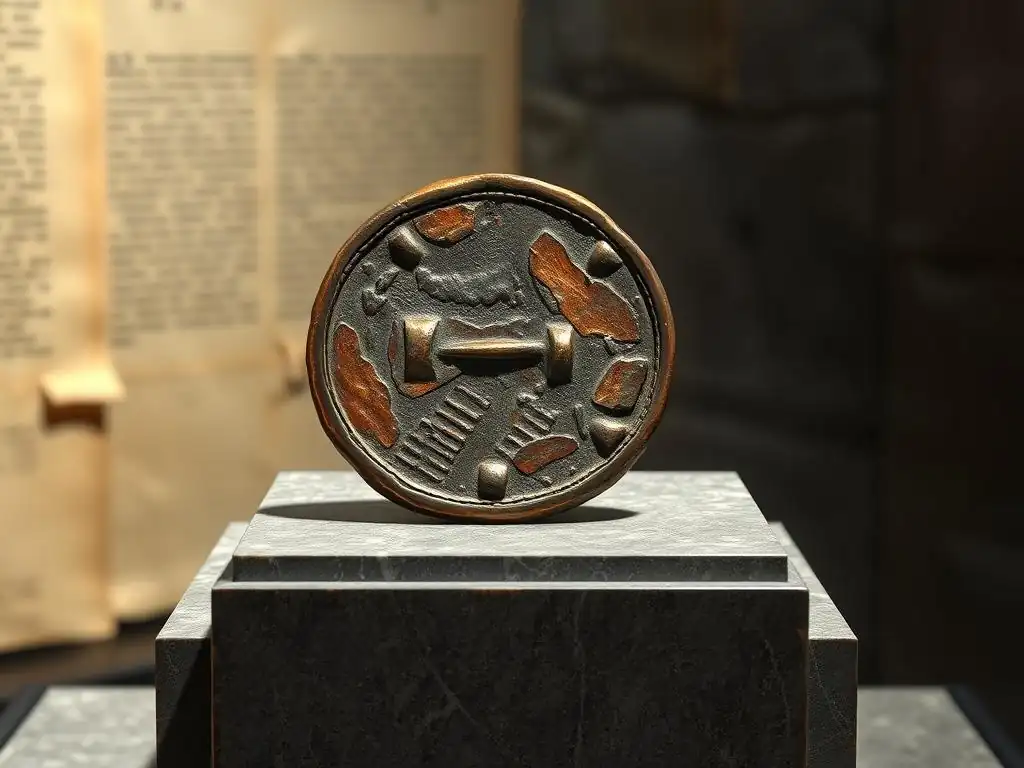
The choice of materials for "Ancient Athenian trade weights measures" reflected their specific function and the desired level of durability and precision. Larger, less frequently moved standards, especially those kept in public repositories like the Tholos, were often made of durable stone, such as limestone or marble, ensuring their stability and resistance to wear over time. These were typically used for calibrating other weights.
For commercial use, particularly by merchants who needed more portable and resilient instruments, bronze was a favored material. Bronze weights were robust, resistant to corrosion, and could be cast with high precision. Lead was also commonly used, especially for smaller weights or for fine-tuning the calibration of other weights due to its malleability. The use of these diverse materials underscores the practical considerations in creating a comprehensive system of "Ancient Athenian trade weights measures."
Craftsmanship and Design of Standard Weights and Measures
Athenian "Ancient Athenian trade weights measures" were not merely functional objects; they were often meticulously crafted and designed, bearing inscriptions and symbols that attested to their official status. Weights typically took disc or rectangular forms, though some lead weights were shaped like animals (e.g., pigs or dolphins). Inscriptions commonly included the unit of measure (e.g., "drachma," "mina"), the name of an issuing official or magistrate, and crucially, an official state mark.
The most common official mark on Athenian weights was the "ΑΛ" (Alpha-Lambda) monogram, representing "Athinaion," or the Athenian owl, a symbol of the city. These markings not only guaranteed the authenticity and accuracy of the "Ancient Athenian trade weights measures" but also served as a deterrent against fraudulent imitations. The precision in their manufacture, often by skilled artisans, was vital to ensuring the integrity of the entire commercial system.
Archaeological Evidence: Discoveries of Weights and Measures in the Agora
Notable Finds: Stone Weight with Alpha-Lambda Inscription, Bronze Standard Hemina
Archaeological excavations in the Athenian Agora have yielded a rich trove of "Ancient Athenian trade weights measures," providing tangible evidence of their widespread use and the state's commitment to standardization. Among the most significant finds are numerous stone weights, often disc-shaped, bearing the distinctive "ΑΛ" (Alpha-Lambda) inscription, confirming their official Athenian origin. These range in size from small drachma weights to larger mina and even talent weights.
Another notable discovery includes a bronze standard hemina, a liquid measure, found within the Agora. This artifact, likely used as a master reference, demonstrates the physical presence of official calibration tools. Such finds are invaluable as they allow archaeologists to verify historical texts describing "Ancient Athenian trade weights measures" and to reconstruct the precise dimensions and materials of these ancient instruments.
Analysis of Inscriptions and Markings on Artifacts
The inscriptions and markings found on recovered "Ancient Athenian trade weights measures" are crucial for understanding their context and evolution. Beyond indicating the unit of measure or official approval (like the "ΑΛ" monogram or the Athenian owl), some weights bear the names of specific Metronomoi or other officials responsible for their oversight during particular periods. These names can help in dating the artifacts and tracing the history of the regulatory system.
Furthermore, the stylistic analysis of these markings, alongside the material composition and craftsmanship, allows archaeologists to distinguish official state-issued "Ancient Athenian trade weights measures" from private or unofficial ones, or even from counterfeits. This detailed epigraphic and material analysis provides profound insights into the administrative practices, economic controls, and legal frameworks that underpinned trade in ancient Athens.
The Evolution of Athenian Measurement Systems
Influences from Other Mediterranean Cultures
The "Ancient Athenian trade weights measures" system did not develop in isolation; it was part of a broader Mediterranean network of exchange and influence. Early Greek measurement systems, including those in Athens, likely absorbed elements from older, established civilizations. For instance, the concept of the talent as a large unit of weight has Mesopotamian origins, though its precise value was adapted to local standards. Similarly, linear measures like the cubit show parallels with Egyptian systems.
Athens, as a burgeoning maritime power, engaged in extensive trade with Egypt, the Near East, and other Greek city-states, facilitating the transfer and adaptation of measurement principles. While Athenians ultimately developed their distinct and highly respected "Ancient Athenian trade weights measures," these foreign influences attest to the interconnectedness of ancient economies and the selective adoption of practices that best served their commercial needs.
Changes and Refinements Over Time
While the core principles of "Ancient Athenian trade weights measures" remained remarkably consistent through the Classical period, the system was not entirely static. Over centuries, particularly from the Archaic period through the Hellenistic era, minor adjustments or reforms might have occurred, driven by economic shifts, changes in trade partners, or the need for greater precision. For example, the precise value of the drachma as a weight could vary slightly over time depending on the purity of silver and state policy.
These refinements, though sometimes subtle, reflect the Athenian state's continuous effort to maintain a robust and equitable system of "Ancient Athenian trade weights measures" that could adapt to the growing complexity of its economy and imperial ambitions. The ongoing archaeological discovery and analysis of different types and periods of weights provide a clearer picture of this gradual evolution and the underlying administrative flexibility.
The Legacy of Athenian Weights and Measures
Impact on Subsequent Measurement Systems
The Athenian system of "Ancient Athenian trade weights measures," particularly its Attic standard for coinage and weights, exerted significant influence across the ancient Greek world and beyond. Due to Athens' economic prowess, cultural prestige, and extensive trade networks, the Attic drachma and talent became widely recognized and adopted as reference standards by many other Greek city-states and even in the Hellenistic kingdoms that emerged after Alexander the Great.
This enduring legacy is evident in the continuity of certain principles of standardization that laid groundwork for later Roman systems, which in turn influenced early modern European measurements. The Athenian emphasis on state-controlled, publicly verifiable standards for "Ancient Athenian trade weights measures" set a precedent for governmental oversight in economic affairs that resonated for centuries, demonstrating its profound historical impact.
Modern Relevance for Understanding Ancient Athenian Trade and Economy
For modern historians and archaeologists, the study of "Ancient Athenian trade weights measures" is not merely an academic exercise; it is crucial for accurately interpreting ancient economic data and reconstructing the daily life and trade volumes of the past. By understanding the precise values of units like the medimnos or the talent, researchers can better estimate agricultural yields, assess the scale of trade transactions, and quantify the wealth of individuals and the state.
The meticulousness with which "Ancient Athenian trade weights measures" were maintained offers profound insights into the Athenian commitment to order, fairness, and the sophisticated administrative capabilities of one of history's most influential city-states. These seemingly mundane artifacts thus serve as tangible links to understanding the intricate economic machinery and societal values that underpinned ancient Athenian society.
Conclusion: The Enduring Importance of Standardized Measurement in Understanding Ancient Athenian Society
Frequently Asked Questions
How were ancient Athenian trade weights and measures standardized, and why was this important?
Standardization was primarily maintained within the Agora, specifically at the Tholos. This was crucial for fair trade and economic stability across Attica. Without standard weights and measures, commerce would have been chaotic.
What role did the Tholos in the Athenian Agora play in regulating weights and measures?
The Tholos served as the official location for storing and verifying standard weights and measures. Officials regularly checked merchants' equipment against these standards, ensuring accuracy.
Archaeologists have unearthed numerous standard weights made of bronze or stone, as well as measuring vessels and inscriptions detailing regulations. These finds provide invaluable insights into Athenian commerce.
How did the use of standardized weights and measures impact the Athenian economy and society?
Standardized systems fostered trust in trade, promoting economic growth and stability. This also contributed to a more equitable society by preventing fraud and unfair practices.
Beyond the Agora, where else might evidence of Athenian trade weights and measures be found?
Evidence can be found at other marketplaces, port cities like Piraeus, and even private workshops involved in the production and trade of goods. These offer a broader view of the system's implementation.
Final Reflection: The Enduring Legacy of Athenian Precision
The meticulous standardization of Ancient Athenian trade weights and measures, as evidenced by the artifacts unearthed from the Agora's Tholos, speaks volumes about their commitment to fair trade and economic stability. This dedication to precision, far from being a dusty relic of the past, resonates powerfully today in our own globalized economy, where standardized metrics are crucial for international commerce and consumer trust. The principles of transparency and accuracy, so diligently upheld in ancient Athens, remain fundamental pillars of a thriving marketplace.
The impact of these ancient standards extends beyond mere economic function; they shaped the very fabric of Athenian society, fostering a sense of trust and shared understanding amongst its citizens. Reflecting on the tangible remnants of these weights and measures allows us to connect with the daily lives of Athenians, understanding their values and priorities. Good order is the foundation of all good things.
- Edmund Burke. This quote, though not Athenian, perfectly encapsulates the spirit behind their meticulous system, highlighting the importance of structure and regulation in creating a prosperous and equitable society.
As we contemplate the legacy of Ancient Athenian trade weights and measures, let us consider the importance of upholding similar principles in our own lives and communities. What standards do we hold ourselves to? How can we contribute to a more transparent and equitable world? Let the dedication of the Athenians inspire us to strive for accuracy, fairness, and integrity in all our endeavors, ensuring a future where trust and mutual understanding prevail.
Unearth Your Inner Archaeologist: Start Digging Today!
Thank you for delving into the world of Athenian weights and measures! We hope you've gained a deeper appreciation for the meticulous standards that shaped ancient commerce. Now, it's time to put that knowledge into action.
- Calculate historical trade values: Using what you've learned, try to estimate the value of goods exchanged in the Athenian Agora, considering the weights and measures discussed.
- Explore further by researching similar standardization efforts in other ancient civilizations, comparing their approaches and impact.
- Share this fascinating glimpse into Athenian life with your friends and fellow history buffs on social media.
What modern day measuring standardization impacts your day to day life the most? Share your thoughts in the comments below!