
Ceramic Conservation from Underwater Roman Sites

Welcome to ArchaeologyHub.org!
Dive into the past! Have you ever wondered how delicate Roman ceramics endure centuries beneath the waves, only to reveal their stories to us today? This article explores the intricate world of Underwater Roman ceramic conservation, unveiling the techniques and challenges faced in preserving these fragile artifacts. Prepare to uncover the secrets hidden within these submerged treasures and understand the cutting-edge science that brings them back to life. Intrigued? Keep reading to learn more!
- Ceramic Conservation from Underwater Roman Sites: An ArchaeologyHub.org Guide
- Introduction: Preserving Roman Ceramics Recovered from Mediterranean Shipwrecks
- The Unique Challenges of Underwater Roman Ceramic Preservation
- Pre-Excavation Assessment and Documentation of Underwater Ceramic Assemblages
- Post-Excavation Handling and Initial Treatment of Roman Pottery
- Advanced Conservation Methods for Roman Ceramics from Shipwrecks
- Case Studies: Successful Underwater Roman Ceramic Conservation Projects
- The Role of Scientific Analysis in Understanding Roman Ceramic Technology
- Ethical Considerations in Underwater Roman Ceramic Conservation
- The Future of Underwater Roman Ceramic Conservation
- Conclusion: Safeguarding Roman Ceramic Heritage for Future Generations
-
Frequently Asked Questions
- What are the main challenges in conserving Roman ceramics recovered from underwater sites?
- Why is it important to conserve underwater Roman ceramics?
- What special techniques are used to conserve underwater Roman ceramics?
- How does the conservation process differ from conserving ceramics found on land?
- Where can I find more information about underwater Roman ceramic conservation techniques?
- Final Reflection: Preserving Echoes of the Roman Sea
- Unearth Your Inner Archaeologist: Dive Deeper into Ceramic Conservation!
Ceramic Conservation from Underwater Roman Sites: An ArchaeologyHub.org Guide
Introduction: Preserving Roman Ceramics Recovered from Mediterranean Shipwrecks
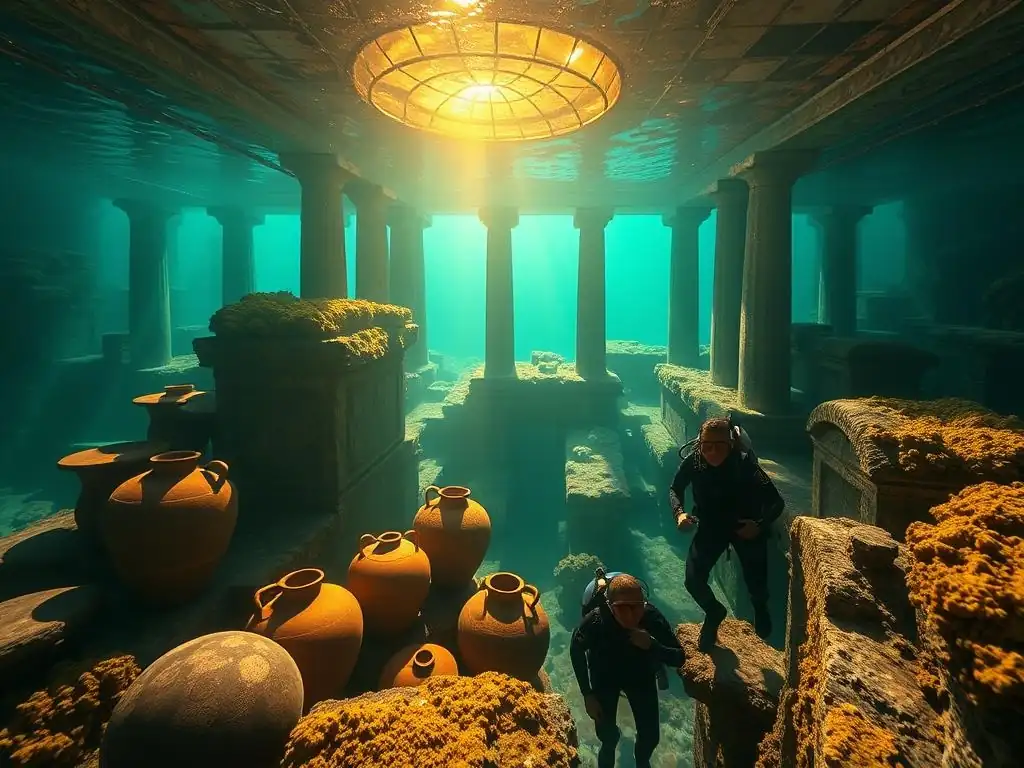
The Mediterranean Sea, a vital artery of trade and culture in the Roman Empire, holds countless shipwrecks, each a time capsule preserving invaluable artifacts. Among the most common finds are Roman ceramics, ranging from sturdy amphorae that transported wine and oil across vast distances to delicate fine tablewares used in daily life.
However, retrieving and preserving these objects from their underwater environments presents a unique set of challenges. Unlike their terrestrial counterparts, ceramics recovered from the seabed are profoundly altered by centuries of submersion, demanding specialized conservation techniques to ensure their survival and the safeguarding of this rich archaeological heritage.
The meticulous process of underwater Roman ceramic conservation is crucial not only for the physical preservation of these artifacts but also for the historical data they embody. Each piece, whether a common cooking pot or an intricately decorated bowl, offers insights into Roman economy, diet, technology, and art.
Without proper conservation, these delicate objects, once exposed to air, can rapidly deteriorate, losing their structural integrity and, consequently, their historical narrative. This guide explores the complexities, methodologies, and ethical considerations inherent in the conservation of Roman ceramics from underwater sites, highlighting the dedication required to bring these submerged stories to light for future generations.
The Unique Challenges of Underwater Roman Ceramic Preservation
Environmental Factors: Saltwater Intrusion and Marine Biofouling
Centuries of submersion in saltwater profoundly alter the physical and chemical structure of Roman ceramics. The porous nature of most pottery allows for significant saltwater intrusion, where chlorides and other soluble salts penetrate deep into the ceramic matrix.
Upon recovery and subsequent drying, these dissolved salts begin to crystallize within the pores, exerting immense pressure that can cause the ceramic material to spall, crack, or even completely disintegrate. This phenomenon, known as salt efflorescence, is a primary driver of deterioration, with ceramics from sites like the Mahdia shipwreck off Tunisia exhibiting severe flaking if not immediately subjected to controlled desalination.
In addition to salt damage, marine biofouling presents another significant challenge. Organisms such as barnacles, mussels, oysters, and calcareous algae attach to and grow on the ceramic surfaces, forming hard, often thick, concretions.
These concretions not only obscure the artifact's details and prevent proper examination but can also trap salts and create localized acidic microenvironments that chemically degrade the ceramic material beneath. For instance, amphorae recovered from the depths of the Capo Graziano shipwreck often feature extensive layers of Saccostrea oysters and Serpula tube worms, requiring painstaking mechanical removal that must be precise enough to avoid damaging the underlying, often fragile, pottery.
The Fragility of Waterlogged Ceramics: Structural Weakness and Material Degradation
Prolonged immersion in water significantly weakens the mechanical strength of ceramics, especially those fired at lower temperatures or with a more porous structure, common in many Roman coarsewares and storage vessels. Water molecules fill the microscopic pores and capillaries within the clay body, reducing the material's internal cohesion and making it incredibly brittle. A Roman amphora that was robust on land can lose upwards of 60% of its original compressive strength after centuries underwater, becoming highly susceptible to fracture and collapse during recovery and initial handling, even under minimal stress.
Beyond physical weakening, waterlogged ceramics often undergo chemical degradation. The dissolution of soluble minerals present in the clay matrix can further increase porosity and reduce material density. This makes the ceramics extremely friable, meaning they crumble easily when touched or allowed to dry rapidly. Many vessels unearthed from the Punta Licosa wreck site, dating to the 1st century BCE, were found to be so fragile that they required immediate support and hydration upon surfacing, highlighting the imperative for specialized underwater Roman ceramic conservation protocols to prevent irreversible damage.
Identifying Ceramic Types and Origins: A Crucial Step in Conservation
Accurate identification of ceramic types and their origins is a foundational step in effective conservation. Different ceramic wares—such as fine tablewares like Arretine ware, utilitarian coarsewares, or various types of storage amphorae—possess distinct material compositions, firing temperatures, and manufacturing techniques. These characteristics directly influence their stability underwater and their optimal response to various conservation treatments. Applying a generic treatment without understanding the specific properties of a ceramic can lead to inappropriate interventions that exacerbate deterioration or cause irreversible damage. For example, a high-fired, vitrified amphora will react differently to desalination and consolidation than a low-fired, porous dolium.
Furthermore, identifying the geographical origin of the ceramics provides invaluable context for conservators. Scientific analyses, such as petrographic analysis or X-ray fluorescence (XRF), can pinpoint the geological source of the clay, revealing ancient trade routes, production centers, and the specific technological choices of Roman potters.
Knowing the origin helps conservators anticipate the original material properties and potential vulnerabilities. For instance, some African Red Slip Ware found in Mediterranean shipwrecks exhibits distinct mineral inclusions traceable to specific Tunisian or Algerian workshops, informing conservators about their typical firing temperatures and inherent fragility, which directly impacts the approach to their underwater Roman ceramic conservation.
Pre-Excavation Assessment and Documentation of Underwater Ceramic Assemblages
Underwater Photography and 3D Modeling for Contextual Recording
Before any physical intervention, comprehensive documentation of underwater ceramic assemblages is paramount. High-resolution underwater photography captures the precise spatial arrangement of ceramics on the seabed, providing an invaluable record of their original context, which is crucial for understanding the wreck's integrity and the distribution of its cargo.
Professional maritime archaeologists utilize calibrated scales, fixed reference points, and systematic photographic grids to ensure dimensional accuracy and complete coverage. For example, the detailed photographic mosaics generated for the Iulia Felix shipwreck off Corsica provided an indispensable baseline for understanding the precise stacking and arrangement of its Roman amphora cargo before any artifacts were moved.
Beyond traditional photography, advanced 3D modeling techniques like photogrammetry and laser scanning are now routinely employed to create highly accurate virtual replicas of ceramic assemblages in situ. These 3D models allow for virtual manipulation, detailed measurement, and comprehensive study from various angles, helping to plan recovery strategies and reconstruct the original context of the finds. The detailed 3D model of the Dramont E wreck site, with its exceptionally well-preserved stack of Roman amphorae, enabled conservators to simulate various lifting and recovery scenarios virtually, minimizing physical risk to the fragile vessels during the actual underwater Roman ceramic conservation operation.
In-Situ Stabilization Techniques: Minimizing Damage During Recovery
Many waterlogged Roman ceramics are too fragile to be lifted directly from the seabed without significant risk of damage. Therefore, in-situ stabilization techniques are often employed to provide structural support before and during recovery. This involves carefully supporting the artifact, sometimes even temporarily consolidating it, to prevent fracturing under its own weight or due to hydrodynamic forces as it ascends through the water column. The specific technique chosen depends on the ceramic's size, fragility, and the surrounding environment.
For larger, more complex objects like complete dolia or large storage amphorae, custom-fitted plaster jackets or fiberglass supports might be meticulously applied underwater to encase and protect them during the lift. For smaller, extremely friable pieces, they might be carefully lifted within a block of surrounding sediment, creating a protective matrix. The recovery of delicate ceramic plates and bowls from the San Pietro shipwreck, for instance, often involved enclosing them within soft foam and rigid, water-filled containers directly on the seabed, minimizing mechanical stress and maintaining hydration during their ascent as part of the underwater Roman ceramic conservation process.
Controlled Excavation Methods for Delicate Ceramic Artifacts
The excavation of delicate Roman ceramic artifacts underwater demands an extraordinarily meticulous and controlled approach, far surpassing the requirements of terrestrial archaeology. Unlike land sites, underwater excavation requires precise management of water currents and sediment removal to avoid dislodging, abrading, or otherwise damaging fragile ceramics. Tools such as airlifts and water dredges are used with extreme caution, often operated from a distance to gently expose artifacts without direct physical contact. A common practice involves establishing a rigorous grid system and excavating in small, defined quadrants to maintain precise spatial control.
For uncovering the most delicate ceramic fragments, manual techniques such as hand fanning or the use of small-scale suction devices are preferred, allowing for the slow and controlled removal of sediment. Once exposed, artifacts are immediately placed into padded baskets or custom-designed containers, often filled with water from the site, to maintain continuous hydration and prevent desiccation shock upon surfacing.
During the excavation of the Oplontis B wreck, divers meticulously cleared sediment around ceramic vessels using gentle suction and hand fanning, ensuring that each piece was carefully bagged underwater before its controlled ascent, exemplifying best practices in underwater Roman ceramic conservation.
Post-Excavation Handling and Initial Treatment of Roman Pottery
Desalination Processes: Removing Harmful Salts from Ceramic Matrices
Upon recovery, the immediate and most critical step in underwater Roman ceramic conservation is desalination. As previously noted, centuries of submersion lead to the absorption of soluble salts, primarily chlorides, into the ceramic's porous structure. If allowed to dry, these salts will crystallize within the pores, exerting destructive pressure that can cause the ceramic to crack, spall, or completely disintegrate. This process, known as salt efflorescence, can rapidly destroy an artifact that survived for millennia underwater.
To prevent this catastrophic damage, ceramics are typically immersed in successive baths of deionized or distilled water. The water is changed regularly, and its conductivity is meticulously monitored. The process continues until the conductivity of the bath water matches that of the deionized water, indicating that the vast majority of soluble salts have diffused out of the ceramic matrix.
This process can be lengthy, often taking several months or even years, depending on the ceramic's porosity, size, and initial salt content. For instance, large Roman amphorae recovered from the Roman shipwreck of Cala Reale required over 18 months of continuous freshwater bathing and regular water changes to achieve adequate desalination, a testament to the patience required in this phase of underwater Roman ceramic conservation.
Mechanical Cleaning: Removing Marine Concretions and Bio-Growth
Once ceramics have undergone initial desalination, the next crucial step is the careful removal of marine concretions and biological growth. Marine concretions are hard, often rock-like formations composed of cemented sediment and biological debris that encapsulate and adhere strongly to the artifact's surface. These layers not only obscure the ceramic's details but can also trap salts and create localized environments that encourage further degradation. Concretions are typically removed mechanically using a range of tools, from fine dental picks and scalpels to pneumatic chisels, often performed under a microscope to ensure precision and prevent damage to the delicate ceramic surface.
Similarly, various forms of biological growth, such as barnacles, worm tubes, and calcareous algae, must be meticulously removed. While some softer growth can be carefully brushed away, harder calcareous deposits require precise mechanical removal, similar to concretions.
This process demands extreme patience and a skilled hand, as the underlying ceramic can be very fragile. For example, the removal of heavy concretions from Roman roof tiles found at the Xlendi shipwreck site often involved hundreds of hours of meticulous work by conservators using specialized tools, slowly revealing the original surface and any remaining decorative elements, a vital part of underwater Roman ceramic conservation.
Consolidation Techniques: Strengthening Weakened Ceramic Structures
After desalination and mechanical cleaning, many waterlogged Roman ceramics remain inherently fragile due to the structural weakening caused by prolonged immersion. Consolidation is the process of impregnating the ceramic with a stable, reversible material that fills the microscopic pores and binds degraded particles, thereby increasing the artifact's mechanical strength and preventing further material loss. This step is critical for ensuring the long-term stability and integrity of the artifact, making it safe for handling, study, and display.
Acrylic resins, such as Paraloid B-72, dissolved in appropriate solvents (e.g., acetone or ethanol), are frequently used consolidants in underwater Roman ceramic conservation. The choice of consolidant and its concentration depends on the ceramic's porosity, fragility, and the desired level of penetration. The consolidant is typically applied by immersion, allowing the solution to fully penetrate the ceramic body, or by careful brushing for larger objects.
As the solvent evaporates, the resin is left behind, strengthening the ceramic matrix. For instance, a 5-10% solution of Paraloid B-72 in acetone is commonly employed for consolidating delicate Roman terra sigillata fragments, providing necessary structural support without significantly altering their visual appearance.
Advanced Conservation Methods for Roman Ceramics from Shipwrecks
Chemical Stabilization: Inhibiting Further Degradation
Beyond the primary physical consolidation, some Roman ceramics recovered from underwater sites may require more specific chemical stabilization treatments to inhibit ongoing degradation processes. This is particularly relevant for ceramics containing unstable minerals or those that have undergone specific forms of chemical alteration during their centuries of submersion. While less common than physical consolidation, chemical stabilization can be crucial for long-term preservation in certain circumstances.
Such treatments might involve adjusting the ceramic's pH to prevent acid-catalyzed degradation or applying specific chemical inhibitors to counteract particular forms of deterioration. For instance, in rare cases where iron-rich ceramics show signs of pyrite decay (the oxidation of iron sulfides leading to acid production and material disintegration), specialized reducing agents or deoxygenation treatments might be considered. However, these are highly specialized interventions, typically reserved for specific material compositions and requiring extensive research and testing to ensure they do not introduce new risks to the artifact, underscoring the complexity of underwater Roman ceramic conservation.
Gap Filling and Reconstruction: Restoring Ceramic Integrity
Once ceramic fragments are thoroughly cleaned, desalinated, and consolidated, the next phase in underwater Roman ceramic conservation often involves gap filling and reconstruction. Gap filling entails carefully filling missing areas (voids) in the ceramic using stable, reversible materials. These fillers serve multiple purposes: they provide structural support to weak areas, prevent dust accumulation in voids, and allow for a more complete visual understanding of the artifact's original form. Common materials for gap filling include epoxy resins, polyester resins, or plaster-based fillers, often tinted to match the ceramic while remaining distinguishable from the original material.
Reconstruction is the meticulous process of reassembling broken fragments of a ceramic vessel. This is a painstaking task that requires precise alignment of fragments and the use of strong, yet reversible, adhesives.
The primary goal of reconstruction is to restore the artifact's original form, making it intelligible for study and display, while ensuring that any added materials or repairs are clearly identifiable as non-original. For example, numerous Roman amphorae from the Dramont A shipwreck have been meticulously reassembled from hundreds of fragments, often requiring custom jigs and supports to hold pieces in place during the curing of adhesives, demonstrating the dedication involved in bringing these fragmented histories back together.
Anoxic Storage: Preventing Future Deterioration
For highly sensitive or particularly vulnerable Roman ceramics, especially those with organic residues or specific mineral inclusions prone to degradation, anoxic (oxygen-free) environments can be employed for long-term storage. This advanced conservation method involves sealing artifacts in specialized barrier bags or containers with oxygen scavengers, or within inert gas atmospheres such as argon or nitrogen. The exclusion of oxygen effectively halts oxidation reactions that can lead to deterioration, particularly for materials susceptible to pyrite decay or microbial growth.
The benefits of anoxic storage are significant: it prevents oxidation reactions that can degrade certain pigments or materials, inhibits microbial growth that might otherwise cause deterioration, and provides a stable environment for sensitive materials. While not universally applied to all ceramics due to logistical and cost considerations, it offers an enhanced level of protection for particularly vulnerable artifacts or those with unique preservation challenges.
Some leading research collections and museums utilize anoxic environments for select Roman ceramics, especially those with organic components or specific mineralogical compositions that react negatively to oxygen exposure, representing a cutting-edge approach in underwater Roman ceramic conservation.
Case Studies: Successful Underwater Roman Ceramic Conservation Projects
The Antikythera Shipwreck: A Conservation Success Story
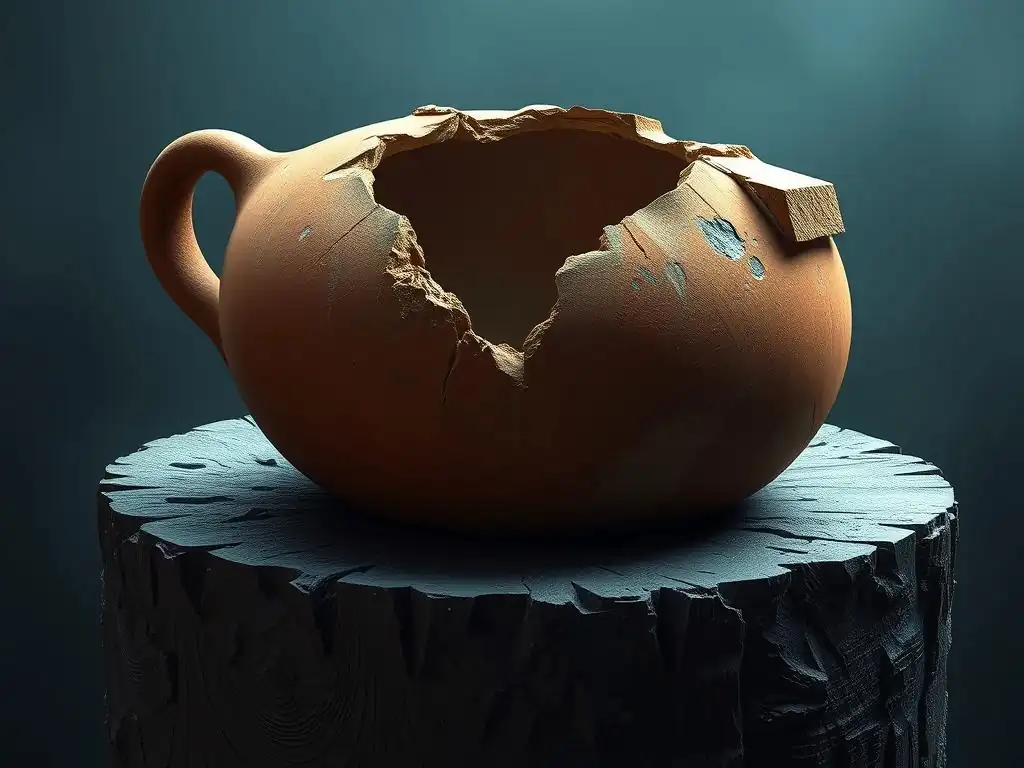
The Antikythera shipwreck, discovered in 1900 off the coast of Greece, represents one of the most significant archaeological finds of all time. While famed for its bronze statues and the enigmatic Antikythera Mechanism, the wreck also yielded an unparalleled collection of Roman ceramics, including amphorae, fine tablewares, and coarsewares. The conservation efforts for this pottery, though initially rudimentary given the early 20th-century context, evolved significantly over time, demonstrating both the historical challenges and later successes in managing such diverse material types from an underwater context.
Early conservation interventions for the Antikythera ceramics involved pioneering, albeit often experimental, desalination and consolidation techniques for their era. Many pieces underwent basic freshwater baths and some form of impregnation. Later interventions, particularly those carried out by institutions like the National Archaeological Museum in Athens, applied modern conservation principles to stabilize pieces that had deteriorated over decades due to initial inadequate treatment or inherent fragility. This long-term commitment to the artifacts, spanning over a century, showcases the enduring dedication required for underwater Roman ceramic conservation, adapting methods as scientific understanding and technology advanced.
The Stella Maris Shipwreck: Innovative Approaches to Ceramic Preservation
The Stella Maris shipwreck, discovered off the coast of Israel, provides a compelling modern case study for applying contemporary conservation science to a complex Roman ceramic assemblage. Its excavation and post-recovery treatment plans were conceived from the outset with an integrated conservation strategy, emphasizing cutting-edge techniques and a holistic approach to artifact preservation. This site yielded a diverse range of Roman pottery, offering a unique opportunity for systematic and innovative underwater Roman ceramic conservation.
The project employed highly controlled desalination protocols, often utilizing custom-designed recirculation systems to optimize the removal of salts. Furthermore, conservators experimented with novel consolidants and application methods tailored to the specific clay types and firing temperatures identified through scientific analysis of the ceramics. The extensive use of remote sensing and detailed in-situ mapping prior to recovery allowed for a more informed and proactive conservation strategy, minimizing stress on the ceramics during retrieval. The Stella Maris project stands as a prime example of how integrated archaeological and conservation planning can lead to exceptional preservation outcomes for underwater Roman ceramics.
Lessons Learned from the Plemmirio D Shipwreck and Their Application to Future Projects
The Plemmirio D shipwreck, located off the coast of Sicily, presented unique challenges due to its deeply buried and heavily concreted Roman ceramic cargo. The project focused on developing efficient and effective methods for the large-scale recovery and initial treatment of hundreds of Roman amphorae and other ceramic vessels. This site provided invaluable practical experience in managing the logistical complexities inherent in conserving substantial quantities of underwater pottery.
The experience from Plemmirio D underscored the critical importance of immediate, controlled hydration of ceramics upon recovery to prevent desiccation shock and the rapid onset of salt efflorescence. It also highlighted the logistical hurdles of desalting hundreds of large amphorae simultaneously, leading to the refinement of bulk desalination tank designs and the development of more efficient protocols for preliminary mechanical cleaning. These lessons, particularly regarding large-scale handling and initial treatment, have been widely adopted and applied to subsequent large-scale underwater Roman ceramic conservation projects across the Mediterranean, demonstrating the continuous evolution of best practices in the field.
The Role of Scientific Analysis in Understanding Roman Ceramic Technology
Petrographic Analysis: Identifying Ceramic Sources and Production Techniques
Petrographic analysis is a fundamental scientific technique in the study and conservation of Roman ceramics. It involves preparing very thin sections of ceramic material and examining them under a polarizing microscope. This allows conservators and archaeologists to identify the mineral inclusions, temper (added materials like sand or crushed rock), and clay matrix characteristics, as well as estimate the firing temperature.
This information provides crucial insights into the geological source of the clay and the specific manufacturing processes employed by Roman potters. For example, petrographic analysis of amphorae from a shipwreck off Tunisia revealed specific volcanic inclusions, directly linking them to production sites near Mount Vesuvius in Italy.
Understanding the raw materials and firing techniques is not merely academic; it is vital for effective underwater Roman ceramic conservation. These factors directly inform the ceramic's inherent stability, its porosity, and its likely response to various conservation treatments, including desalination and consolidation. Furthermore, petrographic studies of Roman tablewares from the Port Vendres 2 shipwreck in France distinguished between local Gallic production and imports from Italy, influencing conservation decisions based on the distinct material properties of each type, thereby ensuring tailored and appropriate preservation strategies.
X-Ray Diffraction (XRD): Determining Mineralogical Composition
X-ray Diffraction (XRD) is a powerful, non-destructive analytical technique used to identify the crystalline mineral phases present in a ceramic sample. By directing X-rays at the material and analyzing the resulting diffraction pattern, conservators and material scientists can precisely identify minerals such as quartz, feldspar, calcite, and various clay minerals. This provides a detailed fingerprint of the ceramic's mineralogical composition.
Knowing the precise mineralogical composition is invaluable for assessing the ceramic's long-term stability and its potential reactions to environmental changes or specific conservation chemicals. For instance, the presence of certain clay minerals like montmorillonite can indicate a ceramic's sensitivity to water or drying cycles, guiding the desalination process to prevent swelling or shrinkage. XRD analysis of Roman dolia (large storage jars) from the Punta Ala shipwreck identified high levels of illite and kaolinite, informing conservators about their potential for differential thermal expansion and guiding the choice of consolidation materials in underwater Roman ceramic conservation.
Radiocarbon Dating: Establishing Chronological Context
While ceramic materials themselves cannot be directly radiocarbon dated, associated organic materials found within the shipwreck context or even organic residues within the ceramic vessels can provide a precise chronological context for the ceramic assemblage. Radiocarbon dating measures the decay of carbon-14 isotopes in organic matter, providing a date range for when the organism died.
This technique is invaluable for establishing the precise historical period of a Roman shipwreck and, by extension, the ceramics it carried. For instance, the dating of ship timbers from the wreck itself, or even olive pits, grain, or other organic cargo found within amphorae, can provide a precise date range for the shipwreck event, thus dating the ceramics.
A precise date range obtained from radiocarbon dating of ship timbers from the Roman wreck of Capo Passero allowed for a refined understanding of the associated ceramic cargo, firmly placing its production and use in the late 1st century BCE. This chronological precision is crucial for archaeological interpretation and informs the historical context of the underwater Roman ceramic conservation effort.
Ethical Considerations in Underwater Roman Ceramic Conservation
Minimal Intervention: Balancing Preservation and Authenticity
The principle of minimal intervention is a cornerstone of ethical underwater Roman ceramic conservation. This dictates that conservation treatments should be the least intrusive necessary to stabilize the artifact, aiming to preserve as much of its original material and historical evidence as possible. Aggressive cleaning, over-restoration, or unnecessary alteration can inadvertently erase valuable information about the object's use, wear, and post-depositional history. The goal is to ensure the artifact's long-term survival while respecting its integrity.
Maintaining authenticity means allowing the artifact to tell its full story, including evidence of its life before, during, and after its time underwater. For example, a Roman amphora that shows signs of an ancient repair, such as lead clamps used to mend a break in antiquity, should have this repair preserved, not removed or hidden. Such features are integral to the object's unique history and provide insights into ancient practices. This approach ensures that conservation enhances, rather than diminishes, the historical value of the recovered ceramics.
Reversibility of Treatments: Ensuring Future Conservation Options
Another critical ethical consideration in underwater Roman ceramic conservation is the principle of reversibility. All materials and methods used in conservation should ideally be reversible, meaning they can be undone in the future without causing damage to the original artifact. This principle is vital because conservation science is constantly evolving, and what is considered best practice today may be superseded by new techniques or materials tomorrow.
The choice of adhesives, consolidants, and gap fillers should prioritize stability and removability using benign solvents or methods that do not alter the ceramic itself. For instance, while some epoxy resins offer extreme strength, their irreversibility often makes them less favored than acrylic resins like Paraloid B-72 for many applications, unless absolutely necessary for structural integrity. Ensuring reversibility safeguards the artifact's future, allowing for re-treatment with improved methods or for researchers to examine the original material unimpeded by permanent interventions, thus preserving options for generations to come.
Public Access and Education: Sharing the Stories of Recovered Ceramics
The recovery and conservation of Roman ceramics from underwater sites are not ends in themselves; they are means to an end: making this shared cultural heritage accessible for study, display, and public education. Ethical underwater Roman ceramic conservation extends beyond the laboratory to include responsible curation, detailed documentation, and the strategic dissemination of knowledge gained from these artifacts. This involves careful planning for their long-term storage and eventual exhibition.
Exhibitions, digital platforms, and educational programs are vital tools for connecting the public with these ancient objects. They allow people to understand Roman daily life, trade networks, technological advancements, and the broader historical context of the Mediterranean world. For example, the impressive displays of conserved Roman amphorae and other ceramic artifacts at the National Museum of Underwater Archaeology in Cartagena, Spain, actively engage visitors with the history of ancient maritime trade, highlighting the immense value and significance of meticulous underwater Roman ceramic conservation in bringing these submerged stories to life for a wide audience.
The Future of Underwater Roman Ceramic Conservation
Advancements in Conservation Materials and Techniques
The field of underwater Roman ceramic conservation is continually evolving, driven by ongoing research into new materials and techniques. Scientists are actively developing more stable, effective, and environmentally friendly consolidants, adhesives, and desalination agents. For example, nanotechnology holds significant promise for creating consolidants that can penetrate deeper into the ceramic matrix at a molecular level, offering superior strength and durability without altering the artifact's appearance or breathability. Research into bio-friendly alternatives for cleaning and consolidation is also gaining traction, aiming to reduce reliance on harsh chemicals.
Furthermore, non-invasive analytical techniques are becoming more sophisticated and widespread. Portable X-ray fluorescence (pXRF) devices, for instance, now allow for on-site elemental analysis of ceramics without the need for sampling, providing immediate data that can inform initial conservation decisions. Robotic and autonomous underwater vehicles (AUVs) are also being explored for more precise documentation, mapping, and even potential in-situ stabilization of delicate ceramic assemblages before human intervention, revolutionizing the initial stages of underwater Roman ceramic conservation.
The Importance of Interdisciplinary Collaboration
Successful underwater Roman ceramic conservation increasingly relies on robust interdisciplinary collaboration. The complex nature of waterlogged archaeological materials demands expertise from a wide array of fields, including maritime archaeology, conservation science, material science, chemistry, engineering, and museology. This multidisciplinary approach ensures a holistic understanding of the artifacts, from their archaeological context to their material composition and long-term preservation needs.
Modern projects involving Roman shipwrecks now routinely integrate dedicated conservation teams from the very outset of discovery, working seamlessly alongside excavators, historians, and scientists. This integrated approach, exemplified by the ongoing exploration of the Antikythera wreck, ensures that conservation needs are considered at every stage, from initial discovery and recovery to long-term storage and eventual display. Such close collaboration optimizes resource allocation, enhances problem-solving capabilities, and ultimately leads to more effective and sustainable underwater Roman ceramic conservation outcomes.
Sustainable Practices for Long-Term Preservation
As the volume of recovered Roman ceramics grows, the importance of sustainable practices for their long-term preservation becomes paramount. This encompasses not only the choice of conservation materials but also the development of energy-efficient storage solutions, environmentally responsible waste management, and cost-effective, long-term maintenance plans for collections. The goal is to ensure that these invaluable artifacts remain stable and accessible for centuries to come, minimizing the need for repeated, potentially intrusive, interventions.
Sustainable practices include investing in robust environmental monitoring systems for museum displays and storage facilities, ensuring optimal control over temperature, humidity, and light levels to prevent deterioration. Furthermore, the development of modular, reusable storage containers and the adoption of conservation treatments with minimal environmental impact contribute to a more sustainable future for archaeological collections. Prioritizing resource efficiency and long-term stability in underwater Roman ceramic conservation is not just good practice; it is an ethical imperative for safeguarding this irreplaceable heritage for future generations.
Conclusion: Safeguarding Roman Ceramic Heritage for Future Generations
The conservation of Roman ceramics recovered from underwater sites is a complex yet profoundly rewarding endeavor, bridging the gap between ancient history and modern science. From the initial challenges posed by saltwater and biofouling to the meticulous processes of desalination, consolidation, and reconstruction, every step is critical to preserving these fragile remnants of the Roman world. The dedication of conservators, supported by advancements in scientific analysis and interdisciplinary collaboration, transforms waterlogged fragments into tangible links to the past.
Each conserved Roman amphora, plate, or lamp tells a unique story of trade, daily life, and the vast maritime networks that defined the Roman Empire. Through rigorous application of ethical principles, such as minimal intervention and reversibility, combined with a forward-looking approach to new materials and sustainable practices, the field of underwater Roman ceramic conservation continues to evolve. Ultimately, these efforts ensure that the rich ceramic heritage found beneath the waves is not lost to time but is safeguarded and made accessible, allowing future generations to learn from and connect with the enduring legacy of Rome.
Frequently Asked Questions
What are the main challenges in conserving Roman ceramics recovered from underwater sites?
The main challenges include dealing with saltwater contamination, the fragility of waterlogged ceramics, and the removal of marine organisms that adhere to the artifacts.
Why is it important to conserve underwater Roman ceramics?
Conserving these ceramics provides crucial insights into Roman trade routes, daily life, and ceramic production techniques. They offer a tangible link to the past that would otherwise be lost to decay.
What special techniques are used to conserve underwater Roman ceramics?
Special techniques include desalination processes to remove salt, consolidation to strengthen the fragile material, and controlled drying to prevent cracking.
How does the conservation process differ from conserving ceramics found on land?
Underwater ceramics require extensive desalination, which is not typically needed for land-based finds. The waterlogged state also necessitates different consolidation methods.
Where can I find more information about underwater Roman ceramic conservation techniques?
ArchaeologyHub.org offers detailed profiles on artifact conservation, including specific examples and methodologies used in underwater Roman site preservation. You can search for "Underwater Roman ceramic conservation" on the site.
Final Reflection: Preserving Echoes of the Roman Sea
The journey through the depths of underwater Roman ceramic conservation reveals more than just fragmented pottery; it unveils a profound connection to our past. The meticulous work of preserving these artifacts is not merely about restoring objects, but about resurrecting stories, trade routes, and the daily lives of those who lived millennia ago. As rising sea levels and increased underwater activity threaten these submerged treasures, the urgency of effective conservation strategies becomes undeniably clear.
This delicate dance between science, history, and preservation has deeply influenced our understanding of Roman maritime culture. The act of carefully lifting, cleaning, and analyzing each shard is an act of reverence, a tangible link to a civilization that shaped our world. The sea, once it casts its spell, holds one in its net of wonder forever.
- Jacques Cousteau. This quote encapsulates the allure and responsibility we hold in safeguarding these underwater legacies, ensuring they continue to speak to future generations.
As we surface from this exploration of underwater Roman ceramic conservation, consider the power of preservation in your own life. What stories are you safeguarding? What legacies are you nurturing? Let us all strive to be custodians of the past, ensuring that the echoes of history continue to resonate, enriching our present and inspiring our future.
Unearth Your Inner Archaeologist: Dive Deeper into Ceramic Conservation!
Thank you for exploring the fascinating world of ceramic conservation from underwater Roman sites. We hope this article has provided valuable insights into the challenges and rewards of preserving these fragile pieces of history. Now, let's turn that knowledge into action!
Here are a few things you can do to further your exploration:
- Become a Citizen Scientist: Explore Archaeological Sites in Your Area!: Check for local opportunities to volunteer with archaeological digs or conservation projects, and help uncover the past firsthand.
- Explore online resources like the Archaeological Institute of America or the Society for Historical Archaeology to learn more about ongoing research and conservation efforts.
- Share this article with friends, family, or colleagues who share your interest in archaeology and conservation, and spark a conversation about the importance of preserving our underwater cultural heritage.
What specific type of artifact sparks the most curiosity for you, and what steps would you take to ensure its long-term preservation?