
The Enduring Legacy of Ancient Olympia in the Modern International Olympic Movement

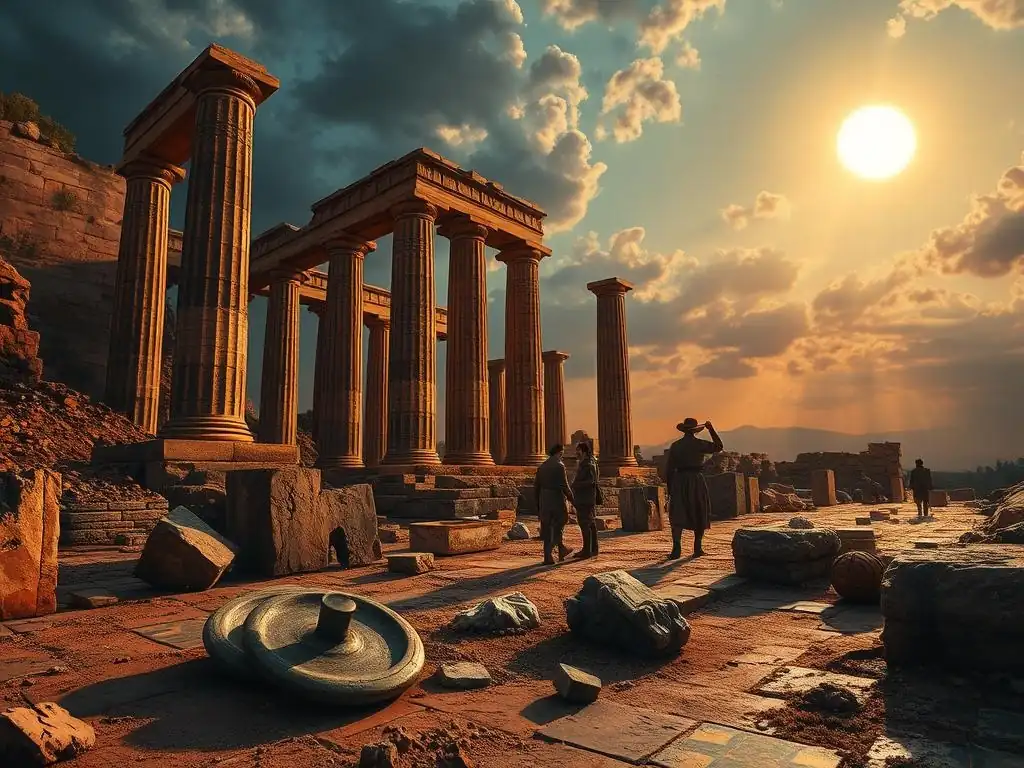
Welcome to ArchaeologyHub.org, your gateway to unraveling the mysteries of the past. Ever wondered how the spirit of Ancient Olympia continues to resonate within the modern Olympic Games? Dive into our digital encyclopedia and discover the enduring legacy of Ancient Olympia, exploring its profound impact on the international Olympic movement and sparking a deeper appreciation for the origins of athletic competition. Prepare to embark on a journey through time and uncover the fascinating connections between ancient rituals and contemporary sporting celebrations. What secrets will you unearth?
- Introduction: Unveiling the Ancient Roots of the Modern Olympics
- Ancient Olympia: A Sacred Sanctuary and the Birthplace of the Games
- Rediscovering Ancient Olympia: Archaeological Excavations and Insights
- The Ancient Olympic Games: Rules, Competitions, and Significance
- The Influence of Ancient Olympia on the Modern Olympic Movement
- Key Elements of the Ancient Olympic Games Reimagined in the Modern Era
- Ancient Olympia Olympic Legacy: A Cultural and Historical Treasure
- Conclusion: Celebrating the Enduring Spirit of Ancient Olympia
-
Frequently Asked Questions
- ### How did Ancient Olympia directly influence the modern Olympic Games?
- ### What significant archaeological discoveries at Ancient Olympia have helped us understand the ancient Games?
- ### What was the role of religious rituals in the Ancient Olympic Games held in Olympia?
- ### How does ArchaeologyHub.org contribute to understanding the historical significance of Ancient Olympia?
- ### What aspects of the Ancient Olympic Games are notably absent or different in the modern International Olympic Movement?
- Final Reflection: Rekindling the Olympic Flame
- Unearth Your Own Olympic Journey Today!
Introduction: Unveiling the Ancient Roots of the Modern Olympics
The Historical Significance of Ancient Olympia
Ancient Olympia, nestled in the western Peloponnese, holds an unparalleled position in the annals of history, not merely as the birthplace of the Olympic Games but as a profound religious and cultural sanctuary. For over a millennium, it served as a unifying center for the disparate city-states of ancient Greece, a place where athletic prowess intertwined with deep spiritual devotion to Zeus, the king of the gods.
The site's historical significance extends beyond its athletic contests; it was a beacon of Panhellenic identity, fostering a shared cultural heritage among Greeks who otherwise often engaged in conflict. This deep-rooted historical context establishes a foundational understanding of the enduring Ancient Olympia Olympic legacy.
The sanctuary's importance is underscored by its continuous use from at least the 10th century BCE until its suppression in 393 CE by Emperor Theodosius I. During this vast period, Olympia evolved from a simple cult site to a sprawling complex featuring monumental temples, treasuries, athletic facilities, and administrative buildings.
Archaeological evidence suggests early forms of competitive rituals long before the traditional founding date of the Games in 776 BCE, indicating a gradual development of its role as a sacred athletic arena. This profound longevity and consistent dedication to both divine worship and human excellence form the bedrock of the Ancient Olympia Olympic legacy that continues to influence global ideals today.
Ancient Olympia Olympic Legacy: A Bridge Between Past and Present
The Ancient Olympia Olympic legacy serves as a vital bridge connecting the foundational ideals of antiquity with the aspirations of the modern international Olympic Movement. This connection is not merely symbolic; it reflects a conscious effort by the revivalists of the late 19th century, most notably Pierre de Coubertin, to draw inspiration directly from the ancient Greek values of peace, fair play, and the pursuit of human excellence. The very concept of the Olympiad – a four-year cycle of athletic competition – is a direct inheritance from Ancient Olympia, structuring the rhythm of global sport.
This enduring legacy is evident in the core principles of the modern Games, which echo the ancient emphasis on physical and moral development, fostering understanding across cultures, and striving for personal best. While the scale and scope of the modern Olympics are vastly different, the underlying spirit of competition, camaraderie, and the celebration of human achievement remains remarkably consistent. The Ancient Olympia Olympic legacy thus provides a timeless framework, reminding participants and spectators alike of the profound historical roots and universal appeal of the Olympic ideal.
Ancient Olympia: A Sacred Sanctuary and the Birthplace of the Games
The Archaeological Site of Olympia: A Brief Overview
The archaeological site of Olympia, situated in the fertile valley of Elis in the western Peloponnese, Greece, is a sprawling complex that once served as the most important religious and athletic center of the ancient Greek world. Spread across approximately 1,100,000 square meters, the site is defined by the sacred grove of the Altis, which housed the principal temples and shrines, and the surrounding secular areas that included the stadium, hippodrome, and various training facilities.
Early excavations, notably by the German Archaeological Institute starting in 1875, painstakingly uncovered the layers of history, revealing structures dating from the early Bronze Age to the Roman period.
Key architectural remnants include the majestic Temple of Zeus, constructed between 470 and 457 BCE, which once housed Pheidias' colossal chryselephantine statue of Zeus, one of the Seven Wonders of the Ancient World. Nearby stands the older Temple of Hera (Heraion), dating to around 600 BCE, which is notably where the Olympic Flame is lit for the modern Games. The stadium, though largely unadorned, could accommodate an estimated 45,000 spectators on its natural slopes, emphasizing the scale of the ancient gatherings. The meticulous preservation and study of these ruins continue to illuminate the rich Ancient Olympia Olympic legacy.
Religious Significance and Rituals at Ancient Olympia
At its core, Ancient Olympia was a sanctuary dedicated primarily to Zeus, the king of the Olympian gods, but also honored other deities like his consort Hera, and Pelops, a mythical hero associated with the founding of the Games. The religious significance permeated every aspect of life at the sanctuary and the conduct of the Games.
Before the athletic contests, elaborate sacrifices and rituals were performed at altars throughout the Altis, particularly at the Great Altar of Zeus, which was formed from the ashes of centuries of offerings. Victors dedicated their olive wreaths and often commissioned statues of themselves within the sanctuary, further intertwining athletic success with divine favor.
Beyond the grand sacrifices, smaller, personal offerings were commonplace, ranging from terracotta figurines to bronze tripods, reflecting the deep piety of visitors and participants. The sacred olive tree, from which the victors' wreaths ( kotinos) were cut, stood near the Temple of Zeus, symbolizing peace and honor. These rituals reinforced the sanctity of the Games and ensured divine blessing for the proceedings, emphasizing that the athletic contests were not merely secular events but integral components of a profound religious festival. This spiritual dimension is a crucial, though sometimes overlooked, aspect of the enduring Ancient Olympia Olympic legacy.
The Ancient Olympic Games: Origins and Evolution
The traditional founding date of the Ancient Olympic Games is 776 BCE, with the first recorded victor being Koroibos of Elis, who won the stadion (a footrace roughly 192 meters long). Initially, the Games were a single-day event featuring only this one race, designed to honor Zeus.
Over the centuries, the festival evolved significantly, expanding both in duration and in the variety of athletic events offered. By the 5th century BCE, the Games spanned five days, incorporating a diverse range of competitions including the diaulos (double-stade race), dolichos (long-distance race, approximately 7.5 to 24 stades), wrestling, boxing, pankration (a brutal combination of wrestling and boxing), and the pentathlon (which included discus, javelin, long jump, running, and wrestling).
The Games were held every four years, defining the "Olympiad," a unit of time used throughout the Greek world. Participation was initially restricted to freeborn Greek men, who competed nude to symbolize purity and the pursuit of excellence. Women were generally forbidden from attending, though there were separate games dedicated to Hera. The evolution from a simple local race to a Panhellenic spectacle, attracting competitors and spectators from across the Greek world, highlights the growing cultural and political importance of Olympia. This continuous development and adaptation underscore the dynamic nature of the Ancient Olympia Olympic legacy.
Rediscovering Ancient Olympia: Archaeological Excavations and Insights
Key Archaeological Discoveries at Olympia: The Temple of Zeus and the Statue of Hermes
The systematic archaeological exploration of Olympia began in earnest in the late 19th century, most notably with the comprehensive excavations undertaken by the German Archaeological Institute from 1875 to 1881. These pioneering efforts brought to light the monumental structures that had lain buried for centuries, providing invaluable insights into the layout and grandeur of the ancient sanctuary.
Among the most significant finds was the complete uncovering of the Temple of Zeus, a Doric peripteral temple measuring approximately 64 meters long and 28 meters wide, with 6 columns on the short sides and 13 on the long sides.
Although the colossal chryselephantine statue of Zeus by Pheidias, which once dominated its interior, had long vanished, the discovery of numerous architectural sculptures, including the majestic pediments depicting the chariot race of Pelops and Oinomaos, and the Twelve Labours of Heracles in the metopes, offered a glimpse into its artistic splendor and the narratives central to the Ancient Olympia Olympic legacy.
Another pivotal discovery occurred in 1877 when archaeologists unearthed the exquisite statue of Hermes and the Infant Dionysus, attributed to the renowned sculptor Praxiteles, within the cella of the Temple of Hera. This marble masterpiece, depicting Hermes playfully holding the infant Dionysus, is celebrated for its remarkable preservation and the subtle humanism of its form, providing a rare original example of classical Greek sculpture.
The finding of such significant artistic and architectural elements not only enriched the understanding of ancient Greek art but also solidified Olympia's status as a site of profound cultural and historical importance, reinforcing the multifaceted Ancient Olympia Olympic legacy.
The Role of Excavations in Understanding the Ancient Olympic Games
Archaeological excavations at Olympia have been instrumental in transforming abstract historical texts into tangible realities, providing concrete evidence of how the Ancient Olympic Games were organized and experienced. The uncovering of the stadium, for instance, with its distinctive starting and finishing lines (known as balbides) and the judges' stand, allowed scholars to accurately reconstruct the running events and understand the precise dimensions of the track, which measured approximately 192.27 meters (one stadion).
Furthermore, the discovery of the gymnasion and palaistra, the training facilities where athletes prepared for the Games, offered insights into the rigorous physical regimen and educational aspects of ancient Greek athletics.
Beyond the athletic venues, excavations have revealed numerous votive offerings, inscriptions, and even lead curses, which paint a vivid picture of the social, religious, and political dynamics surrounding the Games. Inscriptions on bronze tripods and statues commemorate victors, providing a precise chronology of the Games and revealing the origins of successful athletes. These material remains have allowed historians to piece together details about the daily life during the festival, the roles of officials, and the broader cultural context in which the Games thrived, thereby deepening our comprehension of the profound Ancient Olympia Olympic legacy.
Preserving the Archaeological Heritage of Ancient Olympia
Preserving the archaeological heritage of Ancient Olympia is a complex and ongoing endeavor, crucial for safeguarding the irreplaceable Ancient Olympia Olympic legacy. As a UNESCO World Heritage Site since 1989, the site faces a multitude of challenges, including natural degradation from weathering and seismic activity, as well as the pressures of ever-increasing tourism.
Conservation efforts involve a delicate balance between protecting the fragile ruins and making them accessible for study and public appreciation. Expert teams from the Greek Ministry of Culture, often in collaboration with the German Archaeological Institute, continuously monitor the site, undertake meticulous restoration work, and implement preventative measures to mitigate damage.
Recent decades have seen significant investment in protecting the site from environmental threats, such as wildfires, which pose a recurrent danger in the region. Measures include creating firebreaks and enhancing rapid response capabilities. Furthermore, the development of modern infrastructure, such as the Archaeological Museum of Olympia, plays a vital role in housing and exhibiting the numerous artifacts discovered at the site, allowing visitors to appreciate the context of the ruins. These dedicated efforts ensure that future generations can continue to learn from and be inspired by the rich historical and cultural tapestry that is the Ancient Olympia Olympic legacy.
The Ancient Olympic Games: Rules, Competitions, and Significance
Athletic Events in Ancient Olympia: Running, Wrestling, and the Pentathlon
The athletic program of the Ancient Olympic Games, while evolving over centuries, became highly structured around a core set of events that tested speed, strength, and endurance. The most prestigious event was the stadion, a sprint of approximately 192 meters, which was the length of the Olympic stadium. Winners of the stadion race often had the Olympiad named after them, highlighting its supreme importance. Other running events included the diaulos (double-stadion race, roughly 384 meters) and the dolichos (a long-distance race varying from 7 to 24 stades, or approximately 1,344 to 4,608 meters), demanding significant stamina.
Combat sports were equally prominent and often brutal. Wrestling ( pale) aimed to throw an opponent to the ground three times, while boxing ( pygme) involved competitors wrapping their hands with leather thongs, often resulting in severe facial injuries. The most demanding and violent combat sport was pankration, a no-holds-barred combination of wrestling and boxing, where only biting and gouging were prohibited.
The pentathlon, introduced in 708 BCE, was designed to identify the most versatile athlete, comprising five events: discus throw, javelin throw, long jump, the stadion race, and wrestling. A competitor had to win three of these events to be declared the victor, showcasing a balanced skill set that epitomizes a significant aspect of the Ancient Olympia Olympic legacy: the pursuit of all-around excellence.
The Role of Athletes and Spectators in the Ancient Olympic Games
Participation in the Ancient Olympic Games was a highly coveted honor, generally restricted to freeborn Greek men who could prove their lineage and were not guilty of sacrilege or crime. Athletes underwent rigorous training, often for months or even years, in specialized facilities like the gymnasion and palaistra.
They competed nude, symbolizing purity and the pursuit of excellence, and were typically amateurs, though successful athletes could expect significant prestige, material rewards, and civic honors upon returning to their home city-states. Victors received only an olive wreath ( kotinos) from the sacred olive tree in Olympia, but this simple prize carried immense symbolic value, signifying divine favor and unparalleled glory.
Spectators, who numbered in the tens of thousands, flocked to Olympia from across the Greek world, enduring challenging travel conditions and rudimentary accommodations. The Games were not merely athletic contests but a grand religious festival and a significant social event, fostering a sense of Panhellenic identity. The atmosphere was vibrant, filled with religious ceremonies, political discussions, and commercial activities. This convergence of athletes striving for glory and a vast, diverse audience underscores the profound cultural and social impact of the Games, which remains a central component of the Ancient Olympia Olympic legacy.
The Olympic Truce: Promoting Peace and Harmony in Ancient Greece
One of the most remarkable and enduring aspects of the Ancient Olympic Games was the ekecheiria, or Olympic Truce. This sacred truce was declared by heralds ( spondophoroi) who traveled throughout the Greek world before each Games, announcing the cessation of all hostilities and ensuring safe passage for athletes, spectators, and officials traveling to and from Olympia.
The truce typically lasted for three months, encompassing the journey to the site, the duration of the Games (five days), and the return journey. Violating the truce was considered a sacrilege against Zeus and could result in severe penalties, including exclusion from future Games or heavy fines.
The Olympic Truce was a testament to the Games' profound religious and political significance, serving as a powerful mechanism for promoting temporary peace and unity among often warring city-states. While conflicts did not cease permanently, the truce provided a crucial period of respite and allowed for the shared celebration of Greek culture and athletic ideals. This emphasis on peace and safe passage, even amidst geopolitical tensions, highlights a foundational principle that the modern Olympic Movement strives to emulate. The ekecheiria is a powerful testament to the Ancient Olympia Olympic legacy of fostering harmony and transcending conflict through sport.
The Influence of Ancient Olympia on the Modern Olympic Movement
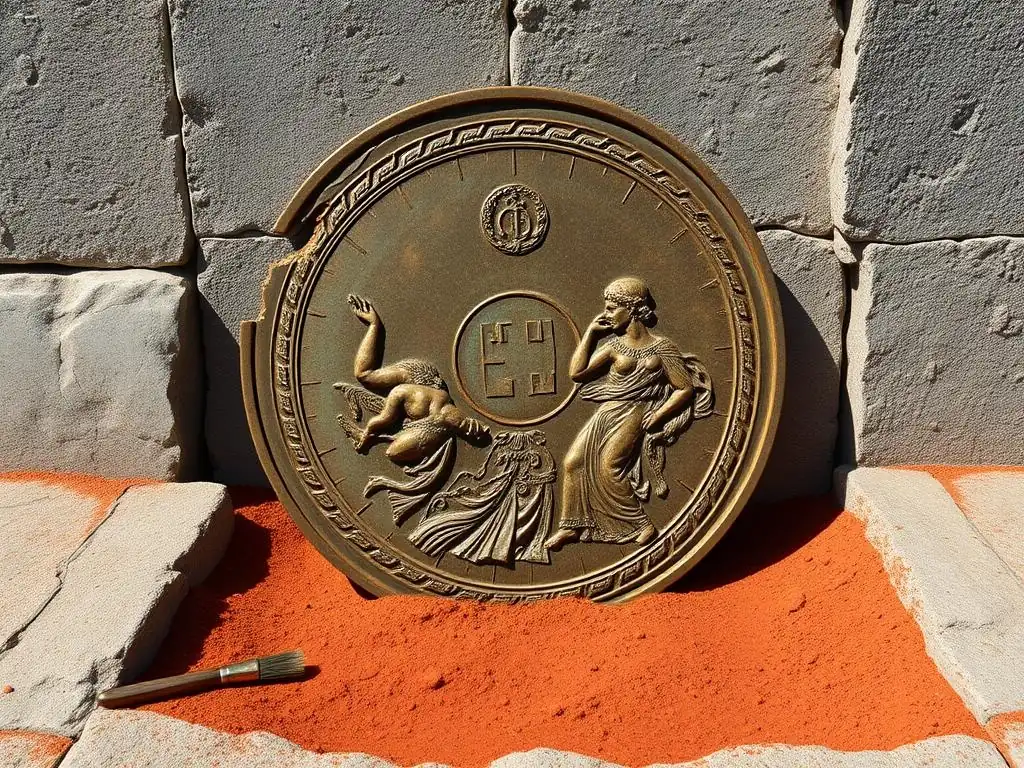
Pierre de Coubertin and the Revival of the Olympic Games
The profound influence of Ancient Olympia on the modern Olympic Movement is inextricably linked to the vision and relentless efforts of Pierre de Coubertin, a French educator and historian. Inspired by the archaeological discoveries at Olympia in the late 19th century and the concept of "muscular Christianity" in England, Coubertin became convinced that a revival of the Olympic Games could foster international understanding, promote physical education, and instill moral values among youth. He believed that the ancient Greek emphasis on the harmonious development of mind, body, and spirit offered a powerful model for contemporary society.
Coubertin officially proposed the revival of the Games at a congress in the Sorbonne, Paris, in 1894, leading to the establishment of the International Olympic Committee (IOC). His efforts culminated in the inaugural Games of the modern era, held in Athens in 1896, deliberately chosen to honor the ancient Greek origins. Coubertin's foundational philosophy, which emphasized amateurism, fair play, and the pursuit of excellence, was directly informed by his interpretation of the Ancient Olympia Olympic legacy, seeking to rekindle the spirit of unity and noble competition that once flourished in the sacred Altis.
Drawing Inspiration from Ancient Olympic Ideals: Peace, Excellence, and Friendship
The modern Olympic Movement explicitly draws inspiration from the enduring ideals cultivated at Ancient Olympia, translating them into its core principles: peace, excellence, and friendship. The ancient Olympic Truce, or ekecheiria, serves as a powerful prototype for the modern Olympic ideal of fostering peace and mutual understanding among nations, encouraging a temporary cessation of conflicts for the duration of the Games. This ancient practice underscores the belief that sport can be a vehicle for diplomacy and unity, a central tenet of the contemporary movement.
Furthermore, the ancient Greek pursuit of arête, or excellence in all aspects of life—physical, moral, and intellectual—is directly reflected in the modern Olympic motto, "Citius, Altius, Fortius – Communiter" (Faster, Higher, Stronger – Together). This motto encapsulates the relentless drive for personal best, not just in competition but also in character.
The emphasis on fair play, respect for opponents, and the spirit of camaraderie among athletes, regardless of nationality, are direct echoes of the ancient Greek ideal of philia (friendship) that transcended city-state rivalries during the Games. These foundational values ensure that the Ancient Olympia Olympic legacy continues to resonate deeply in the ethos of global sportsmanship.
The Symbolic Significance of Olympia in the Modern Olympic Games
The symbolic significance of Olympia within the modern Olympic Games is profound and multifaceted, serving as a tangible link to the movement's ancient roots. The most prominent example is the lighting of the Olympic Flame, which invariably takes place in the ruins of the Heraion (Temple of Hera) at Ancient Olympia.
Utilizing a parabolic mirror to harness the sun's rays, a ritual performed by priestesses, the flame is ignited in a ceremony that evokes the spiritual traditions of antiquity. This act establishes a direct, unbroken chain from the sacred grounds of Olympia to the host city of each modern Games.
Following its lighting, the Olympic Torch Relay commences its journey from Olympia, carrying the flame across continents. This relay is not merely a logistical exercise but a powerful symbol of peace, unity, and the enduring spirit of the Games, connecting diverse cultures through a shared heritage.
Moreover, many modern Olympic ceremonies and visual motifs incorporate elements inspired by Ancient Olympia, from the laurel wreaths presented to victors in early modern Games to the design of medals that often feature classical Greek imagery like the goddess Nike. This continuous homage ensures that the Ancient Olympia Olympic legacy remains visible and celebrated at the heart of the world's premier sporting event.
Key Elements of the Ancient Olympic Games Reimagined in the Modern Era
The Olympic Flame: From Ancient Ritual to Modern Symbol
While there is no definitive archaeological evidence that a torch relay was part of the Ancient Olympic Games, the concept of a perpetual flame held deep religious significance in ancient Greek sanctuaries, including Olympia, where fires burned continuously on altars dedicated to various deities. The modern Olympic Flame, first introduced for the 1928 Amsterdam Games and the torch relay for the 1936 Berlin Games, reimagines this ancient reverence for fire as a powerful contemporary symbol.
The flame is ignited by the sun's rays at the ancient site of Olympia, specifically in front of the Temple of Hera, by priestesses in classical attire, a ceremony designed to evoke the spiritual and historical origins of the Games.
This ritualistic lighting connects the modern event directly to its ancient predecessor, emphasizing continuity and shared heritage. The subsequent torch relay, carrying the flame across continents and oceans to the host city, transforms it into a global symbol of peace, unity, and the Olympic spirit. It represents the "light" of knowledge, life, and excellence, reminding participants and spectators worldwide of the enduring Ancient Olympia Olympic legacy and the universal values it embodies. The flame's journey is a powerful visual narrative, bridging millennia and diverse cultures under a common banner.
The Olympic Stadium: Echoes of Ancient Olympia in Modern Arenas
The design and function of the modern Olympic Stadium bear striking resemblances to its ancient counterpart in Olympia, reflecting a conscious architectural and conceptual homage. The ancient stadium at Olympia, a simple, elongated U-shaped earthwork without elaborate seating, was designed to accommodate tens of thousands of spectators on its natural slopes, focusing attention solely on the central athletic track. Its dimensions – a track length of approximately 192 meters – became the standard for the stadion race, the original and most prestigious event.
Modern Olympic stadiums, while vastly more complex and technologically advanced, often retain the fundamental oval track for running events, paying direct tribute to the ancient layout. The Panathenaic Stadium in Athens, reconstructed for the first modern Games in 1896, is a direct replica of an ancient stadium, showcasing the architectural continuity.
Contemporary arenas, with their grandstands and massive seating capacities (e.g., the Olympic Stadium in London for 2012 had a capacity of 80,000, while Beijing's "Bird's Nest" for 2008 seated 91,000), echo the ancient gathering of vast crowds, replicating the communal experience of witnessing athletic feats. This enduring architectural and functional parallel underscores the timeless appeal and profound Ancient Olympia Olympic legacy in sports venue design.
The Olympic Medals: A Tribute to the Ancient Victors
While the ancient Olympic victors received only a simple olive wreath ( kotinos) as their prize, symbolizing honor, purity, and divine favor rather than material wealth, the modern Olympic medals (gold, silver, and bronze) are a direct tribute to the concept of recognizing unparalleled athletic achievement. The shift from a symbolic wreath to precious metals occurred with the first modern Games in 1896, reflecting evolving societal values and the professionalization of sport. However, the design of these medals frequently incorporates powerful imagery that pays homage to the Ancient Olympia Olympic legacy.
For many decades, the obverse side of the Olympic medals typically depicted the goddess Nike, the ancient Greek goddess of victory, often holding a palm branch and a victor's crown, with the Panathenaic Stadium in Athens in the background. This design, introduced for the 1928 Amsterdam Games, explicitly linked modern triumphs to ancient Greek mythology and architectural heritage.
Although medal designs have become more varied since 2004, often incorporating elements specific to the host city, the underlying principle of celebrating excellence and the occasional inclusion of classical motifs continue to acknowledge the profound Ancient Olympia Olympic legacy that underpins the modern Olympic ideal of recognizing the world's greatest athletes.
Ancient Olympia Olympic Legacy: A Cultural and Historical Treasure
The Enduring Importance of Ancient Olympia for Understanding Greek History
The Ancient Olympia Olympic legacy is of paramount importance for a comprehensive understanding of ancient Greek history, extending far beyond the realm of sport. As a pan-Hellenic sanctuary, it served as a unique meeting point for diverse Greek city-states, offering insights into their political alliances, rivalries, and shared cultural identity.
The Olympic Truce, for instance, provides a vital lens through which to examine the dynamics of inter-state relations and the limitations of constant warfare. The dedications and inscriptions found at the site offer a rich chronological record, detailing the evolution of athletic practices, religious rituals, and even the development of the Greek calendar system based on Olympiads.
Furthermore, the monumental architecture and the wealth of artifacts discovered at Olympia, such as sculptures, pottery, and votive offerings, illuminate ancient Greek artistic, religious, and social customs. The site's continuous occupation from the Mycenaean period through the Roman era provides a stratified archaeological record that chronicles significant shifts in Greek society, from early cult practices to the widespread adoption of Hellenistic and Roman influences.
Thus, Olympia stands as an irreplaceable primary source for scholars and enthusiasts alike, offering tangible evidence of the complex tapestry of ancient Greek civilization and solidifying the site's status as a foundational element of historical inquiry.
The Olympic Games as a Symbol of International Unity and Cooperation
The Ancient Olympia Olympic legacy has profoundly shaped the modern Olympic Games into a global symbol of international unity and cooperation, a vision that transcends national borders and political differences. While the ancient Games fostered unity among Greek city-states, the modern movement, inspired by these ancient ideals, aims to bring together nations worldwide. The participation of over 200 National Olympic Committees in the Games underscores its truly global reach, fostering dialogue and understanding through shared athletic endeavor.
The ideal of athletes from diverse backgrounds competing peacefully on a common stage, adhering to shared rules and values, embodies a powerful message of global solidarity. Instances like the formation of the Refugee Olympic Team, which first competed in 2016, further highlight the Games' capacity to offer a platform for representation and inclusion, irrespective of geopolitical circumstances.
Despite the inherent complexities of international relations, the Olympic Games strive to promote a spirit of friendship and mutual respect, demonstrating how the ancient pursuit of excellence can serve as a catalyst for contemporary global harmony. This enduring aspiration for unity is a testament to the powerful and adaptable Ancient Olympia Olympic legacy.
Challenges and Opportunities in Preserving the Legacy of Ancient Olympia
Preserving the Ancient Olympia Olympic legacy presents both significant challenges and unique opportunities in the 21st century. Environmental threats, particularly climate change, pose an increasing risk to the archaeological site. The region is prone to wildfires, as evidenced by major incidents in 2007 and 2021 that threatened the ancient ruins, necessitating robust fire prevention and emergency response measures.
Additionally, the sheer volume of visitors, while crucial for awareness and local economies, requires careful management to prevent wear and tear on fragile structures and ensure sustainable tourism practices. The natural degradation of ancient materials due to weathering and seismic activity also demands continuous, specialized conservation efforts.
However, these challenges are met with opportunities for innovation and enhanced global collaboration. Digital preservation techniques, such as 3D scanning and virtual reality reconstructions, offer new ways to document and share the site's history, making it accessible to a wider audience without physically impacting the ruins. Educational initiatives, both on-site and online, can deepen public understanding of Olympia's historical and cultural significance.
International partnerships, involving archaeological institutes, universities, and cultural organizations, provide resources and expertise for ongoing research, excavation, and conservation projects. These collaborative efforts are vital to ensure that the profound Ancient Olympia Olympic legacy continues to inspire and educate future generations.
Conclusion: Celebrating the Enduring Spirit of Ancient Olympia
Reflecting on the Ancient Olympia Olympic legacy and its Relevance Today
The Ancient Olympia Olympic legacy is far more than a historical footnote; it is a living testament to the enduring power of human aspiration, community, and the pursuit of excellence. From its origins as a sacred sanctuary dedicated to Zeus, where athletic prowess and religious devotion intertwined, Olympia laid the groundwork for ideals that resonate profoundly in the modern world. The principles of fair play, the disciplined pursuit of physical and moral perfection, and the aspiration for peace through shared competition—all cultivated within the ancient Altis—continue to form the philosophical bedrock of the modern international Olympic Movement.
In an increasingly interconnected yet often fractured world, the relevance of this ancient legacy is perhaps more critical than ever. The Olympic Games, inspired directly by Olympia, stand as a global beacon for unity, transcending political divides and fostering understanding among diverse cultures.
The ritual lighting of the Olympic Flame at the ancient site, the enduring architectural echoes in modern stadiums, and the symbolic recognition of victors all serve as powerful reminders of this unbroken chain of inspiration. The Ancient Olympia Olympic legacy compels us to reflect on the timeless values that bind humanity and to strive for a world where competition is a catalyst for camaraderie, not conflict.
For those eager to delve deeper into the profound Ancient Olympia Olympic legacy, a wealth of resources and avenues for further exploration await. The Archaeological Museum of Olympia, located adjacent to the ancient site, houses an extraordinary collection of artifacts unearthed during excavations, including monumental sculptures, bronze offerings, and terracotta figures, providing invaluable context to the ruins. Key exhibits include the Hermes of Praxiteles and the sculptural decoration from the Temple of Zeus, offering a tangible connection to the artistry and religious fervor of the ancient sanctuary.
Beyond visiting the site and its museum, numerous academic publications, archaeological reports, and historical analyses offer in-depth insights. Works by prominent classical archaeologists and historians detail the intricacies of the Games, the religious practices, and the socio-political landscape of ancient Greece as reflected at Olympia. Engaging with these scholarly materials provides a richer understanding of the site's multi-layered history and its enduring impact on global culture. Exploring these resources allows for a comprehensive appreciation of how the Ancient Olympia Olympic legacy continues to shape our understanding of both antiquity and the modern world.
Frequently Asked Questions
### How did Ancient Olympia directly influence the modern Olympic Games?
Ancient Olympia's influence is seen in the spirit of peaceful competition and the concept of an Olympic Truce, though the modern Games also incorporated new elements. The symbolic flame also traces back to the ancient tradition.
### What significant archaeological discoveries at Ancient Olympia have helped us understand the ancient Games?
Excavations unearthed the Stadium, the Temple of Zeus, and the Gymnasium, providing insights into the athletic training, religious rituals, and organization of the ancient Olympic Games. Inscriptions detail rules and victors.
### What was the role of religious rituals in the Ancient Olympic Games held in Olympia?
The Games were deeply intertwined with religious worship, particularly honoring Zeus. Sacrifices and ceremonies were integral parts of the Olympic festival, connecting the athletic events to the divine.
### How does ArchaeologyHub.org contribute to understanding the historical significance of Ancient Olympia?
ArchaeologyHub.org offers detailed profiles of Ancient Olympia's sites and artifacts. The website provides interpretive analyses within a broader historical context, linking the Games to ancient Greek civilization.
### What aspects of the Ancient Olympic Games are notably absent or different in the modern International Olympic Movement?
The modern Games include women, professional athletes, and a wider range of sports. The ancient Games were exclusively for men, and involved a more explicitly religious and local character.
Final Reflection: Rekindling the Olympic Flame
The journey through the history of Ancient Olympia and its profound influence on the modern Olympic Games reveals a powerful truth: the spirit of competition, peace, and human excellence, born in ancient Greece, continues to resonate deeply in our world today. The ideals that shaped the ancient games – fair play, dedication, and the pursuit of perfection – are not just historical relics, but living principles that guide the Olympic movement and inspire athletes and spectators alike.
This enduring legacy has not only shaped the modern Olympic Games but also continues to influence our understanding of sportsmanship and international cooperation. Reflecting on the connection between the ancient and modern games, it's clear that the Olympic spirit transcends time and culture, fostering a sense of unity and shared humanity. The most important thing in the Olympic Games is not to win but to take part, just as the most important thing in life is not the triumph but the struggle. The essential thing is not to have conquered but to have fought well.
- Pierre de Coubertin, the founder of the modern Olympic Games. This quote encapsulates the very essence of the Olympic legacy, reminding us that the pursuit of excellence is as important as the achievement itself.
As we look to the future, let us remember the lessons of Ancient Olympia and strive to embody the Olympic ideals in our own lives. Let us champion fair play, embrace dedication, and pursue excellence in all that we do. Consider how you can contribute to the enduring legacy of the Olympic spirit, fostering a world where competition inspires collaboration, and where the pursuit of personal bests elevates us all.
Unearth Your Own Olympic Journey Today!
Thank you for delving into the fascinating history of Ancient Olympia and its profound impact on the modern Olympic Movement. Now that you've journeyed through time, it's your turn to engage with the Olympic spirit.
Here are a few ways to continue your exploration:
- Begin researching a lesser-known Olympian from any era and share their story with friends – help keep their legacy alive!
- Explore local museums or historical societies for exhibits related to ancient Greek history or the Olympics.
- Reflect on how the values of Ancient Olympia – peace, excellence, and respect – can be integrated into your daily life.
What small personal challenge will you conquer this week, inspired by the spirit of the ancient Olympic Games?