
The Role of Animals in Daily Life and Economy: Evidence from Pompeii and Herculaneum

Welcome to ArchaeologyHub.org!
Delve into the fascinating world of the past, where every artifact whispers a story. Ever wondered how deeply intertwined animals were with the daily lives of those who lived in the shadow of Vesuvius? Prepare to uncover intriguing insights into the Pompeii Herculaneum animal economy, revealing how these ancient cities thrived through their unique relationship with the animal kingdom. Unearth the evidence and discover how these creatures shaped the lives and fortunes of its inhabitants. The answers await!
- Introduction: Unveiling Animal Life in Pompeii and Herculaneum
- Animals as Part of the Pompeian and Herculaneum Diet
- Animal Labor and Agriculture in Pompeii and Herculaneum
- Animals as Companions and Pets in Roman Society
- Animals in Craft and Industry: Exploitation and Resources
- Animal Sacrifice and Religious Practices in Pompeii and Herculaneum
- The Economic Impact of Animal Trade in Pompeii and Herculaneum
- A Comparative Analysis: Animal Economy in Pompeii vs. Herculaneum
- Conclusion: Animals as Integral to the Daily Life and Economy of Pompeii and Herculaneum
-
Frequently Asked Questions
- What types of animals were most commonly found in Pompeii and Herculaneum, and what does this tell us about the animal economy?
- How did the eruption of Mount Vesuvius in 79 AD help preserve evidence of the animal economy in Pompeii and Herculaneum?
- What evidence exists that animals were used for transportation or labor in Pompeii and Herculaneum, contributing to the urban economy?
- Besides food, what other roles did animals play in the daily lives of people in Pompeii and Herculaneum, impacting the overall economy?
- How does studying the animal economy of Pompeii and Herculaneum contribute to our understanding of Roman society and its economic systems?
- Final Reflection: Echoes of Ancient Symbiosis
- Unearth Your Own Connection to the Past!
Introduction: Unveiling Animal Life in Pompeii and Herculaneum
Pompeii and Herculaneum: A Unique Archaeological Window into Roman Life
The catastrophic eruption of Mount Vesuvius in 79 CE entombed the Roman cities of Pompeii and Herculaneum, preserving them in an extraordinary state of archaeological arrest. Unlike many ancient sites that have suffered from looting, erosion, or subsequent rebuilding, these cities offer an unparalleled snapshot of Roman daily life, providing insights into everything from domestic architecture to social structures and economic practices. The volcanic ash and pyroclastic flows acted as a natural time capsule, allowing archaeologists to uncover perishable materials and intricate details that would otherwise be lost to time.
This remarkable preservation extends to the organic remains, including flora and fauna, which are crucial for understanding the intricate Pompeii Herculaneum animal economy. The archaeological record from these sites allows for a holistic reconstruction of how animals were integrated into the urban fabric, providing food, labor, raw materials, companionship, and even spiritual solace. This unique context enables a detailed examination of the complex relationship between humans and animals in a thriving Roman provincial setting, offering a depth of understanding rarely achieved elsewhere.
The Significance of Animal Remains in Understanding the Ancient Economy
Animal remains, primarily bones, teeth, and sometimes even soft tissues preserved in specific conditions at Herculaneum, serve as invaluable primary sources for reconstructing the ancient economy. Zooarchaeological analyses of these faunal assemblages provide direct evidence of dietary habits, animal husbandry practices, trade networks, and industrial activities. By examining species identification, age at death, sex ratios, and butchery marks, researchers can deduce patterns of consumption, the types of animals favored, and the methods used for processing them.
Beyond mere sustenance, animal remains illuminate the broader Pompeii Herculaneum animal economy, including the roles of animals in agriculture, transportation, and various crafts. The presence of specific animal species, or the absence thereof, can indicate local breeding versus importation, shedding light on regional trade routes and economic specializations. Therefore, the study of animal bones moves beyond simple diet reconstruction, offering a comprehensive lens through which to view the economic engine and daily routines of these vibrant Roman cities.
Animals as Part of the Pompeian and Herculaneum Diet
Archaeological Evidence of Animal Consumption: Bones and Butchery Marks
The most direct evidence for animal consumption in Pompeii and Herculaneum comes from the vast quantities of faunal remains recovered from various contexts, including domestic kitchens, market areas (like the Macellum in Pompeii), and refuse dumps. These remains predominantly consist of fragmented bones, often bearing distinct butchery marks. These marks, left by knives, cleavers, or saws, indicate systematic processing of carcasses for meat, marrow extraction, or bone tool production.
For example, studies of bone assemblages from Pompeii's Insula VI, 1 have revealed a prevalence of pig and sheep/goat bones with clear evidence of chopping and filleting, consistent with common Roman butchery practices. The presence of charring on some bones also points to cooking methods such as roasting or boiling.
Furthermore, the distribution of different bone elements across various sites within the cities can sometimes indicate social stratification, with higher-status dwellings potentially having access to prime cuts of meat, while poorer households might rely on offal or less desirable parts, providing a nuanced view of the Pompeii Herculaneum animal economy and social dynamics.
Common Animal Species Consumed: Pigs, Cattle, Sheep, Goats, and Fish
Faunal analyses consistently show that pigs (Sus scrofa domesticus) were a primary source of meat in both Pompeii and Herculaneum, often making up the largest percentage of consumed animal bones. Their rapid growth rate and efficient conversion of feed to meat made them an economical choice for Roman households. Sheep (Ovis aries) and goats (Capra hircus) were also significant, valued not only for meat but also for wool, milk, and cheese, offering a multi-purpose contribution to the Pompeii Herculaneum animal economy.
Cattle (Bos taurus) were consumed, though typically in smaller proportions than pigs, likely due to their primary use as draft animals for agriculture and transportation, making their meat a more expensive commodity. Poultry, particularly chickens (Gallus gallus domesticus), and various wild game birds were also part of the diet, as evidenced by small bird bones. The prevalence of these species reflects both local availability and established Roman culinary preferences, painting a clear picture of the staple animal proteins in the Vesuvian diet.
The Role of Fishing and Seafood in the Diet of Pompeii and Herculaneum
Given their coastal locations on the Bay of Naples, fishing and seafood played an exceptionally important role in the diet of Pompeii and especially Herculaneum. Archaeological excavations have unearthed a wealth of evidence, including fish scales, otoliths (ear bones), and a diverse array of fish bones from various species. Common finds include bones from tuna, mackerel, sea bream, eels, and anchovies, indicating a thriving maritime economy.
Beyond direct consumption, fish were crucial for the production of garum, a highly prized fermented fish sauce that was a staple condiment throughout the Roman world and a significant export commodity for Pompeii. Evidence from Herculaneum's beachfront area, where many fishing boats would have docked, and from shops and houses in both cities, underscores the importance of marine resources. The reliance on seafood not only diversified the diet but also represented a substantial component of the Pompeii Herculaneum animal economy, supporting fishermen, traders, and garum producers.
Animal Labor and Agriculture in Pompeii and Herculaneum
The Use of Animals in Agriculture: Plowing and Transportation
Animals were indispensable to the agricultural productivity of the fertile Vesuvian region, forming the backbone of the Pompeii Herculaneum animal economy in terms of labor. Oxen (castrated male cattle) were the primary draft animals used for plowing the rich volcanic soil, preparing fields for crops such as wheat, barley, grapes, and olives. Their strength and endurance made them ideal for the heavy work required in extensive farming. Evidence for their use comes from frescoes depicting agricultural scenes and the skeletal remains of robust cattle, often showing signs of heavy muscular development and joint stress.
Furthermore, donkeys (Equus asinus) and mules (a hybrid of a horse and a donkey) were widely employed for transportation, both in agricultural settings and within the cities. They carried produce from farms to markets, transported building materials, and hauled goods for merchants. Their smaller size and agility made them suitable for navigating the narrow streets of Pompeii and Herculaneum. Frescoes found in various villas depict these animals laden with amphorae of wine or oil, visually confirming their critical role in the logistics and daily commerce of the region.
Evidence of Animal-Powered Mills and Other Industries
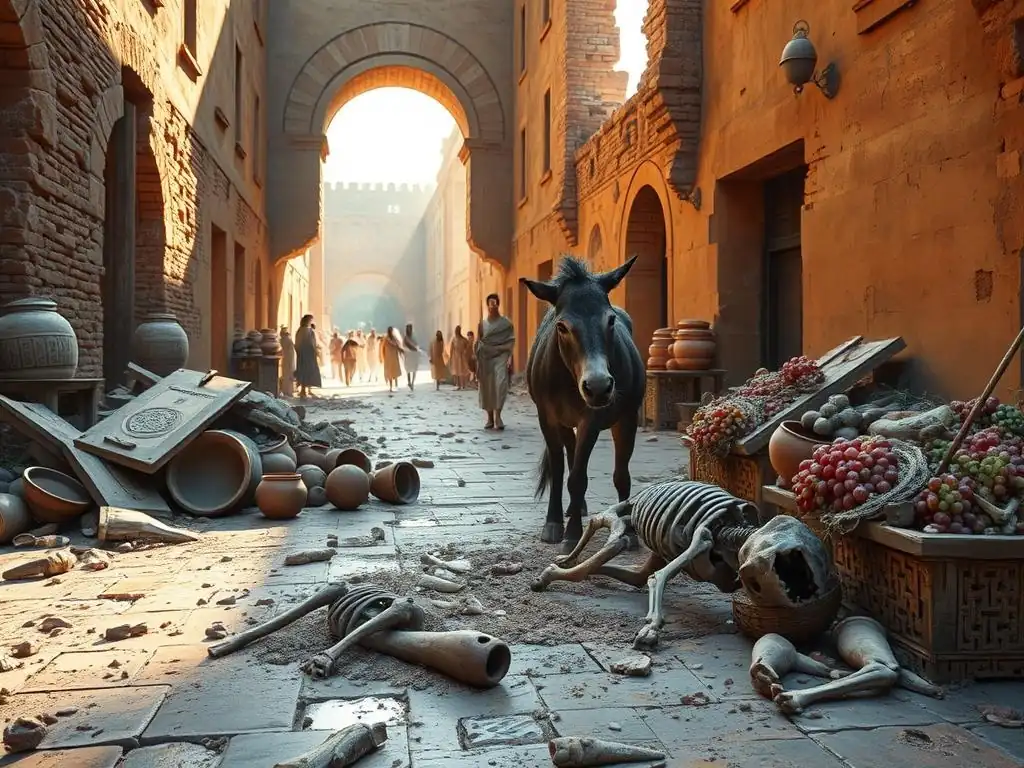
Beyond field work, animals powered various industrial processes within Pompeii and Herculaneum. One of the most striking examples is the use of donkeys in bakeries ( pistrinae) to operate grain mills ( mola asinaria). These large, hourglass-shaped lava mills required constant rotation, a task perfectly suited for a harnessed animal. The Bakery of Modestus in Pompeii, for instance, still contains multiple millstones and troughs, and excavations have even uncovered the skeletons of donkeys found chained to these mills, a poignant testament to their laborious existence.
These animal-powered mills were vital for grinding grain into flour, a fundamental step in bread production, which was a staple food. The efficiency provided by animal labor significantly increased output, supporting the large urban populations and contributing substantially to the local Pompeii Herculaneum animal economy. Similarly, animals might have been used in olive presses or other industries requiring repetitive, heavy-duty power, demonstrating their integral role in the industrial infrastructure of the cities.
Animal Husbandry Practices in the Vesuvian Region: Stall Feeding and Grazing
The maintenance of livestock in the Vesuvian region involved a combination of grazing and stall feeding, adapted to the local environment and agricultural needs. While cattle and sheep might have grazed on pastures in the surrounding countryside, particularly on the slopes of Vesuvius or in the fertile ager Campanus, evidence also suggests practices of stall feeding. This is particularly true for animals used intensively for labor or those kept closer to urban centers, such as pigs and poultry.
Archaeological finds from villae rusticae (rural villas) in the vicinity of Pompeii, like Villa Regina at Boscoreale, indicate specialized areas for animal housing, including stables and pens. These structures, often equipped with feeding troughs and water sources, suggest that animals were often kept in controlled environments, especially during winter months or for fattening purposes. The careful management of livestock, whether through extensive grazing or intensive stall feeding, was a sophisticated aspect of the Pompeii Herculaneum animal economy, ensuring a steady supply of food, labor, and raw materials.
Animals as Companions and Pets in Roman Society
Depictions of Animals in Pompeian Art: Dogs, Birds, and More
The affectionate relationship between Romans and their animal companions is vividly portrayed in the rich artistic legacy of Pompeii and Herculaneum. Dogs, in particular, feature prominently in mosaics, frescoes, and sculptures. The famous "Cave Canem" (Beware of Dog) mosaic at the entrance of the House of the Tragic Poet in Pompeii is a prime example, depicting a chained dog as a guard. Beyond this warning, many frescoes show dogs in domestic scenes, often curled at their master's feet or playing, suggesting their role as beloved pets.
Birds were also popular companions. Frescoes frequently depict small birds, such as doves, pigeons, and even exotic parrots, perched on cages or in gardens. These depictions not only reflect the aesthetic appreciation for animals but also hint at their integration into the daily social fabric. The presence of such detailed and varied animal imagery underscores that animals were not merely utilitarian but held significant symbolic and emotional value within Roman households, adding a qualitative layer to the understanding of the Pompeii Herculaneum animal economy and its societal context.
Evidence of Pet Ownership: Collars, Leashes, and Burials with Animals
While direct archaeological evidence of pet ownership, such as collars or leashes, is relatively rare due to the perishable nature of most materials, some notable finds exist. A bronze dog collar, for example, has been unearthed in Pompeii, providing tangible proof of domesticated pets. Furthermore, in some domestic contexts, small animal skeletons, sometimes found in proximity to human burials or within garden areas, are interpreted as evidence of pet burials.
One significant example is the discovery of a small dog skeleton beneath a bed in the House of the Citharist in Pompeii, suggesting it was a house pet that perished during the eruption. While formal pet cemeteries were not common in the Roman world, these isolated finds, combined with artistic representations, strongly indicate that many residents of Pompeii and Herculaneum kept animals primarily for companionship. This aspect of the Pompeii Herculaneum animal economy wasn't about production, but rather the emotional and social value animals provided.
The practice of keeping pets in Roman society, as evidenced in Pompeii and Herculaneum, often reflected social status and personal affection. While guard dogs might have been kept by property owners across various social strata, exotic birds or highly decorative breeds of dogs could signify wealth and leisure. For instance, the presence of specific breeds like the Maltese dog, known for its small size and suitability as a lapdog, is hinted at in some artistic depictions.
Pets also played a role in the emotional lives of their owners, providing comfort and companionship, much as they do today. The care and resources dedicated to these animals, even without direct economic returns, represent a significant, albeit often overlooked, component of the broader Pompeii Herculaneum animal economy. Their presence speaks to a more nuanced understanding of human-animal interaction, moving beyond purely utilitarian considerations to encompass the emotional and symbolic value placed on animals in Roman domestic life.
Animals in Craft and Industry: Exploitation and Resources
The Use of Animal Products: Leather, Wool, Bone, and Horn
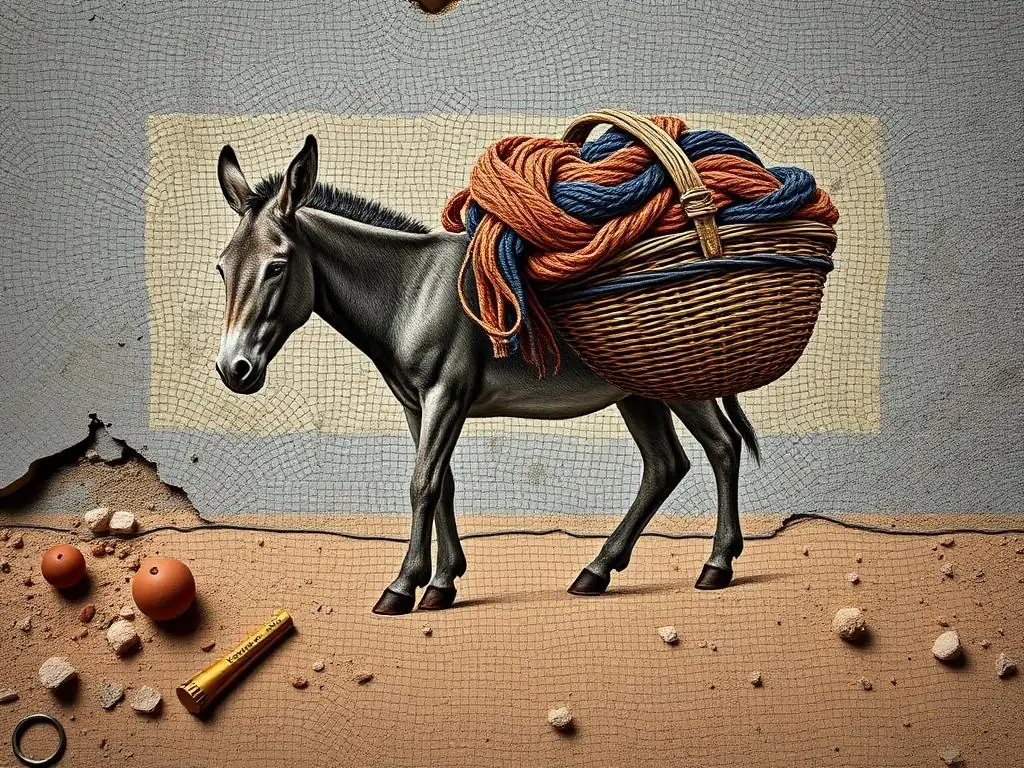
Animals were a critical source of raw materials for various crafts and industries in Pompeii and Herculaneum, underpinning a substantial part of the Pompeii Herculaneum animal economy. Leather, derived from the hides of cattle, sheep, and goats, was processed in specialized tanneries, like the large Tannery of Pompeii (Regio I, Insula 5, 2), which has vats and basins still visible. This leather was essential for making shoes, belts, bags, military equipment, and various straps and harnesses.
Wool, primarily from sheep, was fundamental to the textile industry. Evidence of spinning and weaving tools, along with fulling establishments ( fullonicae) where wool was cleaned and processed, indicates a thriving local production. Bones and horns from slaughtered animals were not discarded but repurposed into tools, pins, combs, dice, and decorative inlays, demonstrating a resourceful approach to animal by-products. The extensive use of these materials highlights a circular economy where every part of the animal was valued and utilized.
Animals and the Production of Garum (Fish Sauce) in Pompeii
One of the most economically significant industries in Pompeii that relied heavily on animal products was the production of garum, a fermented fish sauce that was a ubiquitous condiment and a major export. This pungent sauce was made from the entrails of fish, often mixed with small whole fish like anchovies, and then fermented with salt in large vats under the sun. Archaeological evidence, including large ceramic vats and the distinctive smell that lingers in some areas, points to dedicated garum production facilities.
The famous Pompeian garum producer, Umbricius Scaurus, even had mosaics in his house depicting amphorae of his garum and liquamen, advertising his brand. The scale of garum production suggests a considerable fishing industry to supply the raw materials, and the widespread consumption and trade of this product significantly bolstered the Pompeii Herculaneum animal economy. This industry not only provided employment but also established Pompeii as a key player in the Roman culinary trade network.
Animal-Derived Materials in Construction and Decoration
Beyond everyday items, animal-derived materials also found their way into construction and decorative arts in Pompeii and Herculaneum. Animal glue, made from hides, bones, and cartilage, was an essential adhesive used in carpentry, mosaic work, and fresco painting. Pigments derived from animal sources, though less common than mineral or plant-based ones, could have been used, such as sepia ink from cuttlefish or certain dyes.
Furthermore, shells from marine mollusks were used not only as food but also for decorative purposes, incorporated into mosaics, garden fountains, and even as architectural embellishments. While not as economically dominant as leather or wool, the utilization of these diverse animal resources demonstrates the comprehensive integration of animals into the material culture and daily life of the cities, showcasing the breadth of the Pompeii Herculaneum animal economy and its resourcefulness.
Animal Sacrifice and Religious Practices in Pompeii and Herculaneum
Evidence of Animal Sacrifice in Pompeian Temples and Shrines
Animal sacrifice was a cornerstone of Roman religious practice, and archaeological evidence from Pompeii and Herculaneum confirms its pervasive nature. Numerous altars found in public temples, private shrines ( lararia), and even street-side aediculae (small shrines) bear traces of burnt offerings, including animal bones. For instance, at the Temple of Apollo in Pompeii, remnants of sacrificial fires and associated faunal remains have been discovered. Similarly, the Temple of Isis, with its well-preserved ritual spaces, shows clear evidence of animal offerings.
The types of animals sacrificed varied depending on the deity and the ritual's purpose, but common sacrificial animals included pigs, sheep, goats, and cattle. The bones found at these sites often show specific cut marks related to ritual slaughter and careful selection of certain parts for burning on the altar, distinct from typical butchery for consumption. This ritualistic use of animals highlights a significant, albeit non-consumptive, aspect of the Pompeii Herculaneum animal economy within the spiritual sphere.
The Role of Animals in Roman Religious Rituals and Beliefs
Animals played a crucial role in Roman religious rituals, serving as intermediaries between humans and the divine. Sacrifices were performed to appease gods, to seek their favor, to give thanks, or to divine the future through haruspicy (the inspection of animal entrails). Public sacrifices, often involving large numbers of animals, were grand civic events, reinforcing community bonds and state authority. Private sacrifices at household shrines were more intimate, focusing on the well-being of the family.
Each deity often had specific animals associated with them; for example, pigs were commonly sacrificed to Ceres, the goddess of agriculture, while bulls were offered to Jupiter. The purity and health of the sacrificial animal were paramount, emphasizing their symbolic importance. This deep intertwining of animals with religious belief systems demonstrates that their value extended far beyond the material, shaping the cultural and spiritual landscape of the Pompeii Herculaneum animal economy.
The Symbolic Significance of Animals in Pompeian Religious Art
Beyond direct sacrifice, animals held significant symbolic meaning in Pompeian religious art, often appearing in frescoes and sculptures that adorned temples, public buildings, and private homes. Mythological scenes frequently depicted gods and heroes interacting with animals, such as Jupiter transforming into a bull to abduct Europa, or Leda embracing a swan (Zeus in disguise). These artistic representations reinforced popular myths and the divine attributes associated with certain animals.
Furthermore, animals could symbolize virtues, deities, or even serve as protective talismans. Snakes, for instance, were often depicted as agathodaemones (good spirits) on lararia, associated with household protection and fertility. Lions and panthers were linked to Dionysus/Bacchus, symbolizing wildness and revelry. This rich iconographic tradition underscores that animals were not just physical entities but powerful symbols deeply embedded in the religious consciousness of Pompeii and Herculaneum, reflecting a multifaceted Pompeii Herculaneum animal economy that included spiritual capital.
The Economic Impact of Animal Trade in Pompeii and Herculaneum
Evidence of Animal Markets and Trade Routes
The vibrant Pompeii Herculaneum animal economy was significantly influenced by a dynamic trade in livestock and animal products. The Macellum, Pompeii's main meat and fish market, provides clear archaeological evidence of a dedicated space for the sale of animal produce. Stalls and counters would have displayed various cuts of meat, reflecting a bustling commercial hub. Beyond local transactions, larger animals like cattle, horses, and even specialized breeds of dogs or exotic birds were likely traded over longer distances.
While direct evidence of specific animal trade routes is scarce, textual sources from the Roman world indicate established networks for moving livestock across regions. Animals could have been driven overland from inland pastures in regions like Samnium or Lucania, or transported by sea. The presence of specific animal breeds or species not native to the immediate Vesuvian area would suggest such external trade, highlighting the interconnectedness of Pompeii and Herculaneum with the broader Roman economic landscape.
The Economic Value of Different Animal Species
The economic value of different animal species varied considerably, reflecting their utility, availability, and demand within the Pompeii Herculaneum animal economy. Large draft animals like oxen and horses represented significant capital investments due to their strength, training, and longer lifespans, essential for agriculture and transportation. Their value was tied to their labor capacity and breeding potential.
Smaller livestock such as pigs, sheep, and goats, while individually less valuable, contributed significantly through their rapid reproduction, providing a steady supply of meat, milk, wool, and hides. Fish, especially those used for garum, had a high commercial value due to their export potential. The varied economic worth of these animals created a complex pricing structure, influencing purchasing power and dietary choices across different social strata in both cities.
The Impact of Animal Husbandry on the Local Economy
Animal husbandry was a foundational pillar of the local Pompeii Herculaneum animal economy, providing livelihoods for a wide array of individuals and stimulating numerous related industries. Farmers and shepherds managed herds in the surrounding countryside, supplying the urban centers with livestock and animal products. This primary sector then fed into secondary industries such as butchery, tanning, wool processing, and the production of tools and goods from bone and horn.
The demand for animal products also supported a network of traders, transporters, and retailers. The efficient functioning of these interconnected sectors ensured a continuous flow of essential goods and services, contributing to the overall prosperity and self-sufficiency of Pompeii and Herculaneum. Thus, animal husbandry was not merely an agricultural activity but a complex economic system that underpinned a significant portion of the region's wealth and employment.
A Comparative Analysis: Animal Economy in Pompeii vs. Herculaneum
Similarities and Differences in Animal Use Patterns
While both Pompeii and Herculaneum shared fundamental aspects of the Roman Pompeii Herculaneum animal economy, distinct patterns emerge from their archaeological records. Both cities heavily relied on pigs, sheep/goats, and cattle for meat, with pigs often being the most common. Donkeys and mules were universally used for labor and transport. However, variations in the proportions of different animal remains suggest subtle differences in dietary preferences and economic specializations.
Herculaneum, with its direct coastal access and better preservation of organic remains, shows a notably higher prevalence of marine resources, including a greater diversity of fish species and shellfish, reflecting a stronger reliance on fishing. In contrast, Pompeii, surrounded by extensive agricultural land, might have had a more pronounced emphasis on terrestrial livestock and large-scale agricultural production, though both certainly engaged in both. These differences highlight how local geography and economic focus shaped their respective animal economies.
Factors Influencing Animal Economy in Each City: Coastal Access and Agricultural Land
The primary differentiating factor influencing the Pompeii Herculaneum animal economy of each city was their geographical setting. Herculaneum, situated directly on the Bay of Naples, benefited from immediate access to abundant marine life. This proximity fostered a robust fishing industry, supplying not only fresh seafood but also raw materials for garum production on a significant scale. The archaeological evidence of fishnets, hooks, and a greater density of fish bones in Herculaneum compared to Pompeii underscores this maritime focus.
Pompeii, while close to the coast, was more intimately connected with the fertile ager Campanus – the vast agricultural plain stretching inland. This rich volcanic soil supported extensive vineyards, olive groves, and arable land, necessitating a greater reliance on terrestrial livestock for plowing, transportation, and meat production. The numerous villae rusticae in Pompeii's hinterland confirm a strong agricultural base, making livestock rearing a central component of its economy. These environmental factors demonstrably shaped the distinct nuances of the Pompeii Herculaneum animal economy in each city.
Insights into the Broader Roman Animal Economy
The detailed studies of the Pompeii Herculaneum animal economy provide invaluable insights into the broader Roman world. They illustrate the adaptability of Roman economic practices to diverse local conditions, showcasing how both coastal and agricultural regions integrated animals into their daily lives and economic structures. The evidence from these cities demonstrates a complex interplay between local production, regional trade, and imperial demand for goods like garum.
Furthermore, the comparison between Pompeii and Herculaneum highlights the regional variations within the Roman economic system. While a common Roman diet existed, local availability and specialization led to distinct dietary and industrial emphases. These case studies underscore the importance of zooarchaeological data in complementing textual sources, offering a tangible and granular understanding of the economic realities and the pervasive role of animals throughout the vast Roman Empire.
Conclusion: Animals as Integral to the Daily Life and Economy of Pompeii and Herculaneum
Summarizing the Diverse Roles of Animals in the Vesuvian Cities
The archaeological record from Pompeii and Herculaneum unequivocally demonstrates the profound and multifaceted role animals played in the daily life and economy of these Roman cities. From providing the staple proteins in their diet, such as pigs, sheep, and fish, to serving as indispensable sources of labor for agriculture and industry, animals were woven into the very fabric of urban existence. Their hides, wool, bones, and horns fueled various crafts, supporting industries like tanning, textiles, and tool-making, while the production of garum showcased their crucial contribution to a significant export commodity.
Beyond their utilitarian functions, animals were cherished as companions and imbued with deep symbolic and religious significance, appearing prominently in art and ritual. This comprehensive integration underscores that the Pompeii Herculaneum animal economy was not merely a subset of their overall economic activity but a pervasive system that touched every aspect of daily life, from sustenance and labor to trade, social customs, and spiritual beliefs.
The Importance of Animal Studies in Understanding Roman Urban Life
The meticulous study of animal remains, a field known as zooarchaeology, has proven indispensable for gaining a nuanced understanding of Roman urban life, particularly in the context of Pompeii and Herculaneum. Unlike textual sources that often focus on elite perspectives or public events, faunal assemblages provide direct, tangible evidence of the daily practices, dietary habits, and economic realities of the broader population. They allow researchers to reconstruct ancient foodways, identify animal husbandry techniques, and trace trade networks with remarkable precision.
These studies offer critical insights into the environmental impact of human activities, the availability of resources, and the social stratification reflected in patterns of consumption. By analyzing bones, teeth, and other animal-derived artifacts, archaeologists can paint a more complete and accurate picture of the Pompeii Herculaneum animal economy, revealing the intricate ways in which humans managed, exploited, and coexisted with the animal world in a dynamic Roman urban setting.
Future Research Directions: Ancient DNA Analysis and Isotopic Studies of Animal Remains
As archaeological science continues to advance, future research directions promise even deeper insights into the Pompeii Herculaneum animal economy. Ancient DNA (aDNA) analysis of animal remains holds immense potential to identify specific breeds, trace their genetic origins, and even detect ancient diseases, offering unprecedented detail on livestock management and trade routes. This can help confirm whether animals were locally bred or imported from distant regions, refining our understanding of supply chains.
Furthermore, isotopic studies of animal bones and teeth can reveal an animal's diet and geographical origin. By analyzing stable isotopes of carbon, nitrogen, and oxygen, researchers can determine if animals were primarily grazing on local pastures, consuming specific fodder, or if they migrated, providing direct evidence of their movements and management. These cutting-edge techniques will undoubtedly continue to illuminate the complex and vital role of animals in the daily life and economy of Pompeii and Herculaneum, enriching our understanding of the Roman world.
Frequently Asked Questions
What types of animals were most commonly found in Pompeii and Herculaneum, and what does this tell us about the animal economy?
Remains reveal dogs, cats, livestock (pigs, sheep, goats, cattle), and poultry were common. This suggests a diverse animal economy supporting food, labor, and companionship.
How did the eruption of Mount Vesuvius in 79 AD help preserve evidence of the animal economy in Pompeii and Herculaneum?
The volcanic ash and pyroclastic flows rapidly buried the cities, creating a sealed environment that preserved organic materials, including animal remains and even footprints.
What evidence exists that animals were used for transportation or labor in Pompeii and Herculaneum, contributing to the urban economy?
Artwork, skeletal remains, and traces of harnesses indicate the use of horses, mules, and oxen for transportation, agriculture, and pulling carts within the cities.
Besides food, what other roles did animals play in the daily lives of people in Pompeii and Herculaneum, impacting the overall economy?
Animals provided wool and leather for clothing, bone for tools, and were used in religious rituals. They also served as pets and companions, impacting the emotional and social well-being of the population, thus indirectly affecting the economy.
How does studying the animal economy of Pompeii and Herculaneum contribute to our understanding of Roman society and its economic systems?
Analyzing animal remains helps us understand trade networks, dietary habits, agricultural practices, and the overall economic structure of Roman cities, providing valuable insights into daily life.
Final Reflection: Echoes of Ancient Symbiosis
The evidence unearthed from Pompeii and Herculaneum provides a compelling snapshot of a world where animals were inextricably linked to the daily lives and economic prosperity of its inhabitants. This intimate connection, though separated from us by millennia, resonates profoundly today as we grapple with our own complex relationships with the animal kingdom. Understanding the multifaceted role animals played in these ancient cities offers invaluable insights into the enduring human-animal bond and its impact on societal structures.
The study of Pompeii and Herculaneum reveals not just the practical uses of animals, but also their cultural significance, reminding us that our relationship with animals is far more than transactional; it's deeply woven into the fabric of our societies, past and present. The echoes of their presence – from the bones of working animals to the depictions of pets in art – speak volumes about the values and priorities of a bygone era. The greatness of a nation and its moral progress can be judged by the way its animals are treated.
- Mahatma Gandhi. This quote, though modern, encapsulates the timeless truth reflected in the archaeological record of Pompeii and Herculaneum.
Let us, therefore, consider the lessons learned from these ancient cities. How can we, like the inhabitants of Pompeii and Herculaneum, foster a more sustainable and ethical relationship with the animals that share our world? Reflect on the ways in which animals contribute to our lives, both economically and emotionally, and strive to create a future where their well-being is valued and protected. The past, as revealed by Pompeii and Herculaneum, offers a powerful lens through which to examine our present and shape a more compassionate future for all living beings.
Unearth Your Own Connection to the Past!
Thank you for delving into the fascinating world of Pompeii and Herculaneum and discovering the integral role animals played in their daily lives and economy. Now, it's time to bring that understanding to life!
Here are some ways you can connect even deeper:
- Become a citizen scientist: Contribute to ongoing archaeological projects by transcribing ancient texts or cataloging artifacts online. Many organizations need volunteers like you!
- Reflect on the animals in your own life. How do they contribute to your well-being, or the economy of your community? Document this connection in a journal or share your thoughts with others.
- Share this article with friends and family who love history or animals, and start a conversation about what we can learn from the past.
What surprising parallels do you see between the animal's role in Pompeii and its role in your modern community?