
The Memmius Monument: Commemorating Sulla's Victory in Ephesus

Welcome to ArchaeologyHub.org, your gateway to unlocking the secrets of the past.
Delve into the intriguing story behind the Memmius Monument in Ephesus, a testament to Sulla's victory and its enduring impact. But what secrets lie buried beneath its foundations, and how does it illuminate our understanding of Roman power in Asia Minor? Unearth the answers within and explore the rich tapestry of global archaeological sites.
- Introduction: Unveiling Sulla's Monument in Ephesus
- The Historical Context: Sulla, Ephesus, and the Mithridatic Wars
- Discovery and Excavation of the Memmius Monument
- Architectural Features and Design of the Memmius Monument
- The Inscription: Deciphering Sulla's Victory
- Significance and Interpretation of the Memmius Monument
- The Memmius Family and Their Connection to Sulla
- Preservation and Presentation of the Sulla Monument
- Conclusion: Sulla's Enduring Mark on Ephesus
-
Frequently Asked Questions
- What is the Memmius Monument, and why is it significant in relation to Sulla?
- Where in Ephesus is the Memmius Monument located, and what is its current state of preservation?
- How does the Memmius Monument contribute to our understanding of Roman presence and power in Ephesus?
- What types of artifacts have been discovered during the "Sulla’s monument Ephesus excavation," and what do they reveal?
- What excavation techniques are being employed at the Memmius Monument site, and how do they help archaeologists understand its history?
- Final Reflection: Echoes of Victory, Lessons for Today
- Unearth Ephesus's Secrets: Your Journey Begins Now!
Introduction: Unveiling Sulla's Monument in Ephesus
ArchaeologyHub.org: Delving into Roman Provincial Sites
ArchaeologyHub.org serves as a comprehensive digital encyclopedia, meticulously documenting archaeological discoveries, excavation techniques, and historical sites across the globe. Our dedicated section on Roman provincial sites offers an unparalleled depth of insight into how Roman power and culture permeated diverse regions, transforming local landscapes and societies. Ephesus, as one of the most prominent cities in the Roman province of Asia, stands as a prime example of a thriving metropolis profoundly shaped by Roman influence, offering a wealth of information on urban planning, administration, and daily life under imperial rule.
Within this framework, studying individual monuments like the Memmius Monument becomes crucial for understanding the intricate layers of Roman presence and local adaptation. These structures are not merely architectural relics but tangible expressions of political power, cultural exchange, and historical memory. They provide specific insights into Roman administrative strategies, the projection of imperial authority, and the complex interactions between Roman officials and the indigenous populations, making sites like Ephesus invaluable for historical and archaeological research.
Sulla’s Monument Ephesus Excavation: A Historical Landmark
The Memmius Monument stands as a pivotal historical landmark in Ephesus, directly associated with the formidable Roman general Lucius Cornelius Sulla. Erected in the early 1st century BC, this monument explicitly commemorates Sulla's decisive victory over Mithridates VI of Pontus, marking a significant turning point for Roman dominance in Asia Minor. Its presence in the heart of Ephesus underscores the city's strategic importance and its close ties to Roman political developments, even during periods of intense conflict and transition.
The Sulla’s monument Ephesus excavation has provided invaluable archaeological data, shedding light on the monument's construction, its original appearance, and its symbolic function within the urban fabric of ancient Ephesus. The painstaking work of archaeologists has allowed for the reconstruction of its architectural elements and the deciphering of its dedicatory inscriptions, offering a unique window into Roman imperial symbolism and the ways in which military triumphs were publicly celebrated and remembered in the provinces.
The Historical Context: Sulla, Ephesus, and the Mithridatic Wars
Lucius Cornelius Sulla: Roman General and Statesman
Lucius Cornelius Sulla Felix was one of the most influential and controversial figures of the late Roman Republic. Rising to prominence through a distinguished military career, he earned renown for his tactical brilliance and unwavering determination. His tenure as consul and later as dictator, from 82 to 81 BC, saw him implement sweeping constitutional reforms aimed at restoring senatorial authority and curbing the power of popular assemblies, profoundly reshaping the Roman political landscape.
Beyond his domestic political struggles, Sulla's military campaigns in the East, particularly against Mithridates VI, solidified his reputation as a formidable commander. His victories in Greece and Asia Minor not only secured Roman interests in the region but also allowed him to amass immense personal prestige and wealth. His strategic importance in Roman history is undeniable, as his actions laid some of the groundwork for the eventual transition from Republic to Empire.
Ephesus in the Late Roman Republic: A Prosperous City
During the late Roman Republic, Ephesus flourished as a preeminent commercial and cultural center in Asia Minor. Situated at a crucial crossroads of trade routes, its magnificent harbor ensured its status as a vital economic hub, facilitating extensive trade across the Aegean and beyond. The city's wealth was evident in its grand public buildings, elaborate marble streets, and impressive infrastructure, reflecting a cosmopolitan society that blended Greek traditions with burgeoning Roman influence.
Ephesus held the esteemed position of the capital of the Roman province of Asia, a testament to its administrative and strategic significance. While initially enjoying a degree of autonomy, its prosperity made it a target during conflicts, leading to periods of Roman intervention. Despite political shifts, the city maintained its vibrant cultural and religious life, notably centered around the cult of Artemis, whose colossal temple was one of the Seven Wonders of the Ancient World.
The Mithridatic Wars: Conflict and Roman Expansion in Asia Minor
The Mithridatic Wars, a series of three major conflicts spanning from 89 to 63 BC, represented a significant challenge to Roman hegemony in the East. Initiated by Mithridates VI of Pontus, a powerful and ambitious Hellenistic monarch, these wars aimed to expel Roman influence from Asia Minor and restore Greek sovereignty. The First Mithridatic War (89-85 BC) saw Mithridates initially achieve considerable success, including the massacre of tens of thousands of Roman and Italian residents across Asia Minor, known as the "Asiatic Vespers," which profoundly impacted cities like Ephesus.
Lucius Cornelius Sulla's intervention proved decisive in turning the tide of the war. His strategic military campaigns, notably his victories at the Battle of Chaeronea in 86 BC and Orchomenus in 85 BC, severely weakened Mithridates' forces. These triumphs compelled Mithridates to negotiate the Treaty of Dardanus in 85 BC, which effectively re-established Roman control over Asia Minor and imposed significant indemnities on the provincial cities that had sided with Mithridates, including Ephesus, solidifying Roman dominance for centuries to come.
Discovery and Excavation of the Memmius Monument
Early Excavations at Ephesus: Austrian Archaeological Institute's Contribution
The history of archaeological exploration at Ephesus is extensive, with systematic excavations commencing in the late 19th century. The Austrian Archaeological Institute (ÖAI) has played a particularly pivotal role in uncovering the city's ancient remains, initiating its continuous program of research and excavation in 1895. These early efforts were instrumental in mapping the sprawling urban plan of Ephesus, identifying major civic structures, and establishing a methodological approach to the site's complex stratigraphy.
Over decades, the ÖAI's meticulous work has unveiled layers of Ephesian history, from its Hellenistic foundations to its Roman and Byzantine periods. Their extensive fieldwork has led to the discovery of countless significant structures, including the Great Theater, the Library of Celsus, and the Curetes Street. It was within this broader context of systematic urban exploration that the area containing the Memmius Monument was identified, contributing to a holistic understanding of Ephesus's architectural and historical evolution.
Locating the Monument: Situated Near the State Agora
The Memmius Monument is strategically positioned within the urban fabric of ancient Ephesus, located at a prominent intersection near the State Agora. This area served as the administrative and political heart of the city, housing key governmental buildings and public spaces. Its placement at the northern end of the Curetes Street, one of Ephesus's main thoroughfares, ensured maximum visibility and accessibility to both citizens and visitors navigating the city.
The deliberate choice of this location underscores the monument's intended purpose as a highly visible public display of Roman power and a constant reminder of Sulla's significant influence. Its proximity to the civic center would have ensured that its commemorative message, celebrating a pivotal Roman victory, was continually reinforced to those involved in the city's daily political and social life, solidifying its role as a landmark in the urban landscape.
Unearthing Sulla’s Legacy: The Excavation Process
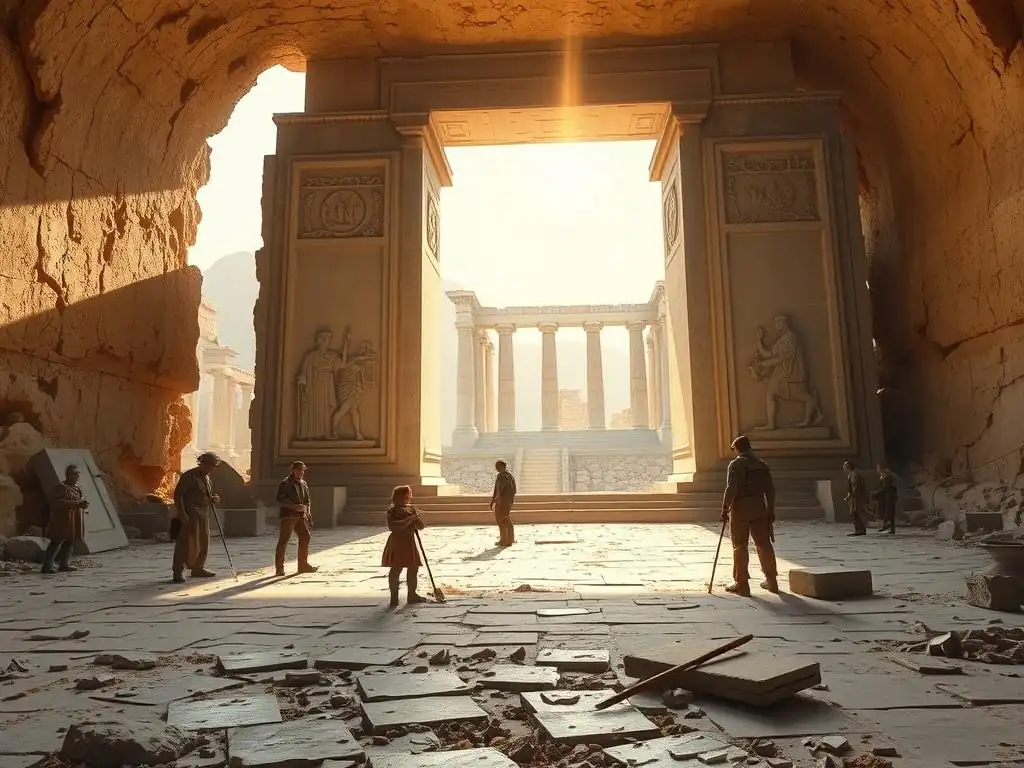
The Sulla’s monument Ephesus excavation involved a painstaking process to uncover and understand this significant structure, which had largely collapsed over centuries. Archaeologists meticulously cleared layers of debris and earth, revealing the monument's foundations and numerous fallen architectural elements. The careful documentation of each fragment's position was crucial for subsequent reconstruction efforts, providing vital clues about its original form and decorative program.
During the excavation, numerous key findings emerged, including large blocks of marble from the monument's superstructure, fragments of its sculptural decoration, and crucially, sections of its dedicatory inscription. These discoveries were meticulously recorded, analyzed, and cataloged, allowing scholars to definitively identify the structure as the Memmius Monument and link it directly to the commemoration of Sulla's victory, thereby unearthing a tangible piece of Sulla’s legacy in Ephesus.
Architectural Features and Design of the Memmius Monument
Monumental Architecture: Roman Influence in Ephesus
The Memmius Monument exemplifies the profound impact of Roman architectural aesthetics and triumphal traditions on the urban landscape of Ephesus. While situated in a city with deep Hellenistic roots, the monument's design clearly incorporates elements characteristic of Roman public works, such as the use of monumental arches and a focus on grand scale. Its structure reflects a blend of local building materials with Roman engineering principles, showcasing the diffusion of imperial architectural norms into the provinces.
Its overall design, often described as a tetrapylon-like structure, with four arched passages and a central core, echoes the form of Roman triumphal arches and gateways found across the empire. This monumental scale and sophisticated design served a dual purpose: to impress and to convey a clear message of Roman authority and permanence. The monument stands as a testament to the Romanization of public space in Ephesus, adapting imperial architectural forms to a local context.
Analyzing the Structure: Materials, Dimensions, and Layout
The Memmius Monument was constructed primarily from local marble and limestone, materials readily available in the region, which contributed to its imposing presence. While precise original dimensions are subject to scholarly reconstruction, the monument is estimated to have stood approximately 15 to 17 meters tall, with a substantial base that would have made it a dominant feature in its immediate vicinity. Its layout consists of a central core with four arched openings, creating a cross-shaped passage.
This unique four-sided design allowed for monumental facades facing all cardinal directions, ensuring high visibility from multiple approaches within the city. Niches and aediculae adorned its surfaces, designed to house sculptural figures. The robust construction and strategic placement indicate a structure intended for longevity and public prominence, designed to be a permanent fixture in the civic landscape of Ephesus.
Decorative Elements: Sculptures, Inscriptions, and Reliefs
The Memmius Monument was richly adorned with a sophisticated program of decorative elements, including sculptures, inscriptions, and reliefs, all contributing to its commemorative message. Surviving sculptural fragments indicate the presence of figures, prominently featuring Gaius Memmius, the dedicator, and potentially his father, as well as allegorical representations. One notable surviving sculpture depicts a figure often identified as Sulla himself, though this remains a subject of scholarly debate, emphasizing heroic qualities.
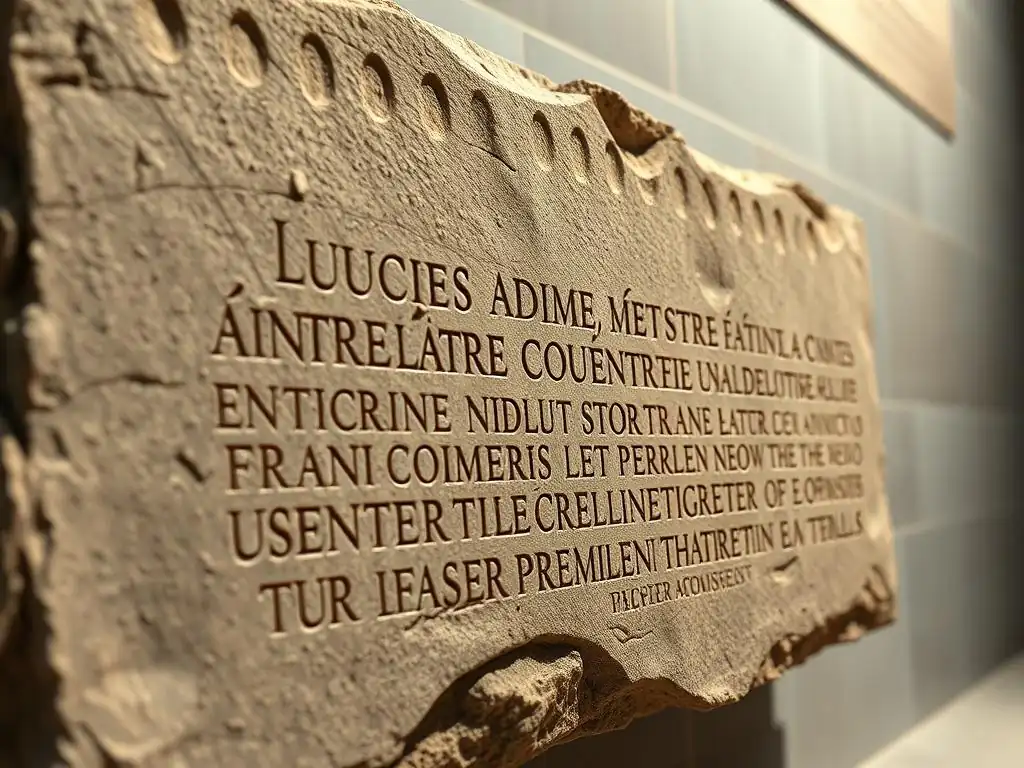
The most crucial decorative element for understanding the monument's purpose is its extensive Latin inscription, which explicitly states its dedication to Sulla and commemorates his victory. In addition to these, there may have been narrative reliefs depicting scenes from Sulla's campaigns or symbolic representations of Roman triumph and peace, though less evidence for these specific elements survives. The combination of these visual and textual elements transformed the monument into a powerful medium for projecting power and celebrating victory.
The Inscription: Deciphering Sulla's Victory
Epigraphic Analysis: Translating and Interpreting the Inscription
Epigraphic analysis, the study of ancient inscriptions, is paramount to understanding the Memmius Monument. The monument bears a significant Latin inscription, crucial for identifying its dedicatory purpose and historical context. Archaeologists and epigraphists have painstakingly translated the surviving fragments of this text, often a challenging task due to the erosion of stone and the fragmented nature of the discoveries. This process involves reconstructing missing words and phrases based on known Roman epigraphic conventions and historical context.
The interpretation of the inscription goes beyond mere translation; it involves a deep understanding of Roman political language, honorific titles, and the specific historical events it references. Scholars analyze the choice of words, the grammatical structure, and the overall tone to discern the precise message the dedicator intended to convey. This meticulous work ensures that the monument's primary purpose—to commemorate Sulla's victory—is accurately understood and contextualized within the broader history of Roman influence in Ephesus.
The Message of the Inscription: Commemorating Sulla's Achievements
The core message conveyed by the inscription on the Memmius Monument is a direct and unequivocal commemoration of Lucius Cornelius Sulla's achievements. It explicitly honors Sulla for his decisive victory over Mithridates VI of Pontus, particularly highlighting his role in restoring peace and order to the Roman province of Asia. The text praises Sulla as a benefactor and savior, emphasizing the stability and security he brought after the tumultuous period of the Mithridatic Wars.
This dedicatory message not only records a historical event but also functions as a public declaration of gratitude and allegiance from the dedicator, Gaius Memmius, towards Sulla. It underscores the profound impact Sulla's military success had on the region, portraying him as the architect of renewed prosperity and the guarantor of Roman authority. The inscription stands as a permanent testament to the reverence and political acknowledgment accorded to Sulla in the eastern provinces.
The inscription on the Memmius Monument serves as a powerful example of political propaganda in the Roman world, meticulously crafted to project Sulla's immense power and authority. By explicitly linking the monument to Sulla's victory, the dedicator aimed to legitimize Sulla's actions and reinforce his image as an invincible general and a bringer of peace, despite his controversial domestic policies as dictator. The prominence of the inscription ensures that this message was widely disseminated among the Ephesian populace.
This public display of reverence for Sulla helped to solidify Roman dominance in the newly re-established province of Asia. It served as a constant visual and textual reminder to the local inhabitants of who held ultimate authority and whose military might ensured their security. The monument, therefore, was not merely a memorial but a strategic tool in the ongoing process of Romanization, embedding imperial power structures deeply within the urban landscape of Ephesus.
Significance and Interpretation of the Memmius Monument
Commemorating Victory: The Monument as a Triumphal Memorial
The Memmius Monument's primary significance lies in its function as a triumphal memorial, specifically commemorating Lucius Cornelius Sulla's decisive victory over Mithridates VI. Its grand scale and prominent location in Ephesus ensured that it served as a permanent, visible reminder of Roman military might and its successful assertion of control over Asia Minor. This public display of triumph was crucial for reinforcing Roman authority in a province that had recently experienced significant upheaval and anti-Roman sentiment.
More than just a record of a battle, the monument symbolized the restoration of Roman order and the return to stability after the devastating Mithridatic Wars. For the inhabitants of Ephesus, it represented the end of a period of conflict and, despite the punitive measures imposed by Sulla, the re-establishment of a framework for economic recovery under Roman peace. It was a tangible emblem of the new political reality in the East.
Sulla's Impact on Ephesus: Political and Economic Repercussions
Sulla's victory, while restoring Roman control, had profound and complex repercussions for Ephesus. Politically, it reaffirmed the city's status as a key component of the Roman province of Asia, firmly integrating it into the imperial administrative system. Economically, however, the immediate aftermath was harsh: Sulla imposed a massive indemnity on the province, estimated at 20,000 talents, to be paid over five years, alongside a significant backlog of taxes. This debt was distributed among the cities, with Ephesus bearing a substantial portion.
This financial burden led to widespread hardship and forced many cities, including Ephesus, into debt with Roman moneylenders. Despite this punitive measure, in the long term, Sulla's re-establishment of Roman authority brought an era of relative peace and stability that allowed Ephesus to eventually recover and prosper. The monument thus stands as a complex symbol of both punitive power and the foundation for future Roman provincial prosperity.
The Monument in the Urban Landscape of Ephesus: Placement and Visibility
The strategic placement of the Memmius Monument within the urban landscape of Ephesus was critical to its impact and visibility. Situated at the intersection of two major thoroughfares—the Curetes Street and the street leading to the State Agora—it commanded attention from multiple directions. This central location ensured that the monument was a constant fixture in the daily lives of Ephesians and visitors alike, making it one of the most prominent features of the city's civic center.
Its elevated position and monumental scale meant that the Sulla’s monument Ephesus excavation revealed a structure designed to be seen and understood from afar. This high visibility amplified its commemorative message, constantly reminding the populace of Sulla's victory and Rome's enduring presence. The monument thus served as a powerful architectural statement, integrating Roman imperial ideology directly into the heart of a major Greek city.
The Memmius Family and Their Connection to Sulla
Gaius Memmius: Dedication and Patronage
Gaius Memmius is identified through the monument's inscription as its dedicator, a figure whose act of patronage was deeply significant in the Roman world. While his exact identity is debated among scholars, he was likely a prominent Roman citizen, possibly a local elite with strong ties to Rome, or a Roman official serving in Asia. His decision to commission such a grand monument for Sulla reflects a strategic alignment with the victorious general, demonstrating loyalty and seeking political favor or enhanced social standing.
In the Roman Republic, public patronage, particularly the funding of monumental structures, was a common means for individuals to display their wealth, influence, and political allegiances. By dedicating a monument to Sulla, Gaius Memmius effectively associated his family name with a pivotal moment in Roman history and with one of its most powerful figures, thereby solidifying his family's prestige and potentially securing their position within the Roman administrative framework in Asia Minor.
The Memmii: A Roman Family in Ephesus
The Memmii family, though not as widely known as some of the great senatorial families of Rome, held a discernible presence in Ephesus, suggesting significant local influence or connections to Roman power. Evidence, primarily from inscriptions and archaeological findings, indicates that certain members of the Memmii family were active in the city's affairs, possibly holding local magistracies or engaging in commercial enterprises. Their integration into the Ephesian elite highlights the complex social dynamics of Roman provincial cities.
Their presence further illustrates the ways in which Roman citizens and Romanized elites established themselves in the provinces, often through a combination of land ownership, trade, and political involvement. The Memmii's decision to dedicate a major public monument in Ephesus suggests a deep-rooted connection to the city and a commitment to maintaining Roman influence and order within its boundaries, reflecting their status as an established and influential family in the region.
Connecting the Memmii to Sulla’s Victory
The dedication of the Memmius Monument directly connects the Memmii family to Sulla’s victory and the subsequent re-establishment of Roman authority in Asia Minor. This act of patronage was likely motivated by a combination of factors: genuine admiration for Sulla's military achievements, political opportunism, or a desire to gain favor with the dominant faction in Rome. By publicly honoring Sulla, the Memmii would have affirmed their loyalty to the Roman state and its victorious general, distinguishing themselves among the provincial elite.
Such a public display of support could have yielded significant benefits for the family, including political appointments, economic advantages, or enhanced social prestige within the Roman hierarchy. The monument serves as a tangible record of this strategic alliance, showcasing how local elites navigated the complex political landscape of the late Roman Republic by aligning themselves with powerful Roman figures, thereby reinforcing the narrative of Sulla’s monument Ephesus excavation as a testament to Roman political maneuvering.
Preservation and Presentation of the Sulla Monument
Conservation Efforts: Protecting the Monument from Deterioration
The Memmius Monument, like many ancient structures, faces significant challenges from natural deterioration and environmental factors. Ongoing conservation efforts are crucial to protect this historical landmark from further decay. Archaeologists and conservation specialists employ a range of techniques, including the consolidation of fragile stone elements to prevent crumbling, the application of protective coatings against weathering, and the implementation of drainage systems to mitigate water damage.
These meticulous conservation measures are vital for ensuring the monument's long-term survival and preserving its structural integrity. The continuous work at the Sulla’s monument Ephesus excavation site involves regular monitoring of the stone's condition, repair of cracks, and protection from seismic activity and erosion. Such efforts highlight the commitment to safeguarding this significant piece of Roman history for future generations of researchers and visitors.
Display and Interpretation: Presenting the Monument to the Public
Presenting the Memmius Monument effectively to the public involves careful display and comprehensive interpretation. While the monument stands partially reconstructed, interpretive signage at the site provides visitors with crucial historical context, explaining its purpose, the significance of Sulla's victory, and the role of the Memmii family. These panels often include illustrations or diagrams that help visitors visualize the monument's original appearance.
Furthermore, archaeological sites like Ephesus increasingly utilize digital tools, such as virtual reconstructions or augmented reality applications, to enhance the visitor experience. These technologies allow for a more dynamic understanding of the monument's place within ancient Ephesus and its historical narrative. The goal is to transform the physical remains into an engaging educational experience, conveying the complex historical narratives embedded within the stone.
The Memmius Monument as a Tourist Attraction
The Memmius Monument holds a prominent place among the many attractions at the ancient city of Ephesus, drawing considerable interest from tourists worldwide. Its strategic location near the State Agora and along the popular Curetes Street ensures that it is a frequently visited site on guided tours. Visitors are often captivated by its imposing scale and the historical narrative it embodies, particularly its connection to a renowned Roman figure like Sulla.
Its inclusion in site maps and tour itineraries underscores its importance in understanding the broader history of Ephesus under Roman rule. The monument's unique architectural features and the story of Sulla’s monument Ephesus excavation contribute significantly to the rich tapestry of historical experiences offered at the site, making it a key stop for those interested in Roman history, archaeology, and ancient urbanism.
Conclusion: Sulla's Enduring Mark on Ephesus
The Memmius Monument: A Window into Roman History
The Memmius Monument stands as a compelling and tangible window into a pivotal period of Roman history, particularly the late Roman Republic and its expansion into Asia Minor. It vividly illustrates the profound impact of figures like Lucius Cornelius Sulla on provincial cities such as Ephesus, serving as a permanent record of military triumph and political power. The monument illuminates the complex dynamics between Rome and its provinces, showcasing how imperial authority was asserted and commemorated through monumental architecture.
Beyond its military significance, the monument offers invaluable insights into Roman architectural styles, epigraphic practices, and the intricate web of patronage that characterized Roman society. It underscores the importance of public monuments as tools for propaganda and the shaping of historical memory, providing archaeologists and historians with crucial data to reconstruct the political and social landscape of ancient Ephesus.
Further Research: Investigating the Monument's Original Appearance
Despite extensive Sulla’s monument Ephesus excavation and scholarly analysis, ongoing research continues to refine our understanding of the Memmius Monument. Future investigations will likely focus on more detailed architectural reconstructions, aiming to achieve a more precise visualization of its original appearance and the full extent of its decorative program. The re-examination of fragmented sculptural pieces and subtle architectural details could yield new insights into its aesthetic and symbolic nuances.
The application of advanced technologies, such as 3D scanning, photogrammetry, and digital modeling, offers promising avenues for creating highly accurate virtual reconstructions. These tools can help in piecing together the monument's fragmented elements, allowing scholars to study its proportions, the placement of its sculptures, and its interaction with the surrounding urban environment in unprecedented detail, further enriching our knowledge of this significant structure.
Ephesus: A Living Archaeological Site.
Ephesus remains a dynamic and vibrant archaeological site, where the process of discovery and interpretation is continuous. Each season of excavation brings new findings, challenging existing theories and adding layers to our understanding of this ancient metropolis. The city's vastness and the depth of its historical layers mean that it continues to yield remarkable insights into various aspects of ancient life, from daily routines to grand imperial policies.
The Memmius Monument, revealed through diligent Sulla’s monument Ephesus excavation, is but one compelling example within this rich historical tapestry. It symbolizes the ongoing commitment to unearthing, preserving, and interpreting the past, ensuring that Ephesus continues to be a living archaeological site that profoundly shapes our comprehension of ancient civilizations and their enduring legacies.
Frequently Asked Questions
What is the Memmius Monument, and why is it significant in relation to Sulla?
The Memmius Monument is a significant Roman-era structure in Ephesus. It commemorates Sulla's victory in the Mithridatic Wars, highlighting his influence in the region.
Where in Ephesus is the Memmius Monument located, and what is its current state of preservation?
The monument's exact location within Ephesus is often detailed in excavation reports. Its current state of preservation varies; ongoing conservation efforts aim to protect it.
How does the Memmius Monument contribute to our understanding of Roman presence and power in Ephesus?
It serves as tangible evidence of Roman influence. The monument demonstrates Rome's political and military control over Ephesus after Sulla's victory.
What types of artifacts have been discovered during the "Sulla’s monument Ephesus excavation," and what do they reveal?
Excavations often uncover architectural fragments, inscriptions, and other artifacts. These finds provide insights into the monument's construction, purpose, and historical context.
What excavation techniques are being employed at the Memmius Monument site, and how do they help archaeologists understand its history?
Modern techniques like stratigraphic analysis and digital mapping are used. These methods help archaeologists reconstruct the monument's chronological development and original appearance.
Final Reflection: Echoes of Victory, Lessons for Today
The meticulous excavation and analysis of the Memmius Monument in Ephesus, as detailed throughout this article, serves as a powerful reminder that history is not merely a collection of dates and names, but a tangible narrative etched in stone. The monument, a testament to Sulla's victory, continues to resonate today, offering invaluable insights into Roman power dynamics, artistic expression, and the complex interplay between conqueror and conquered. Its very existence, unearthed after centuries, underscores the enduring power of the past to inform our present.
The impact of uncovering such a significant piece of history extends far beyond the academic realm. The Memmius Monument allows us to connect with the past on a deeply human level, prompting us to consider the lasting consequences of conflict and the enduring power of art to commemorate and even sanitize historical narratives. As the Roman historian Tacitus wisely observed: The desire for safety creeps in at every age and in every condition.
This monument, built in the aftermath of war, speaks volumes about that very desire, and the lengths to which societies will go to secure it, and to remember those who secured it for them.
Let us, therefore, not merely view the Memmius Monument as an artifact of a bygone era. Instead, let us reflect on the lessons it holds for us today. Consider the ways in which monuments and memorials shape our understanding of history, and the narratives they perpetuate. How can we ensure that these historical markers tell a more complete and nuanced story, one that acknowledges the complexities of the past and inspires a more just and equitable future? The echoes of Sulla's victory in Ephesus still reverberate; it is our responsibility to listen carefully and learn from them.
Unearth Ephesus's Secrets: Your Journey Begins Now!
Thank you for delving into the story of the Memmius Monument and Sulla's victory in Ephesus. Now that you've uncovered a piece of history, it's time to bring it to life.
Here's how you can continue your exploration:
- Visit a local museum with Roman artifacts to see similar pieces up close and deepen your understanding of the era.
- Explore online databases of archaeological finds to compare the Memmius Monument with other Roman structures and discover new details.
- Share this article with fellow history enthusiasts and discuss your favorite insights from the monument's story.
What other ancient monuments ignite your curiosity, and what mysteries do you hope to unravel next?